
No-Limit Betting Sites: What a Bookmaker's Limit Really Means
 Available in US
A bookmaker’s stake limit is the maximum it will accept on a single selection, on a combination bet or on any bet during a defined window. There is no statutory cap on stakes in Great Britain: the Gambling Commission licenses an operator to take bets under the Gambling Act 2005, and the operator sets its own house limits. That is the only sense in which “no limit” exists on a licensed British site — and it is the sense in which every operator on this page has one. Each brand carries its own maximum-stake rules, and a customer who wins more than the marketing wants will meet them sooner rather than later.
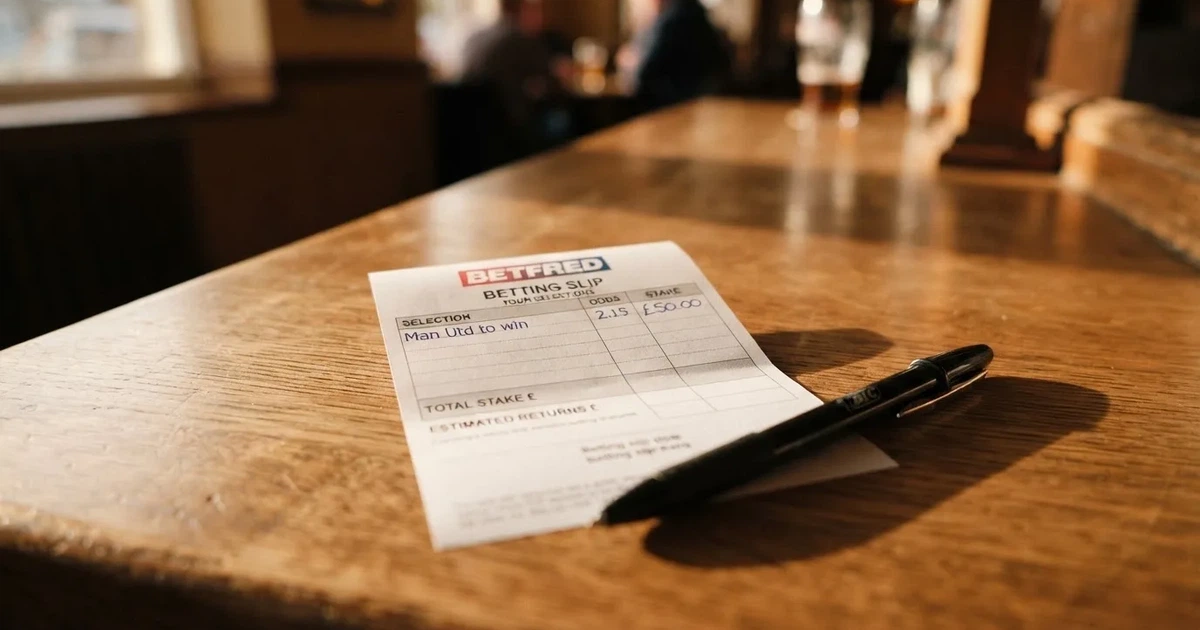
The punter searching for a bookmaker that “does not limit” usually means something narrower: a brand that does not cut stakes on winners, that pays out at full odds, that does not put a ceiling on returns. No GB-licensed brand promises any of those things in writing. What a brand can promise is what it actually takes — the headline maximum on a Premier League match, the maximum on a five-fold acca, the maximum on an ante-post horse. Those numbers differ widely across operators, and so does how each one treats a customer who lands on them.
Current as of 27 October 2026, against the Gambling Commission’s public register and the operator’s own published terms.
What “no limit” actually means in practice
“No limit” describes three different things in the betting market, and the page is clearer once they sit apart.

The first is the *headline* maximum stake — the largest single bet the bookmaker will accept on a popular market before its risk team intervenes. For a Premier League match result this can be several thousand pounds at a major brand, considerably smaller at a newer one. The second is the *exposure limit* — the maximum the operator will leave itself liable for across one customer’s positions in one event, often expressed as the amount the firm is prepared to lose if every selection wins. The third is the *customer-level limit* applied after the fact, when a sharp bettor’s profile puts them on a watch list.
The headline maximum stake
Every betting site carries a per-selection ceiling, sometimes called the maximum stake. The number is set per market: a Premier League 1X2 will sit at a different ceiling from a League Two correct-score, and a Champions League outright will sit lower than a Premier League matchday match. The bookmaker’s own platform states the maximum it will accept on the bet slip; the punter either enters a stake below it or the slip refuses the bet. This is not a “limit” in the pejorative sense — it is the price the operator charges for the risk it carries on the event.

Exposure and the bookmaker’s liability
Exposure is what the bookmaker can lose if every leg of a customer’s bet wins. A £500 stake at odds of 11/4 (decimal 3.75) on three selections creates £1,375 of liability per leg on each correct line. Across a customer’s account, exposure is the figure that decides whether a sharp account gets a tap on the shoulder. Bookmakers that offer high headline maximums often hold the line quietly on exposure, particularly on combinations and exotic markets.
Account-level restrictions
Account-level restrictions are what people mean when they say “I got limited”. The bookmaker reduces the maximum stake on the customer’s account — sometimes to £0.43, the industry joke for a customer it does not want — and tells the customer only that its terms allow it to do so. The Commission does not require an operator to offer every customer the same maximum stake, and most operators reserve the right to restrict in their own terms. A brand that has never limited a customer is a brand that has not yet seen one worth restricting.
How a price is built, and where the margin sits
A betting price is the decimal number the stake is multiplied by to work out a winning return — decimal 3.75 (fractional 11/4) returns £3.75 for every £1 staked. Decimal 1.91 (fractional 10/11) returns £1.91 for every £1. The bookmaker’s margin is the share of every pound staked that the firm expects to keep across the whole market, expressed as the difference between the implied probabilities and 1. In a two-way market priced at 1.91 on each side, the implied probabilities sum to 2 × 0.5236 = 1.0472, so the margin is about 4.7%. Take 1.80 on each side and the margin widens to about 11%. A market priced at 2.00 on each side — an even-money “book” — holds roughly a 0% margin in theory; in practice the operator rounds and the small margin keeps the lights on.
The margin is why the same fixture carries a different price at every bookmaker, and it is why a sharper account is moved on faster. A professional-level punter finds mispriced events and bets them before the price moves; the operator’s response is to set tighter limits on that account, not to fix the price. A recreational punter pays the margin but never generates the kind of volume that triggers a restriction. The middle ground — the bettor who knows the market but does not beat it consistently — is who “no limit” pricing is actually written for.
What kind of markets the licensed sites in this guide cover
Every operator reviewed on this page holds a Gambling Commission remote licence for general betting on real events, or for a related category. That licence lets a brand offer pre-event markets on football, horse racing, cricket, rugby, tennis, golf, American football, basketball, boxing, MMA and motorsport, alongside a long tail of novelty and politics markets. In-play betting is a feature of every site in this list and is offered under the operator’s own licence conditions rather than a separate statute. Betting exchanges — Populus, Smarkets, Betfair Exchange — run under a betting intermediary licence, which lets customers back and lay selections against each other rather than against the bookmaker.
The variety of markets is wide because the licence is wide. The variety of *prices* on the same market is narrow, in the sense that the margin sits between 2% and 10% on most popular football and horse-racing markets at the major brands, and wider on niche events. A bookmaker’s max-stake rule is therefore the bookmaker’s exposure to a mispriced market — the gap between the price it offers and the price it should offer. The bigger that gap looks, the smaller the maximum stake it accepts.
Where the licence sits and what it actually requires
The Gambling Commission is a non-departmental public body sponsored by the Department for Culture, Media and Sport. It licenses the whole commercial market in Great Britain under the Gambling Act 2005 — England, Scotland and Wales. Northern Ireland is outside the Act and runs an older regime, so a GB-licensed operator is licensed for England, Scotland and Wales but not necessarily for Northern Ireland. Since the Gambling (Licensing and Advertising) Act 2014 an operator whose remote facilities are used in Great Britain needs a Commission licence wherever it is based; a Curaçao, Maltese or Gibraltar licence is not a substitute for GB customers. The Commission’s public register can be searched by business name, trading name, domain or account number, and it is the whole test of whether a brand holds a licence.
Identity verification has to happen before the first deposit, including when the first deposit claims a free bet or a bonus. Name, address and date of birth are checked against public records, and a customer cannot deposit or place a bet until the check passes. That is the price of a GB licence: the brand gets the right to take bets in Great Britain, and the customer accepts that the brand knows who they are. No anonymous play exists at a licensed site, and that is by design.
The bonus cap and what it does to promotional value
Wagering requirements on bonuses are capped at 10x since 19 January 2027 — a £10 bonus at 50x turnover needed £500 of bets at the old rate; under the cap no more than £100 of qualifying bets. Mixed-product promotions, where a betting offer requires gambling on another product such as casino or bingo, are banned. Free bets with no wagering condition are outside the cap, but the Commission has not set a money-value ceiling on bonuses, and the terms of each offer vary. The headline is the cap; the practical effect is that every promotional offer on a GB-licensed site carries a turnover requirement that is now predictable rather than punitive.
The deposit that triggers an offer sits under the customer’s own deposit limit, which the operator must offer on a fixed time frame. There is no state-set ceiling: the customer picks the limit, the operator enforces it, and the customer can change it. The first phase of the Commission’s rules on deposit limits took effect on 31 October 2025, and a second phase was postponed to 30 September 2026. Until that second phase lands, the deposit limit on a GB site is whatever the customer has set.
Credit cards, e-wallets and the rule on funding
Credit cards have been banned for gambling in Great Britain since 14 April 2020, including credit-card-funded payments through an e-wallet. Debit cards and bank-based payments are not covered by the ban. The rule cuts one route to debt-funded gambling and forces the operator to check that the money in the account is the customer’s own money; it does not otherwise restrict the choice of payment method. Cryptocurrency deposits are not addressed in the licensing framework, and licensed sites do not take them. A brand accepting crypto is a brand without a GB licence, and a customer depositing with crypto has no recourse to the Commission if funds are withheld.
The financial vulnerability check
A financial vulnerability check applies to licensed remote betting once a customer’s deposits minus withdrawals exceed £150 in a rolling 30-day window — in force since 28 February 2025. It is a public-record check, looking at county court judgments, bankruptcies and similar entries. It is not an income check, not a credit reference check, and it does not ask what the customer earns. The check sits under LCCP condition 3.4.4 and applies to every operator on this page. The “affordability check” of the press is the next stage, announced in a staged plan by the Commission on 7 July 2027 with no start date; the term covers a broader review of the customer’s financial position and will arrive in due course.
How a punter gets limited, step by step
A bookmaker limits an account because the account looks unprofitable. The mechanics are less mysterious than the marketing makes them sound.
The bookmaker’s trading team watches the shape of the money on each event — which side the money is on, how the price moves, where the volume came from. A pattern of bets at prices the market moves past, repeated across events, marks the account as sharp. The first response is rarely a limit; it is usually a price that lags the market, so the firm captures less of the bettor’s action. The second response is to cut the maximum stake on a handful of markets, then across the account. The third response, if the volume continues, is to close the account, with the operator’s terms allowing it to do so at any time.
The bookmaker’s published terms allow this. The Commission’s LCCP does not forbid it. The customer has no statutory right to a particular stake size; the right is the right to be told the bet has not been accepted, and the right to withdraw any balance the account holds. A customer who treats the relationship as a series of bets rather than an ongoing arrangement is the customer most likely to feel the cut.
The reason this matters to anyone who is not a sharp is that the same system that catches sharps also catches consistent winners at a lower level. A recreational bettor who picks three Premier League winners in a week at prices of 3/1 is a profitable account by the end of the month. The bookmaker’s response at that volume is rarely a limit; it is closer monitoring. The threshold at which a punter becomes a target is the threshold at which the bookmaker’s edge has gone missing for long enough to be visible.
The top 10 licensed sites accepting large stakes in Great Britain
Every brand below holds a Gambling Commission remote licence for general betting on real events, or for a related category. Several brands can run under one licensee — the Commission’s register, not the marketing — and every online operator in this market takes part in GAMSTOP. The order is the order the Commission’s register and the operator’s own published terms suggest for customers placing large stakes, not a guarantee against future limits.
| Brand | Gambling Commission licence | Stance on maximum stakes |
|---|---|---|
| bet365 | Remote licence held by Hillside (UK Sports) ENC; GB account for the bet365 brand | Sets per-market maximums across single and combination bets; Bet Builder+ and Super Boost markets carry their own stake ceilings |
| William Hill | Remote licence held by WHG (International) Limited; GB account for the William Hill brand | Pays Best Odds Guaranteed on UK and Irish horse racing from 8 AM on race day; Football Acca Boost caps each boosted acca at £10,000 |
| Betfair | Remote licence held by Flutter Entertainment plc; GB accounts for Betfair Sportsbook and Betfair Exchange | Sportsbook sets per-market maximums; Exchange lets customers set their own odds against other customers rather than against the firm |
| Coral | Remote licence held by Ladbrokes Coral Limited; GB account for the Coral brand | Best Odds Guaranteed on UK and Irish horse racing from 8 AM and on UK greyhound meetings; per-selection maximums stated on the bet slip |
| Paddy Power | Remote licence held by PPB Counterparty Services Limited; GB account for the Paddy Power brand | Sets per-market maximums across singles and multiples; Money-Back specials operate within stated stake ceilings |
| BetVictor | Remote licence held by BetVictor Limited; GB account for the BetVictor brand | Best Odds Guaranteed on UK and Irish horse racing; BetFinder and Smart Stats sit alongside per-market maximums on the slip |
| Smarkets | Remote betting intermediary licence held by Smarkets (Malta) Limited; GB account 39173 | Standard commission 2% on eligible exchange bets; customer sets the lay price and the stake, the firm does not price against the customer |
| Star Sports | Remote licence held by Star Racing Limited; GB account 9177 | In-play and pre-event markets on football, horse racing, golf and US sports; Bet Boosts and Daily Specials sit under stated stake ceilings |
| NetBet | Remote licence held by Netbet Enterprises Limited; GB account 39170 | Daily Boosts, Profit Boosts and Bet Builder markets each under stated stake ceilings |
| Hollywoodbets | Remote licence held by Hollywoodbets International UK Limited; GB account 53028 | Sports welcome offer operates under stated stake ceiling on the qualifying acca; per-market maximums stated on the slip |
The brand matters less than the licence type and the category it covers. Every brand in this table holds a remote general betting standard licence (real events), which is the licence the Commission issues for fixed-odds betting on real-world sport. Smarkets sits under the betting intermediary category, which is the Commission’s term for an exchange: the firm does not take a position on the outcome, it takes a commission on the customer’s net winnings. The difference matters because an exchange cannot “limit” a customer in the same way a sportsbook can — the exchange’s stake is the customer’s stake against another customer, not a position the firm is on.
The next sections look at each brand in this list at a closer grain, working through what each one takes, what each one sets as its ceiling, and where each one sits in the comparison.
Bet365 — the headline maximums on a deeply priced book
Bet365 is the largest operator in the British market and the one customers most often check first when a large stake sits on the bet slip. The Commission licence sits with Hillside (UK Sports) ENC; the GB brand runs under that licence for remote general betting on real events. Bet Builder+ combines markets from one event into a single bet, available pre-match and in-play, and Super Boost, Winnings Boost on Bet Builders and selected singles, and daily Bet Boost markets all carry their own maximum-stake ceilings on top of the standard per-market ceiling.
The platform states the maximum stake it will accept on each selection at the moment the bet is placed; a punter trying to push a stake past the ceiling sees the slip refuse the bet rather than accept a partial. That is the bookmaker’s standard approach, and it is the same approach at most of the brands on this list. The difference at bet365 is the breadth of what is priced — the maximum stake on a Premier League match result is several thousand pounds, the maximum on a League Two correct-score is a fraction of that, and the maximum on a combination bet compounds the per-leg ceiling. A punter looking for a single place to push a large acca will find the ceiling sits on the leg with the smallest market, not on the acca itself.
The verdict on best-thing-the-page-says: the largest ceiling in the GB market on mainstream events, and the strictest per-market cap on combinations. For a customer who bets large on singles, the platform rarely pushes the slip back. For a customer who builds eight-fold accas, the platform will quietly cap the stake well before the headline maximum.
William Hill — Best Odds Guaranteed from 8 AM, and the Acca Boost ceiling
William Hill’s UK remote licence sits with WHG (International) Limited, and the brand carries a deep book on horse racing alongside the Premier League and Champions League football every British punter bets on. Two terms define the maximum-stake experience: Best Odds Guaranteed from 8 AM on UK and Irish racing, on both single and multiple bets but not on ante-post, tote or pari-mutuel markets, and the Football Acca Boost, which boosts accas of 2 or more legs from 3% on a double up to 200% on 20 or more legs, with a maximum boost of £10,000 per online bet and a published end date of 30 May 2027.
The Best Odds Guaranteed promise does not change the stake ceiling; it changes the price the punter gets if the starting price is bigger than the price taken. The punter still bets up to the maximum stake the platform accepts, and the firm still pays out the larger of the two prices. The Acca Boost is a credit on the winning return, capped at £10,000 per bet, so a customer pushing a stake that would generate more than £10,000 of boost has the boost capped regardless of the stake.
The verdict on best-thing-the-page-says: deep racing product, transparent Acca Boost ceiling, Best Odds Guaranteed applies to singles and multiples but not ante-post. The £10,000 boost cap is the number a customer with a large stake needs to weigh against the platform’s pricing, not the headline maximum.
Betfair — the sportsbook ceiling and the exchange’s open stake
Betfair runs two products under one parent. Betfair Sportsbook is a fixed-odds bookmaker under the Commission’s remote general betting standard licence; it sets per-market maximum stakes and offers in-play, Bet Builder, free live streaming of UK and Irish racing and football within the app, and a 90 Minute Payout market. Betfair Exchange is a betting intermediary under the Commission’s separate betting intermediary licence; customers back and lay selections against each other, request better prices, and use MatchMe to match unmatched bets.
The exchange is the relevant product for a customer looking for “no limit”. The exchange does not price against the customer and therefore does not need to cap the customer’s stake — the stake is the customer’s stake against another customer, and the firm takes a commission on net winnings rather than a margin on each price. The 2% standard commission is the price the customer pays for the open stake, and the 0% commission introductory window is the firm’s marketing around that price. The sportsbook’s stake ceiling is the usual sportsbook ceiling; the exchange’s stake ceiling is the size of the opposing liquidity on the same selection.
The verdict on best-thing-the-page-says: for a customer placing a large bet on a popular market, the exchange is the closest thing in the GB market to “no limit”. The cost is the commission, the liquidity on the price, and the absence of the bookmaker’s features — there is no Bet Builder on the exchange, no Super Boost, no Best Odds Guaranteed.
Coral — racing best-odds, a wide football Bet Builder, and the Reward Shaker
Coral sits under Ladbrokes Coral Limited’s GB licence, the same parent as Ladbrokes, and offers Best Odds Guaranteed on all UK and Irish horse racing from 8 AM each morning and on every UK greyhound race. The sportsbook covers match result, goalscorers, total goals and corners across more than 100 football leagues and competitions in its Bet Builder, with cash out on selected Bet Builder markets. The platform runs a free daily Reward Shaker, an Odds Booster on hundreds of markets, and free-to-play games including Football Super Series with a £10,000 jackpot. Bet In-Race betting and cash out during races sit alongside the racing product.
Coral’s welcome offer is a deposit and sports bet of £20 or more at minimum odds of 2.0 (1/1), with £40 in free bets issued within seven days and expiring seven days after issue, for new GB customers who opt in. The free bets are stake-not-returned, so a £20 free bet at 3/1 pays £60 profit on a win rather than £80. The headline is £40 in free bets; the price is the seven-day window, the minimum odds, and the stake-not-returned structure.
The verdict on best-thing-the-page-says: deep racing product, wide football Bet Builder, transparent free-bet terms. The £40 free bet headline costs more in conditions than it returns in cash unless the customer times the qualifying bet to the bigger free-bet expiry.
Paddy Power — the sportsbook ceiling alongside other boosts
Paddy Power runs under PPB Counterparty Services Limited’s GB remote licence and shares its parent with Betfair. The brand’s distinguishing feature is its Money-Back specials on certain markets — money back as a free bet if a particular player scores first, if a horse falls at the last, if a particular event in a multi-leg acca loses. Each special sits under a stated stake ceiling, and the maximum stake on the underlying market is the per-market ceiling on the slip.
The price of a Money-Back special is the stake-not-returned structure of the refund — the firm returns the stake as a free bet rather than as cash, so a winning Money-Back bet on the refunded leg pays the free-bet profit only. The maximum stake is unchanged; the maximum refund is the size of the qualifying bet. A customer weighing the special against the same market elsewhere is weighing the conditional refund against the same price without the special, and the free-bet stake-not-returned terms sit in the comparison.
The verdict on best-thing-the-page-says: distinctive specials at transparent stake ceilings, with the stake-not-returned refund structure as the price of the headline. For a customer reading the small print before placing the qualifying bet, the special is exactly what it says; for a customer reading the headline only, the refund is smaller than it looks.
BetVictor — Best Odds Guaranteed, racing streaming and BetFinder
BetVictor runs under BetVictor Limited’s GB remote licence and offers Best Odds Guaranteed on UK and Irish horse racing, enhanced live race streaming, and a BetFinder feature for finding racing bets, alongside Smart Stats for football. The platform covers pre-event and in-play markets across football, horse racing, tennis, golf and US sports, with per-market maximum stakes stated on the slip.
BetFinder is the brand’s distinguishing product for racing customers — the platform surfaces bets by race type, going, distance and form, and presents the prices the firm is prepared to offer. Smart Stats is the equivalent for football. The two features sit on top of the standard sportsbook ceiling rather than expanding it; a customer pushing a large stake on a Smart Stats-driven selection sees the same slip ceiling as on any other selection. Best Odds Guaranteed is the racing promise the brand shares with William Hill and Coral.
The verdict on best-thing-the-page-says: Best Odds Guaranteed on the racing product, BetFinder and Smart Stats for customers who want the platform to do the legwork. The per-market stake ceiling is unchanged from the wider GB market.
Smarkets — the exchange’s open stake and the 2% commission
Smarkets runs under a remote betting intermediary licence held by Smarkets (Malta) Limited; the GB account number is 39173. The platform takes a standard commission of 2% on eligible exchange bets and has offered 0% commission for 60 days on new accounts with a minimum first deposit of £10. The product is a betting exchange in the Commission’s terms: customers back and lay selections against each other rather than against the firm, request a better price than the one currently posted, and use the platform’s matching engine to find a counterparty.
The stake ceiling on the exchange is the size of the opposing liquidity at the price the customer wants. A customer wanting to back a popular selection at decimal 3.00 will find liquidity at that price or close to it; a customer wanting to lay an outsider at decimal 50.00 will find the liquidity at decimal 50.00. The firm does not price against the customer, and the 2% commission is the price of that arrangement. The 0% commission introductory window is a marketing tactic around the same commission structure, and the £10 minimum first deposit is the only qualifier.
The verdict on best-thing-the-page-says: for a customer placing a large bet on a market with deep liquidity, the exchange is the closest thing in the GB market to “no limit”. The cost is the 2% commission and the requirement to find a counterparty. The 0% commission offer is the same commission structure with the introductory price waived.
Star Sports — Bet Boosts, Daily Specials, Weekend Enhanced Boosts
Star Sports runs under Star Racing Limited’s GB remote licence; the account number is 9177 and the categories on the register cover remote general betting standard on real events. The brand offers pre-event and in-play markets with Bet Boosts, Daily Specials and Weekend Enhanced Boosts, plus in-play betting on football, horse racing, golf and US sports. The stake ceiling on each market is the standard per-market ceiling on the slip, and the boosted markets sit under their own ceilings on top.
The brand’s positioning is the racing product — the parent company has a long history in UK and Irish racing — and the Bet Boosts and Daily Specials sit on top of that book. A customer looking for a racing-focused sportsbook will find a deeper book on racing than on football, with the football book sitting alongside the larger brands rather than replacing them. The Weekend Enhanced Boosts run on the same stake ceiling as the Daily Specials, and the boosted price is the price on the bet slip.
The verdict on best-thing-the-page-says: racing-focused book with daily and weekend boosts at transparent ceilings. The brand is smaller than Bet365, Squire, William Hill or Coral on football, and the football maximum stake reflects that.
NetBet — Daily Boosts, Profit Boosts and the Bet Builder with instant dynamic odds
NetBet runs under Netbet Enterprises Limited’s GB remote licence; the account number is 39170 and the categories cover remote general betting standard on real events. The brand offers Daily Boosts, Profit Boosts and free bet offers, a Bet Builder with instant dynamic odds, and sports stats for the major leagues. The Bet Builder’s instant dynamic odds change as the customer adds and removes selections, and the price on the slip is the price the firm is willing to take at that moment.
The brand sits in the mid-market alongside the other brands on this list — deeper than the smallest operators, narrower than the largest. The Daily Boosts and Profit Boosts sit on the platform’s standard market book rather than expanding it, and the Bet Builder’s pricing reflects the per-leg ceiling on the underlying markets. Sports stats for the major leagues sit alongside the betting product for customers who want the platform to do some of the analysis.
The verdict on best-thing-the-page-says: mid-market book with daily boosts and a Bet Builder with instant dynamic odds. The maximum stake is the standard per-market ceiling, and the Bet Builder’s pricing changes as the customer builds the bet.
Hollywoodbets — the welcome offer and the per-market ceiling
Hollywoodbets runs under Hollywoodbets International UK Limited’s GB remote licence; the account number is 53028. The brand’s sports welcome offer is the headline: new players who deposit £10 or more by card get their stake back as a free bet of up to £30 on their first qualifying losing accumulator, with a stake of £10+, three or more legs, odds of 4/1 (decimal 5.00) or greater, settled within seven days; one free bet per customer. The free bet is stake-not-returned, and the maximum free bet is £30.
The price of the headline is the qualifier. A £10 qualifying bet on a three-leg acca at odds of 4/1 or greater, settled within seven days, returns the stake as a free bet of up to £30 only on a losing bet. A winning qualifying bet pays the acca return and does not trigger the free bet. The seven-day settlement window and the 4/1 minimum odds are the same across the qualifying leg and the rest of the acca. The free bet’s stake is not returned on a win, so a £30 free bet at 5/1 pays £150 profit rather than £180.
The verdict on best-thing-the-page-says: small-stake welcome offer at transparent terms, free bet is stake-not-returned, and the maximum free bet is £30. For a customer looking for a deposit-and-bet welcome at low commitment, the offer is exactly what it says.
Responsible gambling at a no-limit site
The Commission’s rules on player protection apply to every brand on this page, regardless of how generous the headline maximum looks. The headline is the maximum stake; the protection is the rules around it.
GAMSTOP and the self-exclusion register
GAMSTOP is the national multi-operator online self-exclusion scheme and a mandatory licence condition for online operators since 31 March 2020. Customers register with GAMSTOP and choose an exclusion period of six months, one year, five years, or five years with auto-renewal; once registered, the exclusion applies across every online operator in the scheme. After the minimum period the exclusion stays in place for a further seven years unless the customer asks GAMSTOP to remove it. The scheme covers online sites and apps; betting shops use a separate service.
A customer who self-excludes via GAMSTOP cannot open an account at any of the brands on this page while the exclusion is in force. The brands are required to check the GAMSTOP register on sign-up and on deposit, and to refuse service to anyone on the register. A customer who places a bet at one of these brands while self-excluded is in breach of the GAMSTOP terms and at risk of having winnings withheld and the account closed.
Deposit limits and the customer’s own ceiling
Operators must offer a gross deposit limit on a fixed time frame. The first phase of the Commission’s rules on deposit limits took effect on 31 October 2025, and a second phase was postponed to 30 September 2026. Until the second phase lands, the deposit limit on a GB-licensed site is whatever the customer has set. The customer can change the limit, usually with a cooling-off period for an increase, and the operator enforces the limit on the platform.
A customer who wants to bet large sets a high deposit limit or no limit; a customer who wants to keep the budget under control sets a low one. The Commission’s role is to require the platform to offer the limit, not to set the number. The number is the customer’s call.
Help when the bet gets out of hand
GamCare runs the National Gambling Helpline, and the service is free and confidential. GambleAware funds treatment and support across Great Britain, and the NHS runs gambling clinics in several regions. Gamblers Anonymous runs peer-support meetings across the country. The brands on this page link to these services in their safer-gambling sections, and the Commission’s LCCP requires them to do so.
The help exists; the help is independent of the brands; the help is free. A customer who feels the bet is moving away from them can pick up the phone or visit the website without telling the brand first. The brand will not know unless the customer tells them, and the brand’s terms do not require the customer to tell them before seeking help.
Crypto and the unregulated bookmaker
Cryptocurrency deposits sit outside the GB licensing framework. The Commission’s rules do not address cryptocurrency; the Commission’s rules do not permit a licensed operator to take a deposit the operator cannot trace to a verified UK bank account. A licensed site accepts debit cards, bank transfers and a handful of e-wallets; a licensed site does not accept Bitcoin, Ethereum or Tether.
A brand accepting crypto is a brand without a GB licence. A customer placing a bet at that brand has no recourse to the Commission if the brand withholds funds, no protection under the LCCP’s player-protection rules, no coverage under GAMSTOP’s self-exclusion scheme, no access to an approved dispute-resolution body, no bonus cap, no vulnerability check, and no British consumer redress. The Commission’s enforcement is disruption, not blocking — cease-and-desist notices, search-engine referrals, work with registrars, hosts and payment providers — and the Commission’s court-order DNS blocking powers have been granted or are about to be granted, but the blocks target the brands, not the customers.
The honest framing: a licensed site takes the customer’s identity, the customer’s debit card, the customer’s deposit limit and the customer’s commitment to the LCCP’s player-protection rules. An unlicensed site takes the customer’s crypto and does not take any of those things. Neither is “the safe choice” by default; the licensed site is the site where the customer has somewhere to complain if the firm withholds a winning bet.
How to read the odds, and what the margin means for the stake
Odds in Great Britain come in two formats. Fractional odds — 5/1, 11/4, evens — express the profit as a fraction of the stake: 5/1 returns £5 profit for every £1 staked, so the decimal odds are 6.00. Decimal odds — 6.00, 3.75, 1.91 — express the total return as a multiple of the stake: 6.00 returns £6 for every £1 staked, so the profit is £5. The conversion is decimal = (a ÷ b) + 1.
The bookmaker’s margin sits inside every price. In a two-way market priced at 1.91 on each side, the implied probabilities sum to 1 ÷ 1.91 + 1 ÷ 1.91 = 1.0471, so the overround is 0.0471, or about 4.7%. In a three-way 1X2 football market priced at 2.10 / 3.40 / 3.60, the implied probabilities sum to 0.4762 + 0.2941 + 0.2778 = 1.0481, so the overround is about 4.8%. The margin is the firm’s expected cut of every pound staked on the market, and a margin of 4-6% on a popular football match is the GB industry norm.
The illustrative two-way market at decimal odds of 1.90 / 1.90 carries an implied probability of 1 ÷ 1.90 on each side, summing to 2 × 0.5263 = 1.0526. The margin is 1.0526 − 1 = 0.0526, or around 5.3% — the band the GB industry quotes on a typical two-way market. A punter betting £100 on each side at 1.90 has staked £200 and receives £190 back on either outcome, so the firm’s expected cut is £10 on the market. The exact percentage shifts with the price the firm offers, but the band sits at 4-6% on a typical two-way event and 2-10% on a typical three-way football match.
The margin is the cost of the bet. The bookmaker does not charge a fee on the bet, so the fee sits inside the price, and the punter pays the fee every time a bet is placed. The price is the only number the punter can change — the fee is fixed by the firm’s margin — and the punter’s choice is between firms with different margins on the same event.
How a bet pays out, and what a winning return looks like
A winning single returns the stake multiplied by the decimal odds. A £100 stake at decimal 3.75 (fractional 11/4) returns £375, of which £275 is profit and £100 is the stake returned. The same stake at decimal 1.91 (10/11) returns £191, of which £91 is profit. The arithmetic is the same regardless of the firm’s margin: the margin sits inside the price, not on top of it, and the firm’s expected cut is the difference between the price offered and the true probability of the outcome.
A combination bet multiplies the decimal odds of each leg into one price. A £10 stake on three selections at 2.00, 3.00 and 4.00 has combined odds of 24.00, so a winning return is £240. The firm’s margin compounds across the legs, so a combination bet carries a larger margin than a single at the same price — the multiplication of three 5%-margin markets produces a margin of around 14%, not 5%. A punter building a five-fold acca is paying a 25%-plus margin on the bet as a whole, before any account-level consideration.
The maximum stake on a combination bet is the smallest per-leg ceiling across the legs, not the per-market ceiling on the combination. A five-fold acca with legs at maximums of £1,000, £500, £2,000, £300 and £750 has a maximum stake of £300 — the smallest leg’s ceiling — and the punter cannot push the stake past £300 regardless of the acca’s combined price. That is the rule across the GB market, and the rule is the same at every brand on this page.
How a free bet really works, and what it costs in conditions
A free bet is the bookmaker’s stake on the customer’s behalf. The customer picks the selection; the firm puts up the stake. A winning free bet returns the profit, not the stake, so a £30 free bet at decimal 5.00 (fractional 4/1) pays £120 profit rather than £150. The stake-not-returned structure is the rule rather than the exception at GB-licensed brands.
The headline price of a free bet is the headline price; the cost is in the conditions. A £30 free bet at minimum odds of 1.50 on a winning selection returns £15 profit; the same free bet at minimum odds of 5.00 returns £120 profit. The minimum odds decide the upside, and the maximum stake on the free bet is the firm’s per-market ceiling on the selection. A free bet on an acca carries the compounded margin of the legs, just as a paid acca does, and the free bet’s stake is the only part of the bet the firm is on.
The bookmaker’s “free bet” headline is not free in the marketing sense; it is free in the sense that the customer does not put up the stake. The expected value of a £30 free bet at minimum odds of 1.50, on a market with a 5% margin, is £30 × (1.50 − 1) ÷ 1.50 × 0.95 = £30 × 0.3333 × 0.95 = £9.50. The free bet is worth around £9.50 on average on a single selection, before the minimum odds restriction is taken into account. The minimum odds restriction is the price of the free bet; the headline is the size of the stake the firm puts up.
What the wagering cap and the bonus rules actually mean
The Commission’s bonus cap, in force since 19 January 2027, sets a maximum wagering requirement of 10x on bonuses. A £10 bonus with a 50x turnover requirement needed £500 of qualifying bets under the old rules; under the cap, no more than £100 of qualifying bets. The cap is a ceiling, not a floor: a brand can offer a bonus with no wagering requirement, and the bonus is then a cash credit rather than a turnover-gated offer. Mixed-product promotions, where a betting offer requires gambling on another product such as casino or bingo, are banned.
A £10 bonus with no wagering requirement is £10 of cash credited to the account; a £10 bonus with a 5x turnover requirement is £10 of cash credited to the account, withdrawable after £50 of qualifying bets at the minimum odds the brand sets. The customer takes the cash that is left after the qualifying bets have been settled. A bonus with a 10x turnover requirement takes £100 of qualifying bets, and the customer’s expected cost on a 5%-margin market is £5 — the firm’s expected cut on the turnover. The bonus is worth £10 minus the cost of clearing it.
The headline is the bonus; the price is the turnover. A punter weighing a £10 bonus at 10x against the same bonus on a separate bookmaker at 5x is weighing £10 of cash against £5 of expected clearing cost, and the comparison is on the turnover rather than the bonus size.
What the bookmaker’s stake ceiling actually changes for a winning account
The stake ceiling is the line between a recreational and a professional relationship with a bookmaker. A recreational bettor bets small, loses on the margin, and never meets the ceiling. A professional bettor bets the size of the edge, never meets the ceiling on the way in, and meets it on the way out — the firm closes the bet at the ceiling rather than at the price the bettor wants.
The bookmaker’s stake ceiling is the bookmaker’s risk management on a single customer account, and the Commission does not require a firm to apply the same ceiling to every customer. A customer at the ceiling sees the slip refuse the bet; a customer below the ceiling sees the slip accept it. The ceiling is the firm’s number; the Commission’s role is to require the firm to state the number, not to set it. The published number is on the bet slip; the unpublished number is on the trading team’s screen.
A customer who treats the relationship as a series of bets is the customer who meets the ceiling fastest. A customer who reads the small print and bets within the published terms is the customer who meets the ceiling last. The bookmaker’s terms reserve the right to restrict the account at any time; the Commission’s rules require the firm to honour the customer’s withdrawable balance.
How the Commission’s public register works, and what it tells the punter
The Commission’s public register can be searched by business name, trading name, domain or account number. The register lists every operating licence the Commission has issued, the categories it covers, and the dates the licence is in force from and to. A brand with a live operating licence on the register is a brand with the right to take bets in Great Britain; a brand without one is a brand without that right.
The Commission’s enforcement is disruption rather than blocking. The Commission can issue cease-and-desist notices, work with search engines to demote unlicensed brands, work with registrars and hosts to take down unlicensed sites, and work with payment providers to block unlicensed transactions. The Commission’s court-order DNS blocking powers have been granted or are about to be granted, and the blocks target the unlicensed brands rather than the customers. The register is the test of who is licensed; the blocks are the test of who is not.
A punter who wants to check a licence opens the register, types in the brand’s name or domain, and looks for a live operating licence in the right category. A punter who wants to check a brand that is not on the register is a punter looking at an unlicensed brand.
How to pick a site when the question is the limit
The question of a “no limit” site is a question of which firm is prepared to take a large bet at the price the punter wants. The answer on a GB-licensed site is never “the firm will accept any stake”; the answer is always “the firm will accept up to its per-market ceiling, with the ceiling set by the firm and stated on the slip”. The question of which firm to pick is therefore a question of how the ceiling sits alongside the price, the platform, and the firm’s stance on restricted accounts.
A punter betting large on singles will find the largest ceiling at the largest brand — Bet365, William Hill, Coral, Paddy Power — because the firm’s risk on a single event is the firm’s biggest line. A punter betting large on combinations will find the ceiling sit on the smallest leg, and the choice between firms is the choice between the per-leg ceiling rather than the headline maximum. A punter betting large on racing will find Best Odds Guaranteed at William Hill, Coral, BetVictor and Paddy Power, and the ceiling on a Best Odds Guaranteed bet is the firm’s per-market ceiling on the selection. A punter betting large on a niche event will find the ceiling shrink as the market shrinks, and the choice is the firm that prices the niche event at all.
A punter looking for the closest thing to “no limit” on a GB-licensed platform will find it on a betting exchange — Smarkets, Betfair Exchange — where the stake is the customer’s stake against another customer, and the firm’s role is to commission the winnings rather than to cap the bet. The exchange’s “stake ceiling” is the size of the opposing liquidity at the price the customer wants, and the price is the price the market clears at.
How a winning bet is settled, and what happens if the firm disputes the result
A winning bet is settled at the price taken, adjusted for any rule the firm states on the bet type. The starting price on a horse race is the price the course reports at the off, and a Best Odds Guaranteed bet pays the larger of the price taken and the starting price. An ante-post bet pays at the price taken, and a non-runner voids the bet under the firm’s non-runner rule. A Rule 4 deduction on a horse race reduces the winning price on the rest of the field when a runner is withdrawn, and the deduction is set by the industry’s Rule 4 table.
A bet on a postponed event is void unless the firm’s terms state the bet stands. A bet on an abandoned event is settled under the firm’s abandoned-event rule, which varies by sport and by firm. A bet on a player who withdraws before the event is settled under the firm’s player-withdrawal rule, which voids the selection or settles the bet at a reduced price depending on the firm’s terms.
The Commission’s role on a disputed result is the role of an escalation route. The customer first complains to the firm; the firm responds under its own complaints procedure; if the customer is not satisfied, the customer can take the dispute to an approved alternative dispute resolution (ADR) provider. The ADR provider’s decision is binding on the firm but not on the customer, and the Commission’s LCCP requires every licensed firm to be a member of an approved ADR provider. A customer at an unlicensed firm has none of these routes, and the funds are at the firm’s discretion.
What this page has not covered, and where to read further
The page has not covered every licensed brand in Great Britain — there are several hundred on the Commission’s register, and the comparison above is the top ten by stake depth rather than a complete catalogue. The page has not covered every market the licensed brands offer, because the per-market catalogue runs to several thousand events per day per sport, and the comparison above is the structural question rather than the catalogue. The page has not covered every promotion at every brand, because the bonus cap and the per-brand free-bet terms change with every promotional cycle, and the comparison above is the structural question rather than the latest headline.
The page has covered the structural question of what a bookmaker’s stake limit is, how a price is built and what the margin sits inside it, how a free bet and a bonus are settled, how a GB licence is checked, and how the responsible-gambling regime sits around all of it. The page has covered the top ten licensed brands at a closer grain, with the per-brand stake stance and the Commission’s licence record.
The further reading is the Commission’s public register, the Commission’s safer-gambling pages, and the firm’s own published terms. The register tells the punter who is licensed. The safer-gambling pages tell the punter how to keep the bet within budget. The firm’s terms tell the punter what the firm will and will not do.
Frequently asked questions
Which bookmakers do not limit?
No Gambling Commission-licensed brand promises never to restrict a winning account; every operator’s published terms reserve the right to limit stakes or close accounts at any time. The closest thing to “no limit” on a GB-licensed platform is a betting exchange — Smarkets or Betfair Exchange — where the stake sits against another customer and the firm takes commission on net winnings rather than capping the bet. Among fixed-odds sportsbooks, the largest headline maximums sit at Bet365, William Hill, Coral and Paddy Power on mainstream football and horse racing.
Why do sportsbooks limit winning bettors?
A sportsbook limits a winning account because the account is unprofitable for the firm. The trading team watches the shape of the money on each event and identifies accounts that consistently back winners at prices the market moves past; the firm’s response is to cut the maximum stake on the account or close it altogether. The Commission’s rules do not require a firm to apply the same maximum stake to every customer, and the firm’s published terms reserve the right to restrict at any time. The restriction protects the firm’s margin; the customer has the right to withdraw any balance the account holds.
Why do sportsbooks limit sharp bettors?
A sharp bettor is a customer who prices markets more accurately than the firm does, and the firm’s response is to limit or close the account. The mechanism is the same as for any other winning bettor, but the scale is larger — a sharp bettor can move the firm’s line if the firm bettles aggressively, and the firm would rather restrict the account than reprice the market. The Commission’s rules do not forbid the firm from restricting; the Commission’s role is to require the firm to honour the customer’s withdrawable balance.
How can it be checked that a bookmaker holds a Gambling Commission licence?
The Commission’s public register can be searched by business name, trading name, domain or account number. A live operating licence on the register is a licence to take bets in Great Britain; a missing entry is the absence of that right. The register lists the licence’s categories, the dates it is in force, and the trading names it covers. A brand on the register is licensed; a brand off the register is not.
How is the return on a bet worked out from the stake and the odds?
The return on a winning single is the stake multiplied by the decimal odds; for fractional odds, decimal = (a ÷ b) + 1. A £100 stake at decimal 3.75 returns £375, of which £275 is profit. A combination bet multiplies the decimal odds of each leg, so a £10 stake on three legs at 2.00, 3.00 and 4.00 has combined odds of 24.00 and returns £240. The arithmetic is the same regardless of the firm’s margin; the margin sits inside the price rather than on top of it.
What is the bookmaker’s margin and how can it be seen in the odds?
The margin is the firm’s expected cut of every pound staked on the market, expressed as the difference between the implied probabilities and 1. In a two-way market priced at 1.90 on each side, the implied probabilities sum to 2 × 0.5263 = 1.0526, so the margin is about 5.0%. A three-way 1X2 football market priced at 2.10 / 3.40 / 3.60 has implied probabilities summing to 0.4762 + 0.2941 + 0.2778 = 1.0481, so the margin is about 4.6%. The margin is the cost of the bet, and a 4-6% margin on a popular football or horse-racing market is the GB industry norm.
Betting sites & exchanges – Cricket betting
Content created by the «Cricket betting» team
