
The Real Cost of an Acca: Best UK-Licensed Bookmakers for Accumulator Betting in 2026
 Available in US
*Last updated: 27 October 2026 · verified against the Gambling Commission’s public register*
The marketing sells the payout: four winners and five multiplied together, a £10 stake returning four figures, the screen flashing green. The arithmetic is correct. The arithmetic is also what the bookmaker sells it on, because every one of those multiplied prices carries a slice taken off at the start, and the slice compounds with every leg the punter adds. A four-fold acca at typical margins holds back around 8–12% of the theoretical payout once the price of each leg is multiplied together, and a six-fold holds back rather more. That is the working cost a UK bettor should know before a single selection goes on the slip, and it is the cost this page measures the licensed UK market against.
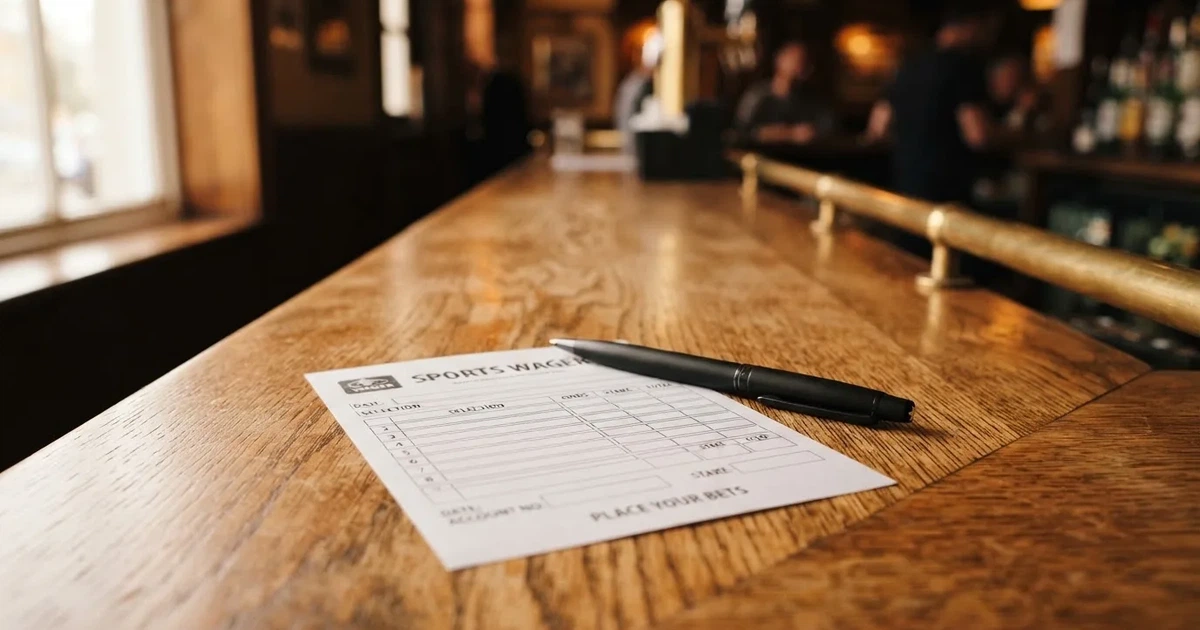
Ten brands appear on the comparison below. All ten hold a remote operating licence from the Gambling Commission for general betting on real events; none is presented as the only licensed operator, because the register lists far more than ten. What separates them is the shape of their accumulator product — the bet builder, the supercharge, the best-odds-guaranteed rail — and the price they put on the leg the punter is about to add. A £10 acca at 2.00, 2.00 and 2.50 returns £100 if every leg wins, and the punter pays for that structure in margin whether the bet wins or loses. The pages that follow lay the mechanism bare, walk through the licence register, and close on ten reviewed bookmakers with a verdict on each.
Acca Predictions and Strategy: Why the Punters Chase the Multi
The accumulator is the most popular single bet type in British online betting, and the reason is not difficult to see. A £10 treble at average football prices returns something close to £60 when it wins; a £10 six-fold returns something a reader can mention in a sentence. The payout is structure: every leg that holds multiplies the odds of the rest. That is also why bookmakers invest so heavily in their acca product, because a punter who has built a four-fold by Saturday lunch has already paid margin on every leg whether or not the bet settles.

The Prediction Trap
“Best acca bets today” is one of the most searched phrases in UK sports betting. It comes from a market that knows it sells a feeling: the tipster page, the in-app “popular accas”, the curated “acca of the day” the app pushes on a Friday morning. The page cannot tell a reader who will win, and a tipster who claims to can be wrong often enough that following the tip is not a system. What it can do is explain what an acca actually costs — the margin is already inside the price the tipster is promoting — and what conditions the offer attached to it carries.
The standard “popular acca” tab on a UK bookmaker app is built from selections at the operator’s own prices, not at a benchmark. Two bookmakers quoting the same four Premier League fixtures will, in practice, quote different prices for at least one of them; the acca with the lower combined odds is the one the punter wants, and the difference is rarely more than a few percent. The tipster page does not flag this. The market that pays for it is the punter who doesn’t compare.

Bankroll and the Long Run
The punter’s bankroll and the bookmaker’s margin run in opposite directions across the season. Every acca the punter places pays a margin on every leg, and every losing leg costs the entire stake. At four legs of 5% each, the compounded margin on a winning acca is roughly 18.5% — the bookmaker kept £18.50 of every £100 that would have been returned at true odds. At six legs, the compounded margin is around 26%. A punter who wins one in four six-folds at fair odds is, at these compounded margins, breaking even or slightly behind. A punter who wins one in five is losing steadily.
This is not a system to beat. It is the structure the punter walks into, and the structure is the same on every licensed UK site. The strategy section of an acca guide, then, has to do something other than predict winners — it has to describe what the bettor is buying and what it costs in the long run.
Acca Bet Types and Odds: How the Multi Is Built
What an Accumulator Actually Is
An accumulator — acca for short, also called a parlay, combo bet or multi — is a single bet that links two or more individual wagers. The bet wins only if every leg wins; one losing leg loses the entire bet. Two legs make a double; three a treble; four and above an accumulator. The American term is “parlay”. The British term, on every licensed site’s terms page and in every betting app, is “acca”.
The payout is the product of the decimal odds of each selection. Three legs at 2.00, 2.00 and 2.50 give combined odds of 10.00, so a £10 stake returns £100 if all three win. The simplicity is what makes the bet dangerous. The punter sees the combined odds and forgets that each leg has its own margin already inside its own odds.
The Push Rule
When a leg ties — called a dead heat or a push in American usage, “non-runner” or “void” on a UK horse-racing slip — the leg is removed and the combined odds are recalculated across the remaining selections. A four-fold where one leg voids becomes a treble; the stake stays the same and the price drops to the product of the three surviving legs. This is the operator’s standard settlement rule and it is the same across the licensed UK market.
Full-Cover and System Bets
The Trixie, the Yankee, the Heinz and the Goliath are not accumulators in the strict sense — they are full-cover bets that combine accumulators and singles into a single package. A Trixie on three selections is four bets: three doubles and one treble. A Yankee on four is eleven bets. A Heinz on six is fifty-seven bets. A Super Heinz on seven is one hundred and twenty bets. A Goliath on eight is two hundred and forty-seven. The unit stake multiplies into a total stake — £2 per line in a Trixie costs £8 in total; £2 per line in a Goliath costs £494.
These bets are popular because one losing leg doesn’t necessarily cost the whole stake. A six-fold Heinz with one loser still pays out on the fifty-six combinations that include only winners. The cost is in the total stake: a punter who picks six selections expecting to pay £10 actually pays £570, and the punter pays the full margin on every leg of every combination. The acca is a single bet; the full-cover bet is a package of accas, and the bookmaker takes the same slice from each one.
Bet Builder and the Same-Game Multi
A bet builder is a same-game multi — the bet on several markets from a single match combined into one price. Most club GB-licensed bookmakers offer one; bet365’s version is called Bet Builder+ and is available pre-match and in-play. The combined price is the product of the individual market prices, with the bookmaker’s margin on each market compounded into the final odds. A bet builder at four legs does not have four times the margin of a single market — it has the margin compounded four times, which is materially higher. The product is convenient and the price is honest: the punter gets the convenience and the bookmaker gets the compounded slice.
Cash Out and the Bookmaker’s Optionality
Cash out is the bookmaker’s offer to settle a bet before every leg has run. The cash-out value is the bookmaker’s own quote, computed from the live prices of the remaining legs and the bookmaker’s view of the risk. It is a price the punter can take; it is not a price the punter can negotiate. A punter who cashes out a four-fold after three winners is, in practice, selling the last leg’s expected payout back to the bookmaker at a price the bookmaker has set. The price is not unfair — the bookmaker is taking on the risk of the last leg — but the punter should know it is the bookmaker’s price, not the market’s.
Decimal, Fractional, and the Margin Inside the Price
UK odds are written as fractions (5/1, 11/4, evens) and the decimal form (6.00, 3.75, 2.00) is published beside every price on the licensed sites. The conversion is straightforward: a/b becomes a÷b+1 in decimal. A price of 5/1 is 6.00. A price of evens is 2.00. A price of 11/4 is 3.75.
Every price carries the bookmaker’s margin. A fair two-way market — a coin toss — would price heads and tails at 2.00 each, and the bookmaker’s margin would be zero. A real bookmaker prices both sides at 1.91, and the margin on the market is about 4.5%. The market’s payout share is 1 ÷ (1/1.91 + 1/1.91) = 95.5%, so the bookmaker keeps 4.5% of every unit bet on this market on average.
The acca compounds the margin. Four legs at 1.91 each give combined odds of 13.30 (not 16.00), and the compounded margin is the gap between those two numbers as a share of the true price. On a four-fold at 1.91 legs the compounded margin is roughly 18.5% of the theoretical payout; on a six-fold at the same leg price the compounded margin is roughly 26%. The bigger the acca, the more the bookmaker keeps of what would have been a fair payout. That is the cost the marketing does not put on the screen.
The Illustrative Calculation
Three illustrative selections at odds of 1/2 (1.50), evens (2.00) and 6/4 (2.50) combined give decimal odds of 7.50. A £10 stake returns £75 if every leg wins, and the punter’s net profit is £65. A punter who runs the same three legs as a Trixie at £2 per line pays £8 in total stake and receives the same £75 on the treble line if every leg wins, plus returns on the three doubles: £2 × 1.50 × 2.00 = £6 from the first double, £2 × 1.50 × 2.50 = £7.50 from the second, £2 × 2.00 × 2.50 = £10 from the third. The Trixie’s full payout at a winning treble is £75 + £6 + £7.50 + £10 = £98.50 on an £8 total stake, with one leg able to lose before the whole package is gone. The acca is the higher-variance version; the Trixie is the same bet with a softer landing. The cost of that softness is the extra stake on the doubles.
Comparing Ten UK Bookmakers for Accumulator Betting
The ten bookmakers below all hold a Gambling Commission remote operating licence for general betting on real events. The licence number, the licence holder, and what each operator’s own terms state on the acca product are listed side by side. None is presented as the only licensed operator and none is presented as the best for every reader; the verdict on each appears at the end of its write-up.
| Brand | Gambling Commission licence | Licence holder | What the operator’s terms state |
|---|---|---|---|
| bet365 | 055148-R-331498-006 | Hillside (UK Sports) ENC | Bet Builder+ combines markets from one event into a single bet pre-match and in-play; Super Boosts, Winnings Boosts on Bet Builders and selected singles; daily Bet Boosts |
| Geoff Banks | 054095-R-330366-010 | GB Sports Advisors Limited | Live in-play prices; ante-post prices on future events |
| Kwiff | 044448-R-323408-017 | Eaton Gate Gaming Limited | Supercharge can boost a bet’s odds from 2/1 to 20/1 on singles or multi bets; available on any sport |
| Fitzwilliam Sports | 048760-R-335434-009 | SBKI Limited | Prices based on Oddschecker’s average price for each selection; Apple and Google mobile apps |
| Dabble | 065677-R-340363-005 | Dabble Sports UK Ltd | Welcome offer: Bet £10, Get £10 in Free Bets on a first deposit; minimum odds apply; 7-day free bet expiry; stake not returned |
| Swifty Sports | 058957-R-334734-006 | Swifty Global (UK) Ltd | Best Odds Guaranteed; Cash Out on horse racing and football; daily price boosts; live streaming and in-play betting; Bet Builder listed as coming soon |
| Octobet | 062545-R-337248-006 | Octopus Game Limited | Best Odds Guaranteed on UK and Irish horse racing, up to £150 per customer per race |
| BetGoodwin | 002927-R-327985-008 | Goodwin Racing Limited | Welcome offer: Bet £10 & Get £15 in Free Bets, comprising a £5 sports bet, a £5 acca and a £5 Sub-Cover bet |
| Betfred | 039544-R-319290-010 | Petfre (Gibraltar) Limited | Bet Builder; Sub Switch; Racing Post data; Extra Places; live casino and bingo |
| BetUK | 039198-R-319450-029 | LeoVegas Gaming PLC | Free bets exclude virtual sports, esports and non-UK/IE horse racing; minimum odds apply |
The table shows the operator’s own product claims and the licence that authorises them. It is the starting point of the comparison, not the verdict.
bet365
bet365 holds Commission account 55148 under Hillside (UK Sports) ENC. The acca product is anchored by Bet Builder+, which combines markets from a single event into one bet, available both pre-match and in-play. Super Boosts and daily Bet Boosts are promoted on the app, and Winnings Boosts apply to Bet Builders and selected singles.
bet365 is the brand against which the rest of the licensed UK market measures itself on in-play depth and price-bolume. The acca product is a strength: Bet Builder+ is the most developed same-game multi in the licensed UK market, and the Super Boosts rail gives the punter a price that is genuinely above the line. The risk for the punter is that the price-bolstered leg is, by construction, more popular — the bookmaker’s margin on the boosted price is the same as on the unboosted one, but the boosted price is the price the punter takes, so the margin is taken on a bigger stake.
Geoff Banks
Geoff Banks operates under GB Sports Advisors Limited, holding Commission account 54095. The app offers live in-play prices and ante-post prices on future events; the operator is smaller than the leaders but the licence and the categories are the same.
Geoff Banks is the small-stake, ante-post operator on the list. A punter who likes to place a football treble six weeks before kick-off will find ante-post prices here that are not on the larger apps. The acca product itself is built from the same selections as every other licensed site; what differs is the catalogue of futures and the absence of the price-bolstered rail. A punter looking for daily Super Boosts should look elsewhere.
Kwiff
Kwiff holds Commission account 44448 under Eaton Gate Gaming Limited. The Supercharge feature boosts the odds on a bet — examples given include 2/1 to 20/1 — and applies to singles or multi bets on any sport.
The Supercharge is the marketing word and the marketing word is, on inspection, accurate: a randomly boosted price is a price the punter gets rather than the price the punter would have got, and on a multi bet the boost compounds with the rest of the legs. The punter pays for it by way of a smaller catalogue of pre-match events than the leaders and a thinner in-play product. A punter chasing the headline boost on a single price will find it here; a punter building a six-fold from a deep in-play menu will not.
Fitzwilliam Sports
Fitzwilliam Sports operates under SBKI Limited on Commission account 48760. The operator’s own terms state that prices are based on Oddschecker’s average price for each selection, and the app is published on both Apple and Google stores.
This is the price-transparent operator on the list: basing the price on Oddschecker’s average means the price Fitzwilliam Sports offers is, by construction, close to the market median. The acca is built from those same median prices, so the compounded margin is the market’s compounded margin. The punter pays for the price transparency with a thinner product outside horse racing and a smaller in-play menu than the leaders.
Dabble
Dabble holds Commission account 65677 under Dabble Sports UK Ltd. The welcome offer is Bet £10, Get £10 in Free Bets on a first deposit, with minimum odds, a 7-day free bet expiry and the stake not returned on a winning free bet.
The free-bet structure is the standard one: stake not returned, minimum odds to qualify, seven days to use it. The free-bet value on a £10 free bet at 2.00 odds is £10 × (2.00 − 1) ÷ 2.00 × 0.95 = £4.75 on a market with a 5% margin — about 48% of the face value of the free bet. The rest is the bookmaker’s margin, taken up front. A punter taking the welcome offer is paying roughly £5.25 to the bookmaker for the privilege of using a £10 free bet, on average, and the punter is paying it whether or not the bet wins.
Swifty Sports
Swifty Sports operates under Swifty Global (UK) Ltd on Commission account 58957. The terms state Best Odds Guaranteed, Cash Out on horse racing and football, daily price boosts, live streaming and in-play betting; Bet Builder is listed as coming soon.
The product is the standard licensed-UK set with Best Odds Guaranteed on horse racing and a Bet Builder on the way. The acca is built from the operator’s own prices, with the daily price boosts adding the headline-prices layer. The absence of a Bet Builder at the time of writing is the practical gap for a punter building a same-game multi — the punter has to use singles and an acca for now.
Octobet
Octobet holds Commission account 62545 under Octopus Game Limited. The terms state Best Odds Guaranteed on UK and Irish horse racing, up to £150 per customer per race.
The £150-per-customer-per-race cap is the practical limit. A punter backing into a strong fancy at SP will get Best Odds Guaranteed up to £150 of stake; above £150 the punter takes the SP, not the better price. The acca product itself runs on the same selections as the rest of the licensed market, with the rail anchored on horse racing rather than football.
BetGoodwin
BetGoodwin operates under Goodwin Racing Limited on Commission account 2927, a remote general betting standard (real events) licence. The welcome offer is Bet £10 & Get £15 in Free Bets, comprising a £5 sports bet, a £5 acca and a £5 Sub-Cover bet.
The acca-shaped welcome offer is unusual: £5 of the £15 free-bet bundle is earmarked for an acca. A punter who uses the £5 acca free bet on a four-fold at 5.00 gets back £25 of free-bet value at the 5% margin, less the free-bet stake not returned. The offer is small but it is the only one on the list that gives the punter a free bet specifically tied to the acca product. A punter who prefers singles should look at the £5 sports-bet token instead.
Betfred
Betfred holds Commission account 39544 under Petfre (Gibraltar) Limited on a remote general betting standard (real events) licence. The terms state Bet Builder, Sub Switch, Racing Post data, Extra Places; live casino and bingo are also offered.
The Bet Builder is the same-game-multi product and the Sub Switch is the substitute-on-losing-pick product. The punter building a football acca on Betfred has the standard licensed-UK set: Bet Builder for the same-game multi, Cash Out in place, Best Odds Guaranteed on horse racing. The acca is a single bet on the standard licensed-UK menu.
BetUK
BetUK operates under LeoVegas Gaming PLC on Commission account 39198, a remote general betting standard (real events) licence. The terms state that free bets exclude virtual sports, esports and non-UK/IE horse racing, and minimum odds apply.
The exclusions on the free bet are the practical limit. A punter with an esports accumulator will not be able to use a BetUK free bet on it, and a punter with a non-UK/IE horse-racing acca will face the same exclusion. The acca product itself runs on the standard licensed-UK menu; the free-bet exclusions are what a punter has to clear before claiming.
The UK Betting Landscape in 2026
UK-licensed online betting is regulated by the Gambling Commission under the Gambling Act 2005. The Act does not list permitted markets — an operator holds a licence for a category and offers markets under its own rules and the Licence Conditions and Codes of Practice (LCCP). A remote general betting standard (real events) licence is the licence category under which every operator reviewed above runs; remote general betting standard (virtual events), remote general betting limited, remote pool betting and remote betting intermediary are separate categories with separate rules. Northern Ireland sits outside the 2005 Act under its own older law, so a “GB-licensed” operator is licensed for Great Britain — England, Scotland and Wales — and is not, by that licence alone, regulated in Northern Ireland.
Since the Gambling (Licensing and Advertising) Act 2014, an operator whose remote facilities are used in Great Britain needs a Commission licence wherever it is based. A Curaçao, Maltese or Gibraltar licence is not a substitute. The Commission’s public register is the whole test of who holds one, and the register can be searched by business name, trading name, domain or account number. A licence number on a site’s footer is necessary; a licence number that does not resolve on the register is not the licence it claims to be. The punter’s first check, before a deposit, is the register.
The minimum age is 18, and identity verification has been compulsory before the first deposit or gamble since 7 May 2019 — including with a free bet or bonus. The verification collects name, address and date of birth, and a punter who cannot complete it cannot place a bet at a licensed site. This is the verification the marketing page does not put on screen.
What Is and Is Not Legal Under the Gambling Act
Permitted bets and markets
No statutory list of permitted bets or markets exists. An operator holds a licence for a category and offers markets under its own rules and the LCCP. In-play betting is offered across the licensed UK market, and the controls are the operator’s licence conditions and customer-protection duties. Esports are treated like any other event; virtual events sit on a separate licence category. Bets on politics, TV shows and novelty markets are offered by GB bookmakers and no statutory prohibition was found. A betting exchange runs under a betting intermediary licence; an exchange’s rates and rules are stated only from that exchange’s terms.
Financial spread betting
Financial spread betting is regulated by the Financial Conduct Authority, not by the Gambling Commission. Spreadex, which is mentioned on some comparison pages, sits under the FCA for spread betting and under the Gambling Commission for fixed-odds betting, and the operator’s own materials state that spread betting losses can exceed deposits. The two licences cover two different products; a punter who opens a financial spread-betting account is not opening a sports-betting account.
Credit cards
Credit cards are banned for gambling in Great Britain, including credit-card-funded payments through an e-wallet, since 14 April 2020 under LCCP condition 6.1.2. Debit cards and bank-based payments are not covered by that ban. A punter who deposits with a credit card at a licensed UK site will be refused, and a punter who tries to fund an e-wallet with a credit card and then deposit from the e-wallet will hit the same block.
Responsible Gambling: The Licence Conditions That Matter
The UK licence is not just a market-entry permit. It carries player-protection conditions the operator must meet, and these are the conditions a punter should know the operator is meeting before a deposit.
Identity Verification Before the First Bet
Identity verification has been compulsory before the first deposit or gamble at a licensed UK site since 7 May 2019. The verification collects name, address and date of birth, and the operator must complete it before the punter can place a bet or claim a bonus. There is no anonymous play at a licensed UK site; a punter who wants to bet without showing ID has to leave the licensed market, and the offshore market carries its own costs.
GAMSTOP and Self-Exclusion
GAMSTOP is the national multi-operator online self-exclusion scheme, and it is a mandatory licence condition for online operators since 31 March 2020. The exclusion periods are six months, one year, five years, or five years with auto-renewal; after the minimum period the exclusion stays in place for a further seven years unless the customer asks GAMSTOP to remove it. GAMSTOP covers online sites and apps; betting shops use a separate service. A punter who has self-excluded through GAMSTOP is excluded from every licensed UK operator for the period selected, and the operator’s duty is to refuse the registration and the deposit.
Financial Vulnerability Check
A financial vulnerability check applies to licensed remote betting when a customer’s deposits minus withdrawals exceed £150 in a rolling 30 days. The check is a public-record check — bankruptcy or county court judgments — not an income check and not a credit reference check. It came into force on 30 August 2024, with the £150 threshold applying from 28 February 2025. A punter whose net deposits cross £150 in a rolling 30-day window will see a public-record check, and the operator is required to act on what it finds.
Deposit Limits
Operators must offer a gross deposit limit on a fixed time frame under RTS 12. The first changes have applied since 31 October 2025, with a second phase postponed to 30 September 2026. There is no state-set deposit or loss ceiling for betting: the limit is the customer’s choice, and the operator must offer the mechanism. A punter who wants a hard monthly ceiling can set one on any licensed site.
Where to Get Help
GamCare runs the National Gambling Helpline. GambleAware funds treatment and education. The NHS runs gambling clinics across the country. Gamblers Anonymous runs peer-support meetings. None of these is a substitute for the punter’s own decision to stop, and none will collect a commission on the punter’s bets. A punter who feels the betting is no longer recreational is reaching out to one of these before the next deposit.
Bonuses and Free Bets on Accas
A “free bet” is a marketing word for a credit the operator lets the punter stake without spending real money, and it carries terms the marketing does not put on the front of the offer.
The Stake-Not-Returned Rule
A free bet whose stake is not returned on a winning bet is the standard licensed-UK free bet, and the stake-not-returned rule means a £10 free bet at 2.00 returns £10 of profit, not £20. The punter who reads the offer as “£10 free bet returns £20” is reading the offer wrong; the punter who reads it as “£10 free bet returns £10” is reading the offer right. The free-bet value at a 5% margin market is £10 × (2.00 − 1) ÷ 2.00 × 0.95 = £4.75 — about 48% of the face value of the free bet, with the rest of the face value taken up by the bookmaker’s margin.
Minimum Odds and the Qualifying Bet
Minimum odds apply to almost every free-bet offer on a licensed UK site. A free bet that requires a qualifying bet at minimum odds of 1.50 is, in practice, a free bet the punter has to earn by placing a real-money bet at a price short enough that the bookmaker is confident of winning. The qualifying bet pays the bookmaker’s margin on the punter’s stake; the free bet pays the bookmaker’s margin on the free-bet stake; the punter pays both.
Acca Insurance and Money-Back Offers
Acca insurance is the offer to refund a losing acca as a free bet or as cash if one leg lets the punter down. The refund is in the form the operator chooses — a free bet refund is not a cash refund — and the maximum refund is the cap the operator sets. A punter who reads “money-back if one leg loses” as “cash back if one leg loses” is reading the offer wrong; a free-bet refund costs the punter the next free bet’s stake-not-returned margin.
The 10x Wagering Cap
Promotion rules in force since 19 January 2026 cap wagering requirements on bonuses at 10x. A £10 bonus at 50x wagering would need £500 of qualifying bets; under the cap, no more than £100 of qualifying bets is required. The cap applies to bonuses, and whether it applies to free bets with no wagering condition is not established. A punter who sees a wagering requirement above 10x on a licensed UK site is looking at an offer outside the cap and should read the terms.
Mixed-Product Promotion Ban
Mixed-product promotions are banned under the same January 2026 rules: an offer that requires gambling on two or more product types — betting, casino, bingo, lottery — is no longer permitted. “Bet on football to get free spins” is the kind of offer the ban removes. The licensed UK market has, in practice, separated the betting bonus from the casino bonus.
Best Odds Guaranteed
Best Odds Guaranteed is the rail on UK and Irish horse racing that pays the bigger of the SP and the price the punter took. Octobet’s cap of £150 per customer per race is the practical limit on the offer. A punter backing into a strong fancy at SP will get BOG up to £150 of stake; above £150 the punter takes the SP, not the better price. Swifty Sports offers BOG on horse racing as well, and the cap is the operator’s own.
What the Calculation Tells the Punter
Three illustrative selections at decimal odds of 1.50, 2.00 and 2.50 combine to give a price of 7.50. A £10 stake returns £75 on a winning treble, with the punter’s net profit at £65. A punter who runs the same three legs as a Trixie at £2 per line pays £8 in total and can lose one leg without losing the whole package. The Trixie’s full payout on a winning treble is £98.50, with returns on the three doubles adding to the £75 treble line.
The band the result lives in is £65 to £98.50 of net profit depending on whether the punter takes the straight treble or the Trixie, on the same three selections at the same prices. The Trixie’s downside is the higher total stake; the Trixie’s upside is the protection of one losing selection. The acca is the higher-variance version; the full-cover bet is the same bet with a softer landing. A punter choosing between the two is choosing between a £10 stake with one losing leg costing the whole stake and an £8 stake with one losing leg still paying on the surviving doubles. The compounded margin is the same on both: every leg pays the bookmaker’s slice.
Frequently Asked Questions
What is an acca bet?
An accumulator — acca, parlay, combo bet or multi — is a single bet linking two or more individual wagers, where every leg must win for the bet to pay out. The combined odds are the product of each leg’s decimal odds, so a treble at 2.00, 2.00 and 2.50 pays 10.00. One losing leg loses the whole stake. The bet is the most popular single structure in UK online betting and every licensed operator offers it.
How do accumulator bets work in practice?
The punter adds two or more selections to a betting slip and places them as a single acca. The combined decimal odds appear on the slip, the stake is entered once, and the bet is settled as one. A leg that voids is removed and the combined odds are recalculated across the surviving selections. A cash-out quote is offered by most operators while the bet is running, settled at the operator’s own price.
Can acca freeze be used on free bets?
Acca freeze is an operator feature that locks a price on a selection once it has been added to the slip, so a price movement does not push the combined odds down. The feature is offered on singles and on accas by some operators, and whether it applies to a free-bet stake is set by the operator’s own terms. The punter reading the feature description should check the free-bet terms separately.
How is a Gambling Commission licence verified?
The Commission’s public register can be searched by business name, trading name, domain or account number, and the licence number on a site’s footer should resolve on the register to the same licensee and the same licence category. The register is the whole test of who holds a licence, and a licence number that does not resolve is not the licence it claims to be. The punter’s check, before a deposit, is the register.
How is the return on a bet worked out from the stake and the odds?
Return = stake × decimal odds. Net profit = stake × (decimal odds − 1). On an acca, the combined decimal odds are the product of the individual legs’ decimal odds, so a £10 treble at 2.00, 2.00 and 2.50 returns £10 × 10.00 = £100, with a net profit of £90. The stake is included in the return.
What is the bookmaker’s margin and how is it seen in the odds?
The margin is the share of every unit bet on a market the bookmaker keeps on average. For a two-way market with prices of 1.91 and 1.91, the payout share is 1 ÷ (1/1.91 + 1/1.91) = 95.5%, so the margin is 4.5%. On an acca the margin compounds with every leg, and a four-fold at 1.91 legs carries roughly 18.5% of compounded margin against the fair price. The punter sees the margin in the gap between the combined odds on the slip and the fair combined odds of the same selection numbers.
Bet types & in-play – Cricket betting
Content created by the «Cricket betting» team
