
Best Odds Guaranteed Sites: What BOG Costs the Punter in 2026
 Available in US
The marketing line says “we pay the bigger price”. The terms say something narrower. Best odds guaranteed, the offer UK racing bookmakers have built their reputations on, looks like a one-line promise and settles like a contract: a fixed price taken before the off, a starting price determined on the course at the off, and a payout whichever of the two is higher. What the marketing copy never quite admits is that the offer has a cost the bookmaker is willing to absorb only up to a ceiling, and that the SP itself is a constructed number rather than the longest price on the rail. This page reads BOG the way a punter actually meets it: as a settlement rule, a margin decision, a capped uplift, and a reason one racing bookmaker is worth more than another to a particular kind of customer.
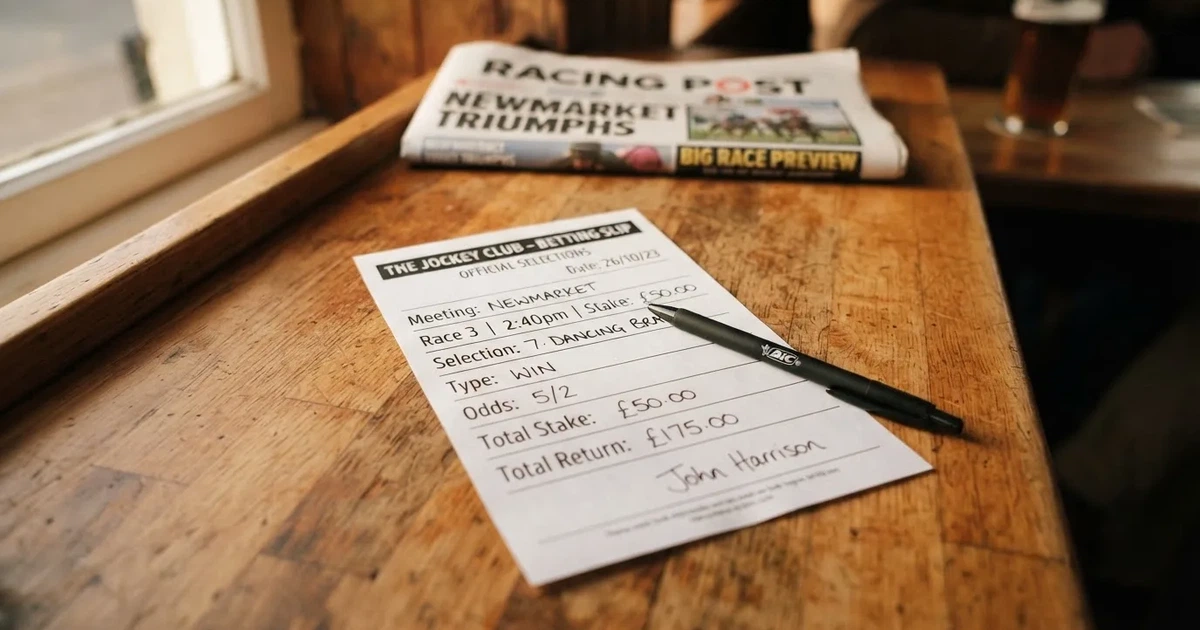
The data is current as of 27 October 2026 and was checked against the Gambling Commission’s public register. Decimal odds are used throughout; a conversion note sits beside the worked example later in the page.
The settlement rule that pays the bigger of two prices
Best odds guaranteed is a horse racing offer, and only a horse racing offer at most of the names that run it. The mechanism is short. A punter takes a fixed price on a runner before the race begins. By the time the stalls open, the starting price — the SP — has been calculated. If the SP is higher than the price the punter took, the winning bet is settled at the SP. If the SP is lower, the bet settles at the fixed price the punter locked in. The bookmaker gives up the upside on its own book when it loses, and saves money on its own book when it wins, which is why the offer exists in the form it does: the cost is real but bounded, and the marketing value is asymmetric.

The SP itself is worth pausing on, because the punter’s mental picture of “the price at the off” is not what the rule actually uses. For British horse racing the SP is the median of a sample of on-course bookmakers’ prices — the shortest price in the longer-priced half of the sample — so at least half of those bookmakers were offering that price or longer at the off. It is a constructed reference price rather than the longest board price, and that construction matters in two ways: it dampens the chance of a wildly long SP from a single ambitious bookmaker moving the line, and it gives the BOG offer a stable target the bookmaker can price against.
Once the SP is in, the offer is mechanical. A £10 each-way bet at a taken price of 5/1, with the SP landing at 6/1, is paid at 6/1 on the win portion and at the place terms the operator publishes for that race. The punter did not get a free upgrade to a fantasy long price — they got the SP, which is itself a market figure with its own bias.
Where the rule meets a Rule 4
Rule 4 deductions are a separate bookmaker rule: when a horse is withdrawn from a race after fixed prices have been taken, the bookmaker takes a small percentage off the returns on the runners that did stand, to compensate the lost value of the removed horse in the market. Sky Bet’s published terms illustrate how the two rules interact. If a price taken receives a Rule 4 deduction, the deduction still applies unless the horse returns at a bigger SP, in which case the bet is paid at SP with no deduction. The punter does not double-recover — the offer does not refund a Rule 4 deduction on top of an SP upgrade — but the bookmaker does not get to take the deduction on a horse that would have paid more anyway. That is the fair version of how the two rules sit together, and it is the version a punter should look for in the terms before laying a BOG bet through a non-runner.

The cap nobody prints on the homepage
A best odds guaranteed uplift looks free from the punter’s side, because the punter does not write the cheque when SP lands above the taken price. The bookmaker does, and that is the reason the offer carries a cap. Sky Bet caps the best odds guaranteed uplift at £50,000 per bet or per race for horse racing. A punter with a £10 bet and a 50/1 shot that drifts to 200/1 SP sees a return of £2,010 either way, capped or not. A high-stakes punter with a four-figure bet on a short-priced favourite who drifts from evens to 6/4 SP sees a return of £2,500, and a cap at £50,000 of additional payout never binds. The cap is built for the long-priced drift case — the bet where a small stake can produce a six-figure differential against the SP — and that is also the case where a bookmaker’s willingness to pay is least tested. A punter with a serious ante-post position on a 25/1 shot should know the cap exists and should know which operators run one, because the answer varies across the licensed set.
The price of an offer, read through the margin
BOG is paid in the same currency as the rest of the book: a margin. The margin is the slice of every pound bet on a market the bookmaker keeps, on average, across all outcomes. It is built into the prices the punter sees, and the only honest way to read a BOG offer is to ask what the market’s margin is alongside what the BOG uplift could be worth. A market with a margin of 5% gives the punter 95p of expected return per pound staked, in the long run, before the BOG uplift is even considered. A market with a margin of 12% gives 88p. The BOG offer sits on top of either figure and never changes it.
The worked example the page runs is the simplest version of the calculation, on a two-way market priced at 1.90 / 1.90 in decimal terms — that is 9/10 in fractional form, an even-money-with-a-commission line that bookmakers actually publish. The reciprocal sum is 1 ÷ 1.90 + 1 ÷ 1.90, which works out to roughly 1.0526. One divided by that sum is the payout share, around 95%, and one minus that is the margin, around 5.3%. The 1.90 / 1.90 line is therefore a fair approximation of a 5% margin market. A bookmaker with a 1.80 / 1.80 line on the same match — a price that exists on Premier League fixtures around the dead rubber period — runs a payout share closer to 90% and a margin of around 10%, twice the cost to the punter before the bet is even placed. The margin on a market is the silent partner in every BOG story, and the BOG uplift cannot outrun it.
That arithmetic is also why a punter who shops on price is shopping on margin, whether they realise it or not. Two bookmakers offering the same fixture at 2.10 and 1.95 are not offering the same fixture — the 2.10 line is the more generous market, and the 5% margin in it is the difference between a BOG uplift feeling like a bonus and feeling like a refund for a worse line elsewhere.
The bookmaker’s margin, illustrated
A worked example makes the margin visible. Take a two-way market at decimal odds of 1.90 and 1.90 (fractional 9/10). The reciprocal of 1.90 is about 0.5263, and the sum of reciprocals across both outcomes is 1.0526. The payout share is 1 divided by that sum, which is 0.95 — 95%. The margin is the difference between 1 and the payout share, which is 0.05, or 5%. The 5% is the book’s expected take from every pound bet on that market, on average, across both outcomes.
Now change one side. At 1.80 and 1.90, the reciprocals are 0.5556 and 0.5263, summing to 1.0819. The payout share is 0.924, or 92.4%, and the margin is 7.6%. The shape of the book changes with each price, and so does the punter’s expected return before any BOG uplift is considered. Where the figures are quoted as a single number — a margin of 5%, a payout share of 95% — they are an average over the whole market, not a guarantee of any single bet. A 5% margin means the bookmaker keeps 5p of every pound bet on the market, on average, across many bets. A 2% margin means 2p. The BOG offer sits on top of the margin; it does not move it.
The same arithmetic is how a punter checks a quoted line. A bookmaker quoting a 1.50 / 2.75 line on a two-way market is offering a payout share of 1 ÷ (0.6667 + 0.3636), which is 0.970, and a margin of around 3%. A bookmaker quoting 1.40 / 3.00 on the same market is offering 0.913 and a margin of 8.7%. The headline price on the favourite is the same shape on both books, and the cost to the punter is not.
The licensed set, and what each one says about BOG
Ten bookmakers hold a Gambling Commission remote licence and offer sports betting to customers in Great Britain. The Commission’s public register is the whole test of who holds a licence, and every name below sits on it. The notes on BOG reflect what each operator’s own terms state on the subject, and the place in the list is the place on the register, not a ranking of which is best. The page’s angle is cost, so the table is built around the licence and the BOG-related term that matters most to a punter reading the small print.
| Brand | Gambling Commission remote licence | What the operator’s own terms state on BOG |
|---|---|---|
| Midnite | 101839, held by Midnite Limited | No BOG terms on the operator’s UK pages reviewed; sports welcome offer is a £5+ qualifying bet at EVS or greater for £25 in free bets and 50 free spins, valid 7 days. |
| Coral | 54743, held by LC International Limited | BOG on UK and Irish horse racing, with the standard SP-vs-taken-price settlement; welcome offer is £20 qualifying bet at minimum odds 2.0 for £40 in free bets, issued and expiring within 7 days. |
| Sky Bet | 67370, held by SBG Sports Limited | BOG on UK and Irish racing; if a Rule 4 deduction applies to a taken price, the deduction stands unless the horse returns at a bigger SP, when the bet pays at SP with no deduction. BOG uplift capped at £50,000 per bet or per race. |
| Smarkets | 39173, held by Smarkets (Malta) Limited | Exchange operator running a 2% standard commission on eligible exchange bets; no BOG offer because the exchange model is back-and-lay against other users rather than a fixed-price book. |
| Betfair | 39439, held by PPB Counterparty Services Limited | Sportsbook and exchange under one licence; the sportsbook inherits the BOG convention on UK and Irish racing, the exchange does not. 90 Minute Payout and Bet Builder are the in-house features alongside the racing book. |
| BetVictor | 39576, held by BV Gaming Limited | BOG on UK and Irish horse racing; BetFinder and Smart Stats as the racing-side research tools on top of the live race stream. |
| Matchbook | 39504, held by Triplebet Limited | Exchange with Bet Builder, multiples, in-play and live streaming of horse racing and greyhounds; no BOG offer as such because the model is peer-to-peer. |
| Fitzdares | 400, held by Fitzdares Limited | Racing-led sportsbook with antepost, accumulators, Lucky 15s and specials; the on-course premium positioning sits alongside the standard BOG convention on UK and Irish racing. |
| VBet | 44662, held by SCGO Limited | Sportsbook with Bet Builder, pre-match and in-play markets, live streaming and a results calendar; BOG convention applied to the racing book where the operator runs one. |
| BoyleSports | 39469, held by Boylesports Enterprise | Sportsbook with Acca Insurance on opt-in, £5 minimum stake at minimum odds 1/2, paying a maximum refund of £20 as a free bet that expires in 7 days. BOG convention on UK and Irish racing sits alongside. |
Every name in the table holds a remote general betting standard (real events) licence, or the equivalent betting intermediary licence for the two exchanges, on the Commission’s public register. A punter can verify any of the licence numbers above by searching the register by business name, trading name, or account number, and that search is the test of whether a brand is licensed in Great Britain. The brands using .com rather than .co.uk are not licensed by the domain, and the licence numbers above are not licensed by the table. A punter who is not on the register’s search results is not licensed in Great Britain, whatever the operator’s marketing says.
What the licence actually buys a punter
A Gambling Commission remote licence is a permission to provide remote betting facilities to customers in Great Britain, and a number of obligations sit on top of it. Identity verification happens before a customer can deposit or gamble, and a free bet is included in that — a free bet or a bonus is not an exception to the verification rule, and the punter will go through a name, address and date of birth check on the way to claiming one. The minimum age is 18, and the operator’s compliance with that is not optional. Every GB-licensed online operator is a member of GAMSTOP, the national multi-operator self-exclusion scheme, and the periods run from six months up to five years with auto-renewal; after the minimum period the exclusion stays in place for a further seven years unless the customer asks GAMSTOP to remove it.
There is no statutory list of what may be bet on in Great Britain. An operator holds a licence for a category — remote general betting standard (real events) is the main sportsbook category, virtual events a separate one, pool betting a third, betting intermediary a fourth — and offers markets under its own rules and the Licence Conditions and Codes of Practice. In-play betting is on the menu at GB bookmakers and the controls are the operator’s licence conditions and customer-protection duties; it is not legally unrestricted, and the punter should read each operator’s in-play terms for what is and is not offered. Esports are treated like any other event. Politics, TV and novelty markets exist at GB bookmakers; no statutory prohibition was found, and the operator’s house rules govern them.
The Commission’s player-protection rules are the second half of the licence. A financial vulnerability check has applied to licensed remote betting since 30 August 2024: when a customer’s deposits minus withdrawals exceed £150 in a rolling 30 days, the operator runs a public-record check for things like a county court judgment or a bankruptcy. It is not an income check and it is not a credit reference check, and the £150 trigger is the line at which the check switches on. Financial risk assessments — the affordability checks the press has written about — are announced in a staged plan from 7 July 2026, with no start date. Deposit limits are an obligation on the operator to offer a fixed-time-frame gross deposit limit to every customer; the first changes applied from 31 October 2025 and a second phase was postponed to 30 September 2026, and whether that second phase is live is not established. There is no state-set deposit or loss ceiling; the limit is the customer’s choice, and a bookmaker cannot impose a higher one for a bettor who asks for less.
Advertising is not licensed by the Commission. The CAP Code covers non-broadcast marketing and the BCAP Code covers broadcast, both enforced by the ASA. The codes’ section 16 requires marketing to be socially responsible, not of strong appeal to under-18s, and not to feature anyone who is or seems to be under 25 gambling in a significant role, with an exception for marketing placed where a bet can be made directly. Promotion rules in force since 19 January 2026 cap wagering requirements on bonuses at 10x, so a £10 bonus that previously needed £500 of bets is now capped at £100, and mixed-product promotions — an offer that requires gambling on two or more product types such as betting and casino — are banned. Whether the cap applies to free bets with no wagering condition, and any cap on the money value of a bonus, are not established. A promo code is not printed on this page; the offer is described in shape, not in code.
Tax is the operator’s problem, not the punter’s. General Betting Duty is a charge on the operator’s gross profits, currently 15%, with a new remote betting rate of 25% applying from 1 April 2027 within it for non-UK-horse-racing remote bets; pool betting, in-person betting and bets on UK horse racing stay at 15%. Until 1 April 2027 the remote rate stays at 15%. The punter pays no tax on betting winnings in Great Britain, and a professional gambler should ask HMRC or an adviser rather than this page.
A GB licence is compulsory at the point of consumption. A Curaçao, Maltese or Gibraltar licence is not a substitute where the customer is in Great Britain, and providing gambling facilities in GB without the licence the Act requires is an offence under section 33 of the Gambling Act 2005, aimed at the operator and punishable on summary conviction by up to 51 weeks’ imprisonment, a fine up to level 5, or both, with six months in Scotland. The Commission’s enforcement is disruption rather than blocking: cease-and-desist notices, search-engine referrals, registrar and payment-provider work, and court-order DNS blocking powers that have been given or are about to be given. The honest framing for a punter is that an unlicensed site offers no GAMSTOP coverage, no Commission complaints route, no approved dispute-resolution body, no British consumer redress if funds are withheld, no 10x bonus cap, no £150 vulnerability check, and no funded player-protection regime — and that licensed is not automatically “the safe choice” either, because licensed is also identity verification before the first bet, a credit-card ban on gambling, and a margin in every price.
Responsible gambling, in the terms a punter can act on
A licensed bookmaker is required to offer a self-exclusion route, and GAMSTOP is the route that covers every GB-licensed online operator at once. A punter who has signed up to GAMSTOP cannot open an account, deposit, or bet at any of the ten names in the table above during the chosen exclusion period, which runs from six months up to five years with auto-renewal. After the minimum period, the exclusion stays in place for a further seven years unless the punter asks GAMSTOP to remove it. The scheme covers online sites and apps; betting shops use a separate service, and the punter who wants offline cover needs to ask for that separately.
The financial vulnerability check is a different lever. Once a customer’s deposits minus withdrawals have exceeded £150 in a rolling 30-day window, the operator runs a public-record check. It is not an income check and it is not a credit reference check; it looks for things like a county court judgment or a bankruptcy in the public record. The punter sees the check and the operator sees the result, and the operator uses that result to set the next interaction with the customer. The check is automatic at the threshold and is not a discretionary offer the punter can refuse without it affecting the account. The deposit limit that an operator must offer is on top of the check, and the punter can set it lower than the check’s threshold without the operator pushing back.
The help lines are not the operator’s and the punter should not wait for the operator to suggest them. GamCare runs the National Gambling Helpline, GambleAware funds treatment and education, the NHS runs gambling clinics, and Gamblers Anonymous runs peer support. The first call is the helpline, and the second is whichever of the others is nearest to where the punter lives. A punter who feels the urge to chase a loss has crossed the line from betting into something else, and the offer on the page will not pull them back.
Bonuses and free bets, and the cost that sits underneath
The offer on the front of a bookmaker’s site is rarely the offer the punter ends up holding. A welcome offer is structured around a qualifying bet, a free-bet bundle and a deadline; a price boost is structured around a stake cap and a maximum payout; an acca insurance is structured around a minimum number of legs and a refund ceiling. Each one has a cost, and each cost is paid in margin the punter would not have paid had they not claimed the offer.
A £30 in free bets welcome offer at Sky Bet — three £10 free bet tokens after a deposit of at least £5 and a first single or each-way bet of at least 5p at odds of 1/1 or greater — looks like £30 of value. It is, in the strict sense, £30 of stake the punter will not see back if any of the three free bets wins, because the stake on a free bet is not returned with the win. A £10 free bet at 5/1 that wins pays £50, not £60. The £10 stake was the operator’s money, and the operator keeps it. Over three free bets at average odds of 5/1 and a 95% payout share, the offer is worth something in the order of £30 × (5/1) ÷ (5/1 + 1) × 0.95, which is around £19 of expected return before the qualifying-bet cost is even counted. The qualifying bet is the cost: a 5p bet at 1/1 with a 5% margin is a 4.75p expected loss, and the rest of the qualifying bet’s life is the punter’s, not the offer’s.
Coral’s £40 in free bets for a £20 qualifying bet at minimum odds 2.0 carries a similar shape, with a 7-day window on both the issue and the expiry of the free bets. Midnite’s £25 in free bets and 50 free spins for a £5+ qualifying bet at EVS or greater carries a 7-day validity and a casino product on the back of a sportsbook bet, with the casino product’s house edge in the free spins sitting separately from the sportsbook’s margin. Each offer is a different shape, and each shape carries a different cost in margin across the qualifying bet and the free bets it unlocks. A punter who reads only the headline value of the offer will overstate what it is worth; a punter who reads the qualifying-bet terms and the free-bet terms together will know what the offer costs and what it returns.
The promotional cap on wagering requirements is a 10x multiple, in force since 19 January 2026. A £10 bonus at 50x — the kind of multiple a punter would have met a few years ago — needed £500 of qualifying bets, and that figure is now illegal. The cap is the operator’s hard ceiling on the rollover, and any bonus whose terms include a higher multiple is in breach of the cap. The cap does not apply to free bets with no wagering condition, and the money-value cap on a bonus is not established, so a punter reading a large headline bonus should also read the rollover and the cap.
A matched-betting punter — the kind who uses BOG alongside a betting exchange to lock a small profit — sits at the intersection of BOG, the exchange’s back-and-lay model, and the welcome offers above. The shape of the trade is straightforward: a back bet at the bookmaker with a free bet or a BOG uplift on the win, a lay bet at the exchange to cover the lose, and a small margin of profit either way. The cost is the exchange’s commission (Smarkets charges 2% on eligible exchange bets) and the operator’s stake on the qualifying bet. The matched-betting punter is the one for whom the cap on a BOG uplift is irrelevant, because the trade sizes are small and the SP-vs-taken-price spread is the profit. The non-matched-betting punter is the one for whom the cap binds, and that is the punter for whom a £50,000 ceiling on Sky Bet is the difference between a working strategy and a constrained one.
What the rest of this page argues
The ten bookmakers above are the licensed set, and the table is the licence evidence. The angle this page takes is cost, because that is what the offer really is once the marketing copy is set aside. A best odds guaranteed uplift is paid in margin, the margin is paid in prices, the prices are paid by the punter, and the punter’s first move is to read the small print. The small print is the cap, the Rule 4 interaction, the welcome offer’s qualifying bet, and the licence behind the name.
The rest of the page closes the FAQ.
Frequently asked questions
Which UK bookmakers offer best odds guaranteed?
Several licensed operators offer BOG on UK and Irish horse racing, including Sky Bet, Coral, and BetVictor. Betfair Sportsbook also features it within its racing section. Each operator applies its own specific terms and conditions, so you should always check the published BOG rules on their respective websites before placing your bet.
How can I check a bookmaker holds a Gambling Commission licence?
You can use the Gambling Commission’s public register to verify any operator. Search by the business name, trading name, or account number. If a brand does not appear in the search results, it is not licensed in Great Britain, regardless of what its own website or promotional marketing might claim.
How is the return on a bet calculated?
The return is simply the stake multiplied by the decimal odds. For example, a £10 bet at decimal odds of 5.00 returns £50 in total. The net profit is the return minus your original stake. For a combination bet, the odds of each leg are multiplied together: a double at decimal odds of 3.00 and 4.00 gives a combined price of 12.00, so a £5 stake returns £60. If the bet settles at a different price due to BOG, the new price is used.
What does the bookmaker’s margin represent?
The margin is the percentage of every pound staked that the bookmaker keeps as its expected profit, across all outcomes in a market. A lower margin generally means more favourable odds for the punter. It is implicitly built into the prices you see, reflecting the cost of your bet in advance.
Does the best odds guaranteed offer apply to every bet?
No, BOG is typically limited to horse racing markets, specifically UK and Irish events. It does not usually cover other sports, greyhounds, or football. Always read the specific terms of the offer, as rules regarding Rule 4 deductions and payout caps can vary significantly between different operators and their racing books.
Free bets & offers – Cricket betting
Content created by the «Cricket betting» team
