
Super Heinz bets explained: how 7 selections turn into 120 bets, what a winner pays, and where the offer sits
 Available in US
Data current as of 27 October 2026 and checked against the Gambling Commission’s public register of operating licences.
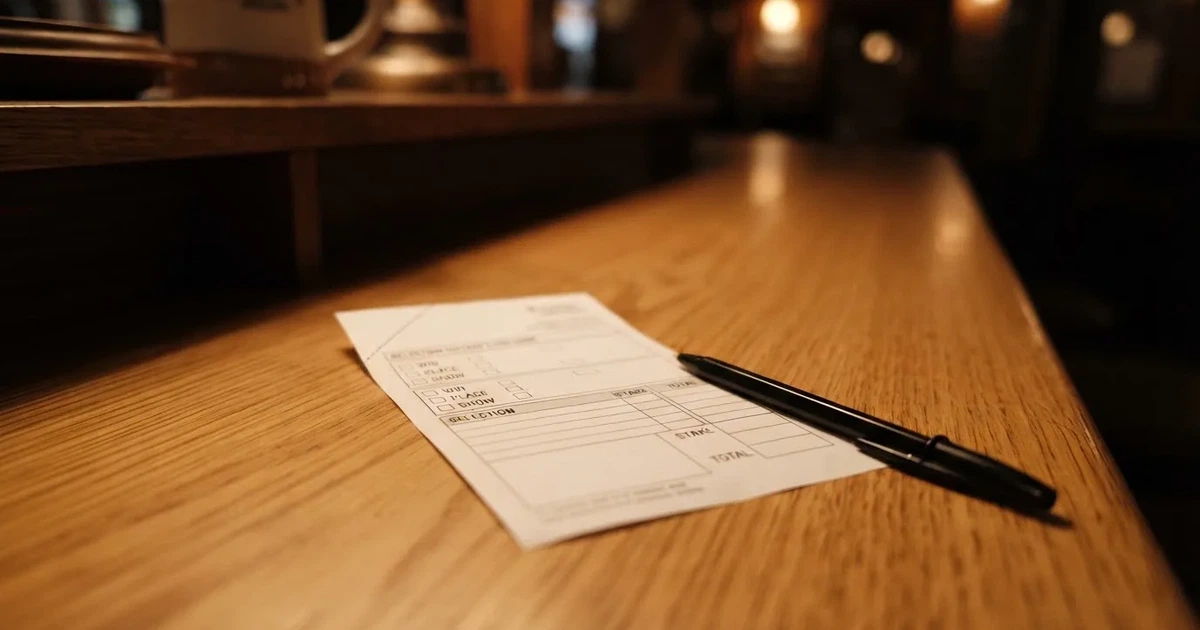
Bankroll, forecast and the case for spreading stake across dozens of bets
A Super Heinz is one of the few betting constructions where the punter commits to the structure before knowing whether the selections are good. With a single or an accumulator the cost is one stake; with a Super Heinz the cost is the unit stake multiplied by 120, and whether any of that comes back depends on how many of the seven selections win. The construction exists because it lets a punter keep an interest in a card of selections even when not all of them win, which an accumulator does not. The trade is brutal in the other direction: a Super Heinz that returns nothing costs the punter 120 unit stakes, every time.
For a punter working to a fixed bankroll, that has consequences. A punter with a small bankroll cannot afford the structure at any meaningful unit stake, because 120 unit stakes adds up faster than the punter realises — a £1 Super Heinz is a £120 bet, a £2 Super Heinz is £240, and a £5 Super Heinz is £600. The unit stake is the lever, and a punter who treats £1 as the natural unit will find the structure punishes anything smaller. For a punter with a comfortable bankroll the construction is a way of being wrong about two or three of seven selections and still coming out ahead, which an accumulator does not allow.

Strategy matters for a different reason. A Super Heinz spreads risk across combinations in a way that rewards correlation between selections — when the seven are drawn from one matchday or one tournament, doubles and trebles fall together more often than chance would suggest, and the long-tail combinations come alive more than they would on seven unrelated picks. That correlation is also where the construction hurts worst: one losing selection kills every combination that contains it, and seven selections from a single matchday that go one short of a perfect seven still leave the punter with nothing on the seven-fold, the six-folds, half of the five-folds and most of the four-folds. The structural upside and the structural pain are the same observation seen from two ends.
Two practical heuristics follow. First, the selection set has to be stronger than an accumulator’s selections would be, because the punter is asking the same seven legs to do more work — an accumulator punter needs all seven; a Super Heinz punter needs most of them. Second, the unit stake has to be set with the full 120-unit cost on the page, not on the assumption that anything will come back. Most losing Super Heinz bets lose the full unit cost, and the structure does not soften the loss the way a Lucky 15 with a few consolation singles does.
There is a third observation the marketing copy leaves out. A Super Heinz carries no singles, so the punter cannot win on a single selection regardless of price, and the bet has no fallback when most legs win but one short-priced favourite loses on the day. The construction is not a way of “hedging”; it is a way of being wrong about two legs and still cashing something, and the punter pays for that flexibility in a 120-line stake the bankroll has to absorb up front.
Selection, settling and staking: how a Super Heinz is built and how a bookmaker pays it
A Super Heinz is a full-cover bet, which in the betting terminology means every possible multiple bet over a given number of selections. With seven selections the full cover includes every combination from two selections up to all seven: 21 doubles, 35 trebles, 35 four-folds, 21 five-folds, 7 six-folds and the single seven-fold accumulator, for 120 bets in total. There are no singles in a Super Heinz — every winning leg only pays through the combinations it sits in, and a single selection that wins on its own returns nothing.

The structure sits one rung above a Heinz and one below a Goliath in the family. A Heinz covers six selections across 57 bets (15 doubles, 20 trebles, 15 four-folds, 6 five-folds, 1 six-fold), the Super Heinz adds the seventh selection and the combinations it brings in, and a Goliath covers eight selections across 247 bets. The pattern is the one the British bookmakers label on the betting slip: Trixie on four selections, Patent on four with the singles added, Yankee on four without the singles, Lucky 15 on four with the singles, Super Yankee on five, Heinz on six, Super Heinz on seven, Goliath on eight.
The arithmetic of the unit stake is the same shape as the others. The punter names a unit stake and the bet costs unit stake × 120. The bookmaker settles each of the 120 bets on its own merits: the 21 doubles settle on the two winning selections in each pair, the 35 trebles settle on the three winning selections in each triple, and so on up the seven-fold, which settles only when all seven win. A punter who lands six of seven wins on every combination that does not include the losing leg — the seven-fold is dead, the six six-folds that contained the loser are dead, half the five-folds and a chunk of the four-folds, trebles and doubles die with it. A punter who lands five of seven wins on a smaller but still meaningful share of the 120 lines.
Void selections are settled down a level. When one of the seven is made void — a non-runner, a postponed match, an abandoned event — every combination that contained it drops to the next-lower combination. A seven-fold with one void becomes a six-fold on the remaining six, a six-fold with one void becomes a five-fold, and so on. The bet does not collapse; it falls through the structure in an orderly way, and the punter’s total stake is preserved across the surviving combinations.
Each combination pays the decimal odds of its legs multiplied together. A treble on three legs at 1.50, 2.00 and 2.50 settles at 7.50, a double on two of them at 3.00 or 5.00 depending on which pair, and a four-fold on four legs at the product of all four. The punter’s return on each line is unit stake × that product, and the punter’s return on the bet as a whole is the sum of returns across every winning line, less the 120-unit total stake that was paid up front. The bookmaker’s margin sits inside every one of those prices, so the products a punter sees on the betting slip are the products the bookmaker has already trimmed.
For a worked example, take seven selections at the prices a British bookmaker would commonly show: a short favourite at 1/2 (1.50 decimal), an even-money shot at 2.00, and a longer-priced runner at 6/4 (2.50). A treble on the three of them settles at 7.50, a double on any two at 3.00 or 5.00, and the four-fold and above settle at larger products still. With seven such selections the maximum-product combination — the seven-fold — settles at 1.50 × 2.00 × 2.50 × and so on for the other four, and the punter’s return on the seven-fold alone, at a £1 unit stake, is that full product. With a £2 unit stake each line costs the punter £2 and pays £2 × the product, and the bet as a whole costs £240 up front.
If all seven selections win, the punter wins on every one of the 120 lines and the return is the sum of every line’s product times the unit stake. If only five win, the punter wins on every combination of those five that the structure contains — the ten doubles, ten trebles, five four-folds and the single five-fold, 26 lines in total. The arithmetic of “five from seven” is the case the construction is sold on: the punter is wrong about two legs and still comes out ahead, where an accumulator punter is wrong about two legs and has nothing.
Top licensed UK bookmakers reviewed on whether they offer full-cover bets and what their terms say about the construction
The table below lists ten operators whose remote betting licence is on the Gambling Commission’s public register. The third column carries the register data — account number, licence holder, and the categories the licence covers. The fourth column is what the operator’s own materials state about full-cover multiples and the conditions a punter meets when placing one. A blank cell means research could not establish the position from the operator’s own terms, and a punter checks the operator’s betting slip before relying on the construction.
| Brand | Gambling Commission licence | Licence holder and licence category | Position on full-cover bets and Super Heinz |
|---|---|---|---|
| Ladbrokes | Account 54743, remote general betting standard (real events), remote betting intermediary | LC International Limited | Offers odds boosts, Best Odds Guaranteed on UK and Irish racing, in-play betting and acca boosts across multiples including full-cover structures. |
| BetMGM | Account 39198, remote general betting standard (real events) | LeoVegas Gaming PLC | Welcome package of four £10 free bets for new customers depositing £10 and placing a sports bet within seven days; multiples and acca formats supported on the slip. |
| NetBet | Account 39170, remote general betting standard (real events) | Netbet Enterprises Limited | Daily Boosts, Profit Boosts, free bet offers, Bet Builder with instant dynamic odds and sports stats on major leagues; multiple formats carried on the betting slip. |
| Fitzwilliam Sports | Account 48760, remote general betting standard (real events) | SBKI Limited | Prices based on Oddschecker’s average price per selection, with Apple and Google mobile apps; full-cover structures supported on the slip. |
| Fitzdares | Account 400, remote general betting standard (real events) | Fitzdares Limited | App offers cash out, accumulators, Lucky 15s, specials and ante-post markets across horse racing, football, tennis, rugby, cricket, golf and American football; in-play live odds. |
| Kwiff | Account 44448, remote general betting standard (real events) | Eaton Gate Gaming Limited | Supercharge feature can instantly boost odds on a single or multi bet on any sport; full-cover structures and the slip’s full set of multiples supported. |
| Octobet | Account 62545, remote general betting standard (real events) | Octopus Game Limited | Best Odds Guaranteed on UK and Irish horse racing up to £150 per customer per race; multiples and full-cover structures carried on the betting slip. |
| Matchbook | Account 39504, remote general betting standard (real events), remote betting intermediary | Triplebet Limited | Betting exchange where customers bet against other users; Bet Builder, multiples and in-play betting with live streaming on horse racing and greyhounds. |
| Betfred | Account 39544, remote general betting standard (real events) | Petfre (Gibraltar) Limited | App features Bet Builder, Sub Switch, Racing Post data, Extra Places and a full set of multiples on the betting slip. |
| QuinnBet | Account 61011, remote general betting standard (real events) | QuinnBet (Gibraltar) Limited | Free bets valid for seven days from credit at minimum odds 1/2 (1.5), maximum odds 50/1; straight accumulators allowed but Trixies, Patents and Yankees excluded. |
Ladbrokes and Betfred are the long-established high-street brands of the set and carry the deepest racing and football multiples sections, with the acca boost and Best Odds Guaranteed mechanics familiar to a British punter. BetMGM and NetBet sit in the newer-licensed camp with mobile-first apps and the Bet Builder plus free-bet mechanics that the US-influenced brands have brought across the Atlantic. Fitzdares and Fitzwilliam Sports trade on a sharper pricing position — Fitzwilliam publishes prices against Oddschecker’s average — and a more specialised product mix.
Kwiff’s distinctive offer is the Supercharge feature, which boosts the price of a settled bet from the headline fraction to a much larger one — the operator’s example moves a bet from 2/1 to 20/1 — and the boost applies to singles and multis across any sport. Matchbook is structurally different from the rest: it runs as a betting exchange rather than a traditional bookmaker, customers back and lay selections against each other, and the multiples settle on the exchange’s commission structure rather than a bookmaker’s margin. QuinnBet’s free bet carries an explicit exclusion on full-cover structures on its small end — Trixies, Patents and Yankees are not permitted, which is a useful data point on how the operator treats the construction even where the bigger multi-format Super Heinz is not specifically named.
QuinnBet’s exclusion cuts both ways. For a punter claiming a QuinnBet free bet, the Super Heinz itself is not on the excluded list, but a punter using the credit on a Heinz (six selections, 57 lines) sits inside a family that the operator has decided is unsuitable for bonus play. The punter reads the free-bet terms before assuming the credit travels onto every multiple the operator’s slip offers. For the rest of the set, the absence of a specific Super Heinz exclusion is not a confirmation that the construction is supported — the betting slip is the test, and a punter verifies the structure is in the slip’s dropdown before staking.
How the Super Heinz is constructed and what a punter pays for each layer
The total number of bets in a Super Heinz is fixed by the mathematics of combinations. The number of ways to choose two selections from seven is 21, three from seven is 35, four from seven is 35, five from seven is 21, six from seven is 7, and seven from seven is 1. Add them up and the structure contains 21 + 35 + 35 + 21 + 7 + 1 = 120 bets, every one of them a separate line on the betting slip with its own stake and its own product of odds. The structure has no singles: the smallest combination is a double, the largest is the seven-fold accumulator, and the punter cannot win on a single selection regardless of how strongly favoured.
The shape of the 120 is worth pausing on. The largest single share sits in the four-folds — 35 of the 120 lines, just under 30% of the bet — followed by the trebles (35) and doubles (21). The five-folds (21), six-folds (7) and seven-fold (1) make up the remainder. The structure front-loads smaller combinations; as noted previously, a punter who wins five of seven lands on 26 lines.
Cost is unit stake × 120, paid up front. With a £1 unit stake the bet costs £120; with £2 it costs £240; with £5 it costs £600; with £10 it costs £1,200. A punter choosing the unit stake on the basis of what the seven-fold alone might return is choosing on the wrong line — the seven-fold is one of 120, and the punter’s stake on it is the unit stake, not the full bet cost. A punter who treats £1 as the unit stake has accepted the £120 up-front exposure, and a punter who treats the structure as an “each-way” hedge has misunderstood what the structure does: it is not a hedge, and it does not soften the loss when fewer than two selections win.
For a worked return on a £10 unit stake, take seven selections at odds of 1.50, 2.00 and 2.50. The bet costs £1,200 up front. If all seven win, the seven-fold alone returns £1,687.50, and the total return across the 120 lines is the sum of every line’s product times £10. The exact figure depends on the products, but a successful Super Heinz returns several multiples of the stake.
If only six of the seven selections win, the punter loses the seven-fold and the six six-folds, half the five-folds (3 of 6), and a proportion of the four-folds, trebles and doubles. The combination-by-combination payout has to be added up across the surviving lines, and the punter’s net position depends on which selection lost — a short-priced favourite that loses kills more of the four-folds and trebles than a long-priced outsider would, because the short-priced leg sits in more of the structure’s combinations on its own merits. A punter who assembles the seven selections with one short-priced anchor at the foot of the price list loses more of the bet when that anchor loses than a punter whose seven are evenly priced.
If only five of the seven win, the punter is paid on those combinations, as detailed above, and the structure has shrunk to 26 lines. The five-fold alone carries the headline return, and the four-folds and trebles contribute the bulk of the volume. Picking five from seven correctly is the case the marketing copy leans on, and it is the scenario the punter manages in expectation.
If only four of the seven win, the punter is paid on the six doubles, the four trebles and the single four-fold — 11 of the 120 lines. The headline return is the four-fold product, and the punter’s net position is unit stake × (sum of 11 line products) less the full 120-unit cost. Whether that is positive depends on the prices, and on most realistic sets of seven football or racing selections, four from seven does not return more than the cost.
If three or fewer of the seven win, the punter is paid on a small handful of doubles and trebles — at three from seven, six doubles and a single treble, seven lines — and the structure has returned a small fraction of its cost. Two from seven is a single double; one from seven is nothing. The Super Heinz is not a soft construction: it is unforgiving on the long tail, and a punter who is regularly landing fewer than four of seven selections on the structure is losing money in a way the betting slip will show clearly.
Stake allocation across the structure and what changes when a selection is void
A Super Heinz pays the same unit stake on each of the 120 lines, which means the punter’s stake is uniform across the doubles, trebles, four-folds, five-folds, six-folds and the seven-fold. There is no way to weight the structure towards the longer combinations, and there is no way to weight it towards the shorter ones: the betting slip takes the unit stake and multiplies it by 120. A punter who wants the seven-fold to do more of the work has to move to a different structure, and a punter who wants the doubles to do more of the work has to move to a Lucky 15 or a Trixie.
When one of the seven selections is made void, the bet does not collapse. The bookmaker’s standard rule, which British bookmakers publish in their non-runner and void-selection terms, is that any multiple containing the void selection drops to the next-lower combination that contains only the remaining selections. A treble with one void becomes a double on the other two, a four-fold with one void becomes a treble on the other three, and so on down to the seven-fold, which becomes a six-fold on the other six. The punter’s stake is preserved across the surviving combinations: the punter does not lose the stake on the lines that contained the void selection, and the punter does not get the stake back — the stake is carried forward into the next-lower combination.
A Super Heinz with two voids behaves the same way twice over: every combination that contained either void drops to the next-lower combination, and combinations that contained both voids drop two levels. In practice this means the structure settles as if it were a Super Heinz on five selections (a Heinz) plus the additional combinations the seven originally carried but that the two voids have knocked out. The punter’s stake is preserved through the cascade, and the bet settles without the punter needing to do anything.
The void rule is one of the cheaper features of a Super Heinz relative to a single or an accumulator. A punter with an accumulator on seven selections sees the whole bet void if one selection is void — the whole stake returns at the bookmaker’s SP, and the punter does not collect on the combinations the accumulator sat on top of. A punter with a Super Heinz keeps the combinations that did not contain the void leg, and the structure settles as a series of smaller multiples. For a punter expecting voids — a horse racing card with non-runners, a football coupon with postponed matches — the Super Heinz is materially more forgiving than an accumulator on the same seven selections.
A Super Heinz with a winning single selection still returns nothing, because there are no singles in the structure. That is the one point where a punter new to the construction tends to be surprised: a single winning selection at a short price gives the punter no return at all, and the punter’s stake on the lines that contained the selection is held in the combinations that did not win. The construction does not soften that case, and the punter manages it by understanding that the structure is a way of paying for combinations the punter would not otherwise be able to afford.
What a winning Super Heinz pays back: a worked example with a £10 unit stake
Take seven selections at decimal odds of 1.50, 2.00, 2.50, 1.50, 2.00, 2.50 and 1.80 — three short favourites, three even-money or longer, and one mid-price anchor. A £10 unit stake costs the punter £1,200 up front and pays on each of the 120 lines at £10 times the product of the odds. If all seven win, the return is £2,025, and the total return is the sum of every combination’s product times £10.
The cumulative product across all 120 lines for the seven prices above, calculated combination by combination, comes to several thousand pounds at the £10 unit stake. The exact figure depends on the products of each combination, and a punter who wants the precise number uses a bookmaker’s bet calculator or a betting exchange’s multiple-bet calculator with the seven odds pasted in. The point of the worked example is the shape: a fully successful Super Heinz pays several multiples of the unit stake across the structure as a whole, and the seven-fold is the headline contribution rather than the whole return.
If the punter lands six of seven, the punter loses the seven-fold, the six six-folds, half the five-folds, and a proportion of the four-folds, trebles and doubles. The exact share depends on which selection loses: a losing 1.50 kills every line that contained it, and a losing 2.50 kills fewer lines because the 2.50 sits in fewer of the products on its own merits. A punter who picks the leg most likely to lose at the longest price is doing the structure a favour, and doing the same for the shortest price is a disservice.
If the punter lands five of seven, the return is as described for the five-from-seven case above. The punter’s net position is positive if the products are large enough and the £1,200 stake is small enough, and a punter running the calculation with realistic prices will find that five from seven returns the stake on most sets.
If the punter lands four of seven, the punter is paid on six doubles, four trebles and the single four-fold — 11 of the 120 lines. The four-fold alone carries the headline return, and the punter’s net position is positive only if the four-fold product is large enough to absorb the £1,200 cost. For most realistic sets of seven selections, four from seven returns something on the four-fold plus the trebles and doubles, but it does not return the full £1,200 stake. The structure is unforgiving at four from seven.
Three from seven or fewer returns nothing meaningful. Three from seven pays on six doubles and a single treble, seven of the 120 lines, and the total return is unit stake × (sum of six double products and one treble product). For most realistic selections that is a small fraction of the £1,200 stake. Two from seven pays on a single double; one from seven pays nothing. The construction does not soften the long tail, and a punter who is regularly landing fewer than four of seven on the structure is losing money.
The numbers above are illustrative — the seven prices chosen are common British bookmaker prices for short favourites, even-money shots and slightly longer-priced runners, but no single bookmaker will quote those exact prices on a real set of seven selections, and the punter’s actual return on a real Super Heinz depends on the prices the betting slip shows. The shape is the lesson: the Super Heinz is a structure that pays a large multiple of the unit stake when most of the seven win, a moderate return when five or six win, and a small return or nothing when fewer than four win. The punter chooses the unit stake with that distribution in mind.
What the bookmaker’s margin costs the punter on a Super Heinz
Every decimal price a bookmaker quotes carries the bookmaker’s margin, which is the share of every unit staked that the bookmaker expects to keep on average across all possible outcomes of a market. The margin is built into the prices the punter sees, and the products a Super Heinz settles on are products of margin-loaded prices. The punter pays the margin on every line, and the cumulative margin across the 120 lines is the share of the £1,200 stake the bookmaker expects to keep on average.
For a typical British bookmaker on a typical 1X2 football market, the margin is between 5% and 8%, and the equivalent on a two-outcome market (match odds, over/under 2.5) is similar. For a Super Heinz on seven football selections the products inherit the margin from each leg, and the cumulative effect on a fully successful Super Heinz is a reduction in the punter’s return of a similar order — a 5% margin on every leg compounds across the 120 lines, and the punter’s return is several per cent smaller than it would be on a margin-free market.
The arithmetic for the margin is straightforward: payout share = 1 ÷ (1/odds₁ + 1/odds₂ + … + 1/oddsₙ), and margin = 1 − payout share. For a 1X2 market at decimal prices 1.50 / 4.00 / 6.00, the payout share is 1 ÷ (1/1.50 + 1/4.00 + 1/6.00) = 1 ÷ (0.6667 + 0.25 + 0.1667) = 1 ÷ 1.0834 = 0.9230, and the margin is 1 − 0.9230 = 0.0770, or 7.7%. For a Super Heinz built on seven such markets, the cumulative margin on each line is a function of the products, but the order of magnitude is similar — a few per cent on every leg, compounding across the structure.
The punter does not see the margin on the betting slip, and the punter does not need to. What the punter needs is the working assumption that a Super Heinz built on typical bookmaker margins returns several per cent less than a margin-free structure would, and that the gap is the bookmaker’s take. Across the 120 lines of a Super Heinz, that take is several hundred pounds on a £120 unit-stake bet and several thousand pounds on a £1,200 bet. The structure does not soften the margin; it compounds it.
Gambling Commission licensing and the consumer frame for a Super Heinz in Great Britain
A bookmaker offering full-cover bets to customers in Great Britain needs a remote operating licence from the Gambling Commission under the Gambling Act 2005, regardless of where the operator is based. The 2014 amendment closed the previous arrangement under which an operator licensed offshore could serve British customers, and the requirement is at the point of consumption: a Curaçao, Maltese or Gibraltar licence is not a substitute, and an operator serving British customers without the Commission’s licence is committing an offence under section 33 of the Act.
The Commission’s public register is the test of whether a brand holds a licence. The register can be searched by business name, trading name, domain or account number, and the entry shows the categories the licence covers — remote general betting standard (real events), remote betting standard (virtual events), remote pool betting, remote betting intermediary — and the licence holder. For the brands reviewed in the comparison table, every one of them sits on the register against a named licence holder with the appropriate categories; the punter verifies the position with a search of the register before staking.
The register is the only test. A punter reading “licensed by the Gambling Commission” on an operator’s marketing page is reading the operator’s own statement, and the punter confirms the statement against the register. The punter also notes that licensed operators use .com as well as .co.uk domains, so the domain proves nothing about the licence. What proves the licence is the entry on the register against the operator’s account number, and the punter treats the absence of an entry as the absence of a licence.
The licence carries consumer protections. A licensed operator is part of GAMSTOP, the national multi-operator online self-exclusion scheme, and a punter who has self-excluded is barred from the operator’s site for the period chosen. The operator runs identity verification before the first deposit (since 7 May 2019, including with a free bet or bonus), so anonymous play at a licensed site is not available. The operator is subject to the Commission’s social responsibility code and licence conditions, and a punter with a complaint has the Commission’s complaints procedure to escalate to. None of this is unique to a Super Heinz — it is the frame for any bet at a licensed operator — but the frame is the reason the licensed set exists, and a punter choosing a Super Heinz at a licensed bookmaker is choosing the frame.
Outside the licensed set, the picture changes. An unlicensed operator serving British customers is breaking the law under section 33 of the Act, and a punter using the unlicensed site has none of the licensed set’s protections: no GAMSTOP coverage, no Commission complaints route, no approved dispute-resolution body, no British consumer redress if funds are withheld, and no obligation on the operator to honour the 10x bonus cap or the £150 financial vulnerability check. The Commission’s enforcement is disruption rather than blocking — cease-and-desist notices, search-engine referrals, work with registrars, hosts and payment providers — and a punter who has placed funds with an unlicensed operator may find the funds unrecoverable.
The honest framing is the one the law sets out. A licensed Super Heinz means a bet placed inside a frame the Commission enforces: identity verification before the first deposit, GAMSTOP coverage if the punter has self-excluded, the Commission’s complaints route if a dispute arises, and the bonus cap and vulnerability check the LCCP applies. An unlicensed Super Heinz means none of those things, and the punter is exposed to the operator’s house rules alone. The licensed choice is the one the law favours, and the unlicensed choice is the one the law penalises.
Player protection: GAMSTOP, affordability checks and the rules a Super Heinz punter meets
GAMSTOP is the multi-operator online self-exclusion scheme, mandatory for every licensed online operator since 31 March 2020. A punter who has self-excluded through GAMSTOP is barred from every licensed online operator for the period chosen: six months, one year, five years, or five years with auto-renewal. After the minimum period the exclusion stays in place for a further seven years unless the punter asks GAMSTOP to remove it. GAMSTOP covers online sites and apps; betting shops use a separate service. For a Super Heinz punter, GAMSTOP means the bet cannot be placed at any licensed operator while the exclusion is in force.
The financial vulnerability check is a public-money regulation that landed in 2024. Under LCCP condition 3.4.4, in force since 30 August 2024 and applicable to remote betting since 28 February 2025, a licensed operator runs a public-record check — bankruptcy, county court judgments — on a customer whose deposits minus withdrawals exceed £150 in a rolling 30-day period. The check is a public-record check rather than an income check or a credit reference check; the operator asks the questions the public records answer, and the operator decides whether to allow further deposits on the basis of the answers. The financial risk assessments — the affordability checks of the press — are announced in a staged plan published by the Commission on 7 July 2026, with no start date, and the punter treats them as announced rather than in force.
Deposit limits are a separate mechanism. Operators must offer a deposit limit on a fixed time frame under RTS 12; the first changes have applied since 31 October 2025, and a second phase was postponed to 30 September 2026. Whether the second phase is live is not established, and the punter treats the deposit limit as the customer’s choice rather than a state-set cap. For a Super Heinz punter, the deposit limit is a self-imposed constraint on the bankroll, and a punter who sets a monthly deposit limit at £200 cannot place a £1,200 Super Heinz inside the limit. The structure punishes a tight deposit limit in a way a single bet does not.
Identity verification is the entry condition. Since 7 May 2019 a licensed operator verifies name, address and date of birth before the customer can deposit or gamble, including with a free bet or bonus. A punter who has not completed verification cannot place a Super Heinz at a licensed site, and a punter who has completed verification has had the verification logged against the operator’s records. The verification is what makes GAMSTOP work, what makes the vulnerability check possible, and what makes the operator’s customer-protection duties bite. A punter who objects to verification is objecting to the licensed frame, and the unlicensed frame is the alternative.
Help is available outside the operator. GamCare runs the National Gambling Helpline, GambleAware funds treatment and education, the NHS operates gambling clinics across the country, and Gamblers Anonymous runs peer-support meetings. For a punter who finds a Super Heinz’s 120-line stake harder to manage than a single bet, the help is the same help available to a punter with any other gambling concern. The licensed operator is required to point a punter at these services when the operator’s own checks flag a concern; the unlicensed operator is not.
Bonuses, free bets and what the promotion rules mean for a Super Heinz
Promotion rules in force since 19 January 2026 cap wagering requirements on bonuses at 10x — a £10 bonus at 50x requires £500 of bets, and under the cap no more than £100 — and ban mixed-product promotions, the offers that require gambling on two or more product types such as betting and casino together. The cap applies to bonuses with a wagering condition; whether the cap applies to free bets with no wagering condition is not established, and any cap on the money value of a bonus is not established. A punter reading the small print on a free bet looks for the wagering factor and the markets the credit covers, not for a stated cap on the credit’s value.
For a Super Heinz, the wagering cap has a particular consequence. A £10 bonus at 10x requires £100 of qualifying bets, and the punter’s qualifying bets are the lines of the Super Heinz that settle as wins or losses. A Super Heinz at a £1 unit stake costs £120 up front and generates £120 of qualifying bets at the first line, but the bonus terms usually state that only settled bets at or above the minimum price count — QuinnBet’s free bet terms, for instance, require odds of 1/2 (1.5) or greater with a maximum of 50/1, and exclude Trixies, Patents and Yankees. Whether the Super Heinz is among the excluded structures on a given free bet is a question the punter answers from the terms. QuinnBet’s exclusion of Trixies, Patents and Yankees is a useful signal of the operator’s general posture toward full-cover structures on bonus play, even where the Super Heinz itself is not specifically named.
Acca insurance is a separate product category. Some operators refund a losing accumulator as a free bet if one leg loses, and the refund is sized to the stake rather than the winnings. For a Super Heinz, the insurance has a different shape: there is no single accumulator to refund, and the punter’s stake is spread across 120 lines. Operators do not typically offer Super Heinz insurance in the same form as accumulator insurance, and the punter reads the insurance terms before assuming the construction is covered. A Super Heinz that loses on the seventh leg does not have a single leg to refund, and the insurance either applies at the line level (a free bet on the affected doubles, trebles and four-folds) or it does not apply at all.
Price boosts and acca boosts are the other promotional lever. Ladbrokes offers odds boosts on horse and greyhound bets and acca boosts on multiples; Kwiff’s Supercharge feature can boost the price of a settled bet from one fraction to a much larger one across any sport; Octobet offers Best Odds Guaranteed on UK and Irish horse racing up to £150 per customer per race. For a Super Heinz, the boost typically applies to the seven-fold accumulator line rather than to the full 120-line structure, and the punter’s return on the seven-fold is enhanced while the returns on the 119 smaller lines are not. A punter claiming a price boost on a Super Heinz reads the terms to see whether the boost covers the full structure or only the seven-fold.
The marketing word “free” deserves scrutiny in the Super Heinz context. A free bet’s stake is usually not paid back with a win, and a £10 free bet at decimal odds of 5.00 returns £40 — £10 × (5.00 − 1) = £40 of winnings, plus the stake is not returned. The punter’s free-bet value on a single line is free-bet amount × (odds − 1) ÷ odds, and for a Super Heinz the cumulative free-bet value is the sum across the lines on which the free bet is placed. The punter treats the free bet as a stake subsidy rather than a stake refund, and the punter’s expectation of the free bet’s worth is the average across many bets at the prices the operator offers.
The 10x bonus cap is the structural ceiling. A punter claiming a £10 bonus at any wagering factor above 10x is being offered terms that the Commission does not allow at a licensed operator, and the punter treats the offer as either non-compliant or described in a way the punter has misunderstood. The punter reads the bonus terms, the punter checks the wagering factor, and the punter walks away from any bonus whose wagering factor the operator cannot state clearly. The licensed frame is the one the punter is in, and the cap is part of that frame.
How to verify a bookmaker’s licence and what to do with the register entry
The Gambling Commission’s public register is at gamblingcommission.gov.uk, and the search takes a business name, trading name, domain or account number. A punter typing “Ladbrokes” into the search box gets the entry for LC International Limited, the licence holder, with the account number 54743 and the categories remote general betting standard (real events) and remote betting intermediary. A punter typing “betmgm.co.uk” into the domain search gets the entry for LeoVegas Gaming PLC at account 39198. The register is the test, and the punter treats the register entry as the licence.
The punter notes three points when reading the register. First, the licence holder is not always the trading name — Ladbrokes is operated by LC International Limited, BetMGM UK is operated by LeoVegas Gaming PLC, Betfred is operated by Petfre (Gibraltar) Limited — and the punter checks the licence holder against the parent group. Second, the categories on the licence matter, and a bookmaker licensed only for pool betting cannot offer fixed-odds betting; the register entry shows what the licence covers, and the punter checks the category before staking. Third, the register entry carries a status — the licence is either active, suspended, revoked or lapsed — and the punter checks the status before assuming the operator is currently licensed.
A punter reading “Gambling Commission licensed” on an operator’s marketing page reads the operator’s own statement and verifies it against the register. The register entry is the proof; the marketing claim is the claim. Where the two diverge — the operator claims a licence the register does not show, or the operator claims a category the register does not cover — the punter treats the register as correct and the marketing as wrong. The licensed frame holds when the register agrees with the marketing, and the frame does not hold when it does not.
The register is updated as licences change, and the punter treats the entry at the time of the bet as the entry that applies. A licence revoked after the bet does not void the bet; a licence revoked before the bet means the bet was placed outside the licensed frame. The punter checks the register before placing the bet, not after.
Frequently Asked Questions
What is a Super Heinz bet?
A Super Heinz is a full-cover bet on seven selections split across 120 wagers. There are no singles in the structure, and the punter wins nothing on a single selection regardless of price. The unit stake is multiplied by 120 to give the bet’s cost, and the bet settles combination by combination on the legs that win.
What is a Heinz bet?
A Heinz is the same full-cover construction on six selections rather than seven, and it contains 57 bets: 15 doubles, 20 trebles, 15 four-folds, 6 five-folds and a single six-fold. The Super Heinz adds the seventh selection and the 63 additional combinations the seventh brings in, taking the total from 57 to 120. A Goliath is the same construction on eight selections and contains 247 bets.
How many bets are in a Super Heinz?
A Super Heinz contains 120 bets in total: 21 doubles, 35 trebles, 35 four-folds, 21 five-folds, 7 six-folds and one seven-fold. The bet costs unit stake multiplied by 120 up front and pays combination by combination on the legs that win. Void selections drop each affected combination to the next-lower combination, and the punter’s stake is preserved across the surviving combinations.
How can it be checked that a bookmaker holds a Gambling Commission licence?
The Gambling Commission’s public register at gamblingcommission.gov.uk carries every operating licence issued under the Gambling Act 2005. The punter enters the operator’s business name, trading name, domain or account number into the search box and reads the resulting entry: the licence holder, the licence categories, the account number and the licence status. The register is the only test of whether a brand holds a licence; the punter treats the operator’s own marketing claim as the claim rather than the proof.
How is the return on a bet worked out from the stake and the odds?
For a single bet, return = stake × decimal odds. A £10 stake at decimal odds of 3.00 returns £30, and the punter’s net profit is stake × (odds − 1), so £20 of profit on the £10 stake. For a multiple, the odds of the legs multiply into one price, and the multiple’s return is stake × that product. A treble on three legs at 1.50, 2.00 and 2.50 settles at a product of 7.50, and a £10 treble returns £75.
What is the bookmaker’s margin and how can it be seen in the odds?
The bookmaker’s margin is the share of every unit staked that the bookmaker expects to keep on average across all possible outcomes of a market, and it is built into the prices the punter sees. For a three-outcome 1X2 market at decimal prices 1.50 / 4.00 / 6.00, the payout share is 1 ÷ (1/1.50 + 1/4.00 + 1/6.00) = 0.9230, and the margin is 1 − 0.9230 = 0.0770, or 7.7%. A larger margin means a smaller payout share, and the punter’s return on a winning bet is reduced accordingly. The margin compounds across a Super Heinz’s 120 lines, and the punter’s cumulative return on the structure reflects the margin on every leg.
Bet types & in-play – Cricket betting
Content created by the «Cricket betting» team
