
Online futsal betting 2026: licensed UK sites, live markets and what a price really costs
 Available in US
Futsal is a small-sided indoor game with a clock that stops at dead balls, and that single rule changes how its markets are priced and read. A 20-minute period is not 45 minutes compressed: it is two short halves, each with its own foul count, its own discipline and its own goals-per-minute rate. A bettor who treats futsal as a faster version of football will pay for the confusion. This page is the cost of getting that right: what the market is, what the bookmaker keeps, what a live market actually offers, what the operator’s welcome page actually gives back, and which of the ten UK-licensed bookmakers on the Gambling Commission’s public register are worth opening an account with for futsal specifically.

Data current as of 27 October 2026, checked against the Gambling Commission’s public register of remote operating licences.
Live futsal and cash out: where the clock makes the market
A futsal match is two 20-minute periods with the clock stopping at dead-ball situations, with one one-minute timeout per team per period. That stop-and-go shape is why live futsal exists as a category at all. The bookmaker is not pricing momentum on a continuously running game; it is pricing a sequence of short bursts separated by dead balls, timeouts and the referee’s whistle. For the bettor this is the friendliest in-play format in football-adjacent betting, because the information that moves a price is delivered in clearly defined chunks: a goal, a sixth accumulated foul in the period, a red card, a timeout, a restart. None of those events is hidden by a 45-minute clock grinding on.
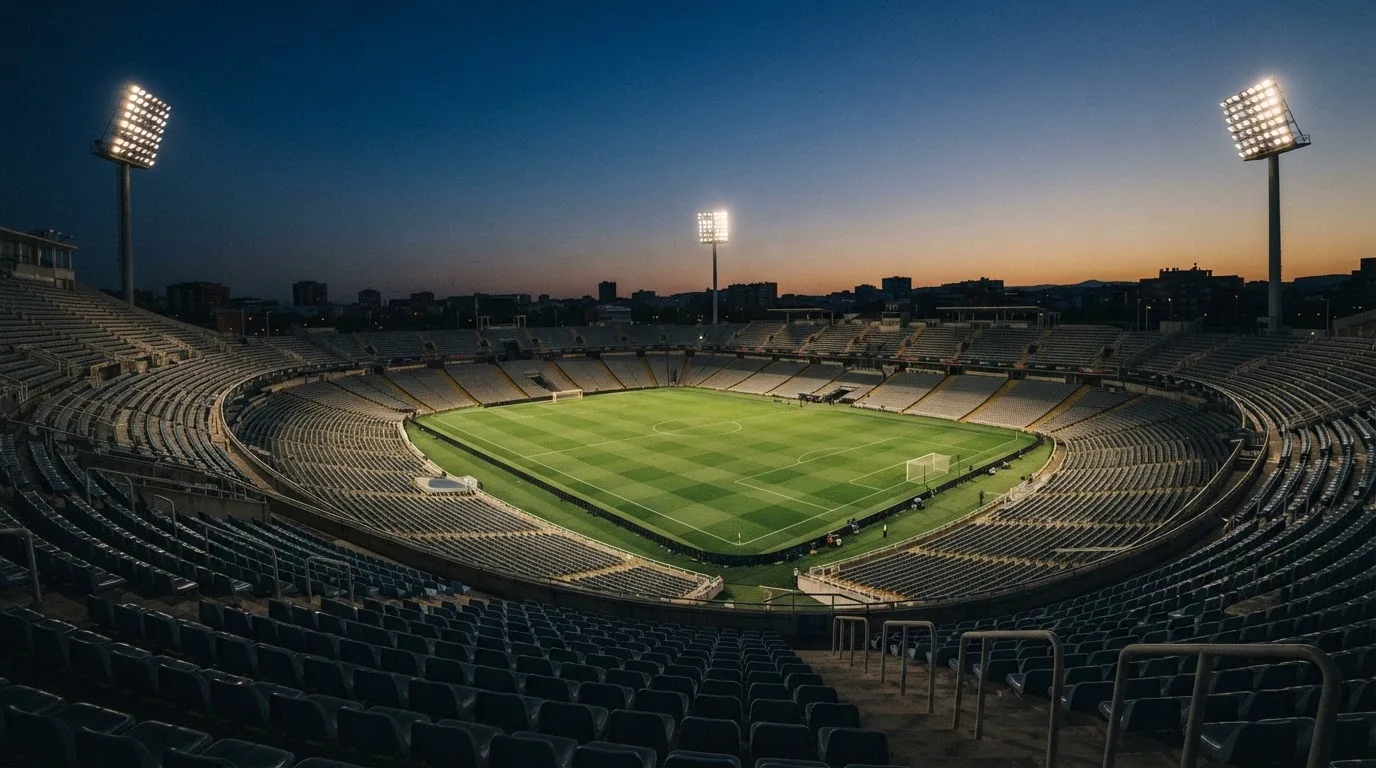
The trade is that the market is thin. UK bookmakers price the bigger FIFA Futsal World Cup and UEFA Futsal Champions League fixtures, and the major national leagues in Spain, Portugal, Brazil and Russia. Below that level the live markets either thin to match result only or disappear between rounds. A bettor planning to use live markets as a tool needs to know which tournaments the operator priced, before kick-off, and which ones it stayed out of.
Cash out works the same way as elsewhere on the operator’s site: settle the bet before the final whistle, at a price the bookmaker itself sets. Two things are worth knowing before it is used. The cash-out figure is the operator’s own valuation at that instant, not the back or lay price on an exchange, and it is usually a worse number than the true mid-price. Second, cash out is not a guaranteed feature on every market. Bet builders, accumulators and certain enhanced-odds selections are routinely excluded, and suspended at moments of high information flow — typically a goal, a red card or a penalty. The bettor who plans to cash out builds that restriction into the original stake, not the other way around.
For futsal specifically, the bet types most often available live are match result, next goal, total goals over/under and, on bookmakers with a deeper programme, the next team to score. Asian-style handicaps appear on the bigger fixtures and are otherwise rare. Live player markets (next goalscorer, player to be carded) are uncommon and should be checked fixture by fixture.
Futsal betting predictions and a stat-led approach
A futseler can build a model from public data. The starting set is the team sheet (futsal squads are small and usually published the day before), the head-to-head record at that venue, the average goals per game in the league that season, and a count of accumulated fouls per period. The fourth item is the one football models miss: from the sixth accumulated foul in a period the opposing team gets a direct free kick from the second penalty mark, ten metres from goal, and no wall may be formed. That single rule is a high-value signal in any live model, because it shifts expected goals sharply for the rest of the period.

A model built only on results under-prices the foul count. A model built only on foul counts over-prices dead-ball conversion. A combined model is the only one that produces numbers worth staking on. Where software helps is in keeping the foul-counting honest across periods, because the count resets at half-time and bookmakers tend to price each period separately in-play. The bettor’s edge, where one exists, is in the period totals, not the full-time price.
A prediction, even a good one, is not a bet. The model gives a probability; the bookmaker’s price gives another probability (implied by 1/odds); the bettor’s edge is the gap. There are nights when the gap closes to nothing, and the model still says “value”. On those nights the right move is no bet, and the model is doing its job by saying so. A model that justifies every stake is a model that has been told what to find.
Bankroll rules: stake a fixed unit, not a percentage of the running total (a percentage system over-bets on a winning streak and under-bets on a losing one, exactly the opposite of what a flat unit does). Keep a written record of price, stake, model probability and the implied probability at the price taken. After 500 settled bets the model either has a positive expected value or it does not, and the bettor’s record is the only honest test. Below 500 bets, anything is noise.
Stats software for futsal is thinner than for football. There is no single canonical feed. FootyStats, Soccerway and the operators’ own sports-stats pages are the most common starting points, and they cover the major leagues. For anything below the top two tiers in Spain, Portugal or Brazil, the bettor is doing the data work by hand from federation sites and tournament PDFs.
Bet types and how the odds are built
Futsal inherits the same bet-type vocabulary as football, with a smaller set on offer. The standard menu is match result (1X2, where the draw is a real outcome), double chance, total goals over/under, both teams to score, Asian handicap on the bigger fixtures, and the occasional correct-score line. Bet builders (same-game multis) appear on the major bookmakers for selected events and usually combine match result, total goals, BTTS and a player market, capped at between six and ten selections depending on the operator.
The odds are built the same way as any other bookmaker market. For a two-way market (a totals line, a BTTS line) the margin is 1 minus 1/(1/odds_A + 1/odds_B). For a three-way market (1X2) the formula extends to three outcomes. A worked example, on a deliberately symmetric two-way market at decimal odds 1.90 / 1.90: the payout share is 1/(1/1.90 + 1/1.90) = 0.5263, so the margin is 1 – 0.5263 = 0.4737, or roughly 47.4% over round. That figure is not what a real Premier League or Liga totals line carries — major-market margins sit in the 4% to 7% range — and it is not what the bookmaker would actually post. It is the price-tag of a fictional symmetric example, used to show the mechanic: equal odds on each side are the worst-case shape, because every unit staked loses roughly 47 pence to margin. A real bookmaker price is asymmetric and tighter, and the page treats that as a number to be compared, not assumed.
On a real market the calculation works the same way. If a 1X2 market is priced 1.85 / 3.40 / 4.50, the implied probabilities are 0.5405, 0.2941 and 0.2222, which sum to 1.0568. The margin is 5.68% and the payout share is 94.32% — meaning that for every £100 staked across all outcomes in proportion to those prices, £94.32 comes back. The bettor’s job is to spot when their own model probability is higher than the implied probability at the available price, and stake only when that gap is meaningful. A 1% edge at 5% margin is not free money; it is a slow grind, and the bookmaker’s own margin is the wall the edge must climb.
For a combination bet, the prices of each leg multiply into one price. A treble at 1.85, 1.85 and 1.85 has combined odds of 6.33. The margin compounds with it: each leg’s margin does not simply add, because the legs are correlated through the payout share of the combination, and a single losing leg forfeits the whole stake. That is the cost the headline price hides.
A worked bet at decimal odds 3.00 with a £10 stake: the return is £30, the profit is £20. The same stake at 1.50 returns £15 for £5 of profit. The fractional equivalent of 3.00 is 2/1: for every £1 staked, the book pays £2 of profit and returns the £1 stake, total £3. The conversion from fractional a/b to decimal is a/b + 1: 5/1 is 6.00, 11/4 is 3.75, evens (1/1) is 2.00.
Sports, tournaments and where the markets are
The futsal calendar is year-round and three-tier. At the top: the FIFA Futsal World Cup, first held in 1989, and the inaugural FIFA Futsal Women’s World Cup, played in the Philippines in 2025. Below that sit the confederation championships: the UEFA Futsal Championship (now the UEFA Futsal Euro), the AFC Futsal Asian Cup, the CONMEBOL Copa América de Futsal and the CAF Futsal Africa Cup of Nations. At the third tier, the strongest national leagues: Spain’s Primera División de Futsal, Portugal’s Liga Placard, Brazil’s Liga Nacional de Futsal and Russia’s Superliga.
The bookmakers price the top tier in depth and the second tier selectively. The Spanish, Portuguese and Brazilian leagues are usually priced in the same week the fixture is published, with match result, totals, BTTS, Asian handicap and bet builders on the bigger matches. The Russian Superliga is priced by some operators and absent from others. Below those four leagues the market thins quickly. National cups and friendly tournaments appear only in the run-up to a major competition, and disappear again once the competition ends.
Futsal is played by two teams of five players, one of them the goalkeeper, with up to nine substitutes and unlimited substitutions. The standard international court is 40 m by 20 m, and the ball is size 4, smaller and heavier than a football with a lower bounce. Both features matter for pricing: the smaller court compresses the angles for a shot, which raises expected goals; the heavier ball with the lower bounce changes the way set pieces behave, and the way the in-running total-goals market drifts after each restart.
Futsal originated in 1930 in Montevideo, created by Juan Carlos Ceriani for YMCAs. The sport’s governing body is FIFA. For the bettor, the practical consequence is that international fixtures are scheduled around FIFA windows, and the bookmakers’ in-play traders are at the desks for those windows. Outside the windows, in-play coverage on a third-tier national fixture is rare.
The ten UK-licensed bookmakers for futsal
The list below is the ten brands the Gambling Commission’s public register names against a remote general betting standard (real events) licence at the time of writing. Several run under the same parent licence; that fact is given where it applies. The set is not a ranking, and a higher place in the list is not a better licence. Each entry closes on the question a bettor comparing them actually asks.
| Brand | Gambling Commission remote licence number and licence holder | What the operator’s own terms state on futsal |
|---|---|---|
| NetBet | 039170-R-319343-032 — Netbet Enterprises Limited | Daily Boosts, Profit Boosts and a Bet Builder with instant dynamic odds; sports stats for the major leagues cover futsal fixtures where priced |
| Kwiff | 044448-R-323408-017 — Eaton Gate Gaming Limited | GB-licensed via Spryme Ltd; futsal pricing varies by fixture and is not a headline product |
| LiveScore Bet | 056859-R-332720-005 — LiveScore Betting and Gaming (Gibraltar) Limited | Bet Builder allows up to 10 selections, covering match result, BTTS, corners, total goals, player scoring and card markets; futsal legs available on selected events |
| BetTom | 064959-R-339314-003 — Bet Tom Limited | Welcome offer is 50% back as a free bet up to £50, plus a matching 50% back up to £50 as free slot funds for casino; full terms apply |
| Octobet | 062545-R-337248-006 — Octopus Game Limited | Welcome offer is 50% back as a free bet up to £50, plus a £10 casino bonus for new customers |
| Betway | 039372-R-319367-029 — Betway Limited | Free Bet Club gives up to £10 in free bets every week after opt-in; £25 or more on sports earns 2 × £5 free bets |
| Coral | 054743-R-330863-014 — LC International Limited | Welcome offer is “Get £40 in Free Bets when you bet £20”: deposit and sports bet of £20 or more at minimum odds 2.0 (1/1), free bets issued within 7 days, expiring 7 days after issue, for new GB customers who opt in |
| Betfred | 039544-R-319290-010 — Petfre (Gibraltar) Limited | Sports, casino and games app from Done Brothers (Cash Betting) Ltd, covering 21 sports; futsal appears under football in the sportsbook |
| BetUK | 039198-R-319450-029 — LeoVegas Gaming PLC | Welcome offer: deposit £10 or more and place a sports bet within 7 days of registering for four £10 free bets (two football accumulators of 4+ selections and two multiples of 2+), valid for 7 days, opt-in required |
| DAZN Bet | 048756-R-327274-019 — DZBT Limited | Deposits from £5 by debit card, Apple Pay, Paysafecard, Trustly and Skrill, and from £20 by PayPal, with no processing fees |
The table says what the operators’ own terms state. It does not say which one is best for futsal, and it should not be read that way: every brand on it holds a current GB licence, and the differences between them on futsal specifically are mostly about which leagues and tournaments are priced, which is fixture-by-fixture, and which is not visible until kick-off.
NetBet
NetBet is a long-running European brand that turned its UK sportsbook into a value-oriented offer with a daily boost, a profit boost and a free-bet line. The Bet Builder carries instant dynamic odds, which means the price updates as each selection is added rather than at submission, and the bettor sees the full price before the slip is confirmed. Sports stats cover the major leagues and reach down into futsal where the league is priced in the same week as the fixtures. The licence holder is Netbet Enterprises Limited on account 39170, and the site serves customers in Great Britain. On futsal specifically, NetBet is one of the UK bookmakers that prices the Spanish and Portuguese leagues in depth, and the Bet Builder is usable on selected events. Whether the deeper national leagues appear is fixture-by-fixture. The welcome offer changes; the licence does not.
Kwiff
Kwiff is a younger UK-licensed brand with a spread-bet-style product layer on top of fixed-odds markets, where the operator can “supercharge” a price on a bet. The licence holder is Eaton Gate Gaming Limited on Commission account 44448, with the trademark operated by Spryme Ltd. The app carries a 17+ age rating. On futsal, Kwiff does not market itself as a futsal bookmaker; the markets that appear depend on the feed at the time, and the bettor checks the sportsbook page for the relevant league. The product is the supercharged price, not the league coverage. For a bettor whose edge is the price and not the line, Kwiff is worth a look. For a bettor who wants a deep pre-built futsal programme, it is not the natural choice.
LiveScore Bet
LiveScore Bet sits next to the LiveScore scores app, and its edge is the bet builder. LiveScore Bet’s Bet Builder allows up to 10 selections and covers match result, both teams to score, corners, total goals, player scoring and card markets. On futsal the same builder structure applies, with the legs adapted to futsal markets where priced. The licence holder is LiveScore Betting and Gaming (Gibraltar) Limited on account 56859. For a bettor who builds same-game multis, LiveScore Bet is the natural fit. For a bettor who prices singles only, the value is in the builder, not the outright market.
BetTom
BetTom is a newer UK brand with a focused welcome offer: 50% back as a free bet up to £50, with a matching 50% back up to £50 as free slot funds for casino play. The offer is deposit-gated, and the full terms set the qualifying bet’s minimum price, the expiry window and the free-bet settlement rules. The licence holder is Bet Tom Limited on Commission account 64959. On futsal, BetTom’s sportsbook prices selected events and the depth depends on the operator’s feed at the time. The product is the welcome bundle, not the league coverage, and a bettor who wants the welcome and is happy to check the programme before staking is the natural customer.
Octobet
Octobet runs alongside BetTom in the same family of newer UK brands, with a similar welcome shape: 50% back as a free bet up to £50, plus a £10 casino bonus for new customers. The licence holder is Octopus Game Limited on account 62545. On futsal the sportsbook prices selected events, and the bettor should check the live programme before kick-off. The product is the welcome offer; the league coverage is the question to ask before depositing, not after.
Betway
Betway is one of the longer-running UK-licensed brands and the brand most bettors already know. The product the welcome page sells is the Free Bet Club: up to £10 in free bets every week after opt-in, with £25 or more on sports earning 2 × £5 free bets. The licence holder is Betway Limited on Commission account 39372. On futsal, Betway prices the major leagues and confederation events and is a mainstream choice for a bettor who wants a single account across sports. The product is the weekly free-bet club, not a futsal-specific proposition, and the bettor who joins for the Free Bet Club is the natural customer.
Coral
Coral is one of the older UK high-street names now running on the same remote platform as Ladbrokes, under LC International Limited on Commission account 54743. Coral’s welcome offer is “Get £40 in Free Bets when you bet £20”: a deposit and sports bet of £20 or more at minimum odds of 2.0 (1/1), with £40 in free bets issued within 7 days and expiring 7 days after issue, for new GB customers who opt in. On futsal Coral prices selected events; the welcome offer is the headline, the league coverage is the question. The bettor who wants a long-established brand with a settled product is the natural customer.
Betfred
Betfred is the other long-running UK high-street name, with a sportsbook that runs under Petfre (Gibraltar) Limited on Commission account 39372. The Betfred Sports, Casino and Games app is published by Done Brothers (Cash Betting) Ltd and covers 21 sports plus over 2,000 casino-style games. On the sports side, futsal typically appears under the football tab rather than as a separate sport, and the depth of coverage is the question the bettor asks before staking. The bettor who already has a Betfred shop account and wants the same product online is the natural customer.
BetUK
BetUK runs under LeoVegas Gaming PLC on Commission account 39198, and the welcome offer is built around free bets that are shaped for football accumulators: deposit £10 or more and place a sports bet within 7 days of registering for four £10 free bets (two football accumulators of 4+ selections and two multiples of 2+), valid for 7 days, with opt-in required. The acca-shaped free bets suit a bettor who already builds accumulators and is happy to use the free bets on football-style slips; a bettor who stakes singles only leaves value on the table. On futsal the sportsbook prices selected events, and the welcome shape is the headline.
DAZN Bet
DAZN Bet is the sportsbook arm of the DAZN streaming brand, with a focus on deposits and withdrawals rather than the welcome offer. Deposits start at £5 by debit card, Apple Pay, Paysafecard, Trustly and Skrill, and at £20 by PayPal, with no processing fees. The licence holder is DZBT Limited on account 48756. The product is the payment shape and the streaming-bundled account, not a futsal-specific proposition. The bettor who already pays for DAZN and wants a sportsbook on the same account is the natural customer.
Futsal betting in the UK: the legal frame
The regulator is the Gambling Commission (UKGC), a non-departmental public body sponsored by the Department for Culture, Media and Sport. The Commission licenses the whole commercial market under the Gambling Act 2005, which covers Great Britain: England, Scotland and Wales. Northern Ireland is outside the Act and runs on its own older law; a GB licence is not a Northern Ireland licence, and a brand with only a GB remote licence is not licensed for Northern Ireland customers.
Since the Gambling (Licensing and Advertising) Act 2014, an operator whose remote facilities are used in Great Britain needs a Commission licence wherever it is based. A Curaçao, Maltese or Gibraltar licence is not a substitute. The Commission’s public register is the whole test of who holds a GB remote licence, and it can be searched by business name, trading name, domain or account number. A brand using a .com domain is not licensed by that fact; the licence is in the register entry, not the URL.
There is no statutory list of permitted sports or markets for a GB-licensed bookmaker, and no cap on the number of licences. The Commission grants licences for categories, and the operator offers markets under its own rules and the Licence Conditions and Codes of Practice (LCCP). Futsal is a real event under any of the standard categories, and the in-play controls are the operator’s licence conditions and customer-protection duties, not a separate statute.
Identity verification is required before the first deposit: name, address and date of birth are checked before a customer can deposit or gamble, including with a free bet or bonus. Credit cards are banned for gambling in Great Britain, including credit-card-funded payments through an e-wallet. Debit cards and bank-based payments are not covered by that ban. The minimum age is 18.
The player pays no tax on betting winnings in Great Britain. General Betting Duty is the operator’s tax on gross profits and is not a charge on the customer. Until 1 April 2027 the remote rate sits at 15%, and from that date a new 25% remote rate applies to most remote betting, with remote bets on UK horse racing, betting-terminal bets in licensed premises, pool betting and in-person betting staying at 15%; whether operators pass duty on through odds is not established, and the customer is not charged duty in any case.
A GB licence is compulsory at the point of consumption. Providing gambling facilities in Great Britain without the licence the Act requires is an offence under section 33 of the Gambling Act 2005, aimed at the operator. There is no offence aimed at a customer who merely bets on an unlicensed site; the cost is the loss of protection — no GAMSTOP coverage, no Commission complaints route, no approved dispute-resolution body, no British consumer redress if funds are withheld, not bound by the 10x bonus cap or the £150 vulnerability check, and outside the credit-card ban. Honest framing: a GB licence is the set of checks, limits, GAMSTOP coverage and the bonus cap; an unlicensed site is none of those.
Safer gambling and the controls a licensed bookmaker has to offer
GAMSTOP is the national multi-operator online self-exclusion scheme and a mandatory licence condition for online operators since 31 March 2020. Self-exclusion periods are six months, one year, five years, or five years with auto-renewal; after the minimum period the exclusion stays in place for a further seven years unless the customer asks GAMSTOP to remove it. GAMSTOP covers online sites and apps; betting shops use a separate service.
A financial vulnerability check (LCCP condition 3.4.4) applies to licensed remote betting when a customer’s deposits minus withdrawals exceed £150 in a rolling 30-day window. The check is a public-record check (for example bankruptcy or county court judgments), not an income check and not a credit reference check. Financial risk assessments — the “affordability checks” of the press — are announced in a staged plan with no start date; they are not yet in force.
Deposit limits are the customer’s choice. The Commission has set out a phased approach: the first changes have applied since 31 October 2025, a second phase was postponed to 30 September 2026, and whether the second phase is now live is not established. There is no state-set deposit or loss ceiling for betting; the customer’s own deposit limit is the binding figure.
Help is available through GamCare (which runs the National Gambling Helpline), GambleAware, the NHS gambling clinics network and Gamblers Anonymous. The licensed bookmakers on the Commission’s register link to these services from their safer-gambling pages, and a bettor who needs a route into help can use any of them directly. Self-exclusion at one operator does not cover the others; GAMSTOP is the only scheme that does, and the bettor who wants full cover uses GAMSTOP, not the per-operator tools.
Bonuses, free bets and the cost of “free”
Welcome offers in futsal betting are not what the marketing page says. The 50%-back-as-a-free-bet offers, the “bet £20, get £40” headlines and the Free Bet Club are deposit-gated, opt-in, and subject to qualifying-bet rules. The cost is the qualifying bet, the minimum price, the expiry window, the free-bet settlement rules, and the cap on what the free bet can win.
A free bet is a credit, not cash. The stake is usually not paid back with a win, so a winning £10 free bet at 3.00 returns £20 of profit and zero of stake; a winning £10 cash bet at 3.00 returns £30, including the £10 stake. The value of a free bet on a single selection is the free-bet amount multiplied by (odds minus 1) divided by the odds, scaled by the payout share of the market the bet is placed on. For a £10 free bet at 3.00 on a market with a 95% payout share, the expected value is £10 × (3.00 – 1) / 3.00 × 0.95 = £6.33. That is the average value, not the winnings.
Promotion rules in force since 19 January 2026 cap wagering requirements on bonuses at 10x, so a £10 bonus at 50x no longer needs £500 of bets; under the cap, no more than £100 of qualifying bets is needed. Mixed-product promotions — an offer that requires gambling on two or more product types such as betting, casino, bingo and lottery — are banned. Whether the cap applies to free bets with no wagering condition, and any cap on the money value of a bonus, are not established. The bonus is described by the operator’s own terms, and those terms set the qualifying bet, the minimum price, the expiry and the cap on free-bet winnings. The bettor’s job is to read the terms before the qualifying bet, not after the free bet is sitting in the account.
Enhanced odds and price boosts are different again. A price boost is the operator raising the price on a specific selection for a window, and the offer is a higher return, not a free bet. The terms are usually simpler: the boosted price is the price, the stake is paid back with a win, and the maximum stake is set by the operator. The bettor’s question is whether the boosted price is still a worse number than the back or lay price elsewhere, and that is a comparison the bettor makes before the boost is taken.
Accumulator insurance is a refund mechanic: if one leg of an accumulator loses, the stake on the leg is refunded as a free bet or cash, up to a cap. The refund is paid only on accumulators of a stated minimum number of selections, and only on specific markets. The bettor’s question is whether the insurance changes the price the operator offers on the accumulator in the first place; it usually does, and the net cost of the insurance is in the price, not the headline.
A cashback offer is a percentage of net losses returned over a period, usually a week, and the cap is on the cashback amount rather than the qualifying stake. Cashback is paid in cash or free bet depending on the offer, and the bettor’s question is the form. A cashback paid as a free bet is worth less than the same number in cash, by the same free-bet factor as above.
The margin: what the bookmaker actually keeps
The margin is the bookmaker’s built-in edge across a market. It is the difference between what the bettors collectively stake and what the bookmaker pays back, expressed as a percentage of stake. The bettor cannot remove it; the bettor can only choose markets where it is lower.
A worked example on a symmetric two-way market at decimal odds 1.90 / 1.90: the payout share is 1 ÷ (1/1.90 + 1/1.90) = 0.5263, so the margin is 1 – 0.5263 = 0.4737, roughly 47.4% over round. That is the worst case, not the real case. A real 1X2 line on a Premier League or Liga match is tighter, with margins in the 4% to 8% range; totals and Asian handicap lines sit lower, often between 2% and 5%; long-shot outright markets carry the highest margins of all, sometimes above 15%.
The bettor’s job is to read the margin on the market they are pricing, not the headline. A 1.91 / 3.50 / 4.50 line carries a different margin from a 1.85 / 3.40 / 4.50 line, and the difference is in the bookmaker’s pocket. The bettor who treats the lowest headline price as the best value is the bettor paying the highest margin; the bettor who reads the overround is the one with the better price.
For a combination bet, the margin compounds. A treble at 1.85, 1.85 and 1.85 has combined odds of 6.33 and a margin of around 16%, not the 5% of the singles. Each leg’s margin does not simply add, because the legs are correlated through the payout share of the combination, and a single losing leg forfeits the whole stake. The headline price on an accumulator hides a higher margin than the singles, and the bettor’s edge on the singles may not survive the combination.
Frequently asked questions
How do you bet on a futsal league?
Pick a bookmaker that holds a current Gambling Commission remote licence from the Commission’s public register, open an account, complete the verification (name, address, date of birth), deposit by debit card or bank-based payment (credit cards are banned for gambling in Great Britain), find the league in the sportsbook, and place a bet at the price offered. The welcome offer sits on top of that, deposit-gated and subject to its own qualifying-bet rules.
How can it be checked that a bookmaker holds a Gambling Commission licence?
Use the Commission’s public register, which is searchable by business name, trading name, domain or account number. The register is the whole test of who holds a GB remote licence; a .com domain proves nothing on its own. The register entry shows the licence number, the licence holder, the licence categories and the trading names covered.
How is the return on a bet worked out from the stake and the odds?
For a single bet at decimal odds, return = stake × odds, and net profit = stake × (odds − 1). For a combination bet, the prices of each leg multiply into one combined price, and the same formula applies to the combined price. The return is what the bookmaker pays on a win, not what the bet is worth on average.
What is the bookmaker’s margin and how can it be seen in the odds?
The margin is the percentage of every unit staked that the bookmaker keeps on average across a market. For a two-way market the formula is 1 − 1/(1/odds_A + 1/odds_B); for a three-way market it extends to three outcomes. The margin is in the price, not stated separately, and the bettor reads it by summing the implied probabilities (1/odds for each outcome) and subtracting from 1.
How do fractional odds such as 5/1 convert to decimal odds such as 6.00?
The conversion is decimal = a/b + 1. 5/1 is 6.00, 11/4 is 3.75, evens (1/1) is 2.00. The fractional form gives the profit per unit staked; the decimal form gives the return per unit staked, including the stake. The bookmaker publishes both on most GB sites, and the bettor can use whichever form is easier to read.
Which tools for controlling play does a licensed bookmaker have to offer?
A licensed operator must offer GAMSTOP self-exclusion, deposit limits, timeouts, reality checks and access to help services such as GamCare, GambleAware, the NHS gambling clinics and Gamblers Anonymous. A financial vulnerability check is run by the operator when a customer’s deposits minus withdrawals exceed £150 in a rolling 30-day window. Financial risk assessments are announced in a staged plan and are not yet in force.
Football – Cricket betting
Content created by the «Cricket betting» team
