
Horse racing betting odds: how the price is built and what it really costs
 Available in US
Current as of 27 October 2026 · verified against the Gambling Commission’s public register
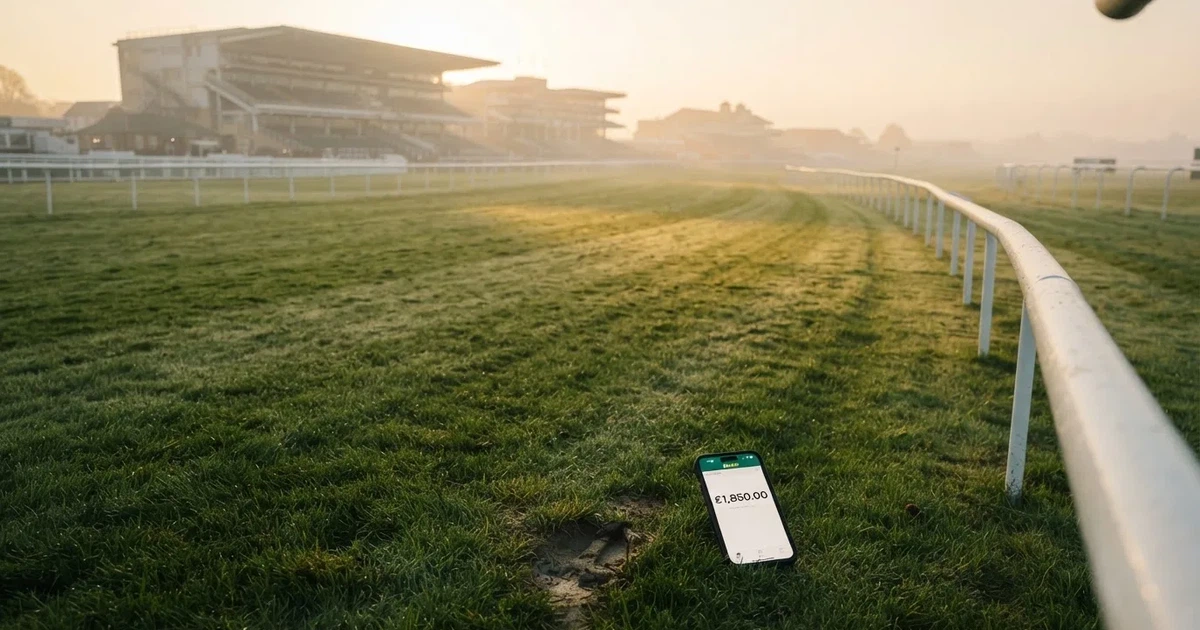
A British punter looking at a racecard meets fractions on the screen: 5/1, 11/4, evens. Behind the fractions sits a decimal price, a margin taken by the bookmaker and, on every each-way slip, a second stake that the punter sometimes forgets. The shape of the odds is not a marketing choice. It is the maths of a market in which a layer of profit is set into every runner’s price, and the punter’s job is to read it before placing the bet. This page works through what a price actually is on a UK-licensed horse-racing bookmaker, how each-way bets double the stake, what Best Odds Guaranteed does to a ticket placed the night before, and which operators on the Commission’s public register cover the sport in the way research has logged.
Bonuses & free bets on horse racing
A horse-racing free bet is what the marketing calls a giveaway. Read the small print and it usually is not. The stake is rarely returned with a winning free bet: a £10 free bet at 5/1 returns £50 in profit, not £60, because the £10 stake belonged to the house. The £10 free bet that “matches” your stake therefore pays back less than the same stake paid in cash. Two bookmakers in this guide state the rule in their own terms, and the punter is the one who absorbs it.

A second cost sits behind the headline. Wagering requirements — the turnover a bonus has to be played through before any winnings become withdrawable — were capped at ten times the bonus value by the CAP Code in force since 19 January 2026, across the whole of UK-licensed online betting. A £20 bonus at 5x takes £100 of qualifying bets; a £20 bonus at 20x is no longer permissible. Some horse-racing offers still carry no wagering condition at all, in which case the stake is the only cost: the free bet is a one-shot ticket, and any profit lands in the withdrawable balance.
Each operator’s free bet is described only as its own terms state it. A welcome offer that bundles a sports bet, an accumulator token and a niche market bet is not the same value as a single free bet of the same headline. The punter who reads the breakdown — which selection counts, what minimum price applies, when the token expires — gets a different number than the headline suggests.
The mobile app and the touchscreen slip
The bulk of UK horse-racing turnover now settles through a phone. Apps compress the bet slip into a column at the foot of the screen, push a price update between placing and confirming, and let the punter cash out a live bet without the cashier’s intervention. The best horse-racing app for a given punter depends on the workflow: a Best Odds Guaranteed toggle is meaningless if the app’s racing card hides meetings in a sub-menu, and an in-play racing feature is useless if the price does not stream live.

The mainstream UK apps cover the major meetings — Cheltenham, Aintree, Royal Ascot, the Classics — without exception. Smaller operators and the racing specialists focus on different parts of the day: some firms provide an early-price adjustment window from 8am on the day of the race, some provide ante-post prices weeks in advance, and others run a tipping line in-app. Touch response, login time and the speed of a partial cash-out are the operational differences between two apps that, on paper, look identical.
Geolocation is what makes the app an English app at all. The phone’s location has to fall inside Great Britain for a licensed operator to take a bet, and the punter who travels to a non-GB jurisdiction finds the slip disabled. The same rule blocks racing bets in Northern Ireland on a GB-licensed site: Northern Ireland is outside the Gambling Act 2005, and the app checks against the Act’s geography, not against the punter’s passport.
Live betting and cash out on a race
In-running betting on horse racing is a smaller market than in-running football. There is a moment — the off, the first fence, the home turn — when the price swings, and a bookmaker offering in-play on a race has to price a moving picture into a settled bet within seconds. Not every bookmaker in the licensed set streams a live feed, and not every streaming feed is licensed for the British market: a punter who sees a video inside an app may be looking at a feed the operator has rights to in some jurisdictions and not in others.
Cash out is the inverse. The bookmaker offers to buy the bet back at a live price before the race is decided. The price is the bookmaker’s, not the market’s, and the offer is rarely a fair reflection of the horse’s chance at that instant — it includes a margin the same way a pre-race price does. A punter who cashes out at 4/1 on a horse that wins at 3/1 has paid for the privilege of not waiting. A punter who lets a 10/1 shot run has paid for the privilege of taking a 10/1 shot.
The Best Odds Guaranteed promotion is the most consequential live feature on British racing. William Hill pays BOG on UK and Irish racing from 8am on the day of the race, on both single and multiple bets; it does not apply to ante-post bets, to the tote or to pari-mutuel pools. The mechanism: if the starting price (SP) is greater than the price taken, the bet is settled at SP. A punter who took 5/1 the night before and the horse returns at 7/1 SP pockets the 7/1, not the 5/1. The 8am cut-off is the catch: an early-morning move in the market is included; a price taken at 7.55am is not.
Predictions, tipsters and strategy
Tipping services and “horse racing systems” share a market. The systems are not the same as the tipsters: a system is a rule about staking, prices or selections, and a tipster is a person whose view is being sold. Neither alters the margin the punter pays on every bet placed, and neither changes the long-run return on a market in which the bookmaker keeps a fixed slice of every pound. The punter’s edge, where there is one, is the size of the slice he or she pays.
A staking plan — flat stakes, level stakes, Kelly — controls the variance, not the expected loss. A punter staking £10 a race on a 5% margin market loses 50p a race on average; the plan decides whether that 50p is one of twenty bets in a quiet week or a £20 hit on a busy Saturday. The plan does not convert a negative-edge market into a positive one.
What the punter can do is read the market. A bookmaker with a Best Odds Guaranteed concession, a place terms advantage on a big-field handicap and a tight margin on the win market is three different bets in one: a single at SP, an each-way at 1/4 the odds for four places, and a win-only punt. Three books and three bets; one horse. The punter who prices the same race at three firms sees where the bookmaker’s confidence is thinnest, and that is where a small-stake bet costs least.
Bet types and how the price is read
Decimal odds, fractional odds and a starting price are three ways of writing the same number. The punter who sees 5/1 on a racecard reads it as a return of £5 for every £1 staked, plus the £1 back, so £6 in cash. The decimal form is 6.00; the calculation is the fraction plus one (a divided by b, plus one). Two-and-a-half to one, written 5/2, becomes 3.50; six-to-four, written 6/4, becomes 2.50. The punter who only sees fractions can ask the app for decimals; the punter who only sees decimals can convert by removing the 1.
An each-way bet is two bets at equal stakes, so a £5 each-way costs £10 in total. The win half pays at the price taken; the place half pays at a fraction of that price, set by the bookmaker’s place terms. A 10-horse handicap with four places at 1/4 odds means a 5/1 shot pays 5/4 for the place half, or 2.25 in decimals. The punter who takes a 10/1 each-way at 1/4 the odds in a four-place race is buying a 10/1 win bet and a 2.5/1 place bet for the same stake — two separate bets, one slip. The place terms are the bookmaker’s, and the punter is the one who reads them: handicaps with 16 or more runners pay 1/4 for four places; 12 to 15 runners pay 1/4 for three; eight to eleven runners pay 1/5 for three; five to seven runners pay 1/4 for two; fewer than five runners are win-only.
A bet builder combines selections from one event into a single price. The legs multiply, the bookmaker takes a margin on the combined price, and the punter takes the bet at the multiplied odds. A £10 bet builder on a horse to win and to be the favourite at the off, with legs that price at 5/2 and 6/4 respectively, pays the product: 3.5 × 2.5 = 8.75, so a £10 stake returns £87.50. The catch is the margin: the bookmaker’s slice of a bet builder is rarely a single bet’s margin, because the legs are not independent events and the punter’s price has to cover the correlation.
A spread bet, on the firm side, is a different product. Sporting Index and Spreadex offer spread betting on horse racing alongside their fixed-odds books; the punter buys or sells a number — the winning distance, the finishing order — at a stake per point. Losses on a spread bet can exceed the deposit, and the punter is exposed to the size of the winning margin, not to a fixed return. The Financial Conduct Authority regulates financial spread betting; the Gambling Commission regulates fixed-odds betting, and a single firm can hold both licences for two distinct products.
Sports & tournaments: the British racing calendar
Flat racing and jump racing are the two disciplines under Rules of Racing in Great Britain. Flat races run between two points on a straight or oval track, from 440 yards (400 m) to more than four miles (6.4 km); five to twelve furlongs (1.0 to 2.4 km) is the most common distance. Jump racing — steeplechases and hurdles — runs over longer distances with obstacles, and in Great Britain and Ireland is called National Hunt racing. The two disciplines share the same betting markets and the same bookmakers, but the form cycle is different: the Flat season runs roughly from March to November, with peaks at the Classics and the major festivals; the National Hunt season runs from October to April, with Cheltenham in March and Aintree in April at the top of the calendar.
The British Classics anchor the Flat season. The 2000 Guineas, the Derby and the St Leger form the British Triple Crown, and the 1000 Guineas, the Oaks and the St Leger form the Fillies’ Triple Crown. Handicaps and conditions races run between them: handicaps assign each horse a weight to carry based on its ability, equalising the field; conditions races give horses the same weight with allowances for younger and female horses. A 25-runner handicap is the market in which place terms matter most, because four places at 1/4 the odds is a meaningful slice of a 5/1 shot.
Irish racing is priced on British books because the GB-licensed firms carry the Irish meetings as a matter of routine. The Cheltenham Festival, the Grand National meeting, Royal Ascot, Goodwood, the Ebor at York, the Cambridgeshire at Newmarket and the Champion Hurdle at Cheltenham are the meetings that move the betting handle most. The bookmaker’s margin tightens on these meetings, because the punter base is liquid and the price has to be sharp to take money.
Top 10 licensed UK horse-racing bookmakers
A ranking is a snapshot, not a verdict. The ten operators below hold a Gambling Commission remote general betting standard (real events) licence, take part in GAMSTOP, and are described only as their own terms state them. The set is the GB-licensed set research has logged; it is not the whole of the British betting market. Each row is a snapshot of the licence and the operator’s own statement on a feature of horse-racing betting: a margin, a Best Odds Guaranteed window, a free bet, an in-play feature. A punter who wants to bet, places a bet with the licence holder, and the operator’s own terms page is the document that matters on the day of the bet.
| Brand | Gambling Commission licence | Operator’s own position on horse racing |
|---|---|---|
| Tote | 054779-R-331321-008 (TDCO Limited) | Pool-betting specialist, UK and Irish racing, SP-based pricing |
| BetGoodwin | 002927-R-327985-008 (Goodwin Racing Limited) | Racing-focused sportsbook with a free-bet welcome bundle |
| Geoff Banks | 054095-R-330366-010 (GB Sports Advisors Limited) | In-play and ante-post racing prices, GB Sports Advisors Ltd as publisher |
| VBet | 044662-R-324273-022 (SCGO Limited) | Racing alongside football and tennis, free-bet welcome tied to first settled bet |
| Sporting Index | 027343-R-308898-011 (Sporting Index Limited) | Fixed odds and spread betting on the same account, racing covered |
| Kalooki Sportsbook | 057730-R-333396-005 (Kalooki Sportsbook Limited) | Sportsbook with a GAMSTOP member confirmation on its own site |
| LiveScore Bet | 056859-R-332720-005 (LiveScore Betting and Gaming (Gibraltar) Limited) | Bet Builder on football; racing sits inside the wider sportsbook |
| Dabble | 065677-R-340363-005 (Dabble Sports UK Ltd) | Free-bet welcome with a 7-day expiry and stake not returned on the free leg |
| 10bet | 043173-R-322899-023 (Blue Star Planet Limited) | Racing inside a sportsbook that also lists football, tennis, cash out and bet builder |
| Betfred | 039544-R-319290-010 (Petfre (Gibraltar) Limited) | 21 sports covered, named Best Odds Guaranteed operator on UK and Irish racing |
Tote and BetGoodwin are the racing-first operators in the set. Tote is the pool-betting specialist, settled against the tote dividend rather than against a fixed price; BetGoodwin’s free-bet welcome bundles a £5 sports bet, a £5 acca and a £5 Sub-Cover bet for a £10 qualifying stake. The other eight are sportsbooks that list racing alongside football, tennis, in-play and bet builder, and the punter looking for a racing-specific product is reading their racing page rather than their football page.
A licence number is a check, not a recommendation. The Commission’s public register is searchable by business name, trading name, account number or domain, and the account number is the cleanest match: 54779 for Tote, 2927 for BetGoodwin, 54095 for Geoff Banks, 44662 for VBet, 27343 for Sporting Index, 57730 for Kalooki Sportsbook, 56859 for LiveScore Bet, 65677 for Dabble, 43173 for 10bet, 39544 for Betfred. The categories on the register are remote general betting standard (real events); the licence holders above are the entities the Commission has issued the licence to. Several brands can run under one licence holder — Paddy Power and Betfair share a parent, as do Ladbrokes and Coral — and a brand is a trading name, not a corporate identity.
Overview: the price, the stake, the layer of profit
A bookmaker’s margin is the slice of every pound staked that the bookmaker keeps, on average, across the runners in a market. The mechanism: a fair market on a two-runner race with two equally likely outcomes would price each runner at evens (2.00 in decimals); the bookmaker prices each runner at 1.90 (about 9/10) to embed a margin, and the punter pays the difference. The 10p of margin per pound is the same from the punter’s side as a 5% margin from the bookmaker’s side: the sum of the implied probabilities exceeds 100%, and the excess is the layer of profit.
On a four-runner race with the bookmaker pricing each runner at 4.0 (3/1), the implied probabilities are 25% each; the sum is 100%, and there is no margin. The bookmaker tightens the price to 3.75 (11/4) and the implied probabilities become 26.67% each, summing to 106.67% — the 6.67% is the margin, paid on every pound staked on the market. A market with eight runners at 9/1 each has implied probabilities of 10% per runner, summing to 80%; the bookmaker tightens to 7/1, the probabilities become 12.5% each, summing to 100% and the margin is 20%. The bigger the field, the bigger the margin the bookmaker can embed, because the punter is looking at more runners for a single bet.
A worked example on a two-way market: at decimal odds 1.90 / 1.90, the implied probability is 1/1.90 + 1/1.90, or 0.5263 + 0.5263, summing to 1.0526. The payout share is 1/1.0526, or about 0.95, and the margin is 1 – 0.95, or 5%. The punter staking £10 on either outcome gets back £19 if the bet wins, and the bookmaker keeps roughly 5p of every £1 staked on the market across many bets. The 5% is illustrative: the layer of profit on a British horse-racing market is typically higher than 5% on a big-field handicap and lower on a two-runner match bet, and the punter who reads the price before placing the bet sees where the layer sits.
A punter staking on a Best Odds Guaranteed market with a starting price higher than the price taken keeps the starting price; the bookmaker pays the difference out of its own margin, and the punter’s expected return on the bet improves without the punter doing any further work. The catch is the 8am cut-off on most BOG books, and the exclusion of ante-post, tote and pari-mutuel bets. A punter who places a bet at 6am on a 7/1 shot and the horse returns at 9/1 SP keeps the 9/1, and the bookmaker pays the 2/1 difference. A punter who places the same bet at 7.55am keeps the 7/1.
Legality and regulation in Great Britain
The Gambling Commission is the regulator. Sponsored by the Department for Culture, Media and Sport, it licenses the whole commercial market under the Gambling Act 2005 in Great Britain (England, Scotland and Wales); Northern Ireland is outside the Act and has its own older law, so a GB-licensed operator does not cover Northern Ireland. Since the Gambling (Licensing and Advertising) Act 2014 an operator whose remote facilities are used in Great Britain needs a Commission licence wherever it is based, and a Curaçao, Maltese or Gibraltar licence is not a substitute. Spreadex is regulated by the FCA for spread betting and by the Gambling Commission for fixed-odds betting, a two-licence posture that lets one firm sell two different products under two different regulators.
Licence categories on the Commission’s register are remote general betting standard (real events), remote general betting standard (virtual events), remote general betting limited, remote pool betting and remote betting intermediary (the licence for betting exchanges). The ten operators in this guide hold the first of those, with Tote holding a pool-betting licence for the tote dividend. The categories determine what the bookmaker can offer: a remote general betting standard (real events) licence covers horse racing; a remote pool betting licence covers the tote; a remote betting intermediary licence covers a betting exchange. The Commission’s public register is searchable by business name, trading name, account number or domain, and the account number is the most reliable match.
Identity verification sits on the licensed bookmaker’s side. Since 7 May 2019 a customer has to pass name, address and date-of-birth verification before depositing or gambling, including with a free bet or a bonus; Kalooki Sportsbook’s site shows the verification step and the GAMSTOP membership, and the same step is in place across the licensed set. The punter who values anonymity does not have a GB-licensed option, because the verification is a licence condition. A Curaçao-licensed or otherwise offshore bookmaker may not verify at all, and the punter trades British protections — GAMSTOP coverage, the Commission’s complaints route, the approved dispute-resolution body — for the absence of checks.
On the player’s side: no tax on winnings
The British punter pays no tax on betting winnings. General Betting Duty is the operator’s tax on gross profits, currently 15% and rising to a new remote rate of 25% from 1 April 2027 within the duty, with remote bets on UK horse racing, bets on self-service betting terminals, pool betting and in-person betting staying at 15%. Spread betting has its own rates (3% financial, 10% other). Until 1 April 2027 the remote rate stays at 15%; whether operators pass the duty on through tighter odds is not established, and the punter is never charged the duty directly. A professional gambler, by HMRC’s own guidance, is taxed on profits as income, and the rule above is for the non-professional punter.
On the offshore side: a licence is compulsory at the point of consumption
A GB licence is compulsory at the point of consumption: providing gambling facilities in Great Britain without the licence the Act requires is an offence under section 33 of the Gambling Act 2005, aimed at the operator. The offence carries up to 51 weeks’ imprisonment, a fine up to level 5, or both on summary conviction; in Scotland the maximum is six months. The Commission enforces by cease-and-desist notices, search-engine referrals, work with registrars, hosts and payment providers, and the regulator has been given or is about to receive court-order DNS blocking powers. ISP blocking is not yet in operation, and the punter who reaches an unlicensed site from a British IP address is reaching a site the Commission is moving to disrupt.
A punter who bets on an unlicensed site loses the protections a British licence confers: no GAMSTOP coverage, no Commission complaints route, no approved dispute-resolution body, no British consumer redress if funds are withheld, not bound by the 10x bonus cap, not bound by the £150 financial vulnerability check. Whether betting on an unlicensed site is itself an offence aimed at the customer is not established; the law is aimed at the operator, and the punter’s exposure is the loss of protections, not a criminal charge.
Responsible gambling on a racing bet
GAMSTOP is the national multi-operator online self-exclusion scheme and a mandatory licence condition for online operators since 31 March 2020. Periods are six months, one year, five years, or five years with auto-renewal; after the minimum period the exclusion stays in place for a further seven years unless the customer asks GAMSTOP to remove it. The scheme covers online sites and apps; betting shops use a separate service. A punter who self-excludes through GAMSTOP is excluded from every GB-licensed online bookmaker, the racing specialists and the sportsbooks alike, and the period is the punter’s choice.
A financial vulnerability check sits inside the licensed set. LCCP condition 3.4.4, in force since 30 August 2024, applies to licensed remote betting when a customer’s deposits minus withdrawals exceed £150 in a rolling 30 days (since 28 February 2025). The check is a public-record check — bankruptcy, county court judgments — not an income check and not a credit reference check. A punter with a clean public record passes; a punter with a CCJ does not. The check is on the bookmaker, not on the punter, and the punter who bets below the £150 threshold does not see it.
Financial risk assessments, the affordability checks of the press, are announced in a staged plan with no start date. A Commission article of 7 July 2026 sets out the plan; the punter should read it as “announced, staged, no start date” and not as “in force”. Deposit limits are an operator obligation under RTS 12, with the first changes applied since 31 October 2025 and a second phase postponed to 30 September 2026, and whether the second phase is live is not established. The punter sets a deposit limit at the point of registration, can change it downward at any time, and can change it upward only after a cooling-off period.
Help is on the punter’s side. GamCare runs the National Gambling Helpline; GambleAware funds treatment and education; NHS gambling clinics offer face-to-face support; Gamblers Anonymous runs peer-led meetings. Fitzwilliam Sports’s site links to GambleAware, GamStop and Gamblers Anonymous from its homepage, and the pattern is common across the licensed set. A punter who recognises the problem before the next bet is the punter who finds a self-exclusion route and a helpline, and the licensed bookmaker is the one that offers them.
Crypto and anonymous horse-racing betting
A British punter looking for crypto deposits on a horse-racing bet does not have a GB-licensed option. Identity verification before the first deposit is a licence condition since 7 May 2019, and crypto’s pseudonymous chain does not satisfy name, address and date-of-birth verification. The Commission’s position on cryptocurrency deposits at licensed operators is not established; the licensed set’s payments pages describe debit cards, bank transfers and e-wallets, and a punter looking for a Bitcoin or Ethereum deposit is looking at the unlicensed set.
An offshore bookmaker that takes crypto does not take British pounds on the same licence. A Curaçao-licensed or otherwise non-GB bookmaker is outside the Commission’s remit, and the punter who funds an account in BTC, ETH or USDT trades British protections — the licence, the GAMSTOP coverage, the £150 vulnerability check, the 10x bonus cap, the British dispute-resolution route — for a deposit that does not require a verified identity. The exchange-rate risk sits on the punter, because the bet is priced in fiat and the deposit is in crypto, and the conversion cuts both ways between deposit and withdrawal.
What the punter actually buys with crypto is the absence of checks: no name, no address, no date of birth, no source-of-funds question at higher spend, no public-record vulnerability check. The trade is the trade. A punter who values anonymity pays for it in lost protections, and a punter who values protections does not have the option of paying in crypto at a licensed bookmaker. The non-GB operator is a different market with a different rule set, and a British punter betting on it is not betting inside the British system.
Featured operators: what each one offers, and what it costs
The ten reviews below cover the set research has logged. Each block is a snapshot of the operator’s own terms and the licence on the Commission’s public register, with the operator’s own position on horse racing stated in the operator’s own words. A “worth it” verdict closes each block, on the basis of what the block above it actually established: a free-bet welcome, a Best Odds Guaranteed window, a Bet Builder feature, a stake limit on a boost, a margin, a verification step. The verdict is the page’s own, and is not the operator’s marketing.
Tote
Tote is the pool-betting specialist in the licensed set. The Commission account is 54779, the licence holder is TDCO Limited, and the licence categories cover remote pool betting alongside remote general betting standard (real events). The tote dividend is the price: a punter does not take a fixed price on a horse but a share of the pool, less the operator’s take, and the dividend depends on which horses finish where and how the pool is divided. Tote is the racing bookmaker for a punter who wants pool pricing rather than fixed odds, and the brand sits inside the Commission’s public register against the licence above.
The pool-betting structure changes the math of a winning bet. A £10 win bet on a 5/1 shot at a fixed-odds bookmaker returns £60; the same £10 on the tote returns the dividend, which is not the fixed price but the pool share, and the dividend can be higher or lower than 5/1 depending on the pool. A punter who likes the pool pricing likes the upside of a long-priced winner; a punter who likes fixed pricing likes the certainty of the price taken. Tote is the pool-betting specialist for the UK and Irish markets, offering pool-based dividends rather than fixed-price odds. This structure means returns fluctuate with the pool size, making it a distinct alternative to fixed-odds bookmakers. For those who prioritise pool dividends and the potential upside of long-priced winners over the certainty of fixed returns, Tote provides a focused experience.
BetGoodwin
BetGoodwin is the racing-focused sportsbook in the set. The Commission account is 2927, the licence holder is Goodwin Racing Limited, and the licence categories cover remote general betting standard (real events). The welcome offer is a free-bet bundle: a £10 qualifying stake unlocks a £5 sports bet, a £5 acca and a £5 Sub-Cover bet, three free bets of £5 each, with the Sub-Cover bet a racing-specific token. The brand sits inside a sportsbook that prices the major British and Irish meetings, and a Best Odds Guaranteed concession is the racing feature the punter should look for on the day.
The free-bet bundle is not the same as a single £15 free bet. A £5 sports bet on football at 2/1 returns £15 in profit on a free bet, not £20; a £5 acca at combined odds of 10/1 returns £55 in profit; a £5 Sub-Cover bet is the racing-specific token, and the operator’s own terms state how the Sub-Cover stake and settlement work. A punter who reads the three tokens separately gets a different number than the headline, and the punter who reads the Sub-Cover terms before the bet knows which races the token covers.
BetGoodwin serves the racing enthusiast who wants a sportsbook with a racing-first focus. Its welcome bundle, featuring multiple smaller free-bet tokens rather than one large bonus, provides variety. While it lacks some in-play features found at larger sportsbooks, its specialised racing content and BOG window make it a viable option for those prioritising specific racing features over broad market variety.
Geoff Banks
Geoff Banks is the racing-and-ante-post specialist in the set. The Commission account is 54095, the licence holder is GB Sports Advisors Limited, and the app is published by GB Sports advisors Ltd on the GB App Store. The app offers live in-play prices and ante-post prices on future events, and the racing offer sits inside a smaller bookmaker’s product rather than a major sportsbook’s catalogue. The brand is the racing bookmaker for a punter who wants ante-post weeks before a meeting and in-play on the day.
Ante-post betting is a different product from day-of-race betting. An ante-post bet is placed before the final declarations, and the bookmaker’s rule on a non-runner applies: most ante-post books void the bet if the horse does not run, and the punter’s stake is returned. The exception is a non-runner no-bet concession, where the punter keeps the bet if the horse is withdrawn; the concession is the bookmaker’s, and the punter reads the terms before placing the bet. Geoff Banks’s app offers ante-post and the punter is on the bookmaker’s standard non-runner rule unless the brand says otherwise.
Geoff Banks occupies a niche as a racing specialist, catering to those who demand ante-post markets and live in-play pricing. Its focus is entirely on the racing discipline, distinguishing it from generalist sportsbooks. For punters who require early-market access and racing-specific features over a wide range of casino or sports products, this is a dedicated platform.
VBet
VBet is the sports-and-racing bookmaker in the set. The Commission account is 44662, the licence holder is SCGO Limited, and the sports welcome offer is a £10 free bet tied to a first settled bet of £10 or more, with the free bet paid only if the qualifying bet loses. The offer is a refund-style structure: a free bet on a losing first bet, not a free bet credited on registration, and the punter’s qualifying stake is the one at risk.
A refund-style free bet is not the same as a matched free bet. A matched free bet pays the free bet on a winning or losing qualifying bet; a refund-style free bet pays the free bet only on a losing bet, and the punter’s qualifying stake is the one that takes the loss. A punter who reads the structure sees that a winning first bet at 2/1 returns the qualifying stake plus the winnings, and a losing first bet triggers a £10 free bet whose stake is not returned. The cost of the offer is the qualifying stake the punter was going to place anyway, and the upside is the free bet on the loss.
VBet combines sports and racing with a refund-style welcome offer, which provides a free bet only if the initial qualifying bet loses. This structure requires careful consideration, as the upside is contingent on the qualifying stake failing. It is a suitable choice for sports bettors who want to incorporate racing, though it lacks dedicated features like Bet Builders for the sport.
Sporting Index
Sporting Index is the dual-product bookmaker in the set. The Commission account is 27343, the licence holder is Sporting Index Limited, and the product set is fixed odds and spread betting on the same account, with in-play betting, Bet Builder for football, auto cash-out and Multi-Markets. The punter can switch between fixed odds and spread betting on the same login, and the two products carry two different regulators: fixed-odds betting is under the Gambling Commission; financial spread betting is under the Financial Conduct Authority. Spreadex is the other dual-product bookmaker, regulated by the FCA for spread betting and the Commission for fixed-odds betting.
Spread betting on a horse race is a different risk from a fixed-odds bet. The punter buys or sells a number — the winning distance, the finishing order — at a stake per point, and the punter’s liability is the size of the winning margin, not a fixed return. Losses on a spread bet can exceed the deposit, and a punter who is not comfortable with a variable liability should stay on the fixed-odds side of the account. The fixed-odds side prices racing the same way the rest of the licensed set does, and the punter is on the fixed-odds book unless the punter picks the spread market.
Sporting Index provides a combined account for fixed-odds and spread betting, managed under two separate regulatory frameworks. This is an advanced platform for those who understand the variable liability associated with spread markets. It is not designed for those seeking a standard racing-only experience but serves the punter who integrates spread-betting exposure into their broader strategy.
Kalooki Sportsbook
Kalooki Sportsbook is the GAMSTOP-confirmed sportsbook in the set. The Commission account is 57730, the licence holder is Kalooki Sportsbook Limited (company number 12938274), and the site states the Commission’s licence number and the GAMSTOP membership on the homepage. The brand is a sportsbook with a clear safer-gambling posture, and the punter who values a visible GAMSTOP link is on a brand that puts the link in front of the punter rather than behind the terms.
The licence confirmation on the homepage is unusual in the licensed set, where most brands put the licence in the footer or the terms. A punter who values a visible safer-gambling posture is on a brand that has chosen to put the Commission’s account number and the GAMSTOP membership on the front page, and the punter can verify the licence by searching the Commission’s public register for account 57730 or for the trading name. The verification is the punter’s, and a brand that makes it easy is a brand that has decided to make it easy.
Kalooki Sportsbook stands out for its visible safety posture, featuring a prominent GAMSTOP link and license confirmation. It is a straightforward sportsbook for those who want clear, accessible compliance information. While it may not offer the extensive Bet Builder or racing-specialist tools found elsewhere, its clarity regarding safer-gambling tools makes it a notable option for the compliance-focused bettor.
LiveScore Bet
LiveScore Bet is the Bet Builder sportsbook in the set. The Commission account is 56859, the licence holder is LiveScore Betting and Gaming (Gibraltar) Limited, and the Bet Builder feature allows up to 10 selections on a single event. The brand’s Bet Builder covers match result, both teams to score, corners, total goals, player scoring and card markets, and the product is football-led; racing sits inside the wider sportsbook. A punter looking for a Bet Builder on horse racing does not have one here.
The Bet Builder’s 10-selection ceiling is the upper end of the licensed set. A bet builder on football combines markets from one event into a single price, the legs multiply, the bookmaker takes a margin on the combined price, and the punter takes the bet at the multiplied odds. A punter who wants a Bet Builder on a horse race is looking at a same-race multi, and the brand is the punter’s call: some books offer same-race multis on selected meetings, others do not. LiveScore Bet’s Bet Builder is a football product, and the punter looking for a racing Bet Builder is on another brand.
LiveScore Bet centres its experience around football, with a comprehensive Bet Builder feature. Its racing section functions as a secondary offering within a wider sportsbook catalogue. For bettors whose primary focus is football, this offers a streamlined experience, but it is not intended for the punter seeking a specialised racing-first betting engine.
Dabble
Dabble is the social-and-sports bookmaker in the set. The Commission account is 65677, the licence holder is Dabble Sports UK Ltd, and the welcome offer is a £10 free bet on a £10 first-deposit qualifying bet, with a 7-day free bet expiry, minimum odds applying and the stake not returned on the free leg. The brand sits inside a social betting product where the punter can follow other punters’ bets in-app, and the social layer is the brand’s point of difference.
The 7-day free bet expiry is the cost. A free bet that expires in seven days is a free bet the punter has to use in seven days, and the punter who leaves the free bet unused loses it. The minimum odds on the qualifying bet are the book’s, and the punter who reads the terms before placing the qualifying bet knows the price floor. A £10 free bet at 5/1 returns £50 in profit on a winning free bet, not £60, because the £10 stake is not returned.
Dabble integrates social elements directly into the betting flow, allowing users to follow others. Its offer structure, with a short-expiry free bet, requires active management. This platform is geared toward those who prefer a collaborative, social betting environment rather than a standalone racing-specialist site, making it a distinct choice within the broader market.
10bet
10bet is the multi-feature sportsbook in the set. The Commission account is 43173, the licence holder is Blue Star Planet Limited, and the sportsbook covers football, tennis and horse racing with cash out, Bet Builder and live streaming. The brand is a multi-feature bookmaker with a wide product catalogue, and the punter looking for a single bookmaker with most features is on 10bet.
The product catalogue is the brand’s point of difference. A punter who bets on football, tennis and horse racing on the same account has one login and one bet history, and the product catalogue covers the major sports with cash out, Bet Builder and live streaming on selected events. The punter looking for a single bookmaker with most features is on 10bet; the punter looking for a racing specialist is on Tote or BetGoodwin. The two products are different, and the punter picks the one that fits the betting pattern.
10bet functions as a versatile sportsbook, integrating football, tennis and racing into a single interface. It provides standard features like cash-out and basic Bet Builders, appealing to the generalist punter who prefers all their betting activity within one account. It lacks the deep specialisation of a racing-specific firm but offers a broad, functional experience.
Betfred
Betfred is the multi-sport bookmaker in the set. The Commission account is 39544, the licence holder is Petfre (Gibraltar) Limited, and the app covers 21 sports plus over 2,000 casino-style games. The brand is a multi-sport bookmaker with a long British history, and the Best Odds Guaranteed concession is the racing feature the punter should know about: Betfred pays BOG on UK and Irish racing from 8am on the day of the race, on both single and multiple bets, with ante-post, tote and pari-mutuel bets excluded.
The Best Odds Guaranteed concession is the headline racing feature. A punter who takes 5/1 the night before a race and the horse returns at 7/1 SP keeps the 7/1, and the bookmaker pays the difference. The 8am cut-off is the catch: a punter who takes a price at 7.55am does not get BOG on that bet. The exclusion of ante-post, tote and pari-mutuel bets is the second catch: a punter who bets ante-post does not get BOG on the ante-post bet, even if the SP is higher.
Betfred is a long-standing multi-sport bookmaker with a strong tradition in UK and Irish racing. Its Best Odds Guaranteed policy is a core feature for racing customers, providing significant value on single and multiple bets placed from 8am daily. It is a robust option for the generalist who requires consistent racing support alongside a large sports catalogue.
Frequently asked questions
How is a horse-racing bet placed in Great Britain?
A British punter places a horse-racing bet by opening an account with a Gambling Commission-licensed bookmaker, passing name, address and date-of-birth verification before the first deposit, choosing a meeting and a race on the racecard, selecting a runner or an each-way combination, and confirming the stake on the bet slip. The licensed bookmaker checks the punter’s location against Great Britain at the point of bet, and the bet is settled at the price taken unless Best Odds Guaranteed applies and the starting price is higher.
How are horse-racing bet winnings worked out?
A winning single bet returns the stake plus the winnings, calculated as stake multiplied by the decimal odds. A £10 single at 5/1 (6.00 in decimals) returns £60, made up of £10 stake and £50 winnings. An each-way bet is two bets at equal stakes: a £5 each-way costs £10, and the place half pays at a fraction of the price taken, set by the bookmaker’s place terms.
How do betting odds work on horse racing?
A fractional price of 5/1 means a return of £5 for every £1 staked, plus the £1 stake, so £6 in total for a £1 stake. The decimal form is 6.00. The implied probability of a 5/1 shot is 1 divided by 6, or about 16.67%. The sum of the implied probabilities across a race is the bookmaker’s overround, and the overround minus 100% is the bookmaker’s margin on the market.
How is a Gambling Commission licence checked?
The Commission’s public register is searchable by business name, trading name, account number or domain. The punter enters the trading name or the account number, looks up the licence on the register, and confirms the licence categories and the licence holder. The register is the only test of whether a brand holds a Commission licence, and a brand that is not on the register is not a licensed bookmaker in Great Britain.
How is the return on a bet worked out from the stake and the odds?
The return is stake multiplied by decimal odds, and the profit is stake multiplied by (decimal odds minus 1). A £10 stake at decimal odds 3.75 (11/4 in fractions) returns £37.50, made up of £10 stake and £27.50 profit. A combination bet multiplies the legs into one price: a double at 3.00 and 4.00 becomes 12.00, and a £5 double returns £60.
What is the bookmaker’s margin and how is it seen in the odds?
The bookmaker’s margin is the slice of every pound staked that the bookmaker keeps, on average, across the runners in a market. It is seen in the sum of the implied probabilities: a market at 1.90 / 1.90 has implied probabilities of 52.63% each, summing to 105.26%, and the 5.26% is the margin. A four-runner race at 7/1 each has implied probabilities of 12.5% each, summing to 100% and a margin of 0%; the same race at 11/4 each has implied probabilities of 26.67% each, summing to 106.67% and a margin of 6.67%.
Horse racing & greyhounds – Cricket betting
Content created by the «Cricket betting» team
