
Rugby union betting tips 2026
 Available in US
What a “tip” actually is in this market matters more than any list of picks ever could. A tip is not a prediction handed down; it is a price the bettor reads against their own view of probability, and the gap between the two is where the edge lives or dies. This guide walks through how that gap is built, what the bookmaker’s margin does to it, what kinds of bets sit on a rugby union match, which tournaments carry the most liquidity, and what the safer gambling and licensing landscape looks like for anyone placing bets from Great Britain in 2026. Ten UK-licensed bookmakers round out the picture, each on its own terms and its own licensing position.

A punter chasing tips without knowing how a price is constructed ends up paying the bookmaker’s margin on every bet and calling it luck when the account drifts south. That is the page’s first warning, and the rest of it is the working out.
*Current as of 27 October 2026. Gambling Commission public register and operator terms pages checked.*
Live Betting and Cash Out on Rugby Union
Live betting on rugby union has a different shape to live betting on football, and a punter who treats the two as interchangeable pays for the lesson. A rugby match is two 40-minute halves with stoppage time not counted off the clock, so a game rarely finishes inside 80 minutes and the clock keeps running through injuries, scrum resets and television reviews. That irregular stoppage pattern makes in-play markets move on fewer clear triggers than football — there is no added-time goal-fest, no extra minute of dramatic decisive reactions to read into. What moves the line is the score itself, a red card, a sin-binning, or a substitution that signals a tactical shift, and the bookmaker’s algorithm responds to each.
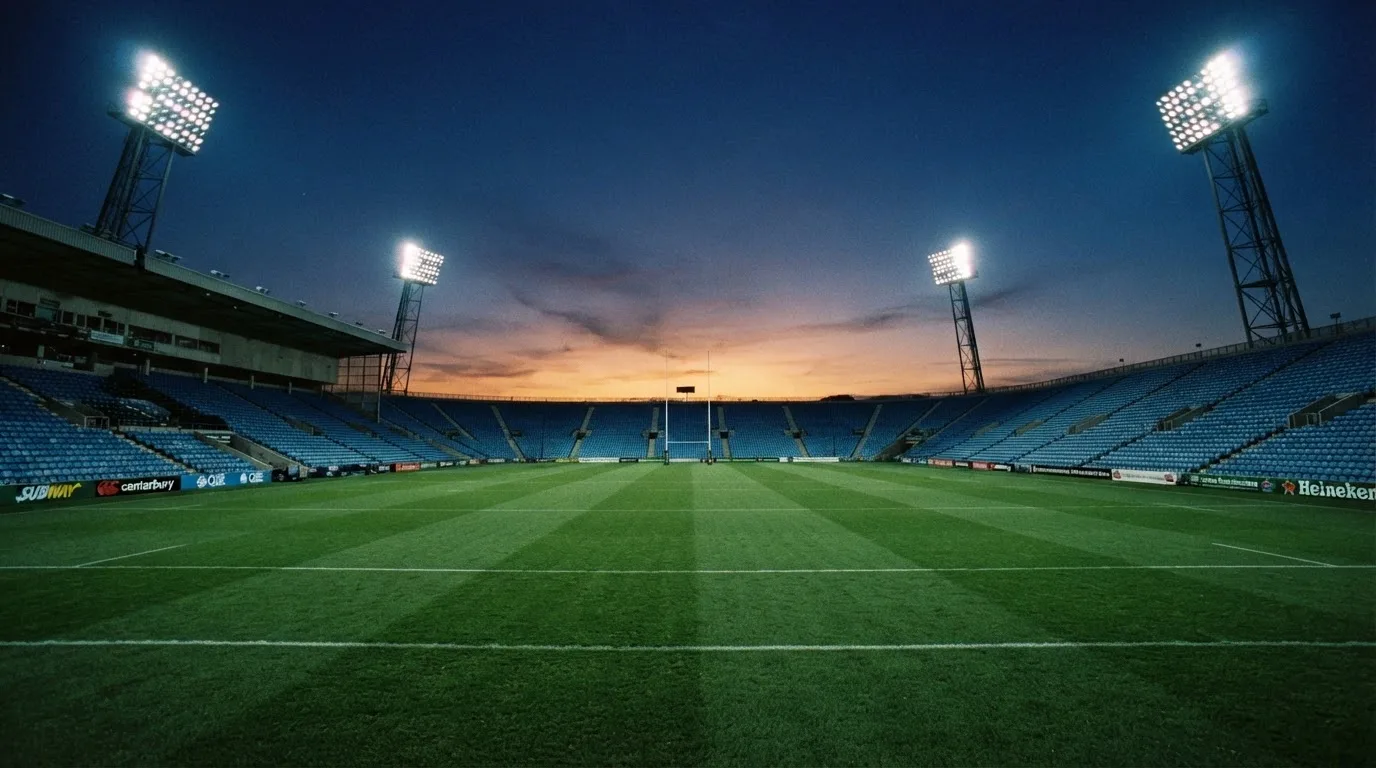
In-play odds on the outright winner shorten sharply the moment a try is scored and lengthen on a missed penalty or a turnover inside the 22. The fastest markets are handicap lines, total points, next scoring play and next team to score, all of which are offered by every major licensed bookmaker in Great Britain. Markets that settle only at full-time, such as winning margin and race-to-X-points, are also live-priced but move more slowly because the underlying probability has less time to shift before the off.
Cash Out is the second mechanism that shapes how a live bettor behaves, and it deserves more scrutiny than the marketing copy usually gives it. A Cash Out button offers to settle the bet at the current live price, less a margin the bookmaker keeps. That margin is not advertised, and it widens when the live price is moving fast — the very moment a bettor most wants to lock in profit. The maths is the same as any other market: the bookmaker’s offer is built around a payout share below 100%, and the bettor’s effective price includes that haircut. Cash Out is convenient; it is rarely the best price available, and a punter who reaches for it on every selection slowly bleeds the edge that a pre-match price briefly offered.
A few practical rules help. Place the live limit only on events where there is a clear, observable trigger — a yellow card, a key substitution, a forward pack starting to dominate set piece — and let the rest run. Treat the Cash Out button as a tool for cutting loss on a bet that has gone wrong rather than as a profit-taking mechanism on every selection, because the latter trains the eye to ignore the underlying price. And remember that the live market is a thin market on most Premiership matches and a thinner one still on the United Rugby Championship and the Top 14: fewer liquidity providers means a wider margin, which is the reader’s cost.
Bet builders that include both pre-match and live legs have grown common on apps serving Great Britain, and the same scrutiny applies to them. The combined price multiplies, which is mathematically honest, but each leg carries its own margin and the multiplied margin is steeper than the margin on a single outcome. A four-leg live bet builder pays out only if all four legs land, and the margin built into the multiplied price is the book’s reward for that longer shot. It looks generous; the arithmetic is the book’s.
Predictions, Tips and Strategy: What a Tip Actually Is
A tip is a price the tipster believes to be larger than the true probability of the outcome justifies, after the bookmaker’s margin has been removed. That sentence does a lot of work, and unpacking it is what separates a punter who lasts from one who does not. The price is the decimal odds the bookmaker publishes (or the fractional form a British punter more often sees at the counter: 5/1, 11/4, evens). The true probability is the bettor’s own estimate of how often the outcome will happen across enough repetitions to wash out variance — a 3.00 decimal line (a 2/1 fractional line, a 33.3% implied probability before margin) is “value” only if the bettor’s honest assessment is that the outcome happens more often than one in three. If it happens one in four, the price is a long-term loser despite a winning bet today.

The implied probability is the first step. A 2.50 decimal line carries an implied probability of 1 / 2.50 = 40% before margin; the bookmaker’s margin inflates every implied probability in the market, so the true implied probabilities sum to more than 100%. A market with two selections at 1.90 / 1.90 has an implied sum of 1/1.90 + 1/1.90 = 105.3%, which is an overround of roughly 5.3% and a margin of roughly 5.0% — the bookmaker’s cut of every pound bet on that market, expressed as a percentage of turnover. A bettor has to beat that margin on every selection to come out ahead, which is why punting without ever thinking about price is a slow leak.
Form and statistics are the next inputs. A rugby union side’s recent results carry weight, but the weighting is not equal: a side returning from a long tour with several senior players rested is a different proposition to the same side at home with a clean injury bill. Head-to-head records are weaker predictors than in football because squad turnover in rugby is high and a side’s personnel changes substantially between meetings a season or two apart. Line-ups matter most of all when they are released, usually 24 to 48 hours before kick-off, and the punter who waits for them and reads the team sheet against their own model has a structural edge over one who bets the night before on rumour.
Weather is a sharper variable than in most sports. A wet, windy afternoon at a ground with a heavy pitch suppresses scoring and pushes total points lines down; a dry, calm evening on a fast track inflates them. The bookmaker’s line will reflect the forecast, but it lags at the extremes, and the lag is where the value sits. Rest matters too: a side playing its third match in ten days, particularly one that travels across time zones, is at a measurable disadvantage that odds partly price in and partly miss.
Bankroll discipline is the discipline on a wager the punted tips actually take. A punter who stakes a fixed percentage of the bank — somewhere between 1% and 3% is the convention — survives the losing runs that any system produces; a punter who doubles up after a loss chases them. The discipline on a wager has nothing to do with picking winners and everything to do with staying in the game long enough for the edge to compound. A staking plan is not a strategy in itself, but no strategy survives without one.
The hardest truth is that no tip is ever certain. A 1.10 decimal line still loses one time in roughly ten, and a sequence of three such “certainties” loses about 27% of the time. Anyone selling tips, free or paid, who claims a hit rate north of what the mathematics allows is selling something other than probability. Betting is no income, the bankroll line that compounds quietly is the long-term result, and the punter who treats the activity as entertainment paid for by the bookmaker’s margin is closer to the reality than one who treats it as a side hustle.
Bet Types and Odds: Reading a Rugby Union Market
The match-result market (home win, draw, away win) is the deepest market on any rugby union fixture and the one with the tightest margin. Most licensed bookmakers in Great Britain post a margin in the low single digits on Premiership and United Rugby Championship fixtures, with the margin widening as the fixture drops down the pyramid. A draw in rugby union is rare but not impossible — the 2023 Rugby World Cup final between New Zealand and South Africa ended 12-11 — and the draw price sits at a long number, often 26.00 or higher on a tight match. A punter looking purely at margin will find the match-result market the cheapest to take.
Handicap betting is where a bookmaker’s pricing gets interesting. A handicap gives one side a notional start — favourites might be priced at 1.90 to cover a -7.5 points line, with the underdog at 1.90 to cover +7.5. The margin on handicap lines is wider than on the match-result market because the price depends on the bookmaker’s view of how the sides compare once the notional start is applied, and that view varies more between firms. A punter who shops around can find a 0.5% to 1.5% edge on the same handicap between two bookmakers, which is the size of edge that compounds across a season.
Total points, sometimes called over/under, is another deep market on televised fixtures and a thin one on the rest. The line is set at a number the bookmaker judges the median total to be, with both sides priced close to 1.90 on a well-formed market. A punter who has a view on conditions — wet weather, a fast track, two strong defences — and reads the forecast has a structural reason to take one side of the line at the posted number.
Outright markets on the Rugby World Cup, the Six Nations, the Premiership and the United Rugby Championship are settled over weeks and months. The margin is wider than on a single match because the bookmaker carries uncertainty for longer, and prices drift as the field narrows. An ante-post price on a World Cup outsider six months before the tournament can carry 30% or more in margin; the same side 24 hours before kick-off, with form known and the team sheet out, trades at a much tighter number. A punter who backs early takes the cheaper price but accepts the wider margin; a punter who waits pays a higher price for a tighter market. Each has its own logic.
Bet builders combine several selections from the same match into one bet, with the combined price being the product of each leg’s price. The marketing pitch is that a £10 stake can return a four-figure sum for a small stake; the audit is that the multiplied margin on the combined bet is steeper than the margin on any single leg, and the more legs the punter adds, the wider the cumulative margin. A two-leg bet builder carries roughly twice the margin of a single bet; a six-leg carries six times. The bookmaker’s price compounds in its favour faster than the punter’s edge does, which is why bet builders feel generous and rarely are.
Each-way betting splits a stake into two equal bets: one on the selection to win, and one on the selection to place. The place terms depend on the field size — typically a quarter of the odds for a handicap or outright market with a large field, and a fifth or a third for smaller fields. A punter who backs a 10.00 decimal line each-way at a quarter the odds for places has, in effect, a 2.50 decimal line on the place element with the rest of the price on the win. The combined stake is doubled, so a £10 each-way bet costs £20. Each-way is a useful structure for outright markets where the place payout cushions a near-miss, but it doubles the stake without doubling the edge.
Decimal and fractional odds are two notations for the same number. Decimal odds of 2.50 mean a £10 stake returns £25, of which £15 is profit and £10 is the returned stake; the equivalent fractional odds are 3/2 (a 6/4 would be 2.50, and the conversion is odds minus 1, so 2.50 – 1 = 1.50, expressed as 3/2). British bookmakers publish both forms, and a punter who reads fractional at the counter should learn the decimal form too because the implied probability is a clean division in decimal terms and a clumsier one in fractional terms. A 5/1 fractional line is 6.00 decimal, an implied probability of 16.7%, and a margin contribution equal to whatever the bookmaker’s take is on that market.
Best Odds Guaranteed (BOG) is a concession on horse racing and on a small number of rugby outrights at some bookmakers. If the starting price at the off is bigger than the price the punter took, the bet is settled at the bigger number. The concession costs the bookmaker money on the long-priced winners and earns it goodwill on the short-priced losers; for the punter it removes the timing risk on ante-post bets, but only on the markets where the operator extends it. Rugby union outrights are rarely covered by BOG; the reader should check the operator’s terms for which sports the concession applies to.
Sports and Tournaments: Where the Liquidity Sits
The Six Nations is the deepest rugby union market on the calendar for Great Britain. England, Scotland, Wales, Ireland, France and Italy play each other home and away across five weekends in February and March, and every match carries the kind of liquidity that pulls the bookmaker’s margin tight. The Premiership in England is the second-deepest, with the larger clubs drawing enough action to keep margins in the low single digits; smaller clubs in the same league see margins widen.
The United Rugby Championship (URC) sits in the middle — a competition involving sides from Ireland, Italy, South Africa, Scotland and Wales, where matches involving the Irish provinces and the South African sides attract action and the rest trade on thinner books. The Top 14 in France is the largest league by revenue but is not as deep a betting market for a Great Britain-based punter because the broadcasts and the coverage are thinner; the prices are available but the markets are not as fully formed.
The Rugby World Cup is the headline event and the one with the most outright liquidity, two years out from a tournament and for the six weeks running into it. The 2027 Rugby World Cup is hosted by Australia from 1 October to 13 November 2027, with 24 teams in six pools of four and 52 matches; South Africa are the defending champions after beating New Zealand 12-11 in the 2023 final in France. Ante-post outright markets open well before the tournament and the margin on the outsiders is substantial; the favourites trade tighter as the event approaches. Pool-stage matches and knock-out matches have the deepest pricing, with the final itself carrying the kind of liquidity that drives margins into the low single digits.
The Champions Cup, the European club competition run by European Professional Club Rugby, attracts outright and match markets from late autumn through to the late-spring final, with the larger clubs carrying the bulk of the action. The Challenge Cup, the second-tier European competition, has thinner markets but real prices are available. Below those, the second-tier domestic leagues and the cross-border competitions are thinly priced and the margin is wide; a punter who bets there is paying for the privilege.
Super Rugby in the southern hemisphere, the Japanese League One and the Major League Rugby in North America are available at most major bookmakers but the prices are not as competitive as the European and southern-hemisphere flagship competitions. The reader should not assume the margin is the same across competitions, because it is not. A bookmaker’s margin on a Currie Cup match in South Africa is wider than on a Six Nations match at the same time of year, even though the sport is the same.
Top 10 UK-Licensed Bookmakers for Rugby Union Betting
The ranking below covers ten bookmakers that hold a Gambling Commission remote licence for Great Britain, in the order set by the operator set in research and the page’s spec. The column on the right of each entry is a representative point on the operator’s own terms — the kind of thing a punter should know before signing up. The columns vary by operator because each bookmaker’s distinct feature is different, and the table does not pad with repeated detail. Where the operator’s site is listed, it is for the reader to verify on the Commission’s public register; the address itself is not printed on this page.
| Brand | Gambling Commission remote licence number and licence holder | what the operator’s own terms state on the key’s subject |
|---|---|---|
| 888sport | 888 UK Limited, account 39028 | Pre-match and in-play betting, Cash Out, Bet Builder, racing streams, BetFinder form tools, a live bet feed and daily boosted odds |
| Spreadex | Spreadex Limited, account 8835 | Fixed-odds plus FCA-regulated spread betting; spread losses can exceed deposits |
| Sporting Index | Sporting Index Limited, account 27343 | Fixed-odds plus spread betting on sports indexes; new-customer offer has minimum odds and an in-play restriction on the qualifying bet |
| Copybet | Copybet UK Limited, account 53774 | Best Odds Guaranteed all day on UK and Irish racing; pays first past the post even if the winner is later disqualified |
| VBet | SCGO Limited, account 44662 | Bet Builder, pre-match and in-play betting, live streaming and a live calendar with results and stats |
| Bet600 | Tyche Tech Limited, account 44731 | Best Odds Guaranteed on horse racing, settled at the starting price if it beats the price taken |
| William Hill | WHG (International) Limited, account 39225 | Best Odds Guaranteed on UK and Irish racing from 8 AM on race days; single and multiple bets; not ante-post, tote or pari-mutuel |
| Fafabet | Taichi Tech Limited, account 57385 | Best Odds Guaranteed on UK and Irish racing from 9 AM on race days; settled at the bigger of the original or starting price |
| Paddy Power | PPB Counterparty Services Limited, account 39439 | Bet Builder+, Popular Bet Builders, Super Sub (rolls to a replacement if a selected player is subbed), expanded Win More markets, player and acca stats |
| Kalooki Sportsbook | Kalooki Sportsbook Limited, account 57730 | Instant withdrawals by bank transfer, Best Odds Guaranteed on UK and Irish racing, in-play betting, daily boosts and extra place races |
888sport
888sport carries a full set of pre-match and in-play markets on rugby union and adds the features a regular punter uses daily: Cash Out, Bet Builder, racing streams, BetFinder form tools, a live bet feed and daily boosted odds. The Gambling Commission licence under 888 UK Limited, account 39028, sits in the standard remote general betting (real events) category and covers what a Great Britain punter needs. The app store listing reads “888 Sport: Live Sports Betting” and the GB app rating is 17+, which the reader should treat as the floor on the operator’s own age-gating rather than a substitute for it. For a punter who wants a single app that handles Premiership outrights, Six Nations match markets and the Rugby World Cup outrights without leaving the screen, 888sport covers the basics cleanly. The verdict: a competent mid-market bookmaker whose appeal is the combination of bet builder and live feed rather than any single feature.
Spreadex
Spreadex is one of the smaller names on the list and the only one that runs fixed-odds betting and FCA-regulated spread betting from the same account. The FCA regulates the spread side because financial spread betting is a financial instrument, not a gambling product, and the same punter can spread-bet on a rugby union total-goals index alongside a fixed-odds bet on the match result. The risk note is the headline: spread losses can exceed deposits, because a spread position is leveraged and a wrong-way move can compound. The Commission licence under Spreadex Limited, account 8835, covers the fixed-odds book. The Spreadex terms page carries that warning prominently. The new-customer offer is a £10 fixed-odds bet unlocking £60 in free bets usable across fixed odds and spread betting, with the qualifying bet needing to be placed within 28 days of opening the account. The verdict: a different proposition for a punter who specifically wants spread betting alongside fixed odds, and not the right starting point for someone who has not used a spread book before.
Sporting Index
Sporting Index runs the same dual model as Spreadex but on a sports-spread basis — Total Goals, Winning Favourites, Race Index — alongside a fixed-odds sportsbook. The Commission licence under Sporting Index Limited, account 27343, covers the fixed-odds side. The new-customer offer unlocks a bundle of free bets and free spread bets from a £10 fixed-odds qualifying bet at minimum odds of 1/2 (1.50 decimal), with the qualifying bet excluded from in-play or cashed-out settlement. The terms matter because a punter who places the qualifying bet in-play, or who cashes it out early, voids the offer. The verdict: a specialist bookmaker for the punter who wants spread exposure to sports indexes; less compelling for the punter who only wants fixed odds.
Copybet
Copybet is a Commission-licensed fixed-odds bookmaker under Copybet UK Limited, account 53774, with a focus on racing and a BOG concession that runs all day, every day on UK and Irish racing. The payout rule is a finer point: the operator pays first past the post on horse racing even if the winner is later disqualified, which protects the punter from a steward’s enquiry that strips the result. For rugby union, the markets are standard rather than specialist, and the racing concessions do not extend across sports. The verdict: a clean choice for a punter whose betting is mostly on racing with a side order of rugby outrights.
VBet
VBet is run by SCGO Limited, account 44662, and carries the deeper feature set: Bet Builder, pre-match and in-play betting, live streaming, and a live calendar that pairs fixtures with results and stats. The combination of streaming and stats on the same screen is the point, because a punter who watches the match and tracks possession, territory and tackle count in the same window has more information than one who toggles between apps. The Commission licence covers what a Great Britain punter needs. The verdict: a strong fit for the in-play punter who wants to keep the match on screen alongside the betting slip.
Bet600
Bet600 is licensed under Tyche Tech Limited, account 44731, and is a fixed-odds bookmaker with a racing-focused concession: Best Odds Guaranteed on horse racing, settling at the bigger of the price taken or the starting price. The rugby union coverage is standard rather than specialist. The verdict: a competent mid-market bookmaker for a punter whose betting is split between racing and rugby, with the BOG concession on the racing side as the distinguishing offer.
William Hill
William Hill is the largest name on the list by retail estate and one of the longest-established on the Commission’s register, under WHG (International) Limited, account 39225. The BOG concession runs from 8 AM on the day of the race on UK and Irish horse racing, on both single and multiple bets, and excludes ante-post, tote and pari-mutuel. The rugby union offering is full — match markets, handicaps, total points and outrights — and the deeper feature set includes the standard Cash Out and Bet Builder. The verdict: a high-street brand that carries weight on outright liquidity, particularly on the Six Nations and the Premiership; the BOG timing is the racing-specific detail to know.
Fafabet
Fafabet runs under Taichi Tech Limited, account 57385, and extends BOG to UK and Irish racing from 9 AM on race days, settling at the bigger of the original or starting price. The site carries the standard fixed-odds markets on rugby union and the standard features. The verdict: a tidy choice for a punter who wants BOG with a 9 AM cut-off rather than the 8 AM of the larger rivals.
Paddy Power
Paddy Power runs under PPB Counterparty Services Limited, account 39439, and carries one of the deeper feature sets on the list: Bet Builder+, Popular Bet Builders, Super Sub (a bet rolls over to a replacement player if the selected player is substituted), expanded Win More markets, and player and acca statistics. The Super Sub feature is the standout, because in-play substitution is a regular event in rugby union and the punter who backs a player to score a try is exposed to the substitution risk; Super Sub mitigates that exposure on selected markets. The verdict: a strong fit for the bet-builder punter and for anyone whose markets include player-specific outcomes.
Kalooki Sportsbook
Kalooki Sportsbook is operated by Kalooki Sportsbook Limited, account 57730, and is a GAMSTOP member. The site advertises instant withdrawals by bank transfer within minutes, Best Odds Guaranteed on UK and Irish horse racing, in-play betting, daily boosts and extra place races. The withdrawal speed is the standout for a punter who values fast access to winnings; the other features are standard. The verdict: a Commission-licensed bookmaker whose differentiator is the withdrawal time, with the rugby union offering on a par with the mid-market peers.
Overview: What Rugby Union Betting Is
Rugby union is a fifteen-a-side contact sport played in two 40-minute halves, with stoppages not counted off the clock and games typically running longer than 80 minutes. World Rugby has governed the sport internationally since 1886, and the Laws of the Game it maintains are the same Laws every league, from the Premiership to the Currie Cup, plays under. The scoring is straightforward: five points for a try, two for a successful conversion, three for a penalty and three for a drop goal. A converted try is therefore worth seven points, and a single phase of play can move the scoreboard by three, five or seven in seconds.
The Rugby World Cup is the headline event of the international calendar. It was first held in 1987 in Australia and New Zealand, with New Zealand winning the inaugural title. South Africa are the defending champions after beating New Zealand 12-11 in the 2023 final in France. The 2027 Rugby World Cup will be hosted by Australia from 1 October to 13 November 2027, with 24 teams in six pools of four and 52 matches scheduled. The tournament calendar runs the international season in four-year cycles between World Cups, with the Six Nations and the southern-hemisphere Rugby Championship filling the spring and the southern-hemisphere winter.
The domestic club game in Great Britain runs through the Premiership in England (a ten-team league), the United Rugby Championship (which includes sides from Ireland, Italy, South Africa, Scotland and Wales) and the Champions Cup and Challenge Cup at European level. Below the Premiership sit theChampionship, the third tier in England, and a network of regional leagues. The depth of betting liquidity follows that pyramid: the Premiership and the URC carry tight margins, the Championship wider margins, and the regional leagues are thinly priced.
Betting on rugby union follows the same structure as betting on any other sport: the punter backs an outcome, the bookmaker prices it, and the bet settles at the end of the event (or during it, for in-play markets). The differences from football, the more familiar comparator, are mostly about the scoring pattern and the clock. A rugby match scores in chunks of three, five or seven, which moves the in-play line in larger steps than a football match typically does; a sin-binning is a 10-minute suspension that changes the shape of the game without producing a score, and the bookmaker’s algorithm responds to that change. A punter who reads the game as well as the price has an edge in rugby union that is harder to find in football because the bookmaker’s models are less mature.
Legality and Licensing: The Gambling Commission Frame
The Gambling Commission (UKGC) is the regulator of commercial gambling in Great Britain, and it licenses every operator that takes bets from customers in England, Scotland and Wales under the Gambling Act 2005. Since the Gambling (Licensing and Advertising) Act 2014, an operator needs a Commission licence wherever it is based if its remote facilities are used in Great Britain; a Curaçao, Maltese or Gibraltar licence is not a substitute. Northern Ireland sits outside the 2005 Act and has its own older framework, so a “Great Britain licence” or “GB-licensed” is the correct framing for this page and a GB licence does not regulate activity in Northern Ireland.
The Commission’s public register is the whole test of who holds a licence. It is searchable by business name, trading name, domain or account number, and a punter can verify any operator in seconds. A domain ending in .com rather than .co.uk is not evidence of unlicensed status: licensed operators use both. Several brands can run under one licensee — Ladbrokes and Coral under Entain, Paddy Power and Betfair under Flutter — and the page must not present sister brands as independent. The page lists ten operators, but the Commission’s register lists far more, and no single brand is “the only” licensed one. The ten listed are the ten the spec has routed for review; the broader licensed set is much wider.
Betting licence types matter because the markets an operator can offer depend on the categories on its licence. The categories relevant to this page are remote general betting standard (real events) — which covers sports betting on real matches — and remote betting intermediary, the licence for betting exchanges. Pool betting and virtual events are separate categories, and a bookmaker without a real-events licence cannot offer a sportsbook. The licence categories appear on the Commission’s register against each account, and the punter can read them off in seconds.
Minimum age is 18, and identity verification — name, address and date of birth — is required before a customer can deposit or gamble, including with a free bet or bonus. Verification has been in force since 7 May 2019. There is no anonymous play at a licensed site, and a punter who wants to keep their betting activity invisible from their bank statements will not find that option in the licensed market.
What may be bet on is not prescribed by statute. An operator holds a licence for a category and offers markets under its own rules and the Licence Conditions and Codes of Practice (LCCP). In-play betting is offered by GB operators and is controlled by the operator’s licence conditions and customer-protection duties; the page must not write that in-play is “unrestricted” as a legal conclusion. Esports are treated like any other event, virtual events are a separate licence category, and bets on politics, TV shows and novelty markets are offered by GB operators without a statutory prohibition.
Financial spread betting is regulated by the Financial Conduct Authority, not the Commission, because it is a financial instrument. A punter using Spreadex or Sporting Index for spread betting is dealing with an FCA-regulated product, and the same warnings apply as on any leveraged financial position. The Commission licence on the same operator covers the fixed-odds book; the two sides sit under different regulators.
Advertising of gambling is not licensed by the Commission. It is regulated through the CAP Code (non-broadcast) and the BCAP Code (broadcast), enforced by the Advertising Standards Authority, alongside the Commission’s own marketing rules. Marketing must be socially responsible, must not be of strong appeal to under-18s, and no one who is or seems to be under 25 may feature gambling or play a significant role in an advertisement (with an exception for marketing placed where a bet can be made directly); that rule concerns who may appear in the advertisement, not who may bet. Promotion rules in force since 19 January 2026 cap wagering requirements on bonuses at 10x (a £10 bonus at 50x wagering, needing £500 of bets, exceeds the cap and is now unlawful) and ban mixed-product promotions that require gambling on two or more product types. A bookmaker cannot pay a free bet, then require the punter to spend it on football and earn free spins; that structure is now outside the rules.
The player pays no tax on betting winnings in Great Britain. General Betting Duty is the operator’s tax on gross profits, currently 15%, with a remote rate of 25% applying from 1 April 2027 within it while remote bets on UK horse racing, self-service betting terminal bets, pool betting and in-person betting stay at 15%. Until 1 April 2027 the remote rate stays at 15%. The Commission’s statutory levy is a separate charge and not a tax. Spread betting has its own rates (3% financial, 10% other). Whether operators pass duty on through odds is not established by the published material.
Offshore operators without a Commission licence are operating outside the GB framework. The offence under section 33 of the Gambling Act 2005 is aimed at the operator providing facilities without a licence, not at the customer betting on one. The customer’s exposure is the loss of protection: no GAMSTOP coverage, no Commission complaints route, no approved dispute-resolution body, no British consumer redress if funds are withheld, and not subject to the 10x bonus cap or the £150 vulnerability check. Enforcement is disruption rather than blocking: cease-and-desist notices, search-engine referrals, work with registrars, hosts and payment providers, and court-order DNS blocking powers that have been given or are about to be given. ISP blocking is not in operation as a permanent state. The honest framing: licensed = checks, limits, GAMSTOP, bonus cap, but also verification before the first bet; unlicensed = none of those protections and possible loss of funds.
Responsible Gambling: The Frame Around the Bet
GAMSTOP is the national multi-operator online self-exclusion scheme and a mandatory licence condition for online operators since 31 March 2020. A punter who registers with GAMSTOP self-excludes from every GB-licensed online bookmaker for a chosen period: six months, one year, five years, or five years with auto-renewal. After the minimum period the exclusion stays in place for a further seven years unless the punter asks GAMSTOP to remove it. GAMSTOP covers online sites and apps; betting shops use a separate service. A punter serious about stopping should register with GAMSTOP and then tell the operator directly, because registration alone does not always propagate instantly across every site.
Deposit limits are an RTS (Remote Technical Standards) requirement: operators must offer a gross deposit limit on a fixed time frame. The first changes have applied since 31 October 2025, a second phase was postponed to 30 September 2026, and whether the second phase is live is not established by the published material. There is no state-set deposit or loss ceiling; the limits are the punter’s choice. A punter who wants a hard limit can set one at any licensed operator and the operator must honour it.
The financial vulnerability check (LCCP condition 3.4.4, in force since 30 August 2024) applies to licensed remote betting when a punter’s deposits minus withdrawals exceed £150 in a rolling 30 days (since 28 February 2025). It is a public-record check (bankruptcy, county court judgments and similar) rather than an income or credit reference check. Financial risk assessments — the “affordability checks” of the press — were announced in a Commission article of 7 July 2026 with a staged plan and no start date; the page writes “announced, staged, no start date”, not “in force”.
Help exists outside the operators. GamCare runs the National Gambling Helpline. GambleAware funds treatment and education. NHS gambling clinics operate in several regions. Gamblers Anonymous runs peer-support meetings. A punter who is chasing losses, betting more than they can lose, or borrowing to bet, is the punter these services exist for, and the moment to contact them is the moment the pattern appears, not the moment the bank account empties.
Credit cards are banned for gambling in Great Britain since 14 April 2020, including credit-card-funded payments through an e-wallet. Debit cards and bank-based payments are not covered by the ban. The ban is at the operator and the payment processor, and the punter can confirm the position on the operator’s deposit page. Identity verification before the first deposit means there is no anonymous play at a licensed site, and source-of-funds questions at higher spend are normal under the money-laundering rules. The British named-account rule, a state list of permitted payment methods, and any rule for or against cryptocurrency deposits at licensed operators are not established; the punter checks the operator’s own deposit page for what is and is not accepted.
The Premier League clubs’ withdrawal of gambling sponsorship from the front of matchday shirts from the 2026/27 season is voluntary, not statutory, and the sleeve and perimeter hoardings remain. The change is a signal about how the sport sees its commercial partners, not a change in the law.
Bonuses and Free Bets: Reading the Marketing
Bonuses and free bets are a marketing cost the bookmaker chooses to bear, and the punter’s first job is to read the cost onto themselves. A “free” bet whose stake is not paid back with a win is not free in the way a refund is free; the punter gives up the stake and takes the winnings only. A £10 free bet at 3.00 decimal odds that wins pays £30, not £40, because the £10 stake is the bookmaker’s money and stays with the bookmaker. A £10 cash refund on a losing bet pays £10 back regardless of the odds, because the refund is the bookmaker’s money and goes to the punter. The two are different products.
Wagering requirements are the second mechanism. A bonus that pays out only after the bonus amount has been bet a set number of times at a minimum price is a bonus whose real value is the bonus amount minus the expected cost of clearing it. Promotion rules in force since 19 January 2026 cap wagering requirements on bonuses at 10x — a £10 bonus at 50x wagering, needing £500 of bets, exceeds the cap and is now unlawful. The cap protects the punter from the worst end of the market; it does not make a 10x bonus costless. Whether the cap applies to free bets with no wagering condition is not established by the published material.
The minimum price on qualifying bets is the next condition. A bonus that requires the qualifying bet to be placed at minimum odds of 1/2 (1.50 decimal) excludes bets at shorter prices, because the bookmaker does not want the qualifying bet to be near-certain. A punter who places the qualifying bet at 1.10 voids the offer. The minimum price on the wagering bets — the bets that count towards clearing the bonus — is usually higher than the minimum price on the qualifying bet, and the punter should read both before claiming.
The deadline is the third condition. Most offers expire within 7, 14 or 30 days of the qualifying bet, and the free bets themselves often expire within a further 7 days of issue. A punter who claims an offer and does not use it within the window loses it. The terms page on the operator’s site carries the exact deadlines, and the punter who claims an offer on a Saturday and does not look at the terms until the following Wednesday has already lost a third of the window.
Mixed-product promotions are banned since 19 January 2026: an offer that requires gambling on two or more product types (betting plus casino, betting plus bingo, betting plus lottery) is now outside the rules. A bookmaker cannot pay a free bet in return for a football bet and offer free spins as part of the same package; the structure is unlawful. A punter who sees that structure on a licensed site should read it carefully because it should not be there.
A “risk-free” bet refunded as a free bet is not a refund in cash. The marketing word is “risk-free” because the bookmaker carries the loss on the first selection; the punter’s loss is the chance to win in cash rather than free bets, because a winning free bet does not pay back the stake. The same applies to “no deposit” bonuses that pay free bets rather than cash: the offer is a marketing cost the bookmaker is willing to absorb, and the punter’s job is to read the price in real terms.
Boosted odds on a specific outcome (a price boost on England to beat Wales at 4/1 instead of 5/2) carry the same scrutiny. The boost is a marketing concession; the punter reads the price against the underlying market and decides whether the boosted price is still value. A boosted price that is still shorter than the punter’s own probability estimate is value; a boosted price that remains longer than the punter’s estimate is not.
Acca insurance that refunds the stake as a free bet if one leg lets the punter down carries the same scrutiny as a free bet: the refund is in free bets whose stake is not returned, and the punter who wants cash reads the terms carefully before claiming.
The licensed market is the place to claim these offers. An unlicensed operator offers none of the 10x cap, none of the GAMSTOP coverage, and none of the dispute-resolution route. The protection is part of the product.
How the Margin Sits in a Two-Way Market
The bookmaker’s margin is the cut the book takes of every unit bet on a market, expressed as a percentage of turnover. On a two-way market priced at 1.90 / 1.90 (fractional 9/10 on each side), the implied probabilities add up to 1/1.90 + 1/1.90 = 105.3%. The payout share — the proportion of every pound bet that the book returns to punters across all outcomes — is 1 / 1.0526, or roughly 95.0%. The margin — the proportion of every pound the book keeps — is 100% minus the payout share, or roughly 5.0% on this market. A punter betting £10 on either side of a 1.90 / 1.90 market is, in expectation across many bets, paying about 50p of that stake to the bookmaker before the result is even considered.
The margin is not the same as the odds. A margin of 5% means a payout share of 95% and a break-even expected return on the underlying probability; a margin of 2% means a payout share of 98% and a tighter market that is cheaper for the punter to take. The margin is the cost of the market to the punter, and the punter’s job is to find the market with the lowest margin that still offers the price they want.
Three-way markets (home, draw, away) carry a wider margin than two-way markets because the bookmaker is pricing three outcomes and the implied sum runs higher. A 1.60 / 4.50 / 5.00 decimal market (a typical Six Nations match result) sums to roughly 1/1.60 + 1/4.50 + 1/5.00 = 1.0833, which is a margin of roughly 8.3% — wider than the 5% on the two-way example, and the cost the punter pays for the chance to back a draw that takes 90 minutes plus stoppages to settle.
The punter reads the margin by adding the implied probabilities of every outcome in the market. A sum below 103% is a tight market; a sum between 103% and 106% is typical of a major fixture; a sum above 108% is a wide market. The sum is rarely advertised by the bookmaker; the punter does the arithmetic themselves on the prices shown.
Frequently Asked Questions
How does rugby union betting work in the UK?
Rugby union betting in Great Britain works through bookmakers licensed by the Gambling Commission under the Gambling Act 2005. The punter backs an outcome on a fixture at a price the bookmaker publishes, and the bet settles at the end of the event (or during it for in-play markets). Minimum age is 18, identity is verified before the first deposit, and the licensed operator must offer GAMSTOP self-exclusion and a deposit-limit tool. In-play and outright markets are widely available; spread betting is a separate FCA-regulated product on its licensed operators.
How do you bet on rugby union?
Place an account with a Gambling Commission-licensed bookmaker, complete the identity check (name, address, date of birth), deposit by debit card or bank transfer (credit cards are banned for gambling in Great Britain), and select a market on a fixture. Choose match result, handicap, total points, first scoring play, or an outright on a tournament. Enter the stake, confirm the bet, and the slip settles when the market settles. The punter reads the price against their own probability estimate before placing the bet.
What is a value bet and why is no tip ever certain?
A value bet is a price larger than the true probability of the outcome justifies, after the bookmaker’s margin has been removed. The implied probability at 2.50 decimal odds is 40%; if the punter’s own estimate is that the outcome happens more often than 40% of the time, the bet is value. No tip is ever certain because every bet has a non-zero chance of losing, and a sequence of three “certainties” at 1.10 decimal odds still loses 27% of the time. Betting is no income and no tip guarantees a win.
What is the bookmaker’s margin and how can it be seen in the odds?
The margin is the cut the bookmaker keeps of every unit bet on a market, expressed as a percentage. On a two-way market at 1.90 / 1.90 the implied probabilities sum to 105.3%, giving a payout share of roughly 95% and a margin of roughly 5%. A three-way match-result market at 1.60 / 4.50 / 5.00 sums to roughly 108.3%, a wider margin. The margin is read by adding the implied probabilities (1 divided by decimal odds) of every outcome in the market; the sum above 100% is the margin.
How can it be checked that a bookmaker holds a Gambling Commission licence?
Open the Commission’s public register, which is searchable by business name, trading name, domain or account number. The register lists the licence categories on each account and the licence holder’s name, and the entry of any listed organisation can be verified against the operator’s own terms page. A licensed operator must display its licence status and account number on its own site; the register is the definitive test, and a punter should verify before depositing.
Rugby, cricket & Gaelic – Cricket betting
Content created by the «Cricket betting» team
