
Online greyhound racing betting: what it really costs the punter
 Available in US
Data current as of 27 October 2026 and verified against the Gambling Commission’s public register.
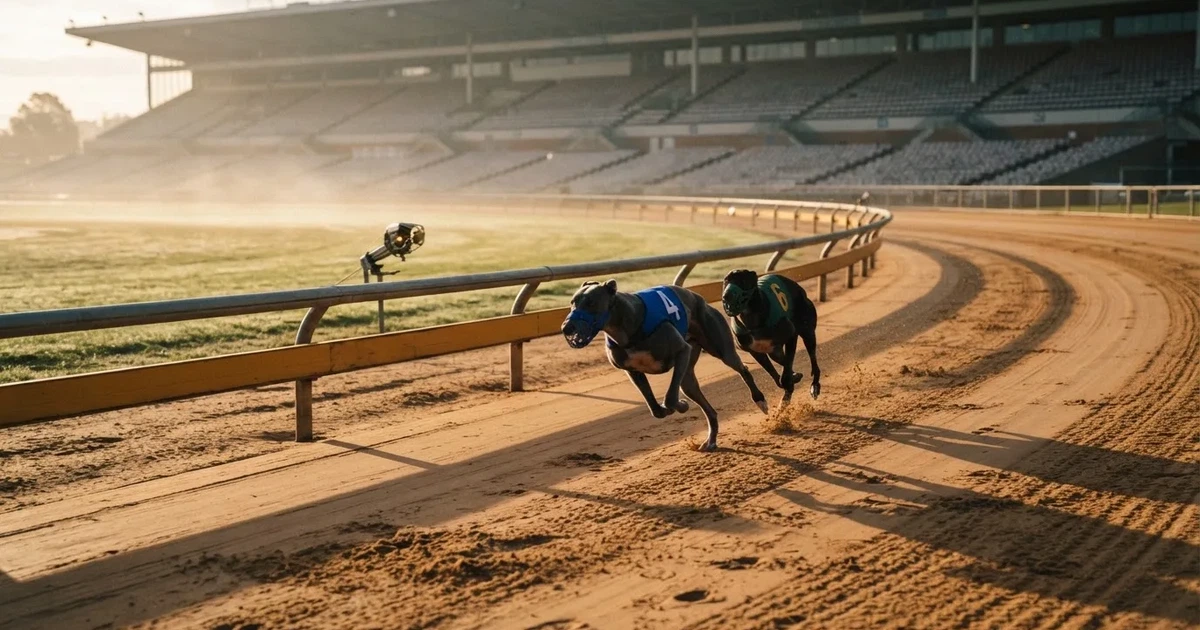
Betting on greyhound racing in Great Britain sits inside a fully commercial market with a single regulator at its centre: every site that takes a bet from a customer in England, Scotland or Wales needs a Gambling Commission licence, and the Commission’s public register is the only place that test is settled. There is no state monopoly, no statutory list of permitted sports, and no cap on the number of licences. That is the picture behind the ten names compared below, and the reason the comparison is read against what each one charges, not what each one claims.
The cost question runs through everything that follows. A greyhound race is short, the margin inside the prices is the same kind of overround that sits on football or tennis, and the offers that come with a sign-up are framed in pounds that often look bigger than they are once the conditions are read. This page works through that cost — at the market, at the offer, and at the ten bookmakers that hold the licences the register names.
Greyhound betting on a phone or tablet
A greyhound meeting lasts an evening, not a weekend, and the bets are placed in the gaps between races. That is the structural reason the mobile app is where most of the action lives for this sport, and the reason almost every UK-licensed bookmaker pushes its app as the primary channel. The first thing to check on any greyhound app is not the welcome offer but whether the in-play odds and the race card load quickly enough to read in the few seconds between races.
What separates the apps in this market is depth on the race card and the speed of the cash-out button. A standard race card shows the trap number, the dog’s name, the form figures, the trainer and the SP, and the better apps also show sectional times, recent grades, an early and a late price movement, and a head-to-head between the two market favourites. Cash out is a feature most of the major apps now carry, and the ones that don’t are the ones the punters leave first. Bet Builder, where offered, covers the win market and the place market in a single bet slip — Greyhound is not a sport where every leg is available, and a slip that requires six legs is, in practice, a longshot at the size of a bet builder.
The browser experience, on the rare evening when an app is not to hand, mirrors the app at most of the major sites, with the exception of the live stream and the bet-slip placement. For greyhound, where the live stream is sometimes the only way to see a smaller meeting at all, that matters. The ten brands covered below all carry an app in the UK stores, and the cost question for the punter is whether the time saved on the app is paid for in a higher take from the market, which the sections that follow work through directly.
A small note on Android specifically: Google Play restricts gambling apps by country, and the major UK brands are reached through the operator’s own page in most cases. That is normal and not a red flag, but a reader who only installs from the Play Store may not find the app at all.
In-running markets and the cash-out lever
Greyhound races settle fast. From the boxes opening to the winning line is six or seven bends and around thirty seconds, and that is not enough time for a meaningful in-play market. What the in-running tab actually carries is the inter-race betting — the next race, the next meeting, the meeting after that — and the same margin built in.

Cash out is the lever that turns the in-running page from a passive stream into an active one. A punter who has taken 3/1 about a dog that has drifted to 4 can lock in a small profit before the race if the cash-out figure is right, or cut the loss if the price has gone the other way. The cash-out figure is a derived price — the bookmaker’s estimate of the live price minus a chunk of margin — and the better books show the calculation, the worse ones do not. On a sport where the price moves by the second, that is the cost the punter is paying: a margin on the original bet, then a second margin on the cash-out figure, then the time-cost of tapping at the right moment.
In-play on greyhounds is also where the streaming service earns its keep. Several of the UK-licensed books carry a live feed of the smaller tracks that ITV does not cover, and a feed that loads fast is the difference between a bet that is placed in time and one that is not. The streaming is offered free to funded customers, with the small print that “funded” can mean as little as a £5 stake in the previous 24 hours. The cost the punter pays for the stream is, in effect, the vig of the markets he or she uses to qualify.
Live betting today runs across the same ten sites as the pre-match offering, and the section on the comparison below sets out which of the ten carries a deep live book and which carries a thin one. The short version: bet365, Sky Bet, Coral, Fitzdares and NetBet carry in-play on the next-off greyhound races; 10bet and Bar One Racing carry a slimmer book; BetGoodwin, Kalooki and Betmaster are pre-match heavy. That is the rank order for a punter whose evening revolves around a single meeting, and a different one for a punter who plans a week of cards in advance.
Tipsters, systems and the value of an angle
Greyhound racing draws more tipsters per fixture than any other sport in the British book, and that is partly because the form book is short — six races at most between a dog’s last run and the next — and partly because the races are frequent enough that a tipster can post daily. A system is the same idea with the receipts shown: a set of rules about trap draw, grade, going, trainer and form, applied consistently. The “value of an angle” framing is the one the tipsters themselves prefer, because it side-steps the question of whether the angle is statistically better than guessing.
Most of the public systems on greyhound racing are not systems at all but a series of post-hoc justifications. The serious ones do exist, and they rest on three things that are checkable: trap bias at the track, the form cycle of the dog (a dog at the top of its cycle is more likely to run to form), and the trainer-jockey combination at the meeting. Trap bias at Belle Vue is real and documented; trap bias at a smaller track may be the same trainer running the same dogs in the same trap every week, which is not the same thing at all.
The honest cost of a tipster is the subscription, which is real money; the cost of a system is the same subscription plus the time-cost of running the rules yourself, which is also real money. The cost of a “free” tipster is the most expensive of the three, because the tipster’s revenue is the affiliate link to a bookmaker, and the bookmaker pays for the player, not the picks.
What the punter actually wants is a small edge that compounds over hundreds of bets. The shape of that edge matters: a tipster who picks 12/1 shots at a 7% strike rate is not the same as one who picks 2/1 shots at a 40% strike rate, even though the return on stake looks similar. The bet type section below covers the odds side; the practical point for a punter here is that a system that does not publish its strike rate, its average price and the sample size is not a system, and is not worth the time-cost of running it.
A “best bet” page on a tipster site is, on a Saturday evening, around £10 to subscribe to the better-known names and free on most of the rest. A punter who pays the £10 and treats it as a research tool rather than a tip sheet is closer to using the tipster the way the tipster would want to be used; a punter who takes the picks as a system is paying £10 a week to lose at the bookmaker’s margin.
The shape of a greyhound bet
The market vocabulary for greyhound betting is shorter than for football or horse racing, and the order in which the markets are listed on a race card is roughly the same at every UK-licensed book. The win market is the bet on the dog to finish first; the place market is the bet on the dog to finish in the first two (or three, in larger fields — most operators set place terms at 1/4 the win odds for a six-runner field, 1/5 for a five-runner field); the each-way bet is one win stake and one place stake of the same size, with the place terms set by the race.
Beyond the win and place markets, the standard greyhound bet includes forecast and tricast bets. A forecast is the first two in the right order, a tricast is the first three in the right order, and a combination forecast covers the first two in any order. The odds on a forecast are a multiple of the two single prices, and the margin inside the forecast market is, on average, larger than the margin inside the win market — partly because the bookmaker has to cover more outcomes, partly because the punters who play the forecast market are a softer target. The cost of a forecast bet is the multiple, and the cost of a forecast market is the higher margin.
Ante-post greyhound betting is the bet placed before the final declarations are out, and it carries a Rule 4 deduction if the field shortens, and a non-runner rule that voids the stake if the dog is withdrawn. The SP, the starting price, is the on-course fixed-odds price when the race starts, and most UK-licensed books offer best odds guaranteed (BOG) on greyhound meetings, which means the punter is paid at the higher of the price taken and the SP.
A bet builder on greyhound racing is a single bet built from markets on the same race — usually the win and the place, sometimes the forecast and the place. The odds are multiplied, and the bet builder is treated as a single bet for the purposes of the wagering requirement. A bet builder that is offered pre-match is, in practice, the same combination of legs at a higher price; an in-play bet builder is rarer and usually covers the win market only.
The greyhound spread-bet market is different again. A spread book, the kind regulated by the Financial Conduct Authority rather than the Gambling Commission, runs a spread on the winning time of a race, the winning distance and the number of finishers inside a margin, and the punter buys or sells inside the spread. The cost of a spread bet is the size of the position times the spread, and the FCA’s warning on the Spreadex homepage — that spread betting losses can exceed deposits — applies here as it does on the financial markets. Spread betting on greyhound racing is not a Gambling Commission product and is not part of the comparison below.
A greyhound bet calculator is the tool that turns the stake and the price into a return, a profit and a per-line figure on a combination bet, and the major UK books now run one inside the bet slip. The calculation itself is short: at decimal odds, a £10 stake at 3.00 returns £30 (£20 profit, the stake is included in the return); at 5.00 the return is £50 (£40 profit); at 1.50, the return is £15 (£5 profit). The figure is what the slip shows when the bet is placed, and is what the book pays when the bet wins.
Tournaments, fixtures and the year in greyhound
The British greyhound calendar is set by the Greyhound Board of Great Britain (GBGB), which licenses 18 stadia across the country. The big meetings are the English Greyhound Derby at Towcester, the Scottish Greyhound Derby at Shelbourne, the Oaks at Swindon, the St Leger at Wimbledon, the Cesarewitch at Belle Vue, and the Brighton Belle. The smaller meetings run nightly at tracks from Perry Barr to Hove, and the race card is the same shape at every meeting: a sprint distance, a standard distance, a stayers distance, and a graded series.
In the southern hemisphere the picture is different. Greyhound racing in New Zealand was ended by the Racing Industry (Closure of Greyhound Racing Industry) Amendment Act 2026, passed on 2 April 2026, with the phase-out set for 1 August 2026. The decision was announced on 10 December 2024 by Winston Peters, and the seven affiliated clubs that previously ran under Greyhound Racing New Zealand — Auckland, Waikato, Whanganui, Palmerston North, Canterbury, Otago and Southland — have wound down. There is no New Zealand greyhound racing to bet on in 2026.
The tournament calendar matters for two reasons. First, ante-post markets on the big meetings open months in advance, and the price on offer is a longshot by the time the race is run; the Rule 4 deduction applies as the field shortens, and the non-runner rule voids the stake if the dog is withdrawn. Second, the bigger meetings carry a place terms upgrade (1/4 the win odds for a six-runner field becomes 1/5 or 1/6 for the bigger fields), and the each-way stake is paid in full to the place market at the upgraded terms.
The fixture list for the year in Great Britain runs from January to December, with the bigger meetings concentrated in the summer. The English Greyhound Derby, the Scottish Greyhound Derby and the Oaks sit in the June-to-September window, and the rest of the year is graded racing at the 18 stadia. A punter who plans around the bigger meetings is a different kind of punter from one who plans around the nightly card, and the two are served by different bookmakers in the list below.
A starting price (SP) is the on-course fixed-odds price when the race starts, and applies to greyhound racing as it does to horse racing. The SP is set by the on-course bookmakers, with most of the major UK tracks running an on-course book on the bigger meetings. Best odds guaranteed (BOG) is the rule that the punter is paid at the higher of the price taken and the SP, and it is offered by the major UK books on greyhound meetings. The cost to the punter is the higher of the two prices, and the cost to the bookmaker is the bettor-friendly version of the price taken.
The ten bookmakers that hold a UK remote licence
The comparison below covers ten UK-licensed bookmakers, listed in the order the Gambling Commission’s register sets out. The licence number, the licence holder and the operator’s own terms on the subject of greyhound racing are the three columns; the prose beside the table covers what the table does not.
| Brand | Gambling Commission licence and holder | What the operator’s own terms state |
|---|---|---|
| Bar One Racing | Remote licence 056516-R-332750-007 (account 56516) — Bar-One Racing Limited | Irish independent with shops across Ireland, sponsorships at Dundalk, Fairyhouse, Navan, The Curragh, Curraheen Park and Cork. UK greyhound coverage sits behind the Irish horse racing focus. |
| BetGoodwin | Remote licence 002927-R-327985-008 (account 2927) — Goodwin Racing Limited | Sports welcome offer of a £10 sports bet at minimum odds for a £15 free-bet bundle split across a £5 sports bet, a £5 acca and a £5 Sub-Cover bet. |
| Fitzdares | Remote licence 000400-R-103839-030 (account 400) — Fitzdares Limited | Premium positioning with cash out, accumulators, Lucky 15s, specials and antepost markets on horse racing, football, tennis, rugby, cricket, golf and American football. Greyhound coverage present, in-play feed available. |
| Coral | Remote licence 054743-R-330863-014 (account 54743) — LC International Limited | Sports welcome offer of £40 in free bets on a £20 sports bet at minimum odds of 2.0 (1/1); free bets issued within 7 days, expiring 7 days after issue, for new GB customers who opt in. |
| Kalooki Sportsbook | Remote licence 057730-R-333396-005 (account 57730) — Kalooki Sportsbook Limited | Operated by Kalooki Sports Book Ltd (company number 12938274), GAMSTOP member, identity check before first deposit. |
| Betmaster | Remote licence 065699-R-339929-002 (account 65699) — BM Solutions GB Ltd | App covers football, cricket, horse racing, NFL and eSports (League of Legends, Dota 2); greyhound racing covered on the main site. |
| Sky Bet | Remote licence 067370-R-341330-005 (account 67370) — SBG Sports Limited | Free bets expire 30 days after crediting, can be used only on single or each-way markets (not multiples) excluding virtuals, are non-withdrawable and do not return the stake with winnings. |
| 10bet | Remote licence 043173-R-322899-023 (account 43173) — Blue Star Planet Limited | Sportsbook covers football, tennis and horse racing with cash out, Bet Builder and live streaming. Greyhound racing covered as a standard racing sport. |
| NetBet | Remote licence 039170-R-319343-032 (account 39170) — Netbet Enterprises Limited | Daily Boosts, Profit Boosts and free bet offers, a Bet Builder with instant dynamic odds, and sports stats for major leagues. Greyhound covered on the racing tab. |
| Fitzwilliam Sports | Remote licence 048760-R-335434-009 (account 48760) — SBKI Limited | Dublin bookmaker with capped membership, instant deposits, fast withdrawals, timeouts and deposit limits, links to GambleAware, GamStop and Gamblers Anonymous. “High Stakes Welcome” subject to compliance criteria. |
Three patterns sit inside the table. First, the licence holders are not always the trading name: Coral’s licence is held by LC International Limited, Sky Bet’s by SBG Sports Limited, 10bet’s by Blue Star Planet Limited. Several brands can run under one licensee — Ladbrokes and Coral, Paddy Power and Betfair — and the register is the only place that distinction is settled. Second, every GB-licensed online operator in the set is a GAMSTOP member, and the identity check before the first deposit is a Commission rule, not a per-operator choice. Third, the offer terms on the table are not all of the same shape: a free-bet bundle at BetGoodwin, a £40 free-bet on a qualifying £20 at Coral, a 30-day expiry with no multiple use at Sky Bet, and a “High Stakes Welcome” at Fitzwilliam Sports subject to compliance criteria. The cost the punter pays for the offer is the wagering requirement, the minimum odds, the expiry and the markets on which the free bet can be used. Reading those four lines is the only way to compare one offer to another on equal terms.
A second observation: not every brand in the table runs a deep greyhound book. Bar One Racing is positioned as an Irish horse racing specialist, Betmaster’s app covers football, cricket, horse racing, NFL and eSports rather than greyhound, and Fitzwilliam Sports is positioned as a Dublin bookmaker with capped membership. For a punter whose week revolves around a greyhound card, the practical shortlist is Coral, Sky Bet, 10bet, NetBet and Fitzdares, with the rest serving as fall-back books for the bigger meetings and the ante-post markets. That is the cost the punter pays for the choice: a smaller market on the smaller books, and a more competitive price on the books where the greyhound market is one of the main racing tabs.
What an online greyhound betting site is, and is not
A greyhound betting site is, at the level of the offer, a sportsbook with a racing tab and a separate greyhound tab inside the racing tab. The racing tab is the part of the site where the day’s meetings are listed, the race card is loaded, and the win, place and forecast markets are priced. The greyhound tab is a sub-section of the racing tab, and at most UK-licensed books the greyhound tab carries the meetings for the evening and the next afternoon, the race card for each meeting, and the live in-play market for the next race.
The greyhound betting experience is structured around the race card, and a punter who has not used one before is working through the same six fields every time: trap number, dog’s name, form figures, trainer, SP, and the price offered. The form figures are the dog’s last six runs, in the order they were run, with the position in the race as the digit (1 = won, 2 = second, and so on). A dog with a 111111 form line is a dog that has won its last six starts; a dog with a 666666 form line is one that has finished last in its last six. The price offered reflects the form, and the form is what the punter is paying for in the price.
The live stream at the smaller tracks is the second structural feature of a greyhound betting site. The major ITV-covered meetings are streamed on free-to-air, but the smaller tracks are not, and the in-house stream is the only way to see the race. A free-to-air stream is offered to funded customers, with the small print that “funded” can be a single £5 bet in the previous 24 hours. The cost of the stream is, in effect, the vig of the qualifying bet.
The bookmaker’s margin sits inside every price, and the greyhound margin is, on average, around 7% to 9% on the win market at the bigger meetings and 9% to 12% on the win market at the smaller meetings. The margin is higher on the place market, and higher again on the forecast market, and the cost of a bet at 3/1 is the same on every UK-licensed book — a price of 3/1 corresponds to a margin of around 7% on a six-runner field, a price of 5/1 to a margin of around 9%, and a price of 10/1 to a margin of around 14%. The cost the punter pays for the choice of bookmaker is the difference between a book with a 7% margin and one with a 9% margin, which on a £100 stake at 3/1 is around £4. The cost the punter pays for the choice of market is the difference between the win market and the forecast market, which on a £100 stake at the same price is around £20.
A greyhound betting calculator, the kind offered as an in-app tool, is the fourth structural feature of a greyhound site. The calculator takes a stake and a price and returns the figure on a single bet, a multiple, a forecast, a tricast and a combination. The arithmetic is short: at decimal odds, a £10 stake at 3.00 returns £30 (£20 profit); at 5.00, the return is £50 (£40 profit); at 1.50, the return is £15 (£5 profit). The figure is what the bet slip shows, and is what the book pays when the bet wins.
A greyhound betting site is also, structurally, the place where the responsible-gambling controls live. The deposit limit, the time-out, the GAMSTOP self-exclusion and the affordability check are all run from inside the customer account, and the section on player protection below covers what each of those controls does and at what level of spend they kick in.
The legal frame for betting on greyhound racing
Greyhound betting in Great Britain is licensed by the Gambling Commission under the Gambling Act 2005. The Act covers England, Scotland and Wales; Northern Ireland sits outside it under older legislation, so a “GB-licensed” operator is licensed for the three GB jurisdictions, not for Northern Ireland. Since the Gambling (Licensing and Advertising) Act 2014, an operator whose remote facilities are used in Great Britain needs a Commission licence wherever it is based — a Curaçao, Maltese or Gibraltar licence is not a substitute, and an operator running on one of those is unlicensed for the GB customer. The Commission’s public register is the only place the test of who holds a licence is settled, and the register can be searched by business name, trading name, domain or account number.
There is no statutory list of permitted bets or markets. An operator holds a licence for a category — remote general betting standard (real events), remote general betting standard (virtual events), remote general betting limited, remote pool betting, and remote betting intermediary (the licence for betting exchanges) — and offers markets under its own rules and the Licence Conditions and Codes of Practice (LCCP). In-play betting is offered by GB bookmakers and the controls are the operator’s licence conditions and customer-protection duties; there is no statutory rule that in-play is “unrestricted”, and a marketing line that says it is, is a marketing line.
The minimum age for betting is 18. Name, address and date of birth are verified before a customer can deposit or gamble, including with a free bet or bonus, and the verification has been a Commission requirement since 7 May 2019. The verification is the reason no anonymous play is possible at a licensed site, and the cost the punter pays for that licence is the time-cost of the verification at the first deposit. A punter who values anonymity over the protections the licence provides is, by definition, a punter who is willing to bet at an unlicensed site, and the offshore section below covers what that costs.
The promotion rules in force since 19 January 2026 cap wagering requirements on bonuses at 10x — a £10 bonus at 50x would need £500 of bets, under the cap no more than £100 — and ban mixed-product promotions, which are offers that require gambling on two or more product types (betting, casino, bingo, lottery) in a single offer. The cap applies to wagering requirements, and the question of whether it applies to free bets with no wagering condition, and any cap on the money value of a bonus, is not established. The practical reading: a free bet with a 1x wagering requirement is well inside the cap; a bonus with a 10x wagering requirement sits at the limit; a bonus with a 20x or 50x requirement is not offered at a GB-licensed book.
The player pays no tax on betting winnings in Great Britain, and General Betting Duty is the operator’s tax on gross profits at 15%, with a new remote rate of 25% from 1 April 2027 within it. Spread betting has its own rates (3% financial, 10% other), and the FCA regulates the financial side of spread betting, not the Gambling Commission. The Commission’s statutory levy is a separate charge, not a tax. The punter pays no tax on a winning bet, and the bookmaker pays duty on the gross profit, and the question of whether the operator passes duty on through the odds is not established.
A note on the British named-account rule, the state list of permitted payment methods, and any rule for or against cryptocurrency deposits at licensed operators: none of these are established. The credit-card ban (since 14 April 2020, LCCP condition 6.1.2) covers credit cards and credit-card-funded e-wallet deposits, but does not cover debit cards or bank-based payments. The payments section of the operator’s own terms is the only place the deposit methods and the withdrawal times are settled.
The offshore side of the market is a different picture. Providing gambling facilities in Great Britain without the licence the Act requires is an offence under section 33 of the Gambling Act 2005 — on summary conviction up to 51 weeks’ imprisonment, a fine up to level 5, or both; six months in Scotland — and the offence is aimed at the operator, not the customer. No offence aimed at a customer who merely bets on an unlicensed site was found in the public record. The cost the customer pays for using an unlicensed site is the loss of protection: no GAMSTOP coverage, no Commission complaints route, no approved dispute-resolution body, no British consumer redress if funds are withheld, and not bound by the 10x bonus cap or the £150 vulnerability check. Honest framing: licensed means checks, limits, GAMSTOP, bonus cap, but also identity verification before the first bet; unlicensed means none of those protections and possible loss of funds. Neither is the “safe choice” by default.
Player protection and the controls that sit on a greyhound account
Every UK-licensed online bookmaker is a GAMSTOP member, and GAMSTOP is the national multi-operator online self-exclusion scheme. Registration is a one-off, and the exclusion periods are six months, one year, five years, or five years with auto-renewal. After the minimum period, the exclusion stays in place for a further seven years unless the customer asks GAMSTOP to remove it. GAMSTOP covers online sites and apps; betting shops use a separate service. A punter who self-excludes at one book is self-excluded at every GB-licensed book, and the cost of the registration is the time-cost of the form and the loss of access to the licensed market for the period of the exclusion.
The financial vulnerability check (LCCP condition 3.4.4, in force since 30 August 2024) applies to licensed remote betting when a customer’s deposits minus withdrawals exceed £150 in a rolling 30 days (since 28 February 2025). The check is a public-record check — for example a bankruptcy register or a county court judgment — and is not an income check and not a credit reference check. The cost of the check to the punter is the time-cost of the form at the relevant level of spend, and the cost of the question that triggers it.
Financial risk assessments — the “affordability checks” of the press — are announced in a staged plan (Commission article of 7 July 2026), with no start date, and the right framing is “announced, staged, no start date”, not “in force”. When the financial risk assessment is in force, it will sit on top of the vulnerability check, and the cost of the new layer is the further time-cost of the form and the further question at the higher level of spend.
Deposit limits are set by the customer and not by the regulator: there is no state-set deposit or loss ceiling for betting, and limits are the customer’s choice. The Remote Technical Standards (RTS 12) require the operator to offer a gross deposit limit on a fixed time frame, and the first changes have applied since 31 October 2025; a second phase was postponed to 30 September 2026, and whether it is in force is not established. The practical reading: a punter can set a daily, weekly or monthly deposit limit at the licensed book of his or her choice, and the book is required to enforce it. The cost of the limit is the limit itself, and the cost of failing to set one is the cost of not setting one.
The help available outside the operator is GamCare (the National Gambling Helpline), GambleAware, the NHS gambling clinics, and Gamblers Anonymous. The first three are publicly funded; the last is a peer-support network. The cost of using them is the time-cost of the call, and the cost of not using them is the same as the cost of any other untreated condition.
A short note on identity verification, because it is the rule that bites first. Name, address and date of birth are verified before a customer can deposit or gamble, including with a free bet or bonus. The verification has been a Commission requirement since 7 May 2019. The cost of the verification is the time-cost of the form and the document upload, and the cost of failing the verification is the closure of the account. A punter who fails verification at one book fails verification at every book, and the verification is the reason the licensed market has no anonymous play.
Bonuses, free bets and the cost of the offer
The offer is the most expensive part of the page for the punter, and the part that needs the most careful reading. The shape of a greyhound offer is, in almost every case, a free bet — a token that is paid back as winnings only, with the original stake not returned — and the cost of the free bet is the time-value of the wagering requirement, the minimum price and the expiry. The offer below the headline is the same as the offer above it: a token that the punter is asked to clear in a fixed window at a fixed minimum price on a fixed set of markets.
The first figure to read on any offer is the wagering requirement. The 19 January 2026 cap limits wagering requirements to 10x the bonus base, and a £10 bonus at the cap is £100 of qualifying bets. A bonus with no wagering requirement is, in practice, a free bet with no rollover, and the cost is the time-value of the expiry, not the size of the rollover.
The second figure to read is the minimum price. A free bet at minimum odds of 2.0 (1/1) is a bet on something with at least an evens chance; a free bet at minimum odds of 1.5 (1/2) is a bet on something at shorter odds and a smaller price. The lower the minimum price, the easier the free bet is to clear, and the higher the minimum price, the harder. The cost of the minimum price is the vig of the qualifying market, and the cost of a high minimum price is the same as the cost of betting on shorter-priced selections only.
The third figure to read is the expiry. A free bet that expires in 7 days is one that the punter clears in the next week; a free bet that expires in 30 days is one that the punter clears in the next month. Sky Bet’s free bets, for example, expire 30 days after crediting and are non-withdrawable, with the stake not returned on a win. The cost of the expiry is the time-pressure on the punter, and the cost of a short expiry is the same as the cost of a market the punter has to bet on at short notice.
The fourth figure to read is the markets. A free bet on single or each-way markets only is a free bet that cannot be used on accumulators, and a free bet on accumulator markets only is a free bet that cannot be used on singles. The cost of the market restriction is the loss of the bet type the punter would otherwise have used, and the cost of a multi-only free bet is the higher vig of the accumulator market.
The fifth figure is the offer shape itself. A “risk-free” bet refunded as a free bet is not a refund in money; a price boost on a single selection is paid as winnings only, with the stake not returned; an accumulator insurance returns the stake as a free bet if one leg lets the bet down. Each shape carries its own cost, and the same £40 headline can mean very different things depending on which shape is offered.
The point of the offer to the bookmaker is the marketing. A £40 free bet on a £20 qualifying bet, with a 7-day expiry, is £40 the punter is asked to clear in a week at a price the book has set, and the book has set the price at a level the punter is unlikely to find elsewhere. The cost of the offer to the punter is the time-value of the clearing plus the vig of the qualifying market, and the cost of the offer to the book is the £40 minus the vig. The £40 is the headline; the £4 to £8 is the cost.
A short note on what the offers are not. They are not a tip. They are not a system. They are not a route to a winning bet. They are a marketing spend the book has set against a future deposit, and the punter who reads the offer as a marketing spend is the punter who values the offer for what it is.
How the market margin is built into the odds
The margin is the slice of every pound bet that the bookmaker keeps, on average, across all outcomes of a market. It is the same number read from the other side as the payout share — a market with a 95% payout share has a 5% margin, a market with a 90% payout share has a 10% margin — and it is the only number that tells the punter what the book is taking from the market.
The arithmetic is short. For a two-way market (a market with two outcomes, like a head-to-head match or a “winner of one of two named dogs” market), the payout share is one divided by the sum of the reciprocal of the two prices. At decimal odds of 1.90 and 1.90 — the example below — the payout share is one divided by (1 ÷ 1.90 + 1 ÷ 1.90) = one divided by (0.5263 + 0.5263) = one divided by 1.0526 = 0.95, and the margin is 1 minus 0.95 = 0.05, or 5%. At 1.85 and 1.85, the payout share is 0.925 and the margin is 7.5%. At 1.80 and 1.80, the payout share is 0.90 and the margin is 10%.
For a six-runner greyhound race, the same arithmetic runs across all six prices, and the margin on a competitive win market at a UK-licensed book is in the band of 7% to 9% on the bigger meetings and 9% to 12% on the smaller meetings. The margin on a place market is, on average, a percentage point or two higher than the win market, and the margin on a forecast market is higher still, in the band of 12% to 18% on a six-runner field.
The illustrative two-way market at decimal odds 1.90 / 1.90 (the example the spec carries, not a quoted price) gives a payout share of 95% and a margin of 5%, which is at the very low end of the range for a UK-licensed book. The same market at 1.85 / 1.85 gives a margin of 7.5%, which is closer to the lower end of a competitive greyhound head-to-head market. The same market at 1.80 / 1.80 gives a margin of 10%, which is the kind of margin a less competitive book would carry on the same market.
A punter who shops the price on a single selection from one book to the next is shopping the slice of the margin he or she pays, and the cost of not shopping is the same as the cost of the higher price. A 5% margin on a £100 stake is £5; a 7.5% margin on the same stake is £7.50; a 10% margin is £10. The cost of the book is the cost of the margin, and the cost of the bookmaker choice is the cost of the spread between the lowest and the highest margin in the market.
The cost of the offer above the market is, in most cases, smaller than the cost of the market itself. A punter who pays 5% in margin and clears a free bet at a 10% margin in a qualifying bet is paying 15% on the qualifying bet and 5% on the free bet, and the average cost of the offer is the time-weighted average of the two. The cost of clearing the offer is the vig of the qualifying market, and the cost of using the free bet is the vig of the market on which it is used. Both vigs are inside the price.
What each bookmaker is worth, and for whom
Bar One Racing
An Irish independent bookmaker with shops across Ireland, sponsorships at the bigger Irish tracks, and a remote licence for the GB customer. The greyhound book at Bar One Racing is not the centre of the offer — horse racing is — and a punter who wants a deep greyhound book should look elsewhere. The cost of choosing a smaller book on a niche sport generally means a thinner market, higher margins on major meetings, and an offer not centered on the greyhound calendar.
The verdict is straightforward. Bar One Racing is worth a look for a punter whose week is split between horse racing and greyhound, and who values the Irish racing focus over the depth of the greyhound book. For a punter whose evening revolves around a single greyhound meeting, the book’s limited greyhound scope may be a drawback.
BetGoodwin
A UK-licensed book with a sports welcome offer of £15 in free bets on a £10 qualifying bet, split across a £5 sports bet, a £5 acca and a £5 Sub-Cover bet. The Sub-Cover bet is the bet that pays out if a selection lets a multiple down by a narrow margin, and the offer is structured around a punter who plays multiples. The cost of the offer is the time-value of the three separate free bets, the minimum price on each, and the expiry on each.
The verdict is that BetGoodwin is worth a look for a punter who plays multiples on greyhound meetings and who values the Sub-Cover bet on the qualifying bet, and the £15 in free bets is a competitive headline against a £10 stake. A punter whose betting style is restricted to single bets may find the offer structure less appealing.
Fitzdares
A premium-positioned UK-licensed book with cash out, accumulators, Lucky 15s, specials and antepost markets on the bigger meetings, an in-play feed, and a greyhound book that sits inside the racing tab. The premium positioning is the reason the offer terms are not the headline: the offer is the racing product, not the marketing. The cost of the choice is the higher minimum stake on some of the specials, and the cost of the premium positioning is the same as the cost of any premium book — a thinner market on the smaller meetings, a higher margin on the bigger meetings, and a punt on the specials.
The verdict is that Fitzdares is worth a look for a punter whose bets are ante-post and specials, and who values the premium positioning over the headline offer.
Coral
A UK-licensed book with a sports welcome offer of £40 in free bets on a £20 qualifying bet at minimum odds of 2.0 (1/1), with the free bets issued within 7 days and expiring 7 days after issue, for new GB customers who opt in. The £40 headline is competitive against the qualifying stake, and the £20 at minimum odds of 2.0 is a qualifying bet that a punter can clear on a single greyhound race. The cost of the offer is the time-value of the 7-day expiry, the minimum price on the qualifying bet, and the markets on which the free bet can be used.
The verdict is that Coral is worth a look for a punter whose first bet is a £20 single on a greyhound race, and the £40 in free bets is a competitive headline against the qualifying stake. For a punter focused on multiples, the offer’s reliance on single-bet structures may not align with their preferences.
Kalooki Sportsbook
A UK-licensed book operated by Kalooki Sports Book Ltd, a GAMSTOP member, with the identity check before the first deposit. The greyhound book at Kalooki is a smaller book, and the offer is not the headline. The implications of this choice mirror those of many smaller books on niche sports: a more concise market, higher margins for major meetings, and a limited live book.
The verdict is that Kalooki is worth a look for a punter who values the smaller book positioning, the GAMSTOP coverage, and the British licence, and who is happy to take a thinner market in exchange for a more focused racing product. Those who prioritize a deep, in-play greyhound market for their evening racing may find other platforms more suitable.
Betmaster
A UK-licensed book with an app that covers football, cricket, horse racing, NFL and eSports (League of Legends, Dota 2), and a greyhound book on the main site. The greyhound book is not the centre of the offer, and the eSports and NFL focus is a different audience. The cost of the choice is the same as the cost of choosing a book that does not run a deep greyhound book: a thinner market on the smaller meetings, a higher margin on the bigger meetings.
The verdict is that Betmaster is worth a look for a punter whose bets split between greyhound and the other sports on the app, and who is happy to take a thinner greyhound book in exchange for the depth on the other sports.
Sky Bet
A UK-licensed book with free bets that expire 30 days after crediting, can be used only on single or each-way markets (not multiples) excluding virtuals, are non-withdrawable, and do not return the stake with winnings. The 30-day expiry is one of the longer expiries on the market, and the single/each-way restriction is a tighter restriction than some. The cost of the offer is the time-value of the 30-day expiry, the single/each-way restriction, and the markets on which the free bet can be used.
The verdict is that Sky Bet is worth a look for a punter who plays singles and each-way bets on greyhound, and who values the 30-day expiry over the 7-day expiry at the larger books. A punter focused on multiples may find the restriction on their bet types to be a significant tradeoff for the extended expiry.
10bet
A UK-licensed book with a sportsbook that covers football, tennis and horse racing with cash out, Bet Builder and live streaming, and a greyhound book on the racing tab. The Bet Builder and the live streaming are the two features that set 10bet apart on a sport where the live stream is the only way to see a smaller meeting. The cost of the choice is the same as the cost of choosing a book that is not the centre of the greyhound market — a thinner book on the bigger meetings.
The verdict is that 10bet is a strong option for a punter who values live streaming and Bet Builder features, even if they choose to accept a smaller greyhound book in return.
NetBet
A UK-licensed book with Daily Boosts, Profit Boosts and free bet offers, a Bet Builder with instant dynamic odds, and sports stats for major leagues, and a greyhound book on the racing tab. The Daily Boosts and the Profit Boosts are the two features that set NetBet apart, and the Bet Builder is a feature most of the major books now carry. The cost of the choice is the same as the cost of choosing a book that is not the centre of the greyhound market — a thinner book on the bigger meetings, and a thinner live book.
The verdict is that NetBet is a solid choice for a punter who prioritizes Daily Boosts and Profit Boosts, accepting a more concise greyhound book as part of the trade-off.
Fitzwilliam Sports
A UK-licensed book positioned as a Dublin bookmaker with capped membership, instant deposits, fast withdrawals, timeouts and deposit limits, links to GambleAware, GamStop and Gamblers Anonymous, and a “High Stakes Welcome” subject to compliance criteria. The capped membership is the structural feature of the book, and the offer is gated by the compliance criteria. The cost of the choice is the compliance criteria on the welcome offer, and the cost of the capped membership is the same as the cost of any membership book — a slower onboarding, a tighter offer, and a more focused racing product.
The verdict is that Fitzwilliam Sports is worth a look for a punter who values the capped membership and the focused racing product, and who is happy to clear the compliance criteria on the welcome offer. Those seeking a straightforward headline offer will find the book’s membership-focused positioning quite different.
The price of the choice
A punter who reads the table above and the offer terms beside it is closer to the cost of the choice than a punter who reads the headline alone. The headline is the marketing; the table is the licence, the holder, and the offer shape; the prose is what the offer and the licence cost the punter in time, in money and in market access.
The cheapest book on the page is not the book with the largest welcome offer. It is the book with the lowest margin on the markets the punter actually plays, the longest expiry on the free bets the punter actually clears, and the smallest minimum price on the qualifying bets the punter actually places. Those three figures are the cost the punter pays, and the cost the punter pays is the price of the choice.
The most expensive book on the page is the book with the highest margin and the shortest expiry and the highest minimum price. The cost of the most expensive book is not the headline; the cost is the time-value of the offer and the vig of the market. The cost of the offer is the offer.
A short framing for the choice: the licensed market in Great Britain is a fully commercial market with a single regulator, and the regulator sets the floor on player protection, on the offer cap, and on the identity check. The bookmaker sets the offer, the margin, and the expiry. The punter sets the bet, the stake, and the limit. The cost of the choice is the spread between the floor the regulator sets and the offer the bookmaker makes, and the spread is what the table above sets out.
Frequently asked questions
How do you bet on greyhound racing?
A greyhound bet is placed at a UK-licensed bookmaker on a race card that lists the meeting, the race, the trap number, the dog’s name, the form figures, the trainer and the price. The bet is a stake on one of three markets: the win market, the place market, or the forecast (first two in order) or tricast (first three in order) market. The stake and the price are entered on the bet slip, and the slip settles when the race is run and the result is published. The bookmaker pays the return at the price taken, and at the SP if best odds guaranteed is in force and the SP is higher.
How do you bet on greyhound dogs?
A bet on greyhound dogs is the same as a bet on greyhound racing — the dogs are the runners, and the markets are the same. The bet is placed on the win market (the dog to finish first), the place market (the dog to finish in the first two or three, depending on the field size and the place terms), the each-way market (one win stake and one place stake of equal size), or the forecast and tricast markets. The bet is settled by the official result of the race, with non-runners handled under the bookmaker’s rules (usually a Rule 4 deduction for late withdrawals, and a void on ante-post bets where the dog is withdrawn before declarations).
How do you win at greyhound betting?
There is no system that wins at greyhound betting. The bookmaker’s margin sits inside every price, and the cost of the margin is the cost the punter pays on every bet. A punter who finds a price that is higher than the true probability of the selection — a price that is “value” in the tipster’s word — is a punter who has an edge on that single bet, and the edge compounds over hundreds of bets. A punter who does not find value is a punter who pays the margin and loses on average. The honest framing is that there is no recipe that wins, and a tipster or system that claims one is selling the marketing, not the edge.
How can it be checked that a bookmaker holds a Gambling Commission licence?
The Gambling Commission’s public register is the only place the test is settled. The register can be searched by business name, trading name, domain or account number, and the result shows the licence number, the categories on the register, the licence holder, and the trading names the licence covers. A bookmaker whose domain is on the register against a GB-licensed operator is licensed for the GB customer; a bookmaker whose domain is not on the register is not. The check takes a minute, and the cost of not running it is the cost of the unlicensed market.
How is the return on a bet worked out from the stake and the odds?
At decimal odds, the return is the stake multiplied by the odds. A £10 stake at 3.00 returns £30, which is the £20 profit plus the £10 stake. A £10 stake at 5.00 returns £50, which is the £40 profit plus the £10 stake. A £10 stake at 1.50 returns £15, which is the £5 profit plus the £10 stake. For a combination bet (a double, a treble, an accumulator, a forecast, a tricast), the odds of the legs multiply into one price, and the return is the stake multiplied by the combined price. The figure is what the bet slip shows, and is what the book pays when the bet wins.
What is the bookmaker’s margin and how can it be seen in the odds?
The bookmaker’s margin is the slice of every pound bet that the book keeps, on average, across all outcomes of a market. It is the same number read from the other side as the payout share — a market with a 95% payout share has a 5% margin. The margin is calculated as 1 minus 1 divided by the sum of the reciprocal of the prices. For a two-way market at decimal odds of 1.90 and 1.90, the payout share is 1 ÷ (1/1.90 + 1/1.90) = 0.95, and the margin is 5%. A six-runner greyhound race carries a margin in the band of 7% to 9% on the bigger meetings and 9% to 12% on the smaller meetings, and a place market carries a slightly higher margin than the win market. The cost of the margin is the cost the punter pays on every bet, and the cost of the book is the cost of the margin it carries.
Horse racing & greyhounds – Cricket betting
Content created by the «Cricket betting» team
