
Reading snooker odds — the price, the margin and the cost behind the offer
 Available in US
Currency snapshot: prices and operator terms reflect the public register as of 27 October 2026; Gambling Commission licences verified against the Commission’s own licence register.
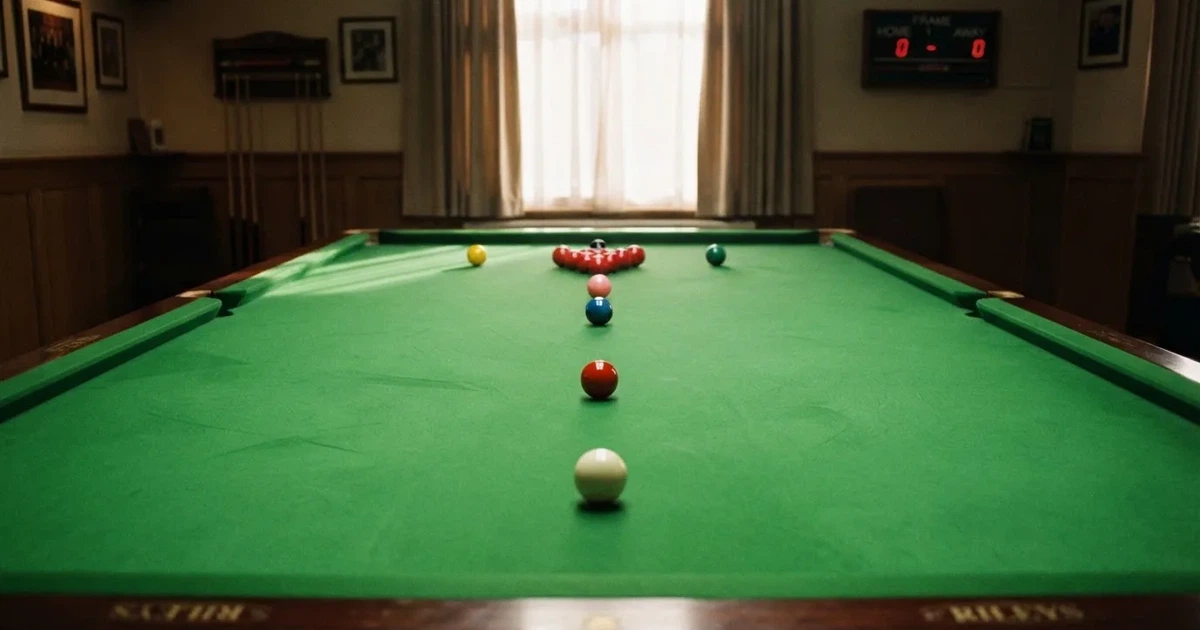
Snooker has the rare habit of rewarding patience. Frames stretch out, the table tells its own story, and the favourite more often than not ends the match exactly where the market expected. That is also the bookmaker’s comfort zone — a sport where the long head-to-head and the stable world rankings do most of the work, and where the price the punter sees has been compressed to almost nothing in places the casual eye never looks. The question this page is built around is not “how do I win at snooker betting” — nobody knows that — but a colder one: what does the snooker betting odds figure in front of you actually contain, what does a snooker welcome offer actually take to clear, and which of the ten licensed bookmakers on the Commission’s register represent a sensible fit for the way you actually place a bet.
The page below reads in the order the cost of the bet stacks up. Offers and what they require come first, because that is where the marketing language is loudest and the arithmetic is most unforgiving. Live markets and cash out follow, then the structure of the bet itself, then the snooker calendar and the events the bookmakers frame the season around. The ten-operator ranking sits in the middle because it is where the rest of the page is applied. The legal frame, responsible gambling and the off-shore question close the page, because the cost discussion is incomplete until the protection layer is named in full. The arithmetic behind the margin runs in plain prose where the material first demands it; a worked example sits later, with the same inputs read twice so the result can be checked.
Bonuses and free bets — what the snooker welcome offer really costs
A snooker welcome offer is not a gift. It is a marketing instrument whose true value is the gap between the headline figure and what a punter has to put through the bookmaker’s tillside to claim it. Two operators in this set run the same headline: “£40 in free bets when you bet £20”, at Coral and Unibet. Coral asks for a deposit and a sports bet of £20 or more at minimum odds of 2.0 (1/1), with the £40 in free bets issued within seven days and expiring seven days after issue. Unibet runs the same terms under its own licence. VBet’s offer is the smallest in the set: a £10 free bet if a new, verified customer stakes £10 or more on a first-ever bet that loses. BetMGM’s bundle is the largest headline — four £10 free bets, two of them tagged to football accumulators of four or more selections and two to sports multiples of two or more — but the structure shows what the marketing hides: not all four are usable on a snooker fixture, and each one carries its own minimum-odds threshold and a seven-day life.

The mechanics matter more than the headline. A free bet is a stake the bookmaker gives you, but the stake itself is almost never paid back with a win. So a £10 free bet at decimal odds 6.00 returns £60, but the £10 is gone; the punter pockets £50 in profit, not £60. That distinction is what the word “free” obscures. The wagering rule — what the bonus must be turned over through before any withdrawal — used to be set by the operator, but the Commission’s 19 January 2026 promotion rule caps it at 10x. A £10 bonus at 50x, the old ceiling on a generous weekend, needed £500 of qualifying bets to clear; the new rule sets the maximum at £100 of qualifying bets for the same bonus. That cap, like every other Commission condition, applies only to operators licensed in Great Britain. Offshore brands run their own house rules, which is the protection layer a punt loses by betting there.
The “Best Odds Guaranteed” promotion is not a welcome bonus at all — it is a horse-racing concession, present at QuinnBet and William Hill, and snooker is unaffected. QuinnBet applies it to Irish and UK horse racing from 10:00 am daily on singles, multiples and system bets, capped at £150 per customer per race. William Hill applies it from 8 AM on the day of the race on UK and Irish horse racing, on both single and multiple bets, and excludes ante-post, tote and pari-mutuel bets. Worth knowing for a multi-sport punter, irrelevant for the snooker punter.
Mixed-product promotions — an offer that demands gambling on two product types together, such as a sports bet that unlocks casino free spins — are banned under the same 19 January 2026 rule. That change ends a class of cross-product enticements a snooker customer might once have stumbled into by accident.
Live betting and cash out — how the in-play snooker market behaves
Snooker is a frame-by-frame sport. That structure makes live betting different from live betting on football: there is no clock, no injury break, no tactical substitution. A frame opens at a particular price, swings on a missed black or a successful re-spot, and resolves in twenty minutes on a tight finish or in forty on a safety exchange. The bookmaker’s in-play snooker market tends to track frame-by-frame odds on the match winner, the next-frame winner, the century break, the highest break in the match, and — depending on operator — whether a player clears a given point threshold before the session ends.
Midnite’s site lists in-play events as a first-class navigation category and pairs them with a live acca builder and popular accas. 888sport’s offering is the broadest in the set: pre-match and in-play betting, Cash Out, Bet Builder, racing streams, BetFinder form tools, a live bet feed and daily boosted odds. Smarkets is the only pure betting exchange in this ranking and runs its in-play market as a back-and-lay order book — a different product from the bookmaker’s fixed-odds line, and one whose liquidity on a low-profile snooker match can thin to almost nothing between frames.
Cash out is the in-play tool a punter uses to close a position before the bet settles. A snooker accumulator that goes from four legs correct to the fifth-leg favourite looking shaky at 4-2 down can be cashed out for less than the full payout, locking in something. The price offered is the bookmaker’s mid-market valuation, and it almost always sits below the true probability-weighted value because the bookmaker’s margin is still in the line. A punter who cashes out regularly is paying that margin twice — once on the way in, once on the way out. That is the cost of the comfort.
Bet Builder — also called a same-game multi — lets a punter combine several selections from one match into one bet. Midnite and Rutile list an acca builder; 888sport lists a Bet Builder. The product looks like an accumulator but settles on a single match. The arithmetic that follows applies to it as it does to any multi-leg bet: the odds of the legs multiply into one price, and the bookmaker’s margin is taken on each one before the multiplication, so the combined price is less generous than a punter who does the maths in their head usually expects. The frame-winner and the highest-break markets are common legs; pairing them produces a price whose true value is harder to read than the headline suggests.
Prediction and strategy — what “tips” can and cannot tell you
Snooker betting tips are easy to find and hard to act on. The World Snooker Championship run from 18 April to 4 May 2026 at the Crucible Theatre in Sheffield was won by Wu Yize, who beat Shaun Murphy 18-17 in the final; the prize fund of £2,395,000 paid the winner £500,000. Nobody published that result in advance with the kind of confidence a tipster needs to be worth following. The same holds for a best-of-11 frame match in the second round of the UK Championship in York. A tip that names a winner is naming a probability it cannot know; a tip that names a value bet — a price the bookmaker has mispriced — is naming an edge the rest of the market has already seen.
The professional-era record books still read as a warning to anyone who thinks the form is destiny. Stephen Hendry and Ronnie O’Sullivan hold seven world championships each in the modern era; Joe Davis won fifteen in a row from 1927 to 1946, long before the modern tour existed. The Crucible has held the World Championship since 1977, and most professional matches are best of seven, nine or eleven frames depending on the round. None of that is a betting signal; it is the shape of the sport.
What a punter can do is read the conditions of the match. A best-of-19 first-round match at the Crucible gives the underdog room to lose a session and recover; a best-of-7 qualifier at the English Open does not. A player returning from long-covid rest is a different proposition to one seeded straight through. None of that is a prediction. It is preparation — the kind of work that closes the gap between the punter’s view and the bookmaker’s view, on those rare days when the gap is real.
The honest framing of any “today’s snooker betting tips” page is that no one knows. A tipster selling a 9/4 shot at the Champion of Champions is selling hope, not information. The punter’s edge, where it exists at all, comes from reading the conditions the tipster has not read, not from following the tipster’s reading.
Bet types and odds — how the snooker price is built
The snooker betting odds figure on the screen is decimal by default at every operator in this set, with fractional odds shown alongside because the British market has never fully let go of them. A 5/1 shot in fractional form is 6.00 in decimal form; the conversion is fractional ÷ fractional + 1, so 5/1 → 5 ÷ 1 + 1 = 6.00. Evens is 1/1 in fractional and 2.00 in decimal. Odds-on means the price is shorter than evens — 4/6 (1.67) is odds-on; 6/4 (2.50) is odds-against. The two formats describe the same market; the decimal form is easier to multiply because the return — and the one you actually want to know — is decimal odds × stake, with the stake already inside the figure.
For a single bet at decimal odds 3.75, a £10 stake returns £37.50 if it wins, for a profit of £27.50. For a combination bet — a double, a treble, an accumulator — the odds of the legs multiply into one price. A double of two selections at 3.75 and 2.50 has combined odds 3.75 × 2.50 = 9.375, and a £10 stake returns £93.75 if both legs win. The system bets — Trixie (4 bets), Patent (7), Yankee (11), Lucky 15, Super Yankee or Canadian (26), Heinz (57), Goliath (247) — package several combinations inside one stake, with the total stake equal to the unit stake × the number of bets inside the system.
The maximum break in snooker is 147, made by potting all fifteen reds with blacks and then all six colours. That is the ceiling on the highest-break market, and the bookmaker knows it as well as the punter does. A price on a 147 is long because the chance is small, but the bookmaker’s margin on a long-shot market is wider than the margin on a short-shot market, because fewer bets go on the long shots and the bookmaker’s overround is spread across less liquidity. That detail is the next section’s subject.
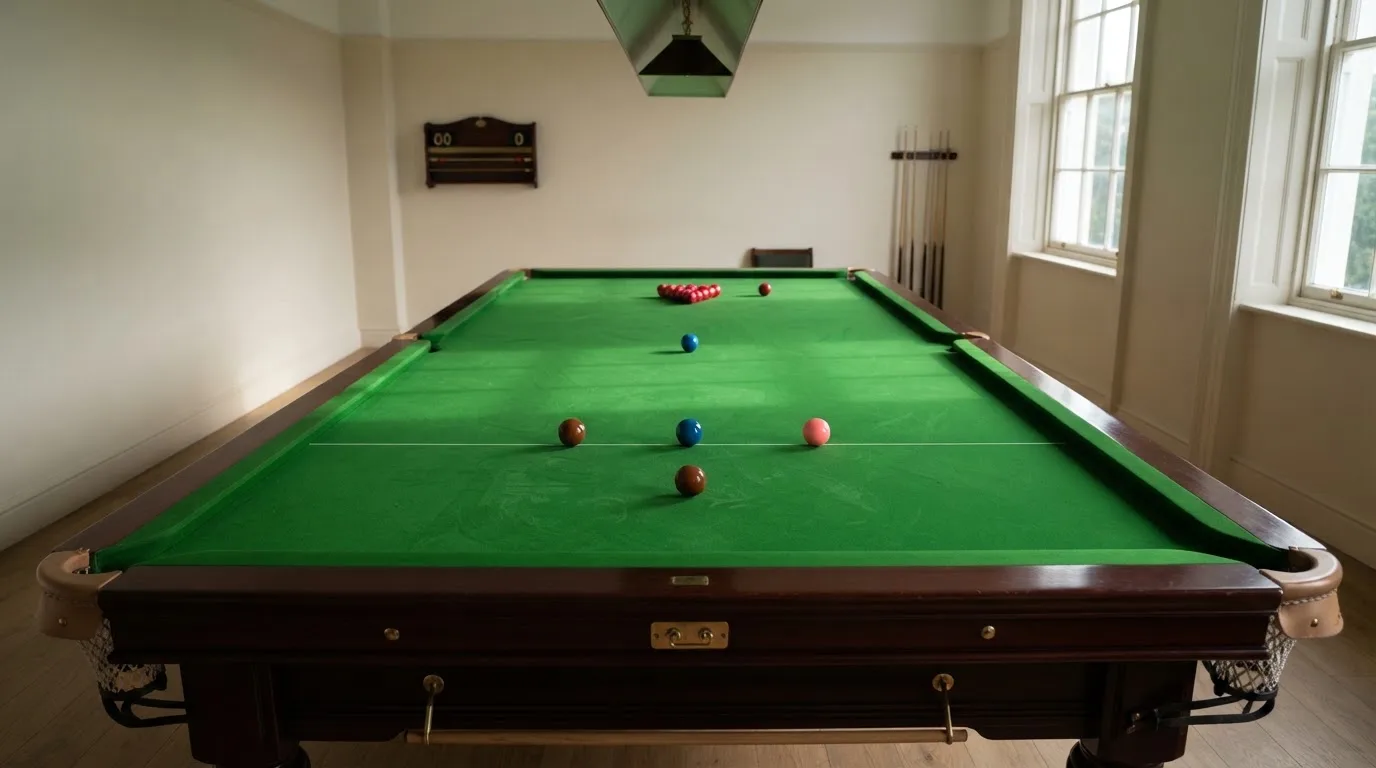
The snooker table is 12 ft by 6 ft with six pockets, and the game is played with twenty-two balls: a white cue ball, fifteen reds and six colours worth yellow 2, green 3, brown 4, blue 5, pink 6 and black 7. None of that affects a price on the match winner; it sets the upper bound on a highest-break market and the universe of possible frame scores.
The price the punter sees is not the “true” probability of the outcome. The bookmaker’s margin — sometimes the bookmaker’s take or the overround — is built into every price, and the punter pays it on the way in. For a two-way market at decimal odds 1.90 / 1.90, the payout share — the fraction of every pound bet that the bookmaker returns to winning punters in aggregate — is 1 ÷ (1/1.90 + 1/1.90) = 1 ÷ 1.0526 = 0.9500, or 95.00 %. The margin is 1 − 0.9500 = 0.0500, or 5.00 %. That 5 % is the bookmaker’s median static margin on a balanced two-way market at the example odds, and it is the cost of placing the bet, regardless of who wins.
Three qualifiers belong with that arithmetic. The first is that the 5 % figure is a median, not a guaranteed figure: a real two-way snooker market priced at 1.90 / 1.90 carries a margin of about 5 %; the same market priced at 1.50 / 2.75 carries a different margin, and the same sport’s frame-winner market carries a different margin from the match-winner market. The second is that a multi-leg combination bet’s combined price has the margin applied on every leg before the multiplication, so the combined margin is wider than any one leg’s margin; a four-leg accumulator at 1.90 per leg carries a combined margin of roughly 1 − (1 ÷ 1.90⁴) ≈ 18.6 %. The third is that the bookmaker’s margin is not a fee: it is the difference between what the bookmaker takes in and what the bookmaker pays out, averaged over many bets, and the punter’s expected loss on a single bet is small but the cumulative loss across a season is the margin of the markets bet on, multiplied by the total staked.
The price of a snooker betting odds figure is therefore three things at once: the probability the bookmaker assigns to the outcome, the ask the bookmaker is making for the service, and the number the punter multiplies the stake by to work out the return. The punter sees the third; the first two are inside it.
Snooker tournaments and the calendar — what the bookmaker frames the season around
The snooker calendar is dominated by a small number of events and a long tail of ranking tournaments, minor-ranking events and invitationals. The World Snooker Championship at the Crucible Theatre in Sheffield since 1977 is the centre of gravity: best of 19 frames in the first round, best of 35 in the final, seventeen days of coverage, and the largest prize fund on the professional tour. The UK Championship in York, the Masters in London, and the Champion of Champions are the other invitational markers around which the bookmakers price outright markets months in advance. The home nations’ opens — English, Welsh, Scottish, Irish — fill the calendar between them, with a handful of Chinese events (the Shanghai Masters, the China Open, the International Championship) and the smaller-ranking European events completing the season.
The 2026 World Championship final ran 18 April to 4 May 2026, with Wu Yize beating Shaun Murphy 18-17. The frame-by-frame swings of a 35-frame final are exactly the conditions in which live betting and cash out come into their own: every session restart is a new market. The bookmakers’ outright markets for the 2027 World Championship open in the autumn of 2026, with the price on the favourites tightened by results in the autumn ranking events and lengthened by surprise results in the smaller tournaments.
The professional tour is governed by the World Professional Billiards and Snooker Association (WPBSA), which owns the official rules, while the International Billiards and Snooker Federation (IBSF) governs amateur competition. None of that affects the punter’s price; it sets the calendar the bookmakers price against.
Top ten licensed bookmakers for snooker — the comparison
The set below is the ten brands the Gambling Commission’s public register lists against a remote general betting standard (real events) licence. The comparison is structured around three matters: the licence number and the licence holder the brand runs under, and the brand’s own terms on the welcome offer. The intent is to put the cost of betting at each brand next to the licence that authorises it; the rest of the comparison is on the operator pages themselves.
| Bookmaker | Gambling Commission licence number | Licence holder | What the operator’s own terms state on the welcome offer |
|---|---|---|---|
| BetMGM | 039198-R-319450-029 (account 39198) | LeoVegas Gaming PLC | Four £10 free bets — two football accas of 4+ legs, two sports multiples of 2+ — issued after a £10 deposit and a qualifying sports bet within 7 days, each free bet expiring 7 days after issue |
| Bar One Racing | 056516-R-332750-007 (account 56516) | Bar-One Racing Limited | Re-launched as BAR 1 Betting, an Irish independent bookmaker with shops across Ireland and racecourse sponsorships at Dundalk, Fairyhouse, Navan, The Curragh, Curraheen Park and Cork |
| QuinnBet | 061011-R-335683-004 (account 61011) | QuinnBet (Gibraltar) Limited | Best Odds Guaranteed on Irish and UK horse racing from 10:00 am daily, on singles, multiples and system bets, capped at £150 per customer per race |
| Coral | 054743-R-330863-014 (account 54743) | LC International Limited | £40 in free bets when a new GB customer bets £20 at minimum odds 2.0 (1/1), free bets issued within 7 days and expiring 7 days after issue |
| Smarkets | 039173-R-319366-011 (account 39173) | Smarkets (Malta) Limited | No sports welcome offer on the standard sportsbook — betting exchange with open bank transfer deposits instant from £10 up to £10,000 and withdrawals processed within 6 hours from £10 up to £100,000 |
| VBet | 044662-R-324273-022 (account 44662) | SCGO Limited | £10 free bet if a new, verified customer stakes £10 or more on a first-ever bet that loses |
| Unibet | 045322-R-324275-019 (account 45322) | Platinum Gaming Limited | £40 in free bets when a new GB customer deposits and bets £20 at minimum odds 2.0 (1/1), free bets expiring within 7 days of issue, deposit by debit card or instant bank transfer |
| 888sport | 039028-R-319297-014 (account 39028) | 888 UK Limited | Pre-match and in-play betting, Cash Out, Bet Builder, racing streams, BetFinder form tools, a live bet feed and daily boosted odds |
| Tote | 054779-R-331321-008 (account 54779) | TDCO Limited | Pool betting operator; Best Odds Guaranteed terms not present on the standard sportsbook offer |
| Kwiff | 044448-R-323408-017 (account 44448) | Eaton Gate Gaming Limited | UK Gambling Commission-licensed sportsbook operated by Spryme Ltd; standard GB verification before the first deposit applies |
A note on the columns: every licence in the table is a real entry on the Gambling Commission’s public register, and the licence holder is the operating company the Commission records against that account — not the consumer-facing brand. Several brands in this set can run under one licensee; Ladbrokes and Coral run under LC International Limited at different remote accounts, and Paddy Power and Betfair run under a similar structure elsewhere. The brand at the top of each row is the trading name the punter sees; the licence holder is the legal entity the Commission licensed.
The “best odds guaranteed” column would be empty for most rows because snooker is unaffected by the horse-racing concession. QuinnBet and Tote are the rows where the BOG reference is meaningful — and even at QuinnBet it is the horse-racing market, not snooker, that benefits. The Tote row references the pool-betting operator’s licence rather than a welcome offer, because the Tote’s business is pool betting rather than fixed-odds sportsbook.
Three things the table does not show. The first is the wagering terms of the offers, which the offer regime limits because variable wagering terms on bonuses are now capped at 10x under the 19 January 2026 promotion rule. The second is the deposit and withdrawal profile of each brand — Smarkets is the row that names a withdrawal time (within 6 hours up to £100,000), and the others should be checked against the operator’s own terms. The third is the in-play product at each brand: 888sport’s offering is the broadest named in the table, and the others carry an in-play product whose depth varies by event.
The margin worked through — a £10 example on a balanced two-way market
The number 5 % keeps appearing in this page’s offer discussion, and the way it gets there is worth one walk-through in plain numbers. Take a balanced two-way snooker market at decimal odds 1.90 / 1.90 — the kind of line a bookmaker posts on a heavy favourite’s opponent in a first-round match, and the kind that is more or less where most frame-winner markets land once the favourite has taken the first frame.
The payout share — the proportion of every pound staked that the bookmaker returns in aggregate to winning punters — is calculated by inverting the implied probabilities of every outcome and dividing one by the sum. Each side at 1.90 implies a probability of 1 ÷ 1.90 = 0.5263, and the sum of the two implied probabilities is 0.5263 + 0.5263 = 1.0526. The payout share is 1 ÷ 1.0526 = 0.9500, or 95.00 %. The bookmaker’s margin is 1 minus the payout share, so 1 − 0.9500 = 0.0500, or 5.00 %.
That 5.00 % is what the bookmaker keeps of every pound bet on this market across a large number of bets. A punter who stakes £10 on either side at 1.90 and wins gets back £19.00 (£10 × 1.90); the bookmaker takes the other side’s £10, pays £19.00 to the winner, and is left with £10 − £19.00 = −£9.00 on this single bet. The bookmaker is losing money on the single bet because only one side paid in. Across many bets — a long run of wagers at the same market — the £10 losers and £19 winners average out, and the bookmaker’s take settles to 5 % of total stakes.
A punter who runs a four-leg accumulator with each leg at 1.90 sees the combined price 1.90⁴ = 13.0321. The implied probability of the accumulator at the bookmaker’s combined price is 1 ÷ 13.0321 = 0.0767, or about 7.67 %. The “true” combined probability, with each leg a fair 50/50, is 0.5⁴ = 0.0625, or 6.25 %. The combined margin is 1 − (1 ÷ 1.90⁴) = 1 − 0.0767 ≈ 0.1843, or roughly 18.4 %. A £10 accumulator at 13.0321 pays £130.32 if all four legs win, and the bookmaker’s expected take is about 18.4 % of every pound put through this kind of combination.
The conclusion from the arithmetic is that the cost of a snooker bet is not the stake; it is the stake multiplied by the margin of the market the bet sits in. A single bet at 1.90 carries a 5 % cost on average; a four-leg accumulator at the same per-leg price carries a cost closer to 18 %. The free-bet value discussion in the offers section above is the same arithmetic in different costume: a £10 free bet at odds 6.00 returns £60 on a win, but the punter never gets the £10 stake back, so the value of the free bet is what the bookmaker’s margin on that market lets the punter keep, on average. The 19 January 2026 promotion rule caps the wagering requirement at 10x; the margin is the part no rule caps.
BetMGM
BetMGM’s UK sportsbook is licensed by the Gambling Commission under a remote general betting standard licence held by LeoVegas Gaming PLC. The welcome bundle — four £10 free bets, two of them tagged to football accumulators of four or more selections and two to sports multiples of two or more — is the largest headline in the set, but its structure reveals a snooker-specific constraint: only two of the four free bets are usable on snooker without restriction, because the football-accumulator free bets require a football acca of four or more legs. The 7-day expiry on each free bet is the deadline the punter has to convert it. For a punter who bets mostly on snooker and only occasionally on football, the bundle is half the headline it sounds. For a punter who runs both sports, it is the largest usable offer in the set.
Bar One Racing
Bar One Racing rebranded as BAR 1 Betting in 2026 and runs as an Irish independent bookmaker with shops across Ireland and racecourse sponsorships at Dundalk, Fairyhouse, Navan, The Curragh, Curraheen Park and Cork. The remote general betting standard licence is held by Bar-One Racing Limited. The bookmaker’s strength on the high street is horse racing and greyhound racing, and the snooker product is offered rather than featured. For a punter who bets on the Irish and UK racing meets the brand sponsors and wants a GB-licensed sportsbook behind it, the brand makes sense. For a snooker-only punter, the racing-shop heart of the brand shows.
QuinnBet
QuinnBet runs under a Gambling Commission remote licence held by QuinnBet (Gibraltar) Limited. Best Odds Guaranteed applies to Irish and UK horse racing from 10:00 am daily on singles, multiples and system bets, capped at £150 per customer per race. The snooker offering is part of the standard sportsbook and not the brand’s signature product; the brand’s signature is the racing concession. For a racing-led punter who also bets snooker, the brand combines both. For a snooker-only punter, the racing shape of the terms means the welcome and ongoing concessions are aimed elsewhere.
Coral
Coral runs under a Gambling Commission remote licence held by LC International Limited — the same parent that holds the Ladbrokes licence under a different account. The welcome offer is the standard £40 in free bets when the punter bets £20 at minimum odds 2.0 (1/1), with the free bets issued within seven days and expiring seven days after issue. Coral’s snooker offering is part of a broad sportsbook that covers football, racing and the smaller sports, and the price competitiveness on outright markets is the brand’s edge. For a snooker punter who already uses the Ladbrokes-Coral parent, Coral is the natural home.
Smarkets
Smarkets is the only betting exchange in this set, running under a Gambling Commission remote betting intermediary licence held by Smarkets (Malta) Limited. The exchange model is different from the fixed-odds bookmaker: the punter backs or lays selections against other punters rather than against the bookmaker, and the margin is the spread between back and lay prices rather than the overround. The deposit and withdrawal profile is the most generous in the set on paper: open bank transfer deposits are instant from £10 up to £10,000 and withdrawals are processed within 6 hours from £10 up to £100,000; UK debit card deposits are instant from £10 up to £15,000. For a snooker punter who wants to lay the favourite rather than back the underdog, an exchange is the only place to do it; for a punter who wants a free bet, an exchange is not the right product.
VBet
VBet is also licensed by the Gambling Commission for remote general betting, with its licence held by SCGO Limited. The welcome offer is the smallest in the set: a £10 free bet if a new, verified customer stakes £10 or more on a first-ever bet that loses. The structure — free bet if the first bet loses — is a “second chance” rather than the standard “free bets when you bet £20”, and the headline cost is half of Coral’s or Unibet’s. For a punter who wants a free bet on a first snooker bet with the lowest qualifying stake, VBet is the natural fit. For a punter who wants the largest free bet bundle, VBet is the wrong product.
Unibet
Unibet runs under a Gambling Commission remote licence held by Platinum Gaming Limited, Gibraltar, and the brand states it has operated since 1999. The welcome offer mirrors Coral’s headline: £40 in free bets when a new GB customer deposits and bets £20 at minimum odds 2.0 (1/1), with the free bets expiring within seven days of issue and the qualifying deposit required by debit card or instant bank transfer. For a snooker punter who wants the largest standard free bet bundle and is willing to deposit by debit card or instant bank transfer, Unibet matches Coral. The choice between the two is the choice between the two parent groups (LC International Limited for Coral, Platinum Gaming Limited for Unibet).
888sport
888sport holds a valid GB operating licence, operated by 888 UK Limited. The offering is the broadest named in this set: pre-match and in-play betting, Cash Out, Bet Builder, racing streams, BetFinder form tools, a live bet feed and daily boosted odds. For a snooker punter who wants the full feature set — bet builder on the match, live feed during frames, cash out between frames, boosted odds on the outright — 888sport is the most complete. The welcome offer is not the headline of the brand, and a punter who joins for the features will find the welcome less generous than Coral’s or Unibet’s.
Tote
Tote operates under a UK Gambling Commission remote licence held by TDCO Limited. The brand’s business is pool betting — the dividend is calculated by dividing the pool among winning tickets after the operator’s take — rather than the fixed-odds sportsbook that the rest of this set runs. For a snooker punter, pool betting is a different product: the price is not set in advance, and the dividend depends on how the pool has been bet. For a snooker-only punter, the fixed-odds sportsbook brands in this set are a closer fit. The Tote row belongs on the list because the licence is current; it does not belong on the list of snooker-first brands.
Kwiff
Kwiff runs under a Gambling Commission remote general betting standard (real events) licence held by Eaton Gate Gaming Limited, and describes itself as a trademark operated by Spryme Ltd. The brand’s product is a sportsbook and casino app with a 17+ age rating on the App Store, and the welcome offer is part of the standard GB sportsbook rather than a snooker-specific concession. For a snooker punter who wants a GB-licensed sportsbook with a smaller parent group than the Coral-Unibet-BetMGM tier, Kwiff is the brand in this set whose scale matches its offer.
What the snooker betting odds page is built on — the protection layer
A snooker punter in Great Britain is protected by the same regime that protects every other punter in Great Britain, and the snooker-specific question — what events the bookmaker offers, what markets sit on the fixture list — sits inside a wider set of rules. The first part of the rule is the licence: any operator offering remote betting facilities to customers in Great Britain must hold a Gambling Commission licence under the Gambling Act 2005, regardless of where the operator is based. The second part is the verification: since 7 May 2019, name, address and date of birth must be verified before a customer can deposit or gamble at a licensed site, and the verification applies to free bet and bonus claims as well as cash deposits. The third part is the GAMSTOP membership: since 31 March 2020, every online operator licensed in Great Britain is a mandatory GAMSTOP member, with self-exclusion periods of six months, one year, five years, or five years with auto-renewal, and a further seven years after the minimum period unless the customer asks GAMSTOP to remove the exclusion. None of this is snooker-specific, and none of it is optional at a GB-licensed bookmaker.
The credit-card ban in force since 14 April 2020 (LCCP condition 6.1.2) prevents the use of credit cards for gambling at any GB-licensed operator, including credit-card-funded payments through an e-wallet. The financial vulnerability check in force since 30 August 2024 (LCCP condition 3.4.4, applied to remote betting since 28 February 2025) triggers when a customer’s deposits minus withdrawals exceed £150 in a rolling 30-day window; the check is a public-record check (bankruptcy or county-court judgments, for example) rather than an income or credit-reference check. The financial risk assessment — the “affordability check” of the press — was announced by the Commission in a 7 July 2026 article with no start date, in a staged plan; the snooker punter who bets under £150 a month does not yet face it. The deposit-limit regime (RTS 12) — the operator’s gross deposit limit on a fixed time frame — saw its first changes on 31 October 2025 and a second phase postponed to 30 September 2026, with no settled start date in this page’s snapshot.
Player protection is the layer a snooker punter inherits by betting with a GB-licensed bookmaker. The bonus cap — 10x wagering requirements since 19 January 2026 — is the layer that protects the punter’s wallet from the offer’s headline. GAMSTOP is the layer that lets a punter who has decided to stop betting close the door at every licensed site at once. GamCare (the National Gambling Helpline), GambleAware, NHS gambling clinics and Gamblers Anonymous are the layer that lets a punter in difficulty find a counsellor. None of this is snooker-specific, and the snooker punter who books a licensed bookmaker gets all of it.
Responsible gambling — what a snooker punter should know before staking
The rules above are the operator’s rules. The snooker punter’s own rules are the deposit limit, the time limit, the stake limit and the loss threshold they have agreed with themselves before the first bet, not after the first losing streak. The Commission does not set a state-set ceiling on either deposit or loss — limits are the customer’s choice — and the Commission’s deposit-limit regime (RTS 12) is the operator’s obligation to offer a gross deposit limit on a fixed time frame, not the operator’s ceiling. The snooker punter who bets more than they intended to is the snooker punter who did not set a limit before they sat down.
The minimum age for gambling in Great Britain is 18. The verification at the first deposit means a licensed site cannot be used anonymously; the source-of-funds questions at higher spend are normal under the money-laundering rules, and a punter who is asked to provide bank statements or payslips is being asked because the operator is required to ask. The protection layer under the operator is the self-exclusion route through GAMSTOP, the financial vulnerability check at £150 in a rolling 30-day window, and the financial risk assessment once it is in force. The snooker punter who is in difficulty is one phone call away from GamCare, one web form away from GAMSTOP, and one punt away from the wrong side of a session.
Crypto and anonymity — what offshore and unlicensed snooker betting actually means
The crypto and anonymity question is, in Great Britain, almost entirely an offshore question. No GB-licensed bookmaker in this set takes cryptocurrency as a deposit method: a licensed bookmaker verifies the customer’s identity before the first deposit, and the identity verification sits in the way of the anonymous use of crypto that an unlicensed operator can run. An unlicensed operator running under a Curaçao, Maltese or Gibraltar licence — without the GB point-of-consumption licence the Gambling (Licensing and Advertising) Act 2014 requires — can offer crypto deposits and operate on a near-anonymous basis. The trade is the protection layer. The customer of an unlicensed operator has no GAMSTOP coverage, no Commission complaints route, no approved dispute-resolution body, no British consumer redress if funds are withheld, and no application of the 10x bonus cap or the £150 vulnerability check. The customer has also lost the verification that prevents a self-excluded punter from opening a new account, and the consumer protection that prevents an operator from withholding a withdrawal without an arbitration route.
Section 33 of the Gambling Act 2005 makes the provision of remote gambling facilities in Great Britain without a Commission licence an offence; the penalty on summary conviction is up to 51 weeks’ imprisonment, a fine up to level 5, or both (six months in Scotland). The offence is aimed at the operator, not the customer. No offence aimed at the customer who merely bets on an unlicensed site was found in this page’s research; the framing is honest: licensed = checks, limits, GAMSTOP, the bonus cap, but also verification before the first bet; unlicensed = none of those protections and possible loss of funds. Neither is “the safe choice” by default. The Enforcement the Commission runs is disruption rather than blocking: cease-and-desist notices, search-engine referrals, work with registrars, hosts and payment providers; the court-order DNS blocking powers the Commission has been given or is about to receive are not yet in operation in this page’s snapshot, and the snooker punter who bets at an unlicensed site is not, in this page’s reading, committing an offence.
Currency and the data this page is built on
Prices and operator terms in this page reflect the Gambling Commission’s public register as of 27 October 2026. The bonus cap on wagering requirements (10x) is in force from 19 January 2026. The mixed-product promotion ban is in force from the same date. The financial vulnerability check at £150 in a rolling 30 days is in force from 28 February 2025; the financial risk assessment is announced and staged with no start date. The deposit-limit regime’s second phase is postponed to 30 September 2026. The 2026 World Championship final ran 18 April to 4 May 2026 with Wu Yize winning 18-17 over Shaun Murphy. No headline snooker betting odds figure in this page is printed as a current price; the worked example at 1.90 / 1.90 is an illustrative two-way market, not a quoted price.
Frequently asked questions
How do you bet on snooker?
A snooker bet is a stake on the outcome of a snooker match or market, settled at the end of the event. The most common snooker bets are the match winner, the frame winner, the highest break, the century break, the session winner and outright tournament markets. Decimal odds are the default at every GB-licensed bookmaker; fractional odds are shown alongside. Returns are stake × decimal odds, profit is stake × (decimal odds − 1), and the bookmaker’s margin is built into the price.
Can you bet on snooker in Great Britain?
Yes — at any bookmaker licensed by the Gambling Commission under the Gambling Act 2005. The Commission licenses the operator, not the sport, and there is no statutory list of permitted sports. Snooker is treated as a normal sporting event at every GB-licensed sportsbook. Betting at an unlicensed operator is not the same as betting at a licensed one, and the trade-off is the protection layer — the verification, the GAMSTOP membership, the bonus cap, the dispute resolution.
How can a bookmaker’s Gambling Commission licence be checked?
The Commission’s public register is searchable by business name, trading name, domain or account number, and is the whole test of whether a brand holds a GB licence. The Commission’s register lists the licence number, the categories covered (remote general betting standard, remote betting intermediary, and so on), the licence holder’s legal name and the trading names under that holder. The set of ten in the ranking above is drawn from that list. A brand whose domain is .co.uk or .com proves nothing on its own; the register is the proof.
How is a bet’s return worked out from the stake and the odds?
For a single bet at decimal odds X and stake S, the return if the bet wins is S × X. The profit is S × (X − 1) because the stake is included in the return. For a combination bet — a double, a treble or an accumulator — the odds of the legs multiply into one combined price, and the same formula applies. A system bet packages several combinations inside one stake, with the total stake equal to the unit stake × the number of bets inside the system.
What is the bookmaker’s margin and how can it be seen in the odds?
The bookmaker’s margin is the proportion of every pound staked that the bookmaker keeps across a large number of wagers at the same market. For a two-way market at decimal odds 1.90 / 1.90, the payout share is 1 ÷ (1/1.90 + 1/1.90) = 0.9500, or 95 %, and the margin is 1 − 0.9500 = 0.0500, or 5 %. A market with a wider margin is more expensive for the punter. Margin applies to each leg of an accumulator before the odds are multiplied, so the combined margin on a multi-leg bet is wider than any single leg’s margin.
How do fractional odds such as 5/1 convert to decimal odds such as 6.00?
The conversion is decimal odds = (fractional numerator ÷ fractional denominator) + 1. So 5/1 becomes (5 ÷ 1) + 1 = 6.00, 11/4 becomes (11 ÷ 4) + 1 = 3.75, and evens (1/1) becomes 2.00. The fractional form is a British convention; the decimal form is the form the punter multiplies the stake by to work out the return. The two formats describe the same market.
Tennis, darts & cue sports – Cricket betting
Content created by the «Cricket betting» team
