
Futsal Betting Odds in Great Britain — Licensed Bookmakers, Markets and Margin
 Available in US
Data current as of 27 October 2026 and verified against the Gambling Commission’s public register.

A futsal match lasts forty minutes of playing time split across two twenty-minute periods, with the clock stopping at dead-ball situations and each side allowed one one-minute timeout per half. That compressed, stop-start rhythm is the thing that makes futsal a distinctive betting product — and the thing most guides skip past in the rush to list markets. The sport itself is played by two teams of five on a 40-metre by 20-metre court, with a smaller, heavier size-4 ball that keeps the action tight and the goalmouth exchanges frequent. From the sixth accumulated foul in a period, the opposing side earns a direct free kick from ten metres out with no wall permitted, which shapes how matches tilt in their final minutes. Knowing those rules is not a footnote; it is what separates a price the bookmaker is offering from a price the punter is reading.
This page works through the cost of a futsal bet from the inside out. It starts where a price is actually struck, during a live match, and walks back through the markets, the tournaments, the ten licensed bookmakers, the legal frame and the bonuses that purport to make the whole thing cheaper. The angle throughout is what an odds line takes from the punter, not what it gives back, because the marketing of a “boosted price” or a “risk-free” stake never tells you what the offer actually requires you to risk to clear it. The arithmetic in the middle belongs to the page; everything else is what each operator’s own terms, or the Gambling Commission’s register, says on the subject.
Live Futsal Fixtures and Cash Out — Where the Price Is Made
The first price a punter ever sees on a futsal match is rarely a pre-match price. The top flight of European futsal — the LNFS in Spain, the Serie A in Italy, the Liga Brasil — and the international calendar, anchored by the FIFA Futsal World Cup and the confederation championships, run their fixtures in compact windows that suit in-play betting. Licensed British bookmakers carry those fixtures under their standard remote general betting licence, the same licence that covers football, tennis and any other real-event sport, and the in-play product sits inside that licence rather than under a separate in-play permit.
What changes between a pre-match price and a live price is the speed at which the margin moves. A bookmaker’s margin is the cut taken from every unit staked across the full set of outcomes, and on a live futsal market the margin is often wider than on a pre-match one because the book has less time to balance the book across a match whose scoring pattern is volatile. Futsal is high-scoring relative to association football; a 5-4 scoreline is routine. A bookmaker that prices 1X2 at 1.90 / 1.90 before kick-off and then drops to 1.80 / 1.85 / 1.95 in-play is not just reacting to a goal; it is widening its margin because the model has been pushed off the line. The punter who backs a live price is paying for that uncertainty, in margin terms, on top of the uncertainty of the result.
Cash out is the tool that bookmakers have built around this volatility. A full cash out settles a bet at the current live price; a partial cash out settles a chosen fraction; an auto cash out triggers when a pre-set price is hit. The point of cash out is to give the punter a price the book is willing to lock in before the final whistle — and the price offered is always the book’s price, not the punter’s. On a market that has just shifted after a goal, the cash-out value is computed at the new live margin, which is wider than the pre-match margin. The offer is “take the money now” and the price of taking it is that the book is the only side setting the number.
For futsal specifically, the live product is dominated by the bookmakers who already run a deep in-play football product, because the trading engine is shared. A bookmaker that streams live football but has no futsal-specific markets will still list the big international matches under its standard live tab. That is the practical shape of the live landscape in Great Britain: futsal is a sub-market of a sub-market, served by the same cash-out buttons, the same partial-cash-out sliders and the same one-click confirmations that the operator has built for the Premier League. A bettor who wants to live-bet futsal is, in practice, choosing among the live-betting product of bookmakers who happen to list it, and the depth of that list varies fixture by fixture.
A subtle point: the same financial-vulnerability check that applies to a pre-match bet applies to a live bet, because the check is on cumulative deposits, not on the channel. A punter who clears the £150-in-30-days threshold while live-betting futsal will trigger the check at the same point as a punter betting on football. Live betting does not, in the regulatory sense, sit outside the safer-gambling perimeter; it sits inside it, with the same tools and the same duty on the operator to monitor activity.
Bankroll, Forecast and Analytic — Building a Futsal Staking Plan
The strategies that work for football do not transfer cleanly to futsal. Football is a low-scoring sport with long spells of possession; futsal is the inverse, with goalmouth exchanges every few seconds and scores climbing past five routinely. A staking plan built on under-2.5 goals is the wrong plan for futsal on its own, because under-2.5 is rarely a plausible outcome in a match of two twenty-minute halves between professionals. The first analytic move is to size the stake to the market, not the other way around.
Most licensed bookmakers do not publish a dedicated futsal stats feed. The data that is available — past results, head-to-head, top scorers — comes through the same aggregators that supply football data, and a futsal feed is usually a thin slice of a football feed. That thinness is the real analytic constraint. A punter who wants an edge on the over/under line, or on a handicap, has less data to grind through than they would on the equivalent football market, and the price the book is offering reflects the bookmaker’s own information disadvantage. The margin the book builds into a futsal price is wider than the margin on a Premier League 1X2 for the same reason: the book has a less accurate model of the true probabilities.
This is where the calculation on this page earns its place. A 1X2 market priced at 1.90 / 1.90 — a price used here as an illustrative two-way example, not as a quoted line — carries a margin of about 5%: the payout share is 0.95 for every unit staked across both outcomes, and the remaining 0.05 is the bookmaker’s hold. That is the floor for a well-priced two-way market. The same market at 1.85 / 1.85 sits at roughly 8% margin; at 1.80 / 1.80 it is closer to 11%. A punter who treats a futsal 1X2 line the same way they treat a Premier League 1X2 line is paying a wider margin for less data — a double cost that no staking plan can offset.
The practical bankroll rule that follows is to size the unit down rather than reach for a higher-stake plan. A bettor running 1% of bankroll per selection on Premier League football, with a typical margin of 5-7%, would reasonably drop to 0.5% on a futsal market at 8-11% margin, because the expected loss per unit staked is higher and the variance is higher. The bet builder — a same-game multi that combines several futsal selections into one — compounds the margin: each leg carries its own margin, and the combined price multiplies those margins together, so a bet builder of four legs each at 8% margin has a combined margin in the high twenties. The marketing language around bet builders is “bigger returns from a single match”; the arithmetic says “wider margin on every leg, stacked”.
There are two analytic tools that genuinely matter for futsal: the foul count and the goalkeeper rotation. The sixth-foul rule in each half — the point at which the opposing side gets a direct free kick from ten metres with no wall — creates a discrete tactical shift, and a punter watching the foul tally can read when the next ten-metre penalty is coming. Goalkeeper rotation in futsal is routine, with outfield players taking the gloves in the final minutes of a tight match and creating a power-play effect that often shows up in the total-goals market. Both factors are visible in the live stream and on the live stat panel, which is why in-play betting on futsal is less a question of pure forecasting and more a question of watching the foul count tick up.
The honest summary: futsal is a market where the data is thin, the margin is wide, the variance is high and the rulebook creates tactical shifts a bettor can read. A staking plan that accounts for all four is rare, which is part of why no single punter’s “system” for futsal has been shown to beat the closing line over time.
Selection, Settling and Staking — The Anatomy of a Futsal Price
A futsal betting odds line looks the same as a football line: two or three decimal numbers, one per outcome, on a market such as 1X2, over/under, handicap or correct score. The form is the same because the engineering is the same — the bookmaker’s trading engine is shared across sports. The substance is different in three ways: the score range is wider, the market depth is shallower, and the in-play volatility is higher.
The match result market (1X2) is the entry point. A typical 1X2 line on a competitive futsal match sits around 2.10 / 3.40 / 3.20 or thereabouts, with the draw close to a 30% chance and the favourite priced accordingly. As a comparison, the same shape of football match — a competitive league fixture with no strong favourite — tends to be priced closer to 2.50 / 3.20 / 2.80, reflecting football’s lower-scoring shape. A punter who reads a futsal 1X2 line as if it were a football 1X2 line is over-weighting the draw, which is roughly as common in futsal as in football in absolute terms but is reached via a different scoreline distribution.
The over/under market on futsal centres around the 4.5 or 5.5 line, not the 2.5 line that anchors football. A typical over 4.5 goals line on a competitive futsal match sits around 1.85, and under 4.5 around 1.95, which puts the implied probability of over at just over 50% and the bookmaker’s margin at roughly 5-6% on the two-way market. The punter’s edge, if any, sits in the price movement between open and close, not in the headline number.
Handicap betting on futsal is where the most creative markets sit. A bookmaker offering a -1.5 handicap on a heavy favourite is, in effect, asking the punter to predict not just the winner but the margin — a much harder call in a sport where a 3-1 lead can become 3-4 in two minutes. The margin on a handicap line is typically wider than the margin on 1X2, because the model’s confidence in the exact goal difference is lower than its confidence in the win-draw-loss outcome.
The bet builder combines selections from one match into a single price. On a futsal match, a typical bet builder might combine the match result with the total goals over a threshold, the first goalscorer and the number of corners or fouls. The price the punter sees is the multiplication of the individual prices, and the margin the bookmaker is taking is the multiplication of the individual margins. A bet builder of four legs at an average 7% margin each carries a combined margin in the high twenties — which is why the marketing language around bet builders emphasises the upside return and never the margin stack.
Decimal odds, the British-licensed standard for online display, work as follows: the number shown is the total return per unit staked, including the stake. A price of 1.90 returns £1.90 for every £1 staked, a profit of £0.90. A price of 3.50 returns £3.50 for every £1 staked, a profit of £2.50. A combination bet’s price is the product of the legs, so a double at 1.90 and 3.50 has a combined price of 6.65, and a £10 stake returns £66.50. That price already bakes in each leg’s margin, which is the point the bettor is paying for the convenience of a single bet slip.
Fractional odds, the traditional British form still seen at the racetrack and on some in-shop displays, express profit rather than return. A price of 5/1 returns £5 profit per £1 staked, plus the £1 stake, so the decimal equivalent is 6.00. The conversion is a ÷ b + 1, so 5/1 becomes 5 + 1 = 6.00, 11/4 becomes 11 ÷ 4 + 1 = 3.75, evens (1/1) becomes 2.00. A bookmaker quoting 5/1 in fractional form and 6.00 in decimal form is quoting the same price. The choice between forms is a display choice; the price is one number.
Each-way betting, common on outright tournaments and on some ante-post markets, places two equal-stake bets: one on the selection to win, one on the selection to place. The place terms vary by event and by operator, and the place portion pays a fraction of the win price (typically 1/4 or 1/5 of the odds). On a futsal outright, an each-way bet doubles the stake; on a single match, an each-way bet is unusual and not commonly offered.
The settling of a futsal bet follows the same rules as any other real-event bet under a remote general betting licence: the bet is settled on the official result, with operator rules applied to any edge case (abandoned matches, void selections, dead-heat rules, walkovers). The punter’s recourse if a settlement is disputed is the operator’s complaints procedure, escalating to an approved alternative dispute resolution (ADR) body if the operator is GB-licensed, and ultimately to the Gambling Commission. That recourse is the practical reason a GB-licensed bookmaker is structurally different from an offshore one.
Futsal Tournaments and Competitions — Where the Markets Are
The international futsal calendar is anchored by the FIFA Futsal World Cup, first held in 1989 and contested every four years, with the most recent men’s edition in Uzbekistan in 2024 and the inaugural FIFA Futsal Women’s World Cup held in the Philippines in 2025. Confederation championships — the UEFA Futsal Championship, the AFC Futsal Asian Cup, the CONMEBOL Copa América de Futsal, the CAF Africa Cup of Nations for Futsal — feed into the World Cup cycle, and each confederation runs its own qualifying path. The result is a year-round calendar with major finals every two years and a World Cup every four.
At club level, the most developed leagues are in Spain (the Primera División de Futsal, often called the LNFS), Brazil (the Liga Nacional de Futsal), Portugal (the Liga Placard), Russia (the Russian Futsal Super League) and Italy (the Serie A). The UEFA Futsal Champions League is the continental club competition, run as a knockout tournament with a final-four format in recent seasons. A licensed British bookmaker with a deep football product is, in practice, the same bookmaker that carries these leagues and tournaments under its futsal tab; there is no separate trading team for futsal at any of the major British bookmakers.
A practical issue for the punter is fixture liquidity. A Spanish LNFS Friday-night match between two top-six sides will be priced across the major bookmakers with a market depth that allows in-play trading; a midweek second-division match in any league will be priced thinly, if at all, and the live markets will be sparse. The bet builder product on those midweek fixtures is often unavailable, because the book does not have the prop-market data to build from. The punter who follows a specific league beyond the top flight finds that the menu of available markets contracts sharply.
The data the bookmakers publish on futsal is also thinner than the data on football. Most licensed bookmakers do not run a dedicated futsal stats feed, and the data that is shown on a fixture page — recent form, head-to-head, top scorers — is a shallow cut of a generalist football data provider. That data thinness is part of why the margin on a futsal market is wider than on an equivalent football market: the bookmaker is pricing with less information, and that information disadvantage shows up in the margin.
The punter’s practical move is to back the tournaments the book has priced well, not the ones the book has priced thinly. The FIFA Futsal World Cup and the UEFA Futsal Champions League final-four are routinely priced across the major bookmakers with proper market depth; a second-tier confederation qualifier may be priced by one bookmaker only, and the price will reflect the model’s uncertainty with a wider margin. A punter who chases the long tail of futsal fixtures is paying a higher margin for thinner data, which is the inverse of a sensible strategy.
One last point on the calendar: futsal is played indoors, in a climate-controlled environment, and the fixtures are not weather-affected. That removes a class of football-style postponements and rain-rule adjustments that complicate the betting calendar. A futsal fixture listed at 7pm local time is played at 7pm local time, with the punter’s bet standing through whatever happens on the court.
The Ten Licensed Bookmakers — Landscape
A licensed bookmaker in Great Britain is one whose name appears on the Gambling Commission’s public register against a remote general betting licence (real events) or an equivalent category. The register is searchable by business name, trading name, domain or account number, and it is the whole test of who holds a licence: there is no separate list, no seal of approval and no further tier. Ten operators in this comparison hold a current remote licence; the table below sets them out with the licence account number from the register and what each operator’s own terms say on the key subject.
| Brand | Gambling Commission remote licence account | Licence holder | What the operator’s own terms state on futsal |
|---|---|---|---|
| Copybet | 53774 | Copybet UK Limited | Best Odds Guaranteed on all UK and Irish racing all day, every day; first past the post paid on horse racing even if the winner is later disqualified; futsal is offered as a real-event sport under the licence |
| Betmaster | 65699 | BM Solutions GB Ltd | Covers football, cricket, horse racing, NFL and eSports (League of Legends, Dota 2); futsal is offered as part of the standard sports menu |
| Fitzwilliam Sports | 48760 | SBKI Limited | Dublin-based bookmaker with capped membership; futsal is offered under the standard sports licence; instant deposits, fast withdrawals, timeouts and deposit limits are available |
| NetBet | 39170 | Netbet Enterprises Limited | Daily Boosts, Profit Boosts and free bet offers; Bet Builder with instant dynamic odds; sports stats for major leagues; futsal is offered as part of the standard sports menu |
| BetTom | 64959 | Bet Tom Limited | Sports welcome of 50% back as a free bet up to a stated ceiling, with a matching casino portion; futsal is offered as a real-event sport under the licence |
| DragonBet | 64908 | DragonBet Ltd | Welsh football and rugby markets, racing, American football, in-play betting and bet builder; futsal is offered as part of the standard sports menu |
| Hollywoodbets | 53028 | Hollywoodbets International UK Limited | Sports welcome: a stake-back free bet on the first qualifying losing accumulator at stated minimum odds and leg count, settled within seven days; futsal is offered as a real-event sport under the licence |
| Spreadex | 8835 | Spreadex Limited | Combines fixed-odds and spread betting in one app; one-click, auto and partial cash out; Bet Builder across fixed odds or spreads; live streaming of UK and Irish racing, greyhounds, tennis, NFL and selected football; futsal is offered under the standard sports licence, with the FCA regulating the spread-betting side |
| BetVictor | 39576 | BV Gaming Limited | Best Odds Guaranteed on UK and Irish racing; enhanced live race streaming; BetFinder for racing bets; Smart Stats; futsal is offered as a real-event sport under the licence |
| BoyleSports | 39469 | Boylesports Enterprise | Sports welcome of free bets on a qualifying first bet; futsal is offered as a real-event sport under the licence |
What the table does not say is also worth reading. The licence account numbers are not customer-facing check numbers; they are the Commission’s own internal identifiers, and the punter’s practical check is to search the Commission’s public register by business name or domain. The licence holders are the legal entities — not necessarily the trading names a punter sees at the betting slip — and several licence holders run multiple brands under one licence, which is permitted under the Commission’s structure. The futsal column is the same word repeated down every row because the regulatory fact is the same: every remote general betting licence covers futsal, and every operator in the table has a current licence of that category. The differentiator between operators is the depth of the futsal product, not the licence that covers it.
The order in this comparison is not a quality ranking. The punter’s own ranking depends on which of these features matters for the bet being placed: a deep in-play product, a Bet Builder with a usable futsal leg list, a Best Odds Guaranteed price on the outright markets, or a free-bet structure that does not eat the stake on a win. Each operator has a profile; the question is which profile fits the bet.
Copybet — Best Odds Guaranteed and Racing Depth
Copybet is operated by Copybet UK Limited under a Gambling Commission remote licence. The headline feature the operator publishes is Best Odds Guaranteed all day, every day on all UK and Irish racing, with first past the post paid on horse racing even if the winner is later disqualified. Neither of those features is futsal-specific; both are racing features, and they speak to the operator’s heritage as a racing-led brand. For a futsal bettor, the implication is that Copybet will be priced competitively on outright markets if the operator treats them under a similar guarantee, but the racing focus means the live futsal product is unlikely to be the deepest in the comparison.
The futsal menu at Copybet runs under the standard remote general betting licence, with the same match result, over/under and handicap markets any other bookmaker would carry. The bet builder product at Copybet is the standard same-game multi and is available on futsal where the underlying data supports it. The licence is current, the licence holder is named on the register and the operator takes part in GAMSTOP.
Verdict: Copybet suits a punter who is also a racing customer and wants one account for both. A punter whose primary interest is futsal and who wants the deepest in-play product will find thinner live coverage here than at the football-led operators in this comparison.
Betmaster — A Standard Sports Menu Without Specialisation
Betmaster is operated by BM Solutions GB Ltd under a Gambling Commission remote licence. The published sports menu covers football, cricket, horse racing, NFL and eSports, with eSports specifically including League of Legends and Dota 2. Futsal sits in the standard sports menu rather than as a featured product, and the depth of the live offering reflects that positioning. There is no operator-led differentiator for futsal, no published best-odds guarantee and no futsal-specific bet builder feature beyond the standard same-game multi.
The bettor’s practical experience at Betmaster is that the major futsal fixtures — the FIFA Futsal World Cup, the UEFA Futsal Champions League final-four, the top Spanish and Brazilian league matches — are priced across the standard markets, and the long tail of futsal is thin or absent. The deposit and withdrawal methods are the standard methods a British-licensed operator offers, and the operator takes part in GAMSTOP.
Verdict: Betmaster is a fine bookmaker for a punter who wants a broad menu and is not chasing the deepest futsal coverage. The price on the major futsal fixtures is competitive with the rest of the comparison; the live product on the second tier of fixtures is not.
Fitzwilliam Sports — Dublin’s Capped-Membership Bookmaker
Fitzwilliam Sports is operated by SBKI Limited under a Gambling Commission remote licence. The operator describes itself as a Dublin bookmaker with capped membership, which is a positioning line that means the operator limits the total number of active customers to protect the trading book. A “High Stakes Welcome” is offered, subject to compliance criteria that the operator does not publish in full. For the typical punter, the capped-membership model means the operator may not be open to new accounts at all times; for the accepted punter, the implication is a book that is more selective about which customers it takes.
The published terms mention instant deposits, fast withdrawals, timeouts and deposit limits, alongside signposts to GambleAware, GamStop and Gamblers Anonymous. The futsal offering is standard under the licence, with no operator-led differentiator. The book is licensed and takes part in GAMSTOP, and the licence holder is a UK-licensed entity, but the operator’s Dublin roots are part of the brand identity.
Verdict: Fitzwilliam Sports suits a punter who values a smaller-book feel and a high-stakes welcome, and who is happy to be vetted before being accepted. A punter who needs an account open today and a deep live futsal product will find the model a poor fit.
NetBet — Daily Boosts and a Dynamic Bet Builder
NetBet is operated by Netbet Enterprises Limited under a Gambling Commission remote licence. The published features are Daily Boosts and Profit Boosts on selected markets, free bet offers, a Bet Builder with instant dynamic odds that update as selections are added, and sports stats for major leagues. The bet builder’s “instant dynamic odds” claim is worth examining: it means the price updates as the punter adds legs, rather than locking at the price of the first leg. For a futsal bet builder, that is a meaningful feature because the combined price of four legs on a thin market can shift significantly as the legs are added.
The Daily Boosts and Profit Boosts are marketing terms the operator uses for price enhancements on selected markets; whether futsal features in those boosts depends on the operator’s daily selection. The sports stats feed covers the major leagues and the major international tournaments; the futsal cut of that feed is determined by the data provider, not by NetBet.
Verdict: NetBet suits a punter who uses the bet builder heavily, because the dynamic-odds feature is genuinely useful on multi-leg bets. A punter who backs singles only will find the rest of the comparison equally good.
BetTom — A 50% Stake-Back Free Bet
BetTom is operated by Bet Tom Limited under a Gambling Commission remote licence. The sports welcome offer is structured as 50% back as a free bet up to a stated ceiling, with a matching 50% back as free slot funds for casino play. The free bet is the kind whose stake is not returned with a win — the punter keeps the winnings, the stake is the operator’s. For a futsal bettor, the relevant question is which market the free bet can be used on, and what the minimum price for that use is. The operator’s terms publish both, and the punter’s move is to read them before placing the qualifying bet.
The matching casino portion is a mixed-product promotion in the marketing sense, and the punter who wants the sports bonus only needs to check whether the offer can be claimed in a sports-only form or whether the casino portion is bundled in. The bonus cap on wagering requirements under the CAP Code rules is 10x the bonus amount, and BetTom’s terms sit within that cap.
Verdict: BetTom suits a punter who is happy with a stake-back free bet structure and who will read the terms before claiming. A punter who wants a cash bonus or a free bet whose stake is returned will find the structure less attractive than the marketing suggests.
DragonBet — Welsh Markets and a Standard In-Play Product
DragonBet is operated by DragonBet Ltd under a Gambling Commission remote licence. The operator’s positioning is around Welsh football and rugby, alongside racing, American football, in-play betting and bet builder. The futsal offering is part of the standard sports menu rather than a featured product, and the live in-play product is the standard one a British-licensed bookmaker offers.
The Welsh-market positioning is a marketing angle, not a regulatory feature; the licence covers all real-event sports, and the operator’s pricing on futsal is not differentiated by the Welsh focus. The bet builder is available on futsal where the underlying data supports it.
Verdict: DragonBet suits a punter with an interest in Welsh sport who also wants a futsal product under the same account. A punter whose focus is futsal only will find no specific advantage.
Hollywoodbets — A Stake-Back on the First Losing Accumulator
Hollywoodbets UK is operated by Hollywoodbets International UK Limited under a Gambling Commission remote licence. The sports welcome offer is a stake-back free bet of up to £30 on the first qualifying losing accumulator: the punter deposits £10 or more by card, places a qualifying bet with a stake of £10 or more, three or more legs, at odds of 4/1 or greater, and the bet must settle within seven days. If the bet loses, the stake is returned as a free bet, up to the ceiling. One free bet per customer.
The structure is an accumulator insurance, not a refund. The free bet is paid only on a losing bet, and the free bet’s stake is not returned with a win. For a futsal bettor who plans to back a three-leg futsal acca at 4/1, the offer is a hedge against the most likely outcome (a losing acca); for a futsal bettor who backs singles, the offer is irrelevant. The punter’s move is to decide whether the qualifying acca they would have placed anyway is one they want to risk at the stated minimum odds and leg count.
Verdict: Hollywoodbets suits a punter who was already planning an acca and wants a stake-back on the loss. A punter who backs singles will find the offer irrelevant and the rest of the menu no different from the comparison.
Spreadex — Fixed Odds, Spread Betting and Live Streaming
Spreadex is operated by Spreadex Limited under a Gambling Commission remote licence for fixed-odds betting and an FCA authorisation for spread betting. The combination is unique in this comparison: Spreadex is the only operator that runs both fixed-odds and spread betting on the same app. The FCA regulates the spread-betting side because spread betting on financial markets is a financial product, and Spreadex’s terms state that spread betting losses can exceed deposits, which is a regulatory disclosure the FCA requires and is not a marketing line. A futsal bettor who has not used spread betting before should not start on Spreadex’s app without understanding the difference between a fixed-odds bet (loss capped at the stake) and a spread bet (loss potentially larger than the deposit).
For fixed-odds futsal, Spreadex offers the same markets as the rest of the comparison, with one-click, auto and partial cash out, a Bet Builder across fixed odds or spreads, and live streaming of UK and Irish racing, greyhounds, tennis, NFL and selected football. The live streaming list does not name futsal, which means a futsal bettor at Spreadex is betting on the price and the cash-out product rather than watching a live feed of the match.
Verdict: Spreadex suits a punter who is already comfortable with spread betting and wants the combined product. A punter new to spread betting should not use Spreadex’s spread product for futsal; the fixed-odds product is a fine bookmaker in its own right, but the spread-betting side is a different risk.
BetVictor — Racing Heritage and Smart Stats
BetVictor is operated by BV Gaming Limited under a Gambling Commission remote licence. The operator’s heritage is in horse racing, and the published features — Best Odds Guaranteed on UK and Irish racing, enhanced live race streaming, a BetFinder feature for finding racing bets, and Smart Stats — are racing-led. The Smart Stats feature is a data overlay on selected sports, with the depth determined by the data provider.
For a futsal bettor, the futsal offering is part of the standard sports menu, with no operator-led differentiator. The price on the major futsal fixtures is competitive with the rest of the comparison; the live product on the second tier is not. The bet builder is available on futsal where the data supports it.
Verdict: BetVictor suits a punter who is also a racing customer and wants the Smart Stats data overlay on football and other sports. A punter whose primary interest is futsal will find no specific advantage.
BoyleSports — A Free-Bet Welcome
BoyleSports is operated by Boylesports Enterprise under a Gambling Commission remote licence. The sports welcome offer for UK players is £20 in free bets when a £10 bet is placed, with a separate Irish-customer offer of €30 in free bets on a €10 bet. The free bet’s stake is not returned with a win; the punter keeps the winnings, the stake is the operator’s. The futsal offering is part of the standard sports menu, with no operator-led differentiator.
The Irish-operator heritage shows in the brand name and the dual UK-Ireland welcome offer; the regulatory structure is the same on both sides of the border for online play, with each customer served under the regulator of their jurisdiction. A UK customer at BoyleSports is served under the Gambling Commission licence.
Verdict: BoyleSports suits a punter who wants a free-bet welcome and is happy with a standard sports menu. A punter whose primary interest is futsal will find the same futsal product as the rest of the comparison, with the welcome offer as the differentiator.
Futsal Fundamentals and What the Markets Are Built On
The fundamentals of futsal — the court size, the ball, the rulebook, the foul count, the substitutions — are the inputs to every market a bookmaker prices. A punter who reads the markets without knowing the inputs is paying the bookmaker’s margin on a market whose model they do not understand.
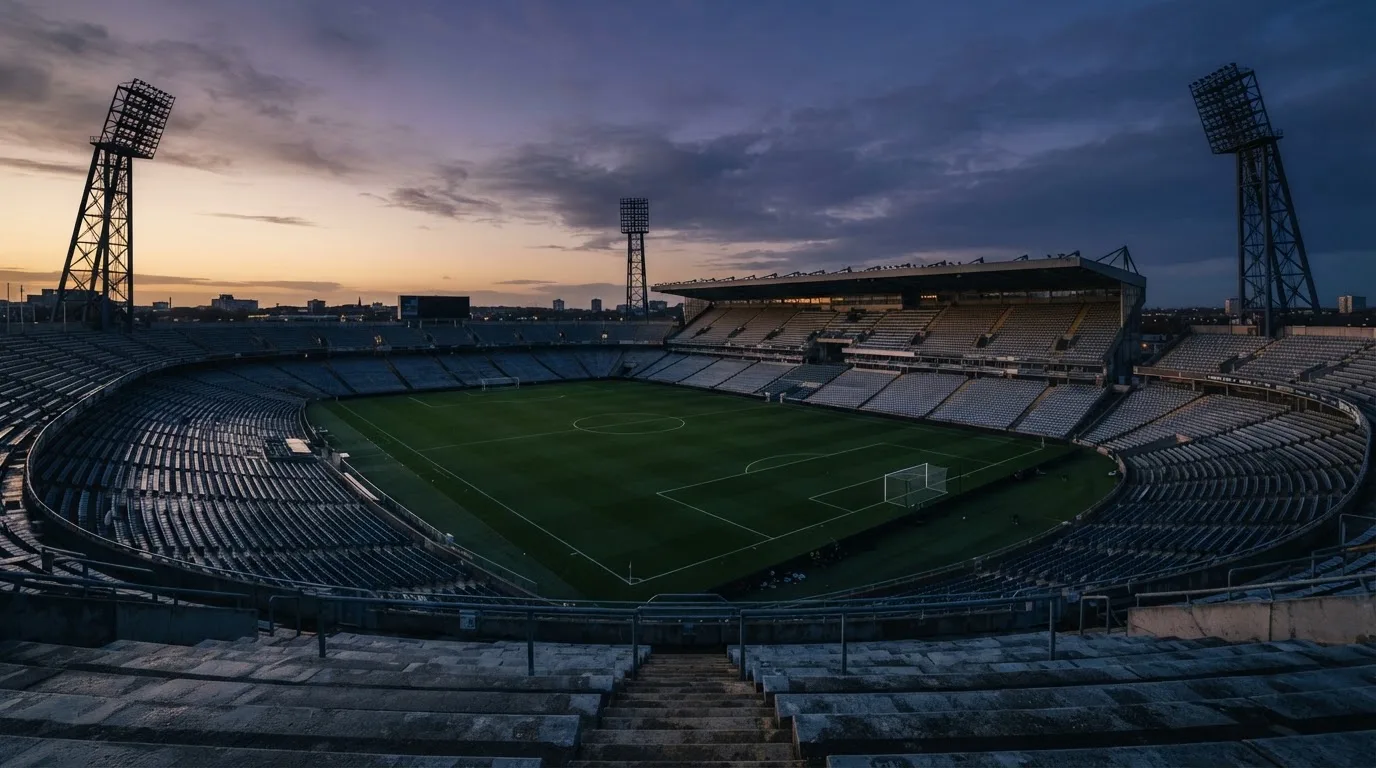
The court is 40 metres by 20 metres at international level, smaller than a football pitch and shaped for tight, technical play. The ball is a size 4, smaller and heavier than a football, with a lower bounce that keeps the action on the floor rather than in the air. A futsal team has five players on the court, including the goalkeeper, and may name up to nine substitutes with unlimited substitutions, which means the rotation is constant and the fresh-legs effect is visible in the late stages of each half. The match is two 20-minute periods with the clock stopping at dead-ball situations, and each team has one one-minute timeout per period.
The rule that shapes the betting markets most directly is the accumulated-foul rule. From the sixth accumulated foul in a period, the opposing team is awarded a direct free kick from the second penalty mark, ten metres from goal, with no wall permitted. That changes the geometry of a tight match in its final minutes: a team five fouls into the half is one foul away from giving the opposition a near-certain scoring opportunity. The live in-play product at a bookmaker that prices these markets well will reflect the foul count, and a punter watching the live stat panel can read when the next ten-metre penalty is coming.
The goalkeeper rotation is the second market-shaping rule. With unlimited substitutions, a trailing team regularly pulls its goalkeeper in the final minutes and brings on an outfield player, creating a power-play that often shows up in the total-goals market. A bookmaker that prices the over/under line without accounting for the rotation is leaving an edge on the table, and a punter who watches the rotation can read the same edge.
The tactical consequence is that futsal matches tilt more dramatically than football matches in their final minutes. A 2-2 scoreline at the 35-minute mark is not a draw in prospect; it is a likely 4-3 or 5-4. The in-play market for total goals is therefore more responsive to time remaining than the equivalent football market, and a punter backing a total-goals line in the final minutes of a futsal match is taking a position on a market that has just become more volatile. The bet builder for total goals combined with match result, common on the major bookmakers, bakes all of that volatility into a single price with a stacked margin.
The fundamental summary: futsal is a sport of high scoring, high rotation, high fouls and a rulebook that creates tactical shifts. The markets the bookmakers offer — 1X2, over/under, handicap, correct score, bet builder — are the standard sports-betting markets applied to that sport, and the depth of the offering is determined by the bookmaker’s data and trading capacity. A punter who reads the markets without the fundamentals is pricing on a model they do not understand; a punter who reads the fundamentals without the markets is watching without a stake.
The Statute of Futsal — Where the Law Actually Sits
The legal frame around futsal betting in Great Britain is the same legal frame around any other sports betting in Great Britain, because the Gambling Commission does not licence by sport; it licences by category. A remote general betting standard (real events) licence covers futsal, football, tennis, horse racing and any other real-event sport the operator chooses to offer. The Commission’s public register is the whole test of who holds a licence: there is no separate list, no separate permit for futsal, and no statutory list of permitted sports or markets.

Since the Gambling (Licensing and Advertising) Act 2014, an operator whose remote facilities are used in Great Britain needs a Commission licence wherever it is based. Sections 33 and 36 of the Gambling Act 2005, as amended, are the operative provisions. A Curaçao, Maltese or Gibraltar licence is not a substitute: providing gambling facilities in Great Britain without the licence the Act requires is an offence under section 33, with a penalty of up to 51 weeks’ imprisonment, a fine up to level 5, or both (six months in Scotland). The offence is aimed at the operator, not the customer who merely bets on an unlicensed site, but the customer loses the protections the licence confers: GAMSTOP coverage, the Commission’s complaints route, an approved alternative dispute resolution body, the £150 financial-vulnerability check, the 10x bonus wagering cap. The frame is not a wall; it is a perimeter the operator crosses at its own risk.
Identity verification has been mandatory at GB-licensed remote operators since 7 May 2019: name, address and date of birth are verified before a customer can deposit or gamble, including with a free bet or bonus. Credit cards are banned for gambling in Great Britain since 14 April 2020 under LCCP condition 6.1.2, and the ban extends to credit-card-funded payments through an e-wallet. Debit cards and bank-based payments are not covered by the ban. There is no statutory cap on stakes in sports betting, and no state-set deposit or loss ceiling: limits are the customer’s choice, set at the operator’s deposit-limit tool, and the operator’s duty is to make that tool available, not to enforce a ceiling.
Northern Ireland sits outside the Gambling Act 2005 and has its own older law, which means a GB-licensed bookmaker serving customers in Northern Ireland is not regulated by the Commission for that service. The phrase “GB-licensed” is the correct term; “UK-licensed” is a misnomer that suggests the Commission regulates Northern Ireland, which it does not.
Financial spread betting on financial markets is regulated by the Financial Conduct Authority, not the Commission, and Spreadex is the operator in this comparison that runs both a Commission fixed-odds licence and an FCA spread-betting authorisation. The FCA’s disclosure regime is the reason Spreadex’s terms state that spread betting losses can exceed the deposit — a regulatory line, not a marketing line.
The honest summary: a GB licence is the only test of who can lawfully serve a British customer. A licence confers a perimeter of protections (verification, GAMSTOP, ADR, the bonus cap, the vulnerability check) and imposes a perimeter of duties (LCCP, RTS, the ASA advertising rules). An offshore operator confers none of those protections and imposes none of those duties. The punter’s choice is between a known frame and no frame, not between “safe” and “unsafe” as abstract categories.
Wellbeing, Safeguard and Counselling — The Responsible-Gambling Frame
Every remote general betting licence in Great Britain comes with a duty to provide responsible-gambling tools, and the major ones are mandatory. GAMSTOP is the national multi-operator online self-exclusion scheme and a mandatory licence condition for online operators since 31 March 2020: every customer at a GB-licensed online bookmaker has access to GAMSTOP, and the periods are six months, one year, five years, or five years with auto-renewal. After the minimum period, the exclusion stays in place for a further seven years unless the customer asks GAMSTOP to remove it. The scheme covers online sites and apps; betting shops use a separate service.
A financial vulnerability check (LCCP condition 3.4.4, in force since 30 August 2024) applies to licensed remote betting when a customer’s deposits minus withdrawals exceed £150 in a rolling 30 days (the threshold has applied since 28 February 2025). The check is a public-record check (bankruptcy, county court judgments, similar) — not an income check and not a credit reference check. The announcement of a further financial risk assessment regime, sometimes called the “affordability checks” of the press, has been made in a staged plan (Commission article of 7 July 2026) with no published start date. The correct framing is “announced, staged, no start date”; it is not in force.
Deposit limits (RTS 12) are a customer-set tool: the operator must offer a gross deposit limit on a fixed time frame, and the first changes have applied since 31 October 2025, with a second phase postponed to 30 September 2026. There is no state-set ceiling; the limit is the customer’s choice. Timeouts, self-exclusion at the operator level (shorter than GAMSTOP) and reality checks are also mandatory.
Help is available outside the operator frame. GamCare runs the National Gambling Helpline. GambleAware funds treatment and education. The NHS runs gambling clinics in several regions. Gamblers Anonymous runs peer-support meetings. The licensed bookmakers in this comparison link to at least one of these services; the practical move for a punter who feels their betting is becoming a problem is to contact GamCare first, then move to self-exclusion at the operator and at GAMSTOP.
The promotional frame changed in January 2026. Since 19 January 2026, wagering requirements on bonuses are capped at 10x the bonus amount: a £10 bonus at 50x wagering would have required £500 of bets; under the cap, no more than £100 of qualifying bets. Mixed-product promotions — offers that require gambling on two or more product types (betting, casino, bingo, lottery), such as “bet on football to get free spins” — are banned. Whether the cap applies to free bets with no wagering condition, and whether there is a cap on the money value of a bonus, are not established.
The honest summary: the responsible-gambling frame is a set of customer tools and a set of operator duties, and the frame in Great Britain is one of the most developed in the world. The punter’s move is to use the tools before they are needed, not after: a deposit limit set on day one is a different decision from a deposit limit set after a bad week.
Incentive, Rollover and Giveaway — What a Bonus Actually Costs
The marketing language around a sports welcome offer is built to suggest the offer is a gift. The arithmetic around the offer is built to recover the gift’s value from the punter’s subsequent play. The gap between the two is what the offer actually costs, and the gap is the whole reason this page exists.
A free bet is a credit the operator places in a customer’s account after a qualifying bet. The free bet is used to back a selection; if the selection wins, the punter keeps the winnings, the stake is the operator’s, and the free bet is gone. The value of a free bet on a winning selection is the winnings, not the stake. The arithmetic of a free bet’s expected value is the free-bet amount multiplied by the odds minus one, divided by the odds, multiplied by the payout share of the market: a £10 free bet at 3.00 returns £20 in winnings, but the expected value of that free bet is roughly £10 × (3.00 – 1) ÷ 3.00 × 0.95 = £6.33, because the market is taking a margin of about 5%. The £10 is the headline; £6.33 is the expected value.
A stake-back free bet, the structure of Hollywoodbets’ welcome, is paid only on a losing qualifying bet. The punter places a qualifying acca at the stated minimum odds and leg count, the acca loses, and the stake is returned as a free bet. The structure is, in marketing terms, “risk-free”; in arithmetic terms, it is insurance against the most likely outcome (a losing acca at 4/1), paid as a free bet whose stake is not returned. The expected value of the structure depends on the probability of the acca winning (low at 4/1) and the value of the free bet on a subsequent bet (the formula above). A punter who would have placed the acca anyway is hedging; a punter who places the acca only to qualify is paying the qualifying bet’s expected loss to access the free bet.
A cash bonus, rarer in sports betting than in casino play, is a credit added to the customer’s cash balance, with a wagering requirement before withdrawal. The wagering requirement is the multiplier on the bonus that must be turned over in qualifying bets before the bonus is withdrawable, and the 10x cap in force since 19 January 2026 is the maximum the operator can set. A £10 cash bonus at 10x requires £100 of qualifying bets; the expected loss on those bets, at an average margin of 5-7%, is £5-£7, which is what the bonus actually costs the operator and what the bonus is worth in expected value. The punter’s net is £10 minus £5-£7, in the range of £3-£5, which is the value the bonus is “worth” after the rollover.
A “boosted odds” or “enhanced price” offer is a price enhancement on a selected market for new or existing customers. The enhancement is a marketing line; the price is what the punter sees, and the price already has the operator’s margin baked in. A boost from 2.50 to 3.00 on a futsal match is offering the punter a price that is, in margin terms, about 6% better than the headline, depending on the underlying margin. The boost is real value if the punter was going to back the selection at the original price; it is a marketing inducement if the punter was not.
An accumulator insurance offer refunds the stake as a free bet if one leg of an acca lets the punter down (typically as a free bet if exactly one leg loses). The insurance is paid only when the acca loses by one leg, and the value of the free bet is the formula above. The punter’s net is the expected loss on the qualifying acca minus the expected value of the free bet, and whether the insurance is worth taking depends on how often the punter’s accas lose by exactly one leg.
A bet builder is a same-event multi, and the marketing language is “bigger returns from a single match”. The arithmetic is that each leg carries its own margin, and the combined price multiplies those margins. A bet builder of four legs at an average 7% margin has a combined margin of about 28%, and the punter is paying 28% to the bookmaker on every unit staked. The bet builder is a product, not a discount.
The honest summary: every bonus and every promotional offer carries a cost, and the cost is the gap between the marketing headline and the arithmetic of the offer. A punter who reads the terms before claiming is paying the offer’s true cost; a punter who reads the headline is paying the offer’s marketing cost, which is higher.
What a Two-Way Market Margin Tells a Punter
The book’s margin is the cut taken from every unit staked across all outcomes of a market, and the margin is the single number a punter can read from the odds alone. The arithmetic is straightforward: on a two-way market priced at decimal odds a and b, the payout share is 1 ÷ (1/a + 1/b) and the margin is 1 minus that share.
A price of 1.90 / 1.90 on a two-way market gives a payout share of 1 ÷ (1/1.90 + 1/1.90) = 1 ÷ (0.5263 + 0.5263) = 1 ÷ 1.0526 = 0.95, and a margin of 1 − 0.95 = 0.05, or about 5%. That is the floor for a well-priced two-way market, and it is the figure this page uses as the illustrative example for the calculation the plan prescribes. The same calculation at 1.85 / 1.85 gives a payout share of 0.93 and a margin of about 7-8%; at 1.80 / 1.80 the margin is about 11%. A 5% margin is the best a punter can realistically expect on a well-priced major-market two-way line, and the band a punter should accept on a thin-market futsal line is closer to 7-10%.
A three-way 1X2 market on a futsal match — home win, draw, away win — carries a wider margin than a two-way market because the bookmaker is taking a cut on three outcomes rather than two. A typical 1X2 line of 2.10 / 3.40 / 3.20 gives a payout share of 1 ÷ (0.4762 + 0.2941 + 0.3125) = 1 ÷ 1.0828 = 0.9234, and a margin of about 7.7%. The three-way margin is structurally wider than the two-way margin, and the punter’s edge, if any, is in the price movement between open and close, not in the headline.
A bet builder’s margin stacks with each leg. A bet builder of four legs at an average 7% margin per leg has a combined margin in the high twenties, which is the cost of the convenience of a single bet slip. The punter’s move is to keep bet builders short (two or three legs) and to accept that the convenience carries a real cost.
A price boost on a single selection reduces the margin on that selection by a known amount. A boost from 2.50 to 3.00 on a futsal match is, in margin terms, taking the original 7% margin and offering a price that is closer to a 1% margin. The boost is paid for by the operator, not by the rest of the market, and the punter’s move is to take the boost only if the punter was going to back the selection anyway.
The honest summary: a margin of 5% on a two-way market is a floor, not a ceiling. A margin of 7-8% on a three-way market is typical. A margin in the high twenties on a multi-leg bet builder is the cost of the bet builder. A margin that is “boosted” is the marketing line, and the punter’s move is to read the underlying price before reading the boost. The arithmetic is simply a guide; the numbers are the punter’s reading tool.
What a Futsal Bet Costs a Punter — A Closing Note
The cost of a futsal bet is not the stake. The stake is what the punter puts down; the cost is the stake multiplied by the margin, plus the stake lost on a losing bet, plus the value of the bonus the punter did not claim, plus the time spent pricing markets that did not move. The honest framing of a futsal bet is that the bookmaker is taking a cut on every unit staked, the data is thinner than the data on football, the margin is wider, the variance is higher and the rulebook creates tactical shifts a punter can read.
The ten licensed bookmakers in this comparison hold a current remote general betting licence from the Gambling Commission. Each one offers futsal under that licence, and each one’s terms state what the operator says it offers. The punter’s ranking of those ten is a personal ranking, built on which features the punter uses and which costs the punter is willing to pay. The bookmaker with the deepest in-play product is not the same as the bookmaker with the best welcome offer, and the bookmaker with the cheapest margin on a 1X2 line is not the same as the bookmaker with the best bet builder.
The legal frame around the bet is a perimeter of protections and a perimeter of duties. The punter who bets within the frame has access to GAMSTOP, the ADR route, the bonus cap and the vulnerability check; the punter who bets outside the frame has none of those. The frame is not a guarantee of a winning bet, because no frame can guarantee a winning bet; the frame is a guarantee of what happens when a bet is disputed, when a bonus is unclear and when the punter needs to step away.
The promotion frame around the bet is a set of marketing offers with arithmetic behind them. The punter who reads the terms is paying the offer’s true cost; the punter who reads the headline is paying the offer’s marketing cost. The 10x cap on wagering requirements, in force since 19 January 2026, is the regulatory ceiling on the cost of a cash bonus, and the punter’s move is to claim only what the punter would have bet anyway.
The closing position: futsal is a thin-market sport with a wide margin, a high variance and a rulebook that creates in-play edges. A GB-licensed bookmaker is the only kind of bookmaker with a regulatory frame; the ten in this comparison all hold that frame. The punter’s bet is a price the punter reads against a margin the punter calculates, on a market the punter understands, at a stake the punter has set as a limit before the bet is placed. Everything else is the marketing the bookmaker has put around the bet, and the arithmetic the punter has done before claiming the offer.
Frequently Asked Questions
How does a punter bet on a futsal league?
A punter bets on a futsal league by opening an account with a Gambling Commission-licensed bookmaker, completing the identity verification, depositing by debit card or bank transfer, navigating to the futsal tab and selecting a market such as 1X2, over/under or handicap. The bet is struck at the price displayed, the stake is taken from the cash balance and the bet settles on the official result. The same workflow applies to the major international tournaments and the confederation championships, which the licensed bookmakers price under their standard remote general betting licence.
How can a punter check that a bookmaker holds a Gambling Commission licence?
The check is the Commission’s public register, searchable by business name, trading name, domain or account number. A licensed bookmaker appears on the register with the licence categories held (for example remote general betting standard, real events) and the licence holder’s legal name. A punter who cannot find a brand on the register, or finds it under a different trading name, should treat the brand as unlicensed for the purposes of the bet. The register is the whole test; there is no separate list and no further tier.
How is the return on a bet calculated from the stake and the odds?
The return on a single bet is the stake multiplied by the decimal odds. A £10 stake at 2.50 returns £25, of which £15 is profit and £10 is the original stake. The return on a combination bet is the stake multiplied by the product of the legs’ odds, so a £10 double at 1.90 and 3.50 returns £66.50, of which £56.50 is profit. The price already has the bookmaker’s margin baked in, which is the cost the punter pays for the bet.
What is the bookmaker’s margin and how does it show in the odds?
The margin is the cut the book takes from every unit staked across all outcomes of a market, and it shows in the odds as the gap between the implied probabilities of the outcomes and 100%. On a two-way market priced 1.90 / 1.90 the implied probabilities add to 105.3%, a 5.3% margin. On a three-way 1X2 market priced 2.10 / 3.40 / 3.20 the implied probabilities add to about 108%, a margin of about 8%. A lower margin means a better price for the punter.
How do fractional odds such as 5/1 convert to decimal odds such as 6.00?
The conversion is a ÷ b + 1, where a/b is the fractional form. So 5/1 becomes 5 + 1 = 6.00, 11/4 becomes 11 ÷ 4 + 1 = 3.75, and evens (1/1) becomes 2.00. The decimal form shows the total return per unit staked, including the stake; the fractional form shows the profit per unit staked, excluding the stake. The two forms are the same price, expressed in two ways.
What responsible-gambling tools must a licensed bookmaker offer?
Every GB-licensed remote bookmaker must offer GAMSTOP self-exclusion, deposit limits, timeouts, reality checks and access to help-line information (GamCare, GambleAware, Gamblers Anonymous). The bookmaker must run a financial vulnerability check once a customer’s deposits minus withdrawals exceed £150 in a rolling 30 days, and must enforce the 10x cap on bonus wagering requirements in force since 19 January 2026. The framework is the same for every licensed operator; the punter’s move is to use the tools on day one rather than after a problem has developed.
Football – Cricket betting
Content created by the «Cricket betting» team
