
Darts Betting Odds 2026: A Cost-First Guide to Markets, Margin and Bookmakers
 Available in US
Data current as of 27 October 2026 and verified against the Gambling Commission’s public register.
Darts Fundamentals and the Shape of the Betting Market
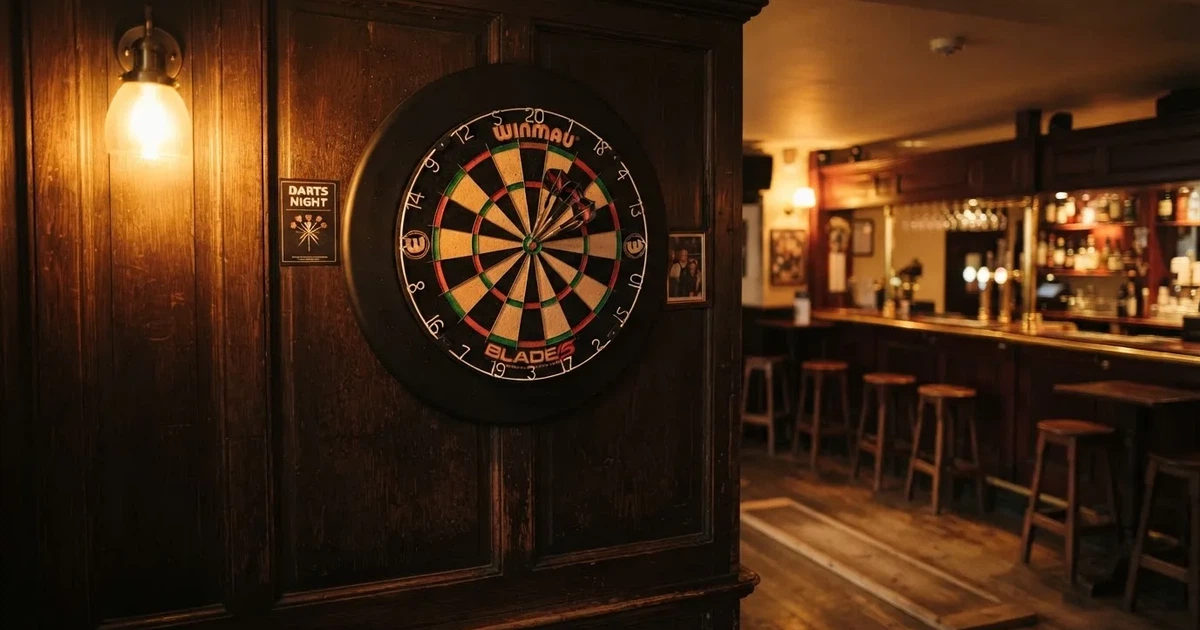
Darts is, by the standards of betting markets, an unusually clean sport. Two players throw three darts each in turn. No referee pulls a player back for offside. No clock runs out. A match is a sequence of visits, and each visit is three darts at a board that has not changed shape since 1976. For a bettor that cleanness is part of the appeal, and part of the cost, because a bookmaker knows that a market built around such a tight feedback loop is easy to price.
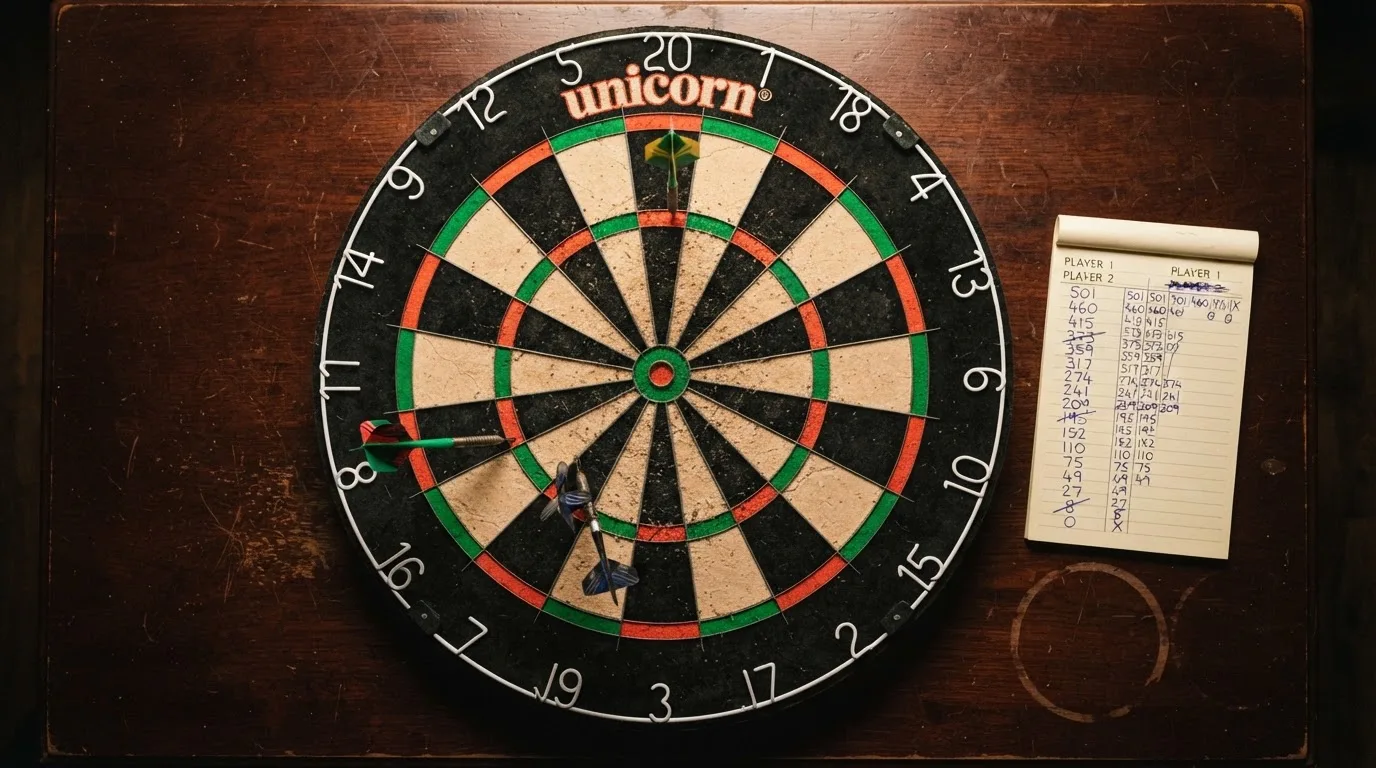
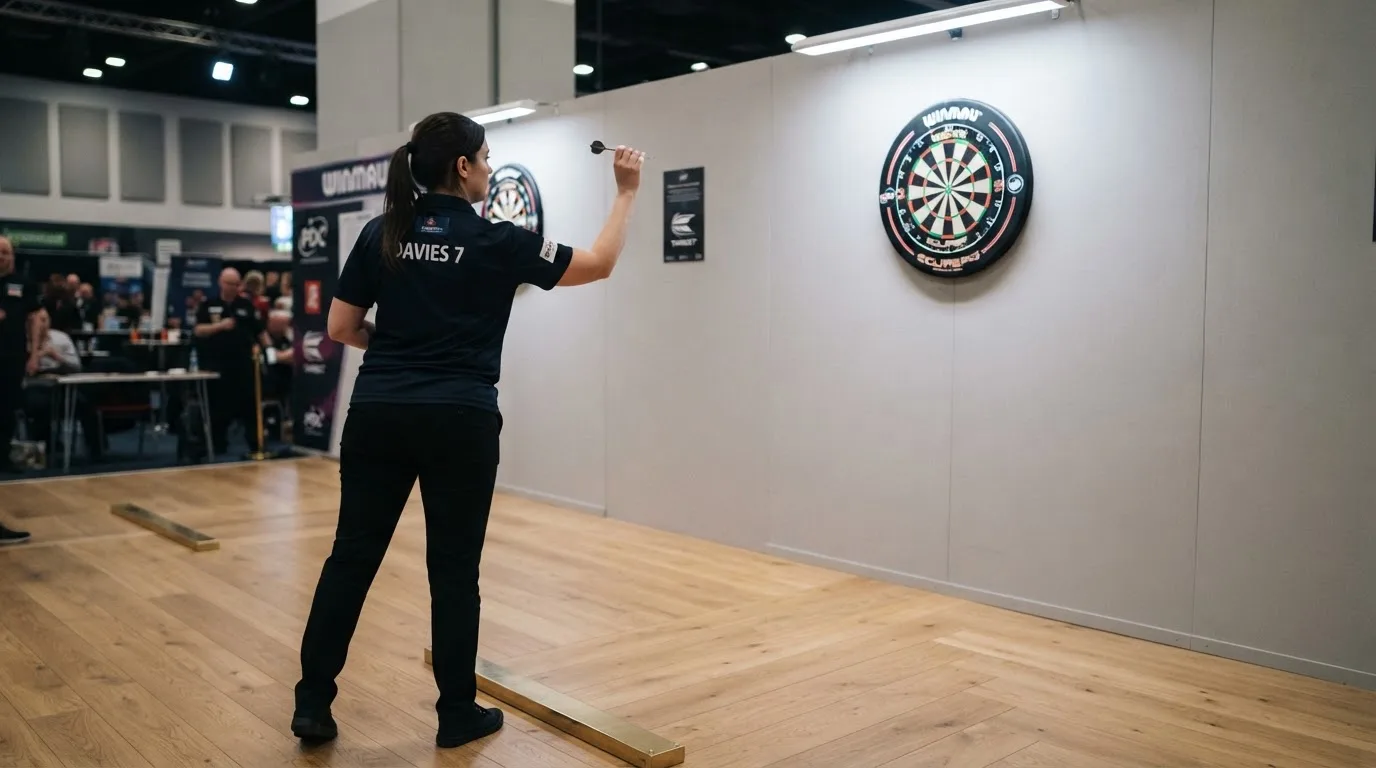
The object of the standard game, 501, is to bring a score of 501 down to zero, finishing on a double or on the bullseye. The highest possible three-dart finish is 170 (treble 20, treble 20, bullseye), and the shortest possible leg, the nine-darter, is the stuff of legends. The bullseye itself is worth 50, with the outer ring worth 25. Throws are taken from 2.37 metres (7 ft 9 in), with the bullseye 1.73 metres above the floor. Those numbers matter to a bettor because they shape every market that gets built around them. Will there be a 180 in this leg? Total 180s over 7.5? Highest checkout over 130.5? Will player X hit a nine-dart finish? Every one of those is a product of the geometry of the board.
Two governing bodies sit at the top of the sport. The PDC runs the Premier League, the World Championship, the World Series and most of the televised events that drive British betting turnover. The World Darts Federation organises a parallel circuit, including the WDF World Championship and the Lakeside World Championship. Both feed markets. Most licensed British bookmakers concentrate their coverage on the PDC, with the WDF and the BDO-era events thinly covered. That asymmetry is itself a cost. The more bets a market attracts, the sharper its price tends to be, and BDO-style fixtures are often loosely priced when they appear at all.
The market is therefore not a single thing. It is a stack. A deep, liquid core on the televised PDC events. A mid-layer on the Premier League nights and the floor tournaments. A thin top layer on challenger and development tour events. And outside all of that, the outright market that runs from one World Championship to the next. Each layer carries a different margin. The same brand can show 3 per cent on a televised final and 8 per cent on a Tuesday-night challenger event. That spread is the first thing a cost-conscious reader should look for.
Live Betting on Darts: What In-Play Actually Costs the Reader
Live betting is where darts becomes a different product. A pre-match price is set when nothing is happening. An in-play price is set in the middle of a leg, with one player on 250 and the other on 180, the thrower’s first dart already in the treble 20. Every licensed British bookmaker offers in-play on televised PDC events. Most suspend the market between legs and only re-open it once a player has thrown at least one dart of the next visit, sometimes only after the visit is complete. That suspension is not a glitch. It is how the bookmaker protects the margin that the pre-match price was built on.
Three costs fall on the in-play reader that the pre-match reader does not pay.
The first is the suspension cost. When a player is cruising at 170 with two darts in hand and the leg is effectively over, the price on the next-leg market collapses. A reader who wanted to back that player mid-leg finds the slip either rejects or returns the price the algorithm posted a second later, after the favourable state has passed. The cost is the missed edge.
The second is the latency cost. In-play feeds on British licensed sites update from a data feed, not from the live television picture. On a strong connection the delay is small. On a congested event, particularly during the World Championship at Alexandra Palace, the delay stretches. A bet on “next leg, Van den Bergh” placed the moment Van den Bergh hits the double is, by the time the bet reaches the trading engine, a bet on a leg that has already started. Most sites will void such a bet under “palpable error” rules if the price was clearly wrong, and the reader loses nothing. In the grey zone, the bet stands, and the reader has paid for stale information.
The third is the cash-out cost. Cash out is offered by the bigger British bookmakers on darts, often on match winner, on the next-leg market and on outright positions. The displayed cash-out value is the bookmaker’s estimate of the current price, less its own margin on the cash-out itself. That margin is not displayed. On horse racing, where cash-out has been studied, the embedded margin is several percentage points wider than the pre-match market. On darts the same shape applies. A £10 back at 3.50 that the reader cashes out at £28 with the player a leg up is a real gain. The same £10 back cashed out at £24 with the player a set down is a smaller loss avoided. The difference between the two is, in part, the cash-out fee. Partial cash-out and auto cash-out at a target value are useful tools. Neither removes the embedded fee.
What the reader actually buys with in-play is not information. The live picture on Sky Sports carries the same information faster. The purchase is convenience. The cost is the suspension, the latency and the cash-out margin, paid in the form of a slightly wider margin overall.
Predictions, Tips and the Honest Cost of a Forecast
“Darts betting tips today” is one of the most-searched phrases attached to this sport, and it is worth saying plainly what a tip is and what it is not. A tip is a forecast made by someone who is not in the room. It is a prediction that a particular player will win a particular match, often stated with a confidence rating and a recommended stake. The tipster usually charges for the service, or monetises it through an affiliate link to a bookmaker. The reader pays either way. In money, or in attention that is sold to a brand.
Three things are worth holding in mind.
Darts is a high-variance sport on a per-leg basis. The best player in the world, on his day, can lose to a debutant. The blowtorch of form, travel, crowd and stage fright bends results. A tip that picked Luke Littler to win his first-round match at the 2026 World Championship was a real tip. A tip that picked a 33-1 outsider in round one of any major is, on average, a tip the tipster would not have made at 16-1.
Darts is also a heavily scheduled sport, with multiple televised events a week through the autumn and winter, and floor events almost every weekend. The sheer volume of fixtures makes tipsters prolific, and it makes their track records opaque. A 60 per cent strike rate is meaningless without the average odds, the sample size and the staking plan. A 55 per cent strike rate at average odds of 2.20 is a profitable service. A 55 per cent strike rate at 1.70 is a losing one. Most tipster sites do not publish the average odds or the staking plan. The reader who takes tips at face value is paying the marketing cost of the tipster without ever seeing the underlying ledger.
The bookmaker’s own “predictions” tab, which most large British operators carry, is not a tipster product at all. It is a curated list of the day’s most-popular bets, which the bookmaker publishes because they are popular, not because they are good. A bet being popular tells a reader something about the public mood and nothing about whether the price is value. The honest cost of a forecast, free or paid, is the price the reader ends up paying at the bookmaker’s site. If the tipster is right at odds of 2.50, the reader gets £25 back from a £10 stake. If the tipster is wrong, the reader loses £10. The forecast does not move either number.
There is one place where a structured approach does pay: bankroll management. A reader who decides in advance that they will stake one per cent of a defined bank on any single selection, never chase, and never increase the stake after a loss, will, over hundreds of bets, lose less than a reader who stakes by feel. That is not a tip. It is arithmetic. The arithmetic is the same whether the selection came from a tipster, from a model, or from a hunch about the World Championship final.
Bet Types and Odds Formats on Darts
The standard unit of price in Great Britain is the fraction. “5/1” means a £1 stake returns £5 in profit, plus the £1 stake back, for a £6 return. “Evens” (1/1) is a £2 return on a £1 stake. “Odds-on”, anything shorter than evens, is what a reader backs when the favourite is expected to win. The decimal price, more common on European-facing sites and on most mobile apps, is the return including stake: 6.00 for 5/1, 2.00 for evens, 1.50 for 1/2. Both formats quote the same information. The conversion is a/b → a ÷ b + 1. Decimal odds are used throughout this article because the arithmetic for margin, return and free-bet value is cleaner in decimal.
The markets themselves come in roughly five shapes.
Match winner. Two outcomes when the tournament format rules out a draw, three outcomes when it does not. Group stages sometimes allow it; knockout stages almost never do. This is the deepest market and the one where the bookmaker’s margin is usually lowest. On televised PDC events expect 3 to 5 per cent overround on the outright; on floor events expect 6 to 9 per cent. The margin widens further on three-way markets.
Set or leg betting. The reader predicts the score in sets or, on some books, in legs. Van den Bergh to win 4–2 in sets at 6/1 (7.00) is a more specific bet than the match winner at 1.50, and pays accordingly. The deeper the score line, the wider the book. A correct-score bet on a first-to-seven-sets final typically runs at 12 per cent overround at the major firms, and higher at smaller ones.
Player props. Will there be a 180 in this leg? Total 180s over or under 7.5? Highest checkout over 130.5? Will player X hit a nine-dart finish? These are the markets that draw big interest because they tie the bet to a televised moment. The margins here are wider than on match winner. Six to ten per cent is common, because the data feed on individual visits is less reliable than on match results, and the bookmaker is pricing more uncertainty.
Handicap. A reader backs a player to win even after a “handicap” of legs or sets is applied. If Van den Bergh is at -2.5 sets, the bet wins only if Van den Bergh wins by three sets or more. The handicap brings two mismatched players to a roughly even price, which is where most recreational bets live. A handicap line of -2.5 at 1.91 (10/11) is the bookmaker’s estimate that Van den Bergh wins the match by three sets about 52 per cent of the time after the deduction.
Outright winner. The reader picks the winner of a tournament weeks or months ahead. The odds are long. 25/1, 50/1, 100/1 on second-tier players. The bookmaker’s margin is usually high, because the field is large and the price of every longshot is generous to the reader in raw odds but poor on a margin basis. Outright markets on smaller tournaments can carry 30 per cent overround or more. On the World Championship they are tighter, because the bookmaker is competing for the same small pool of sharp money.
A combination bet multiplies the odds of the legs into one price, but the margins of the legs multiply too. A five-fold accumulator at 6/1, 4/1, 5/2, 3/1 and 7/4 sounds like 6 × 4 × 3.5 × 4 × 2.75 = 924/1 (925.00), but the embedded margin on each leg means the true probability priced by the bookmaker is closer to 700/1. The bigger the accumulator, the worse the cumulative margin.
The Darts Fixtures Calendar: Where the Money Goes and When
The PDC calendar runs almost year-round. The Premier League occupies Thursday nights from February to May, with a play-off to close. The World Series runs through the summer, taking the top players to New York, Sydney and elsewhere. The European Championship and the Grand Slam are autumn fixtures. The Players Championship Finals close out the floor season in late November, and then the World Championship takes the sport from December through to early January at Alexandra Palace.
The 2026 PDC World Darts Championship is the reference event for the calendar year, running from 11 December 2025 to 3 January 2026 at Alexandra Palace with 128 players, up from 96 in recent years. Luke Littler beat Gian van Veen 7–1 in the final; the prize fund was £5,000,000 with £1,000,000 to the winner. The match format scales up through the tournament. Rounds one and two are first to three sets, rounds three and four first to four, quarter-finals first to five, semi-finals first to six, and the final first to seven. That format, and the long winter run-up, are why the World Championship carries the deepest outright book of any darts event.
The Premier League Darts is the second-biggest betting event in the calendar. The format is shorter than the Worlds, which makes match-winner markets more volatile and handicap markets more popular. Coverage at every major British bookmaker is full pre-match and in-play, with live streaming at the bigger sites.
The floor events, the Players Championships, the European Tour and the Development Tour, are not televised, which is why they sit behind a paywall on most British licensed sites. Streaming is usually available through the PDC’s own service or through specialist channels. The bigger British bookmakers offer match winner on most floor events, but the in-play coverage is thin, and the prop markets (180s, highest checkout) are often missing. The cost to the reader is a wider margin on what is available, and no price at all on what is not.
The WDF calendar runs in parallel, with the Lakeside World Championship as its centrepiece. Coverage on British licensed sites is sparse, but the better brands offer outright and match winner on the major WDF events. The reader who follows the WDF will find fewer promotions, fewer boosted odds, and a thinner market, but also a less efficient book, which is sometimes where the price is best.
A practical note on scheduling. The PDC Premier League and World Championship run on UK prime-time television. The World Series runs on time-zone-shifted broadcasts, and the European events run on European evenings. The reader who bets on darts from a British account will see the best in-play coverage on UK-time events and the thinnest on overseas late-night broadcasts, where the data feed is often the only source of in-play prices.
How the Top 10 Licensed Bookmakers Compare on Darts
A shortlist of ten licensed British bookmakers is reviewed below. They are not a ranking and not a recommendation. They are ten brands the Gambling Commission’s public register lists as holding a remote general betting standard licence for real events, and they appear here because they take bets on darts at a range worth comparing. The table below names the licence, the licence holder and what each operator’s own published terms say about the key subject. The verdicts that close the article are the editor’s view of where each one fits.
| Operator | Gambling Commission licence and holder | What the operator’s terms state on darts |
|---|---|---|
| LiveScore Bet | Commission account 56859 — LiveScore Betting and Gaming (Gibraltar) Limited | Pre-match and in-play on televised PDC events; Bet Builder allowing up to ten selections across the markets the brand’s own help documentation lists |
| Star Sports | Commission account 9177 — Star Racing Limited | Phone trading on 08000 521 321 and email support at [email protected] |
| Kwiff | Commission account 44448 — Eaton Gate Gaming Limited | UK Gambling Commission licensed, with a “surprise” payout feature that increases the return on selected bets; 17+ App Store age rating in Great Britain |
| Unibet | Commission account 45322 — Platinum Gaming Limited, Gibraltar | Operated since 1999; live streaming and in-play on televised PDC events; deposit and sports bet offer for new GB customers |
| Betboro | Commission account 44181 — Webmedia Development N.V. | First-deposit free-bet offer for new GB customers via debit card |
| Tote | Commission account 54779 — TDCO Limited | Heritage in pool betting on horse racing; sportsbook on televised events around that core |
| Copybet | Commission account 53774 — Copybet UK Limited | Best Odds Guaranteed all day every day on UK and Irish racing; first past the post paid even on later disqualification |
| Betway | Commission account 39372 — Betway Limited | Weekly free-bet club after opt-in |
| Betfred | Commission account 39544 — Petfre (Gibraltar) Limited | Sports, casino and games under one app; 21 sports covered |
| 888sport | Commission account 39028 — 888 UK Limited | Pre-match and in-play with Cash Out, Bet Builder, racing streams, BetFinder form tools, a live bet feed and daily boosted odds |
The way the comparison breaks down, in practice, is into three loose groups. LiveScore Bet, Unibet and 888sport are the most built-out in-play products, with full coverage of televised PDC events, bet builders and a streaming tie-in. Betway and Betfred are the multi-product brands, with darts sitting inside a wider sportsbook alongside horse racing, football and the casino. Tote and Copybet are the racing-first shops, with strong horse-racing terms and a thinner darts product. Star Sports is a smaller bookmaker with a phone-trading model. Kwiff is a smaller operator with a feature-led payout product. Betboro is a mid-tier bookmaker with a deposit-gated free bet.
The Statute Behind Darts Betting: The Gambling Act 2005 and What It Demands
The framework is the Gambling Act 2005, which covers Great Britain: England, Scotland and Wales. Northern Ireland is outside the Act and runs under earlier legislation, so any reference to a “British licence” is properly read as a “Great Britain licence”. Since the Gambling (Licensing and Advertising) Act 2014, any operator taking bets from customers in Great Britain needs a Gambling Commission licence, wherever the operator itself is based. A Curaçao, Malta or Gibraltar corporate registration is not a substitute for a Commission licence, though it often accompanies one, because the operator’s holding company is commonly domiciled offshore. What makes a brand GB-licensed is the Commission’s public register.
The register lists the licence type. For darts betting, the relevant category is remote general betting standard (real events), which every operator in the comparison table above holds. Other licence types cover pool betting (off-course horse and dog racing), betting exchanges (where customers back and lay against each other rather than against the bookmaker), and casino. Spread betting on financial markets is regulated by the Financial Conduct Authority, not the Commission, and a brand that offers financial spread betting alongside sports betting is licensed by two regulators for two different products.
The Commission enforces its framework through licence conditions and codes of practice, the LCCP, and through the Remote Technical Standards. Three rules the reader meets in practice, even if not in those words.
Identity verification before the first deposit. Since 7 May 2019, every licensed remote operator has verified a customer’s name, address and date of birth before that customer can deposit or place a bet, including a bet paid for with a free bet or a bonus. The friction is real. The alternative is unlicensed operators, where no such check is required at sign-up, but which are not within the Commission’s regulatory net at all.
Credit-card gambling banned. Since 14 April 2020 no licensed operator has accepted a credit card, directly or through an e-wallet funded by a credit card, for any gambling transaction. A debit card, a bank transfer or a direct bank-payment service are the standard routes.
GAMSTOP membership. Since 31 March 2020, every GB-licensed online operator has been a member of the national multi-operator self-exclusion scheme. A customer who registers with GAMSTOP is blocked from every GB-licensed online operator for the chosen exclusion period: six months, one year, five years, or five years with auto-renewal. After the minimum period the exclusion stays in place for a further seven years unless the customer actively asks GAMSTOP to remove it. Betting shops use a separate in-shop self-exclusion arrangement.
There is no statutory list of permitted sports or markets. A bookmaker licensed for remote general betting standard (real events) may offer any market it chooses under its own rules, and darts is an obvious fit. Esports, politics, novelty markets and TV-show markets are all offered by GB bookmakers under the same licence; no statutory prohibition on any of them was found. In-play betting is not prohibited or restricted in statute; the controls are the operator’s licence conditions and customer-protection duties. The reader who searches the register for remote general betting standard (real events) sees a list that runs to several hundred brands, of which the comparison table above is a small sample.
Offshore operators, those licensed only in Curaçao, Malta, Anjouan or similar, are not within the Commission’s reach. The reader who bets with an offshore brand gives up three things. GAMSTOP coverage, the Commission’s complaints route, and any approved dispute-resolution body, with no guarantee that funds will be returned if a dispute arises. The Commission’s enforcement is disruption-led. Cease-and-desist notices, search-engine referrals, work with registrars, hosts and payment providers. Court-order DNS blocking powers have been granted or are about to be granted, but no ISP-level block is in operation. The reader who bets with an unlicensed site is not committing an offence aimed at the customer under the Act, but is paying the cost of losing the Commission’s protection.
The bonus environment changed materially on 19 January 2026. Wagering requirements on bonuses are now capped at 10x. A £10 bonus with a 50x turnover requirement is, after the cap, capped at 10x, which means £100 of qualifying bets to withdraw the bonus as cash. Mixed-product promotions, an offer that requires the customer to bet on football to get free spins, or to play casino to unlock a sports free bet, are banned. The cap on free bets with no wagering condition is not established. The cap on the money value of a bonus is not established either. What the reader sees in plain English: a £50 welcome offer with a 10x turnover means £500 of qualifying bets before the bonus money is withdrawable. The marketing word “free” should be read in light of that.
The tax framework is separate from the bonus framework. The player pays no tax on betting winnings in Great Britain. The operator pays General Betting Duty on its gross profits from betting, currently 15 per cent. From 1 April 2027 a new remote betting rate of 25 per cent applies within General Betting Duty, while remote bets on UK horse racing, self-service betting terminal stakes and in-person betting stay at 15 per cent. Until that date the remote rate stays at 15 per cent. Whether operators pass duty on through odds has not been established. The reader sees the price the operator posts and pays or doesn’t.
Responsible Gambling: What the Reader Can Lean On
Three services are worth knowing by name. GamCare runs the National Gambling Helpline. GambleAware funds treatment and education. Gamblers Anonymous runs peer-support meetings across the country. NHS gambling clinics offer specialist treatment through the health service. A reader who is worried about their own betting, or about someone else’s, can reach any of these without going through the bookmaker.
The licensed bookmaker itself is required to offer deposit-limit, time-out and self-exclusion tools. A deposit limit is the customer’s choice: a daily, weekly or monthly cap on deposits. A time-out is a short break (twenty-four hours, a week, a month) during which the customer cannot deposit or bet. Self-exclusion is the longer step, and at a GB-licensed online operator the self-exclusion also enrols the customer in GAMSTOP, which carries across to every other licensed operator.
Two checks the reader should know about. The first is the financial vulnerability check, in force since 30 August 2024. Once a customer’s deposits minus withdrawals exceed £150 in a rolling 30-day period, the operator runs a public-record check (bankruptcy, county court judgments, IVAs) before accepting further deposits. It is not a credit reference check. It is not an income check. It is a check on whether the customer has an insolvency history that would make further gambling imprudent. The second is the financial risk assessment, sometimes called the “affordability check” in coverage, which is a staged plan announced by the Commission with no start date. A reader who reads that “affordability checks are in force” is reading a press summary, not the legal position. The Commission has published the staged plan but has not given a date for the formal affordability check.
There is no state-set deposit or loss ceiling for betting. The £150 vulnerability threshold is the only statutory number on deposits. Limits beyond it are the customer’s choice, and a bookmaker may impose a stake restriction on a particular customer if its own risk model flags the account, but no operator is required by statute to set a default cap.
The honest framing. A licensed site gives the reader GAMSTOP, deposit limits, time-outs, self-exclusion, and access to GamCare. An unlicensed site gives none of those. The cost of gambling on an unlicensed site is not that the bet is illegal, but that the reader has given up the entire customer-protection architecture for what is usually a slightly larger bonus.
Bonuses and Free Bets: What the Marketing Word Costs in Real Terms
Three types of offer dominate darts welcome pages. The first is the matched deposit bonus: the operator matches the first deposit in bonus money, with a turnover requirement attached. The second is the free bet: the operator credits the account with a free bet, which is paid out as winnings with the stake not returned. The third is the price boost: the operator raises the odds on a specific selection, often a multiple, with the stake paid normally. Each one carries a different cost.
A matched deposit bonus offers “100 per cent up to £100”. The reader deposits £100, the operator credits £100 in bonus money. The turnover requirement is the number of times the bonus (or the bonus plus the deposit, depending on the terms) must be staked before the bonus is withdrawable. Under the post-January 2026 cap the turnover requirement on a bonus is capped at 10x. A £100 bonus at 10x means £1,000 of qualifying bets. The qualifying bets must typically be at minimum odds (often 1.50 or 2.00 decimal) and within a deadline (often seven or thirty days). The expected cost of clearing the bonus, taking the book’s margin as roughly 7 per cent, is about £70 of expected stake loss on a £1,000 turnover. The honest framing. The bonus is worth £30 in expected value to the reader, who has paid £70 in expected margin for the privilege of clearing it. That is what “free” costs.
A free bet offers “£40 in free bets when you bet £20”. The reader places a qualifying £20 bet, the operator credits £40 in free bets. The free bet, when it wins, pays the winnings only. A free bet of £40 placed at decimal odds of 5.00 returns £160 if it wins (4 × £40), not £200. The expected value of the free bet is the free-bet amount multiplied by the difference between the odds and 1, divided by the odds, multiplied by the payout share of the market. On a typical 95 per cent payout share (5 per cent margin) and odds of 5.00, the free bet is worth about £30.40 in expected value. The qualifying £20 bet has its own expected cost at the book’s margin (about £1 on a 5 per cent margin market). The reader has paid £1 in margin to receive a free bet worth £30.40. A much better deal than the matched deposit bonus, in expected-value terms, but only if the qualifying bet was placed at a market the reader would have taken anyway.
A price boost offers “Littler to win boosted from 2.50 to 5.00”. The reader places a stake at the boosted price. There is no turnover requirement and no wagering condition. The cost is whatever margin the bookmaker has built into the boosted price, which is usually a few percentage points wider than the original. The reader is not clearing a bonus. The reader is taking a one-off bet at a slightly worse price. For a reader who would have taken the bet anyway, the boost is a small gain. For a reader who would not have taken it at the original price, the boost is the marketing word “boost” doing its job.
The marketing word “risk-free” usually means a free bet credited if the first bet loses. The risk that is removed is the stake of the first bet. The risk that remains is the wagering condition on the free bet, which is the same as on any free bet. Risk-free is not free.
The 10 Reviewed Bookmakers
LiveScore Bet — Strongest In-Play Product, Bet Builder With Room to Spare
LiveScore Bet’s offer on darts sits on a sportsbook with full pre-match and in-play coverage of televised PDC events, a Bet Builder allowing up to ten selections, and a strong racing product underneath. The Bet Builder is described in the brand’s own help documentation as covering match result, both teams to score, corners, total goals, scorer and card markets where the format applies, with darts markets layered on top in the builder interface.
The brand is licensed under Commission account 56859, held by LiveScore Betting and Gaming (Gibraltar) Limited, and runs on the Gibraltar corporate side. The licence category on the register is remote general betting standard (real events). It is not, on the Commission’s register, a betting-intermediary licence: this is a back-the-bookmaker product, not an exchange.
Where the brand earns its place in the comparison is on the in-play product, which is the most fully built of any operator on this shortlist. LiveScore Bet’s app and site surface in-running prices on televised PDC events with a fluidity that smaller bookmakers cannot match. The reader who bets a lot of in-play darts is best served here.
The honest limit is the brand’s reliance on televised events. Floor tournaments are thinly covered, and the deeper prop markets (180s, highest checkout) are often missing outside the World Championship and Premier League nights. For the reader who wants a broad floor-tournament book, this is not the right shop.
Verdict. In-play coverage is the brand’s centre of gravity on darts. Floor tournaments sit further down the product line, and the reader who wants them should look elsewhere.
Star Sports — A Phone-Trading Bookmaker With a Racing Heart
Star Sports is a smaller operator with a phone-trading model. Customers can call 08000 521 321 to open an account, place a bet or raise a query, and can also write to [email protected]. That model dates from the days when UK high-street bookmaking was run from a trading floor, and the brand carries that heritage. Online coverage on darts is present but not the centre of gravity.
The licence is Commission account 9177, held by Star Racing Limited. This operator holds a remote general betting standard (real events) licence. Listings of Star Sports’ coverage note the racing-first focus, which is the strongest indication of where the product is built.
Where the brand earns its place is the phone-trading model. A reader who wants a personal trader for a bigger bet on a televised PDC event has few better options. The phone line is staffed, and the brand’s own materials describe the trader relationship as the differentiator. For a reader who wants a self-service app-first experience, this is the wrong product.
Verdict. The phone-trading model is the differentiator. A reader who places a phone bet on a televised PDC event has few rivals to this product; a reader who wants an app-first experience does not.
Kwiff — A Feature-Led Payout Product on a Smaller Licence
Kwiff is a smaller operator with a distinctive feature. “Surprise” payouts on selected bets, where the operator increases the payout above the price the reader saw. The feature is the marketing word the brand is built on. The licence under it is Commission account 44448, held by Eaton Gate Gaming Limited, and the categories are remote general betting standard (real events). The app carries a 17+ App Store age rating in Great Britain.
Where the brand earns its place is the surprise-payout feature, which is genuinely unusual among GB-licensed brands. A reader who places a bet at 4.00 and sees the payout rise to 6.00 because the bet was supercharged is receiving value the rival shops do not offer. The cost is that the underlying margin on Kwiff’s markets is harder to verify, and the feature is selective. Not every bet is supercharged, and the criteria for selection are not published in detail.
Verdict. The surprise-payout feature is the brand’s marketing word, and on this list only Kwiff offers it. The cost is opacity on the underlying margin.
Unibet — The Long-Running Brand With the Most Built-Out Live Product
Unibet has operated since 1999, and the UK site is run by Platinum Gaming Limited, Gibraltar, under Commission account 45322. It is licensed for remote general betting standard (real events). The UK site carries pre-match and in-play on televised PDC events, with live streaming of selected events tied to the betting product.
Where the brand earns its place is the combination of operating history, live streaming and a polished in-play product. Unibet’s UK welcome offer at the time of writing is a £40 free-bet bundle for new GB customers after a £20 sports bet at minimum odds of 2.0 (1/1), with the free bets expiring within seven days of issue. The qualifying bet must be placed with a debit card or an instant bank transfer.
The honest limit is the welcome offer’s modest size. A £40 free-bet bundle is below the headline figures some competitors advertise, but the terms are transparent and the turnover multiplier is short. For a reader who values a long-running brand with a polished product over a headline-grabbing welcome bonus, Unibet is the right fit.
Verdict. Operating history since 1999 and a polished live-streaming tie-in make this a long-game pick. The welcome offer is not the largest point in the page.
Betboro — A Mid-Tier Brand With a Deposit-Gated Free Bet
Betboro’s UK welcome offer is a 100 per cent matched free bet of up to £25 on the first qualifying wager. The qualifying terms require a debit card deposit of at least £10 and a first bet of £5 to £25 with at least three selections, each at 3/5 (1.60) decimal or higher. The licence is Commission account 44181, held by Webmedia Development N.V., which holds a remote general betting standard (real events) licence.
Where the brand earns its place is the deposit-gated structure. The offer is available only via debit card, which puts it firmly inside the GB rule that bans credit-card gambling. The minimum price on each leg (1.60) is also inside the post-January 2026 framework for offer legs. The free bet, when it wins, pays winnings only. The stake is not returned, which is the standard free-bet mechanic.
The honest limit is the size. £25 is a smaller free bet than some competitors, and the requirement of three selections at 1.60 or higher is a real constraint on what the qualifying bet can be. A reader who wants to bet a single at heavy odds on a darts match cannot use this offer. A reader who wants a small free bet on an accumulator is well served.
Verdict. A small free bet with a real constraint on the qualifying stake. Three selections at 1.60 or higher. Right for a short accumulator, wrong for a single at long odds.
Tote — Pool Betting on Racing, Sports Betting Around It
Tote’s licence is Commission account 54779, held by TDCO Limited, which holds a remote general betting standard (real events) licence, and the brand’s heritage is in pool betting on horse racing. The dividend is calculated by the pool, not by a fixed price, which is a different product from fixed-odds betting. The sportsbook layer around that core offers pre-match and in-play on televised PDC events.
Where the brand earns its place is the racing product. Tote’s place in a darts comparison is the sportsbook around the racing core. The honest limit is that darts is not the centre of the product. A reader who wants a racing-first bookmaker with a competent darts side bet is well served. A reader who wants a darts-first bookmaker is not.
Verdict. The racing product is the centre of gravity. The darts product is competent but not central; the reader who wants a darts-first bookmaker should look elsewhere.
Copybet — All-Day Best Odds Guaranteed and First Past the Post
Copybet’s licence is Commission account 53774, held by Copybet UK Limited. The brand offers Best Odds Guaranteed all day, every day on UK and Irish racing, and pays first past the post on horse racing even if the winner is later disqualified. The darts product is a sportsbook layer on top of that racing core.
Where the brand earns its place is the racing terms. “All day every day” is a stronger best price window than most rivals offer, and the first-past-the-post payout is a feature on horse racing. For a reader who wants a bookmaker with strong racing terms and a darts side bet, Copybet is competitive.
The honest limit is the same as Tote’s. Darts is not the centre of the product. The reader who wants a darts-first bookmaker will not find it here.
Verdict. Best Odds Guaranteed all day every day and first-past-the-post payout are the racing terms. The darts layer is the same shape as Tote’s, competent rather than central.
Betway — Weekly Free Bet Club on a Big Multi-Product Brand
Betway’s licence is Commission account 39372, held by Betway Limited. The brand’s headline offer for sports is a Free Bet Club: up to £10 in free bets every week after opt-in, with £25 of sports spending earning 2 × £5 free bets. The structure is opt-in-and-stay-in, not a one-off welcome.
Where the brand earns its place is the weekly cadence. A reader who bets on darts regularly through the Premier League and the World Series can earn £10 of free bets every week on a £25 spend. A meaningful recurring offer, smaller per week than a welcome bonus but larger over a season. The honest limit is the qualifying spend and the minimum odds, which sit on the casual-bettor side of the market.
For a reader who bets occasionally and wants a headline welcome bonus, Betway is not the right shop. For a reader who bets weekly through the televised calendar, the Free Bet Club compounds.
Verdict. The Free Bet Club is recurring, not headline. A reader who bets weekly through the televised calendar sees the offer compound; a reader who bets once a season does not.
Betfred — A Multi-Product Brand With 21 Sports and a Casino
Betfred’s licence is Commission account 39544, held by Petfre (Gibraltar) Limited. The Betfred Sports, Casino and Games app is published by Done Brothers (Cash Betting) Ltd and covers 21 sports plus over 2,000 casino-style games, with darts inside the sportsbook.
Where the brand earns its place is the breadth of the product. A reader who bets on darts alongside horse racing, football, greyhound racing and a casino session has a single account, a single wallet and a single safer-gambling architecture. The honest limit is the absence of a darts-specific differentiator. Betfred is a broad multi-product brand, not a darts-led shop.
Verdict. Twenty-one sports and over 2,000 casino-style games in one app. Darts is one of twenty-one, and the brand’s differentiator is breadth, not darts-specific depth.
888sport — Pre-Match, In-Play, Bet Builder, Streaming and Boosts
888sport’s licence is Commission account 39028, held by 888 UK Limited. The brand’s offer on darts sits inside a sportsbook with pre-match and in-play, Cash Out, Bet Builder, racing streams, BetFinder form tools, a live bet feed and daily boosted odds.
Where the brand earns its place is the suite of features layered onto the sportsbook. Daily boosted odds is the marketing word that surfaces most often, with boosted prices on selected selections and no turnover requirement on the boosted stake. The Bet Builder is a similar feature to LiveScore Bet’s, with darts markets integrated where available. The honest limit is that the feature density is not the same as darts-feature depth, and a reader who wants the deepest in-play darts product on the list will find it elsewhere.
Verdict. The feature suite, Cash Out, Bet Builder, racing streams, daily boosted odds, is the brand’s centre. Darts sits inside that suite rather than at the centre of it.
Worked Example: The Margin in a Two-Way Darts Market
The price of every bet carries an embedded cost the reader pays whether the bet wins or loses. That cost is the bookmaker’s margin, and it can be calculated from the odds alone.
Take an illustrative two-way market, the match winner of a hypothetical darts final with no draw possible, priced at decimal odds of 1.90 on each player. 1.90 is fractional 9/10, a typical short price on a televised PDC final.
The payout share of the market is the inverse of the sum of the inverses of the odds:
1 ÷ (1 ÷ 1.90 + 1 ÷ 1.90) = 1 ÷ (0.5263 + 0.5263) = 1 ÷ 1.0526 = 0.9500.
The margin is 1 minus the payout share: 1 − 0.9500 = 0.0500, or 5.00 per cent.
That is the bookmaker’s edge on the market. For every £100 staked across both outcomes in proportion to the odds, the bookmaker keeps £5.00 and pays back £95.00. The reader who places a £10 single at 1.90 and wins receives £19.00, and pays £0.50 of expected value on the bet before it is placed, not as a fee, but as the difference between the true probability of the event and the price the bookmaker offered.
The 5.00 per cent figure is a band, not a single point. A symmetric 1.90 / 1.90 line is the centre of the band for televised PDC finals at the major firms. Real markets diverge in two ways. The favourites-short side tends to be slightly wider in margin because bookmakers protect against sharp money on the favourite. The underdog side carries a wider overround for the same reason. On floor tournaments and on lesser-covered events the band widens. A 1.80 / 1.80 line carries a margin of 10.00 per cent. A 1.70 / 1.70 line carries a margin of 15.00 per cent. On the deepest televised PDC finals, the band tightens: a 1.95 / 1.95 line carries a margin of 2.50 per cent.
For a reader, the practical question is not “what is the margin” but “what is the margin on this bet, on this market, with this bookmaker”. The arithmetic above takes seconds; the bigger discipline is to do it before staking, and to know which markets are tight and which are loose.
Frequently Asked Questions
What is darts betting and what can actually be bet on?
Darts betting is wagering on the outcome of professional darts matches. The televised PDC calendar (the World Championship, the Premier League, the World Series, the European Championship and the Grand Slam) is the main product, with floor tournaments and WDF events layered on top. Within a single match, the standard markets are match winner, set or leg betting, handicap on sets, total 180s, highest checkout and whether a nine-dart finish will occur. The outright market lets the reader back the tournament winner weeks or months ahead. Coverage varies by bookmaker: a televised PDC final will be priced at every GB-licensed operator, while a Development Tour event may not be priced at all.
How does a handicap bet work in a darts match?
A handicap bet evens up the price by applying a notional deficit to one player. If Van den Bergh is priced at 1.50 to win a first-to-seven-sets final against a less-fancied opponent, the handicap line might be Van den Bergh -2.5 sets at 1.91 (10/11). A bet on Van den Bergh -2.5 wins only if Van den Bergh wins by three sets or more; a bet on the opponent +2.5 wins if the opponent either wins the match or loses by two sets or fewer. The handicap is settled on the official match score. It does not affect the actual play; it is a betting construction that lets the reader back a heavy favourite at a longer price or a long outsider at a shorter one.
Where can a reader confirm a bookmaker holds a Gambling Commission licence?
The Commission’s public register is the only test. It can be searched by business name, trading name, domain or account number, and it lists the licence type, the licence holder, the registered domain and any trading names. A reader who sees a brand advertising itself as licensed by the UK Gambling Commission can search the register and check the licence number, the holder’s name and the domain. If any of the three do not match the brand’s own marketing, the reader should treat the claim with caution. The register is publicly accessible without registration, and a licence held today can be checked today.
How are stake and odds turned into a return?
A stake of £10 at decimal odds of 3.50 returns £35.00 if the bet wins. Decimal odds quote the return including stake, so the arithmetic is stake × odds. The profit, what the reader keeps above the stake, is stake × (odds minus 1), or £25 on this example. A combination bet multiplies the odds of the legs into one price: a £10 double at 2.00 and 3.50 is a stake of £10 at combined odds of 7.00, returning £70 if both legs win. The stake is forfeit if any leg loses, which is the cost of the higher price.
What is the bookmaker’s margin and how does it sit inside the odds?
The margin is the share of every pound staked that the bookmaker keeps, on average, across all outcomes of a market. It is built into the odds by pricing each outcome slightly shorter than its true probability would suggest. On a two-way market priced at 1.90 / 1.90, the margin is 5.00 per cent; on 1.80 / 1.80 it is 10.00 per cent; on 1.70 / 1.70 it is 15.00 per cent; on 1.95 / 1.95 it is 2.50 per cent. The tighter the odds, the smaller the margin, and the closer the reader’s return comes to a fair price. The looser the odds, the larger the margin, and the more the reader is paying the bookmaker for the privilege of betting.
Tennis, darts & cue sports – Cricket betting
Content created by the «Cricket betting» team
