
Online Badminton Betting 2026: Where to Bet, How the Odds Work and What It Costs
 Available in US
Badminton sits in an unusual spot in British sportsbooks. It is not a fringe sport — the All England Open dates from 1900, the BWF World Championships to 1977, the Thomas Cup and Uber Cup to a biennial slot in the calendar — yet on most UK-licensed sites it travels under a different name. The court is there, the fixtures are there, the prices are there, and the markets are thinner than for football or horse racing. The question this page answers is what the bettor is actually buying when the bet slips under “Badminton”: which brands carry it, which markets they price up, what those prices keep for the bookmaker, how live betting behaves on a sport that finishes a match in forty minutes, and what the welcome offers pinned to the homepage cost in the small print.

The figures throughout this page are current as of 27 October 2026 and were checked against the Gambling Commission’s public register of remote operating licences. Where a price or margin is given, it is a snapshot; where a market is described qualitatively, no live price is implied. Read the operator’s own terms before staking on a specific match, especially for any free bet or boosted price, because the terms that govern a promotion run on the operator’s site, not on this page.
Live Badminton Betting: How a Forty-Minute Sport Behaves in Play
Why in-play suits the format
A badminton match is short. Three games, each played to 21 with rally point scoring, and at 20–20 the play continues until one player leads by two; at 29–29 the next point settles it. A men’s singles tie between two ranked players runs thirty to fifty-five minutes; women’s singles finishes faster, and doubles can be quicker still. The pace is the reason in-play works on badminton at all. The bookmaker’s screen updates inside a rally, the price on the next point moves with the momentum, and the bettor who has watched the run of service can read a price the pre-match market never offered. None of this changes the fact that the match is short. The bookmaker’s risk window is narrow, and so is the bettor’s.
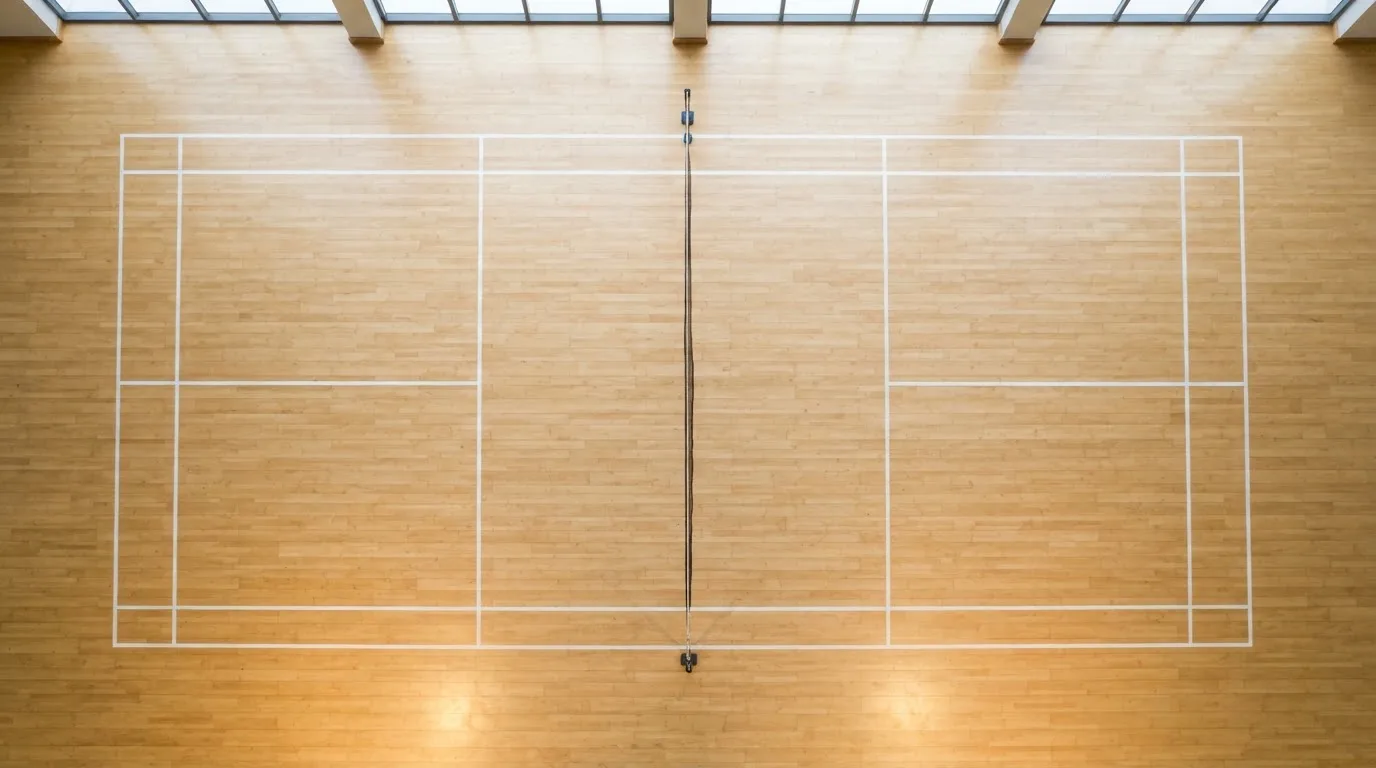
The other reason in-play suits badminton is the structure of the scoring. A player can lead 11–4 at the mid-game interval and still lose the game 21–19 to an opponent who has worked the backhand. A 3–0 head-start in the first game’s mid-game break is not the cushion it looks; the price on a comeback at that moment is part of what an in-play book does, and the bettor who reads it carefully is reading the bookmaker’s read of the form.
What a live badminton market looks like
The match-winner market sits at the centre: player A, player B, and (in team events) a third outcome for doubles pairings. From it, the larger bookmakers build game-winner markets — who takes the first game, who takes the second — and after the first game, a set-by-set match-winner that updates as the scoreboard moves. Set handicap, total games (over/under 2.5), and a “race to 15” in a given game are the kind of derived markets that appear on the bigger badminton events.
What the bettor should know is that on a BWF World Tour Superseries event the markets are deep, and on an Olympic group stage match the same operator may show only match-winner and the next game. Depth of market tracks the event, not the operator. A brand that does horse racing in depth is not necessarily the brand that prices up the BWF Thomas & Uber Cup qualifiers.
Cash out on a live match
Cash out is the bookmaker’s offer to settle a bet before the event finishes, at a price the bookmaker itself sets. On a short sport like badminton, the price moves quickly and the offer is often wide of what a real exchange would pay. The bettor who takes it is selling the bet back to the bookmaker at the bookmaker’s price, not the market’s. On a BWF World Tour final, with a four-figure live market, the cash-out figure will usually trail the live price by enough to make a holding strategy unattractive. The bettor who holds through a game break often gets more.
Cash out also has a quiet limit. Most operators will not let a bettor cash out a free bet, an enhanced-odds stake, or a bet placed with a price-boost token. The restriction sits in the promotion terms, and reading those terms before relying on cash out is the only reliable check.
Predictions, Form and What “Tips” Actually Tell You
What a tipster is selling
A “badminton betting tip” is a forecast. It names the player the tipster expects to win and the price the tipster considers value. It does not know who will win — nobody does, including the tipster — and the price the tipster quotes is the price the tipster saw when the tip was filed. A tip that was filed at 1.85 and is now 1.45 is a tip whose value is gone. A tip whose player retires mid-game is a tip whose result is void.
The honest use of tips is as a check on a bettor’s own view, not as a substitute for it. A tipster with a long, public record and a clear method is one source; a tipster with a tip feed and no record is a paid opinion, and a paid opinion is not a forecast a reader can price.
Reading the form
Badminton form runs on head-to-heads, recent matches on the same surface (indoor court), and the BWF World Rankings. The BWF publishes a rolling ranking across men’s singles, women’s singles, men’s doubles, women’s doubles and mixed doubles, and the ranking moves on a weekly basis. A player ranked 12 in the world is not a long shot in a Super 500 event; the price on that player reflects the field, and a tip that says “Player X is the value” against a market that already has Player X at 1.45 is a tip that needs more than a ranking.
The other piece of form the bettor should know is the tournament calendar. The BWF World Tour runs all year, the All England Open sits in March, the World Championships in August on Olympic years, and the season ends with the BWF World Tour Finals. The Thomas Cup and Uber Cup are the men’s and women’s team world championships, played every two years, with the Sudirman Cup (mixed teams) on the alternating year. A bettor who bets on a Super 100 event one week before a Super 1000 has to price in a likely early exit from the bigger-name players.
What a “prediction model” adds
A prediction model in badminton takes the head-to-head record, the recent results, the ranking difference and a surface factor (indoor wood, shuttle speed), and produces a probability for each player. The probability translates to a fair price, and the bettor compares the bookmaker’s price to the model’s. The work is not in the model; the work is in the inputs. A model that uses three matches of recent form is reading three matches, and a player returning from injury has a form line that does not exist.
The bettor who runs a model is also running a margin of error, and the error is wide at the extremes. A model that puts Player A at 75 per cent to win has a confidence interval that, on a one-off match, makes 1.33 a coin-flip as far as the model is concerned. The bet is in the price, not the model.
Bet Types and Odds: Reading What the Bookmaker Sells
From match winner to set betting
The basic badminton market is the match winner: two players (or two pairs), two prices, and a margin. From it, the bookmaker builds:
- Set winner — who takes the first game, who takes the second. Priced after the first game begins.
- Set betting — the exact score, 2–0 or 2–1, at fixed prices. The 2–0 line is the favourite’s scoreline; the 2–1 is the underdog’s.
- Game handicap — a player starts the match at +1.5 or -1.5 games. The handicap removes the toss-up third game and prices the favourite higher.
- Total games — over or under 2.5. Two straight games (2–0) goes under; a match that runs three games goes over.
- Race to X points in a game — race to 5, race to 11, race to 15. The mid-game break at 11 in each game gives a natural reset for an in-play market.
The deeper markets — total points, player to win a specific game, exact score in a game — appear on the bigger events and on the bigger brands. The bettor should check the operator’s badminton page before staking on a market the operator does not show.
How a price is built
A decimal price of 1.90 on Player A and 1.90 on Player B says the bookmaker’s margin on this market is the difference between 100 per cent and the payout share. The payout share is the sum of the implied probabilities: 1 ÷ 1.90 = 52.6 per cent, times two outcomes = 105.3 per cent. The 5.3 per cent above 100 per cent is the overround, the bookmaker’s edge, and it is the price the bettor pays for the convenience of a price on both sides of the market.
The 5.3 per cent is illustrative. A two-way market at 1.90 / 1.90 carries a margin of about 5.3 per cent, and that figure is a midpoint for what licensed bookmakers charge on a top-of-the-line badminton match winner. The actual margin runs higher on the smaller events — a 1.70 / 2.10 line carries a margin near 7 per cent, and a 1.45 / 2.60 line over 8 per cent — and the bettor who cares about price is reading the implied margin before placing the bet. The bettor who reads a 1.50 / 2.50 line without doing the arithmetic is paying the bookmaker’s price without knowing the price.
The flip side of the margin is the payout share. A market at 1.90 / 1.90 returns 94.7p on every pound staked, on average, before the bookmaker’s take; the bettor’s edge, if any, is in finding a price above the model’s fair price for the outcome.
Odds formats
British bookmakers price in fractions by default and in decimals alongside. The conversion is decimal = (a ÷ b) + 1: 5/1 becomes 6.00, 11/4 becomes 3.75, evens (1/1) becomes 2.00, 4/5 becomes 1.80. An “odds-on” price is shorter than evens (4/5, 1/2, 1/3); an “odds-against” price is longer (5/4, 6/4, 2/1). The bookmaker’s switch between formats is a display choice; the underlying market is the same.
Combination bets
An accumulator, or “acca”, multiplies the prices of the legs into one. Three legs at 1.50, 1.80 and 2.00 produce a combined price of 5.40. The stake is on the combined price, and one losing leg voids the bet. Each leg carries its own margin, and the combined margin is higher than any one leg: three legs at a 5 per cent margin compound to about 14 per cent on the acca price. The payout is bigger, the probability of winning is smaller, and the bookmaker’s edge on the acca is wider than on the singles.
A bet builder, on a sport with a small match like badminton, is usually the match winner combined with the game handicap or the total games, on the same match. The combined price is below the multiplied singles because the legs are correlated — the favourite to win the match is more likely to win 2–0 than 2–1. The bookmaker’s margin on a bet builder is wider than on either leg alone.
Sports and Tournaments: The Calendar the Markets Follow
The BWF and the structure of the season
The Badminton World Federation (BWF) governs international badminton. Founded in 1934 as the International Badminton Federation and renamed in 1978, the BWF runs the BWF World Tour, the BWF World Championships, the Thomas Cup and Uber Cup (men’s and women’s team world championships) and the Sudirman Cup (mixed team, since 1989), the All England Open, and the Olympic badminton competition. The BWF also publishes the BWF World Rankings, the form book every bettor reads.
The BWF World Tour runs from January to November on a tiered system: Super 1000 (the four biggest events including the All England), Super 750, Super 500, Super 300 and Super 100. The points earned scale with the tier, and so does the field. A Super 1000 event brings out the world’s top players; a Super 100 event is the development tier.
The Thomas Cup and Uber Cup alternate: the men’s team event in even years, the women’s in odd years (with the Sudirman Cup, mixed teams, in the gap year). A bettor watching the team events bets on ties, not matches, and the market on a Thomas Cup tie is the match-score market (3–0, 3–1, 3–2) and the singles/doubles winner in each rubber.
The Olympic dimension
Badminton has been an official Summer Olympic sport since Barcelona 1992, with the mixed doubles added at Atlanta 1996. The Olympic event is the one time the calendar drives the prices: the field is small, the matches are one-off (no tournament best-of-three progression until the knockout), and the in-play markets move faster because the matches finish faster. A group stage match in Olympic badminton runs twenty-five to forty minutes, and the live markets are the main way to bet the event.
Where the depth sits
The BWF World Tour Super 1000 events and the BWF World Championships are the deepest markets. The Super 100 and continental events are shallower, and on a BWF International Challenge event some operators do not run a market at all. The bettor checking the page for a small event should expect a price on the match winner, and not much more.
Ranking the UK Sites for Badminton Betting
The set, and what it means
The ten brands in this ranking are holders of a Gambling Commission remote operating licence for general betting on real events. The Commission’s public register is the test of who holds one; a place in this ranking is not a licence, and an absence from the ranking is not the absence of a licence. The set is a sample, not a shortlist of every licensed brand. Each review names the licence number and the licence holder, and states what the operator’s own terms say on the markets and offers this page is about.
The criteria the ranking turns on are: a dedicated badminton page on the operator’s site, the depth of the badminton markets (match winner, set winner, set betting, total games), the live betting and cash-out coverage, the welcome offer and its terms, and the operator’s standing with the Commission (active licence, no public regulatory action in scope). A brand that meets most of these is a good fit; a brand that meets none of them is a brand the bettor checks before staking.
Comparison table: licences and badminton markets
The table below names the licence number, the licence holder as the Commission’s register carries it, and what the operator’s own terms say about badminton markets on the snapshot date. Where the operator’s site does not name a market or the page does not state one, the cell carries the no-data marker.
| Brand | Gambling Commission licence (account number) | Licence holder | Badminton markets per the operator’s own terms |
|---|---|---|---|
| BetVictor | 39576 | BV Gaming Limited | Match winner, set winner, set betting, game handicap, total games on the BWF World Tour; in-play on selected events |
| Sporting Index | 27343 | Sporting Index Limited | Match winner on the BWF World Tour; fixed-odds and spread betting where licensed |
| Tote | 54779 | TDCO Limited | Match winner on selected BWF and Olympic events; no dedicated in-play page |
| BetMGM | 39198 | LeoVegas Gaming PLC | Match winner on the BWF World Tour; acca builder and price boosts on selected events |
| Betboro | 44181 | Webmedia Development N.V. | Match winner on the BWF World Tour and the All England Open; in-play on selected matches |
| Betmaster | 65699 | BM Solutions GB Ltd | Match winner on the BWF World Tour; eSports-led app, badminton markets on selected events |
| Betfred | 39544 | Petfre (Gibraltar) Limited | Match winner on the BWF World Tour and the All England Open; in-play on selected matches |
| William Hill | 39225 | WHG (International) Limited | Match winner on the BWF World Tour and the Olympic Games; in-play on selected matches |
| VBet | 44662 | SCGO Limited | Match winner on the BWF World Tour; in-play on selected matches |
| Sky Bet | 67370 | SBG Sports Limited | Match winner on the BWF World Tour and the Olympic Games; in-play on selected matches |
The variation in the table is real. Some operators carry the deep markets (set winner, set betting, game handicap, total games); others run the match-winner line and stop there. The bettor who wants a set-betting market on a BWF Super 300 quarter-final needs an operator that prices up that market, and the table is a way to see who does. Where a cell carries the no-data marker, the operator’s own terms on the snapshot date did not name the market; the bettor checks the operator’s badminton page before staking.
The Fundamentals of Badminton: Court, Scoring and Disciplines
The court and the shuttle
A badminton court is 13.4 metres long. For doubles, the court is 6.1 metres wide; for singles, 5.18 metres. The net stands 1.55 metres high at the edges and 1.524 metres at the centre — a small difference, but the dip is what defines the shape of a clear or a smash. The lines on the court separate the singles and doubles alleys, and a shuttle that lands on the line is in.

The shuttle, a feather or plastic projectile, is what makes the game a game. A smash off a good drop can pass 400 km/h; a tight net shot dies before the receiver can read it. The rally is short, the points are quick, and the margin between the two players at the top of the BWF World Tour is a few points in a tight third game.
Scoring: the rally point system
Each game is played to 21 points, with rally point scoring: every rally produces a point, regardless of who served. At 20–20, play continues until one player leads by two. At 29–29, the next point wins. A match is the best of three games. The side that wins the rally serves next; the side that wins the game starts the next game with a fresh serve.
The mid-game interval at 11 points in each game is the natural pause in an in-play market. The bookmaker’s screen usually resets the game-winner market at the interval, and the bettor who reads the run of points from the start of the game to the interval is reading the form the bookmaker has already priced in.
Disciplines
Badminton has five disciplines: men’s singles, women’s singles, men’s doubles, women’s doubles, and mixed doubles. The betting market separates them, and a player who plays mixed doubles does not necessarily play men’s doubles, and vice versa. A bettor who assumes the doubles market has the same depth as the singles market is often wrong; the singles market is the deepest, and the doubles markets thin out on the smaller events.
Legality and Regulation: What a Gambling Commission Licence Means
The framework
The Gambling Commission (UKGC) is a non-departmental public body sponsored by the Department for Culture, Media and Sport. It licenses the commercial gambling market in Great Britain under the Gambling Act 2005, which covers England, Scotland and Wales; Northern Ireland is outside the Act. Since the Gambling (Licensing and Advertising) Act 2014, an operator whose remote facilities are used in Great Britain needs a Commission licence wherever it is based. A Curaçao, Maltese or Gibraltar licence is not a substitute; the test is whether the brand is on the Commission’s public register.
The register is searchable by business name, trading name, domain or account number. It is the whole test of who holds a licence, and the licence number in the comparison table above is the account number on the register. The bettor who wants to check a brand goes to the register and searches the trading name; the register returns the licence, the holder and the categories.
What a licence covers
A remote general betting standard (real events) licence covers the betting products the brands in this ranking offer. A remote general betting limited licence covers a smaller product set. A remote betting intermediary licence covers a betting exchange. A remote general betting standard (virtual events) licence covers virtual sports. The categories are separate, and an operator licensed for real events is not automatically licensed for virtual events.
The licence categories matter because the brand’s market depth on badminton depends on the operator’s commercial choice, not on the licence. A brand that holds a real-events licence may still not price up a BWF Super 100 event; the licence permits the market, it does not require the market.
Verification, age and the no-anonymity rule
The minimum age for gambling in Great Britain is 18. Since 7 May 2019, licensed remote operators verify the customer’s name, address and date of birth before the first deposit and before the first bet, including with a free bet or a bonus. The check is a one-time identity verification, not a credit check. A bettor who fails the check cannot deposit or bet at a licensed site, and the operator’s marketing of welcome offers to unverified customers is restricted.
What the operator’s licence means for the bettor
A licensed operator is bound by the Commission’s Licence Conditions and Codes of Practice (LCCP), the social responsibility code, and the Remote Technical Standards (RTS). The bettor’s protections are the LCCP and the RTS: GAMSTOP enrolment (mandatory since 31 March 2020), the financial vulnerability check (in force from 30 August 2024), the deposit limit (RTS 12, phased from 31 October 2025), the bonus wagering cap (10x, in force from 19 January 2026), and the ASA’s advertising rules. The bettor’s recourse is the Commission’s complaints process and an approved alternative dispute resolution (ADR) body.
An unlicensed operator is none of those things. No GAMSTOP coverage, no Commission complaints route, no ADR, no British consumer redress if funds are withheld, no bonus cap and no vulnerability check. The bettor who bets at an unlicensed site does so without the consumer protections a licensed site is required to offer, and the loss is real if the operator does not pay out.
Responsible Gambling: The Tools a Licensed Operator Has to Offer
Self-exclusion: GAMSTOP
GAMSTOP is the national multi-operator online self-exclusion scheme, and a mandatory licence condition for online operators since 31 March 2020. A bettor who registers with GAMSTOP excludes themselves from every licensed online operator for a period of six months, one year, five years, or five years with auto-renewal. After the minimum period, the exclusion stays in place for a further seven years unless the bettor asks GAMSTOP to remove it. The exclusion covers online sites and apps; betting shops use a separate service.
GAMSTOP is the single most effective tool a bettor has if gambling has become a problem, and a bettor who has registered cannot undo the exclusion early. The bettor who is considering self-exclusion should know that the choice is a long one.
The financial vulnerability check
The Commission’s LCCP condition 3.4.4, in force from 30 August 2024, requires a financial vulnerability check on a licensed remote betting customer whose deposits minus withdrawals exceed £150 in a rolling 30-day period (the threshold was lowered from £500 to £150 from 28 February 2025). The check is a public-record check — bankruptcy, county court judgments — not an income check and not a credit reference check. The operator can ask the customer for source-of-funds information at higher spend under the money-laundering rules, and the question is the operator’s, not the customer’s, to refuse.
A staged plan for fuller financial risk assessments has been announced by the Commission (statement of 7 July 2026) with no start date. The bettor should know what the check is, and what it is not: it is a public-record check, not a check on whether the bettor can afford the bet.
Deposit limits and timeouts
RTS 12 requires operators to offer a gross deposit limit on a fixed time frame. The first changes have applied since 31 October 2025, and a second phase was postponed to 30 September 2026. There is no state-set ceiling on deposits: the limit is the customer’s choice, and the operator’s job is to offer the choice and to honour it.
Timeouts (24 hours, 7 days, 30 days) and self-exclusion measures are the operator’s standard tools for control. The bettor seeking a short rest sets a timeout, while those needing a long-term break should access GAMSTOP.
Where to get help
GamCare runs the National Gambling Helpline. GambleAware funds treatment and education. The NHS runs gambling clinics in several regions. Gamblers Anonymous runs local support groups. A bettor who is worried about their own or someone else’s gambling can call any of these. The bettor who is in crisis can call the Samaritans. The licensed operator’s safer-gambling page links to these services; the bettor who cannot find the page should ask the operator’s customer service.
Bonuses and Free Bets: What the Marketing Word Hides
The shape of a welcome offer
A UK-licensed sports welcome offer takes one of three shapes: a matched deposit, a free bet, or a price boost. Each shape has its own cost in the small print, and the bettor who reads the small print before claiming is the bettor who knows what the offer is worth.
A matched deposit — “100% up to £100” — credits a bonus equal to the deposit, up to the cap, and the bonus carries a wagering requirement. The bonus turnover is the bonus base times the wagering factor. A £100 bonus at 6x wagering means £600 of qualifying bets before the bonus is withdrawable. The bonus is not cash until the wagering is done, and the wagering only counts on bets at or above the minimum price the operator sets. The minimum price is usually 1.50 (1/2) or 1.60 (3/5), and a bet below the minimum does not count.
A free bet — “£10 free bet if your first bet loses” — credits a free bet of a fixed value, and the free bet’s stake is not paid back with a winning bet. A £10 free bet at 4.00 returns £30 in profit, not £40, and the bet is the operator’s, not the bettor’s. A free bet also has a deadline: 7 days, 14 days, 30 days. A free bet the bettor does not use is gone.
A price boost — “Enhanced odds on Player A” — increases the price on a named selection for a new or qualifying customer. The boost is a one-shot offer, the stake is the bettor’s own cash, and the winnings are withdrawable. A price boost on a 1.80 favourite that goes to 5.00 is a 2.20 price increase; the bettor’s stake is the bettor’s, and the winnings are the bettor’s.
The bonus cap and the marketing rules
The Commission’s social responsibility code and the CAP Code govern how a licensed operator can market a bonus. Since 19 January 2026, wagering requirements on bonuses are capped at 10x — a £10 bonus at 50x, which would have required £500 of bets, is no longer permitted; under the cap, no more than £100 of turnover is required on a £10 bonus. The cap applies to deposit bonuses and to free-bet packages with a wagering condition. Whether the cap applies to free bets with no wagering condition is not established, and any cap on the money value of a bonus is not established either.
Mixed-product promotions are banned under the same rule: an offer that requires gambling on two or more product types — “bet on football to get free spins”, or “deposit for the casino and the sportsbook together” — is not permitted. The ban covers cross-product offers, not within-product offers; a sportsbook welcome offer that is sportsbook-only is fine.
The Commission’s check is on the operator, not the bettor. The bettor’s job is to read the terms, and the terms run on the operator’s site, not on this page.
How an offer’s cost is read
The arithmetic on a bonus has three parts: the bonus base, the wagering factor, and the minimum price. The number of bets the bonus needs is the turnover divided by the stake per bet, and the bets must be at or above the minimum price to count. A £100 bonus at 6x wagering with a £10 stake per bet and a minimum price of 1.50 means 60 qualifying bets of £10 each, all at 1.50 or higher, before the bonus is withdrawable.
The expected cost of clearing the bonus is the turnover times the margin of the market the bettor is betting on. A bettor who clears a £600 turnover on badminton match-winner markets at a 5.3 per cent margin loses, on average, about £32 to the bookmaker’s edge before the bonus is in the bettor’s hand. A bettor who clears the same turnover on a market with a 7 per cent margin loses about £42. The market the bettor chooses to clear on matters as much as the offer itself.
The free bet’s value, for a free bet whose stake is not paid back, is the free bet amount times (odds minus 1) divided by the odds, times the payout share of the market. A £10 free bet at 4.00 on a market with a 94.7 per cent payout share is worth, on average, about £7.10 in expected profit. The free bet is not a £10 windfall; it is a £7.10 expected value at that price, and the price the bettor uses the free bet on changes the number.
The bettor who treats a welcome offer as a marketing word and prices the offer in expected value terms is the bettor who sees the offer for what it is. The bettor who treats the offer as a free £100 is the bettor who clears the offer at a loss.
The Operators: Reviews
BetVictor
Gambling Commission account 39576, held by BV Gaming Limited. The operator runs match winner, set winner, set betting, game handicap and total games on the BWF World Tour, and in-play on selected events. The Best Odds Guaranteed offer on UK and Irish horse racing does not run on badminton, but the operator’s price-boosting on football and the Smart Stats feature for racing show the operator’s appetite for data-led pricing. The bettor who wants a deep badminton market and a strong horse-racing book on the same site is the bettor BetVictor suits.
For a badminton-only bettor, the market depth is a key advantage. The brand supports BWF World Tour events with a quality level comparable to the largest UK books, and the in-play options are extensive enough to facilitate strategies on major matches.
Sporting Index
Gambling Commission account 27343, held by Sporting Index Limited. The site provides match winner markets on the BWF World Tour and offers fixed-odds and spread betting where its licence permits. The brand’s signature is the spread-betting product: Sporting Index is one of the few UK operators to offer spread betting on sports, alongside fixed odds. The bettor who wants to bet the BWF World Tour on a spread (the number of points in a match, for example) is the bettor Sporting Index suits, and the bettor who does not know what spread betting is should stay with fixed odds.
The brand’s risk warning on the spread book — losses can exceed the deposit — is the small print the bettor reads before opening a spread position. Spread betting on a sport with short matches is a different product from fixed-odds match betting, and the two run on different licences.
Tote
Gambling Commission account 54779, held by TDCO Limited. The operator runs match winner on selected BWF and Olympic events, and pool betting is its heritage product. The bettor who wants pool betting on a major event will find it at Tote; the bettor who wants a deep in-play badminton market will not. The brand’s strength is the pool book, and the badminton coverage is a small part of it.
For a badminton-only bettor, Tote is a bettor’s secondary book — a place for the pool bet on a major event rather than the in-play book for the daily card. The licence is current and the operator is on the Commission’s register, and the brand’s product is what the terms say it is.
BetMGM
Gambling Commission account 39198, held by LeoVegas Gaming PLC. The platform provides match winner markets on the BWF World Tour, with an acca builder and price boosts on selected events. The brand’s sports welcome offer for new UK customers who deposit £10 or more and place a sports bet within 7 days is four £10 free bets — two football accumulators of 4+ selections and two sports multiples of 2+ — valid for 7 days with minimum odds and opt-in required. The bettor who wants the welcome offer to apply to badminton reads the offer’s terms: the four free bets are tied to football accumulators and sports multiples, and the bettor who places a single badminton bet will not unlock the free bets in the same way.
For a badminton bettor, the brand’s strength lies in its extensive sportsbook and integrated casino, with badminton coverage reaching a mid-depth level. The bettor who enjoys BetMGM’s welcome offer and stays for the casino gaming finds a good fit; however, those focused solely on badminton may find the book size smaller compared to the brand’s primary sports markets.
Betboro
Gambling Commission account 44181, held by Webmedia Development N.V. The operator runs match winner on the BWF World Tour and the All England Open, with in-play on selected matches. The brand’s sports welcome offer is a 100 per cent matched free bet of up to £25 on the first qualifying wager, requiring a debit card deposit of at least £10 and a first bet of £5 to £25 with at least three selections each at 3/5 (1.60) or higher. The three-selection minimum is the offer’s hinge: a single badminton bet does not qualify, and the bettor who wants the matched free bet places a treble.
For a badminton bettor, the brand is a smaller book with a sharp welcome offer. The in-play coverage on the bigger badminton events is competitive, and the bettor who wants the matched free bet and the in-play book is the bettor the brand suits. The bettor who places singles only does not get the welcome offer.
Betmaster
Gambling Commission account 65699, held by BM Solutions GB Ltd. The operator’s app covers football, cricket, horse racing, NFL and eSports, with badminton markets on selected events. The brand’s strength is the eSports coverage (League of Legends, Dota 2) and the multi-sport book; the badminton coverage is match winner on the BWF World Tour and is thinner than the bigger books.
For a badminton bettor, Betmaster serves as a secondary option — a place to bet on major badminton events when larger books are closed or the odds are less favourable. The bettor who uses Betmaster for its eSports focus and stays for badminton finds a reasonable selection; the badminton-only bettor will notice a smaller book size than the brand’s other offerings.
Betfred
Gambling Commission account 39544, held by Petfre (Gibraltar) Limited. The operator’s app covers 21 sports plus over 2,000 casino-style games, with badminton markets on the BWF World Tour and the All England Open and in-play on selected matches. The brand’s strength is the depth of the sports book and the high-street heritage, and the badminton coverage is competitive with the bigger UK books.
For a badminton bettor, Betfred is a primary book on bigger events and a secondary option for smaller tournaments. The in-play coverage is consistently broad, making it a reliable choice for bettors seeking an established UK brand with deep sports book options.
William Hill
Gambling Commission account 39225, held by WHG (International) Limited. The brand’s Best Odds Guaranteed on UK and Irish horse racing, paying from 8 AM on the day of the race on both single and multiple bets and not on ante-post, tote or pari-mutuel bets, is the brand’s signature racing offer; the badminton coverage is the broader sports book.
For a badminton bettor, William Hill is a primary book on the bigger events and a secondary book on the smaller ones. The brand’s high-street heritage and the depth of the UK book are the selling points, and the badminton coverage is competitive with the bigger UK books.
VBet
Gambling Commission account 44662, held by SCGO Limited. The operator runs match winner on the BWF World Tour with in-play on selected matches. The brand’s sports welcome offer is a £10 free bet if a new, verified customer stakes £10 or more on a first-ever bet that loses. The offer is a “losing-bet” free bet: a single losing bet on badminton qualifies, and the bettor who loses a £10 badminton bet at 1.80 gets a £10 free bet in return.
For a badminton bettor, VBet is a smaller book that offers a sharp welcome incentive. The in-play coverage on major badminton events is competitive, making it a viable alternative for bettors who prioritize the first-bet offer and in-play market variety.
Sky Bet
Gambling Commission account 67370, held by SBG Sports Limited. The operator runs match winner on the BWF World Tour and the Olympic Games, with in-play on selected matches. The brand’s free bets expire 30 days after crediting, can be used only on single or each-way markets (not multiples) excluding virtuals, are non-withdrawable and do not return the stake with winnings. The single-only restriction is the offer’s hinge: a free bet won at Sky Bet is a free bet on a single, and the bettor who wants to use the free bet on a badminton acca does not get the choice.
For a badminton bettor, Sky Bet acts as a primary book for major events. The in-play coverage is broad, and the brand is well-suited for UK-based bettors who prefer a strong sports book and want flexibility in using free bets on singles.
How the Bookmaker’s Margin Is Seen in the Odds
The arithmetic
A two-way market at decimal odds of 1.90 on Player A and 1.90 on Player B is the example. The implied probability of each side is 1 ÷ 1.90, which is 52.6 per cent. Two sides at 52.6 per cent give a sum of 105.3 per cent, and the 5.3 per cent above 100 per cent is the bookmaker’s margin, also called the overround. The payout share is 100 per cent minus the margin, which is 94.7 per cent. For every pound staked across both outcomes, the bookmaker keeps, on average, 5.3 pence, and pays back 94.7 pence in winnings and stake.
The 5.3 per cent is the midpoint for a top-of-the-line badminton match-winner market. A less competitive line — a 1.70 favourite and a 2.10 underdog — gives a margin of 1 ÷ 1.70 + 1 ÷ 2.10 = 58.8 per cent + 47.6 per cent = 106.4 per cent, a margin of 6.4 per cent. A long-shot line — 1.40 / 2.80 — gives a margin of 1 ÷ 1.40 + 1 ÷ 2.80 = 71.4 per cent + 35.7 per cent = 107.1 per cent, a margin of 7.1 per cent. The margin widens as the price on the favourite shortens, because the bookmaker is taking a thinner view on the favourite and laying off the underdog at a longer price.
Why the margin is a band, not a number
The margin is a snapshot of one market at one moment, and the margin on a badminton match-winner market moves with the event, the field and the time to start. A BWF World Tour Super 1000 final two hours before the first serve will run a tighter margin than a BWF International Challenge quarter-final the day before. The deeper the market, the tighter the margin, in general; the smaller the event, the wider the margin. The bettor who wants the tightest margin bets on the bigger events and reads the implied margin before staking.
The margin also varies by market type. The match-winner market is the deepest, the set-winner market is shallower, the set-betting market (the 2–0 / 2–1 line) is shallower still, and the game-handicap market and the total-games market are the narrowest. The bettor who bets on a derived market pays a wider margin than the bettor who bets on the match winner, and the wider margin is the price of a market with fewer bets to balance it.
The bettor’s edge
The bettor’s edge, if any, is the difference between the bettor’s fair price and the bookmaker’s price. A bettor whose model puts Player A at 60 per cent to win, on a market where the bookmaker has Player A at 1.50 (66.7 per cent), sees a price below the model’s: the bettor’s edge is negative, and the bet is a loss. A bettor whose model puts Player A at 50 per cent, on a market where the bookmaker has Player A at 2.20 (45.5 per cent), sees a price above the model’s: the bettor’s edge is positive, and the bet is a value bet.
The model is a model; the bookmaker’s price is a price; the bettor’s edge is the gap. The bettor who runs a model that is wrong will lose on the gap, and the bettor who runs a model that is right will win on the gap, on average, over many bets. The model is not a tip; it is a check on the price.
What a Licensed Betting Site Looks Like in Practice
Deposits, withdrawals and the credit card rule
Credit cards are banned for gambling in Great Britain (since 14 April 2020, LCCP condition 6.1.2), and the ban covers credit-card-funded payments through an e-wallet. A bettor who tries to deposit with a credit card at a licensed operator is blocked at the deposit screen. Debit cards and bank-based payments are not covered, and a bettor with a debit card or a bank transfer can deposit at any licensed operator.
The ban is the Commission’s, and it is enforced by the operator. A licensed operator that processes a credit card deposit is in breach of the LCCP, and the Commission’s enforcement record on this rule is consistent.
Source of funds and the high-spend check
A bettor whose deposits minus withdrawals cross £150 in a rolling 30-day period triggers the financial vulnerability check: a public-record check, not an income check, and not a credit reference check. The operator can ask the bettor for source-of-funds information at higher spend, under the money-laundering rules, and the bettor’s response is part of the operator’s record.
The check is the operator’s licence condition, and the bettor’s choice is to provide the information or to stop. A licensed operator that does not run the check is in breach, and a bettor who refuses the check is in breach of the operator’s terms.
How a withdrawal is paid
A licensed operator pays withdrawals to the same method the bettor used to deposit, in line with the money-laundering rules. A bettor who deposited with a debit card and is withdrawing £500 sees the £500 returned to the debit card, not to a bank account. A bettor who deposited with an e-wallet sees the withdrawal returned to the e-wallet. A bettor who deposited with a bank transfer sees the withdrawal paid to the bank account.
The withdrawal time is the operator’s. Most UK operators run a 24-hour pending period for security, and the funds are released after the pending period. A bettor who needs the funds faster checks the operator’s “fast withdrawal” policy: some operators run a same-day or next-day withdrawal for verified customers, and the time is on the operator’s site, not on this page.
How an Offer’s Cost Is Read (2)
The shape of a bonus
A “100% matched bonus up to £100” credits a bonus equal to the deposit, up to the cap, and the bonus carries a wagering requirement. The bonus is not cash until the wagering is done, and the wagering only counts on bets at or above the minimum price the operator sets. A £100 bonus at 6x wagering needs £600 of qualifying bets, and a bet below the minimum price (usually 1.50 or 1.60) does not count.
A free bet, by contrast, is a fixed amount credited to the bettor’s account, and the free bet’s stake is not paid back with a winning bet. A £10 free bet at 4.00 returns £30 in profit, not £40. The free bet has a deadline (7, 14 or 30 days), and a free bet the bettor does not use is gone.
A price boost, by contrast, is a one-shot increase in the price on a named selection. The boost is on a real bet, the stake is the bettor’s cash, and the winnings are the bettor’s cash. A price boost on a 1.80 favourite that goes to 5.00 is a 2.20 price increase for the bettor.
The arithmetic of expected cost
A bonus turnover of £600 on a market with a 5.3 per cent margin costs the bettor, on average, £600 × 0.053 = £31.80 in expected losses to the bookmaker’s edge. A bonus turnover of £600 on a market with a 7 per cent margin costs £42. The market the bettor chooses to clear on matters as much as the bonus itself, and the bettor who clears a bonus on a tight market keeps more of the bonus than the bettor who clears it on a wide one.
A free bet of £10 at 4.00 on a market with a 94.7 per cent payout share has an expected value of £10 × (4.00 – 1) ÷ 4.00 × 0.947 = £10 × 0.75 × 0.947 = £7.10. The free bet is not a £10 windfall; it is a £7.10 expected profit at that price. A bettor who uses a £10 free bet at 1.50 sees £10 × (1.50 – 1) ÷ 1.50 × 0.947 = £3.16 in expected profit. The price the bettor uses the free bet on changes the number, and the bettor who uses the free bet at a long price keeps more.
The arithmetic of expected payout
A winning single at 2.00 returns the stake plus the stake (2.00 – 1 = 1.00 units of profit, plus 1 unit of stake returned). A winning single at 5.00 returns four units of profit plus the stake. A winning accumulator at 5.40 returns 4.40 units of profit plus the stake.
The payout is the arithmetic, and the probability is the form. A bet at 5.00 is a bet that pays well if it wins, and a bet at 5.00 on a player who has a 20 per cent chance to win (a fair price of 5.00) is a value bet; a bet at 5.00 on a player who has a 15 per cent chance to win (a fair price of 6.67) is a losing bet. The payout is the same; the probability is the bet.
The Set and the Ranking
What the set is, and what it is not
The ten brands in this ranking are holders of a Gambling Commission remote operating licence for general betting on real events. The set is a sample of the licensed market, not a shortlist of every licensed brand, and a place in the ranking is not a licence. The Commission’s public register is the test of who holds a licence, and a brand on the register is a brand the bettor can check.
The criteria the ranking turns on are: a dedicated badminton page on the operator’s site, the depth of the badminton markets, the live betting and cash-out coverage, the welcome offer and its terms, and the operator’s standing with the Commission. A brand that meets most of these is a good fit; a brand that meets none of them is a brand the bettor checks before staking.
The position of each brand
BetVictor, William Hill, Betfred and Sky Bet are the primary books for a badminton bettor: each runs match winner on the BWF World Tour and the bigger events, with in-play on selected matches, and each holds a current licence. Sporting Index is a primary book for the bettor who wants fixed-odds and spread betting on the same site. Tote is a secondary book for a major event’s pool bet. BetMGM, Betboro, VBet and Betmaster are smaller books with sharp welcome offers and mid-depth badminton coverage; the bettor who uses these for the offer and stays for the in-play book is the bettor they suit.
The ranking is not a recommendation. The bettor’s choice is the bettor’s, and the licence is the floor, not the ceiling.
Frequently Asked Questions
How do you bet on badminton?
Pick a licensed bookmaker from the Commission’s public register, register an account, verify your name, address and date of birth, deposit by debit card or bank transfer (credit cards are banned for gambling in Great Britain), and find the badminton market on the operator’s site. The match-winner market is the most common; the deeper markets (set winner, set betting, game handicap, total games) are on the bigger events. Place the bet, watch the match, and the bet settles on the result the operator records. Cash out, if offered, settles the bet at the bookmaker’s price before the match finishes.
How can it be checked that a bookmaker holds a Gambling Commission licence?
The Commission’s public register is the whole test. The register is searchable by business name, trading name, domain or account number, and the register returns the licence, the holder and the categories. The licence number in the comparison table above is the account number on the register. A bettor who wants to check a brand searches the trading name; the register returns the licence, and the licence is current if the register says so. The register is on the Commission’s site, and the link is the register’s, not this page’s.
How is the return on a bet worked out from the stake and the odds?
A decimal price is the total return per unit staked, including the stake. A bet of £10 at 2.00 returns £20 (£10 stake + £10 profit). A bet of £10 at 5.00 returns £50 (£10 stake + £40 profit). A bet of £10 at 1.50 returns £15 (£10 stake + £5 profit). The profit is the stake times (odds – 1); the return is the stake times the odds. For a combination bet, the prices of the legs multiply: three legs at 1.50, 1.80 and 2.00 produce a combined price of 5.40, and a £10 acca returns £54.
What is the bookmaker’s margin and how can it be seen in the odds?
The bookmaker’s margin is the difference between 100 per cent and the sum of the implied probabilities of all outcomes. A two-way market at 1.90 / 1.90 implies 52.6 per cent on each side, summing to 105.3 per cent, and the 5.3 per cent above 100 per cent is the margin. The margin is the bookmaker’s edge on the market, and the payout share is 100 per cent minus the margin. The wider the margin, the more the bookmaker keeps, and the tighter the margin, the more the bettor keeps on average. The margin is in the odds, and the bettor who reads the implied margin before staking is the bettor who knows the price.
How do fractional odds such as 5/1 convert to decimal odds such as 6.00?
The conversion is decimal = (a ÷ b) + 1. 5/1 is 5 ÷ 1 + 1 = 6.00. 11/4 is 11 ÷ 4 + 1 = 3.75. Evens (1/1) is 1 + 1 = 2.00. 4/5 is 4 ÷ 5 + 1 = 1.80. The conversion works in both directions, and the bookmaker’s switch between formats is a display choice; the underlying market is the same.
Which tools for controlling play does a licensed bookmaker have to offer?
A licensed remote operator must offer GAMSTOP enrolment (six months, one year, five years, or five years with auto-renewal), a financial vulnerability check at the £150-in-30-days threshold, a gross deposit limit (RTS 12), timeouts (24 hours, 7 days, 30 days) and self-exclusion at the operator level. The bettor can set a deposit limit, request a timeout, or self-exclude. GAMSTOP is the national scheme; the operator’s tools are local. The Commission’s safer-gambling rules are the floor, not the ceiling, and an operator that offers more is offering more. The bettor who wants to control their play sets a deposit limit and reads the safer-gambling page before staking.
Tennis, darts & cue sports – Cricket betting
Content created by the «Cricket betting» team
