
High stakes betting sites 2026
 Available in US
Data current as of 27 October 2026, checked against the Gambling Commission’s public register.
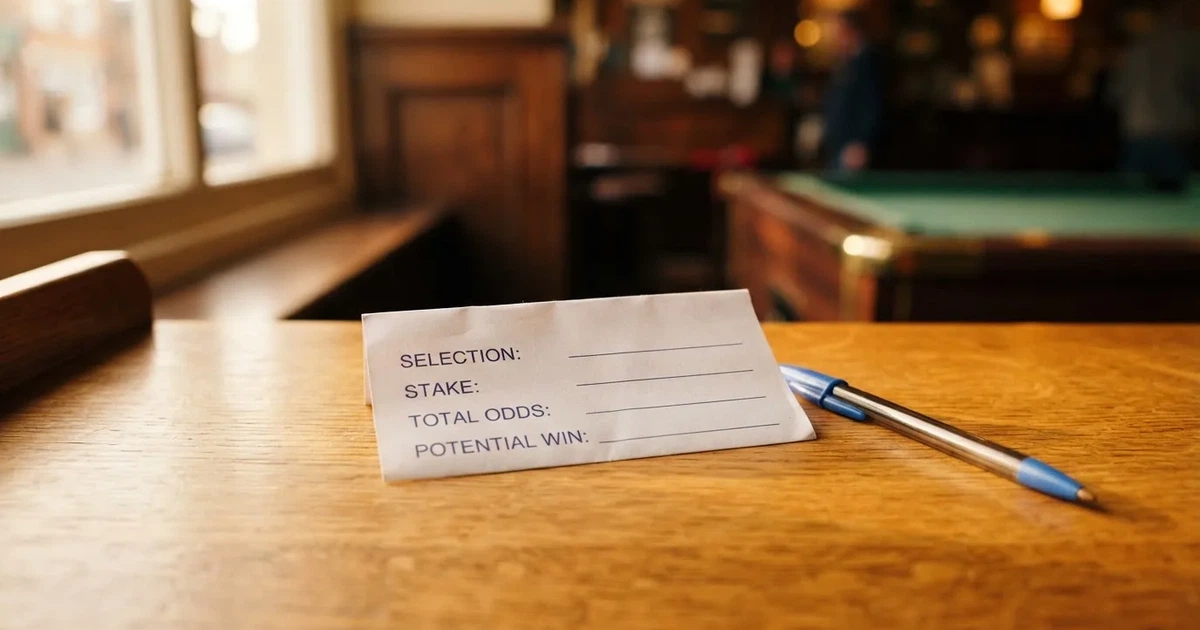
The phrase “high stakes” sounds like a marketing line, but it means something specific in British betting: a punter whose wager size makes the bookmaker look twice, and who expects a bookmaker to keep paying out rather than restrict the account when those wagers win. The 10 names below all hold a Gambling Commission remote licence, and that licence is the difference between a bookmaker with a duty of care and one that simply takes the cash. What this page costs the reader is the truth about each name: the margin baked into the price, the welcome offer behind the headline figure, the ceiling a bonus terms page quietly lowers, and the day a free bet stops being free.
The 10 reviewed bookmakers at a glance
The table covers every operator in this ranking, the Gambling Commission account number shown on each licence, and the betting-related condition that matters most when stake size grows.

| Bookmaker | Gambling Commission remote licence | What the operator’s own terms state on high-stake play |
|---|---|---|
| Betfred | 39544 (Petfre (Gibraltar) Limited) | Bet Builder, Sub Switch, Extra Places, live casino and bingo in the app; specific large-stake rules not published |
| Midnite | 101839 (Midnite Limited) | In-play, acca builder, price boosts with maximum-stake limits; new customers get £25 in free bets and 50 free spins on a £5+ pre-match qualifying bet at EVS or greater, free bets valid 7 days |
| Sky Bet | 67370 (SBG Sports Limited) | Welcome offer of £30 in free bets (three £10 tokens) after a £5 deposit and a first single or each-way bet of at least 5p at 1/1 or greater |
| Kwiff | 44448 (Eaton Gate Gaming Limited) | Supercharge can boost the odds of a single or multi bet (for example 2/1 to 20/1), subject to its own stake terms |
| Ladbrokes | 54743 (LC International Limited) | Odds boosts on horse and greyhound, Best Odds Guaranteed on UK and Irish racing, Acca Boosts; separate betting intermediary licence category also held |
| William Hill | 39225 (WHG (International) Limited) | Best Odds Guaranteed on UK and Irish racing from 8am, Football Acca Boost on accas of 2+ legs at 1/5+, 3% to 200% boost up to £10,000 per bet, runs to 30 May 2027; Cash Out restricted on each-way and not always on accumulators |
| BetGoodwin | 2927 (Goodwin Racing Limited) | Welcome offer of £15 in free bets (a £5 sports bet, £5 acca, £5 Sub-Cover) on a £10 qualifying bet |
| BetVictor | 39576 (BV Gaming Limited) | Best Odds Guaranteed on UK and Irish racing, enhanced live race streaming, BetFinder, Smart Stats |
| QuinnBet | 61011 (QuinnBet (Gibraltar) Limited) | Free bets valid 7 days from credit, usable on any market at 1/2 (1.50) or greater, cap of 50/1, accumulators permitted but Trixies, Patents and Yankees excluded |
| Swifty Sports | 58957 (Swifty Global (UK) Ltd) | Best Odds Guaranteed, Cash Out on horse racing and football, daily price boosts, live streaming, in-play; Bet Builder listed as coming soon |
Every name in the table above is on the public register. The Commission account number is what a punter searches for on the register; the brand name on the licence sometimes differs from the trading name. Betfred, for example, trades under Betfred but is licensed to Petfre (Gibraltar) Limited, a name that has nothing to do with the front of the app. The same is true of Sky Bet (SBG Sports Limited), Ladbrokes and Coral (both LC International Limited), William Hill (WHG (International) Limited), and BetVictor (BV Gaming Limited). Where research does not give a published ceiling for high-stake play, the cell says so rather than fabricating one — the test of a serious large-wager punter is whether the operator publishes a stake rule at all.
How this ranking was built
The 10 names meet three conditions. First, each one holds a Gambling Commission remote licence for real-event betting, the category that covers football, racing and the rest of the sportsbook. Second, each one trades to British customers through a .com or .co.uk address, so verification and dispute resolution sit with the Commission rather than an overseas regulator. Third, each review includes working specifications — stake rules, free-bet terms, a price-boost mechanic, a Cash Out policy — that a high-stakes reader can actually use.

What the ranking is not is a list of “the only” licensed bookmakers. The Commission’s public register lists several hundred remote betting licences, and the gambling sections of the App Store show many more. The 10 names here are the ones a big-money punter is most likely to compare. A brand that does not appear is not unlicensed; it is simply outside the scope of this comparison.
The bet type a high-stakes punter is most likely to place is the single, often at a price that would be capped on a casual account. The bookmaker cares about stake size for two reasons: it changes the price offered (a request for a bet above the advertised maximum often returns a smaller price, or no price at all) and it changes the operator’s view of the customer’s risk (high-stake customers may face stake restrictions, account reviews or limits after a run of winners). The brand that is honest about both is the one worth keeping.
Kalooki Sportsbook: the unlicensed outlier worth flagging
Kalooki Sportsbook trades under Kalooki Sports Book Ltd (company number 12938274), states Gambling Commission account 57730, and is a GAMSTOP member, so it does hold a GB licence for self-exclusion coverage. The licence is real; the trading name is not on every register entry under that number, and a high-stakes punter is well advised to search the register by account number rather than by brand before placing a bet. The other name worth flagging for the same reason is Midnite, whose site cites Gambling Commission licence 101839 and shows in-play, an acca builder, popular accas and price boosts with maximum-stake limits. Both brands are run by smaller licensees, and the size of the operator is the single biggest non-price factor in a high-stakes account.
What a “high stake” actually means in British betting
British law sets no upper limit on the size of a sports bet. The Gambling Commission licenses the operator, not the wager; the maximum stake on a Premier League match is whatever Betfred, Sky Bet or BetVictor is willing to lay at the time the bet is requested. In practice the maximum moves with the market, the event, the price, and the customer’s history with the bookmaker.
A few definitions the rest of this page leans on:
- Stake: the cash the punter risks on a single bet. The bookmaker’s liability is stake × (decimal odds − 1) at the moment the bet is struck, before commission or winning deductions.
- Return: stake + profit. A £100 single at 6.00 returns £600, made up of £100 stake returned and £500 profit. A free bet works differently: the stake is usually not returned with a win, so a £25 free bet at 6.00 returns only the £125 profit.
- Price: the decimal odds, or the fractional form (5/1, 11/4, evens). Evens is 1/1 in fractions, 2.00 in decimals, the line at which a winning bet returns exactly twice the stake.
- Margin: what the bookmaker keeps out of every pound bet on a market, embedded in the prices. The arithmetic is given in plain prose below.
A high-stakes punter is, broadly, anyone who bets at a level that puts them on the operator’s “important customer” list. There is no Commission definition, no threshold, and no published figure. The bookmakers themselves draw the line. Midnite, for one, shows price boosts “with maximum-stake limits” in its product listing; the limit is not published, because the limit is the lever the book uses to manage the market on its own terms.
The margin is the tax that never gets named
Every price carries the bookmaker’s margin — the slice of every pound bet that stays with the operator, whatever the outcome. It is the same as the overround, the same as the bookmaker’s “edge”, and it is the single number a punter should know before judging an offer.
The arithmetic, on a two-way market with decimal prices 1.90 and 1.90:
- Payout share = 1 ÷ (1/1.90 + 1/1.90) = 1 ÷ (0.5263 + 0.5263) = 1 ÷ 1.0526 = 0.9500, or 95.00% of every pound bet.
- Margin = 1 − 0.9500 = 5.00%, or 5p in the pound.
That 5% is what the bookmaker keeps, on average, on every pound bet on that market. Change the prices to 1.80 and 2.20 and the share becomes 1 ÷ (0.5556 + 0.4545) = 0.9901, or a 0.99% margin — that is a sharper market, not a fairer one. The same market at 1.95 and 1.95 sits at 1 ÷ (0.5128 + 0.5128) = 0.9750, a 2.50% margin, which is roughly the floor a serious book charges on a Premier League 1X2. The further the prices sit from true probability, the higher the margin; the closer, the sharper the book, and the more of each pound the punter keeps on average.
A high-stakes punter who bets at 1.90 and 1.90 on a 5% market is paying 5p per pound to the operator. On a £1,000 wager that is £50 gone before the whistle blows. The margin is the price of admission, and a price-boost is no exception — Kwiff’s Supercharge, for example, can move a bet from 2/1 to 20/1, but the margin of the boosted price is still Kwiff’s margin, and a Supercharged multi carries the multiplied margin of every leg.
The offer behind the headline
The headline figure on a welcome offer is never the figure the punter keeps. Coral’s “Get £40 in Free Bets when you bet £20”, Midnite’s £25 in free bets and 50 free spins, Sky Bet’s £30 in free bets, BetGoodwin’s £15 in three £5 tokens — each one is split into tokens, each token is a free bet, and a free bet’s stake is not paid back on a win. A £10 free bet at 5/1 returns £50, not £60.
The arithmetic matters because the welcome offer is the part of the relationship the book spends the most money selling. The free bet is real cash once it lands, and the 7-day validity on Midnite’s free bets and QuinnBet’s free bets is the clock the punter races. QuinnBet adds three more conditions: the free bet is usable on any market at 1/2 (1.50) or greater, with a maximum price of 50/1, and accumulators are allowed but Trixies, Patents and Yankees are not. The 1/2 floor is a high margin in itself; place the free bet on a market priced at 1.50 and the implied margin is the chunk of every £1 that is gone before the bet settles.
How the licence protects the punter — and where it stops
The Gambling Commission licenses the whole commercial betting market in Great Britain under the Gambling Act 2005. England, Scotland and Wales are covered; Northern Ireland is not. Since the Gambling (Licensing and Advertising) Act 2014, any operator whose remote facilities are used in Great Britain needs a Commission licence wherever the operator is based. A Curaçao, Maltese or Gibraltar licence is not a substitute, and an operator that takes bets from a British address without the right Commission licence is breaking section 33 of the 2005 Act.
There are four betting licence categories that matter for a high-stakes punter:
- Remote general betting standard (real events): the standard sportsbook licence, covering football, racing, tennis, in-play, and so on. Held by every name in the ranking.
- Remote general betting standard (virtual events): separate category, covering computer-generated events. Held by some of the same operators.
- Remote betting intermediary: the betting-exchange licence. Held by LC International Limited (Ladbrokes and Coral’s parent), alongside the standard licence.
- Remote pool betting: for pool products on racing. Separate licence, separate duty.
The Commission’s public register can be searched by business name, trading name, domain, or account number. The register is the whole test of whether a brand holds a licence, and a punter who is not on it is gambling with an operator that owes no British regulatory duty. The register entry shows the licence type, the trading name, the domain, the licence holder, the account number, and the status (active, suspended, lapsed). The date the entry was last checked is what makes the check trustworthy — a name on the register today may have lapsed tomorrow, and a punter placing a high-stake bet on a lapsed licence has no recourse if the operator fails to pay out.
The LCCP (Licence Conditions and Codes of Practice) is the rule book the Commission enforces. Three conditions matter for a high-stakes punter:
- Identity checks (in force since 7 May 2019): name, address and date of birth verified before a customer can deposit or gamble, including with a free bet or a bonus. No anonymous play.
- Credit cards banned for gambling in Great Britain (in force since 14 April 2020): includes credit-card-funded payments through an e-wallet. Debit cards and bank-based payments are not covered.
- Wagering requirements on bonuses capped at 10x (in force since 19 January 2026): a £10 bonus with a 50x wagering requirement needs £500 of bets to clear; under the cap no more than £100 of qualifying bets is required. Mixed-product promotions (an offer that requires gambling on two or more product types, for example “bet on football to get free spins”) are banned outright. Whether the cap applies to a free bet with no wagering condition, and any cap on the money value of a bonus, are not settled in the public guidance.
The LCCP is the rule book. CAP Code (non-broadcast) and BCAP Code (broadcast) cover advertising, enforced by the ASA. Whistle-to-whistle — no betting ads on TV from five minutes before a live sporting event to five minutes after it, before the 9pm watershed, in place since 1 August 2019 — is industry code, not law, with horse and greyhound racing excluded. The Premier League clubs’ withdrawal of gambling sponsorship from the front of matchday shirts (from 2026/27, sleeves and hoardings remaining) is voluntary.
What the licence does not do
The licence does not set a maximum stake. The licence does not set a minimum margin. The licence does not insure a winning bet. The bookmaker’s maximum stake is the bookmaker’s call, the margin is the bookmaker’s, and the payout is the bookmaker’s promise. The Commission’s role is to police the operator, not to underwrite the bet.
A punter who bets on an unlicensed site loses the protections the licence buys. No GAMSTOP coverage, no Commission complaints route, no approved dispute-resolution body, no British consumer redress if funds are withheld, no cap on wagering requirements, no identity-check regime at the door, no credit-card ban. Providing gambling facilities in Great Britain without the licence the Act requires is an offence aimed at the operator, with a summary conviction penalty of up to 51 weeks’ imprisonment, a fine up to level 5, or both (six months in Scotland). The offence is not aimed at the customer, but the customer’s loss of protection is real.
The safeguards every licensed bookmaker must offer
A high-stakes punter’s relationship with the regulator is built on five pillars. None of them is optional, and the brands in this ranking offer all of them.
Identity verification at sign-up. Name, address and date of birth are confirmed before a first deposit or a first bet, including when the bet is a free bet or a bonus. The check is the price of operating under a Commission licence, and a book that does not ask for it is not licensed for Great Britain.
GAMSTOP self-exclusion. The national multi-operator self-exclusion scheme, mandatory for every online operator since 31 March 2020. Periods: six months, one year, five years, or five years with auto-renewal. After the minimum period the exclusion stays in place for a further seven years unless the customer asks GAMSTOP to remove it. Covers online sites and apps; betting shops use a separate service. Every bookmaker named above is a GAMSTOP member, and the brand’s GAMSTOP membership is what makes the self-exclusion bite at the operator the punter is actually using.
Financial vulnerability check (LCCP condition 3.4.4, in force since 30 August 2024). A public-record check, applied when a customer’s deposits minus withdrawals exceed £150 in a rolling 30 days (since 28 February 2025). The check looks at bankruptcy, county court judgments and similar entries on the public record. It is not an income check, it is not a credit reference check, and it is the first of the Commission’s affordability measures to bite at a meaningful spend.
Financial risk assessments (the “affordability checks” of the press). Announced by the Commission in a staged plan on 7 July 2026, with no start date. “Announced, staged, no start date” is the right framing; the rules are not in force, and a book that runs them is running them voluntarily, not as a compliance matter.
Deposit limits. Operators must offer a gross deposit limit on a fixed time frame. The first changes applied on 31 October 2025, a second phase was postponed to 30 September 2026, and whether it is live is not established in the public guidance. There is no state-set deposit or loss ceiling: the limit is the customer’s choice, and the limit is the operator’s product to set up and enforce.
Help. GamCare runs the National Gambling Helpline; GambleAware funds treatment and research; the NHS runs gambling clinics across Great Britain; Gamblers Anonymous runs peer-support meetings. None of these services is a bookmaker; all of them are free at the point of use.
The bet types a high-stakes punter actually uses
The single is the workhorse. A £500 single at 2.00 returns £1,000, made up of £500 stake and £500 profit. A winning each-way bet is two bets of equal stake, so a £500 each-way at 2.00 is a £1,000 stake, and the place part pays a fraction of the win price (typically 1/4 or 1/5, depending on the race and the field size). The doubling of stake is the first thing a casual punter misses; the place terms are the second.
The accumulator — “acca” — multiplies the prices of the legs into one. A four-fold at 2.00, 2.00, 2.00, 2.00 is a 16.00 accumulator. The margin of an accumulator is the multiplied margin of every leg, and a six-leg acca on six 5% markets sits at roughly a 26% margin — the prices look generous because they are, until the multiplied margin is counted. William Hill’s Football Acca Boost covers accas of two or more legs at 1/5 or bigger, with a boost of 3% on a double up to 200% on twenty or more legs, a maximum boost of £10,000 per online bet, and the promotion runs to 30 May 2027. The boost is on top of the multiplied margin, not instead of it.
The bet builder combines markets from one event. bet365’s Bet Builder+, Midnite’s acca builder, Coral’s Bet Builder on over 100 football leagues, and Swifty Sports’ “coming soon” bet builder are the same product under different names. The bet builder is not a separate market; it is a synthetic accumulator inside one event, and the margin is the combined margin of the legs.
Cash Out is the operator’s offer to settle a bet before the event is over, at a price the book sets. William Hill does not offer Cash Out on each-way bets and does not always offer it on accumulators; it does not guarantee its availability. The Cash Out price is the operator’s, not the market’s, and the margin on a Cash Out is wider than the margin on the original bet. A punter who takes Cash Out on a winning position is taking the operator’s price, not the market’s.
Spread betting, as Spreadex runs it, is a different product. The punter’s profit or loss is the difference between the spread and the result, multiplied by the stake. Spreadex is regulated by the FCA for spread betting and by the Gambling Commission for fixed-odds betting, and states that spread betting losses can exceed the deposit. A high-stakes punter who treats a spread bet as a sports bet is taking a leveraged position, and the loss can be larger than the stake.
The numbers behind the offer
Three numbers decide whether an offer is worth taking: the qualifying bet, the wagering requirement, and the free-bet value.
Qualifying bet. Coral’s £20 at minimum odds 2.0 (1/1), Midnite’s £5 at EVS or greater, Sky Bet’s first single or each-way at 5p at 1/1 or greater, BetGoodwin’s £10. The smallest qualifying stake is Sky Bet’s 5p, and the £30 in free bets that follows is a 600-times return on the qualifying stake — a number that is meaningless without the second figure.
Wagering requirement. The 19 January 2026 cap of 10x applies to bonuses, not free bets with no wagering condition. A bonus that does carry a wagering requirement is now bounded: a £10 bonus can ask for no more than £100 of qualifying bets. Free bets whose stake is not paid back with a win sit outside the cap, and the operator’s terms say so plainly on each book.
Free-bet value. The free bet’s expected value is the free-bet amount × (decimal odds − 1) ÷ decimal odds × the market’s payout share. A £25 free bet on a market at 6.00 with a 95% payout share returns, on average, £25 × (6.00 − 1) ÷ 6.00 × 0.95 = £19.79, not the £125 the headline price implies. The 7-day validity on Midnite and QuinnBet’s free bets is the clock the punter races, and the 1/2 floor on QuinnBet’s free bets is the floor on the price the bet can be placed at.
Best Odds Guaranteed, price boosts, and what they really do
Best Odds Guaranteed (BOG) is the bookmaker’s promise to pay the starting price (SP) or the price taken, whichever is higher, on UK and Irish horse racing. Ladbrokes, William Hill, Coral, BetVictor and Swifty Sports all run BOG. William Hill’s BOG runs from 8am on the day of the race, on single and multiple bets, and excludes ante-post, tote and pari-mutuel bets. Coral’s BOG runs from 8am on all UK and Irish racing and on every UK greyhound race. BOG is the single most useful concession in a racing book, and a high-stakes racing punter is well advised to take it.
Price boosts move the price of a single market, often on a popular accumulator leg. bet365’s Super Boosts, Ladbrokes’ odds boosts, Coral’s Odds Booster, Swifty Sports’ daily price boosts, and Midnite’s price boosts are the same product in different costumes. The boost is the operator’s, the margin is still the operator’s, and the boost usually applies to a maximum stake the operator sets.
Supercharge, Kwiff’s product, is a price boost with a random element. Kwiff’s marketing describes a Supercharge that can move a bet from 2/1 to 20/1, on single or multi bets, on any sport. The boost is not published, the rate of boost is not published, and the qualifying stake is not published. Kwiff holds a UK Gambling Commission licence and is operated by Spryme Ltd; the licence is what makes the random boost a regulated product, and the price the punter sees is the price the punter gets.
Accumulator insurance refunds a stake as a free bet if one leg of an accumulator loses. The refund is a free bet, the free bet’s stake is not paid back on a win, and the value of the insurance is the value of the free bet less the value of the stake. The marketing line — “money back if one leg lets you down” — flatters the offer; the arithmetic deflates it.
The operators ranked
The 10 names are listed below. Each write-up is the operator’s profile, the offer, and the verdict.
Betfred
Betfred trades under Petfre (Gibraltar) Limited and holds Commission account 39544, a remote general betting standard (real events) licence that covers the sportsbook. The app features Bet Builder, Sub Switch, Racing Post data, Extra Places, live casino and bingo. The Sub Switch feature — letting a punter swap a player out of an accumulator if they do not start — is the kind of small concession that lands well with high-stake acca punters, and the Racing Post data integration is the racing equivalent. A specific large-stake policy is not published, and a high-stakes punter is well advised to ask the operator’s customer service what the maximum stake on a given market is before placing the bet. The verdict: a long-standing British book with a strong racing product and a sportsbook that does what most punters need, and the absence of a published high-stake rule is the absence the punter should test for themselves.
Midnite
Midnite holds Commission account 101839, run by Midnite Limited. The site shows in-play events, an acca builder, popular accas and price boosts with maximum-stake limits. The welcome offer is £25 in free bets and 50 free spins on a £5+ pre-match qualifying bet at EVS or greater, free bets valid 7 days, and 50 free spins valid 7 days. The small qualifying stake (£5) is what makes the £25 in free bets look generous, and the EVS floor is the line the punter has to clear to qualify. The price boosts with maximum-stake limits are the lever the book uses on a hot market. The verdict: a smaller, sharper sportsbook with a clear welcome offer and an in-play product that suits a punt-through-the-match bettor; the maximum-stake rule is the rule to read first.
Sky Bet
Sky Bet holds Commission account 67370, run by SBG Sports Limited. The welcome offer is £30 in free bets, credited as three £10 free bet tokens after a £5 deposit and a first single or each-way bet of at least 5p at 1/1 or greater. The 5p qualifying bet is the smallest in the ranking, and the 1/1 floor is the price the bet has to be at. The three-token split is the bookmaker’s way of forcing three separate bets, and each token’s value is the value of the free bet, not the headline £30. The verdict: a high-street name with a low-friction welcome offer that suits the punter who wants to test a book with a small stake and a small return.
Kwiff
Kwiff holds Commission account 44448, run by Eaton Gate Gaming Limited, and describes itself as a trademark operated by Spryme Ltd. The headline product is Supercharge, a feature that can instantly boost the odds of a bet, for example from 2/1 to 20/1, on single or multi bets on any sport. The Supercharge is the product; the licence is the framework. The App Store age rating is 17+. The verdict: a regulated book with a distinctive boost product, and the value of a Supercharged bet is the boosted price minus Kwiff’s margin, not the headline odds.
Ladbrokes
Ladbrokes holds Commission account 54743, run by LC International Limited, which also runs Coral and the Ladbrokes exchange. The licence covers remote general betting standard (real events) and remote betting intermediary — the exchange category. The product set is odds boosts on horse and greyhound bets, Best Odds Guaranteed on UK and Irish horse racing, in-play betting, and Acca Boosts. The exchange is the part of the product the high-stakes punter uses to lay off a position or to back at a better price than the sportsbook offers. The verdict: a name with the racing concessions a big-money punter wants and an exchange that opens prices the sportsbook will not; the trade-off is the price of the sportsbook’s BOG and Acca Boosts, which is the multiplied margin of the boosted legs.
William Hill
William Hill holds Commission account 39225, run by WHG (International) Limited. The product set is Best Odds Guaranteed on UK and Irish horse racing from 8am on the day of the race, on single and multiple bets (no ante-post, tote or pari-mutuel); Football Acca Boost on accas of 2+ legs at 1/5 or bigger, 3% on a double up to 200% on 20+ legs, maximum boost £10,000 per online bet, runs to 30 May 2027; Cash Out not on each-way and not always on accumulators, with no guarantee of availability. The Football Acca Boost is the most generous boost in the ranking by headline number, and the £10,000 cap is the high-stake ceiling that makes the boost relevant. The verdict: the long-distance favourite for racing and football, with a published Acca Boost ceiling and a Cash Out policy that says what it does not cover.
BetGoodwin
BetGoodwin holds Commission account 2927, run by Goodwin Racing Limited. The welcome offer is “Bet £10 & Get £15 in Free Bets”, a £5 sports bet, a £5 acca and a £5 Sub-Cover bet, on a £10 qualifying bet. The Sub-Cover bet is the part of the product that does not appear at the bigger names, and the three-token split is the operator’s way of forcing three uses of the free bet. A specific large-stake policy is not published. The verdict: a smaller racing-led book with a welcome offer that splits the free bet into three products, and the high-stake punter’s read is the same as Betfred’s: ask the operator, then place the bet.
BetVictor
BetVictor holds Commission account 39576, run by BV Gaming Limited. The product set is Best Odds Guaranteed on UK and Irish horse racing, enhanced live race streaming, BetFinder for finding racing bets, and Smart Stats. The racing product is the spine of the book, and the data products (Smart Stats, BetFinder) are the tools a high-stake racing punter uses to find a price. The verdict: a racing book with a data-led product, and the high-stake ceiling is the ceiling a racing punter tests before placing a bet on a major festival.
QuinnBet
QuinnBet holds Commission account 61011, run by QuinnBet (Gibraltar) Limited. The free-bet terms are the most specific in the ranking: free bets valid 7 days from credit, usable on any market at 1/2 (1.50) or greater, with a maximum odds of 50/1, accumulators permitted but Trixies, Patents and Yankees excluded. The 1/2 floor is a meaningful restriction, the 50/1 cap is the line above which the free bet does not work, and the multi-leg exclusion is the kind of restriction that quietly removes the offer’s best use. The verdict: a free bet with more strings than most, and the strings are the read the high-stake punter does before placing the qualifying bet.
Swifty Sports
Swifty Sports holds Commission account 58957, run by Swifty Global (UK) Ltd. The product set is Best Odds Guaranteed, Cash Out on horse racing and football, daily price boosts, live streaming, in-play betting, and Bet Builder listed as coming soon. The Cash Out on horse racing is the racing concession a high-stake racing punter asks for, and the live streaming is the part of the product that justifies the in-play margin. The verdict: a new book with a full racing and football product and a Bet Builder on the way, and the high-stake ceiling is the ceiling a punter tests on the first big bet.
The cost, recapped
A high-stakes punter pays the bookmaker in three currencies: the margin, the welcome offer, and the time the free bet has to clear. The margin is the slice of every pound bet on a market that stays with the operator (5% on a 1.90 / 1.90 line, roughly 2.5% on a 1.95 / 1.95 line, and far higher on a multi-leg acca). The welcome offer is the headline figure (Coral’s £40, Sky Bet’s £30, BetGoodwin’s £15, Midnite’s £25), split into tokens, with a 7-day validity, a minimum price, and a stake that is usually not paid back on a win. The time is the 7-day window on Midnite’s free bets and QuinnBet’s free bets, the 14-day window on Midnite’s qualifying bet, and the 7-day window on Coral’s free bets. The arithmetic behind each is in the section above; the verdict on each is in the operator write-up.
The cost the punter does not see is the cost of an unlicensed site. No GAMSTOP coverage, no Commission complaints route, no approved dispute resolution, no British consumer redress, no 10x bonus cap, no £150 vulnerability check. The bookmaker’s licence is the bookmaker’s promise to pay, and a high-stakes punter who bets off-licence is the punter who takes the loss.
Frequently asked questions
How can it be checked that a bookmaker holds a Gambling Commission licence?
Search the Commission’s public register by business name, trading name, domain or account number. The register entry shows the licence type, the licence holder, the trading name, the domain, the account number, and the status. The date the register is consulted is the date the check is true to.
How is the return on a bet worked out from the stake and the odds?
Return = stake × decimal odds. A £100 single at 6.00 returns £600. Net profit is stake × (decimal odds − 1), so the same bet returns £500 profit. A free bet works the same way except the stake is not paid back on a win: a £25 free bet at 6.00 returns £125 profit, not £150.
What is the bookmaker’s margin and how can it be seen in the odds?
The margin is what the bookmaker keeps out of every pound bet on a market. For a two-way market at 1.90 and 1.90 the margin is 5.00% (a 95.00% payout share). For a market at 1.95 and 1.95 the margin is 2.50%. The lower the margin, the sharper the market.
How do fractional odds such as 5/1 convert to decimal odds such as 6.00?
Decimal odds = fractional odds + 1. So 5/1 becomes 5 + 1 = 6.00, 11/4 becomes 2.75 + 1 = 3.75, and evens (1/1) becomes 1 + 1 = 2.00. The conversion is the same in both directions: decimal − 1 = the fractional form.
Which tools for controlling play does a licensed bookmaker have to offer?
Identity verification at sign-up (since 7 May 2019), GAMSTOP self-exclusion (mandatory for online since 31 March 2020), a financial vulnerability check on deposits minus withdrawals over £150 in a rolling 30 days (since 28 February 2025), a customer-set deposit limit, and signposting to GamCare, GambleAware, the NHS gambling clinics and Gamblers Anonymous. The Commission’s affordability plan is announced and staged with no start date.
Are betting winnings taxed in Great Britain, and who pays General Betting Duty?
The player pays no tax on betting winnings in Great Britain. General Betting Duty is the operator’s tax on gross profits, currently 15%, with a new remote betting rate of 25% applying from 1 April 2027 within the duty on remote bets, while remote bets on UK horse racing, self-service betting terminal bets, pool betting and in-person betting stay at 15%. Spread betting has its own rates (3% financial, 10% other). The Commission levy is a separate charge.
Betting sites & exchanges – Cricket betting
Content created by the «Cricket betting» team
