
Over under betting explained: how totals are priced, settled and what they cost
 Available in US
Over/under betting sells a single question: is the stat bigger or smaller than a line the bookmaker has set? The stat is most often the combined score of both teams in a match, but it can be total points in a basketball quarter, total games in a tennis set, total corners in a half of football, total runs in a cricket innings, or anything else a bookmaker prices on the day. The line moves. So does what the bettor pays to take either side of it. This guide is for a punter in Great Britain who wants to understand the mechanism, see what each operator in this review actually offers, and judge the price they are being asked to pay for the choice they are making. Snapshot taken 27 October 2026, licence claims verified against the Gambling Commission’s public register.
Betting strategy and where totals fit in a bankroll
Why over/under is its own decision, not just another side of the match result
A match-winner bet asks the punter to call who wins. A totals bet asks them to call whether a number finishes higher or lower than a line. The two are correlated — high-scoring games tend to favour one side, low-scoring games the other — but the lines are set independently and prices reflect that. Treating a totals price as a roundabout way of backing the favourite is the most common mistake. The book has set the line where it has for a reason, and the spread on the two sides tells you how the weight of money has tilted that reason.
Bankroll logic specific to totals
Totals move more than match-result lines because the input data is denser. A football score is a single number; a bookmaker’s model for it has plenty of league history to lean on, but every match is a small sample of two teams whose forms shift week to week. A punter who specialises in totals gains an edge by knowing one league’s scoring rhythm deeply, not by chasing totals across every sport the bookmaker offers. Specialisation also matters for the other side of the bet: the same bettor needs to know what their bookmaker’s liquidity looks like at off-peak hours, because a totals market in a Tuesday-night EFL fixture behaves nothing like a Premier League 4:30pm kick-off.

Discipline points that matter more on totals than on results
Staking plans treat totals as a higher-variance market than match-winner bets because the score finishes in one of dozens of possible totals, not in one of three outcomes. Conservative staking — flat units, a strict loss limit per session, no chasing after a near-miss that ended one goal short of the over — keeps a totals bettor in the game longer than a staking system that “adjusts” after every near miss. There is also the matter of timing. The line moves from open to close as money comes in and as team news lands. A bettor who watches the line for ten minutes before placing picks up information the late clicker does not have; a bettor who places at the same time every week, regardless of team news, hands that information to the book.
Limits on what a “strategy” can do
No staking system changes the margin the bookmaker has baked into each price. A punter can be sharper at reading team news than the next bettor, and still lose to a margin that is just slightly wider than it should be. The only way a strategy becomes the punter’s friend is if it produces a long, honest record — settled bets, noted closing lines, written reasoning — that the punter can audit. A spreadsheet of wins, no closing-line comparison, no record of why each bet was placed, tells the punter nothing they can act on next week.

How the bet is built and how it settles
Anatomy of an over/under selection
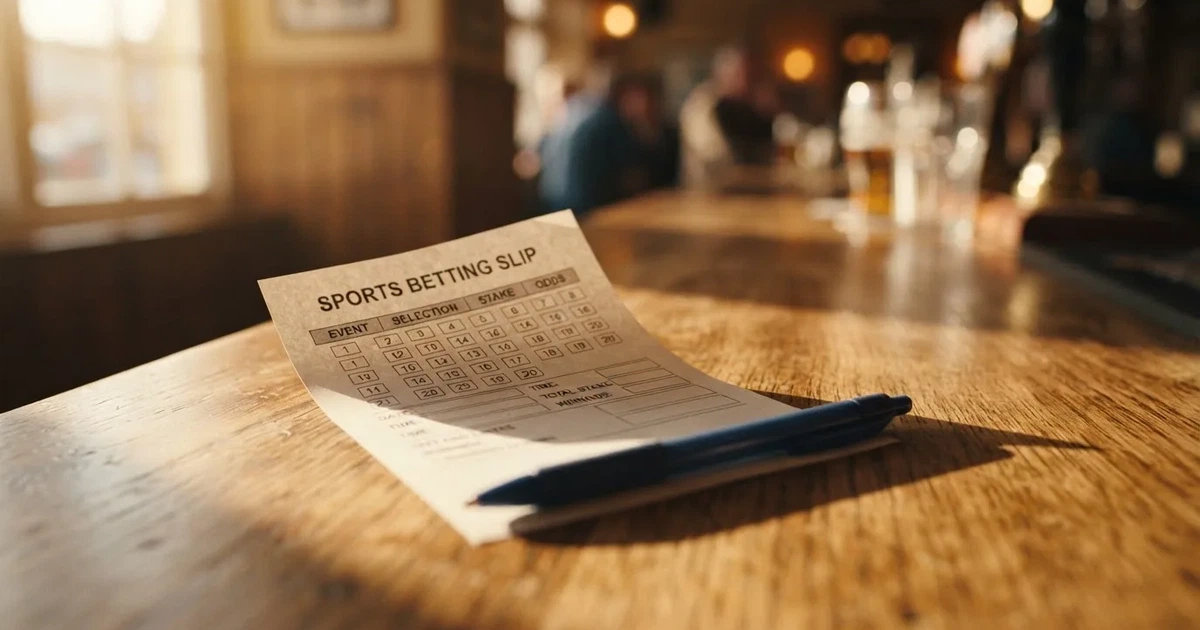
Three numbers make a totals bet: the line, the side, and the price. The line is the figure the bookmaker sets — 2.5 goals in a football match, 47.5 points in an NFL game, 22.5 games in a tennis match, 9.5 rounds in a UFC fight. The side is over or under. The price is the decimal odds the book pays on a winning selection (the fraction the British punter sees in the betting slip is the same information rendered a different way: a decimal price of 1.91 is 10/11, a decimal price of 2.50 is 6/4, and so on).
The line is rarely a whole number, because a whole number creates a third outcome the bookmaker does not want to pay out on. If the line is set at 2 goals exactly and the game finishes 2-1, the result is tied with the line and the bet is a push: every stake is returned and no side wins. The bookmaker’s answer to pushes is to set lines on the half — 2.5 goals — so that every scoreline falls on one side or the other. Lines on whole numbers do appear, usually in specials markets where the half-point premium the book would charge on 2.5 is not the same product the customer wants.
The push rule and what it means for the bettor’s record
A push returns the stake without profit or loss. It is the one outcome where the margin does not eat the bet. A 0-0 finish to a match priced at over 2.5 costs the bettor their entire stake minus the bookmaker’s margin over the long run; a 2-0 finish to a match priced at over 2.5 is a push and costs the bettor nothing. The trade-off a half-point line gives the bookmaker is real, and the trade-off a whole number line gives the punter is also real.
How the bet is settled
A winning over/under bet pays the stake plus the profit calculated from the decimal odds. A stake of £10 at 1.91 returns £19.10, of which £9.10 is profit. That arithmetic is the same on every totals market, on every bookmaker’s app, in every currency. Where settlements differ — and this matters more in totals than in match-result markets — is what counts as “in” the official total.
When the timer matters
Football totals count 90 minutes plus referee-added stoppage time. Extra time and penalty shootouts are settled separately and do not feed into the over/under 2.5 line. A punter who has backed over 1.5 goals in a cup tie that finishes 1-1 after 90 minutes and 2-1 after extra time has a losing bet, because the 90-minute total was 2 and the line was 1.5 — under wins. The same logic applies to NFL over/under: the betting markets count regulation time, and overtime totals are a separate line. Cricket run totals are settled on completed innings and follow the series format; a Test match first-innings total is different from a T20 game total and a punter who does not read which market they are in is not placing the bet they think they are.
Over/under across sports and tournaments
Football: the dominant totals market
Football over/under is anchored on goals: 0.5, 1.5, 2.5, 3.5, 4.5 goals the most common lines for full-time matches. The 2.5 line is the headline — balanced scoring, decent liquidity, the line that recurs across every fixture in every league a GB bookmaker lists. 1.5 is typically a quieter line with a heavier over price, because goal averages above 1.5 are the rule rather than the exception. 4.5 and 5.5 are long-shot lines; liquidity thins, prices fatten, and the punter trading them needs to know what they are doing.
Asian lines and quarter-goal lines — 2.25, 2.75, 3.25 — split the stake across two adjacent lines, which the punter reads as a way to back a half-line edge without giving the whole stake to the push. A 2.25 line is half on over 2 and half on over 2.5; a goal settles the half on 2 as a push and the half on 2.5 as a win. Quarter lines exist in the deeper markets of bigger bookmakers and are the playground of the bettor who has a numerical edge, not the weekend punter.
Basketball and American sports
Basketball over/under is on points, with lines climbing into the 200s for NBA matches. Quarter and half lines are common, as are team totals — over/under on just one side, which gives a sharper view if the punter’s read is on one team’s offence rather than on the combined pace. NFL over/under is on game points and similarly posts team totals, quarter totals, and player-prop style markets.
Tennis, cricket and other sports
Tennis over/under is on total games in a set or in the match. The push rule differs: in tennis the line that lands on a whole number is settled as a push, and the move is to match totals (over/under 21.5 games) more than set totals, because match totals behave more predictably across long matches. Cricket over/under runs across innings — team totals, match totals, player totals — and follows the format of the match, so a T20 game and a Test match live in different totals worlds. UFC round totals use over/under on the round in which the fight ends, with the push rule applied if the fight ends in the exact round on the line.
Tournaments and when the line moves differently
Totals pricing varies by competition. The Champions League final and an early-round League Two fixture use the same over 2.5 line structure, but the lines themselves will sit at different places and the market weight will be heavier on the bigger fixture. A punters reading a totals line on the Premier League’s relegation run-in looks at different data than their read of the group stage of a European tournament, where rotation can hollow out a fixture’s expected goals in a way the betting model has to absorb.
How the price is built and what the margin takes
Why no price is fair, and what “fair” would look like
A fair over/under would price both sides such that, over a long series of bets at that line, neither side returns a profit to a bettor who knows nothing. A bookmaker does not price on that basis. The bookmaker prices to keep a margin — also called overround — on every market they offer, no matter the outcome. The margin is the percentage of every pound bet that the book keeps on average; it is the cost of doing business with the book instead of with another bettor.
A worked example on a two-way line
Take an illustrative over/under 2.5 goals market where the book has set both the over and the under at decimal odds of 1.90 (about 9/10 in fractions). The fair price on a two-way line, the price the bettor would receive from another bettor with no margin taken, would be 2.00 on both sides. Anything below 2.00 is margin.
The way to read the margin out of the price is to add the implied probabilities of both sides and compare the sum to 1. Decimal odds of 1.90 imply a probability of about 0.5263 on each side (1 divided by 1.90). Both sides implied together sum to about 1.0526, which is 105.26 percent of the 100 percent a fair market would imply. The extra 5.26 percent is the margin the bookmaker has built in. A bettor who places £10 on either side of this illustrative line pays the bookmaker roughly £0.53 of expected cost over the long run, regardless of which side they pick.
The actual cost to a bettor depends on the line the book is offering. Margins on Premier League totals typically come in lower than this illustrative 5.26 percent — major bookmakers post narrow margins on heavily bet fixtures to attract volume and win the line. Margins on a Tuesday night EFL Cup tie or a friendly tournament can be twice as wide, because the model’s uncertainty is greater and the volume does not reward a tight price. The same market mechanism applies across the book, but the exact number the punter pays varies widely from fixture to fixture.
How the margin hides in plain sight
The margin is rarely advertised. A bookmaker’s marketing focuses on price boosts, sign-up offers, and acca insurance — none of which speaks to the margin on the totals markets themselves. The bettor who wants to know what the book is taking has to do the maths themselves, either by hand on a single fixture or by aggregating a sample of lines on a spreadsheet. There is no shortcut here. The punter who does the work has a real view of what they pay; the punter who does not takes whatever the book offers.
Why prices move
A line moves because the bookmaker re-prices the market in response to money, to team news, to a respected bettor’s stake, or to a combination of all three. A bettor watching the move in real time has one advantage and one only: they see where the line started and where it ended, and the difference between those two is information about what the market thinks. Whether the bettor acts on that information is a separate question, and the answer to it depends on whether the bettor has a model of their own or is just chasing the move.
Picking a bookmaker for over/under in Great Britain
What the licence is and is not
A Gambling Commission licence means the operator has been checked to the level the regulator requires, follows the social responsibility code, takes part in GAMSTOP and is subject to Commission enforcement. It does not mean the operator offers the cheapest totals line on the market, pays out faster than its rivals, or runs a generous sign-up promotion that beats the next operator’s. A licence is a baseline. Every brand reviewed in this guide is GB-licensed; the comparison is about what sits on top of the licence.
Where bookmakers compete on totals
The competitive ground for over/under in GB is price, market depth, and how the book handles settlement. Price is the closing line on a major fixture — the difference of a few ticks between one book and another, multiplied across many bets, is the punter’s annual edge or annual loss. Market depth is whether the book posts the half-goal lines, the team totals, the quarter-goal Asian lines, the player props. Settlement is what happens on the rare fixture that crosses wires — a goalscorer market mis-settled at a competitor that had the same outcome right, or a totals push settled late and the punter sees the return land an hour after kick-off.
Where bookmakers are interchangeable
The licence picture is uniform: every GB-licensed online bookmaker takes part in GAMSTOP, runs identity checks at first deposit, and operates under the same broad regulatory regime. The promotional picture is more varied, but the page deals with what each operator’s terms state rather than with the marketing — the difference matters, because the headline offer is not the same as the offer a punter ends up with once the terms are read.
A note on the comparison that follows
The table beneath this section lists each operator with the Commission’s account number and the licence holder named on the register, alongside a note on what the operator’s own terms state on a point relevant to this comparison. The Commission’s public register is the test of whether a brand holds a licence; the operator’s own terms page is the test of what the brand actually offers. Both records were checked against the snapshot date given at the top of the page.
The shape of over/under in Great Britain
What the market looks like in the round
A typical GB-licensed bookmaker offers over/under on hundreds of fixtures on a typical Saturday. Football dominates by volume: Premier League, Championship, the Scottish leagues, the big European leagues, the European cup competitions. Tennis comes second during a Grand Slam week, with match totals and set totals across the men’s and women’s draws. Basketball, American football, cricket, rugby, MMA and boxing all post totals markets where fixtures warrant. The volume is concentrated in three or four sports; the depth — the number of lines per fixture — is concentrated in football.
The two big lines and what they mean in the bookmaker’s pricing
Over 2.5 goals in football and the equivalent 47.5-or-so line in an NFL game carry the bulk of a typical week’s totals action. Liquidity sits on the headline line, the price is tight, the margin is the narrowest the book offers. Other lines — over 1.5, over 3.5, over 4.5, the team totals, the half lines — post wider margins because the book is hedging a smaller pool of bets and the model has less confidence. A punter who can spot where the book’s confidence is misplaced in the wider margins — an EFL Cup tie the book has priced too tightly, or a Champions League qualifier priced too loosely — finds the kind of edge a weekend punter usually does not.
Why every over/under line carries a margin
The bookmaker is not a price-taker; the bookmaker is a price-maker, and the price it makes contains its margin by construction. The margin is the cost the punter pays for the convenience of betting against the book instead of against another punter on an exchange. On a betting exchange, where punters back and lay against each other, the price matches the implied probability minus a commission the exchange charges; the margin is set by the market rather than by a single operator. A GB bookmaker on its own app has no such discipline — the margin is what the operator sets and updates when it sees fit. The convenience of a one-app betting slip comes at a price the operator chooses.
What the rules around totals are and what changes from next year
The framework the regulator runs
The Gambling Commission is the regulator of commercial gambling in Great Britain under the Gambling Act 2005. An operator holding a Commission licence has been checked, is subject to the Commission’s Licence Conditions and Codes of Practice, and is bound by the Commission’s enforcement powers. The Northern Irish market is regulated separately under older legislation and a GB licence does not authorise service there; the operators listed in this guide hold GB licences and are described as such.
Since the Gambling (Licensing and Advertising) Act 2014, an operator whose remote facilities are used in Great Britain needs a Gambling Commission licence wherever the operator itself is based. A Gibraltar, Maltese, or Curaçao licence, on its own, is not a substitute. The Commission’s public register lists every brand the Commission has licensed and the licence holder behind it; the register is the whole test of whether a brand holds a licence for the British market.
What the licence does not do
A Commission licence does not list which markets an operator may offer. An operator holds a licence for a category — remote general betting standard being the relevant category here for real-world events — and offers markets under its own commercial decisions and under the social responsibility code. There is no statutory list of permitted markets, so a bookmaker can offer totals on a reality TV show if the licence lets them and the LCCP’s marketing rules do not object; a separate licence category covers virtual events.
In-play totals and the controls on them
In-play totals are offered by GB bookmakers and the rules are the operator’s licence conditions and the Commission’s customer-protection duties. There is no statutory prohibition on in-play markets; there are also no statutory guarantees that any particular in-play market will be offered at any particular time. Where a bookmaker takes an in-play bet is the bookmaker’s decision, and the punter who needs that bet placed at speed needs to know which bookmakers run the in-play product the punter wants.
Spread betting is a different licence
Financial spread betting is regulated by the Financial Conduct Authority, not the Gambling Commission. The Spreadex brand is one example of an operator that runs both fixed-odds betting and spread betting — the FCA regulates the spread-betting side, the Commission regulates the fixed-odds side, and the two regulators run different rulebooks. A punter reading an FCA-regulated spread-betting product is reading a financial product with a different risk profile from a fixed-odds totals bet; the spread-book’s losses can exceed the deposit on the spread leg. That distinction belongs in the punter’s head before they fund the account, not after.
Tax in plain terms
A punter in Great Britain pays no tax on sports betting winnings. General Betting Duty is the operator’s tax on its gross profits from betting, set by the Treasury and collected by HMRC. The rate on remote betting is 15% until 1 April 2027, when a new remote rate of 25% takes effect within General Betting Duty; remote bets on UK horse racing, self-service betting terminal bets in licensed premises, pool betting, and in-person betting remain at 15%. Whether operators pass any part of that duty through to the punter in tighter prices is not established, and the cleaner reading of the rules is that the duty sits on the operator’s margin.
Safer gambling and what the regulator requires
The mandatory baseline
Every GB-licensed online operator is a GAMSTOP member and offers GAMSTOP self-exclusion for periods of six months, one year, five years, or five years with auto-renewal. After the minimum period the exclusion stays in place for a further seven years unless the customer asks GAMSTOP to remove it. GAMSTOP covers online sites and apps, not high-street betting shops, which run a separate in-shop self-exclusion scheme. A punter who wants the multi-operator cover should use GAMSTOP.
The financial vulnerability check
A licensed remote betting operator must run a financial vulnerability check — a public-record check, including bankruptcy or county court judgments — once a customer’s deposits minus withdrawals exceed £150 in a rolling 30 days. The check is not an income check and it is not a credit reference check; it is a check against public records. Full financial risk assessments — the kind sometimes called “affordability checks” in the press — are at a later stage in the regulator’s staged plan and have no start date. A punter placing moderate bets with a verified account will not trigger the later-stage checks; a punter whose betting spend hits the higher bands should expect the operator to ask questions.
Deposit limits and the customer’s choice
Operators must offer a deposit limit on a fixed time frame under the Commission’s Remote Technical Standards; the operator’s own product is the channel the punter uses to set it. There is no state-set ceiling on how much a punter may deposit or lose; the ceiling is whatever the punter agrees with themselves via the operator’s tools. A punter who wants a hard ceiling should set it before the first deposit and treat the conversation with the operator’s customer services about raising it as a moment to consider whether the change is the right one.
Where to get help
GamCare runs the National Gambling Helpline and is the first port of call for a punter who notices their betting slipping out of the patterns they set. GambleAware funds research and treatment. The NHS runs gambling clinics in several regions, with referral through a GP. Gamblers Anonymous runs mutual-support meetings in person and online. None of these is a sales channel; all of them are independent of the operators reviewed in this guide.
Gambling offshore: what changes and what does not
A punter who signs up at an offshore site that does not hold a Commission licence keeps their money at the site, but loses the British protections: no GAMSTOP cover, no Commission complaints route, no approved dispute-resolution body, no British consumer redress if funds are withheld, no application of the bonus rules. The site’s house rules and the rules of the regulator in the country that licensed it are what apply. Using an unlicensed site is not a criminal offence for the customer, but the protections are gone.
The operator reviews
What this section does
The reviews below cover every operator from the ranking of ten GB-licensed bookmakers. Each profile states the licence account number and the licence holder named on the Commission’s public register, alongside what the operator’s own terms state on a point that bears on this comparison — a settlement rule, a market depth note, a product feature, a qualification on a free bet. The comparison is operational rather than promotional; where the operator’s promotional terms would reward the punter they are stated as the operator’s terms state them, not as a marketing headline. There is no recommendation. There is a profile that the punter can read alongside the operator’s own terms page.
How to read the licence line
The licence account number is the Commission’s internal identifier for the licensee. The licence holder is the company the Commission has issued the licence to; several brands may run under one licensee. The brand listed on the Commission’s register is the test of what the licence covers. A punter verifying a licence is reading the Commission’s public register directly, by business name or account number.
| Operator | Licence holder | Commission account | Notes from the operator’s own terms |
|---|---|---|---|
| Fitzdares | Fitzdares Limited | 400 | Premium betting app listing cash out, accumulators, Lucky 15s, specials and antepost markets across horse racing, football, tennis, rugby, cricket, golf and American football, with in-play live odds. |
| Fitzwilliam Sports | SBKI Limited | 48760 | Prices each selection against Oddschecker’s average price; provides Apple and Google mobile apps for settled-bet access. |
| London Bet | Thistle Bet Limited | 66162 | States it is licensed and regulated in the UK; the app carries a 17+ age rating on the App Store. |
| BetUK | LeoVegas Gaming PLC | 39198 | Free bets exclude virtual sports, esports and non-UK/IE horse racing; minimum odds apply to any qualifying bet. |
| Lottoland | EU Lotto Limited | 38991 | UK app combines casino, lottery betting, sports betting and scratchcards; states it is licensed by the Gambling Commission for Great Britain customers. |
| Betfred | Petfre (Gibraltar) Limited | 39544 | App lists Bet Builder, Sub Switch on football, Racing Post data for horse racing, Extra Places, live casino and bingo. |
| Tote | TDCO Limited | 54779 | Best Odds Guaranteed applies to UK and Irish horse racing from 8 AM on the day of the race, on single and multiple bets; does not apply to ante-post, tote or pari-mutuel bets. |
| bet365 | Hillside (UK Sports) ENC | 55148 | Offers Bet Builder+, Super Boosts, Winnings Boosts on Bet Builders and selected singles, plus daily Bet Boosts. |
| Hollywoodbets | Hollywoodbets International UK Limited | 53028 | Welcome package refunds a first qualifying losing accumulator as a free bet of up to £30 (stake £10+, three legs, odds of 4/1 or greater, settled within seven days); one free bet per customer. |
| Copybet | Copybet UK Limited | 53774 | Best Odds Guaranteed all day every day on UK and Irish racing; pays first past the post on horse racing even if the winner is later disqualified. |
Fitzdares
Fitzdares operates under Commission account 400 held by Fitzdares Limited, a long-standing bookmaker whose app offers cash out, accumulators, Lucky 15s, specials and antepost markets across horse racing, football, tennis, rugby, cricket, golf and American football, with in-play live odds across the listed sports. The price list on the app covers major totals markets in football and basketball, with sport-by-sport lines for the bigger fixtures. A punter looking for a single bookmaker that runs totals across several sports rather than just football gets the breadth here. The depth of any single fixture’s totals book is not as deep as the bigger generalist operators.
Fitzwilliam Sports
Fitzwilliam Sports operates under SBKI Limited on Commission account 48760, and its pricing model is worth noting because the operator’s own description is that each selection is set against Oddschecker’s average price. That pricing approach does not produce the narrowest line in the market on any given fixture, but it does mean the punter sees a price that has been benchmarked against the wider market at the moment of posting. Mobile apps on iOS and Android give the punter access to the same markets as the desktop site. The product range is shorter than the major generalists, and the fixture coverage is narrower outside the top British and Irish sports.
London Bet
London Bet runs under Thistle Bet Limited on Commission account 66162, and the operator states it is licensed and regulated in the UK. The app’s age rating sits at 17+ on the British App Store, a marker relevant for parents managing family devices. The product is a smaller-scale bookmaker with a regional British feel; the totals markets available cover the mainstream British football leagues and a selection of other sports, with depth thinner than the bigger generalist brands. A punter who wants the deepest possible book on a midweek EFL fixture will not find London Bet’s book the largest on the market; a punter who values the regional product and the brand will find it adequate.
BetUK
BetUK is operated by LeoVegas Gaming PLC on Commission account 39198 — the same parent that runs BetMGM UK’s separate sports product, and the connection is worth noting because LeoVegas’s mobile product experience shapes both apps. BetUK’s free bets come with the structural exclusions typical of a casino-led sports book: virtual sports, esports, and non-UK/Irish horse racing are excluded from qualifying, and minimum odds apply to the qualifying bet. The punter who reads the terms before claiming an offer avoids the most common reason an offer does not land. Totals coverage is wide across British football and the major American sports.
Lottoland
Lottoland runs under EU Lotto Limited on Commission account 38991 and presents a hybrid app combining casino, lottery betting, sports betting and scratchcards in a single product. The lottery heritage is the brand’s identity; the sports book sits alongside it and offers totals markets in football and a selection of other sports. Lottoland states the sports side is licensed by the Commission for Great Britain customers. A punter who wants lottery play and sports play on the same app will see the product. A punter looking for the deepest sports-only totals book will not.
Betfred
Betfred operates under Petfre (Gibraltar) Limited on Commission account 39544 — a heritage British bookmaker now under a Gibraltar parent for its remote operation. The app’s product list is broad: Bet Builder for same-game accumulators, Sub Switch on football (a feature that lets the punter substitute a selection in a pre-built bet builder if their chosen player does not start), Racing Post data integrated into the horse racing product, Extra Places on selected horse races, live casino and bingo. The product list speaks to a punter who treats the betting app as a hub rather than a single sport. Totals markets across football, horse racing, American sports and others reflect the breadth.
Tote
Tote runs under TDCO Limited on Commission account 54779, with the Tote brand sitting in a particular niche: pool betting on horse racing alongside fixed-odds sports markets. The Tote’s Best Odds Guaranteed applies to UK and Irish horse racing from 8 AM on the day of the race, on both single and multiple bets, with the standard exclusions for ante-post, tote and pari-mutuel bets. A punter who bets a horse racing totals equivalent — without the half-goal or quarter-point frame, but in race-finish markets — sees a Tote product quite different from the standard fixed-odds book. The mainstream fixed-odds sports totals are also available.
bet365
bet365 operates under Hillside (UK Sports) ENC on Commission account 55148 and is the benchmark generalist online bookmaker by fixture coverage and market depth. The product list named on its app store listing — Bet Builder+ for combining markets from one event into a single bet, available pre-match and in-play; Super Boosts; Winnings Boosts on Bet Builders and selected singles; daily Bet Boosts — is the kind of catalogue a punter compares the rest of the market against. Totals markets are deep: half-goal lines, Asian lines, team totals, player totals in basketball and American football, and a fixture list that runs through every sport the operator covers. Price is competitive on the major fixtures and loosens on the marginal ones, which is the pattern across the industry rather than a bet365 quirk.
Hollywoodbets
Hollywoodbets UK operates under Hollywoodbets International UK Limited on Commission account 53028. The welcome package refunds a first qualifying losing accumulator as a free bet of up to £30 on the standard qualifying pattern: stake £10 or more, three or more legs, odds of 4/1 or greater, settled within seven days. One free bet per customer is the structural ceiling. The product is competitive on South African and British football and on the major horse racing and tennis meetings; depth outside those sports is thinner. A punter looking for a South African racing angle will see a product the European bookmakers do not run.
Copybet
Copybet operates under Copybet UK Limited on Commission account 53774 — a name that hints at the social element of the product, where punters can follow other users’ bets in addition to running their own book. The operator’s named feature is Best Odds Guaranteed all day every day on UK and Irish racing, plus first past the post paid even if the winner is later disqualified — a horse racing settlement rule some operators have stopped offering and that Copybet retains. Totals markets cover the mainstream sports; the racing settlement rules are the headline differentiator.
Mobile and app specifics for over/under betting
What the punter uses an app for
An app is a faster way to reach the same markets the desktop or mobile browser offers. The punter who places the bulk of their bets during a live fixture uses the app because typing a stake into a browser on a phone screen in the ninety seconds between a goal and the price changing is too slow. The app also delivers push notifications, which the punter can switch on for the markets they care about and off for those they do not.
What to check before settling on an app
Three things. First, the depth of in-play coverage — not every bookmaker shows every in-play totals market on its app, even if the desktop site does. Second, the cash-out product, where offered, and whether the cash-out figure updates at the same pace as the underlying line. Third, the verification product, because the app is the channel through which identity checks are run; an app that handles verification quickly and stores the documents the punter has already uploaded is an app that does not interrupt play.
Where apps disagree on settlement
Settlement on the same fixture occasionally differs between two apps because the data feed underlying each bookmaker’s product is different. The differences are small and infrequent, but a punter who watches their bets settle across two apps on the same Saturday will see the odd diverged result. The resolution path is the operator’s customer service first, and the Commission’s complaints route second; the punter with a photo of the result and the timestamp has the stronger position in either.
Verification, deposit, bet
Since the regulator’s customer-due-diligence rules tightened in 2019, a licensed remote betting operator verifies the customer’s name, address and date of birth before the first deposit can be made. The verification is built into the app — a photo of an ID document and a selfie, sometimes a recent bank statement — and the verification takes minutes on most operators rather than days. A punter who has not yet verified an account cannot deposit, cannot bet, and cannot claim a free bet or sign-up offer. Verification is the entry point, not a hurdle to be put off until the punter is ready to play.
A note on the cost of betting with a margin
What a margin feels like over time
A margin of 5% on every totals bet means the punter loses 5 pence per pound bet, on average, across a long series of bets, before any other edge or disadvantage is accounted for. A punter betting £10 per selection over 100 bets at a 5% margin has staked £1,000 and lost on average £50 to the bookmaker’s commission-equivalent. Across a year of weekly betting that is a real cost. Over a career of betting it is a meaningful part of why most punters end up behind, not because they picked badly every time but because the margin was always working against them.
What a sharper line changes
Halving the margin from 5% to 2.5% on a portfolio of similar bets more than halves the long-run cost. The arithmetic is exact: margin is multiplied by turnover, and the turnover does not change when the margin halves. The punter who chooses to bet with two or three books and rotate stake to the one with the narrowest line on the day turns the margin into a part of their strategy rather than a tax they pay regardless. The work is the same; the saving is real.
What does not change the margin
Promotions do not change the margin. A sign-up offer or a free bet on the side of a bet does not narrow the line on the totals market; the price the bookmaker quotes on the match is still set with the margin the book wants to make. The promotion moves the punter’s expected value at the margin if the offer is generous, but the line still costs the punter what it costs. A punter who understands this does not treat a promotion as a substitute for shopping the line.
Frequently asked questions about over/under betting
How is a tennis over/under bet placed?
A tennis over/under bet is on the total number of games in a set or in the whole match. The operator sets a line — for example over 21.5 total games in a three-set match — and the punter backs over or under at the operator’s price. The bet is settled on the official match score, with tiebreaks counting as one game for totals purposes. Lines are deeper on the men’s ATP and women’s WTA tours during the Grand Slam weeks.
What is the basic shape of an over/under bet?
An over/under bet asks the punter to back whether a single statistic from the event — the combined score most often — finishes higher or lower than a line the bookmaker sets. The bet pays the stake plus profit at the price quoted. If the result lands exactly on the line, the bet is a push and the stake is returned. That is the entire mechanism.
What does over/under mean in betting language?
The terms say exactly what the bet asks. Over means the punter bets that the statistic will exceed the line; under means the punter bets it will fall short of the line. The line itself is the central number the bookmaker sets and updates. Most totals markets are two-way — over or under, one or the other wins — and a third outcome exists only where a whole-number line is in use and the statistic lands exactly on it.
How is a Gambling Commission licence verified?
The Commission’s public register is the test of whether a brand holds a GB licence. The register is searchable by business name, trading name, domain or account number, and it lists the licence holder behind each brand and the categories the licence covers. A punter who wants to verify a brand enters the brand’s name or domain and reads the register entry directly. The register is the primary source for this and is more reliable than a statement on the brand’s own page.
How is the return on a bet calculated?
The return is the stake multiplied by the decimal odds. A £10 stake at decimal odds of 1.91 returns £19.10, of which £9.10 is profit and £10 is the original stake. The same arithmetic applies to a winner at any price. A push returns the stake without profit and without loss.
What is the bookmaker’s margin and how does it show in the odds?
The margin is the percentage of every pound bet that the bookmaker keeps on average, and it is built into the prices the bookmaker posts. To read it out of a two-way market, add the implied probabilities of both sides — each is one over its decimal odds — and the excess above 100 percent is the margin. A market at 1.90 and 1.90, for example, carries an implied margin of roughly 5.0 percent; the line costs the punter that amount on average across a long series of bets.
Bet types & in-play – Cricket betting
Content created by the «Cricket betting» team
