
Live-streaming bookmakers ranked: what each one shows, what it costs
 Available in US
*Current as of 27 October 2026 · verified against the Gambling Commission’s public register*
Live streaming has reshaped what a UK online bookmaker actually is. The slip is still there, but the product is now a video feed, a scoreboard that updates by the second, and a button that lets the bettor walk away before the whistle. The ten brands below all carry a remote operating licence from the Gambling Commission, which is the starting line, not the finish. The differences come down to what each site streams, whether the stream is free or gated, how generous the in-play markets are, and what the price looks like once the margin is taken out.

This page reads in reverse order of how the market presents itself. Instead of starting with the headline act and working down, it begins with the live-streaming bookmark — the mobile app and the cash-out button, because that is what the bettor sees first when a match kicks off — and finishes with the legal framework every operator sits inside. Cost is the thread that runs through it: the cost of claiming a bonus, the cost of pulling money out, the cost of a stream that buffers instead of plays.
Mobile Apps and Live Streaming: What the Betting App Actually Shows
A betting app is not a portable version of the desktop site. It is a separately coded product that has to make a decision the browser does not face. On a desktop, the bookmaker can stream at any resolution, on any screen, through any plugin. On a phone, the screen is small, the network flutters and the battery drains. So every live-streaming app that works on UK mobile is the result of a long list of trade-offs, and the trade-offs show.
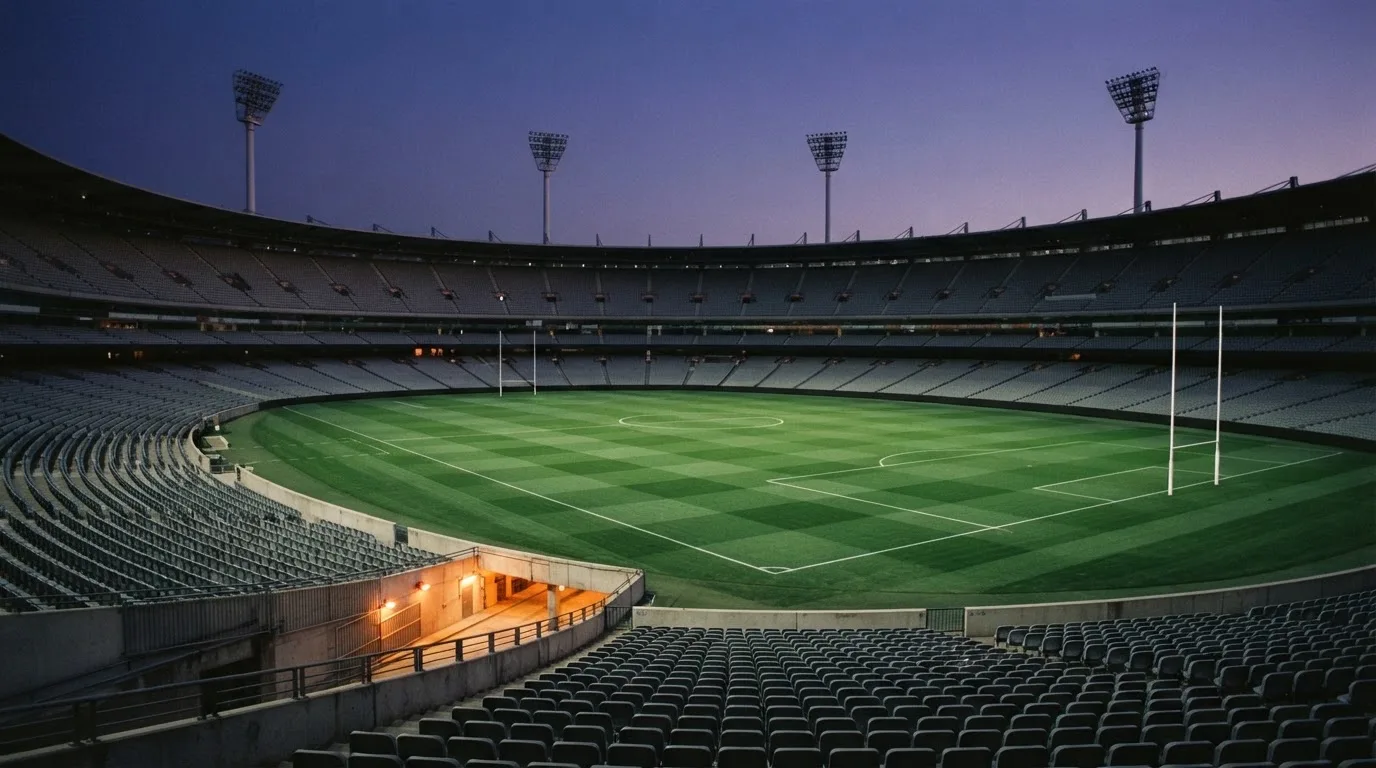
The first trade-off is the stream itself. A full broadcast feed from a Premier League rights-holder is not something the average UK bookmaker can carry: those rights are sold separately, often to subscription services. What the bookmaker streams is typically a lower-tier feed — horse racing from tracks the bookmaker has paid to film, esports tournaments the operator sponsors, second-tier European football, darts, snooker, table tennis — delivered in a resolution that holds on a 4G connection. Stream availability is decided by each operator’s deals with the rights-holders, and the list changes by sport, by country and sometimes by month.
The second trade-off is the gate. Some streams are free to any logged-in customer, even a freshly registered one who has not deposited. Most are not. The standard gate is an active bet in the last 24 hours, or a funded account, or a qualifying bet on a specific race. William Hill’s streaming service WHTV requires a funded account or a bet in the last 24 hours, and live racing requires a stake of £1 or more on a qualifying race; its separate Betting TV product shows UK and US horse racing and UK greyhounds at no charge. Betfair Sportsbook offers free live streams inside its app for events such as UK and Irish horse racing and football. Matchbook, the betting exchange, streams horse racing and greyhounds through the app. Coral’s streams reach a customer who has Best Odds Guaranteed or has placed a bet recently; the exact rule varies. None of this is published in a single place the bettor can compare — each gate sits in the operator’s own terms page, often buried under two or three clicks.
The third trade-off is the in-play betting feature that runs alongside the stream. bet365 layers Match Live, Bet Track and a Live Golf Tracker over its streams so a bettor can follow a shot or a stat without leaving the picture. Sky Bet’s My Bets screen offers cash out alongside in-play markets. The presence of a tracking layer is not a given. Some apps offer the stream and offer in-play markets but show neither a tracker nor a score board — the bettor watches the picture and reads the numbers from a separate panel. That design still works; it just costs the bettor attention.
Latency is the fourth trade-off, and the one nobody markets. A stream is always a few seconds behind the live action, sometimes more on a busy network. In-play prices move with the event, not with what the bettor saw ten seconds ago. A goal can land and the price can drop before the bettor’s finger reaches the button. This is the bettor’s cost of the technology: nothing in the operator’s terms guarantees a stream in time to back the next goal. Low-latency streaming is the phrase some apps use to distinguish themselves. It is a real distinction, but it does not eliminate the delay.
These trade-offs frame how the rest of this page reads. Each operator entry later in the page lays out what streams it offers and what the gate looks like. Each in-play feature is judged against the price the bettor pays to use it, where the price can be measured.
In-Play Betting and Cash Out: How the Live Markets Actually Move
In-play betting, also called live betting, is the broader category; cash out is the narrower feature inside it. The two share a screen and a price engine, but they do different things for the bettor.

An in-play bet is a new bet placed while the event is in progress. The markets update by the second — next goal, method of next goal, player to score next, total corners at full time, every point in a tennis match — and each tick the old price is replaced by a new one. The bettor who wants to back the favourite after the underdog takes an early lead has a window to do it, and the price will reflect the new score. That is the live product: a sliding market that mirrors the game.
Cash out is the button that says “settle this bet now”. It works on singles and multiples; whether it works on a given bet depends on the market and the operator. The basic mechanic is simple: at any moment during the event, the bookmaker offers a settlement value that reflects the current score, the time left and the original odds. On a winning bet, cash out locks in a profit smaller than the full win would have been. On a losing bet, it returns part of the stake — sometimes a lot less than the bettor expects. Cash out is opt-out only by default; the bettor has to press the button. If the bettor does nothing, the bet settles at full time.
Three live facts decide how useful cash out is in practice. First, availability: cash out is not guaranteed on every market. Some bookmakers restrict it on each-way bets and on accumulators, or pull it during market suspension. William Hill’s Cash Out is not available on each-way bets and is not always available on accumulators, and the firm does not guarantee its availability. Second, settlement timing: the cash-out price is offered, but the bet is not settled at the offer, it is settled at the price the bookmaker is willing to honour a few seconds later. If the price has changed in the gap, the bettor either gets the new price or the bet fails. One UK-facing sportsbook’s terms state that cash out is unavailable during market suspension and may fail if odds change or a market is suspended during the cash-out delay. Third, partial cash out: Coral and Sky Bet offer Early, Partial and Auto Cash Out, which let the bettor take some of the value and leave the rest on the bet. It is a useful tool, but it is the operator’s tool, sold on the operator’s terms.
In-play markets are not all the same depth. A Premier League match might have 200 in-play markets; a Scottish League Two match might have 30. The English top flight and the major European leagues are dense; lower divisions and small sports can be sparse. bet365’s in-play range is one of the broadest in the UK market. Matchbook, as an exchange, lets the bettor back and lay in-play, which is a different mechanic again — the prices come from other users, not from the bookmaker, and the depth depends on who is logged in. Kalooki Sportsbook advertises in-play betting as part of its offering but does not publish the number of markets. The headline “in-play betting” is therefore a one-word promise that can mean a lot or a little.
The cash-out button sits inside the live feature, so its economics affect the live product’s economics. Every cash-out settlement takes a slice of the market overround. The bettor does not see that slice as a fee — it appears as a smaller number on the screen. Whether it is worth it depends on how the event unfolds. On a Saturday afternoon with four bets riding, the button can rescue a careless selection. On a single match where the bettor was right all along, it is the difference between winning and winning slightly less.
Top 10 UK Betting Sites With Live Streaming: The Comparison
This is the comparison itself. Every brand below carries a remote operating licence from the Gambling Commission for general betting on real events. The licence numbers are stated exactly as the public register holds them; they are the starting condition, not a qualification on the rest of the entry. The order is the order the brands appear on the public register’s licensing record matched against each operator’s own product page, not a ranking by how good the streaming is. Each write-up closes with this page’s judgement on what the brand is actually for, in one sentence. The comparison table sits further down.
1. Star Sports
Star Sports holds a remote general betting licence on the Commission register under account 9177, with Star Racing Limited named as the licence holder. The brands’s sportsbook combines pre-event and in-play markets with Bet Boosts, Daily Specials and Weekend Enhanced Boosts, and the in-play book covers football, horse racing, golf and US sports. Star Sports is a smaller name than the firms further down this list, which is sometimes a help and sometimes a constraint: it can pick markets it wants and run them carefully, and it does not have to compete with the wide broadcast feeds of the largest firms. For a bettor who already knows which sport they want and likes a bookmaker that gives a personal touch over a wide menu, Star Sports’ in-play coverage and the value-add of three separate boost types make it worth a look.
2. DragonBet
DragonBet runs under a Commission account 64908, with DragonBet Ltd as the licence holder, and its app publishes markets for Welsh football and rugby, racing, American football, in-play betting and bet builder markets. The brand’s anchoring is clear: Welsh sport is the centre of gravity, and the rest of the offering hangs off it. A bettor who follows the Welsh leagues or the Southern League pyramid will find markets that the bigger brands leave alone. A bettor who does not care about Welsh football gets a thinner sportsbook with an English top-flight menu and standard markets. DragonBet is the choice when its core content is your content.
3. BetGoodwin
BetGoodwin’s licence account is 2927, held by Goodwin Racing Limited. The app offers pre-match and in-play Bet Builder across 11 sports, Early, Partial and Auto Cash Out, and the operator says more than 200,000 live events each month pass through the platform. Two figures stand out: the breadth of the Bet Builder — eleven sports, not just football — and the named versions of cash out. Early Cash Out settles before the standard timing window; Partial Cash Out lets the bettor take a fraction and leave the rest; Auto Cash Out triggers at a rule the bettor sets. For a bettor who uses cash out as a routine tool rather than a panic button, those named versions are the difference between a useful product and a one-trick button. BetGoodwin is the bettor’s choice if the routine is the point.
4. Lottoland
Lottoland UK holds a remote general betting licence under account 38991 with EU Lotto Limited as the licence holder. The platform is broader than most sportsbooks: casino, lottery betting, scratchcards and sports betting sit under the same brand. The position is unusual. A bettor who has a lottery habit and wants everything in one wallet will find Lottoland a single sign-up for both products. A bettor who only bets on football will find a sportsbook that is competent but not deep, sitting beside a lottery product that is the brand’s centre of gravity. The streaming offering is not the headline here — the headline is the bundle.
5. Betfred
Betfred’s UK licence account is 39544, held by Petfre (Gibraltar) Limited. The app features Bet Builder, Sub Switch (a substitute-pick feature for in-play events), Racing Post data, Extra Places, a live casino and bingo. The Sub Switch tool is the live product to watch: in a match where a player comes off with an injury, the tool lets the bettor swap that selection for another player from the same position without rebuilding the bet from scratch. Extra Places extends each-way payouts on selected horse races. The live streaming feed is on the standard UK racing and greyhounds schedule. For the bettor whose cycling bet is heavily populated, Betfred is a credible place to start.
6. Kalooki Sportsbook
Kalooki Sportsbook is operated by Kalooki Sports Book Ltd (company number 12938274), licensed by the Gambling Commission under account number 57730, and is a GAMSTOP member. The site advertises instant withdrawals by bank transfer within minutes, Best Odds Guaranteed on UK and Irish horse racing, in-play betting, daily boosts and extra place races. The instant-withdrawal claim is the headline: most bookmakers take a working day or longer; “within minutes” is a different proposition. Horse racing bettors will recognise BOG as a baseline, not a perk. The in-play book does not publish its depth in headline numbers. Kalooki Sportsbook is the pick if the speed of getting a withdrawal back is the deciding factor in your comparison.
7. Sky Bet
Sky Bet’s licence account is 67370, held by SBG Sports Limited, with operations restricted to users in the UK and Ireland. The app features Matchday Assist, BuildABet, Acca Freeze (which freezes one winning leg of a five-leg accumulator), Bet & Watch, Request A Bet, in-play betting, My Bets with cash out, and Price Boosts on more than 250 markets each week. Acca Freeze is the stand-out: if four of the five legs win and the fifth loses, the bettor’s stake is returned as a free bet rather than the bet losing outright. That is a real cushion on long-odds accumulators, but it is conditional: five legs, one losing leg, returned as a free bet. The 250+ price boosts each week are not the same as 250 unique boosts; many are repeats across sports. Sky Bet is the choice for the bettor who likes a long acca and wants one safety net built into the way the bet is settled.
8. bet365
bet365’s UK licence account is 55148, held by Hillside (UK Sports) ENC. The app combines Bet Builder+ (markets from one event into a single bet, pre-match and in-play), Super Boosts, Winnings Boosts on Bet Builders and selected singles, and daily Bet Boosts. The live betting product is layered with in-play betting and live streaming of events worldwide, plus Bet Track, Match Live and a Live Golf Tracker. The breadth of the live product — the trackers, the in-play markets, the streaming feed across multiple sports — is the bet365 signature. It is also the bettor’s cost in time: the menu is dense, the markets move fast, and a casual bettor can lose a stake on a price that has already gone. bet365 is the place for the experienced in-play bettor.
9. Matchbook
Matchbook’s licence account is 39504, held by Triplebet Limited, with two licence categories: remote general betting standard (real events) and remote betting intermediary. The intermediary category makes Matchbook an exchange, where customers bet against each other rather than against the bookmaker. The platform supports Bet Builder, multiples, in-play betting and live streaming of horse racing and greyhounds. An exchange runs on its own economics: prices tend to be sharper because the margin between back and lay is what the platform earns; but liquidity matters more than it does on a sportsbook, and a thin market means a half-completed order book. Matchbook is for the bettor who already understands lay betting and wants the sharper end of the live price.
10. Kwiff
Kwiff holds a Commission licence under account 44448, with Eaton Gate Gaming Limited as the licence holder, and operates as a trademark of Spryme Ltd. The app has a 17+ App Store age rating. Kwiff’s product is built around surprise mechanics: the operator’s “supercharged” odds feature can boost a price on a bet, unpredictably, after the bettor places it. This is the marketing word the operator runs on. The actual product sits on a standard UK sportsbook shape — pre-match, in-play, bet builder — with the boost as an overlay. For a bettor who wants surprises on odds, Kwiff is the one to try; for a bettor who wants predictable settlement, the surprise element is itself the cost.
Comparison Table: Brand, Licence and Streaming Policy
| Brand | Gambling Commission licence | Licence holder | What the operator’s own terms state on live streaming |
|---|---|---|---|
| Star Sports | 009177-R-104555-019 | Star Racing Limited | In-play markets on football, horse racing, golf and US sports; standard UK streaming schedule |
| DragonBet | 064908-R-339041-003 | DragonBet Ltd | In-play markets on Welsh football, rugby and racing; bet builder included |
| BetGoodwin | 002927-R-327985-008 | Goodwin Racing Limited | In-play across 11 sports, 200,000+ live events a month, Early/Partial/Auto Cash Out |
| Lottoland | 038991-R-319408-020 | EU Lotto Limited | Sports betting and lottery under one app; streaming depth not stated in the product’s headline |
| Betfred | 039544-R-319290-010 | Petfre (Gibraltar) Limited | Standard UK racing and greyhounds streaming; Sub Switch tool for in-play |
| Kalooki Sportsbook | 057730-R-333396-005 | Kalooki Sportsbook Limited | In-play betting alongside standard racing feed; instant withdrawals claim |
| Sky Bet | 067370-R-341330-005 | SBG Sports Limited | In-play betting, My Bets with cash out, Bet & Watch pricing model |
| bet365 | 055148-R-331498-002 | Hillside (UK Sports) ENC | Live streaming of events worldwide with Bet Track, Match Live and Live Golf Tracker |
| Matchbook | 039504-R-319407-024 | Triplebet Limited | Free live streaming of horse racing and greyhounds on the exchange |
| Kwiff | 044448-R-323408-017 | Eaton Gate Gaming Limited | In-play markets present; streaming depth not the operator’s headline |
What the Comparison Table Does Not Show
A table can hold a licence number, a holder and a one-line summary of the streaming policy. It cannot hold the whole comparison. Three things sit beside the table that the bettor needs to weigh on top of it. The first is in-play depth: the table mentions in-play on most rows, but the volume of live markets per match varies from one operator to the next, and that variation does not show up in a one-line cell. The second is the gate on the stream: the table does not say whether the stream is free with a logged-in account, gated by a funded balance, or gated by a recent bet. That is the practical cost of using the stream at all. The third is cash-out availability: the table mentions cash out on BetGoodwin and Sky Bet explicitly, and the rest is read from each operator’s terms. None of these is a deal-breaker on its own, but the three together decide what a £10 in-play Saturday looks like across the ten brands.
What the UK Live-Streaming Bookmaking Market Actually Looks Like
The UK live-streaming bookmaking market is regulated and crowded. There is no statutory cap on the number of remote licences, so the register carries hundreds of brands and several hundred more across licensed and non-licensed gambling categories. No single firm is “the only” licensed one, no licence qualifies a comparison, and the brands on the register that the public actually uses are a small fraction of the list. The market is best read as a handful of large incumbents, a long tail of mid-sized brands, and a small number of niche operators covering sports the bigger brands ignore.
The framework that ties all of them together is the Gambling Act 2005, which covers Great Britain (England, Scotland and Wales); Northern Ireland is outside the Act and operates under older law. The Gambling (Licensing and Advertising) Act 2014 closed the offshore loophole: from 2014 an operator whose remote facilities are used in Great Britain needs a Gambling Commission licence wherever it is based, and a Curaçao, Maltese or Gibraltar licence is no substitute. Two consequences follow. One, every brand a UK bettor logs into with a £10 stake needs a GB licence — that is the whole test, and the Commission’s public register is where it is verified. Two, the same licence conditions apply across firms, so safer-gambling standards, identity checks before the first deposit and the bonus rules that follow are not optional extras.
Several brands run under one licensee, even though they look like separate firms to the bettor. Ladbrokes and Coral share a parent. Paddy Power and Betfair share a parent. A reader who treats them as independent operators is over-counting, not under-counting. The ten brands on this page all carry their own licence account — each registered to its own trading entity on the public register.
In Great Britain, no statutory rule on in-play markets or on cash out was found. The Commission’s view is that in-play betting is offered by GB bookmakers under each operator’s own licence conditions and customer-protection duties, and the controls (suspension rules, market closures, in-play restrictions on particular events) sit in those terms and licences. The hard rules that are statutory are elsewhere: no credit-card gambling, GAMSTOP coverage as a licence condition, identity verification before the first deposit, the LCCP framework that runs through every operator’s compliance team.
Customer protection on the marketing side is the same: caps on wagering requirements (10x as a maximum since 19 January 2026, meaning a £10 bonus at 50x wagering that would have needed £500 of bets is now capped at £100 of required betting); a ban on mixed-product promotions (an offer that ties betting to casino spins in one bundle); the credit-card ban in place since 14 April 2020; debit cards and bank-based payments not covered by the same ban. None of these is specific to the live-streaming product, but the bettor who claims a £5 free bet because a live stream prompted the bet encounters them anyway.
Legal Framework for Live-Streaming Betting in Great Britain
The legal frame for any UK-licensed bookmaker running a live-streaming product is built from three layers. The first layer is the Gambling Act 2005, which sets the licensing regime and the customer-protection obligations. The second layer is the Licence Conditions and Codes of Practice (LCCP), which the Commission issues and revises, covering social responsibility, anti-money-laundering and the technical standards for remote gambling. The third layer is the Remote Technical Standards (RTS), which sit underneath the LCCP and bind the technical implementation — the bit that decides what a streaming feed on a phone has to look like.
The Commission itself is a non-departmental public body sponsored by the Department for Culture, Media and Sport. Its public register is the test of whether a brand holds a licence. The register can be searched by business name, trading name, domain or account number, and it is the only authoritative source for licence status. Domains prove nothing on their own — licensed operators use .com as well as .co.uk — and a site with a .co.uk domain is not automatically licensed.
For the bettor, three legal points matter most. The first is identity verification before the first deposit, in force since 7 May 2019. Name, address and date of birth are checked, even when the customer only wants to claim a free bet or work through bonus funds. The second is the credit-card ban, in force since 14 April 2020 (LCCP condition 6.1.2), which covers credit cards directly and credit-card-funded payments through an e-wallet. The third is GAMSTOP coverage, mandatory for online operators since 31 March 2020, with self-exclusion periods of six months, one year, five years, or five years with auto-renewal; after the minimum period the exclusion stays in place for a further seven years unless the customer asks GAMSTOP to remove it. GAMSTOP covers online sites and apps; betting shops use a separate service.
The financial-vulnerability check (LCCP condition 3.4.4, in force since 30 August 2024) applies to licensed remote betting when a customer’s deposits minus withdrawals exceed £150 in a rolling 30 days (since 28 February 2025). It is a public-record check (bankruptcy, county court judgments), not an income check and not a credit-reference check. The press’s “affordability check” is a separate set of measures (financial risk assessments), announced in a staged plan by the Commission on 7 July 2026 with no start date — the right phrasing is “announced, staged, no start date”. A £150-rolling figure on a brand-new account and a per-bet evaluation on a long-standing account are not the same thing.
On the marketing side, the bonus cap deserves its own mention. Wagering requirements on bonuses are capped at 10x as of 19 January 2026: a £10 bonus at 50x wagering needs £500 of qualifying bets, and under the cap no more than £100 of turnover is now permitted to clear the offer. Mixed-product promotions — “bet on football to get free spins” or any tie-in between two or more product types — are banned as of the same date. Whether the cap applies to free bets with no wagering condition is not established by the published rules, so the bettor reads the offer’s own terms before claiming.
Offshore brands that target UK customers without a GB licence present a different picture. Offering gambling facilities in Great Britain without the licence the Act requires is a criminal offence aimed at the operator (section 33 of the Act). The customer side of the equation is not criminal: there is no record of a UK bettor being prosecuted for placing a bet with an unlicensed firm. The honest framing for the bettor is the loss of protection. No GAMSTOP coverage. No Commission complaints route. No approved dispute-resolution body. No British consumer redress if funds are withheld. Not bound by the 10x bonus cap, not bound by the £150 vulnerability check. Enforcement against offshore operators is disruption, not blocking: cease-and-desist notices, search-engine referrals, work with registrars, hosts and payment providers. The Commission has been given, or is about to receive, court-order DNS-blocking powers; ISP-level blocking is not yet in operation. None of that brings the bettor’s money back.
Responsible Gambling: Limits, Checks and Where Help Is Available
Live streaming makes betting faster. A bettor who watches a football match on a stream and places in-play bets every few minutes can spin through a £50 balance in an hour, and the product is designed for that pace. Responsible gambling features are the bettor’s brake, and every UK-licensed operator now carries them. The differences between the ten brands are mostly in how obvious the tools are on screen and how quickly a limit takes effect.
Deposit limits are a customer-set ceiling on the gross amount that can be paid in. Operators must offer a fixed-time deposit limit under the LCCP (RTS 12). The first changes have applied since 31 October 2025; a second phase was postponed to 30 September 2026, and whether that phase is live is not established. There is no state-set deposit ceiling — the figure is the customer’s choice, not the regulator’s. A limit can be lowered at any time and takes effect immediately; a limit cannot be raised without a cooling-off period, so the bettor has to wait to gamble more.
Time-out, product restriction and self-exclusion sit one level up. Time-out is a short break, from 24 hours to six weeks. Product restriction removes a category (sportsbook, casino, exchange) from the bettor’s account. Self-exclusion is the longer version, six months to five years, and goes through GAMSTOP. A bettor who excludes from one operator through GAMSTOP excludes from all online operators at once; the bettor cannot walk the exclusion back for a minimum of six months. The exclusion stays in place for a further seven years after the minimum period unless the customer asks GAMSTOP to remove it.
Reality checks and session reminders are the lightest touch. A pop-up appears during play to ask whether the bettor wants to keep going. Unibet’s safer-gambling tools include deposit limits, a Player Profile test, product restrictions and self-exclusion, with live chat support and links to BeGambleAware, GamCare, GAMSTOP, Gambling Therapy and the BGC. That list of signposts is the same across most UK-licensed brands.
The financial vulnerability check sits outside the bettor-set tools. It triggers when deposits minus withdrawals exceed £150 in any rolling 30 days. It is a public-record check: county court judgments, insolvency, bankruptcy. It is not an income check and not a credit-reference check. The result of the check can mean the operator asks for source-of-funds information or applies a deposit limit. The operator cannot legally share what the check found.
Help outside the operator runs through GamCare, which runs the National Gambling Helpline, GambleAware, the NHS gambling clinics, and Gamblers Anonymous. All four are free; the helpline runs 24 hours a day. The Bracken House run of NHS clinics is in fixed locations (London, Northampton, Leeds, Sunderland, Manchester), with referrals through a GP or a self-referral route on the NHS website. None of it depends on the bettor’s account at a particular brand, and none of it reports back to the operator.
A final caveat. A bettor who loses control on a streaming site has to do two things at once: use the operator’s product-level tools (deposit limit, time-out, product block, self-exclusion) and reach outside the product to a free counselling service. The product-level tools are immediate; the outside help is what changes the long-run. Neither replaces the other, and a session in which only one is used is not a finished intervention.
Bonuses and Free Bets: What Live-Stream Bonus Offers Actually Cost
A live-stream bookmaker’s welcome offer is a marketing spend aimed at turning a £10 deposit into a £50 first-month balance. The bettor’s cost is the work to clear the offer. That cost is made of three pieces: the wagering requirement, the minimum price of qualifying bets, and the deadline.
The wagering requirement, or “rollover”, is the number of times the bonus has to be turned over before the bonus balance can be withdrawn. The current UK rule caps it at 10x. A £10 bonus at 50x wagering that would have needed £500 of bets is now capped at £100 of bets. The cap is welcome; it does not eliminate rollover. A £50 bonus at 10x still needs £500 of qualifying bets.
The minimum price decides what counts as a qualifying bet. Most free-bet offers require the bettor to place qualifying bets at minimum odds of 1/2 (1.50) or 4/5 (1.80); the higher the minimum, the more of the qualifying turnover counts as marketing spend and the less of it counts as efficient betting. A £500 turnover at 1.50 minimum means the bettor is making 33 bets of £15 at 1.50 or higher; the same turnover at 2.00 minimum means 25 bets at higher price. The bets at 1.50 minimum have less expected value per bet because the market margin is the same.
The deadline decides how long the bettor has. A seven-day deadline on a 10x rollover is a serious constraint — it means 10 bets a day at minimum stake. A 30-day deadline is comfortable. A 90-day deadline is what the bonus landscape used to offer as standard.
Once the rollover is complete, the bonus is paid as either cash, a free bet, or a free-bet bundle. The difference matters: a free bet whose stake is not paid back returns the winnings minus the stake; a cash bonus pays the stake back with the winnings. A £10 free bet at odds of 5.00 returns £40 in winnings (stake lost); a £10 cash bonus at 5.00 returns £50 in winnings (the £10 stake is paid back as part of the £60 return). Operators advertise both as the same headline — “£10 bonus” — and the difference is in the value per £1 of promotional credit.
The market value of a free bet is roughly the offer size multiplied by the gap between the bettor’s expected price and the true price, divided by the true price — for a £10 free bet at 5.00 on a market with a 5% margin, the expected value is around £4. The operator does not price this in the offer headline. The operator advertises a “£10 free bet”; the bettor should read it as about £4 of expected value at the offered minimum.
Mixed-product promotions are out as of 19 January 2026. A “bet on football to get free spins” is no longer allowed. So an offer that bundles sports betting with casino, lottery or bingo into one churn is gone, and the bettor now faces single-product offers only. That makes the comparison cleaner but not necessarily cheaper — operators now push harder on the wagering cap, the price floor and the deadline.
Free bets tied to live-streaming events are the most common live-streaming bonus. The bettor claims a free bet on a Champions League match, places it in-play or pre-match at the offer’s price floor, and clears it through the rollover if there is one. Cash out is usually not valid for free-bet settlement; the bettor has to let the bet run.
Cashback offers, where the operator returns a percentage of net losses over a week or a month, are the second common type. They sit closer to a loyalty scheme than to a bonus: the bettor’s edge comes from being a regular customer rather than from the headline number. Acca insurance, where one losing leg on a five-leg or six-leg accumulator returns the stake as a free bet, is the third. Sky Bet’s Acca Freeze is the named version of this mechanic, freezing one winning leg of a five-leg accumulator so a four-wins-one-loss bet returns the stake. Each of these is a way of saying “we will give you part of the loss back” — the bettor’s expected value depends on the offer’s threshold, its cap and its payout form.
A bookmaker’s “boosted odds” headline is the marketing phrase that always rewards a close read. A “best odds guaranteed” offer on UK and Irish horse racing is a BOG — the operator guarantees it will pay out at the starting price if that is higher than the price the bettor took when placing the bet. Coral offers BOG on all UK and Irish horse racing from 8am each morning and on every UK greyhound race. That is a baseline feature, not a bonus. Where a price boost is on a specific match (a 50% boost on a Champions League winner), it is a more limited offer: the boost applies to one market, one match, and usually has a maximum-stake limit. Midnite’s site shows price boosts with maximum-stake limits, which means the boost is bounded in cash terms and the headline “boost” stops where the cap sits.
The overall comparison: on a £50 deposit with a £50 bonus matched at 10x, the bettor faces £500 of qualifying bets at minimum odds of, say, 4/5. At a market margin of 5%, the expected cost of clearing the offer is £25 of expected loss. The headline “£50 bonus” is, in expectation, a £25 net cost. A £50 deposit with no bonus is £50 to bet at the operator’s full price; the no-bonus path is cheaper when the bonus’s expected cost is more than the bonus itself. It is the bettor’s call whether the bonus is worth the rollover.
Worked Example: What a Winning £10 Single Pays at 3.50
A worked calculation pulls the betting products apart from the marketing. Consider a £10 single bet at fractional odds of 5/2, which is decimal odds of 3.50. The return — the cash the bettor receives back from a winning bet, including the original stake — is the stake multiplied by the odds. At 3.50, that is £10 × 3.50 = £35. The net profit on top of the stake is the stake multiplied by the odds minus one, which is £10 × (3.50 − 1) = £10 × 2.50 = £25. So the bettor hands over £10, the bet wins, and the bettor receives £35 back, of which £10 is the original stake and £25 is the profit.
That figure is what a winning bet pays back. It is not the bettor’s expected value over many bets. A market with a 5% margin (payout share of 95%) sees a £10 stake expected to return £9.50 across all outcomes, of which £9.50 is expected return including the stake; a winning single bet at 3.50 on that market returns £35, but the bettor is paying for the chance through the margin, and that cost is built into the price. So a single bettor whose bets win one in three at true odds expects to break even, and a bookmaker that runs at 5% margin expects to take 5% of every unit bet on the market. The £10-at-3.50 calculation says what the winning bet returns when it wins; it does not say that any single bet will win.
The same arithmetic works on a combination bet, with a twist: the prices of the legs multiply into one price. A treble with three legs at decimal odds 2.00, 3.00 and 1.50 has a combined price of 2.00 × 3.00 × 1.50 = 9.00, so a £10 treble returns £90 on a win. The higher the combined price, the smaller the implied probability, and the more the margin of each individual market compounds. A treble at combined odds 50.00 on three markets with 5% margins runs at a cumulative margin of about 14%, not 5% — the multiplicative effect of overround turns a small edge on each leg into a much larger one on the bet.
For a free bet whose stake is not paid back with a win (the standard free-bet mechanic), the value is the free-bet amount multiplied by the gap between the odds and one, divided by the odds, multiplied by the payout share of the market. For a £10 free bet at odds 5.00 on a market with a 95% payout share, the expected value is roughly £10 × 4.00 / 5.00 × 0.95 = £7.60 of expected value. That is what the “£10 free bet” is worth in long-run expectation. It is not what it wins on any given event.
The lesson is mechanical: every price the bookmaker quotes already carries the margin. A winning single bet pays the decimal price minus one, multiplied by the stake, plus the stake itself; a winning combination bet pays the product of the prices multiplied by the stake; a free bet is a fractional claim on the same calculation. None of these is a secret. None of them is a way to beat the margin. What they do is let the bettor compare offers at the same level: how much the win pays, how much the rollover costs, how much of the free bet can be expected back, and what the deadline costs in commitment.
Frequently Asked Questions
How does live streaming at a bookmaker work?
A live stream at a UK bookmaker is typically a lower-tier video feed — horse racing from tracks the operator films, second-tier European football, darts, snooker, table tennis, esports — that the bettor watches in the app or browser once an account gate is cleared. The standard gates are an active bet in the last 24 hours, a funded account, or a qualifying bet of £1 or more on a specific race. The stream carries a few seconds of latency behind the live action, and in-play prices move on the live event, not on what the stream shows.
Which betting apps offer live streaming on NBA games?
NBA live streams at UK bookmakers depend on each operator’s rights deals; bet365 lists basketball among its streamed sports globally, the bigger apps tend to carry NBA markets, and smaller apps may not. The bettor should check each operator’s streaming schedule for the specific league week by week, because the schedule changes by season and by rights deal.
Which betting sites have live streaming?
Every UK-licensed online bookmaker offers some live streaming: horse racing is universal, with greyhound racing close behind; football, tennis and US sports vary by brand. The breadth of the schedule is what separates them — bet365’s in-play product is one of the broadest in the market; smaller brands stream a thinner selection, often focused on UK and Irish racing alone.
How do in-play betting and cash out differ from a pre-match bet?
An in-play bet is a new bet placed while the event is in progress, at a price that updates second by second as the score changes. Cash out is a button that settles an existing bet before the event finishes, taking profit on a winning bet or recovering part of the stake on a losing one. They share a screen and a price engine, but the bettor uses them at different points: in-play to enter a bet later, cash out to leave one earlier.
How is the return on a bet worked out from the stake and the odds?
For a single bet at decimal odds of 3.50, the return is the stake multiplied by the odds (£10 × 3.50 = £35), and the profit on top of the stake is the stake multiplied by the odds minus one (£10 × 2.50 = £25). For a combination bet, the prices of the legs multiply into one price, and that product multiplied by the stake is the return. The margin of the market is built into every price; the bettor pays the margin as the cost of the bet.
How can it be checked that a bookmaker holds a Gambling Commission licence?
The Commission’s public register is searchable by business name, trading name, domain or licence account number. It is the only authoritative source for licence status. Domain endings — .com versus .co.uk — do not on their own indicate licensing; licensed operators use both. A licence account number on the register, tied to the licence holder named on the register, is the verification.
Bet types & in-play – Cricket betting
Content created by the «Cricket betting» team
