
Online darts betting 2026: what it costs, how the odds are built
 Available in US
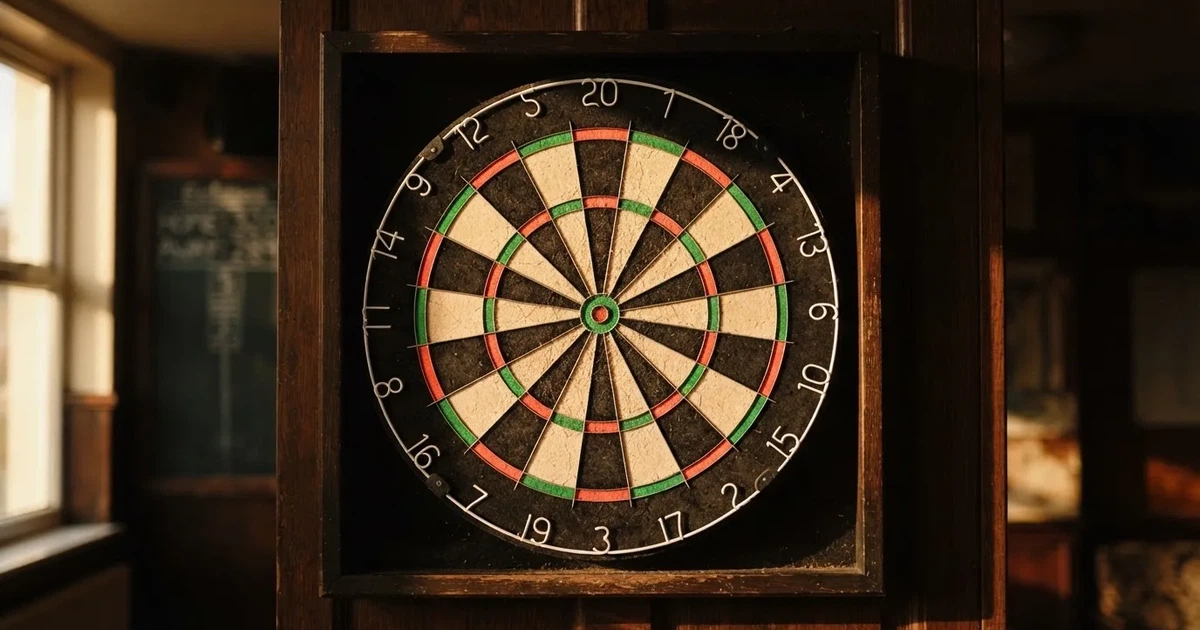
A standard dartboard carries twenty numbered segments, each split into single, double and treble areas, with a 50-point bullseye at its centre, and almost every darts market a British bookmaker lists rests on a player throwing three of those darts. Online darts betting 2026 works the same way it has for years: pick an outcome, stake money on it, and wait for the leg or match to settle. What changes year to year is the margin the bookmaker builds into the odds, the timing of the live market, and the conditions attached to the offers a new account can claim. This page is written for the reader who wants those three layers separated, with the price in front and the cost behind it, so the comparison is the reader’s, not the marketing’s.
Data current as of 27 October 2026, cross-checked against the Gambling Commission’s public register of remote operating licences for Great Britain.
The moving price of a dart: live darts betting and cash out
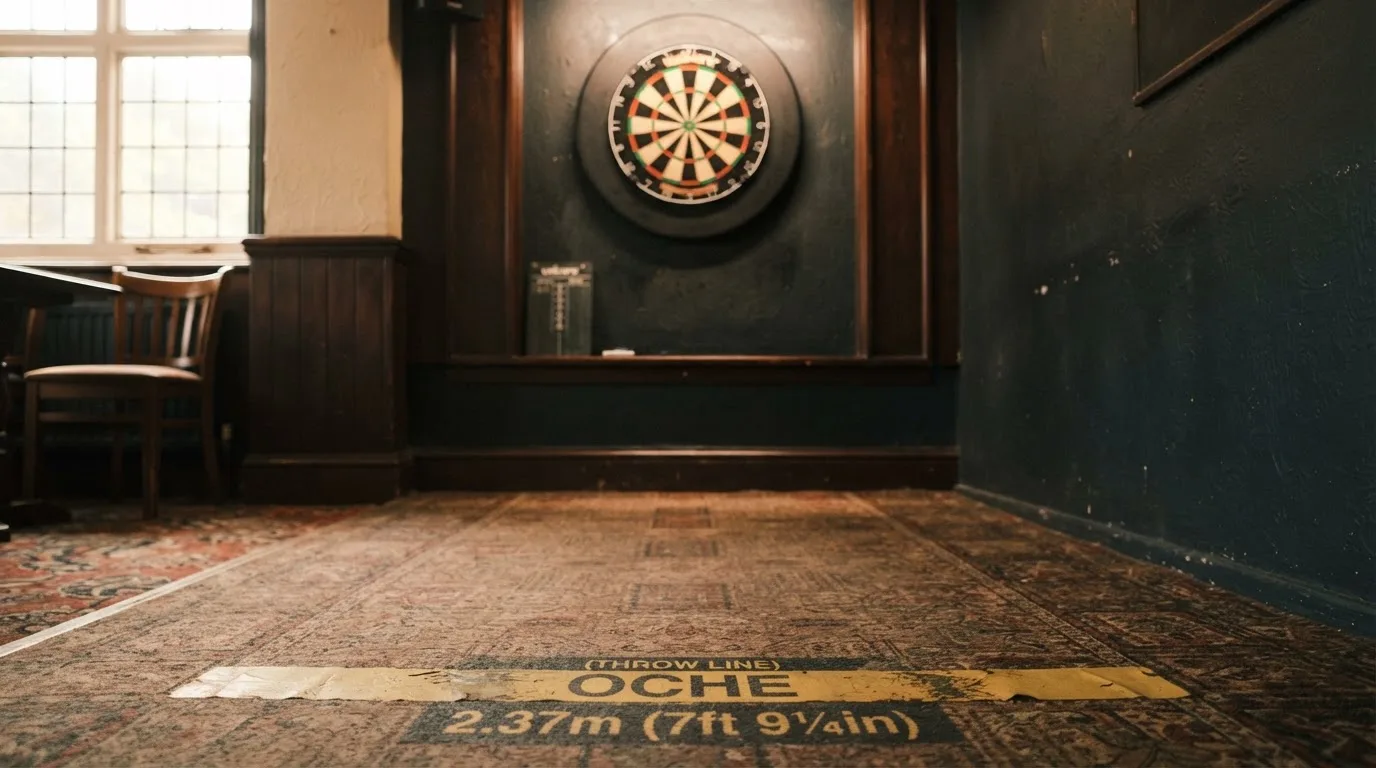
Live darts betting is the in-play product: a market that opens once the player walks to the oche and a market that gets priced again after every three-dart visit. A leg in professional darts lasts long enough to react to — the minimum possible leg is nine darts, and a deciding leg can stretch further — which is why the in-play book on a televised set behaves the way it does. Momentum matters, but the price does the talking.
Three shapes show up on most licensed in-play platforms. The match winner market ticks through every visit, often with a one- or two-tick delay while the operator’s traders update the price. The handicap market lets a bettor back a player to lose by fewer sets than the line, or to win by more, which becomes useful when one player breaks throw early and the favourite’s price collapses. The next-leg or next-set market is the fastest-moving of the three, settling within minutes. A bookmaker’s cash-out function is the lever that ties those three together: a stake on the match winner can be closed before the match ends, and the price the bookmaker offers is its own live quote, not the one a back-of-the-envelope calculation would produce. The cash-out price the reader sees is the bookmaker’s price, with its own margin, on top of the margin of the original bet.
The mechanics of an in-play darts book sit between the operator’s own risk team and its feed from the venue. When a player breaks throw, the favourite’s price shortens; when the trailing player holds, the price drifts back out. Two licensed operators’ apps, among the ten reviewed below, are built around exactly that pattern: Betfair’s in-play product runs alongside its exchange, where the price is set by other customers rather than a trader, and 888sport publishes a live bet feed with boosted odds on selected in-play events. Sky Bet and Betfair both support cash out across the darts product; the condition a reader should check before staking is whether cash out is offered on the specific market they have backed, because a bookmaker can suspend cash out on a market at any point during a leg, and the offer is then no longer there.
The cost the reader pays for the live product is the cost of taking a tighter price. In-play margins on televised darts are wider than the pre-match margin on the same fixture, sometimes by two or three percentage points, because the bookmaker is pricing a smaller information set with the same operational cost. That is the trade: the speed of being able to act on what a set is showing, paid for in a price that has more house edge baked in. A reader who wants the live experience gets the live price. A reader who wants the cheapest price waits for the pre-match market and the small selection advantage that comes with knowing the walk-on music has already played.
Reading tips without following tips: darts predictions, model and bankroll
The phrase “darts betting tips” turns up everywhere, and it is worth separating what a tip is doing from what it is not. A tip is somebody’s stated view on an outcome: a player to win, a handicap, an over or under on the highest checkout. It is not a probability. A tipster who went 60/40 on a coin flip would look authoritative, because nobody checks what would have happened on the other side. That is the first thing the reader should hold when looking at a predictions page: the article can describe how a tip is constructed, and the article can describe what a tip costs the reader who follows it. It cannot tell the reader which player wins tonight, because nobody can, and a tip that promises otherwise is selling certainty that does not exist.
The strategy side is the part that does carry useful information, and the useful part is not “who wins”. It is the bankroll. A bankroll is the stake the reader has set aside for darts specifically — a sub-budget inside the wider gambling budget — and the rules around it decide whether the reader finishes the season having made a decision that cost less than it was worth. Three rules recur in serious darts writing. One: stake a fixed percentage of the bankroll on each bet, often between one and three per cent, so a losing run does not wipe the budget and a winning run does not tempt a stake the bankroll cannot support. Two: keep a record of every bet placed, the closing odds, the stake and the result, so the reader can see their own closing-line value rather than guessing at it. Three: do not chase. A loss followed by a bigger stake to “win it back” is the most expensive rule in the book, because it converts a single bad beat into a sequence of them.
The “predictions” half of the market is where the most advertised product lives: a tipster with a strike rate, an accumulator sold as a “bet of the day”, a Telegram channel selling picks. None of these are illegal; most are licensed to advertise in Great Britain under the CAP Code. The reader’s defence is the same in every case. Read the strike rate in the context of the sample size — a 70% strike rate over twenty bets is not the same as the same rate over two thousand. Read the average odds alongside the strike rate, because a 70% strike rate at 1.20 prices is a losing strategy. And read whether the tipster publishes a record independently, because an unverified record is a record the tipster can edit.
Darts is a sport where model-building is unusually accessible, and that is its own warning. Three-dart averages, checkout percentages and first-nine-dart averages are published after every televised match, and a spreadsheet of them is a real tool. The same data set is also the basis for every “best bets today” page on the open web, and the bookmakers price the same data set faster than any individual reader can. The edge, where one exists, is small, and the cost of the subscription that gives a reader a faster feed is a real line item against the bankroll. Honest framing: there is no system that beats a margin-bearing bookmaker over a large sample, and a reader who has a system in mind should be able to state the size of the sample it has been tested on before the bankroll is spent on it.
What a bet on darts actually settles on: bet types and odds
The match winner is the simplest market and the one every bookmaker prices. Two players, two outcomes (or three if a draw is possible at a given stage), the price of each expressed in decimal form on a British app and in fractional form in older bookmaker windows. The payout is stake multiplied by the odds; the profit is stake multiplied by the odds minus one. A £10 stake at 2.50 returns £25, of which £15 is profit; a £10 stake at 1.50 returns £15, of which £5 is profit. That is the whole of the calculation, and it is the same calculation the reader is doing whenever they read an article that describes an odds movement as “shortening” or “drifting”.
The outright winner market sits at the other end of the timescale. An outright is a bet on the winner of a tournament, priced weeks in advance, with the field broken into individual players and the bookmaker’s margin built into the difference between the back sum and 100%. A field of 128 players priced at any meaningful margin will have most of them at large prices, with the favourite at the bottom and the long tail at the top. The 2026 PDC World Darts Championship ran from 11 December 2025 to 3 January 2026 at Alexandra Palace with 128 players and a £5,000,000 prize fund, of which £1,000,000 went to the winner, Luke Littler, who beat Gian van Veen 7–1 in the final. The structure of the rounds — first to three sets in rounds one and two, first to four in rounds three and four, first to five at the quarter-finals, first to six at the semi-finals, first to seven in the final — is what makes the outright interesting to back before the event, because the first-round price of a finalist is far longer than the price of the same player once the bracket has narrowed.
Handicap betting in darts is the same as in any sport: a line is set, and the bet is settled against that line rather than the outright result. In a darts context, a -1.5 set handicap on the favourite means the favourite must win by two sets or more; a +1.5 line on the underdog means the bet wins if the underdog either takes the match or loses by a single set. The price on each side reflects the bookmaker’s view of how likely the line is to be covered, with the same margin baked in. A correct-score market — 4–2, 5–3, 7–4 — is the most granular of the pre-match set markets and the one where the margin is widest, because the number of outcomes multiplies and the bookmaker’s traders have less data per outcome. The wider the margin, the more the price is doing the bookmaker’s job for it.
Each-way betting is the bridge between the pre-match outright and the match-by-match market. An each-way bet is two bets of equal stake: one on the player to win, one on the player to place, with the place terms set by the bookmaker — a third of the field at a quarter of the win odds is common in darts, although operators vary. The stake on an each-way bet is therefore double what the reader is paying for a single win bet, and the return is two separate calculations. The place half wins if the player reaches the place threshold; the win half wins only if the player wins the event. The price-boost and enhanced-odds product the British bookmakers run at televised events is built on the same mechanism: a boosted price on a player to win or to reach the final, available for a window of minutes, and a stake that does not always return with the winnings.
Combination bets — the accumulator, or “acca” — multiply the prices of two or more legs into a single price. A double on two selections at 1.80 and 2.10 settles at 3.78, and the £10 stake returns £37.80 if both legs win, of which £27.80 is profit. A treble at 1.80, 2.10 and 1.50 settles at 5.67, and the same stake returns £56.70. Each leg of the accumulator must win for the bet to settle as a winner, and the margin is compounded on each leg. A bookmaker’s acca insurance — usually a free bet if one leg of a four-fold or longer lets the bet down — is a partial answer to the compounded margin, but only a partial one, because the free bet comes with its own conditions. The acca-finder or bet-builder product, offered by Sky Bet, Betfair, 888sport and others, lets the reader combine markets from a single event into one bet, with a price the bookmaker builds leg by leg. A bet builder on the next-leg winner, the highest checkout and the number of 180s in a set is one priced bet of three legs, all on the same match, and the price reflects the bookmaker’s view of how the legs correlate.
Where darts is played and what that does to the market
Darts is unusual among televised British sports in that the calendar runs almost year-round, and the bookmaker’s outright market on the PDC Premier League, the World Grand Prix, the Grand Slam and the World Championship runs on top of week-in, week-out Players Championship events. The PDC, alongside the World Darts Federation, is the highest governing body in the sport, and the World Championship is the headline event of the season, played over the Christmas and New Year period. The Premier League is the weekly travelling event, with eight players contesting knockout nights across European venues, and the Grand Slam of Darts is the autumn majors event that brings together PDC and BDO players in a format that is one of the more open to upsets. For the reader, the calendar matters because the bookmaker’s outright market on the World Championship opens months before the event, and the price shortens with every televised event in between, as form reads off the screen.
Tournament format drives the market structure. A first-to-three-sets format in round one means a wider distribution of outcomes than a first-to-five, and the outright book on a tournament with a 128-player first round has a longer tail of possible finalists than a 32-player event. Round-by-round prices on a televised event are built around the format, with the per-leg price on a long-format match narrower than the per-leg price on a short-format one, because the bookmaker has more data to lean on. The 2026 World Championship’s 128-player field is the largest the tournament has run, up from 96 the year before, and that expansion has a real effect on the outright book: more players, a longer first round, and a wider range of seeded prices. The reader who bets on a finalist before the event is pricing in the first round, not just the final.
The British coverage on Sky Sports and ITV carries the headline events; PDC.tv carries the live feed of the Players Championship floor events that are not on free-to-air British television. The licensed bookmakers’ in-play product sits on top of the same live feed, and the bookmaker’s latency is what the reader is paying the live price for. Where the calendar is thin — the late summer gap between the World Matchplay and the Grand Slam — the outright market on the next major is the only product the bookmaker is pricing in earnest, and the reader is paying for the depth of the field. Where the calendar is dense — the World Championship window from mid-December to early January — the in-play and pre-match markets are layered on top of each other, and the comparison between the two is the comparison between the live price and the closing price.
The 2026 World Championship’s final between Luke Littler and Gian van Veen is the reference point for the year, both as the most-watched darts event of the season and as a result the bookmakers priced live. Littler’s 7–1 win was the price, in the end, of a market that had him favourite throughout, and the prize-fund split of £1,000,000 to the winner and £5,000,000 in total is the size of the event the bookmakers are pricing. The next World Championship is the next major on the calendar, and the outright market on it is the place the reader who backs early is pricing in.
What the bookmaker’s margin is, and what an example price looks like
A bookmaker’s margin is the cut the operator takes on every market it prices, built into the difference between the back sum of all outcomes and 100%. Take an illustrative two-way market priced at 1.90 and 1.90. The payout share of that market is one divided by the sum of one over each price: 1 ÷ (1/1.90 + 1/1.90) = 1 ÷ 1.0526 = 0.95, or 95%. The margin is 1 minus that figure: 5%. The reader’s return on a winning bet at 1.90 is still stake multiplied by 1.90, but the average bet on that market pays 95p back to the customer and 5p to the bookmaker, and the difference compounds across every bet the reader places on the same market. The 5% margin is the cost of the bookmaker’s product — its traders, its risk team, its platform, its compliance and its marketing — and the price a reader pays is the price of those costs plus the operator’s margin.
The same calculation works on a three-way market. A Premier League Darts match priced at 1.80 on player A, 3.40 on player B and 5.50 on player C carries a payout share of 1 ÷ (1/1.80 + 1/3.40 + 1/5.50) = 1 ÷ (0.5556 + 0.2941 + 0.1818) = 1 ÷ 1.0315 = 0.9694, or 96.94%, and a margin of 3.06%. A wider margin on a three-way market is a function of the extra outcome, not a sign of a worse price; a tighter margin on a two-way market is a function of the bookmaker’s confidence in the prices, not a sign of a better product. The reader who can recognise a margin in a price can compare two bookmakers’ offers on the same fixture: the lower the margin, the better the price on average, and the difference is real money across a season’s betting.
The illustrative two-way market at 1.90 / 1.90 is a clean example, and 1.90 / 1.90 is a realistic shape for a televised darts match where the bookmaker sees the players as near-even. The 5% margin it carries is a band, not a single number: a darts match on the PDC Premier League, priced in-play, can run at 6% to 8% margin because the bookmaker is pricing with less data; a pre-match outright on the World Championship winner can run at 25% to 35% margin because the bookmaker is pricing 128 players with a long tail of longshots. The reader who wants the cheapest price bets pre-match on a head-to-head market, not on the outright, and accepts that the cheapest market is the smallest field. The reader who wants the biggest payout bets on the outright, and accepts that the biggest payout is the most expensive bet on the card.
Margin compounds in an accumulator. A two-leg acca at 1.90 and 1.90 settles at 3.61, but the payout share of the same two prices combined is 1 ÷ (1/3.61 + sum of the opposing outcomes), and the more legs added, the more the margin compounds. A four-leg acca at 1.90 / 1.90 / 1.90 / 1.90 settles at 13.03, but the margin is closer to 18% than to 5%, because each leg adds a layer. The acca-finder product the bookmaker advertises is built on this mechanism: the price the bookmaker is willing to show on the screen is the price after the compounded margin, and the bookmaker’s risk team is happier with a small number of acca bets at compounded margin than with a large number of singles at 5%. A reader who bets singles rather than accumulators is paying a lower margin on the same fixture.
The landscape of UK-licensed online darts betting
The British online darts market in 2026 is a market of around ten licensed brands at scale, plus a long tail of smaller operators that the Gambling Commission’s public register records as licensed for remote general betting standard (real events). The reader’s question is not “which is the only licensed brand” — there is no such brand — but which of the licensed brands offers the product the reader wants, at the price the reader is willing to pay, under the conditions the reader is willing to accept. A licence is the floor; a comparison is the work above it.
The licensing frame is the Gambling Act 2005, enforced by the Gambling Commission. The Commission’s public register is searchable by business name, trading name, domain or account number, and a brand listed against a remote operating licence for general betting standard is a brand the reader can verify in two minutes. Since the Gambling (Licensing and Advertising) Act 2014, an operator whose remote facilities are used in Great Britain needs a Commission licence wherever it is based; a Curaçao, Maltese or Gibraltar licence is not a substitute. Verification of name, address and date of birth is required before the first deposit, including with a free bet or bonus, and every licensed remote operator is part of GAMSTOP, the national multi-operator online self-exclusion scheme that became a mandatory licence condition in March 2020.
The minimum age is 18. Credit cards are banned for gambling in Great Britain since 14 April 2020, including credit-card-funded payments through an e-wallet; debit cards and bank-based payments are not covered by that ban. The player pays no tax on betting winnings in Great Britain; the operator pays General Betting Duty on its gross profits. From 1 April 2027 a new remote betting rate of 25% applies within that duty, while remote bets on UK horse racing, in-person bets and pool betting stay at 15%, but until that date the remote rate is 15% and the change is the operator’s to absorb or pass on. The reader does not pay the duty, and the reader should not be told they do.
The licensed market the reader sees is split between full-service sportsbooks, racing-led brands, and specialist products. Sky Bet, Betfair, 888sport, 10bet, Coral, Unibet, bet365, Paddy Power and Ladbrokes are the generalist sportsbooks, with broad pre-match, in-play, acca and bet-builder products across the darts calendar. Fafabet and DragonBet are mid-sized operators with regional UK presence and a racing-led product. Star Sports runs an in-house trader-led model where the customer can speak to a trader directly to open an account or place a bet; it is the same product shape as a City bookmaker from the pre-online era. Lottoland runs sports betting alongside its lottery and casino products. Kalooki Sportsbook, Midnite and Spreadex sit on the smaller end of the licensed set, with narrower sports coverage and a sharper focus on the markets they do cover. A licence does not equal a product; the comparison the reader does is over the product, with the licence as the precondition.
What the licence actually checks
A Gambling Commission remote licence is not a quality mark. It is a permission to operate, granted under the Gambling Act 2005 and conditional on continued compliance with the Licence Conditions and Codes of Practice (LCCP) and the Remote Technical Standards (RTS). The reader who wants to check a brand’s licence goes to the Commission’s public register and searches by the trading name, the licensee name or the domain. A match is a record that the brand holds a current licence; a non-match is a record that the brand does not. The reader who bets at a brand not on the register gives up the protections that come with the licence: no GAMSTOP coverage, no Commission complaints route, no approved dispute-resolution body, and no British consumer redress if funds are withheld. That is the cost of the unlicensed product, and the cost is paid in the worst possible moment.
The reader who wants the cheapest price should look at a brand they are already licensed with: the price is one of many, the cost of a new account is not. The reader who is comparing two or three brands should look at the licence register first, the product second, the offer third, and the price last — the order the regulator would name, even if the marketing puts it in the opposite direction.
Where to find help if darts betting stops being a choice
The British responsible-gambling frame sits on top of the licensing frame, and the help lines are funded by a combination of the voluntary levy and GambleAware. GamCare runs the National Gambling Helpline and a network of one-to-one and group treatment across England, Scotland and Wales; the NHS runs specialist gambling clinics in London, Leeds, Manchester, Southampton and a number of satellite sites; Gamblers Anonymous runs peer-support meetings in most British cities. GambleAware is the public-information body funded by the voluntary levy. GAMSTOP is the multi-operator self-exclusion register, free to the customer, with exclusion periods of six months, one year, five years, or five years with auto-renewal, and a seven-year tail after the minimum period unless the customer asks to be removed.
A financial vulnerability check is a public-record check the operator runs when a customer’s deposits minus withdrawals exceed £150 in a rolling 30 days. The check looks at public records — bankruptcy, county court judgments — and is not an income check or a credit reference check. The wider “affordability check” the press refers to is a separate mechanism, announced in a staged plan with no start date, and the reader who sees the words “affordability check” applied to a current deposit should treat the wording as marketing. The £150 figure is the trigger for the vulnerability check that is in force; the wider regime is the regime that is not.
A licensed operator offers deposit limits the customer can set on a fixed time frame — daily, weekly, monthly — and the offer is required by the LCCP. Time-outs, where the account is closed for a chosen period from 24 hours to six weeks, and self-exclusion, where the exclusion is at least six months, are also required products. The marketing around these tools is sometimes louder than the tools themselves, and the reader who wants to set a limit should set it in the account settings, not wait for the marketing to remind them. The help the help lines give is free, confidential and outside the licensed market, and the reader who wants it should reach for it before the next bet, not after.
The reader who has self-excluded through GAMSTOP and is looking for a way back into betting is the reader the unlicensed market is built for. The licensed market’s door is closed for the period the customer has asked for; the unlicensed door is open. The licensed door is the door that has a lock and a key; the unlicensed door does not. The reader who values the lock and the key chooses the licensed door, even when the lock is the harder one to live with.
What the offers really cost: bonuses, free bets and the bonus cap
A welcome offer is the licensed bookmaker’s standard recruitment product: a free bet, a deposit match, an enhanced price, an acca insurance. None of these are gifts, and the cost of each is stated in its own terms. A free bet whose stake is not paid back with the winnings is a free bet of value equal to the stake multiplied by the price minus one, divided by the price — the formula the bookmaker does not put in the headline. A £10 free bet at 2.00 is worth £10 of profit if it wins; a £10 free bet at 5.00 is worth £40 of profit if it wins; the headline “£10 free bet” is a true description of the stake, and a true description of the value only at the price the bookmaker assumes. A reader who takes a free bet at long odds is taking a product the bookmaker priced at a shorter one.
The bonus cap that took effect on 19 January 2026 sets a 10x ceiling on wagering requirements: a £10 bonus at 50x turnover would have required £500 of qualifying bets, and under the cap no bonus can require more than £100 of qualifying bets. Mixed-product promotions — an offer that requires gambling on two or more product types, for example a free spins offer that requires a sports bet — are banned under the same rules. The cap is the single largest change the licensed British market has seen in the bonus product in a decade, and the reader who compares offers across bookmakers is now comparing within a tighter band. The free bet whose terms put it above the cap is no longer on the menu; the offer that has crept closest to the cap is the offer to read most carefully.
The Coral welcome offer is one of the clearest examples on the licensed market. A deposit and a sports bet of £20 or more at minimum odds of 2.0 (1/1) returns £40 in free bets within seven days, with the free bets expiring seven days after issue. The £40 headline is the headline; the £20 qualifying stake is the cost the reader pays for the offer, and the seven-day expiry is the window in which the £40 must be used. A reader who does not place a bet within seven days loses the offer; a reader who places the qualifying bet at odds shorter than 2.0 does not qualify. The Sky Bet free bet expires 30 days after crediting, can be used only on single or each-way markets and not on multiples, excludes virtuals, is non-withdrawable, and does not return the stake with the winnings. The 30-day window is the time the reader has to clear the offer; the singles-only rule is the product shape the offer is built for; the non-returned stake is the cost the headline does not name.
The acca insurance product the licensed bookmakers run — usually a free bet if one leg of a four-fold or longer loses — is a partial answer to the compounded margin of an accumulator, but it is a partial one. A free bet refund, in product, is a free bet whose value is calculated the same way as the free bet above. The “refund” is a stake the bookmaker gives back as a free bet, not as cash, and the value of the free bet is the value of the original stake, calculated at the price the bookmaker assumes. A reader who reads acca insurance as “money back if one leg loses” is reading the product as cash, and the product is a free bet, not cash. The 10x cap applies to the wagering requirement of the refund; whether it applies to a free bet with no wagering condition is not clear from the published rules.
The enhanced-odds product the bookmakers run at televised darts — a boosted price on a player to win or to reach the final, available for a window of minutes — is the offer with the most variable value. The headline is a price the bookmaker has not held open to the wider market; the stake limit is often a low one; the enhanced price is usually paid as a free bet rather than as cash. A reader who backs the boosted price and wins receives winnings at the enhanced price, in the form the bookmaker’s terms describe. The “boost” is a real number; the form of the payout is the cost the reader pays for taking it.
The product the offers are built on, then, is a price the bookmaker has priced lower than the market price, in a form that costs the reader more than the cash headline would suggest. A welcome offer is recruitment spend the bookmaker prices into its margin; a free bet is a stake the bookmaker gives back at its own price; an enhanced price is a market price the bookmaker holds for a window. The reader who reads the offer’s small print, who knows the bonus cap, who knows the free bet is not a stake returned, who knows the seven-day and 30-day windows, is the reader who takes the offer at the cost the offer is priced at. A reader who reads only the headline is paying a price the offer has not named.
The ten licensed bookmakers the comparison rests on
The ten brands below are the brands the Gambling Commission’s public register records as licensed to take remote general bets in Great Britain on real sporting events. Each is named, with the licence number, the licence holder, and the part of the product the comparison turns on. The order is the order the comparison is written in, not a ranking.
10bet — broad sportsbook, racing- and football-led
10bet is licensed by the Gambling Commission under account 43173, with the licence held by Blue Star Planet Limited, and the Commission’s register records the brand as a holder of a remote general betting standard (real events) licence. The product is a broad sportsbook whose app covers football, tennis and horse racing, with Cash out, Bet Builder and Live Streaming as the headline product features. 10bet’s darts offering is integrated into its wider sportsbook, with its value proposition largely determined by the competitiveness of the pricing on televised Premier League fixtures. A reader who prefers a brand that bundles acca products with extensive racing and football markets will find 10bet well-suited to their needs; a reader seeking a brand that treats darts as its primary showcase might choose a more specialized bookmaker.
Sky Bet — the singles-and-each-way free bet
Sky Bet is licensed under account 67370, with the licence held by SBG Sports Limited. The product is a full sportsbook, with a free bet whose terms are the most clearly stated in the licensed market: free bets expire 30 days after crediting, can be used only on single or each-way markets and not on multiples, exclude virtuals, are non-withdrawable and do not return the stake with winnings. The Sky Bet free bet is the offer the comparison turns on, with terms that are notably transparent regarding the exclusion of stakes from winnings. A reader who prioritizes clarity in promotional terms, and who sticks to singles and each-way markets, will find Sky Bet’s offer straightforward; a reader who is accustomed to placing multiples may prefer an operator that accommodates those markets within their free bet terms.
DragonBet — Welsh-led product with bet builder
DragonBet is licensed under account 64908, with the licence held by DragonBet Ltd. The product is built around Welsh football and rugby, with racing, American football, in-play betting and bet builder markets as the broader product. The DragonBet app is published under the brand’s own name, and the darts product is part of the broader in-play book. A reader who backs Welsh football and rugby and wants a brand that runs those markets as the headline product will find DragonBet fits; a reader whose interest is the darts calendar specifically will use DragonBet for its in-play and bet builder products, and the licence will be the reason the brand is in the comparison at all.
888sport — broad product with boosted odds and live feed
888sport is licensed under account 39028, with the licence held by 888 UK Limited. The product is a full sportsbook with pre-match and in-play betting, Cash Out, Bet Builder, racing streams, BetFinder form tools, a live bet feed and daily boosted odds. The 888sport darts book is part of the broader sportsbook, and the live bet feed is the product feature the comparison turns on, because the feed is the price the bookmaker is willing to show the reader in real time. A reader who wants a broad product with racing streams, boosted odds and a live feed will find 888sport in the middle of the licensed market; a reader who prefers the simplicity of a specialized, trader-led darts book may seek a more focused alternative.
Fafabet — Best Odds Guaranteed on UK and Irish racing
Fafabet is licensed under account 57385, with the licence held by Taichi Tech Limited. The product is a sportsbook with Best Odds Guaranteed on UK and Irish horse racing win and each-way bets from 9am on race days: if the starting price is bigger than the original price, the bigger odds are paid. The BOG product is a racing-specific feature that highlights the brand’s focus. A reader who combines racing and darts will find Fafabet well-positioned in the licensed market; those focused exclusively on darts pricing might explore other specialist bookmakers.
Star Sports — the trader-led model
Star Sports is licensed under account 9177, with the licence held by Star Racing Limited. The product is built around a model in which the customer can speak to a trader directly on 08000 521 321 to open an account, place bets or ask customer queries, with the same support available at the brand’s customer-service address. The trader-led model is the defining product feature here, distinguishing the brand from the automated, feed-driven approach of its competitors. A reader who values personal service and trader-set prices will find Star Sports unique in the licensed market; a reader who prioritises a high-frequency, app-based interface for casual in-play betting will find the brand’s traditional model less suited to their needs.
Coral — the £40 in free bets offer
Coral is licensed under account 54743, with the licence held by LC International Limited, and the Commission’s register records the brand as a holder of both a remote general betting standard (real events) licence and a remote betting intermediary licence, which is the licence shape of a brand whose exchange sits alongside the sportsbook. The Coral welcome offer is “Get £40 in Free Bets when you bet £20”: a deposit and a sports bet of £20 or more at minimum odds of 2.0, with £40 in free bets issued within seven days and expiring seven days after issue, for new GB customers who opt in. The £40 in free bets is the central offer here, with the cost defined by the £20 qualifying stake, the 2.0 minimum odds, and the seven-day window. A reader who can comfortably place a qualifying bet under these conditions will find the offer clear-cut; a reader who prefers a more lenient window or lower minimum odds may find other bookmakers more accommodating.
Betfair — the exchange plus the sportsbook
Betfair is licensed under account 39439, with the licence held by PPB Counterparty Services Limited. The product is a sportsbook alongside a betting exchange, with in-play betting, Bet Builder, free live streaming of events such as UK and Irish horse racing and football within the app, and a 90 Minute Payout market. The exchange is a key differentiator, as it remains one of the few places in the licensed British market where a customer can lay a player to lose. A reader who wants both the sportsbook product and the exchange interface will find Betfair offers a comprehensive solution; for the punter who is exclusively focused on straightforward sportsbook betting, the platform’s added complexity might be unnecessary.
DAZN Bet — the deposit-method-defined product
DAZN Bet is licensed under account 48756, with the licence held by DZBT Limited. The product is a sportsbook whose deposit methods are defined by the app: deposits start at £5 by debit card, Apple Pay, Paysafecard, Trustly and Skrill, and at £20 by PayPal, with no processing fees. The deposit-method ceiling is the feature that anchors the comparison, as a £5 minimum by debit card is a clear entry point for a small-stake reader. A reader who bets at the £5 to £20 level will find DAZN Bet accessible; for those who bet larger, a bookmaker with a higher maximum deposit threshold might be more appropriate.
Kalooki Sportsbook — the GAMSTOP-registered, smaller-set product
Kalooki Sportsbook is licensed under account 57730, with the licence held by Kalooki Sportsbook Limited, and is a GAMSTOP member. The product is a sportsbook run by a smaller operator, and the darts product is part of the broader book. The Kalooki comparison focuses on the value proposition of a smaller licensed brand against the industry-standard full-service providers. A reader who wants a smaller, GAMSTOP-registered brand will find Kalooki a suitable choice; a reader who requires the most expansive sportsbook features might prefer one of the larger, mainstream operators.
The landscape at a glance
| Brand | Gambling Commission remote licence | What the operator’s own terms state on the darts book |
|---|---|---|
| 10bet | 043173-R-322899-023 (Blue Star Planet Limited) | Broad sportsbook with Cash out, Bet Builder and Live Streaming across football, tennis and racing |
| Sky Bet | 067370-R-341330-005 (SBG Sports Limited) | Free bets expire in 30 days, singles and each-way only, stake not returned with winnings |
| DragonBet | 064908-R-339041-003 (DragonBet Ltd) | Welsh football and rugby as headline product, with racing, American football, in-play and bet builder |
| 888sport | 039028-R-319297-014 (888 UK Limited) | Pre-match and in-play, Cash Out, Bet Builder, racing streams, BetFinder form, live feed, daily boosts |
| Fafabet | 057385-R-333191-006 (Taichi Tech Limited) | Best Odds Guaranteed on UK and Irish racing from 9am on race days |
| Star Sports | 009177-R-104555-019 (Star Racing Limited) | Trader-led model; account opening and bet placement by phone on 08000 521 321 |
| Coral | 054743-R-330863-014 (LC International Limited) | Welcome offer: £40 in free bets for a £20 qualifying bet at minimum odds 2.0, seven-day window |
| Betfair | 039439-R-319330-013 (PPB Counterparty Services Limited) | Sportsbook plus exchange, in-play, Bet Builder, free live streaming, 90 Minute Payout market |
| DAZN Bet | 048756-R-327274-019 (DZBT Limited) | Deposits from £5 by debit card, Apple Pay, Paysafecard, Trustly and Skrill, and from £20 by PayPal |
| Kalooki Sportsbook | 057730-R-333396-005 (Kalooki Sportsbook Limited) | Smaller-licensed sportsbook; GAMSTOP-registered product |
The licences are the floor, not the ceiling. Two brands in the table offer the same headline product — a broad sportsbook with in-play and bet builder — and the comparison between them is the comparison of the price each shows on the same televised darts fixture. The price the bookmaker shows is the only number the reader can act on, and the price is a function of the margin the bookmaker builds into the product. The reader who can read the margin, can see the cost.
Frequently asked questions about online darts betting
How do you bet on darts?
A darts bet is a stake on the outcome of a leg, a set or a match. The match-winner market is the simplest: pick a player, stake a sum, take the price the bookmaker is showing. The book settles when the match ends. The pre-match market closes shortly before the first dart; the in-play market reopens once the match starts, and the price moves with every visit. The reader who wants the simplest experience backs a player pre-match and waits for the match to settle; the reader who wants the live experience backs in-play and watches the price move. The bonus cap and the bonus terms are part of the welcome offer, not part of the bet, and they sit on top of the price.
What is darts betting as a product?
Darts betting is the licensed bookmaker’s product on the professional darts calendar: pre-match, in-play, outright, handicap, correct-score, each-way and bet-builder markets on televised and untelevised events. The licensed British market covers the PDC World Championship, the Premier League, the Grand Slam, the World Grand Prix and the Players Championship floor events. The price a bookmaker shows on each market is the price after the bookmaker’s margin, and the margin is the cost the reader pays for the product. The bookmaker’s terms describe the markets the brand offers; the Gambling Commission’s public register describes the brands that are licensed to offer them.
How does darts handicap betting work?
A handicap bet is settled against a line the bookmaker sets, not against the outright result. A -1.5 set handicap on the favourite means the favourite must win by two sets or more; a +1.5 line on the underdog means the bet wins if the underdog either takes the match or loses by a single set. The bookmaker prices each side of the line, and the price reflects the bookmaker’s view of how likely the line is to be covered. The wider the margin on the handicap market, the more the price is doing the bookmaker’s job. A correct-score market is the most granular of the set markets and the one with the widest margin, because the number of outcomes multiplies and the bookmaker has less data per outcome.
How can a reader check a bookmaker holds a Gambling Commission licence?
The Gambling Commission runs a public register searchable by business name, trading name, domain or account number. The reader who wants to check a brand’s licence goes to the register, types in the brand or the domain, and reads the licence record. A match is a record that the brand holds a current licence; a non-match is a record that the brand does not. The brand listed in the register may be a trading name of a different licensee, and the register shows the licensee and the licence categories against the trading name. The minimum age for betting with a licensed brand is 18, and verification of name, address and date of birth is required before the first deposit, including with a free bet or bonus.
How is the return on a bet worked out from the stake and the odds?
The return on a single bet is the stake multiplied by the decimal odds. A £10 stake at 2.50 returns £25, of which £15 is profit and £10 is the stake returned. A £10 stake at 1.50 returns £15, of which £5 is profit. The profit alone is the stake multiplied by the odds minus one: £10 × (2.50 – 1) = £15. A combination bet’s odds are the prices of the legs multiplied together, and the return is the stake multiplied by the combined odds; both legs of an accumulator must win for the bet to settle. The bookmaker’s margin sits inside the odds, and the return is the price after the margin, not the price before.
What is the bookmaker’s margin, and how can it be seen in the odds?
The margin is the cut the bookmaker takes on a market, built into the difference between the back sum of all outcomes and 100%. An illustrative two-way market priced at 1.90 and 1.90 carries a payout share of 95% and a margin of 5%, calculated as 1 ÷ (1/1.90 + 1/1.90) = 0.95. A wider margin on a televised darts market — 6% to 8% in-play on a Premier League fixture, 25% to 35% on a pre-match outright on the World Championship — is a function of the smaller information set and the longer field. The reader who can recognise a margin can compare two bookmakers’ prices on the same fixture and pick the lower one, and the lower the margin, the better the price on average.
Tennis, darts & cue sports – Cricket betting
Content created by the «Cricket betting» team
