
Hurling Betting Tips 2026: How to Read the Odds You're Given
 Available in US
Last checked: 27 October 2026 against the Gambling Commission’s public register.

Hurling is one of the oldest field games in the world and one of the smallest major betting markets in Britain. The 2026 All-Ireland Senior Hurling Championship, won by Limerick over Galway in the Croke Park final on 19 July 2026, runs across a five-month season: provincial round-robin groups in Leinster and Munster, then the All-Ireland series from the quarter-finals. For a reader who wants to bet on it, the question is not which team wins, it is what the bookmaker’s price actually contains and what it costs to find out. That is what this page is for.
How Live Hurling Markets Settle — and How Cash Out Changes the Price
Hurling moves in bursts. A goal is worth three points and a point over the crossbar is worth one, so a single strike of the sliotar can swing the match-state by three in an instant. Live betting on GAA hurling catches that swing as it happens, and the way the bookmaker quotes prices after the whistle has gone is the difference between a market that tracks the pitch and one that pretends to.

In-play on Gaelic games is offered by every major GB-licensed operator. The market you see depends on the operator’s own trading desk, but the shape is consistent: match result (including the draw after extra time, depending on the rules the operator states), next point scorer, total points in a half or in the match, handicap on the winning margin, and team to score next. Each is re-priced after every score. The longer the bookmaker waits between prices, the more the displayed price lags the match — a slow screen with a fast game is not a feature, it is a margin widening in real time.
The settling rule matters as much as the price. One GB bookmaker’s Gaelic games rules state that bets settle on the official result at the end of normal time including injury time; extra time does not count unless the market explicitly says so. A punter who reads “match result” and assumes extra time is included can be paid out on the wrong number. The rule is the operator’s; check it on the betting slip before staking.
Cash Out is the second live-betting mechanism every punter meets. It is the bookmaker offering to buy your bet back before the final whistle, at a number it has just computed from the current score, the time left and its own view of the probabilities. That number is not a favour, it is a quote, and it almost always sits below what a fair re-pricing of your bet would return. The operator offers it because most punters take it: a £10 free bet cashed out at a tidy profit feels like a win, even when the underlying bet would have paid more if left to settle. The price on offer moves with the score. A one-point gap late in the game prices out one side heavily, and the Cash Out value reflects that.
Two Cash Out mechanics are worth distinguishing. Full Cash Out closes the bet at the offered figure. Partial Cash Out lets you take a fixed percentage — say half — and leave the rest running. Both are subject to a delay or a suspension: when a goal is scored the market is briefly suspended while the price is recomputed, and a Cash Out request that lands in that window is declined. Operators also reserve the right to suspend Cash Out at any time, on any market, without notice. A reader who relies on Cash Out as a safety net should know that the safety net can be pulled.
Live streaming sits beside in-play on most GB-licensed apps. It carries no separate licence requirement from the Gambling Commission, but the operator’s right to show the stream depends on rights deals with the GAA and the broadcasters that hold them. A stream that disappears mid-match is not a fault; it is a rights window closing. RWC’s GAA Go service streams a number of championship games, and individual operators have arrangements for others.
What Hurling Betting Odds Actually Mean — and How Settling Works
A decimal price is what a winning £10 stake returns, stake included. A price of 3.00 pays £30, of which £20 is profit and £10 is the stake returned. A price of 1.50 pays £15, of which £5 is profit. The lower the price, the more the bookmaker thinks that outcome is likely, and the smaller the profit for the same stake.
Fractional odds — the form British bookmakers have used for generations and still print alongside decimal — describe the profit only, not the stake. 5/1 means a £10 stake wins £50 profit plus the £10 stake back, the same as 6.00 in decimals. 11/4 means £11 profit for every £4 staked, the same as 3.75. Evens is 1/1, the same as 2.00. Odds-on — a price shorter than evens — is anything like 4/6, 1/2 or 2/5: the punter risks more than they stand to win.
The conversion is mechanical. Take the fractional price a/b, divide a by b, and add 1. So 5/1 becomes 5 ÷ 1 + 1 = 6.00, 11/4 becomes 11 ÷ 4 + 1 = 3.75, 4/6 becomes 4 ÷ 6 + 1 = 1.67. The arithmetic is the same every time.
Inside every set of prices sits the bookmaker’s margin — the slice of every pound wagered the operator keeps regardless of the result. The way to see it is the overround. Add up the implied probabilities of all outcomes on one market, and the sum is greater than 100%. The difference is the margin. Take a two-way match at 1.90 / 1.90 in decimals: the implied probability of each side is 1 ÷ 1.90 = 52.63%, so the two sides sum to 105.26%, and the margin is 5.26%. Translated into English for a reader who bets in fractions, 9/10 each way gives the same picture. A typical All-Ireland hurling match winner market with three prices — home, away, draw — carries a heavier margin, usually in the 7% to 10% band before any promotion is applied. That is the cost of betting with a bookmaker rather than at a betting exchange, where back and lay prices can sit closer to 100%.
The implication for anyone reading a price is sharp. A 1.90 quote is not a 52.63% chance; it is a 52.63% chance minus whatever margin the operator has loaded on. The real implied chance is closer to 50% on a fair market, which means a £10 stake at 1.90 returns £19 on a fair market, not £19 minus an implicit margin. The marketing of “best odds” is a comparison against the same margin-loaded prices at another bookmaker, never against a fair price. The arithmetic still favours the punter who picks the highest of several quotes — but only the highest, never the highest-sounding marketing line.
Each-way betting splits a stake into two equal halves: one on the win, one on the place. The place part pays at a fraction of the win price — a quarter or a fifth, depending on the number of runners in the race or the field in the tournament — and only fires if the selection places. The stake doubles because two bets are placed. Each-way is most often seen in horse racing, but GAA bookmakers apply a version of it on outright markets: place terms depend on the field.
Combining selections multiplies the prices. A double at 2.00 and 3.00 becomes 6.00; a treble at 2.00, 3.00 and 4.00 becomes 24.00. Each leg must win for the bet to pay, and the more legs added, the more the margin compounds — five legs each at a 5% overround add up to a margin closer to 23% on the combined price. Accumulators look like value because the headline price is large; the structure is what eats the edge. Acca insurance — a refund if one leg lets you down — is sold against this, but the refund is usually a free bet whose stake is not returned on a win, so the headline number still shrinks once the mechanics are read.
Bet Builder — the same-game multi — combines markets from one event into a single price. A Bet Builder on Limerick to win, over 2.5 total goals (the hurling equivalent of 2.5 goals is in fact over 2.5 total goals’ worth of scoring, since a goal counts as three points), and Conor Whelan to score at any point multiplies the individual prices into one quote. The convenience is real; the margin is heavier than three separate singles, because the legs are correlated and the operator’s pricing reflects that.
A bet settles in one of three states. Win: the stake returns plus the profit at the price taken. Loss: the stake is kept by the bookmaker. Void: the stake is returned in full, usually because a selection was a non-runner, the event was abandoned, or a Rule 4 deduction applied. Rule 4 is a horse racing rule but its principle generalises: when late information changes the field materially — a key player scratched, conditions altered — the operator adjusts the price of surviving selections and keeps a slice of the original stake.
The Sport, the Season and the Markets on It
Hurling is governed by the Gaelic Athletic Association (GAA), founded in 1884, and the senior inter-county championship is the sport’s showpiece. A hurling team fields 15 players; the game runs for 70 minutes, two halves of 35 minutes. A goal — the sliotar driven into the net under the crossbar — counts three points; a point — over the crossbar, between the uprights — counts one. The 2026 final, Limerick over Galway, ended a championship that began in the spring with provincial round-robins: six teams in Leinster, five in Munster, the top two in each province meeting in a provincial final, the third-placed team crossing into the All-Ireland quarter-finals.
The shape of the season shapes the betting calendar. Provincial rounds run from late April into June, with most fixtures on weekends and a handful midweek. The All-Ireland series runs from late June through the third Sunday in July. The club championship — the All-Ireland Senior Club Hurling Championship — runs from November through March, peaking with St Patrick’s Day. There is no winter hurling season of the kind the Premier League or the NFL enjoys, and the GAA’s playing calendar means operators tighten and loosen their markets accordingly: heavy in May, June and July, thinner from August through February, then a club-championship spike in late winter.
The markets on offer track the structure of the sport. Match winner — home, away or draw after normal time — is the bread-and-butter market and is priced on every championship fixture. Outright winner markets run for the All-Ireland, the provincial championships and the major club championships; they sit open for months and adjust after every round. Handicap on the winning margin levels the field when a strong team meets a weaker one and is offered in points rather than goals because goals are rarer than points in hurling. Total points in the match, total points in a half, team total points, and the same at handicaps are priced on most fixtures.
Player markets — first goalscorer, first point scorer, anytime scorer, total points by a named player — have grown with the sport’s profile and sit on the bigger championship games. They are most liquid on the All-Ireland semi-finals and final; on Munster and Leinster round-robin games the depth is thinner and the margin wider. Score-casting markets — predicting the exact scoreline at the end of normal time — are available on a few apps, and the margin is severe: 24 possible scorelines from a 0-0 draw to a 5-15 win, and the operator has to price them all.
The 2025 final was won by Tipperary; the 2026 final by Limerick over Galway. The bookmaker’s outright market opens in early spring and re-prices after every round. A price of 5.00 on a team at the start of the Munster round-robin can collapse to 1.50 after two comfortable wins, and a longer price that looked generous in April can drift to 15.00 by June if the form has fallen away. The same shape applies in horse racing: the earlier the bet, the larger the price but the larger the uncertainty about whether the selection will even run. Ante-post in hurling is mostly an outright-market question; the sport has no analogous non-runner rule because teams do not scratch.
The Hurling Betting Sites on a GB Register
Ten brands make up the comparison below. Every one is on the Gambling Commission’s public register, holding a remote general betting standard (real events) licence, and every one is required to take part in GAMSTOP. Several operate under licensee groups that run other brands in parallel: Paddy Power sits under the same parent as Betfair, for instance, and the same is true of Ladbrokes and Coral elsewhere on the register. The comparison is about what each brand brings to a hurling punter — the breadth of GAA markets, the strength of in-play trading, the cost of the welcome offer, the friction in paying out.
No brand is “the only” licensed one. The Commission’s register lists hundreds of remote licences and the comparison below is a shortlist, not a census. A punter who finds a brand outside the ten that holds a remote licence is at a brand the register recognises; a brand the register does not recognise is one the punter cannot verify.
The table that follows is a landscape view: who holds what licence, and what that operator’s own published terms say on the subject of the comparison — the strength of the welcome offer, the BOG position on horse racing, the in-play features. GAA-specific markets are not universally stated in a brand’s headline terms; the right place to check them is the operator’s own betting slip the day of the fixture, not its marketing page.
| Brand | Licence holder (Commission account) | What the operator’s own terms say on the key subject |
|---|---|---|
| Kalooki Sportsbook | Kalooki Sportsbook Limited (57730) | Newer GB-licensed brand; operates under a GAMSTOP registration; modest GAA market depth on championship weekends |
| William Hill | WHG (International) Limited (39225) | Best Odds Guaranteed on UK and Irish horse racing from 8am on race days, singles and multiples; Football Acca Boost up to 200% on 20 or more legs |
| Fafabet | Taichi Tech Limited (57385) | BOG on UK and Irish horse racing from 9am on race days, win and each-way; modest GAA outright pricing on provincial rounds |
| Bet600 | Tyche Tech Limited (44731) | BOG on horse racing paying at SP if the starting price is bigger than the early or show price taken |
| Swifty Sports | Swifty Global (UK) Ltd (58957) | BOG and Cash Out on markets including horse racing and football; daily price boosts; live streaming; in-play betting; Bet Builder listed as coming soon |
| bet365 | Hillside (UK Sports) ENC (55148) | Bet Builder+ combining markets from one event pre-match and in-play; Super Boosts; Winnings Boosts on Bet Builders and selected singles; daily Bet Boosts; official global betting partner of the UEFA Champions League |
| Paddy Power | PPB Counterparty Services Limited (39439) | Wide sport coverage including football, horse racing, boxing, rugby, tennis, golf, darts, snooker and F1 |
| BoyleSports | Boylesports Enterprise (39469) | Sports welcome offer of £20 in free bets on a £10 qualifying bet for UK players (€30 in free bets for a €10 qualifying bet for Irish players) |
| 888sport | 888 UK Limited (39028) | Pre-match and in-play; Cash Out; Bet Builder; racing streams; BetFinder form tools; live bet feed; daily boosted odds |
| QuinnBet | QuinnBet (Gibraltar) Limited (61011) | BOG on UK and Irish horse racing from 10am daily on singles, multiples and system bets; maximum benefit of £150 per customer per race |
The betting landscape above is a snapshot of who holds a remote licence in the GB market. The detail that varies between brands — the in-play features, the bet builder mechanics, the welcome offer — is what a punter compares when the operator is shortlisted. The margin and the qualifying terms are the part of any offer that decides whether the headline figure is worth taking, and they sit below in the section on bonuses.
What Hurling Betting Looks Like — the Fundamentals
A punter weighing a price on the 2026 All-Ireland was given a 5.50 quote on Limerick at the start of the provincial round-robin in April. By the Munster final in late May, after a comfortable win over Cork, Limerick had shortened to 2.50. By the All-Ireland semi-final in late June, they were 1.80. By the final itself on 19 July 2026, they were 1.45 favourites and won. The price collapse shows the market reacting to form, not the other way round: the bookmaker is not predicting, it is repricing as new information lands.
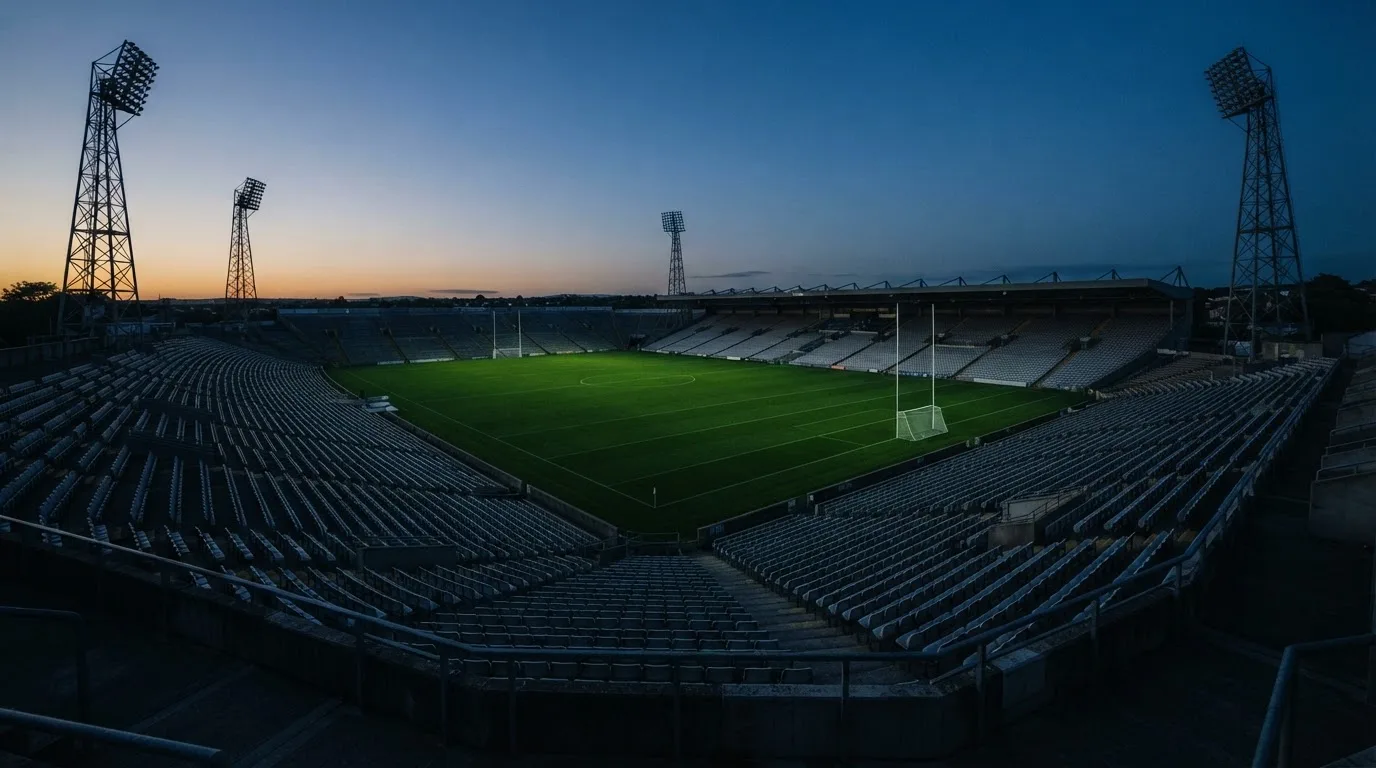
The same dynamics apply to a 2027 All-Ireland outright: a price today reflects the bookmaker’s reading of returning players, the manager’s situation and last season’s results, and it changes after every championship game next spring. A reader who wants to bet on the outright must accept that the price they take is a snapshot, and that the bet is ante-post in the sense that it survives whatever happens in the round-robin.
The starting-price concept in hurling is loose because there is no on-course bookmaker at a championship fixture. The BOG mechanism, which guarantees horse racing punters the bigger of the price taken and the starting price, has no direct hurling analogue. Some operators run a “best price” promotion on selected GAA outrights, paying out at the bigger of the price taken and the price at the final; check the operator’s terms page for whether the championship is in scope.
The fundamentals matter most when the price does not move. A team at 5.00 with three weeks to the next round and no news is being held at a price; that price is the bookmaker’s reading of the field, not a prediction. Reading it well is the work that no tip sheet can do for the reader, and no tipster can guarantee. Form tables, injury news, the venue and the weather are the inputs; the price is the output. The punter’s edge sits in the gap between the two, and that gap closes as the round approaches and the bookmaker’s trading desk re-prices.
The Legal Frame Around a GB-Licensed Hurling Bet
The Gambling Commission licenses the whole commercial market in Great Britain under the Gambling Act 2005. A bookmaker serving customers in England, Scotland or Wales needs a Commission licence wherever it is incorporated, and the public register is the test of who holds one. Northern Ireland sits outside the Act and runs its own older law, so a GB licence is not a Northern Irish licence and a brand licensed in Belfast but not in London is not licensed to take bets from a reader in Leeds. The 2014 Gambling (Licensing and Advertising) Act closed the offshore loophole: an operator whose remote facilities are used in Great Britain needs the Commission’s permission even if it is run from Gibraltar or Malta.
Five licence categories matter for a punter. Remote general betting standard (real events) covers sports betting and is the category every brand in the comparison above holds. Remote general betting standard (virtual events) covers computer-generated events. Remote general betting limited covers smaller operators. Remote pool betting covers off-course pool betting on horse or dog racing. Remote betting intermediary covers betting exchanges.
A brand’s licence status is the test of who regulates it, and the register is searchable by business name, trading name, domain or Commission account number. A punter who wants to check whether a brand is licensed looks the brand up; if it is on the register, the brand holds the licence the register entry names, and if it is not, the brand is unlicensed for the purposes of British consumer protection. The register lists far more brands than any article can feature; the featured set is a shortlist of ten, not a census. A licence register entry lists far more brands than any article can name, and the featured set is a shortlist, not a census.
Financial spread betting is regulated by the Financial Conduct Authority, not the Commission. Spreadex, for example, is regulated by the FCA for spread betting and by the Gambling Commission for fixed-odds betting, and its own pages state that spread betting losses can exceed the deposit. A reader who opens a spread betting account is opening a different product from a sports betting account, with a different regulator and a different risk profile.
Minimum age is 18. Name, address and date of birth are verified before a customer can deposit or gamble — the rule has been in force since 7 May 2019 — including when a free bet or bonus is being claimed. Anonymous play at a licensed site is not a thing; the verification is the price of consumer protection, and the punter who dislikes it is being asked to choose between convenience and the protection the licence offers.
Player Protection, the Self-Exclusion Register and the Deposit Limit
GAMSTOP is the national multi-operator online self-exclusion scheme and a mandatory licence condition for online operators since 31 March 2020. Self-exclusion periods are six months, one year, five years, or five years with auto-renewal, and after the minimum period the exclusion stays in place for a further seven years unless the customer asks GAMSTOP to remove it. GAMSTOP covers online sites and apps; betting shops use a separate service.
A financial vulnerability check applies to licensed remote betting when a customer’s deposits minus withdrawals exceed £150 in a rolling 30 days, and has been in force since 28 February 2025. It is a public-record check (bankruptcy, county court judgments) — not an income check, not a credit reference check, and it does not phone the customer’s employer. Financial risk assessments, sometimes called “affordability checks” in the press, are a separate, more intrusive layer: the Commission announced a staged plan for them on 7 July 2026, with no start date. As of writing, the affordability check is announced, staged and has no operational date. Do not write it as in force.
Deposit limits under the Commission’s Remote Technical Standards require operators to offer a gross deposit limit on a fixed time frame; the first phase of changes applied from 31 October 2025, a second phase was postponed to 30 September 2026, and whether the second phase is live is not established. There is no state-set ceiling on deposits or losses in betting: the limit is the customer’s choice, and the operator’s job is to make the choice easy to make and hard to undo. A punter who wants to set a deposit limit should look on the safer-gambling page of the operator they use.
Help is available whether or not a punter uses a licensed site. GamCare runs the National Gambling Helpline. GambleAware funds treatment and education. The NHS runs specialist gambling clinics in several regions. Gamblers Anonymous runs peer-support meetings. Fitzwilliam Sports’ home page, for instance, links to GambleAware, to GAMSTOP and to Gamblers Anonymous, alongside its own safer-gambling tools: instant deposits, fast withdrawals, timeouts and deposit limits. A licensed operator is required to point a punter at these resources; an unlicensed one is not.
Bonuses, Free Bets and What the Headline Number Actually Costs
A “free bet” sounds like a gift. It is a marketing term for a token whose stake is not paid back on a win. A £10 free bet at 3.00 returns £30 profit but the £10 stake is not returned; the punter’s pocket sees £30, not £40. A £10 cash bonus at the same price, where the stake is paid back, returns £40. The distinction is the whole difference between a free bet and a cash bonus, and the marketing is structured so the headline sounds identical.
The turnover requirement — how many times the bonus has to be bet before winnings can be withdrawn — is where the headline stops flattering. A £10 free bet with no rollover turns the £30 profit into withdrawable cash on the first winning bet. A £10 free bet with a 5x rollover on the winnings requires £50 of further betting at minimum price before the profit can be taken out, and each of those bets carries the operator’s margin. The promotion rules in force since 19 January 2026 cap wagering requirements on bonuses at 10x — a £10 bonus at 50x is now illegal under the LCCP — and the cap means a £10 bonus with the maximum rollover demands £100 of qualifying bets. Mixed-product promotions — an offer that requires gambling on two or more product types such as betting and casino — are banned under the same rules.
Minimum odds for qualifying bets are the next cost. A rollover that demands bets at 1/2 (1.50 in decimals) accepts almost every market; a rollover at 5/2 (3.50) closes off most of the GAA outright market and most match-winner prices on heavy favourites. The qualifying bet lands on the markets the bookmaker wants punters to bet on, not the ones the punter wants to back.
A welcome offer also carries a deadline — the time within which the qualifying bet must be placed, the free bet must be used and the rollover must be cleared. BoyleSports’ sports welcome offer, for example, is £20 in free bets when a £10 bet is placed, and the qualifying conditions of any welcome offer sit on the operator’s promotions page. A punter who lets the deadline lapse loses the bonus, and the offer cannot usually be reclaimed.
BOG — Best Odds Guaranteed — is not a bonus but a price guarantee on UK and Irish horse racing. William Hill’s BOG runs from 8am on the day of the race and applies to single and multiple bets; it excludes ante-post, tote and pari-mutuel bets. Fafabet’s runs from 9am on race days, win and each-way. QuinnBet’s runs from 10am daily on singles, multiples and system bets, with a maximum benefit of £150 per customer per race. Bet600 pays at the SP if the starting price is bigger than the early or show price taken. None of these are hurling promotions; they are racing mechanics the punter inherits by virtue of betting with a horse-racing operator.
Price boosts and acca boosts are a different mechanism. bet365 offers Super Boosts, daily Bet Boosts and Winnings Boosts on Bet Builders and selected singles. William Hill offers a Football Acca Boost on accas of two or more legs, each at 1/5 (1.20) or bigger, with a boost from 3% on a double up to 200% on 20 or more legs, a maximum boost of £10,000 per online bet, and the offer runs until 30 May 2027. The boost is a percentage added to the winnings, not a free bet, so the boost itself does not carry a rollover — but the underlying bet must still be at a price the boost applies to. Paddy Power, BoyleSports, 888sport and the other operators on the comparison all run some flavour of price boost on selected markets, and the offers rotate weekly.
Acca insurance — a refund if one leg of an accumulator fails — is sold against the structure of the accumulator bet, where the margin compounds leg by leg. The refund is usually a free bet, and a free bet whose stake is not returned is the trade. A punter weighing an acca insurance offer should weigh the cost of the free bet (zero stake returned) against the size of the boost they would otherwise have to find elsewhere.
The advertising rules around bonuses sit with the ASA and the CAP Code (non-broadcast) and BCAP Code (broadcast), and the rules are not the operator’s discretion. Marketing must be socially responsible, must not be of strong appeal to under-18s, and no one who is or seems to be under 25 may be featured gambling or play a significant role, with an exception for marketing placed where a bet can be made directly. The rule is about who may appear in an advertisement, not who may bet. Since 1 August 2019 betting advertisements are not shown on TV from five minutes before a live sporting event to five minutes after it, before the 9pm watershed; horse and greyhound racing are exempt. The Premier League clubs’ withdrawal of gambling sponsorship from the front of matchday shirts from 2026/27 is voluntary, not law.
Tax on betting winnings in Great Britain is paid by the operator, not the punter. The punter keeps the full return; General Betting Duty is the operator’s tax on gross profits, currently 15% across general, with a new remote betting rate of 25% applying from 1 April 2027, while remote bets on UK horse racing, bets on self-service betting terminals in licensed premises, pool betting and in-person betting stay at 15% (HM Government policy paper of 26 November 2025). The remote rate stays at 15% until 1 April 2027, and whether operators pass duty on through odds is not established. Spread betting carries its own rates — 3% on financial, 10% on other.
Hurling Betting Tips in 2026: Reading the Market You Are In
There is no such thing as a guaranteed tip. The bookmaker’s price already contains the bookmaker’s read on the form, the line-up and the venue; the trading desk re-prices after every score in-play and after every round of the championship, and the price a punter sees is the most current reading the operator has. The punter’s edge sits where the punter’s information is fresher than the bookmaker’s, and that edge closes as the round approaches and the market re-prices.
A punter looking at a 5.00 quote on the outright is being told the bookmaker thinks the team has about a 17% chance of winning the All-Ireland — the implied probability at 1 ÷ 5.00 = 20%, minus the margin. If the punter’s own read says the team has a 25% chance of winning, the bet is a value bet at that price. If the punter’s read says 15%, the bet is not a value bet, however tempting the price looks on the page. The mechanism is mechanical: implied probability at the price taken, versus the punter’s own probability, versus the size of the stake. The arithmetic is the test that no marketing line can replace.
The bookmaker’s margin is the silent tax on every bet. The two-way market at 1.90 / 1.90 carries a 5.26% margin, and a punters’ “win” has to overcome that margin before it becomes a profit. Three-way markets carry more margin, and acca markets carry more still. The punter who is comparing prices on the same market is the only punter who is comparing apples with apples; comparing prices across markets, or across bookmakers with different market shapes, is a fool’s errand.
Bankroll discipline is the work that no tip can do for the reader. A punter with a £200 bank and a 3% stake rule is staking £6 per bet, regardless of how confident the bet feels; a punter who doubles the stake after a loss is chasing, and the chase ends in one of two places. A betting record — every bet, the price taken, the stake, the outcome — is the only way to know whether the punter is making money, and most punters who keep one are surprised by what it shows. A punter who bets without one is betting blind.
Form and statistics are the inputs that turn a price into a value bet. The venue, the weather, the injury list, the head-to-head record and the recent scoring rate are the inputs that move the price; the punter’s job is to read them before the price moves. Limerick’s five-in-a-row between 2022 and 2024 reshaped the outright market for three seasons; Tipperary’s 2025 win reset it; Limerick’s 2026 win over Galway settled it. Each season’s form table is the input to the next season’s pricing.
Line-ups are the most underweighted input. The bookmaker’s price is set on a morning line-up that may have changed by throw-in; a late change to a key defender, a recalled free-taker or a switch of goalkeeper moves the price on the trading floor but not on the punter’s phone if the punter placed the bet an hour earlier. The line-up announcement is the moment the market re-prices most sharply.
The marketing of tips and predictions is the marketing of a feeling, not a method. A tipster who claims a strike rate above the break-even point of a margin-loaded market is making a claim that mathematics contradicts. A punter who pays for tips is paying for the feeling of having inside information and not for any edge the market will not already have priced. The only edge a punter has is the edge the punter has built — the form reading, the price discipline, the bankroll rule — and no subscription replaces it.
There is no income in betting. The bookmaker’s margin is the cost of every bet placed, and a punter who beats it over a season is a punter who has done the work; a punter who relies on tips is a punter who has paid for the feeling and will, on average, lose. A punter who bets more than they can afford to lose is a punter the safer-gambling tools exist for; a punter who has stopped enjoying the bet is a punter who should take a longer break than a Saturday afternoon.
Working Out the Margin on a Hurling Market
Take an illustrative two-way market — a price on a hurling match winner after normal time without the draw, which bookmakers price as a two-runner market in some formats — at 1.90 / 1.90 in decimals (the same as 9/10 in fractions). The implied probability of each side is 1 ÷ 1.90 = 52.63%, and the two sides sum to 105.26%. The 5.26% above 100% is the bookmaker’s margin, the slice of every pound wagered the operator keeps regardless of the result.
A three-way match-winner market — home, away, draw — carries a heavier margin, because the bookmaker is pricing three outcomes and the overround loads onto all three. A typical pre-match hurling market with prices of 1.80 / 3.40 / 4.50 sums to implied probabilities of 55.56% + 29.41% + 22.22% = 107.19%, a 7.19% margin. The margin varies by operator and by fixture: the All-Ireland final carries tighter margins because every operator has a book on it, and a Munster round-robin game between a strong favourite and a weaker side carries a wider margin because the bookmaker’s risk is concentrated on one runner.
The margin compounds in accumulators. Five legs each at a 5% margin add up to a margin closer to 23% on the combined price, because the overround of each leg multiplies into the next. A double at two single-price markets with 5% margin each carries a margin closer to 10%; a treble at 5% per leg carries a margin of about 14%. The “great price” on an eight-fold acca is not a great price — it is a great headline on a market whose underlying edge has been loaded by the bookmaker eight times.
Live betting widens the margin by design. The bookmaker’s trading desk re-prices after every score, and the price offered in the seconds after a goal is the price at which the bookmaker is willing to lay off the new risk. The margin on a fast market on a slow screen is whatever the operator can charge while the punter waits for the next price update; it can briefly exceed 10% on a hurling market, and the Cash Out price incorporates that margin alongside the bookmaker’s view of the remaining probabilities.
Bet Builder carries a heavier margin than separate singles because the legs are correlated. A Bet Builder on Limerick to win, over a certain total score and a named player to score combines three markets whose prices are not independent; the operator prices the correlation. A punter who builds a Bet Builder is buying convenience, and the price the convenience costs is the additional margin the operator loads on.
Spread betting and betting exchanges have different mechanics. A spread bet on a hurling index — total points, winning margin, named player’s points — pays per unit above or below the spread, and the punter’s liability is the full size of the bet. A betting exchange lets the punter back and lay, and the margin on a back-to-lay market can sit closer to 100% than the same market at a traditional bookmaker. Both are specialist products and neither is the same as a fixed-odds single.
The margin on a market is the cost the punter pays for the privilege of betting with a bookmaker. A punter who understands the margin reads prices differently: not “what does this team have to do to win”, but “what is the bookmaker saying about the probability of this team winning, and is that saying consistent with what I see”. The two questions are not the same, and the second is the one that decides whether the bet is worth placing.
A Reader’s Reading List for Hurling Betting
The hurling season rewards the punter who plans ahead. The provincial championships open in spring with the round-robin groups, the All-Ireland series begins in summer, the club championship runs from November through March. The punter who sets a calendar — when the outright market opens, when the round-robins start, when the finals sit — is the punter who prices each move in time.
The form table is the punter’s first stop. Last year’s All-Ireland, the year’s National League, the provincial championships of the last three seasons: each gives a sense of which teams are rising and which are falling, and the bookmaker’s outright market prices each move as it happens. The 2026 final, Limerick over Galway, was the fifth championship meeting between the two counties in seven seasons; a punter reading the head-to-head would have known the fixture pair was a recurring one.
The injury list is the punter’s second stop. A team missing a key free-taker or a starting corner-back is a different team on the field, and the bookmaker’s price moves when the news breaks. The line-up announcement — usually an hour before throw-in — is the moment the market re-prices most sharply. A punter who has the line-up fifteen minutes before the rest of the market is a punter with an edge, and the edge closes as the rest of the market catches up.
The venue is the punter’s third stop. A team playing at home in front of a full Páirc Uí Chaoimh or Semple Stadium is a different team from the same side on the road in a quiet quarter-final. The referee matters too: a referee who allows physical play is a referee who lets a certain style of hurling flourish, and the style of hurling is the input to the total-points market.
The weather is the punter’s fourth stop. A wet afternoon in Thurles is a different game from a dry evening in Croke Park, and the total-points market prices both differently. The wind matters more than the rain: a strong crosswind blows the sliotar off line and pulls the scoring rate down; a still day lifts the scoring rate and tightens the handicap.
The bookmaker’s price is the punter’s fifth stop. By the time the punter reaches it, the price is the last input, not the first. The price is the bookmaker’s read on all four of the inputs above, and the punter’s job is to read whether the bookmaker has read them correctly.
The Hurling Betting Sites in Detail
The detail below is what each of the ten brands on the comparison brings to a hurling punter. No single brand is “the only” licensed one, and the verdict at the end of each review is the page’s own read on who the brand suits, not a marketing line.
Kalooki Sportsbook
Kalooki Sportsbook is operated by Kalooki Sports Book Ltd (company number 12938274) and licensed by the Gambling Commission under account 57730. It is a GAMSTOP member and operates under a remote general betting standard (real events) licence, which is the right category for sports betting. The brand is a newer entry on the GB register, and the GAA outright market on provincial rounds is modest rather than deep; the breadth is in football and horse racing, where the bookmaker’s main liquidity sits. A hurling punter looking for a wide outright book on the All-Ireland will find less depth here than at a longer-established operator, and a punter looking for in-play on a Munster round-robin game will find the in-play page thinner than at bet365. The brand suits a punter whose priority is a familiar GB-licensed operator with the standard safer-gambling tools in place, and whose GAA betting is a Saturday-afternoon interest rather than a season-long campaign.
William Hill
William Hill is one of the longer-established names on the GB register and is licensed under WHG (International) Limited on Commission account 39225. The brand’s Best Odds Guaranteed on UK and Irish horse racing runs from 8am on the day of the race, on singles and multiples, and excludes ante-post, tote and pari-mutuel bets. William Hill’s Football Acca Boost covers accas of two or more legs with each selection at 1/5 (1.20) or bigger, with a boost from 3% on a double up to 200% on 20 or more legs, a maximum boost of £10,000 per online bet, running until 30 May 2027. The boost is on football and does not extend to GAA accas as a standard feature; check the terms page. This is a racing-led bookmaker where the GAA outright pricing is accessible but the focus is on the horse racing and football products.
Fafabet
Fafabet is licensed under Taichi Tech Limited on Commission account 57385 and offers Best Odds Guaranteed on UK and Irish horse racing from 9am on race days, win and each-way. The hurling outright book is priced on the bigger championship fixtures, with modest depth on the provincial round-robin games. This brand is a racing-focused choice for the GAA punter whose interest is secondary.
Bet600
Bet600 is licensed under Tyche Tech Limited on Commission account 44731 and pays Best Odds Guaranteed on horse racing: if the starting price is bigger than the early or show price taken, the bet is paid at the SP. The brand’s hurling offering is the kind of mid-tier GAA book a GB punter finds on a championship weekend: outright winner, match winner, and the most-liquid handicap and total-points markets. The brand suits a punter looking for a smaller GB-licensed operator with the standard racing promotions and a thin but functional GAA book.
Swifty Sports
Swifty Sports is licensed under Swifty Global (UK) Ltd on Commission account 58957 and offers Best Odds Guaranteed, Cash Out on markets including horse racing and football, daily price boosts, live streaming and in-play betting. Bet Builder is listed as coming soon. The combination of features on the GB-licensed Swifty product is broader than what the smaller brands offer, and the in-play page on GAA fixtures has been built up since the brand’s launch. A hurling punter who values in-play features and Cash Out across multiple markets — even where hurling is not the headline sport — will find a usable product here.
bet365
bet365 is licensed under Hillside (UK Sports) ENC on Commission account 55148, is the official global betting partner of the UEFA Champions League, and is described as the most downloaded sports betting app in the UK. The product range on bet365 is the deepest of the comparison: Bet Builder+ combines markets from one event into a single bet, available pre-match and in-play; Super Boosts and daily Bet Boosts run across sports; Winnings Boosts apply to Bet Builders and selected singles. The in-play offering is the brand’s centre of gravity: in-play betting and live streaming of events worldwide, plus Bet Track, Match Live and a Live Golf Tracker for following bets in play. The GAA book on bet365 is priced on every championship fixture, with player markets, score-casting markets and outright pricing on the All-Ireland, provincial championships and the major club championships. A hurling punter looking for the deepest GAA book on a GB-licensed app, the widest in-play offering and the most-developed Bet Builder mechanics will find the depth they need at bet365, and the cost of the depth is the standard margin on a major operator’s book.
Paddy Power
Paddy Power is licensed under PPB Counterparty Services Limited on Commission account 39439 and the Paddy Power Sports Betting app covers football, horse racing, boxing, rugby, tennis, golf, darts, snooker and F1. The GAA book sits alongside the wider sport offering, with outright pricing on the All-Ireland and provincial championships and match-winner markets on every round. The brand’s price-boost promotions rotate weekly, and the in-play page on the bigger championship fixtures provides the market depth expected from a major brand.
BoyleSports
BoyleSports is licensed under Boylesports Enterprise on Commission account 39469 and runs a sports welcome offer of £20 in free bets when a £10 bet is placed for UK players (£30 in free bets for a £10 bet for Irish players). The free bet carries its own qualifying conditions and rollover. The GAA book sits in the brand’s wider sport offering, with outright pricing on the All-Ireland and the bigger provincial championships. This is a functional GAA book where the welcome offer’s value is the primary driver for a new account.
888sport
888sport is licensed under 888 UK Limited on Commission account 39028 and offers pre-match and in-play betting, Cash Out, Bet Builder, racing streams, BetFinder form tools, a live bet feed and daily boosted odds. The combination of features is broader than what most brands in the comparison offer, and the racing streams and form tools are a familiar part of the 888sport product. The GAA book sits alongside a wider sport offering. This is a versatile, feature-rich operator for a punter who wants a full-service platform.
QuinnBet
QuinnBet is licensed under QuinnBet (Gibraltar) Limited on Commission account 61011 and runs Best Odds Guaranteed on UK and Irish horse racing from 10am daily on singles, multiples and system bets, with a maximum benefit of £150 per customer per race. The GAA book sits alongside the brand’s wider sport offering, with outright pricing on the All-Ireland and provincial championships. The BOG cap is the part of the offer worth reading carefully: a punter whose racing book exceeds £150 per race has a cap, and the cap is per customer per race, not per bet. A hurling punter whose racing interest is significant and whose GAA betting sits alongside will find the product familiar.
A Reader’s Costs Versus an Offshore Brand
A GB-licensed brand is the only kind of brand that protects a British punter under British consumer law. The protections are not free — the operator pays the licence fee, the verification is the punter’s first task on opening an account, and the safer-gambling tools are mandatory rather than optional — but they are real.
Verification is the price. Since 7 May 2019 a licensed brand has to verify name, address and date of birth before a customer can deposit or gamble, including with a free bet or bonus. A punter who dislikes the verification is being asked to choose between convenience and the protection the licence offers. The verification is the Commission’s response to money-laundering risk, and a brand that does not verify a customer is a brand that does not hold a Commission licence.
GAMSTOP is the second protection. The mandatory self-exclusion scheme has run since 31 March 2020, and a punter who self-excludes for six months, one year, five years or five years with auto-renewal cannot open an account at any GAMSTOP-participating brand during the period. After the minimum period the exclusion stays for a further seven years unless the customer asks GAMSTOP to remove it. A punter who has self-excluded and who finds a brand that takes bets during the exclusion is finding a brand that is not on the register.
Deposit limits are the third protection. Operators must offer a gross deposit limit on a fixed time frame under the Commission’s Remote Technical Standards, and a punter who wants to set a limit must be able to do so without friction. The first phase of changes applied from 31 October 2025, a second phase was postponed to 30 September 2026, and whether the second phase is live is not established.
The bonus cap is the fourth protection. Wagering requirements on bonuses are capped at 10x since 19 January 2026, and mixed-product promotions are banned. A free bet with no wagering condition is not necessarily caught by the cap, and the position on the money value of a bonus is not established. A punter weighing a bonus offer should weigh the rollover against the cap.
An offshore brand — a brand licensed in Curaçao, in the Philippines, in Anjouan, or anywhere else outside the Commission’s reach — runs on the operator’s house rules. The customer can be verified, but is not required to be. The customer can self-exclude, but is not protected by GAMSTOP. The bonus can carry any rollover the operator chooses. The customer’s recourse, if funds are withheld, is the courts of the operator’s jurisdiction, not a British regulator. A punter who is tempted by an offshore brand’s headline price is being asked to weigh a small saving on margin against the loss of every protection the licence offers.
The Commission’s enforcement against unlicensed brands is disruption, not blocking. Cease-and-desist notices, search-engine referrals, work with registrars, hosts and payment providers, and court-order DNS blocking powers that have been given or are about to be given. ISP blocking is not in operation. A punter who chooses an unlicensed brand cannot rely on the Commission to recover funds; the Commission’s role is to make the brand harder to find, not to act as the punter’s insurer.
The honest framing is that a licensed brand is the safer choice on consumer protection but not on outcome, and an unlicensed brand is the cheaper choice on margin but at the cost of every protection the licence offers. Neither is “the safe choice” by default. The licensed brand requires verification, accepts a margin, and offers recourse. The unlicensed brand offers a wider price but no recourse. The choice is the punter’s.
How a Hurling Bet Is Worked Out
A £10 stake at 3.00 returns £30, of which £20 is profit and £10 is the stake. The arithmetic is mechanical. A £10 stake at 1.50 returns £15, of which £5 is profit and £10 is the stake. A £10 stake at 6.00 returns £60, of which £50 is profit. The decimal price is what a winning stake returns, stake included. The fractional price — 5/1, 11/4, 4/6 — describes the profit only, and the conversion is a ÷ b + 1: 5/1 becomes 5 + 1 = 6.00, 11/4 becomes 2.75 + 1 = 3.75, 4/6 becomes 0.67 + 1 = 1.67.
An each-way bet doubles the stake because two bets are placed. A £10 each-way at 5.00 is £10 on the win and £10 on the place, so £20 staked. The win part pays £50 profit plus the £10 stake; the place part pays a fraction of the win price — a quarter or a fifth — depending on the field. If only the place part wins, the punter is paid out at the place terms; if neither wins, the £20 is lost. The doubling of the stake is the cost of the safety net.
An accumulator multiplies the prices. A double at 2.00 and 3.00 becomes 6.00; a treble at 2.00, 3.00 and 4.00 becomes 24.00; a four-fold at 2.00, 3.00, 4.00 and 5.00 becomes 120.00. Each leg must win for the bet to pay, and the more legs added, the more the margin compounds and the more the headline price inflates relative to the underlying probability. A punter weighing an eight-fold acca is weighing the chance of every leg winning against the inflated headline, and the inflated headline is the part the bookmaker wants the punter to read first.
Bet Builder combines markets from one event into a single price. The convenience is the point — one stake, one bet, one outcome — and the cost is the heavier margin the bookmaker loads on the correlated legs. A punter who builds a Bet Builder instead of placing three singles is paying for the convenience in margin, and the trade-off is the punter’s to make.
Cash Out converts an open position into a closed one. The bookmaker offers a price based on the current score, the time left and its view of the probabilities, and the punter takes the price or leaves it. The price offered is almost always below what a fair re-pricing of the bet would return, because the operator is taking the other side. A punter who relies on Cash Out as a strategy is paying a hidden margin on every bet cashed out.
Spread betting is a different product. The punter buys or sells a “spread” — a range of outcomes — and the punter’s profit or loss is per unit above or below the spread. The liability is the full size of the position, and a losing spread bet can exceed the deposit. Spread betting on a financial index is regulated by the FCA; spread betting on a sporting index, where it is offered, sits inside General Betting Duty.
The punter’s job is to choose the product that fits the bet. A £10 single on a match winner is a different bet from a £10 Bet Builder on the same fixture, and the margin on each is different. The punter who understands the difference is the punter who reads the price correctly.
Frequently asked questions
What is a value bet and why is no tip ever certain?
A value bet is a price higher than the true probability of the outcome justifies. If a punter’s own read says a team has a 25% chance of winning and the bookmaker’s price implies 20%, the bet is a value bet at that price. The bookmaker’s margin is built into every quoted price, so the implied probability is always lower than the true probability the operator’s read suggests. No tip is ever certain because the bookmaker’s price already contains the operator’s read on form, line-ups and venue, and the punter’s edge sits in the gap between the operator’s read and the punter’s read. That gap closes as the round approaches and the market re-prices, and the gap is what the punter is buying when they place a value bet.
What is the bookmaker’s margin and how can it be seen in the odds?
The margin is the slice of every pound wagered the operator keeps regardless of the result, and it shows in the overround. Add up the implied probabilities of every outcome on one market — 1 ÷ decimal price for each — and the sum is greater than 100%. The excess is the margin. A two-way market at 1.90 / 1.90 carries a 5.26% margin (52.63% × 2 = 105.26%); a three-way match winner at 1.80 / 3.40 / 4.50 carries a 7.19% margin. The wider the margin, the more the operator is taking from every pound wagered on that market, and the harder the punter has to work to beat the line.
How is the return on a bet worked out from the stake and the odds?
A decimal price is what a winning stake returns, stake included. A £10 stake at 3.00 returns £30, of which £20 is profit and £10 is the stake. A £10 stake at 1.50 returns £15, of which £5 is profit. A £10 stake at 6.00 returns £60, of which £50 is profit. The fractional form — 5/1, 11/4, 4/6 — describes the profit only, and the conversion to decimal is a ÷ b + 1: 5/1 becomes 6.00, 11/4 becomes 3.75, 4/6 becomes 1.67. The arithmetic is mechanical and applies to every fixed-odds bet the operator offers.
How can it be checked that a bookmaker holds a Gambling Commission licence?
The Commission’s public register is searchable by business name, trading name, domain or Commission account number, and the register entry lists the licence categories the brand holds. Every brand in the comparison above holds a remote general betting standard (real events) licence, and the licence numbers are stated on each brand’s own pages and on the register. A brand the register does not recognise is not a brand the Commission regulates, and a British punter who bets with such a brand is not protected by the consumer protections the licence offers. The register is the test, and the register is public.
Which tools for controlling play does a licensed bookmaker have to offer?
A licensed remote operator must offer GAMSTOP self-exclusion, deposit limits on a fixed time frame, timeouts, reality checks and links to GamCare, GambleAware and the National Gambling Helpline. A financial vulnerability check applies when a customer’s deposits minus withdrawals exceed £150 in a rolling 30 days (in force since 28 February 2025), and is a public-record check — not an income check, not a credit reference check. Financial risk assessments are announced in a staged plan with no start date. Fitzwilliam Sports’ home page, for example, links to GambleAware, to GAMSTOP and to Gamblers Anonymous, alongside the operator’s own safer-gambling tools. The licensed operator is required to point a punter at these resources.
How do fractional odds such as 5/1 convert to decimal odds such as 6.00?
The conversion is a ÷ b + 1. Take the fractional price a/b, divide a by b, and add 1. So 5/1 becomes 5 ÷ 1 + 1 = 6.00, 11/4 becomes 11 ÷ 4 + 1 = 3.75, 4/6 becomes 4 ÷ 6 + 1 = 1.67. Evens, written 1/1, becomes 1.00 + 1 = 2.00. Odds-on prices — those shorter than evens — follow the same rule: 4/6 is 1.67, 2/5 is 1.40, 1/3 is 1.33. The decimal form is what a winning stake returns, stake included; the fractional form describes the profit only.
Rugby, cricket & Gaelic – Cricket betting
Content created by the «Cricket betting» team
