
Both Teams to Score Betting 2026: How the Market Works, What It Costs, and Who Offers It
 Available in US
Data current as of 27 October 2026 and checked against the Gambling Commission’s public register.
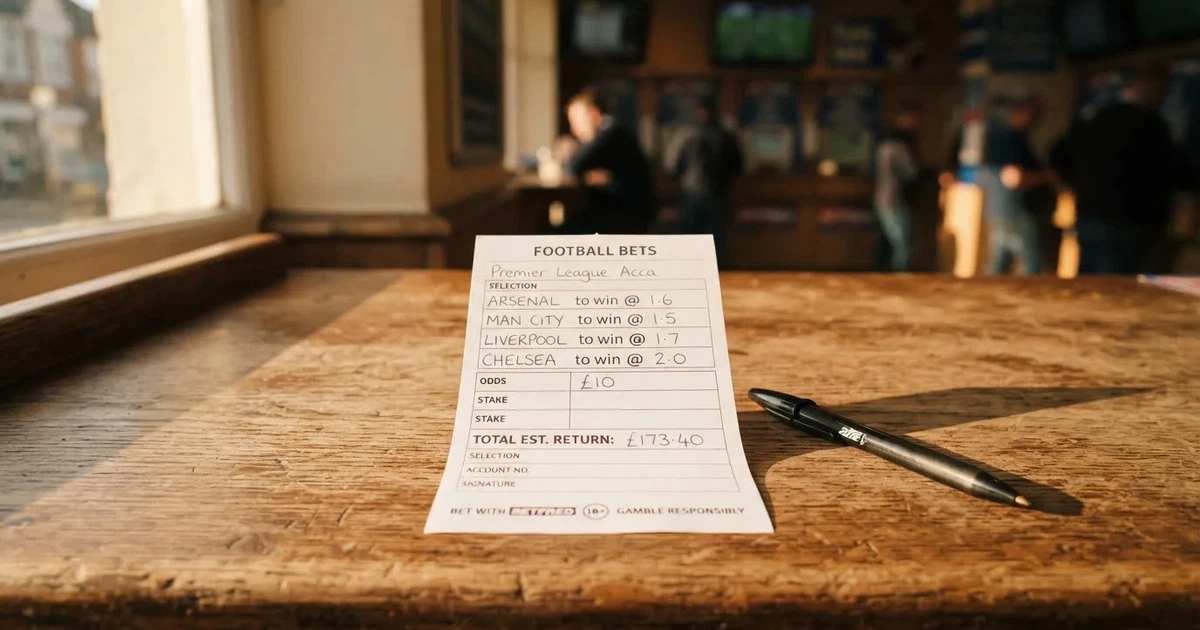
A “both teams to score” market — BTTS to its regulars — sits on a single question: will each side find the net before the final whistle? Two runners, two outcomes, and the price the bookmaker shows already carries the cut he keeps. That cut is the page’s subject. Every other thing a searcher wants to know about BTTS lives downstream of it: how a bet is settled, what counts as a goal, what happens when a match is abandoned, and which licensed bookmakers in Great Britain offer the market at a price worth taking. The arithmetic is short, the rules are not, and the same advertised “yes” can pay very different amounts depending on which bookmaker is selling it.
What a both teams to score bet actually is
A BTTS bet asks one question, and a stake rides on its answer: over ninety minutes plus stoppage, will both teams score at least once? It is a two-outcome market, which makes it a different animal from the 1X2 match result. The 1X2 has three runners — home win, draw, away win — and the bookmaker’s margin is spread across all three. BTTS has only two — yes or no — and the margin sits in those two prices alone.

This sounds like a smaller cut. It is not. With only two runners, the bookmaker does not have the third outcome to soak up the vig, and the prices tend to start tighter than the match-result line. A typical pre-match BTTS line on a Premier League fixture runs in the region of 1.80 to 2.00 for “yes” and 1.80 to 2.00 for “no” — short enough that a single goal in either direction moves the price noticeably. That is the point of the market: a punt is settled on the goals, not on which side scores more.
Settling follows the goals, and the goals follow the clock. Sky Bet’s football rules — used here because they are stated plainly and most other GB-licensed bookmakers settle on similar terms — say a football bet runs on ninety minutes of play including time added by the referee for stoppages. Extra time and penalty shootouts do not count unless a market specifically says so. A goal in the 89th minute counts. A goal in the 91st counts. A goal in the 93rd minute, scored with the last touch of stoppage time, counts. The match finishes; the bet is settled on the goals scored in that window.
That window is also where most confusion lives. The match result on the same fixture uses the same ninety minutes, so BTTS and the 1X2 settle on the same events. A first-goalscorer bet is also settled on the result after ninety minutes including injury time, again at Sky Bet, and extra time does not count unless the market is labelled “extra-time betting”. Anyone laying a BTTS and watching the match go to extra time should know the bet is already settled one way or the other. The 120th minute and the shootout change nothing.
How the margin sits inside the price
Two-outcome markets look fair. Each side has a 50/50 chance, the prices are near enough to evens, and the punter assumes the bookmaker is taking a small cut on a near-coin-flip. The arithmetic says otherwise.
Take an illustrative two-way market at decimal odds 1.90 on each side — a bookmaker’s hypothetical line, not a quoted price. The payout share is one over the sum of the implied probabilities: 1 ÷ (1 ÷ 1.90 + 1 ÷ 1.90) = 1 ÷ 1.0526 = 95.0 per cent. The margin is 100 per cent minus the payout share, or 5.0 per cent. Read the other way: for every pound that crosses the bookmaker’s counter on this market, 95p is returned to winning punters on average and 5p stays with the house. The 1.90 line is generous by the standards of the major bookmakers; the same market routinely prices at 1.83 / 1.83 or tighter, which means a margin closer to 9 or 10 per cent of the stake, not 5.
That 5 to 10 per cent is the cost of the bet, and it never goes away. A punter who wins a 1.90 shot has done better than the closing margin suggests. A punter who loses has handed the bookmaker 5p to 10p in the pound. Over a season, on hundreds of BTTS bets at the same short prices, the difference between a 5 per cent margin and a 9 per cent margin is the difference between a price worth taking and a price that bleeds the bankroll before the football does.
Two things follow. First, the price matters more than the match. A BTTS punt on a derby at 1.95 and a BTTS punt on a mid-table fixture at 1.80 are not the same bet, and the punter treating them as such is paying the bookmaker for the privilege. Second, the only way to see the margin is to do the arithmetic for the specific market on offer, because a price on a totals line is not the margin of a BTTS line, a margin on Premier League football is not the margin on League One, and a margin published in a magazine column is not necessarily the margin the bookmaker is offering at kick-off. The £10 free-bet token the punter claims on the way in does not change the 1.80 line on the BTTS market. It changes the terms on which the punter clears that token, and the two costs are separate.
What counts as a goal, and what does not
A goal is a goal, but only if the match says so. The referee decides. The linesman decides. The VAR booth, where one exists, decides. Once the decision is made and the goal stands, the BTTS market updates. If a goal is disallowed after a long VAR review, the market is settled as it was before the goal. The bookmaker’s rules do not run on the punter’s interpretation of the incident; they run on the official record.
Own goals count. The BTTS market does not care which player put the ball in the net, only that the net was found. A defender’s miskick and a striker’s placed finish settle the same way. The market’s question is whether both teams scored, and the answer is yes regardless of which player got the touch.
Goals scored in extra time and the penalty shootout do not count, because the match is over at ninety minutes plus stoppage. A cup tie that finishes 1–1 after ninety and goes to extra time has already settled the BTTS market as “yes” before a single minute of extra time has been played. The same is true of a goalless ninety that goes to penalties: the BTTS bet is already a loser, no matter how many penalties are scored in the shootout.
A match abandoned after kick-off is a different problem. At Sky Bet, a football match abandoned after kick-off leaves already-decided bets standing and voids all others, unless the restart is announced within three hours of kick-off and occurs within three days of abandonment. A BTTS bet on a 2–1 scoreline when the referee stops the match in the 67th minute is a winning bet, because the question is already answered. A BTTS bet on a 0–0 match abandoned in the 32nd minute is void, because the question is not yet answered and the match will not be played to a conclusion inside the time the rules allow.
Variations: what the bookmakers add around the core question
The plain BTTS market is the spine, and the bookmakers have layered several markets on top of it. Each variation changes the question, which changes when the bet is settled, which changes what a win looks like.
To score in both halves. A team must score at least once in each half. Two goals in the first half settle the bet. Two goals in the second half settle the bet. One goal in the first and none in the second does not. The bet asks a sharper question than plain BTTS, and the price reflects it: a “yes” on a single team scoring in both halves is longer than the same team’s “yes” on plain BTTS, because the bet is harder to land.
Match result and BTTS. A double result. The punter picks the winner and answers the BTTS question in one stake. A home win with both teams scoring is one of six combinations — three outcomes on the 1X2, two on the BTTS, multiplied together. The price is shorter than either bet on its own, because two conditions both have to land. The margin is the bookmaker’s cut on the combined question, not the sum of two separate cuts.
Bet builder and same-game multi. A bookmaker-built accumulator on a single match: BTTS, total goals, first goalscorer, corners, cards, anything the bookmaker offers in a single fixture. The legs multiply into one price, and a single losing leg voids the whole bet. The margin on a bet builder is harder to read than on a single market, because each leg carries its own cut, and the cuts stack. A bet builder at a combined price of 6.00 is not the same value as six separate singles on the same selections at the same combined price.
First goalscorer and BTTS. The first goalscorer market settles on the result after ninety minutes including injury time at Sky Bet, and extra time and penalty shootouts do not count unless the market is specifically extra-time betting. A first goalscorer bet combined with a BTTS leg is settled on the same ninety-minute window, and the punter who backs a striker to score first and the match to feature both teams scoring is betting on a different sequence of events than a plain BTTS.
In-play BTTS. The market continues to run during the match. A goal moves the price; a red card moves the price; a long stoppage for weather or floodlight failure does not change the price until the referee resumes play. Cash-out availability on in-play BTTS bets is not guaranteed, and the bet stands if cash-out is unavailable.
Ten licensed bookmakers in Great Britain that offer BTTS
| Brand | Licence number and holder | Operator terms |
|---|---|---|
| BetUK | 39198 (LeoVegas Gaming PLC) | Free bets exclude virtual sports, esports and non-UK/IE horse racing |
| Betway | 39372 (Betway Limited) | £40 in free bets for £10 stake at min odds 2.0 |
| Midnite | 101839 (Midnite Limited) | £25 in free bets and 50 free spins for £5 bet |
| DAZN Bet | 48756 (DZBT Limited) | Features Cash Out, Bet Builder and daily bet boosts |
| Betboro | 44181 (Webmedia Development N.V.) | Boosted odds on selected singles from £10 stakes |
| DragonBet | 64908 (DragonBet Ltd) | Strong focus on Welsh football and rugby markets |
| Bet600 | 44731 (Tyche Tech Limited) | Best Odds Guaranteed on horse racing |
| Geoff Banks | 54095 (GB Sports Advisors Limited) | Live in-play prices and ante-post prices |
| Sky Bet | 67370 (SBG Sports Limited) | £30 in free bets for £5 deposit and 5p bet |
| Copybet | 53774 (Copybet UK Limited) | Best Odds Guaranteed and First Past the Post |
The ten brands below hold a Gambling Commission remote licence for general betting on real events and were selected from the Commission’s public register. The licence number beside each brand is the account number under which the operator is registered, and a punter can confirm it on the Commission’s public register by searching for the brand name, the trading name or the account number. Each review is a description of what the operator’s own terms state, and each closes with a verdict on where the brand sits in the comparison.
Sky Bet — the price the others are judged against
Sky Bet’s welcome offer for new customers is £30 in free bets, credited as three £10 free bet tokens after a deposit of at least £5 and a first single or each-way bet of at least 5p at odds of 1/1 or greater. The £5 deposit is the smallest in the comparison and the 5p qualifying stake is the smallest, which means the offer can be tested at almost no cost. The free bet tokens expire, the qualifying bet must be at evens or longer, and a debit card or funded e-wallet is the standard route in.
Sky Bet’s football rules are stated plainly: football bets run on ninety minutes including stoppage time, abandoned matches follow the rule above, and first-goalscorer bets settle on the result after ninety minutes. The same rules apply to BTTS, and they are the rules most other licensed bookmakers in Great Britain settle on. A punter who has used Sky Bet once has used the convention. The price on a Premier League BTTS line at Sky Bet is consistently among the shorter in the market, which is the cost of the brand and the depth of its in-play trading. The depth is the upside: the in-play BTTS market is live, the cash-out button is available more often than not, and a goal moves the price by a tick that reflects the new state of the match.
Verdict: the benchmark for both the rules the rest of the industry follows and the price the rest of the industry is judged against. Punters who want the conventional rules and the deepest in-play market pay for it in a tighter line.
BetUK — a short bonus and a tight sportsbook
BetUK is run by LeoVegas Gaming PLC under the same Gambling Commission account as BetMGM UK. The free-bet terms exclude virtual sports, esports and non-UK/IE horse racing, and a minimum odds requirement applies. The bettor’s choice of qualifying market is therefore the conventional football, tennis and basketball lines, and the BTTS market is in scope.
Verdict: a solid mid-market offering on a familiar platform. Worth a look for a punter who already has a LeoVegas account and wants the BTTS market at the same prices.
Betway — a familiar offer on a familiar platform
Betway’s welcome offer for new UK and Ireland customers is £40 in free bet tokens credited as four £10 free bets on settlement of a first bet of at least £10 at minimum odds of 2.0, with a seven-day expiry and debit card deposits only. The £10 qualifying stake is the standard in the comparison, the minimum odds are 2.0 (evens), and the seven-day window is tight by comparison with a thirty-day free-bet token.
Betway’s sportsbook is mature: the BTTS market is offered on the major European leagues, the in-play offering is deep, and the bet builder is on the same fixture page as the single markets. The same-league limit on the welcome offer is a soft constraint — most punters will be betting on the Premier League or the Championship in any case.
Verdict: a £40 token for a £10 bet at evens is a fair rate, and the seven-day expiry keeps the punter honest. A good fit for a bettor who already has a Betway account and wants the BTTS market on the same page as a bet builder.
Midnite — a smaller bookmaker with a sharper sportsbook
Midnite is licensed by the Gambling Commission under account 101839, and its site lists in-play events, an acca builder, popular accas and price boosts with maximum-stake limits. The sports welcome offer is a £5 minimum qualifying bet at minimum odds of EVS (2.0) within fourteen days of sign-up, with £25 in free bets and fifty free spins credited on settlement, valid for seven days.
The free-bet stake is not paid back with a win, which is the standard arrangement for a free-bet token in Great Britain. The price boost element is the differentiator: Midnite’s acca builder lets the punter combine legs from the same match, and a price boost on a selected acca shortens the price the punter sees. The catch is the maximum-stake limit, which sits below the standard bet ceiling. A punter who backs a price-boosted BTTS acca at the maximum stake is testing the offer on its own terms, not the operator’s standard terms.
Verdict: a smaller bookmaker with a sharper sportsbook than the brand would suggest, and a free-bet offer that tests the punter on a tight window. Worth a look for a bettor who wants the acca builder and the price boost more than the headline free-bet amount.
DAZN Bet — cash out, bet builder and a clean in-play line
DAZN Bet offers Cash Out, Bet Builder, daily bet boosts and in-play betting; cash-out availability is not guaranteed and bets stand if it is unavailable. The brand is positioned as a sportsbook rather than a casino-plus-sports hybrid, which is the relevant point for a BTTS bettor: the football markets run deeper, the in-play trading is sharper, and the bet builder is on the same fixture page as the single markets.
The welcome offer is described on the operator’s own terms page, and the standard for DAZN Bet’s free bets is a token credited on settlement of a qualifying bet at a minimum price, with a seven-day expiry. The free-bet stake is not returned with a win.
Verdict: a clean sportsbook with a deep in-play market. This operator is recommended for punters who use bet builder and cash out on the same fixture page as the BTTS line.
Betboro — boosted odds and a familiar in-play offering
Betboro offers in-play markets and cash-out on football, racing and tennis, boosted odds on selected singles from £10 stakes, and responsible gambling tools including deposit limits, reality checks and self-exclusion. The boosted-odds element is the differentiator: a BTTS single at an enhanced price is offered on selected fixtures, and the £10 minimum stake is the standard.
The cash-out offering covers football, racing and tennis, which means the BTTS market on a football fixture is in scope. The in-play market is live on the major European leagues, and the price on a Premier League BTTS line is competitive with the rest of the comparison.
Verdict: a mid-market bookmaker with a familiar sportsbook and a boosted-odds element that adds value on selected fixtures. This is a reliable choice for any punter who backs a price-boosted BTTS single once a week.
DragonBet — a Welsh bookmaker with a strong regional focus
DragonBet’s app is published by DragonBet Ltd and features Welsh football and rugby markets, racing, American football, in-play betting and bet builder markets. The Welsh football coverage is the differentiator: the Welsh Premier League and the Cymru Premier and South are covered in depth, and the BTTS market is offered on the regional fixtures as well as the major European leagues.
The sportsbook is conventional in shape: a single-page bet slip, a bet builder on the same fixture page, and an in-play market on the major leagues. The welcome offer is standard for the industry.
Verdict: a regional bookmaker with a national-licence footprint and a strong offering on Welsh football. It is well-suited for a punter who backs the Welsh leagues as well as the Premier League, though it may be less appealing for someone who focuses exclusively on the top flight.
Bet600 — best odds guaranteed on the racing
Bet600 pays Best Odds Guaranteed on horse racing: if the starting price is bigger than the early or show price taken, the bet is paid at the SP. The racing focus is the differentiator: the BOG offering is a real concession on the racing market, and the racing terms are stronger than the BTTS terms on the same site.
The football offering is conventional: a BTTS market on the major European leagues, a bet builder, and an in-play line. The offer terms align with industry norms.
Verdict: a racing-first bookmaker with a conventional football offering. A good fit for a punter who backs the racing more than the football, and a poor fit for a punter who only bets on BTTS.
Geoff Banks — a small bookmaker with a personal touch
Geoff Banks’ app is published by GB Sports Advisors Ltd and offers live in-play prices and ante-post prices on future events. The brand is positioned as a smaller bookmaker with a personal touch: the ante-post offering is deeper than the major operators, and the in-play market is on the major leagues.
The football offering is conventional: a BTTS market on the major European leagues, a bet builder, and an in-play line. The welcome offer terms are in line with general market standards, and the brand’s differentiator is the personal service rather than the headline price.
Verdict: a smaller bookmaker with a personal touch and a deep ante-post offering. A good fit for a punter who values the personal service over the headline price, and a poor fit for a punter who only bets on BTTS at the major operators.
Copybet — best odds guaranteed all day on the racing
Copybet offers Best Odds Guaranteed all day, every day on all UK and Irish racing, and pays first past the post on horse racing even if the winner is later disqualified. The racing offering is the differentiator: the BOG offering is a real concession, and the first-past-the-post rule protects the punter from a late disqualification.
Copybet UK Limited states it is licensed and regulated in Great Britain by the Gambling Commission under account number 53774. The football offering is conventional: a BTTS market on the major European leagues, a bet builder, and an in-play line.
Verdict: a racing-first bookmaker with a strong football offering. A good fit for a punter who backs the racing as well as the football, and a good fit for a punter who only bets on BTTS at a licensed bookmaker with a deep racing concession.
How BTTS settles in the rules every bookmaker uses
The rules above are Sky Bet’s, and they are stated here because they are written down clearly. Most other licensed bookmakers in Great Britain settle on similar terms. The differences are at the edges: a goal scored directly from a kick-off after a goal has been scored is a separate question for some bookmakers, an own goal is treated the same way by all of them, and a goal scored from a deflection off the referee is treated the same way as any other goal by all of them.
Three rules are common to the licensed bookmakers in this comparison. First, the match is ninety minutes plus stoppage time. Second, the bet is settled on the goals scored in that window. Third, a match abandoned after kick-off is either voided or settled on the goals already scored, depending on the state of the match when the referee stops play.
The punter who reads the rules before the bet knows what counts. The punter who reads the rules after the bet has lost knows what went wrong, and the answer is rarely the rule. It is the price, the time of the goal, or the state of the match when the whistle blew.
What the Gambling Commission licence does and does not do
The Gambling Commission is the regulator for the commercial gambling market in Great Britain, and the Gambling Act 2005 is the statute. A bookmaker who accepts a bet from a customer in Great Britain needs a Commission licence, and the Commission’s public register is the test of who holds one. The register can be searched by business name, trading name, domain or account number, and a punter can confirm the licence of any brand on the register in a few minutes.
A Commission licence does not guarantee a price. It guarantees a regulatory framework: a licensed operator is bound by the Licence Conditions and Codes of Practice, the social responsibility code, the Remote Technical Standards, and the customer-protection duties in the Act. The licensed operator is required to verify the customer’s identity before the first deposit, to offer GAMSTOP self-exclusion, to apply the financial vulnerability check when deposits exceed £150 in a rolling 30 days, and to comply with the 10x cap on bonus wagering requirements. A licensed operator is also required to keep customer funds separate from operating funds in the event of insolvency, and to submit to the Commission’s enforcement powers when the rules are broken.
A Commission licence does not guarantee a payout on a disputed bet. The Commission’s role is to license the operator, not to settle the bet. A punter with a dispute goes to the operator’s customer service first, and then to an alternative dispute resolution (ADR) provider if the operator’s answer is not satisfactory. The Commission’s role in a payout dispute is limited to the regulatory frame, not the settlement of the individual bet.
An unlicensed brand is a different story. A bookmaker who accepts bets from customers in Great Britain without a Commission licence is committing an offence under section 33 of the Gambling Act 2005, and the Commission’s enforcement powers include cease-and-desist notices, search-engine referrals, work with registrars, hosts and payment providers, and court-order DNS blocking powers that have been granted or are about to be granted. The punter who bets with an unlicensed brand has no GAMSTOP coverage, no Commission complaints route, no approved dispute-resolution body, no British consumer redress if funds are withheld, and no protection under the 10x bonus cap or the £150 vulnerability check. The bet may be settled; the funds may be paid. The punter has no British backstop if they are not.
What the punter pays: the arithmetic of a BTTS bet
The payout on a winning BTTS bet is the stake multiplied by the decimal odds. A £10 stake at decimal odds 1.90 returns £19 — the £10 stake plus £9 in profit. The same £10 stake at decimal odds 2.00 returns £20 — the £10 stake plus £10 in profit. The arithmetic is the same for a BTTS leg in an accumulator, except the legs multiply into one price: a BTTS leg at 1.90 and a match-result leg at 2.00 in a double returns a price of 3.80, and the £10 stake returns £38 — the £10 stake plus £28 in profit.
The margin is what the bookmaker keeps on the market. The 1.90 / 1.90 example above shows a margin of 5.0 per cent. A 1.83 / 1.83 line on the same market shows a margin closer to 9.3 per cent. The difference between the two margins is the cost of the bet to the punter, and the punter who picks the 1.90 line over the 1.83 line is keeping 4.3p in the pound of the stake on every bet, before a goal is scored.
The expected cost of a BTTS bet over many bets is the stake multiplied by the margin. A punter who places 100 BTTS bets of £10 each at a margin of 5.0 per cent has staked £1,000 and is expected, on average, to lose £50 of it to the margin. The same 100 bets at a margin of 9.3 per cent is expected to lose £93 of it. The difference is £43 over the season, and that is the cost of the price difference on the same market at the same bookmaker on a Saturday afternoon.
The expected cost of clearing a free-bet token is a different calculation. The free-bet stake is not paid back with a win, so a £10 free bet at decimal odds 1.90 returns £9 in profit, not £19. The expected profit on the free bet is the free-bet stake multiplied by the odds minus one, divided by the odds, multiplied by the payout share of the market. A £10 free bet at 1.90 on a market with a 95 per cent payout share has an expected profit of £10 × 0.90 ÷ 1.90 × 0.95 = £4.50. The free bet is worth £4.50 on average, not £10, and the punter who claims the token without checking the qualifying terms is paying the difference.
Responsible gambling: what the licensed bookmaker has to do
Every licensed bookmaker in Great Britain is required to offer GAMSTOP self-exclusion, and the GAMSTOP registration covers the customer’s online and app-based play at every licensed operator that takes part. The self-exclusion periods are six months, one year, five years, or five years with auto-renewal, and after the minimum period the exclusion stays in place for a further seven years unless the customer asks GAMSTOP to remove it. GAMSTOP does not cover the betting shop; the betting shop uses a separate self-exclusion service, and the punter who wants both has to register with both.
A licensed bookmaker is also required to apply a financial vulnerability check when a customer’s deposits minus withdrawals exceed £150 in a rolling 30 days. The check is a public-record check, not an income check and not a credit reference check, and it is designed to surface a bankruptcy or a county court judgment. The check is a customer-protection duty, and the licensed operator is required to complete it before accepting further deposits when the threshold is breached.
A licensed bookmaker is required to offer deposit limits. The Remote Technical Standards (RTS 12) require the operator to offer a gross deposit limit on a fixed time frame, and the first changes have applied since 31 October 2025. A second phase of the deposit-limit requirements was postponed to 30 September 2026, and whether it is live at the time of writing is not established. The customer can set a deposit limit on a daily, weekly or monthly basis, and the licensed operator is required to honour the limit. The state does not set a deposit ceiling; the ceiling is the customer’s choice.
The licensed operator is required to offer self-exclusion beyond GAMSTOP at the operator’s own level, and to provide links to GamCare (the National Gambling Helpline), GambleAware, the NHS gambling clinics and Gamblers Anonymous. The licensed operator is also required to train customer-facing staff in social responsibility, and to apply the social responsibility code in the LCCP.
The punter who wants help has four routes: the operator’s own responsible-gambling tools, GAMSTOP, GamCare, and the NHS gambling clinics. The punter who wants the strongest protection is the punter who registers with GAMSTOP first and then sets deposit limits with each operator on top.
What a BTTS prediction is and what it is not
A BTTS prediction is a forecast that both teams will score before the final whistle. The forecast is a probability statement: the punter says “I think the chance of both teams scoring is 60 per cent”, and the price on the BTTS “yes” reflects the bookmaker’s view of the same probability. A 60 per cent probability is decimal odds of 1.67, and a 1.80 line on the BTTS “yes” implies a 55.6 per cent probability. The punter who has a view of 60 per cent is getting 4.4 points of edge over the bookmaker’s line, and that is the bet.
The forecast is not a tip. A tip is a name, a fixture, and a price. The tipster does not say what the probability is; the tipster says which side to back. The punter who follows a tip is taking the tipster’s view of the probability, and the price the tipster quoted is the price the punter pays. If the price has moved by the time the punter places the bet, the punter is no longer taking the tipster’s view; the punter is taking a different bet at a different price.
The forecast is not a system. A system is a set of rules that produces a bet. The rules can be as simple as “back BTTS yes on every Premier League match at odds of 1.80 or shorter”, and the system produces a bet on every match. The punter who runs a system is running an experiment, and the experiment produces a result over time. The result is a yield — the profit or loss divided by the total stake — and the yield is positive if the system is finding edge over the bookmaker’s line. A system with a negative yield over hundreds of bets is not a system; it is a way of paying the bookmaker’s margin on a regular basis.
The punter who has a view of the probability of both teams scoring can back the BTTS “yes” at a price that reflects the view. The punter who has a view of the probability of a goalless match can back the BTTS “no” at a price that reflects the view. The punter who has no view can watch the match. The forecast is a tool, not a guarantee, and the punter who treats it as a guarantee is paying the bookmaker for the privilege of finding out.
Strategy: how a punter reads a BTTS price
The first read is the line. The 1.80 / 2.00 line on a BTTS market is a different bet from the 2.00 / 1.80 line, and the punter who treats them as the same bet is paying the bookmaker for the privilege. The line is the bookmaker’s view of the probability, and the line that sits above the punter’s view is the bet; the line that sits below is not.
The second read is the form. A team that has scored in seven of its last ten matches and conceded in eight of them is more likely to feature both teams scoring than a team that has scored in four and conceded in three. The form is the punter’s view of the probability, and the form that produces a higher probability than the line is the bet. The form that produces a lower probability is not.
The third read is the fixture. A derby is more likely to feature both teams scoring than a match between two defensive sides, and the same applies when two attack-minded sides meet, compared to a clash between a strong team and a weak one. The fixture is the punter’s view of the probability, and the fixture that produces a higher probability than the line is the bet. The fixture that produces a lower probability is not.
The fourth read is the price. The price is the punter’s edge over the bookmaker’s line, and the price that sits above the punter’s view of the probability is the bet. The price that sits below is not. The punter who has a view of 60 per cent on a 1.80 line is getting 4.4 points of edge; the punter who has the same view on a 1.67 line is getting zero edge, and the punter who has the same view on a 1.50 line is paying the bookmaker for the privilege.
The strategy is the combination. A punter who reads the line, the form, the fixture and the price is finding edge over the bookmaker’s line, and the edge is the profit over the season. A punter who reads only the form is finding bets the bookmaker has already priced, and the punter who reads only the fixture is finding bets the bookmaker has already priced. The punter who reads all four is the punter who makes the margin work in his favour.
Frequently asked questions about both teams to score betting
Where can a punter bet on both teams to score in Great Britain?
Every licensed bookmaker in the comparison offers a BTTS market on the major European football leagues, and a punter who holds an account with one of the ten operators above can place a BTTS bet on a Premier League fixture at any time before kick-off and in-play once the match has started. The brand with the deepest in-play market and the most consistent price is Sky Bet, and the brand with the most regional focus is DragonBet. A punter who only wants the racing as well as the football can use Copybet or Bet600; a punter who only wants the football can use any of the ten. The price varies by brand and by fixture, and a punter who wants the best price on a specific fixture should check the line at two or three of the operators before placing the bet.
What does “to score in both halves” mean?
The market asks whether a named team will score at least once in each half of the match. A team that scores twice in the first half and not at all in the second half has still scored in both. Similarly, scoring once in each half satisfies the condition. However, scoring three times in the first half and none in the second means the side did not score in both halves, as the second half was goalless for them. This bet is harder to land than plain BTTS, so the price is longer, though it is offered on the same fixture page as plain BTTS at most licensed bookmakers in Great Britain.
What is a both teams to score bet?
A both teams to score bet is a wager on whether each side will find the net at least once during the match. The match is ninety minutes plus stoppage time, and the bet is settled on the goals scored in that window. A 1–1 scoreline settles the bet as a winner for the BTTS “yes” backer; a 2–0 scoreline settles it as a loser. The bet is a two-outcome market, and the bookmaker’s margin sits inside the two prices. The market is offered at every licensed bookmaker in the comparison, and the price varies by brand and by fixture.
How can it be checked that a bookmaker holds a Gambling Commission licence?
The Commission’s public register is searchable by business name, trading name, domain or account number, and a punter can confirm the licence of any brand by entering the trading name in the search box at the top of the register’s home page. The search returns the licence holder’s name, the licence type, the account number and the status. A brand that does not appear on the register is not licensed to accept bets from customers in Great Britain, and a punter who bets with such a brand has no British backstop if the funds are withheld or the bet is disputed. The register is the whole test, and a brand’s own statement that it is licensed is not a substitute for a check on the register.
How is the return on a bet worked out from the stake and the odds?
The return on a winning single bet is the stake multiplied by the decimal odds. A £10 stake at decimal odds 1.90 returns £19 — the £10 stake plus £9 in profit. The same stake at decimal odds 2.00 returns £20 — the £10 stake plus £10 in profit. Fractional odds of 5/1 are decimal odds 6.00; a £10 stake at 5/1 returns £60 — the £10 stake plus £50 in profit. An accumulator multiplies the legs into one price, and a £10 stake at a combined price of 6.00 returns £60 on a single bet. The arithmetic is the same in every case; the price changes, the formula does not.
What is the bookmaker’s margin and how can it be seen in the odds?
The margin is the cut the bookmaker keeps of every pound staked on a market, and it sits inside the prices the bookmaker shows. The margin of a two-outcome market at decimal odds 1.90 / 1.90 is 1 minus the payout share, where the payout share is 1 divided by the sum of the implied probabilities. The implied probability of 1.90 is 1 ÷ 1.90, or 52.6 per cent; the sum of two such probabilities is 105.3 per cent; the payout share is 1 ÷ 1.0526, or 95.0 per cent; the margin is 5.0 per cent. A 1.83 / 1.83 line on the same market shows a margin of 9.3 per cent. The punter who reads the margin is reading the cost of the bet, and the punter who ignores the margin is paying the cost without seeing it.
Bet types & in-play – Cricket betting
Content created by the «Cricket betting» team
