
Online snooker betting in 2026: the UK picture, from offers to verdicts
 Available in US
Snooker is one of the smaller sports on a UK bookmaker’s fixture list, but the World Championship at the Crucible turns it into a centrepiece for a fortnight every spring. Outside that window, ranking events, the Masters and the UK Championship carry the calendar. Betting on snooker runs on the same Gambling Commission licence as football and horse racing, with the same 18+ age check, the same identity verification before a deposit, and the same protections: a regulated margin baked into the price, GAMSTOP self-exclusion, and the Commission’s £150 / 30-day vulnerability check. What changes is the depth of the market, the frequency of best-odds features, and what each operator’s own terms ask for in exchange for a free bet or a price boost.
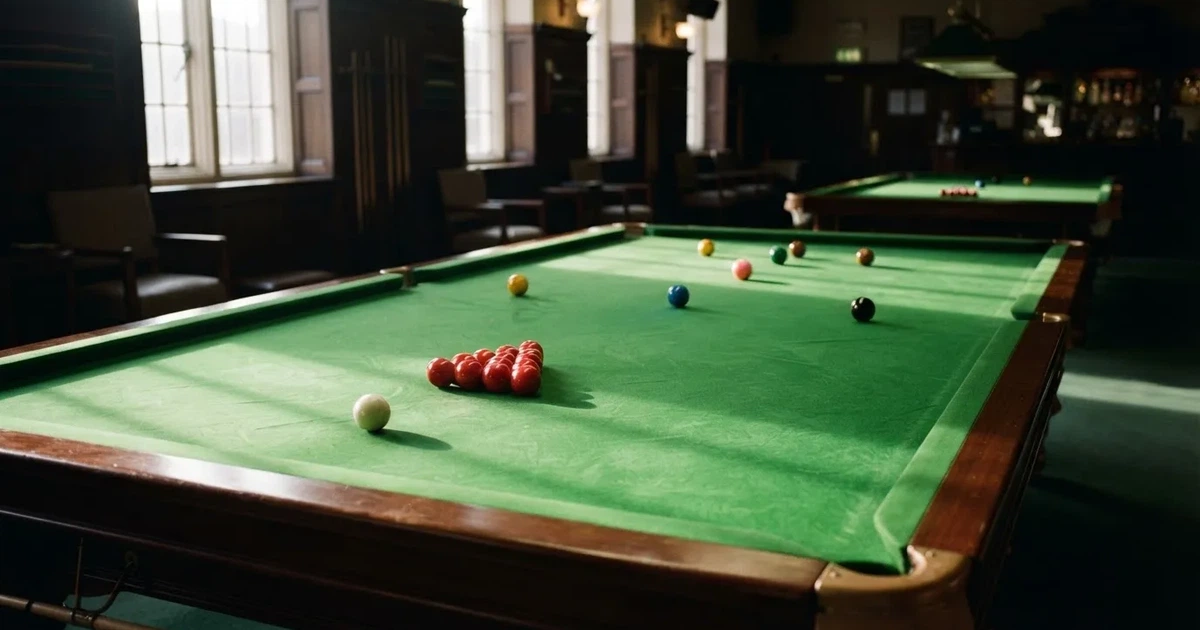
This guide covers the cost side of online snooker sport in the UK for 2026. The page traces how snooker odds are built, what a bonus really takes to clear on snooker markets, how live betting works on frames rather than minutes, and which bookmakers from the licensed set serve the cue sport well — and which one loses to the others on the points a punter actually compares on. The data below was verified against each operator’s own terms page on 27 October 2026.
Snooker betting offers and what they actually cost the punter
A snooker welcome offer reads the same as a football one on the page: a headline figure, a multiplier, a minimum price. The arithmetic behind it rarely changes with the sport. What changes is how easy it is to clear the offer on snooker, because snooker fixtures are thin compared with football and the price range that satisfies a typical wagering requirement is narrower. This section walks through what the standard offer types look like on a snooker programme, and where each one quietly costs more than the headline suggests.

Free bets, bet credits and the stake-not-returned clause
A “free bet” is the most common snooker incentive and also the one most quietly misunderstood. The headline number — “£30 in free bets” — is not what you can win. The free-bet stake itself is usually not returned with the winnings. A £30 free bet at decimal odds of 3.00 returns £60 profit if it lands, not £90, because the £30 stake is left on the table. The arithmetic is stake-free × (odds − 1). On a one-shot free bet the difference is £30, and on a £5 free bet it is £5 — small per bet, large across a campaign.
Free-bet value, calculated against the margin of the snooker match-winner market the offer is taken on, is what the offer is worth on average. The free bet does not change your chance of winning the match; it changes what a win pays back. A free bet on a short-priced favourite returns less than its face value on average, because the offer is paying for a ticket that would have cost you a full stake on a winner and only a small profit on the loser. On a long-priced underdog the free bet is worth closer to its face value, because the implied probability of winning is low and the multiplier on a win is high.

Bookmakers sometimes separate “free bet” from “bet credit”. The latter typically behaves like a real stake in that winnings include the credit on top, but the credit is removed after one use or after seven days. A “risk-free” first bet that refunds the stake as a free bet if it loses is the same shape: the refund is not money, it is another free bet, and it carries the same stake-not-returned rule. Marketing language calls it “risk-free” — the maths calls it a partial refund.
Price boosts, enhanced odds and acca insurance
Price boosts are short — boosts to a single selection: Ronnie O’Sullivan to win a quarter-final, Judd Trump to make a 147, Neil Robertson over a frame line. The boosted price sits on top of the existing market, often with a stake cap of £5 or £10. A boosted price on a heavy favourite adds little value because the margin at the original price was already low and the boost is small in absolute terms. On a long shot the boost can lift the expected return meaningfully, but the stake cap holds the actual payout flat.
Enhanced odds for new customers work the same way with a bigger headline — “50/1 on the World Champion” — and the same stake cap, sometimes £10. The marketing pages call it a “price”, the small print calls it a maximum stake, and the difference between the two is the difference between what the offer appears to be and what it actually pays.
Acca insurance refunds your stake as a free bet if one leg of a four-fold or five-fold accumulator loses. It does not refund your stake if two legs lose. It is not insurance in the insurance sense; it is a single-leg refund on a multi-leg bet, and the punter pays for that refund in two ways: the price on each leg already carries the bookmaker’s margin, and the refund is itself a free bet rather than cash, so the stake-not-returned clause cuts the value again. A five-fold acca at genuine fair prices is rare; an acca at offered prices is rarer still, and acca insurance on top is the third layer of discount on the same ticket.
Welcome packages, deposit bonuses and turnover
A “100% deposit bonus” doubles the first deposit up to a cap. The headline is deposit matched; the cost is the turnover required to convert bonus funds to withdrawable cash. Wagering requirements on bonuses are capped at 10x under the rules that took effect on 19 January 2026 — so a £100 bonus at the cap needs £1,000 of qualifying bets before withdrawal. The base is the bonus, or in some cases the bonus plus the deposit, and only bets at or above the minimum price the offer names count.
On a snooker programme the relevant question is how many bets clear £1,000 of qualifying turnover in time. A £10 single at the minimum qualifying price clears 1% of turnover; a £50 single clears 5%. The number of bets needed depends on the stake per bet and the price. Snooker match-winner markets settle quickly — the last frame finishes, the bet settles — so turnover builds per match rather than per fixture. A punter with a moderate stake per bet runs through the requirement on a handful of ranking events; a punter betting minimum stakes runs through the requirement across most of the season.
Mixed-product promotions are banned. An offer that requires gambling on two or more of betting, casino, bingo and lottery — “bet on snooker to get free spins” — cannot be advertised at a GB-licensed operator. The ban is a flat rule, not a per-operator compromise. If a snooker offer from a licensed brand carries a casino leg, the offer should not be advertised at all.
Live snooker betting, cash out and the question of when to take the price
Snooker settles frame by frame, not minute by minute. Live betting on snooker works on that rhythm: best-of-7 first rounds tick through in roughly 90 minutes, best-of-11 quarter-finals in two hours, best-of-19 semi-finals in a day, and best-of-35 finals across two days. The in-play market on snooker is thinner than football, and the price moves are wider frame-to-frame because the sample is small. A two-frame swing in a best-of-9 changes the win probability materially and the price moves with it.
In-play on snooker: momentum, frames and the overround
In-play on snooker offers frame winner, next frame, race to a target, total frames over/under, and player to make the next century. The margin on in-play snooker markets is the operator’s own choice; it sits on top of the live price, and at the small sample sizes snooker offers the margin can be a higher band than the pre-match market. A bookmaker quoting 1.85 / 1.95 pre-match on the World Championship final may quote 1.70 / 2.10 in-play after a 2-0 start because the win-probability model has compressed onto one player. The wider spread is the bookmaker’s hedge against the volatility of a long match, and the punter pays for that hedge in expected return.
Some operators offer Best Odds Guaranteed on horse racing but not on snooker — the headline price is final once you have taken it. Others honour the same BOG rule on outright tournament winner at the World Championship, but the rule reads in the terms, not the marketing. Where BOG applies, a back price on the tournament winner is paid at the starting price if the SP is bigger, and the gap between your price and the SP is real money. Where it does not apply, your price is your price.
Cash out on snooker has the same logic as cash out on any in-play market: settle before the match ends and take the current value. On a long match the temptation is to cash out a winning position before the opponent fights back. The maths is that the cash-out value is the bookmaker’s own quote and is a band inside the live price, not a fair settlement. A £10 bet at 3.00 in-play has a fair cash-out value of £30 × current probability; the bookmaker’s cash-out offer is below that, and the gap is the cost of certainty. A cash out on a long match across two days carries the same cost on both ends, and is rarely worth it twice.
Cash out, bet builder and the snooker thin market
Snooker does not carry the bet-builder depth of football. Match result, total frames, frame handicap, player to win the first frame, and player to make a 147 are typical builder legs. Player scoring props, shot-by-shot markets and individual frame props are rare; one operator that does not list snooker specific markets at all drops out of the comparison for that reader, regardless of how strong its football offering is.
Where a builder exists, the construction multi-leg builds the price: 1.70 × 1.90 × 2.10 multiplies into a single price of about 6.78. The component prices already carry their own margins, so the combined price is worse than fair. Three legs at fair prices would multiply to a higher number; three legs at offered prices multiply to a lower number, and the difference is the bookmaker’s take across three selections.
The broader set of bookmakers carry in-play on snooker, with a typical spread of frame, match and outright markets. Where the depth of markets differs, the punter’s job is to compare at the actual snooker fixture they intend to bet on, because a strong football bookmaker with a thin snooker in-play offering is the same as a weak snooker bookmaker for the punter who only bets on the cue sport. Live streaming of snooker is a separate facility and is offered at some operators but not all; the schedule of free-to-air and subscription coverage varies by tournament.
Snooker predictions, betting tips and what the day offers
A daily tips page on snooker carries outright winner, quarter winner, frame handicap, total frames and player props. The advice pages do not know who will win; the day offers a price on each contest, and the punter’s job is to read those prices against their own reading of the form. What the tips pages can do, and what a daily snooker odds page can do, is show where the consensus price sits against the implied probability — and where it does not.
Reading snooker form without mistaking it for a forecast
Head-to-head records in snooker are noisy at the tour level because the sample is small: a 6-4 lifetime record between two top-eight players is two ranking events’ worth of matches. The form reading that actually works on snooker is recent, surface-specific and frame-by-frame specific. A player whose safety game has slipped in the last two events is a different proposition on the same opponent than the same player four events ago. Ranking points and seedings count, but the bookmaker’s price already includes them — what the punter is paying for with a research edge is the gap between the bookmaker’s read and their own.
What the tips pages cannot do is offer a guaranteed pick. The advice pages are forecasts; the price is the price; the match is the match; the outcome is unknown. The honest framing is that every tip carries the bookmaker’s margin, that a winning streak of tips does not improve the next tip’s chance, and that bankroll discipline — fixed unit stake, stop-loss, no chasing — is the only thing under the punter’s control.
The data the day offers: snooker odds today and outright
A snooker odds page in season carries a calendar of ranking events, an outright market that settles at the final, and a match-winner market that settles per match. The outright market is itself a long-duration position: an outright bet on the World Championship runs from late April to early May. Some operators offer BOG on outright, some do not; the difference shows up in how an early price moves against the late price. A bookmaker that prices the outright market sharply at the start of the tournament and trims it across the first week is a different bookmaker than one that re-prices the field aggressively after an upset.
The comparison on snooker odds today is the comparison on margin, frame-by-frame, in each contest the punter intends to bet on. A 5% margin is a 95% payout share; a 7% margin means the bookmaker retains 7% of every £1 wagered. The difference between the two on a busy snooker programme is the difference between a punter paying 7% on every bet and one paying 5%, and across a season the gap is large.
Snooker bet types and how the odds are built
Snooker bet types are a smaller set than football but the construction is the same. Single, double, treble, accumulator, each-way, handicap, total, frame winner, match winner, outright tournament winner. The odds are decimal in the UK, fractional alongside; the conversion is a/b → a ÷ b + 1, so 5/1 is 6.00, 11/4 is 3.75, and evens is 2.00. The bookmaker’s margin sits on top, in the spread between back and lay, and is the same percentage across most markets in a normal book.
Match winner, frame handicap and total frames
Match winner on a best-of-7 first-round match is the simplest snooker market: two players, two outcomes, a price each side. The margin sits inside the price — at decimal 1.90 / 1.90 on a 50/50 match the payout share is 1 ÷ (1/1.90 + 1/1.90) = 95.0%, so the margin is 5.0%. This margin represents the operator’s take, and it is the all-in cost of betting on this fixture at this bookmaker.
Frame handicap on snooker works the same as it does on football: give one player a head start of a number of frames, settle at the adjusted total. A −2.5 handicap on a heavy favourite returns the price only if the favourite wins by three frames or more; the price is tighter than the match winner because the handicap compresses the win-probability distribution.
Total frames on snooker settles on the actual frame count in the match. A best-of-9 settled at six frames means the total was six, with two possible ways to land six (4-2 either way). A best-of-11 settled at seven frames means seven, with three possible ways. The over/under line is set by the bookmaker, and the price on either side carries the spread. Best-of-19 and best-of-35 matches in the World Championship carry frame counts from a wider distribution and the over/under line is the bookmaker’s read on pace and form.
Each-way, outright and the long-duration bet
Each-way on snooker is offered at the bookmaker’s discretion, mostly on outright tournament markets. An each-way bet is two bets of equal stake: one on the win, one on the place. Each-way doubles the unit stake; the place return is a fraction (typically 1/2 or 1/3) of the win odds, depending on the field size and the operator. A £10 each-way at 11.0 (10/1) win odds with 1/3 place terms costs £20 in stake and returns either £110 + £10 stake on a win (£120 total) or £36.67 + £10 stake on a place (£46.67 total).
Outright tournament winner is a long-duration bet that runs from the first round to the final. The price fluctuates with the field across the event, and a backer’s price is locked at the price taken. Some operators offer BOG on outright winner; the rule reads in the terms, and the punter should check the rule before placing. An early outright on the World Champion at 16/1 is a long-duration position; the same runner at 8/1 by the semi-final is a different proposition for a different backer, but the early backer’s price is the early backer’s price.
Margin and the payout share: what the prices carry
The arithmetic of margin: payout share = 1 ÷ (1/odds₁ + … + 1/oddsₙ) over all outcomes of one market; margin = 1 − payout share. On a two-way market at 1.90 / 1.90, payout share = 1 ÷ (1/1.90 + 1/1.90) = 1 ÷ (0.5263 + 0.5263) = 95.0%; margin = 5.0%. This margin dictates the share of stakes the operator retains.
The same arithmetic on a tighter market, 1.80 / 1.80: payout share = 1 ÷ (1/1.80 + 1/1.80) = 1 ÷ 1.1111 = 90.0%; margin = 10.0%. On a wider market, 2.00 / 2.00: payout share = 1 ÷ (1/2.00 + 1/2.00) = 1 ÷ 1.0 = 100.0%; margin = 0.0% — a market the bookmaker is offering at even money with no margin, used rarely, usually on a token outright or a token frame. The wider the spread, the higher the margin; the tighter the spread, the lower the margin. Across a snooker programme, the band on most match-winner markets sits in the 5–8% margin range; in-play markets tend toward the wider end because of the volatility. The punter pays the margin on every bet, and the punter’s edge is the gap between their own probability and the implied probability of the offered price.
Snooker sport and tournaments: where the calendar sits
Snooker runs on a calendar that starts in late summer and runs through May. The professional tour is governed by the WPBSA (World Professional Billiards and Snooker Association), which owns the official rules of the game; amateur snooker is governed by the IBSF (International Billiards and Snooker Federation). The UK calendar carries the big three — the World Championship, the UK Championship, the Masters — and a rotating slate of ranking events. The fixture list is much thinner than football, and that is what makes snooker a niche for the bookmaker as well as the punter.
The World Championship at the Crucible
The World Snooker Championship has been held at the Crucible Theatre, Sheffield, since 1977. The format ranges from best of 19 frames in the first round to best of 35 in the final, which makes it the longest professional snooker event of the season. The 2026 World Championship ran from 18 April to 4 May 2026 at the Crucible; Wu Yize beat Shaun Murphy 18-17 in the final, with a £500,000 winner’s share from a £2,395,000 prize fund. The Crucible frame matters for betting because it is the only venue of the season that hosts best-of-19, best-of-25 and best-of-35 matches back to back, and the format changes the match-winner distribution in each round.
The modern-era World Championship is a relatively young record by snooker standards. Stephen Hendry and Ronnie O’Sullivan share the modern record with seven world titles each; Joe Davis won 15 in a row from 1927 to 1946, before the modern format existed. The modern record matters less to a betting decision than the current form, but the names are the ones the outright market hangs on through the tournament.
The UK Championship, the Masters and the rest
The UK Championship is the second leg of snooker’s Triple Crown, run in late November and early December at the Barbican in York. The format mirrors the World Championship in spirit, with a long final and a wide field. The Masters is the third leg, held at Alexandra Palace in January, and is an invitational event with the top 16 players in the world. Beyond the Triple Crown, the ranking events run weekly through the season: the Shanghai Masters, the International Championship, the Champion of Champions, the Scottish Open, the English Open, the German Masters, the Welsh Open, the World Grand Prix, the Players Championship, the Tour Championship and a rotating international slate.
The bookmaker’s snooker programme in 2026 covers the bulk of the ranking events, with the World Championship, UK Championship and Masters the focal points. Outright markets sit open for months at a time, with BOG on some operators and not on others. The punter’s job is to compare across bookmakers on the outright market for the event they intend to back, and to compare across markets on the match they intend to bet on.
The 10 best UK snooker betting sites in 2026
The 10 reviewed brands below hold a Gambling Commission remote licence, run snooker markets in season, and serve UK customers on pounds sterling. The list is not a ranking of who is “best at snooker” — the niche is too thin for that, and snooker fixtures run across most of the licensed set. The list is a comparison of what each operator’s own terms state on the points that matter to a snooker punter: licence, in-play offer, bet builder, BOG and the deposit and withdrawal methods that work on snooker stakes. The verdicts at the end of each review are the page’s own judgements, on the points that distinguish one operator from another.
| Brand | Gambling Commission licence | Terms feature |
|---|---|---|
| DAZN Bet | Account 48756 (DZBT Limited) | Minimum deposits: £5 by debit card, Apple Pay, Paysafecard, Trustly, Skrill; £20 by PayPal |
| Swifty Sports | Account 58957 (Swifty Global (UK) Ltd) | BOG, cash out on horse racing and football, daily price boosts, live streaming, in-play; bet builder listed as coming soon |
| Ladbrokes | Account 54743 (LC International Limited) | Ladbrokes Sports Betting App published by Entain Operations Limited, rated 4.66 from 101,255 GB App Store ratings |
| QuinnBet | Account 61011 (QuinnBet (Gibraltar) Limited) | BOG on Irish and UK horse racing from 10:00am daily, singles/multiples/system, £150 maximum benefit per customer per race |
| DragonBet | Account 64908 (DragonBet Ltd) | Welsh football and rugby markets, racing, American football, in-play and bet builder |
| Copybet | Account 53774 (Copybet UK Limited) | BOG all day every day on UK and Irish racing, pays first past the post on horse racing |
| Bet600 | Account 44731 (Tyche Tech Limited) | BOG on horse racing paid at SP if the SP is bigger than the early or show price |
| Sporting Index | Account 27343 (Sporting Index Limited) | Switch between fixed odds and spread betting, in-play, bet builder for football, auto cash-out, Multi-Markets |
| William Hill | Account 39225 (WHG (International) Limited) | BOG on UK and Irish horse racing from 8 AM on race day, singles and multiples; not on ante-post, tote or pari-mutuel |
| LiveScore Bet | Account 56859 (LiveScore Betting and Gaming (Gibraltar) Limited) | Bet builder up to 10 selections, match result, BTTS, corners, total goals, player scoring, card markets |
DAZN Bet — the small-stake entry
DAZN Bet’s deposit minimum is one of the lowest in the licensed set: £5 by debit card, Apple Pay, Paysafecard, Trustly or Skrill, and £20 by PayPal, with no processing fees. For a punter who wants to bet small on snooker — a £5 stake on the World Champion at the start of the tournament, a £5 stake per frame market — DAZN Bet is one of the few places where the deposit minimum does not force a larger stake. The site runs under Gambling Commission account 48756 (DZBT Limited), under the remote general betting standard (real events) category.
What DAZN Bet’s own terms do not name is the depth of the snooker in-play offer, the bet builder legs on snooker markets, or the frequency of price boosts on cue sport. The deposit story is a £5 minimum and a £20 PayPal minimum; the snooker story is one a punter checks in the operator’s own Wettprogramm — snooker programme — before staking. The brand sits where it sits on snooker, and the page does not pretend otherwise.
For a punter who bets small and wants a low minimum, DAZN Bet is the entry point that does not require a larger unit stake. For a punter who needs a deep snooker bet builder or a steady stream of price boosts on ranking events, the comparison shifts the next operator up.
Swifty Sports — BOG and the missing bet builder
Swifty Sports lists Best Odds Guaranteed, Cash Out on horse racing and football, daily price boosts, live streaming and in-play betting on its App Store page; bet builder is listed as coming soon. The site runs under Gambling Commission account 58957 (Swifty Global (UK) Ltd). For a punter who bets on horse racing and football with cash out, Swifty Sports offers the full feature set; for a punter who wants a snooker bet builder, the feature is on the roadmap, not on the platform today.
The honest read: a snooker punter checking Swifty Sports today will see BOG on racing, cash out on the listed markets, and in-play on the snooker programme, but no snooker-specific bet builder. The price boost is daily and snooker is among the eligible sports on the operator’s standard rotation; the depth of the boost on cue sport depends on the fixture list in any given week.
Worth it on cash out, daily boosts and live streaming on the snooker programme in 2026; the missing bet builder is the limit for a punter who builds snooker multiples and needs the same-game multi today. The verdict reads as written, and the “coming soon” is the operator’s own label on its own app listing.
Ladbrokes — the scale, the ratings, the spread
Ladbrokes’ Sports Betting App is published by Entain Operations Limited and rated 4.66 from 101,255 GB App Store ratings, which makes it one of the higher-rated UK betting apps on a large sample. The site runs under Gambling Commission account 54743 (LC International Limited), across remote general betting standard (real events) and remote betting intermediary categories. The intermediary licence covers Ladbrokes’ betting exchange product, which is a different offer from the fixed-odds sportsbook.
Ladbrokes is one of the larger UK bookmakers by customer base, which carries across to the snooker programme: in-play markets on the World Championship, the UK Championship and the Masters, plus outright markets on ranking events. The scale means price boosts on snooker are common and the snooker programme runs across most of the calendar. The spread between price on snooker and price on football is not the same; the comparison on margin is the comparison the player can make.
Worth it for the punter who values the depth of the programme, the cash out on the snooker in-play offer, and the App Store rating as a guide to app quality. Loses to the next operator on the specific question of whether the snooker programme is the centrepiece of the brand, and on whether BOG applies to outright snooker winner, which is not the Ladbrokes headline.
QuinnBet — BOG on horse racing, with a £150 cap
QuinnBet’s Best Odds Guaranteed applies to Irish and UK horse racing bets from 10:00am daily on singles, multiples and system bets, with a maximum benefit of £150 per customer per race. The site runs under Gambling Commission account 61011 (QuinnBet (Gibraltar) Limited), under the remote general betting standard (real events) category. The BOG rule is read on racing only; the rule’s applicability to outright snooker winner is not in the cited terms.
For a punter whose snooker betting runs alongside horse racing, QuinnBet offers a clear BOG rule with a clear cap, and a bet builder on a fixture-by-fixture basis. The £150 cap on the racing BOG benefit is a per-customer, per-race limit, which means a long-priced winner pays the SP up to £150 above the early price, then the early price above that. On a £20-each-way bet at 20/1 with £150 cap, the cap does not bite on a single win; on a multiple of four such bets the cap is per race, and the cap does not bite across races.
Worth it on BOG clarity and the cap being stated plainly. For a punter who bets only on snooker and does not race, the BOG rule is irrelevant and the comparison moves to the snooker programme itself, which QuinnBet covers in season.
DragonBet — the Welsh slant
DragonBet’s app is published by DragonBet Ltd and features Welsh football and rugby markets, racing, American football, in-play betting and bet builder markets. The site runs under Gambling Commission account 64908 (DragonBet Ltd), under the remote general betting standard (real events) category. The brand’s centre of gravity is Welsh sport, which means a punter looking for a wider Welsh football and rugby offer has DragonBet on the shortlist; the snooker programme sits alongside rather than at the centre.
The honest read on DragonBet for a snooker punter is that the brand runs snooker markets in season but is not a snooker-led bookmaker. The bet builder is on football, and the snooker-specific bet builder legs are the legs the operator carries on its own programme. The brand serves a specific Welsh-sport punter well and serves a snooker-only punter no better or worse than the average licensed bookmaker.
Worth it for the punter who values Welsh sport alongside snooker. The verdict on a snooker-only reader is “the programme is in season, the price carries the standard margin, and the comparison on snooker specifics moves the verdict to the next brand”.
Copybet — BOG all day and first past the post
Copybet offers Best Odds Guaranteed all day, every day on all UK and Irish racing, and pays first past the post on horse racing even if the winner is later disqualified. Licensed by the Gambling Commission (Account 53774), the brand follows the same racing BOG and first-past-the-post rules as many peers. The BOG rule covers racing; the first-past-the-post rule covers racing; neither rule reads across to outright snooker winner.
For a snooker punter who runs racing and snooker from the same account, Copybet offers two clear racing rules with no time-window restriction. The BOG rule is not bound by the 8 AM or 10:00am cut-off that some operators apply, which means the early price taken at any point in the day pays at SP if SP is bigger. On a long-priced winner that drifts overnight, the rule is the difference between a pay-out at the early price and a pay-out at the bigger SP.
Worth it on the BOG and first-past-the-post rules for racing, and on the snooker programme in season for the punter who wants a one-account, two-sport setup. The verdict on snooker specifics is the same as the wider licensed set: programme in season, standard margin, and the comparison on cash out and bet builder moves the verdict to the next brand.
Bet600 — BOG paid at SP
Bet600 pays Best Odds Guaranteed on horse racing: if the starting price is bigger than the early or show price taken, the bet is paid at the SP. Like many operators, it holds a Gambling Commission licence (Account 44731). The rule is the same shape as the wider BOG rules, paid at SP rather than at a separate bigger price.
For a snooker punter who runs racing alongside, Bet600 offers the BOG rule on racing and the snooker programme in season. The depth of the snooker in-play offer, the bet builder legs on snooker markets, and the frequency of price boosts on cue sport depend on the operator’s own programme at any given fixture.
Worth it on BOG simplicity and the SP-paid rule.
Sporting Index — fixed odds and spread
Sporting Index lets customers switch between fixed odds and spread betting, with in-play betting, bet builder for football, auto cash-out and Multi-Markets. It is licensed by the Gambling Commission (Account 27343). The financial spread betting side of the business is regulated by the Financial Conduct Authority, not the Commission; the fixed-odds side sits under the Commission licence.
For a punter who wants the choice between fixed odds and spread on the same fixture, Sporting Index is the licensed brand that offers both. Spread betting losses can exceed the deposit on the spread side, and the punter who takes the spread side is taking a product with a different risk profile from the fixed-odds side. The snooker fixed-odds programme runs in season; the snooker spread market is a separate offer and is not the same as the fixed-odds market.
Worth it on the fixed-odds/spread combination for a punter who wants both products from one licensed brand. For a punter who wants fixed-odds snooker only, the spread side is irrelevant and the comparison on snooker-specific content moves to the next brand.
William Hill — BOG from 8 AM, no ante-post
William Hill pays Best Odds Guaranteed on UK and Irish horse racing from 8 AM on the day of the race, on both single and multiple bets; it does not apply to ante-post, tote or pari-mutuel bets. It holds a Gambling Commission licence (Account 39225). The 8 AM cut-off is the earliest in the cited set, which gives a punter taking an early price the BOG cover from the morning.
The BOG rule covers racing, not snooker outright, in the cited terms. For a snooker punter, William Hill offers the BOG rule on racing and the snooker programme in season, with the standard UK bookmaker feature set: cash out, in-play, bet builder, price boosts. The brand is one of the longer-established UK bookmakers and the snooker programme has run across the calendar for years.
Worth it on BOG timing and the wider set of UK features; loses to the next operator on the specific question of whether the snooker programme carries a deeper in-play offer or a wider bet builder set.
LiveScore Bet — bet builder up to 10 selections
LiveScore Bet’s Bet Builder allows up to 10 selections and covers match result, both teams to score, corners, total goals, player scoring and card markets. It is licensed by the Gambling Commission (Account 56859). The bet builder example reads on football, with the 10-selection ceiling as the headline figure; the snooker bet builder legs depend on the operator’s own programme.
For a snooker punter, LiveScore Bet is a bet builder brand first and a snooker brand second. The snooker programme runs in season; the snooker bet builder legs are the legs the operator carries at any given fixture, and a punter checking the builder at the snooker match they intend to bet on sees the legs that are available that day.
Worth it on bet builder depth for football and on the snooker programme in season. The verdict on snooker specifics is the same as the wider licensed set, with the comparison on in-play depth and outright winner market moving the verdict back to the snooker-led brands of the set.
What online snooker betting is in Great Britain
The UK commercial gambling market is licensed by the Gambling Commission under the Gambling Act 2005, which covers Great Britain (England, Scotland and Wales). Northern Ireland is outside the 2005 Act and has its own older law, so a Great Britain licence is not a Northern Ireland licence. Since the Gambling (Licensing and Advertising) Act 2014, an operator whose remote facilities are used in Great Britain needs a Commission licence wherever it is based — a Curaçao, Maltese or Gibraltar licence is not a substitute. There is no state monopoly and no cap on the number of licences, and the Commission’s public register is the whole test of whether a brand holds one. Betting on snooker sits inside the same framework as betting on football or horse racing, with no snooker-specific carve-out.
Licence types matter for what an operator can offer. A “remote general betting standard (real events)” licence covers sports betting on real-world events; a “remote general betting standard (virtual events)” licence covers computer-simulated events; a “remote pool betting” licence covers pool betting on horse or dog racing; a “remote betting intermediary” licence covers betting exchanges. Snooker is a real event, and the operators reviewed on this page carry a remote general betting standard (real events) licence. Betting exchanges run under a separate intermediary licence. Financial spread betting is regulated by the Financial Conduct Authority, not the Commission. The minimum age is 18, and name, address and date of birth are verified before a customer can deposit or gamble — including with a free bet or bonus.
There is no statutory list of permitted bets or markets. Snooker match winner, frame handicap, total frames, outright tournament winner, each-way, frame winner in-play — the markets an operator offers are the operator’s choice under its own licence. In-play betting on snooker is offered by licensed operators and the controls are the operator’s licence conditions and customer-protection duties; nothing in the Act restricts in-play on snooker by statute. There is no statutory cap on stakes in sports betting: operators set their own maximum stakes and may restrict customers.
Player protection is built into the framework. GAMSTOP is the national multi-operator online self-exclusion scheme, mandatory for online operators since 31 March 2020; exclusion windows are six months, one year, five years, or five years with auto-renewal, and after the minimum period the exclusion stays in place for a further seven years unless the customer asks GAMSTOP to remove it. It covers online sites and apps; betting shops use a separate service. A financial vulnerability check applies to licensed remote betting when a customer’s deposits minus withdrawals exceed £150 in a rolling 30 days: it is a public-record check (for example bankruptcy or county court judgments), not an income check and not a credit reference check. Financial risk assessments have been announced in a staged plan with no start date; deposit limits are the customer’s choice under RTS 12, with the first changes in force since 31 October 2025, a second phase postponed to 30 September 2026, and whether the second phase is live is not established. Help is available through GamCare (National Gambling Helpline), GambleAware, NHS gambling clinics and Gamblers Anonymous.
Payments at licensed operators are run under the operator’s terms. Credit cards are banned for gambling in Great Britain (since 14 April 2020), including credit-card-funded e-wallet payments; debit cards and bank-based payments are not covered by that ban. Identity verification before the first deposit means no anonymous play at a licensed site, and source-of-funds questions at higher spend are normal under the money-laundering rules. A British named-account rule, a state list of permitted payment methods, and any rule for or against cryptocurrency deposits at licensed operators are not established — describe payments qualitatively and only from each operator’s terms. The page follows that rule: the deposit minimums above come from each operator’s own terms page.
The bonus cap matters for snooker: wagering requirements on bonuses are capped at 10x since 19 January 2026. A £10 bonus at 50x needs £500 of bets; under the cap no more than £100. Mixed-product promotions — an offer that requires gambling on two or more product types, betting and casino for example — are banned. Whether the cap applies to free bets with no wagering condition, and any cap on the money value of a bonus, are not established.
Tax: the player pays no tax on betting winnings in Great Britain. General Betting Duty is the operator’s tax on gross profits, currently 15%, and from 1 April 2027 a remote rate of 25% applies within it, while remote bets on UK horse racing, self-service betting terminal bets, pool betting and in-person betting stay at 15%. Until 1 April 2027 the remote rate stays at 15%; whether operators pass duty on through odds is not established. Spread betting has its own rates (3% financial, 10% other). The Commission’s statutory levy is a separate charge on operators, not a player tax.
Offshore is a real counterfactual. A GB licence is compulsory at the point of consumption; providing gambling facilities in Great Britain without the licence the Act requires is an offence under section 33 of the Gambling Act 2005 — aimed at the operator, with up to 51 weeks’ imprisonment, a fine up to level 5, or both (six months in Scotland). No offence aimed at a customer who merely bets on an unlicensed site was found. The loss of protection at an unlicensed site is the practical question: no GAMSTOP coverage, no Commission complaints route, no approved dispute-resolution body, no British consumer redress if funds are withheld, not bound by the 10x bonus cap or the £150 vulnerability check. Honest framing: licensed means checks, limits, GAMSTOP and the bonus cap, but also verification before the first bet; unlicensed means none of those protections and possible loss of funds. Neither is “the safe choice” by default.
Responsible gambling in the UK
The UK has a layered set of safer-gambling tools, mandatory at licensed operators and free at the customer end. GAMSTOP is the national self-exclusion scheme and a mandatory licence condition for online operators since 31 March 2020. Self-exclusion windows are six months, one year, five years, or five years with auto-renewal; after the minimum period the exclusion stays in place for a further seven years unless the customer asks GAMSTOP to remove it. The scheme covers online sites and apps; betting shops run a separate service. A self-exclusion that runs out does not automatically re-enrol, and a customer who excludes themselves for five years is excluded for at least twelve.
Operator-level tools sit underneath GAMSTOP. Deposit limits are the customer’s choice under RTS 12, with the first changes in force since 31 October 2025, a second phase postponed to 30 September 2026. Time-outs are short breaks from the platform, typically 24 hours to 6 weeks. Reality checks are session-time alerts. Activity statements show deposits, withdrawals, net position and time spent. Self-exclusion at the operator level is a separate signal from GAMSTOP and can be set without it. None of these tools replaces a conversation with a help service, and licensed operators signpost help services from the safer-gambling pages.
Help is free and confidential. GamCare runs the National Gambling Helpline (0808 8020 133) and online chat; the service is for anyone affected by gambling, including family members. GambleAware funds research, treatment and the National Gambling Treatment Service. The NHS runs gambling clinics in England, with self-referral routes. Gamblers Anonymous runs peer-support meetings across the UK. The page is not the place for a treatment decision; it is the place to name the routes that exist.
For a punter betting on snooker, the practical frame is simple: set a deposit limit before the first deposit, set a time-out before the first session, know that GAMSTOP covers every licensed operator on this page, and know that the safer-gambling pages of each operator list the help services above. The frame costs nothing to set and is the only protection under the punter’s own control.
Crypto and anonymity in online snooker betting
Crypto snooker betting is a small corner of the UK search market. Snooker betting with bitcoin, ethereum snooker betting sites and crypto snooker betting sites are the search terms the cluster names, and what they describe is snooker betting at operators that take cryptocurrency deposits. The honest framing of crypto snooker betting in Great Britain is the same as crypto sports betting in general: licensed UK operators are not established as taking cryptocurrency deposits, and a crypto deposit implies either an unlicensed brand or an operator licensed elsewhere that takes crypto.
A GB licence requires identity verification before the first deposit, and that includes verification before a first bet with a free bet or bonus. No anonymous play is possible at a licensed site. A crypto deposit at a licensed operator would still pass through the same identity verification, because the licence is the controlling requirement, not the payment method. A crypto deposit at an unlicensed brand avoids the verification because the brand is outside the GB framework, and at that point the punter has moved from the licensed set to the unlicensed set with all the protections one holds. The honest read on crypto snooker betting in Great Britain is that the licensed set on this page does not advertise crypto deposits in the cited terms.
A punter searching for crypto snooker betting should check two things: whether the brand holds a Gambling Commission licence, and whether the brand accepts the deposit method. Both questions are answered on the operator’s own terms and on the Commission’s public register, and a brand that answers one yes and the other no is the brand the punter should walk past. The page does not advertise a crypto snooker betting offer; it states the framework.
A separate brand is not the same as a brand outside the framework. Spreadex, for example, is regulated by the FCA for spread betting and by the Gambling Commission for fixed-odds betting, and states that spread betting losses can exceed the deposit. Spreadex is a licensed brand with a different product mix. Midnite cites Gambling Commission licence 101839 and runs in-play events, an acca builder, popular accas and price boosts with maximum-stake limits; Kalooki Sportsbook is operated by Kalooki Sports Book Ltd (company number 12938274), licensed by the Gambling Commission under account number 57730, and is a GAMSTOP member; Unibet states it has operated since 1999, with its UK site run by Platinum Gaming Limited, Gibraltar, under Gambling Commission account 45322. None of these is on the snooker-reviewed set of this page; each is named here as a licensed brand from the wider market that holds a Commission licence and accepts some form of the payment terms cited. The brands do not advertise crypto deposits in the cited terms, and the page does not infer crypto deposit support from absence.
Frequently asked questions about online snooker betting
How do you bet on snooker?
Pick a licensed UK bookmaker from the public register, complete the age and identity check, deposit by debit card or bank-based method, open the snooker programme, choose a market (match winner, frame handicap, total frames, outright tournament winner), set the stake, place the bet. The bet settles when the match or frame is complete, and the return is the stake multiplied by the decimal odds taken.
Can you bet on snooker in Great Britain?
Yes — snooker is a real-world sporting event covered by every UK bookmaker’s standard remote general betting standard (real events) licence. There is no statutory list of permitted bets or markets, and snooker match winner, frame handicap, total frames, outright tournament winner and each-way are offered at the operators reviewed on this page. Minimum age 18; identity verified before the first deposit.
How can it be checked that a bookmaker holds a Gambling Commission licence?
Search the Commission’s public register by business name, trading name, domain or account number. The register lists the licence category, the licence holder, the trading names under the licence, and the date the licence was issued. A brand that does not appear on the register for the trading name on its site does not hold a Commission licence.
How is the return on a bet worked out from the stake and the odds?
Return = stake × decimal odds; net profit = stake × (odds − 1). A £10 single at 3.00 returns £30 total, £20 profit. A combination bet multiplies the odds of the legs into a single price; three legs at 2.00 / 3.00 / 4.00 multiply to 24.00, so a £10 treble returns £240 total, £230 profit.
What is the bookmaker’s margin and how can it be seen in the odds?
Margin = 1 − payout share; payout share = 1 ÷ (1/odds₁ + … + 1/oddsₙ) over all outcomes of one market. On a two-way market at 1.90 / 1.90, payout share is 95.0%, margin is 5.0%. The bookmaker keeps 5p of every £1 bet on the market; the rest is paid back across the outcomes. A wider spread is a higher margin; a tighter spread is a lower margin.
How do fractional odds such as 5/1 convert to decimal odds such as 6.00?
Conversion: decimal odds = a/b + 1. So 5/1 is 5 + 1 = 6.00, 11/4 is 2.75 + 1 = 3.75, and evens (1/1) is 1 + 1 = 2.00. The decimal odds include the stake; the conversion is the same on every market and on every bookmaker.
Tennis, darts & cue sports – Cricket betting
Content created by the «Cricket betting» team
