
Best Value Betting Sites in the UK: A Costs-First Guide for 2026
 Available in US
Data current as of 27 October 2026 and checked against the Gambling Commission’s public register.
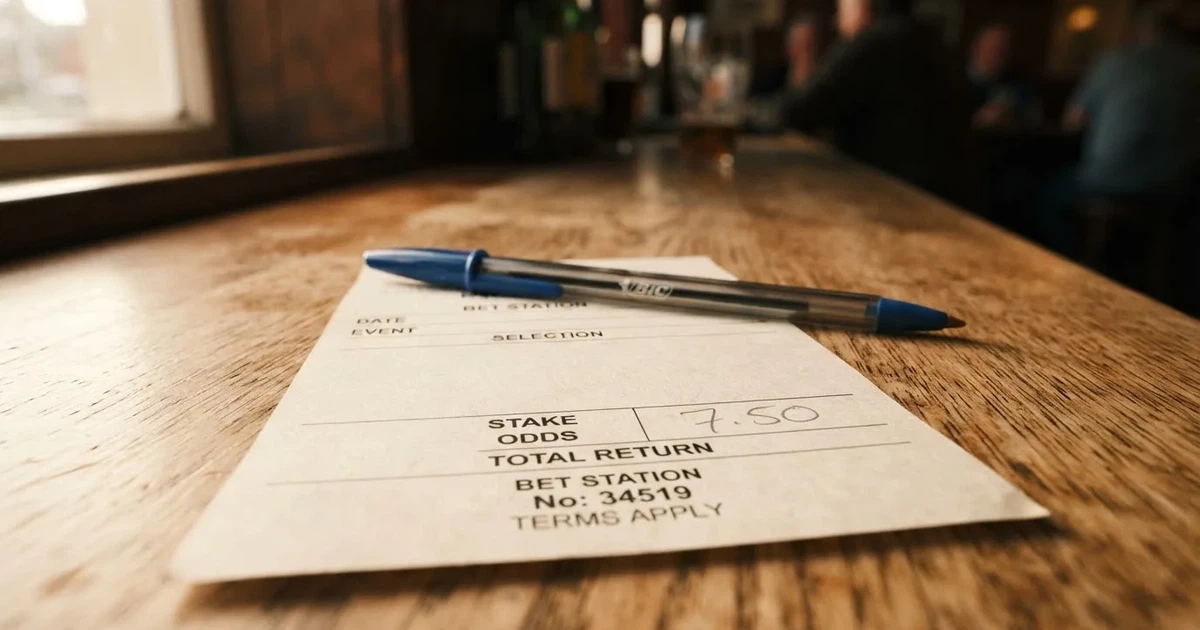
A “value bet” sounds like a tip. It is not. It is the difference between what a selection is worth and what a bookmaker charges you to back it, and the size of that gap is decided by two things only: how accurately the price reflects the true chance of the outcome, and how much of every pound the bookmaker takes as margin. Talk to a punter about value for any length of time and the conversation drifts, almost without exception, to those two numbers. The rest is branding.
This page is built around that drift. It walks through the maths first, because every recommendation that follows is only as honest as the arithmetic beneath it. It names the licences, because a price means nothing if the operator is not on the Gambling Commission’s register. It describes the offers, because a free bet advertised at £50 is rarely a £50 windfall once the turnover and the minimum price are taken into account. It closes on a ranking of ten GB-licensed brands, and on the places where the marketing word and the wagering term quietly disagree.
The angle throughout is cost. What does this market, this offer, this minimum price, this deadline, this licence requirement actually take out of a punter’s bankroll? The closer the answer approaches zero, the closer the brand is to being a value operator.
Mobile and the App Question
The first question most punters ask in practice is no longer about the desktop site. It is about the app, and the reason is not laziness. Betting apps are where the bulk of live betting and acca-building happens, where push notifications carry price boosts, and where the cash-out button is one tap away when a lead is slipping. The cost question changes shape the moment a wager moves from a desktop to a phone: the screen is smaller, the markets are reorganised, the bet builder is rebuilt for touch, and the live odds stream has to survive a patchy mobile signal on a crowded concourse.

A value punter treats the app the way an investor treats execution speed. The same price available on a slow app is not the same price available on a fast one, because the in-play market reprices in seconds and a sluggish bet placement leaves the price behind. Of the ten brands covered later, bet365 and Paddy Power have set the pace in this respect, and the others have been pulled along. The Fitzdares app offers cash out, accumulators, Lucky 15s, specials and antepost markets on horse racing, football, tennis, rugby, cricket, golf and American football, with in-play live odds sitting in the same shell. NetBet’s app surfaces Daily Boosts, Profit Boosts and free bet offers alongside a Bet Builder with what its listing calls instant dynamic odds, plus a stats section for the major leagues. London.bet has a 17+ App Store age rating, which is a small thing and worth noting: a rating below 17 in the UK would be a sign the operator is not in the regulated channel at all.
The kwiff app, published by Spryme Ltd, and Lottoland UK’s combined casino, lottery, sports and scratchcard app are both downloadable from the UK App Store and carry the same 17+ rating. The 10bet app states that 10bet.co.uk is licensed by the Great Britain Gambling Commission under licence 43173, and that line of self-description is the only public-facing proof a punter gets without opening the register. The Copybet app, from Copybet UK Limited, also states it is licensed and regulated in Great Britain by the Gambling Commission under account number 53774.
None of this settles the value question. A clean app with a slow price feed is still a value-destroying app. The brands whose in-play product holds up best are the ones whose cash-out, bet builder and live streaming have been re-engineered for the device rather than ported across.
Live Betting, Cash Out and the Cost of Taking the Money Early
Live betting is the natural home of value work, because a market that reprices in-play gives a sharper punter a longer window to find a mispriced outcome. The bookmaker’s defence is the margin, which is typically wider in-play than pre-match, and the price stream, which moves faster than any human reaction time once liquidity picks up. A “live value bet” is, in practice, a pre-match thesis that has not been invalidated by the in-play scoreline, priced at a moment when the bookmaker’s algorithm has not yet caught up. That moment is short.

Cash out is the other side of the live market. It is the price the bookmaker is willing to pay you to close a wager before the result, and it is set by the same model that set the original price. A punter who lays off a winning position at a small profit is paying the bookmaker for liquidity and for the removal of variance. A punter who cuts a losing position at a smaller loss is buying a stop-loss, which is the right move sometimes and an expensive habit most of the rest of the time. The question to ask before any cash out is whether the live price is closer to the true probability of the outcome from this point onwards, or further from it. If the bookmaker’s margin has widened in-play, cashing out of a winning position at a margin-widened price is selling at a discount.
Bet365’s Bet Builder+ combines markets from one event into a single wager and works both pre-match and in-play, with Super Boosts and Winnings Boosts layered on top. Paddy Power’s app adds Super Sub, where a bet rolls over to the replacement player if a selected footballer is substituted, alongside expanded Win More markets and player and ACCA stats. 888sport offers pre-match and in-play betting, Cash Out, Bet Builder, racing streams, BetFinder form tools, a live bet feed and daily boosted odds. Midnite’s site carries in-play events, an acca builder, popular accas and price boosts, all under the ceiling of its maximum-stake limits.
Smarkets sits in a different category. It is a betting exchange, licensed as a remote betting intermediary, and applies a standard commission of 2% on eligible exchange bets, with new customers having been offered 0% commission for 60 days against a £10 minimum first deposit. An exchange takes the other side of a bet, which means a punter can both back and lay, and the price is set by the customers, not by the operator. The trade-off is liquidity, and a thin market on a small fixture leaves the backer holding a price the bookmaker would have beaten. The 2% commission is the exchange’s cut of net winnings, not a margin on the price, and that distinction matters: the value the exchange offers comes from a tighter market, and the value it loses comes from the spread on a quiet event.
Predictions, Strategy and the Maths Behind a “Value” Call
A value bet is a wager whose price implies a lower probability than the bettor’s own estimate of the true chance. The arithmetic is plain. Take decimal odds of 3.00 on a tennis player to win a match you have priced at 40% to take. The implied probability from the odds is 1/3.00, or 33.3%, and the gap between 33.3% and 40% is the value. The expected return on a £10 stake, at 40% true probability, is £10 × 3.00 × 0.40 = £12, and the expected loss against the same probability is £10 × 0.60 = £6, leaving a positive expected value of £6. That is the only sense in which a bet is “good”. It does not mean the bet wins. It means the bet wins often enough, at a high enough price, to come out ahead over a large sample.
Three rules follow. The first is that a single bet is not a sample. A punter with a 55% edge who loses twice in a row has not lost the edge. A punter who treats a short losing run as evidence the edge was illusory will not stay in the market long enough to find out whether it was real. The second is that the price must be evaluated at the moment of placement, not in hindsight. The closing line, the last price available before the event starts, is the sharpest estimate the market has produced of the true probability, because the most informed money has had its final say. A punter who consistently beats the closing price is, by definition, finding value. A punter who does not is paying the bookmaker margin and calling it skill. The third is that the stake must be sized in proportion to the edge. The Kelly criterion, applied to a binary bet, sizes the wager as f = p/l – q/g, where p is the win probability, q is 1 – p, g is the fraction gained on a win, and l is the fraction lost on a loss. With a 60% chance of winning at even money, p = 0.6, q = 0.4, and g = l = 1, so f = 0.6 – 0.4 = 0.2, and 20% of the bankroll is staked on each bet. The full Kelly is aggressive; a half-Kelly or quarter-Kelly is the working compromise for almost everyone.
Value bettors look for closers, which is the term for a price that has tightened on a side they already backed. Value betting software exists to automate the scan across bookmakers, comparing each price against a benchmark model and flagging the gap. The value is real only as long as the model is real. A punter whose model is “I fancy this horse” is not running value work; they are running a hunch and dressing it up.
Bet Types, Odds Formats and the Margin That Hides in Every Price
The two odds formats the British punter meets are fractional and decimal. Fractional odds of “X to Y against” mean the profit is X for every Y staked, and the implied probability is Y / (X + Y). Four to one against implies a 1/5 chance, or 20%. Decimal odds express the same market as the total return per unit stake, so 4/1 fractional is 5.00 decimal, and the implied probability is the reciprocal, again 1/5.00 or 20%. The two formats describe the same number; the decimal is more useful for the arithmetic the rest of this page does.
The bookmaker’s margin (also called overround) is the difference between the true probabilities of all outcomes, which sum to 100%, and the implied probabilities the bookmaker publishes, which sum to more. In a three-runner market with true probabilities of 50%, 40% and 10%, a bookmaker’s implied probabilities of 60%, 50% and 20% sum to 130%, and the 30-point excess is the operator’s built-in profit on every pound bet, before any other cost is taken into account. The margin is the price of doing business with a bookmaker, and it is the single most important number on the page. A punter who does not know the margin of the market they are betting in is paying an unknown tax on every wager.
The illustrative two-way market for this section is priced at decimal odds of 1.90 / 1.90 (fractional 9/10 against). The implied probability on each side is 1/1.90, or about 52.63%, and the two sides sum to 105.26%. The fair probabilities, before the bookmaker took its cut, would sum to 100%, so the payout share of the market is 100% divided by 105.26%, which works out to about 95.0%. The margin, the slice of every pound the bookmaker keeps on average, is the difference, which lands at roughly 5.0%. A punt on either side at these prices is a wager in which the operator, in the long run, pockets about five pence in every pound staked across the market. A punt at 1.95 / 1.95 would sit closer to a 2.5% margin; a punt at 1.80 / 1.80 is a margin closer to 10%. The pattern holds across sports and across bet types: tighter prices, lower margin, less cost to the punter.
The margin is not a single number for one bookmaker. It varies by sport, by market, by fixture, and by whether the bet is placed pre-match or in-play. A football match-result market at 1.90 / 3.60 / 4.50 will carry a different margin to the same match’s total goals market, and both will differ from the corner or card markets on the same fixture. A tennis match-winner market will differ from the set betting market, and the match-winner market in-play will be wider than the same market pre-match. The only honest answer to “what is your margin” is the margin of the specific market being priced, on the day, at the time the punter is looking at it. Anything else is a brand average, and brand averages are not what gets paid out on a losing wager.
Sports, Tournaments and Where the Margin Creeps Down
Football carries the deepest liquidity of any sport in the British market, and the deepest liquidity is where the margin is thinnest. Premier League match-winner prices around 1.90 / 3.60 / 4.50 sit close to a 5% margin on most major books. Championship and Scottish Premiership matches are a touch wider. Lower-league football, women’s football, and youth football can carry margins above 8% and the prices become value traps for a punter who treats the sport as a single market.
Horse racing, and particularly UK and Irish racing, is the other deep market. Best Odds Guaranteed is the industry concession that pays the higher of the price taken and the starting price (SP), and it sits on top of the bookmaker’s margin as a small refund. William Hill pays BOG from 8 AM on the day of the race, on both single and multiple bets, and it does not apply to ante-post, tote or pari-mutuel bets. Octobet offers BOG on UK and Irish horse racing up to £150 per customer per race, which is the size of the ceiling a single punter can claim back on a single race.
Tennis is a value-rich sport in the sense that the outright market is binary and the prices are set by an algorithm that does not always keep up with form on clay, on grass, or at the back end of a long season. Cricket, golf, rugby and American football all carry the same characteristic: a smaller market, a sharper bookmaker, a longer-form game that lends itself to in-play trading, and a price stream that punishes any punter who works from yesterday’s model.
The bet builder is where the margin moves in the wrong direction for the punter. A bet builder combines markets from one event into a single wager, and the bookmaker’s combined price carries an additional layer of margin on top of the margin already inside each leg. Bet365’s Bet Builder+, Paddy Power’s Bet Builder+ and NetBet’s Bet Builder with instant dynamic odds all work this way, and the cost is in the price. A bet builder at a face price of 5.00 is, after the build margin, often equivalent to a single market at 4.50, and the punter who does not know that is paying for the convenience.
How Value Betting Works, Step by Step
The mechanics of a value bet are not complicated, and the discipline is the same whether the bettor is on a £5 stake or a £500 one. The first step is the model. A price without a model is just a number; a price with a model is a comparison. The model can be as simple as a closing-line benchmark and as elaborate as a Poisson-driven expected-goals model for football, and what matters is that the model produces a probability the punter is willing to defend.
The second step is the price. The punter checks the bookmaker’s price against the model’s probability, and the bet is placed only when the price is higher than the model says it should be. Decimal odds of 3.00 on a 40% chance are a value bet. Decimal odds of 2.20 on a 40% chance are not, even though 2.20 is the right number to back at 45%. The difference between a value bet and a bad bet is often a single tick in the price, which is why a price comparison across several books is the third step. Bet365, Paddy Power, 888sport, NetBet, Fitzdares and the rest of the field will often sit a tenth or two apart on the same selection, and the difference is sometimes the entire value of the wager.
The fourth step is the stake. Kelly-sizing the wager, or sizing it to a half or quarter of full Kelly, ties the stake to the edge and prevents the bettor from over-committing to a marginal price. The fifth step is the record. A value punter who does not log every wager, the price taken, the closing line, and the result is running blind. The closing line is the scoreboard; the wager log is the only way to read it.
The sixth step is the long run. A punter who runs this process over hundreds of bets, with a model that holds up, and a price discipline that does not slip, will end up ahead of the bookmaker’s margin in expectation. A punter who runs it for a weekend and quits after a bad run was never running value work; they were running a tipster’s diary with extra arithmetic.
The Top Ten UK Value Bookmakers, Compared
The ranking below is built on three things. The first is a Gambling Commission remote licence, checked against the Commission’s public register; every brand here holds one, and the licence number is the test a punter can re-run in under a minute. The second is the bookmaker’s own statement of what the offer, the market, the payment method or the feature does in practice, read from the operator’s site or app listing. The third is the cost the punter pays, after the margin, the wagering requirement, the minimum price, the deadline, the cap on free-bet winnings, and the in-play mark-up have all been taken into account. The brands are listed in the order set by research, and the licence details are stated as the register records them.
| Brand | Gambling Commission remote licence and holder | What the operator’s own terms state on value |
|---|---|---|
| Fitzdares | Remote general betting standard (real events); Fitzdares Limited; account 000400 | Cash out, accumulators, Lucky 15s, antepost markets on horse racing, football, tennis, rugby, cricket, golf and American football, in-play live odds |
| NetBet | Remote general betting standard (real events); Netbet Enterprises Limited; account 039170 | Daily Boosts, Profit Boosts and free bet offers, Bet Builder with instant dynamic odds, sports stats for major leagues |
| BetUK | Remote general betting standard (real events); LeoVegas Gaming PLC; account 039198 | Free bets exclude virtual sports, esports and non-UK/IE horse racing, minimum odds apply |
| bet365 | Remote general betting standard (real events); Hillside (UK Sports) ENC; account 055148 | Bet Builder+ pre-match and in-play, Super Boosts, Winnings Boosts on Bet Builders and selected singles, daily Bet Boosts |
| Paddy Power | Remote general betting standard (real events); PPB Counterparty Services Limited; account 039439 | Bet Builder+, Super Sub where a bet rolls over to a substitute, expanded Win More markets, player and ACCA stats |
| London Bet | Remote general betting standard (real events); Thistle Bet Limited; account 066162 | Stated as licensed and regulated in the UK, 17+ App Store age rating |
| 888sport | Remote general betting standard (real events); 888 UK Limited; account 039028 | Pre-match and in-play betting, Cash Out, Bet Builder, racing streams, BetFinder, live bet feed, daily boosted odds |
| Smarkets | Remote betting intermediary; Smarkets (Malta) Limited; account 039173 | 2% standard commission on eligible exchange bets; 0% for 60 days against a £10 minimum first deposit |
| Octobet | Remote general betting standard (real events); Octopus Game Limited; account 062545 | Best Odds Guaranteed on UK and Irish horse racing, up to £150 per customer per race |
| Tote | Remote general betting standard (real events); TDCO Limited; account 054779 | Best Odds Guaranteed on UK and Irish horse racing from 8 AM on race day, singles and multiples, not ante-post, tote or pari-mutuel |
Fitzdares
Fitzdares is licensed for remote general betting standard on real events, which is the licence category the great majority of British sportsbooks hold. The product is positioned on racing and the sports with a settled British audience: horse racing, football, tennis, rugby, cricket, golf and American football. The app surface carries cash out, accumulators, Lucky 15s, antepost markets and in-play live odds, and the same markets are visible on desktop. For a punter who keeps a tighter portfolio, Fitzdares’ narrower sports book is also a tighter one, with a price on the big Premier League and Championship fixtures that is usually inside a percentage point of the market leaders. The cost of staying inside the brand is the absence of some of the more exotic markets the bigger books carry.
NetBet
NetBet’s licence is held by Netbet Enterprises Limited, and the brand’s offer sits in the middle of the market. Daily Boosts, Profit Boosts and free bet offers are the headline items, and the Bet Builder with instant dynamic odds is the feature that distinguishes the product for a punter who likes to combine markets. A sports stats section for the major leagues sits next to the bet placement, which is a small but real advantage when pricing a bet. The free bet terms are stated in the brand’s own terms, and a punter who claims one should expect the usual minimum-odds and wagering conditions; a free bet at minimum odds of 1.50 (3/2) is a different wager from a free bet at minimum odds of 2.00 (1/1), and the difference is the value the offer actually returns.
BetUK
BetUK runs on the LeoVegas Gaming PLC licence, and the operator is one of two brands on this list (the other being BetMGM UK) that sit under that licence holder. The offer is mainstream: football, racing, in-play, casino, and the same bet builder and boosts as the rest of the field. The free bets exclude virtual sports, esports and non-UK/IE horse racing, and minimum odds apply, which means a punter who was planning to use a free bet on a virtual football coupon or an esports outright will not get the chance. For a punter whose betting is focused on real UK and Irish sport, the exclusion list is irrelevant. For a punter who plays across virtuals and esports, the offer is not what the marketing copy suggests.
bet365
bet365 is the largest single brand in the British market and the price-setter the rest of the field measures itself against. The Bet Builder+ combines markets from one event into a single wager, available pre-match and in-play; Super Boosts are the headline price-promotion; Winnings Boosts apply to Bet Builders and selected singles; daily Bet Boosts are a smaller version of the same. The cost of being a price-setter is that the brand is also the sharpest at restricting successful punters. A long-term winner will, at some point, find their stakes limited on a side, and that is the standard cost of doing business at a sharp book.
Paddy Power
Paddy Power runs alongside Betfair under PPB Counterparty Services Limited, and the two are part of the same commercial operation, which a punter comparing brands should not treat as two independent operators. The product is full-spectrum: Bet Builder+, Super Sub (where a bet rolls over to the replacement player if a selected footballer is substituted), expanded Win More markets, and the player and ACCA stats that frame a football wager. The brand is the home of the price boost in the British market, and the cost of those boosts is that the unwaged stake is often not returned on a free bet, which is the convention across the industry but not the way a casual reader reads the marketing.
London Bet
London Bet is published by Thistle Bet Limited and states it is licensed and regulated in the UK. The app has a 17+ App Store age rating, which is the App Store’s own filter on age-appropriate content, and that rating, alongside the licence, is the minimum a UK punter should require of an app. The product is smaller than the bigger brands, and the narrower book can mean a less competitive price on Premier League football and a thinner in-play offering on lower-league matches.
888sport
888sport is the sportsbook of 888 UK Limited, a brand that sits inside the 888 group. The offer is broad: pre-match and in-play betting, Cash Out, Bet Builder, racing streams, BetFinder form tools, a live bet feed and daily boosted odds. The racing streams are the differentiator for a punter who wants to watch the race they have bet on without leaving the app, and the BetFinder form tools sit next to the bet placement for the same reason. The cost of the broader product is the wider app, which can feel slower than a smaller book on older handsets.
Smarkets
Smarkets is a betting exchange, licensed as a remote betting intermediary, and it works on a different model from the rest of the field. The price is set by the customers, not by the operator, and the operator’s cut is the commission on net winnings, which sits at 2% on eligible bets, with 0% commission for 60 days available against a £10 minimum first deposit for new customers. A punter who can find the other side of their wager at a competitive price pays a fraction of the margin they would pay at a traditional bookmaker, and the exchange is the natural home of in-play trading. The cost is liquidity, and the smaller the event the wider the spread. A Premier League match-winner market on Smarkets is a tight market; a League Two match-winner market is not.
Octobet
Octobet is licensed for remote general betting standard on real events, and the headline offer is Best Odds Guaranteed on UK and Irish horse racing, up to £150 per customer per race. The £150 ceiling is the same kind of cap that BOG offers tend to carry, and a punter whose BOG refund would exceed £150 on a single race gets only £150 back. For a smaller punter, the cap is irrelevant; for a higher-staking racing punter, it is the difference between a full BOG and a partial one.
Tote
Tote runs pool betting on British and Irish racing alongside the fixed-odds book, and the pool product is the differentiator. Tote is licensed by TDCO Limited and pays Best Odds Guaranteed from 8 AM on race day, on single and multiple bets, with the BOG not applying to ante-post, tote or pari-mutuel bets. The pool betting product is a separate question from the fixed-odds book, and a punter who treats Tote as only a fixed-odds book is missing the part of the offer that makes the brand distinct.
The Regulatory Frame in Great Britain
The Gambling Commission is the regulator. It is a non-departmental public body sponsored by the Department for Culture, Media and Sport, and it licenses the whole commercial market under the Gambling Act 2005. The Act covers Great Britain, which is England, Scotland and Wales; Northern Ireland is outside the Act and runs under older legislation, and a GB licence is not a Northern Ireland licence. Since the Gambling (Licensing and Advertising) Act 2014 an operator whose remote facilities are used in Great Britain needs a Commission licence wherever it is based, and the Commission’s public register, searchable by business name, trading name, domain or account number, is the whole test of whether a brand holds one. The register is the only test, because licensed operators use .com as well as .co.uk, and the domain proves nothing. There is no state monopoly and no cap on the number of licences.
Betting licence types matter. A remote general betting standard (real events) licence covers the bulk of British sportsbooks, including the ten on this page. A remote betting intermediary licence covers betting exchanges, and Smarkets on this list is the only one. Spread betting is split: financial spread betting is regulated by the Financial Conduct Authority, and Spreadex is one of the brands that splits the regulator between the FCA and the Gambling Commission, with the FCA on the financial product and the Commission on the fixed-odds book. A spread betting customer is told on the Spreadex homepage that losses can exceed the deposit, and that warning is the regulator’s first line of defence, not a marketing line.
Identity verification is in force before a customer can deposit or gamble at a GB-licensed site, and that has been the case since 7 May 2019, including when a free bet or bonus is the wager in question. Name, address and date of birth are checked before the first deposit, and a customer who fails the check does not get the offer. There is no anonymous play at a licensed site, and that is a feature, not a bug: it is the verification the regulator uses to enforce the age floor at 18 and the self-exclusion register at the back.
Payment rules a punter should know
Credit cards are banned for gambling in Great Britain, and the ban took effect on 14 April 2020 under LCCP condition 6.1.2. The ban covers credit-card-funded payments through an e-wallet, which closes the route that would otherwise exist of topping up an e-wallet with a credit card and then spending from the e-wallet at a bookmaker. Debit cards and bank-based payments are not covered by the ban. There is no state list of permitted payment methods, no British named-account rule, and no rule for or against cryptocurrency at licensed operators; the payments question is settled in each operator’s own terms, and a punter who plans to deposit by an unusual method should check the operator’s payments page first.
The bonus cap that took effect this year
The Commission has put a cap on bonus wagering. From 19 January 2026, wagering requirements on bonuses at GB-licensed operators are capped at 10x, which means a £10 bonus at 50x wagering would have needed £500 of qualifying bets, and the same £10 bonus under the cap needs no more than £100. Mixed-product promotions, an offer that requires gambling on two or more product types such as betting, casino, bingo and lottery, are banned. Whether the 10x cap applies to free bets with no wagering condition, and any cap on the money value of a bonus, are not established; the punter who is offered a £50 free bet should read the small print for the wagering condition and the minimum price, and the 10x cap is the ceiling above which the terms should not sit.
Tax
The player pays no tax on betting winnings in Great Britain, which is general information and not tax advice; a professional gambler should ask HMRC or a qualified adviser. General Betting Duty is the operator’s tax on gross profits, currently 15%, and a new remote betting rate of 25% applies within it from 1 April 2027, while remote bets on UK horse racing, self-service betting terminal bets, pool betting and in-person betting stay at 15%. Until 1 April 2027 the remote rate stays at 15%, and whether operators pass duty on through the odds is not established. A punter should not be told the player is charged duty; the duty is the operator’s, and the way it reaches the punter is the margin.
Offshore and what an unlicensed site costs
A GB licence is compulsory at the point of consumption. Providing gambling facilities in Great Britain without the licence the Act requires is an offence under section 33 of the Gambling Act 2005, and the offence is aimed at the operator, not the customer. No offence aimed at a customer who merely bets on an unlicensed site was found, and the honest framing is the loss of protection: no GAMSTOP coverage, no Commission complaints route, no approved dispute-resolution body, no British consumer redress if funds are withheld, not bound by the 10x bonus cap and not bound by the financial vulnerability check. Enforcement is disruption, not blocking: cease-and-desist notices, search-engine referrals, work with registrars, hosts and payment providers, and the Commission has been given, or is about to receive, court-order DNS blocking powers. The point is not that an unlicensed site is “illegal to use” for the punter. The point is that the punter who uses one gives up the entire British safety net and replaces it with whatever the operator chooses to provide.
Responsible Gambling and the Cost of the Protections
GAMSTOP is the national multi-operator online self-exclusion scheme, and it has been a mandatory licence condition for online operators since 31 March 2020. The exclusion periods are six months, one year, five years, or five years with auto-renewal, and after the minimum period the exclusion stays in place for a further seven years unless the customer asks GAMSTOP to remove it. GAMSTOP covers online sites and apps; betting shops use a separate service. Kalooki Sportsbook, which sits outside the ten on this page but illustrates the point, is a GAMSTOP member, and so is every other operator the Commission licenses for online play.
The financial vulnerability check (LCCP condition 3.4.4) is a public-record check that applies to licensed remote betting when a customer’s deposits minus withdrawals exceed £150 in a rolling 30 days, with the rule in its current form since 28 February 2025. It is not an income check and not a credit reference check, and the trigger is a public-record marker such as a bankruptcy or a county court judgment. Financial risk assessments, the affordability checks the press describes, are announced in a staged plan from a Commission article of 7 July 2026 with no start date. A punter who has heard about affordability checks should treat the rule as announced and staged, and not assume it is in force.
Deposit limits under the Remote Technical Standards (RTS 12) are an operator obligation to offer a gross deposit limit on a fixed time frame, and the first changes have applied since 31 October 2025, with a second phase postponed to 30 September 2026; whether the second phase is live is not established. There is no state-set deposit or loss ceiling for betting, which is worth saying because the assumption the other way is common: the limits are the customer’s choice, and the operator must offer the option to set one. Help is at GamCare (National Gambling Helpline), GambleAware, the NHS gambling clinics, and Gamblers Anonymous.
The protection package has a cost, and the cost is friction. Identity verification before the first deposit, a vulnerability check at £150 of net deposits in 30 days, a financial risk assessment when the staged plan starts, and a GAMSTOP self-exclusion a customer has to ask to be removed from after the minimum period. Friction is the price of a regulated market, and a punter who resents the friction is being asked to weigh it against the cost of giving up the safety net. Both costs are real.
Bonuses, Free Bets and What an Offer Actually Pays
A free bet is a token the operator credits to a customer’s account, and the punter uses it as a stake. The stake is usually not returned on a winning free bet, and the winnings are paid in cash after a wagering condition is met, or as a free bet in a second round, depending on the terms. A £10 free bet at 3.00 that wins pays £20 in profit, not £30, and that distinction is the difference between the marketing word and the wagering reality. The same offer with a 5x wagering requirement at minimum odds of 1.50 is a different offer again, because the £50 of qualifying bets that follow the free bet carry the bookmaker’s margin, and that margin is the cost of clearing the offer.
The 10x bonus cap that took effect in January 2026 has changed the shape of the British bonus market. A £10 bonus at 50x wagering would have needed £500 of qualifying bets before the cap, and under the cap needs no more than £100. A punter who now sees a £50 bonus at 10x wagering is looking at a £500 turnover, and the cost of that turnover to the punter, on a market with a 5% margin, is £25 in expected loss. The offer is worth the £50 face value minus the £25 in clearing cost, which is £25, and the punter who treats the offer as a £50 windfall is the punter the marketing copy is written for.
Mixed-product promotions are banned as of 19 January 2026. An offer that requires the customer to bet on football to get free spins, or to wager on casino to get a sports free bet, is no longer available at a GB-licensed operator. The cap is one of the sharpest edges the Commission has put on the British market in years, and a punter who sees a bonus that crosses product types is looking at an offer that is either pre-cap or non-compliant, and either of those is a reason to check the operator’s licence status.
A “risk-free” bet is a marketing label, not a regulated product. The offer usually takes the form of a free bet refund if the first wager loses, which is a free bet, not a refund in money. A “price boost” is a one-off enhancement on a named selection, and the cost is that the boosted price usually carries a stake cap. An “accumulator insurance” is a refund as a free bet if one leg of an acca lets the punter down, and the cost is the same: the refund is a free bet, with the wagering condition that comes attached. Each of these is a free bet under another name, and the punter who treats them as the marketing copy describes will be surprised by the wagering term.
Frequently Asked Questions
How is a value bet found?
A value bet is a wager whose price is higher than the probability of the outcome justifies. The first step is a model, however simple, that produces a probability; the second is to check the bookmaker’s price against it; and the third is to place the wager only when the price implies a lower probability than the model. A closing-line comparison across bookmakers is the cleanest test: a punter who consistently beats the closing price is finding value, and a punter who does not is paying the margin.
What is value betting?
Value betting is the practice of placing wagers whose expected return is positive against the punter’s own probability estimate of the outcome. It is not the same as tip-following. A tip is a selection; a value bet is a selection at a price high enough to clear the margin and leave a positive expected return over a large sample. The price is the whole of the value.
What is closing line value in betting?
The closing line is the last price available on a selection before the event starts, and it is the sharpest estimate the market has produced of the true probability. A punter who consistently takes a price higher than the closing line has beaten the market, which is the operational definition of value. A punter who finishes below the closing line has paid the margin and called it skill.
How can a Gambling Commission licence be checked?
The Gambling Commission publishes a public register that can be searched by business name, trading name, domain or account number, and the register is the whole test of whether a brand holds a GB licence. The licence number is the search term; the licence holder, the licence category and the licence status are what the register returns. A punter who cannot find a brand on the register should not deposit with that brand.
How is the return on a bet worked out from the stake and the odds?
The return is the stake multiplied by the decimal odds. A £10 stake at decimal odds of 3.00 returns £30, of which £10 is the original stake and £20 is the profit. The same market at fractional odds of 2/1 returns the £10 stake plus £20 in profit for the same £30 total. A combination bet multiplies the odds of the legs into one price, so two selections at 3.00 each become 9.00, and the same £10 stake returns £90.
What is the bookmaker’s margin and how does it show in the odds?
The bookmaker’s margin is the slice of every pound staked the operator keeps on average, and it is the difference between the true probabilities of all outcomes, which sum to 100%, and the implied probabilities of the prices the bookmaker publishes, which sum to more. A two-way market priced at 1.90 / 1.90 implies probabilities of about 52.63% on each side, summing to 105.26%, which is a margin of roughly 5%. The margin is the cost of doing business with the bookmaker, and it is the same number for the punter regardless of which side wins.
Betting sites & exchanges – Cricket betting
Content created by the «Cricket betting» team
