
Best Odds Guaranteed in 2026: How the Offer Pays Out, and Who Actually Offers It
 Available in US
Data current as of 27 October 2026 and checked against the Gambling Commission’s public register. Decimal odds throughout, with the British fractional form in brackets where the figure matters.
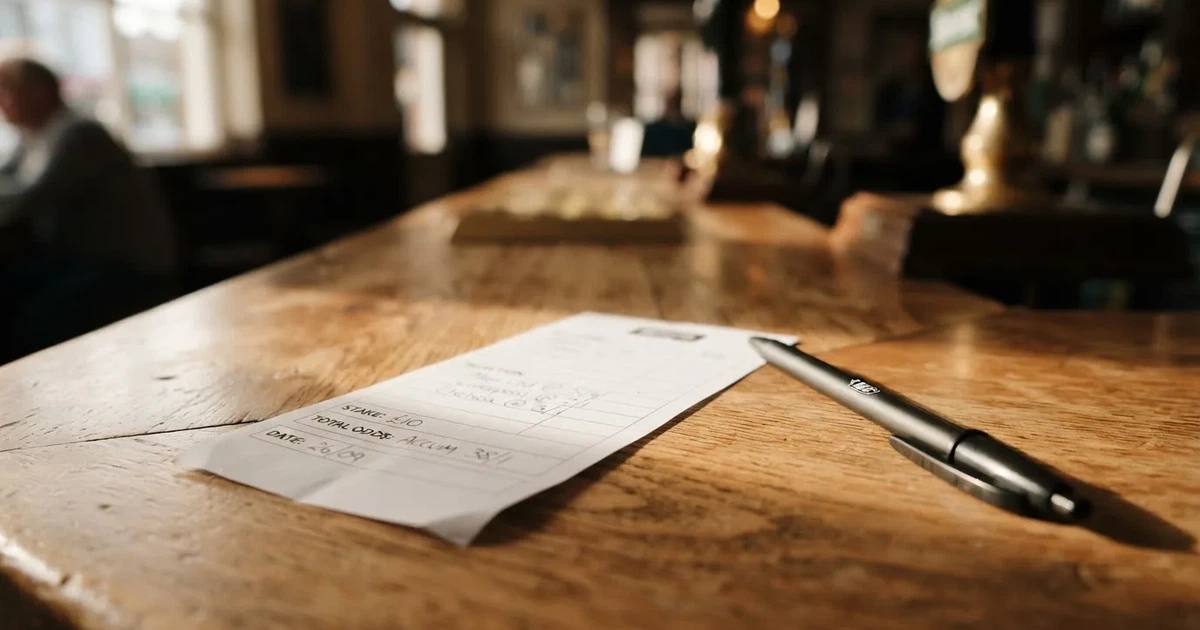
Best Odds Guaranteed sounds like a gift from the bookmaker. It isn’t. It is a price promise that pays out only on a particular kind of racecourse outcome, and the conditions sitting on top of it decide whether the punter sees the benefit or merely the marketing. This page is about the cost: the price, the settlement rule, the cap, the deadline, and the market margin that is sitting inside every price the offer improves.
How Best Odds Guaranteed Is Built and Settled
A bet on a British or Irish horse race is taken at a fixed price — a number the bookmaker quotes in the morning, the night before, or a few minutes before the off. The starting price (SP) is a different number, set on the course when the race begins. SP is the median of a sample of on-course bookmakers’ prices: the shortest price in the longer-priced half, meaning at least half the sample was offering that price or bigger when the tape closed. Where the punter has not taken a fixed price, the SP settles the bet.
Best Odds Guaranteed is the rule that bridges the two. Where the punter has taken a fixed price and the SP turns out to be larger, the winning bet is paid out at the SP rather than the price taken. The headline number was 4/1, the SP closes at 9/2, the bet pays at 9/2. The punter gains the difference; the bookmaker absorbs it.
The offer has no statutory basis. It is a commercial promise each operator chooses to run, and the terms attached decide how often the promise actually pays out. The three that matter are timing, scope and cap.
Timing: When the Offer Switches On
A bookmaker that runs BOG turns the offer on at a particular time. William Hill turns it on at 8am on the day of the race, for UK and Irish racing, and applies it to both single and multiple bets; ante-post bets (those placed before the final declarations are made), tote bets and pari-mutuel bets are excluded from that start time. Other operators run from a different cutoff, and a number of them only guarantee the offer on the day rather than from the night before. A bet placed too early is settled on the price taken, regardless of the SP that follows.

Scope: What Kind of Bet Qualifies
BOG covers win singles and the win leg of an each-way bet, on most operators. Multiples are a more uneven picture. William Hill applies the offer to multiples, where every leg runs on a race that is itself covered. The each-way part of an each-way bet is a separate bet; the place terms are set by the operator and by the race, and they are settled separately. Ante-post bets, enhanced-place terms and any non-runner markets fall outside the offer on most terms. The punter who thinks BOG covers the place half of an each-way bet is reading the marketing, not the rule.
Cap: The Uplift Ceiling
Sky Bet caps the BOG uplift at £50,000 per bet or per race for horse racing — a ceiling on what the offer can add to a return, not on the bet itself. The cap rarely bites at recreational stakes; it bites when a price has drifted a long way and the bet is large. The punter with a £5 each-way bet at 10/1 has nothing to fear from a £50,000 ceiling. The punter with a £10,000 win bet at 6/4 has very good reason to read the cap on the terms before placing it.
Rule 4 and the Bigger SP
Rule 4 is a bookmaker deduction applied when a horse withdraws from a race after the fixed-price market has formed. The bookmaker takes a percentage from the winnings to compensate the layers who have already taken the bigger price. Sky Bet’s terms keep the Rule 4 deduction on a price taken where the horse runs, unless the horse returns at a SP that is bigger than the price taken, in which case the bet is paid at SP with no deduction. The SP is then treated as the bigger number, and the deduction is bypassed. The rule is finer than it looks: a deduction taken on a price taken may be reversed in part or in whole on the SP, and the punter who ignores the rule pays for ignoring it.
What the Offer Is Worth, in Margin Terms
The bookmaker’s margin is built into every price on the betting board. The margin is the share of every unit staked that the bookmaker keeps on average across all outcomes of one market. For a two-way market priced at 1.90 / 1.90, the payout share is 1 ÷ (1/1.90 + 1/1.90) = 1 ÷ (1.0526) = 0.95, so the margin is 1 − 0.95 = 0.05, or 5%. The same calculation at 1.80 / 1.80 gives a payout share of 1 ÷ (1/1.80 + 1/1.80) = 1 ÷ (1.1111) = 0.90, a margin of 10%. The margin is what the bookmaker keeps regardless of which runner wins, and it is the first cost the punter pays. BOG pays a second time, after the race, on the SP, but only on the bet that won.
Best Odds Guaranteed does not change the margin. It changes the payout on a single bet when one condition holds. The bookmaker’s edge on the bet was already taken at the price; the SP is the small upside on the upside, and the punter who reads the offer as “no margin” is reading it wrong.
The 10 Bookmakers Running Best Odds Guaranteed
The brands below hold a Gambling Commission remote licence for general betting on real events, as recorded on the Commission’s public register. Each card sits on the same template: licence, what the offer covers, and the verdict the terms support.
| Brand | Gambling Commission licence | What the terms say on best odds guaranteed |
|---|---|---|
| BoyleSports | Account 39469 (Boylesports Enterprise) | Horse racing BOG applies on the day; specific terms published on site |
| BetUK | Account 39198 (LeoVegas Gaming PLC) | Free bets and BOG advertised on app; minimum-odds terms apply to free bets |
| London Bet | Account 66162 (Thistle Bet Limited) | UK-licensed brand; BOG terms published on site |
| DragonBet | Account 64908 (DragonBet Ltd) | Welsh racing and football markets, plus standard UK racing BOG |
| Bet600 | Account 44731 (Tyche Tech Limited) | Pays BOG on horse racing: where SP is bigger than the early or show price taken, the bet is paid at the SP |
| Matchbook | Account 39504 (Triplebet Limited) | Betting exchange; rates and rules specific to exchange customers; SP-based settlement for backers |
| Sporting Index | Account 27343 (Sporting Index Limited) | Spread betting operator; fixed-odds free bets settle per operator’s terms |
| Spreadex | Account 8835 (Spreadex Limited) | Fixed-odds and spread betting on the same account; FCA-regulated for spread betting |
| William Hill | Account 39225 (WHG (International) Limited) | BOG on UK and Irish racing from 8am on race day, on single and multiple bets; ante-post, tote and pari-mutuel bets excluded |
| QuinnBet | Account 61011 (QuinnBet (Gibraltar) Limited) | Free bets valid 7 days at minimum odds of 1/2 (1.5) and maximum 50/1; BOG terms published on site |
Every brand on the table is on the Commission’s public register as a remote general betting standard (real events) licensee. The register is the test of who holds a licence in Great Britain, and a name on the table is a name on the register as of the data current-as-of date at the top of the page. A licence is a permission to operate, not an endorsement of any specific offer, and every offer on the table is settled on the operator’s own published terms.
BoyleSports
BoyleSports runs the standard horse-racing BOG on the day. The licence sits with Boylesports Enterprise, a long-standing operator on the Commission’s register. BoyleSports also runs an Acca Insurance offer: opt-in required, a minimum stake of £5, a minimum price of 1/2 (1.50), and a maximum refund of £20 paid as a free bet expiring in 7 days; the qualifying bets must be placed and settled on the same day. The acca insurance is the louder offer; BOG is the quieter, more frequently paid one. The £20 ceiling on the refund, and the requirement to settle on the same day, are the two costs the marketing page does not name.
The verdict: a solid BOG, with a free-bet product that pays a defined ceiling and demands same-day settlement. The punter who values the acca insurance for what it is — a £20 ceiling, not a full refund — has the right expectation.
BetUK
BetUK runs on the same LeoVegas Gaming PLC licence as BetMGM UK, account 39198. Free bets exclude virtual sports, esports and non-UK/IE horse racing, and minimum odds apply. The exclusion list is the cost: a free bet that looks general in fact cuts out three of the louder product categories. The punter who wants a free bet on a virtual football match or a non-UK horse race is looking at the wrong place.
The verdict: a clear offer, with an exclusion list that the marketing page flattens. BOG on UK and Irish racing is the day-to-day value.
London Bet
London Bet is published by Thistle Bet Limited, account 66162. The brand is a small, London-facing bookmaker with a 17+ App Store rating. The BOG terms are published on the site rather than the app, and they cover UK and Irish horse racing. There is no broad product claim in the marketing — the offer is what the terms say, and the punter who reads the terms gets the offer they expect.
The verdict: a straightforward BOG, with no acca insurance or price boost on top. A thin offer paid exactly as written is what this brand runs.
DragonBet
DragonBet is published by DragonBet Ltd, account 64908, with a particular focus on Welsh football and rugby, alongside racing, American football, in-play and bet builder markets. BOG on UK and Irish horse racing runs alongside the regional specials. The brand is small and the offer is the standard one; the regional focus is the reason a punter might pick it, not a different BOG.
The verdict: a brand worth a look for the Welsh markets, with BOG running on the racing side. The punter who bets on Welsh football has a reason to keep the account; the punter who doesn’t has no reason to open it.
Bet600
Bet600 pays BOG on horse racing: where the starting price is bigger than the early or show price taken, the bet is paid at the SP. The brand sits on Tyche Tech Limited, account 44731. The wording is the cleanest on the table: a direct statement of the rule, with no marketing layer above it. A punter comparing terms across the table will see the Bet600 line and read it the same way as the rule itself.
The verdict: a clear, simply-worded BOG. The punter who values the offer for what it says has found a brand that says it directly.
Matchbook
Matchbook is a betting exchange, licensed as a remote betting intermediary (the betting exchange licence category), account 39504, with Triplebet Limited as the holder. A betting exchange is a different business: customers bet against each other rather than against the bookmaker, with Bet Builder, multiples, in-play and live streaming of horse racing and greyhounds. The BOG concept does not transfer directly to an exchange, because the punter’s price is set by another customer, not the house. Back bets on horse racing on the exchange are settled at SP where the backer did not take a price, and the BOG-style upside is in the lay side rather than the back side.
The verdict: a different business model, with a BOG concept that applies in form rather than in name. The punter who wants the exchange model has a reason to be here; the punter who wants a BOG with a cap and a deadline is looking at a traditional bookmaker.
Sporting Index
Sporting Index is a spread betting operator, account 27343, with a sports spread betting product on the side. The new-customer offer is a £10 fixed-odds bet at minimum odds of 1/2 (1.50), which unlocks three £10 fixed-odds free bets, three £5 Total Goals spread bets, three £5 Winning Favourites spread bets and a £1 Race Index spread bet. The qualifying bet cannot be placed in play or cashed out early. The free-bet structure is the louder offer; the spread bets at the end are the smaller slots, and the in-play / cash-out exclusion is the cost the headline does not name.
The verdict: an offer with a defined shape, where the headline free bets are bounded by an in-play and cash-out rule. The punter who reads the qualifying-bet terms before placing has the right expectation.
Spreadex
Spreadex runs both fixed-odds betting and spread betting on the same account, regulated by the Gambling Commission for fixed odds and by the FCA for spread betting. Spread betting losses can exceed the deposit. The new-customer offer is £60 in free bets for a £10 fixed-odds bet, with the free bets usable across fixed odds and spread betting; the qualifying bet must be placed within 28 days of opening the account. The 28-day window is a real deadline and the cross-product free bets are a different shape from a single-vertical free-bet offer.
The verdict: a broad offer on a hybrid account, with a deadline the punter must meet. The punter who wants to use free bets on both sides of the business has the right reason to be here; the punter who wants a single-vertical free bet has a smaller reason.
William Hill
William Hill is the longest-established name on the table, with account 39225 held by WHG (International) Limited. BOG runs on UK and Irish horse racing from 8am on the day of the race, on single and multiple bets; ante-post, tote and pari-mutuel bets are excluded. The 8am start time and the explicit exclusion list are the costs the marketing page does not name. The punter who places a bet the night before and assumes BOG applies is on the wrong side of the rule; the punter who bets at 8.05am is on the right side.
The verdict: the most explicit BOG terms on the table, with a clear start time and a clear exclusion list.
QuinnBet
QuinnBet is published by QuinnBet (Gibraltar) Limited, account 61011, with BOG on UK and Irish racing. Free bets are valid for 7 days from credit, on any market at odds of 1/2 (1.5) or greater, with maximum odds of 50/1; straight accumulators are allowed but Trixies, Patents and Yankees are not. The 7-day validity, the 1/2 minimum, the 50/1 maximum and the multi-bet exclusion list are the four costs that the marketing page does not name.
The verdict: a defined free-bet product with four specific costs, paid in line with the published terms. The punter who reads the four costs before placing has the right expectation.
The Framework: Who Licenses a Bookmaker in Great Britain
The Gambling Commission licenses the whole commercial betting market in Great Britain, under the Gambling Act 2005. The Commission is a non-departmental public body sponsored by the Department for Culture, Media and Sport. Great Britain means England, Scotland and Wales; Northern Ireland is outside the Act and runs under its own older law. Since the Gambling (Licensing and Advertising) Act 2014, an operator whose remote facilities are used in Great Britain needs a Commission licence wherever it is based. A Curaçao, Maltese or Gibraltar licence is not a substitute at the point of consumption.
The Commission’s public register is the whole test of who holds a licence. It can be searched by business name, trading name, domain or account number. A search by name returns the licence categories the holder runs: remote general betting standard (real events), remote general betting standard (virtual events), remote general betting limited, remote pool betting, and remote betting intermediary (the licence for betting exchanges). The register is the source of every licence number on the table above; a brand on the table is a brand on the register, as of the data current-as-of date at the top of the page.
The licensing categories decide what the operator can offer. A holder of remote general betting standard (real events) can offer fixed-odds betting on real sporting events; a holder of remote betting intermediary can run a betting exchange. An operator can hold several categories, and several brands can run under one licence. A name on the table is a name on the register, not an endorsement of any specific offer, and the offer is settled on the operator’s own published terms in every case.
Verification, Age and Identity
A customer at a GB-licensed bookmaker is verified before the first deposit, with name, address and date of birth confirmed through a third-party data check (since 7 May 2019). The check covers free bets and bonuses as well as cash deposits: a free bet is still a bet, and the same rules apply. The minimum age is 18. An unlicensed site asks for none of this, and the absence of verification is one of the reasons an unlicensed site is cheaper to operate.
Financial Conduct Authority and Spread Betting
Financial spread betting is regulated by the Financial Conduct Authority, not the Gambling Commission. Spreadex, which runs both fixed-odds and spread betting on the same account, is a useful illustration: the fixed-odds side is regulated by the Commission, the spread-betting side by the FCA, and the marketing page names both. Spread-betting losses can exceed the deposit; that line is on the spread-betting firm’s homepage, and the punter who bets on a financial market through spread betting is taking a position with losses that are not capped at the deposit.
Marketing and the Bonus Cap
Advertising is not licensed by the Commission; it runs through the CAP Code (non-broadcast) and BCAP Code (broadcast), enforced by the ASA, alongside the Commission’s own LCCP marketing conditions. The CAP Code section 16 rule: marketing must be socially responsible, must not be of strong appeal to under-18s, and no one who is or seems to be under 25 may be featured gambling or play a significant role in the advertisement, with an exception for marketing placed where a bet can be made directly. The rule concerns who may appear in the advertisement, not who may bet.
Promotion rules in force since 19 January 2026 cap wagering requirements on bonuses at 10x: a £10 bonus at 50x would need £500 of qualifying bets; under the cap no more than £100. Mixed-product promotions — an offer that requires gambling on two or more product types, for example “bet on football to get free spins” — are banned. Whether the cap applies to free bets with no wagering condition, and any cap on the money value of a bonus, are not established in the published rules.
The “whistle-to-whistle” rule is an industry code rather than a law: since 1 August 2019, betting advertisements are not shown on TV from five minutes before a live sporting event to five minutes after it, before the 9pm watershed, with horse and greyhound racing excluded. The Premier League clubs’ withdrawal of gambling sponsorship from the front of matchday shirts from 2026/27 (sleeves and hoardings remain) is voluntary, not law. A punter who sees a betting brand on a sleeve or a hoarding is seeing a deal between a club and a sponsor, not a regulatory rule.
Tax and the Punter’s Position
The punter pays no tax on betting winnings in Great Britain. General Betting Duty is the operator’s tax, currently 15% on gross profits, and from 1 April 2027 a remote betting rate of 25% applies within it, while remote bets on UK horse racing, bets on self-service betting terminals, pool betting and in-person betting stay at 15%. The remote rate stays at 15% until 1 April 2027. Whether operators pass duty on through odds is not established, and the punter is not charged duty at the betting slip.
Spread betting has its own rates: 3% on financial spread betting, 10% on other spread betting. The Commission’s statutory levy is a separate charge, not a tax on the punter. The punter is paid the return; the duty is paid by the operator; the rate is the operator’s cost.
Offshore and the Loss of Protection
A GB licence is compulsory at the point of consumption. Providing gambling facilities in Great Britain without the licence the Act requires is an offence under section 33 of the Gambling Act 2005, aimed at the operator. The customer who bets on an unlicensed site is not committing an offence under the Act; the customer is losing the protections that come with the licence.
The list of protections is the page’s case for using a licensed site. GAMSTOP coverage, the Commission’s complaints route, an approved dispute-resolution body, British consumer redress where funds are withheld, the 10x bonus cap, the £150 financial vulnerability check — none of these exist at an unlicensed site. The unlicensed site also does not verify identity, which is the reason the punter can open an account in five minutes and the reason the punter’s funds are not protected under British consumer law if the site disappears. The page’s framing: licensed = checks, limits, GAMSTOP, bonus cap, but also verification before the first bet; unlicensed = none of those protections and possible loss of funds. Neither is the safe choice by default; the comparison is a comparison of protections, not a verdict on the punter.
Enforcement is disruption rather than blocking. The Commission issues cease-and-desist notices, refers unlicensed sites to search engines, works with registrars, hosts and payment providers, and has been given or is about to receive court-order DNS blocking powers. ISP-level blocking is not in operation; describing it as such overstates the present position.
Safer Gambling, GAMSTOP and the Customer’s Tools
The protections a GB-licensed bookmaker offers the punter are the next cost. The punter is verified, the offer is bounded by the bonus cap, the free bet has a deadline, and the deposit has a limit the punter sets. The licensed bookmaker’s safer-gambling product is built around these.
GAMSTOP is the national multi-operator online self-exclusion scheme. It is a mandatory licence condition for online operators since 31 March 2020. A punter who registers with GAMSTOP is excluded from every online GB-licensed operator for the period chosen: six months, one year, five years, or five years with auto-renewal. After the minimum period the exclusion stays in place for a further seven years unless the customer asks GAMSTOP to remove it. GAMSTOP covers online sites and apps; betting shops use a separate service.
The financial vulnerability check (LCCP condition 3.4.4, in force since 30 August 2024) applies to licensed remote betting when a customer’s deposits minus withdrawals exceed £150 in a rolling 30 days, since 28 February 2025. It is a public-record check (for example bankruptcy or county court judgments), not an income check and not a credit reference check. The punter who crosses the threshold is checked against public records, and the operator takes the result into account in the customer interaction.
Financial risk assessments — the “affordability checks” of the press — are announced in a staged plan (Commission article of 7 July 2026), with no start date. The published position is “announced, staged, no start date”, and writing that the checks are in force overstates the present position.
Deposit limits (RTS 12) require operators to offer a gross deposit limit on a fixed time frame. The first changes have applied since 31 October 2025, a second phase was postponed to 30 September 2026, and whether the second phase is live is not established. There is no state-set deposit or loss ceiling for betting: limits are the customer’s choice, and the operator’s job is to offer the tool, not to set the number.
The help lines are free and confidential. GamCare runs the National Gambling Helpline. GambleAware funds treatment and education. NHS gambling clinics are free at the point of use. Gamblers Anonymous runs peer-support meetings across the country. A punter who feels the betting is no longer fun has a list of places to start, and the licensed operator’s safer-gambling page links to them.
Identity Verification and the Cost of Anonymity
The verification at signup is the cost of anonymity. The punter who wants to bet without a name and address has chosen the unlicensed site, and the unlicensed site is the one without GAMSTOP, the bonus cap, the £150 check or the dispute-resolution body. The licensed site is the site that knows who the punter is, and the licensed site is the one that can act on that knowledge.
The Licensed Bookmaker’s Product and the Bonuses Attached to It
Every bookmaker on the table runs a new-customer offer alongside the BOG. The headline is a free bet; the fine print is the wagering, the minimum odds, the deadline, the market exclusion, and the cap on the winnings. The punter who reads only the headline has the wrong expectation. The punter who reads the fine print has the right one.
Free Bets, Bet Credits and the Stake Question
A free bet is a token the operator credits to the punter’s account. The punter places a bet with the token rather than with cash. The stake is not returned with a winning free bet on most operators: a £10 free bet at 4/1 returns £40 in profit, not £50. The arithmetic is stake-free, and the punter who treats the free bet as a £10 cash bet at 4/1 has the wrong expectation by £10. The terms state whether the stake is returned, and the punter who reads the terms has the right expectation.
BoyleSports’ Acca Insurance is a refund-as-free-bet offer: one leg fails, the stake is refunded as a free bet up to £20, with a 7-day expiry and same-day settlement. QuinnBet’s free bets are valid for 7 days from credit, at minimum odds of 1/2 (1.5) and maximum 50/1, on straight accumulators but not on Trixies, Patents or Yankees. Sporting Index’s qualifying bet cannot be placed in play or cashed out early. Each rule is a constraint, and the punter who places the qualifying bet in play, or settles the next day, is on the wrong side of the constraint.
The 10x Cap and the Cost of a Bonus
A bonus is a credit the operator adds to the punter’s deposit, which the punter must wager before withdrawing. The wagering requirement is the multiplier: a £10 bonus with a 5x requirement needs £50 of qualifying bets. The 10x cap introduced in 2026 is the regulatory ceiling: no licensed operator can require more than 10x. A £10 bonus at the cap is £100 of qualifying bets; the punter who clears it has spent the wagering on margin.
The margin on the qualifying bets is the cost of clearing the bonus. A market with a 5% margin costs 5p per £1 staked, on average; a £100 turnover at 5% costs £5 in expected loss. The bonus is £10; the cost is £5; the net value is £5, before any winnings on the bonus credit itself. A heavier bonus with a lower wagering requirement and a smaller margin is a better offer than a lighter bonus with a higher wagering requirement and a heavier margin, and the punter who compares offers on net value is comparing them on the right basis.
Enhanced Odds and Price Boosts
An enhanced odds offer is the bookmaker raising the price of a particular outcome for new customers: a normally 5/1 shot becomes 10/1, with the stake usually capped and the stake not returned on a win. A price boost is the same shape on an existing customer: a particular outcome gets a temporary price increase, on the operator’s chosen events. Both offers have a stake cap; both are paid at the boosted price; the punter who reads the cap has the right expectation.
The cost of an enhanced odds offer is the price. The bookmaker has priced the offer to break even on the marketing bet, with the long-term value to the operator in the punter’s subsequent bets. A punter who takes the offer and walks away has captured the marketing value; a punter who takes the offer and continues betting has paid the marketing value back in margin.
Acca Insurance and the Ceiling
Acca insurance is a refund-as-free-bet offer on accumulators (one leg fails, the stake is refunded as a free bet up to a ceiling). BoyleSports’ offer has a £20 ceiling, a £5 minimum stake, a 1/2 (1.50) minimum price and a same-day settlement rule. The £20 ceiling is the cap on the refund, and the punter who placed a £100 acca and lost one leg has the £20, not the £100.
The expected value of acca insurance is the probability of one leg failing, multiplied by the refund, minus the cost of the wagering on the free bet. A five-leg acca at 1/2 per leg has a probability of all five legs winning of (2/3)^5 = 32/243 = 13.2%, a probability of one leg failing of 5 × (2/3)^4 × (1/3) = 80/243 = 32.9%, and a probability of two or more legs failing of 1 − 13.2% − 32.9% = 53.9%. The £20 refund applies on the 32.9% of bets that lose exactly one leg, and the punter’s expected refund per £100 staked is £20 × 0.329 = £6.58. The free-bet stake is not returned on a win, so the value of the refund depends on the price the punter takes with the free bet. The punter who calculates the expected value has the right expectation.
The Working Price: How a Margin Is Built
A bookmaker’s margin is the share of every unit staked that the bookmaker keeps on average across all outcomes of one market. The margin sits inside every price on the betting board, and the punter who reads the margin reads the bookmaker’s edge.
The Two-Way Market
A two-way market (a match-result market, an over/under, a both-teams-to-score bet) is the simplest case. Two outcomes, two prices, one margin. The payout share is 1 ÷ (1/odds₁ + 1/odds₂), and the margin is 1 minus the payout share. A 1.90 / 1.90 market has a payout share of 1 ÷ (1/1.90 + 1/1.90) = 1 ÷ 1.0526 = 0.95, a margin of 5%. A 1.80 / 1.80 market has a payout share of 0.90, a margin of 10%. The market at 1.90 / 1.90 keeps 5p in every pound staked; the market at 1.80 / 1.80 keeps 10p. The punter who reads the margin reads the cost.
A two-way market at 1.95 / 1.95 has a payout share of 1 ÷ (2/1.95) = 0.975, a margin of 2.5%. A market at 2.00 / 2.00 is a perfect 100% payout, with no margin and no bookmaker’s edge. A 2.00 / 2.00 market is the cleanest price the bookmaker offers, and the punter who finds one has found a price that pays out the full stake on a win.
The margin is the band, not a point. A 1.90 / 1.90 market has a margin in a narrow band around 5% depending on the rounding; a market at 1.91 / 1.89 has a margin of about 5.3%; a market at 1.85 / 1.95 has a margin of about 5.1%. The band is the same on most major markets, and the punter who compares markets on the band is comparing them on the cost.
The Three-Way Market
A three-way market (1X2 on a football match: home win, draw, away win) is built the same way. Three outcomes, three prices, one margin. The payout share is 1 ÷ (1/odds₁ + 1/odds₂ + 1/odds₃), and the margin is the rest. A 2.10 / 3.40 / 3.60 market has a payout share of 1 ÷ (0.4762 + 0.2941 + 0.2778) = 1 ÷ 1.0481 = 0.954, a margin of 4.6%. A 1.80 / 3.40 / 4.50 market has a payout share of 1 ÷ (0.5556 + 0.2941 + 0.2222) = 1 ÷ 1.0719 = 0.933, a margin of 6.7%. The draw adds a third price and a third leg to the margin, and the margin on 1X2 is heavier than the margin on a two-way market on the same event.
The Margin and the Punter’s Edge
A punter who bets on a market with a 5% margin loses 5p on every £1 staked, on average, before considering the punter’s skill. A punter who bets on a market with a 10% margin loses 10p on every £1. The skill that overcomes a 5% margin is real but rare; the skill that overcomes a 10% margin is rarer still. The punter who reads the margin reads the bookmaker’s edge, and the punter who reads the edge knows the cost of the bet.
The price is the only number on the betting slip that the punter controls. The margin is the only number the punter should compare across markets. A market at 1.90 / 1.90 is cheaper than a market at 1.80 / 1.80, and the punter who picks the cheaper market is keeping more of the stake for the same outcome.
The Snapshot and the Live Market
The margin moves with the market. A price taken in the morning is not the price the market closes at, and the closing price is the most efficient price the market produces. The punter who bets early takes a less efficient price; the punter who bets late takes a more efficient price. The cost of the early bet is the wider margin, and the cost of the late bet is the missing price if the market has moved against the punter.
The BOG promise sits inside this. A punter who takes a price in the morning and the SP closes higher is paid at the SP. The morning bet is the inefficient price; the SP is the efficient price; the offer bridges the two. The bridge is the offer’s value, and the offer is the bookmaker’s way of taking the morning bet at the inefficient price without losing the punter to the more efficient market that closes on the course.
Frequently Asked Questions
Which bookmakers do best odds guaranteed?
The brands above — BoyleSports, BetUK, London Bet, DragonBet, Bet600, Matchbook, Sporting Index, Spreadex, William Hill and QuinnBet — all run some form of BOG, settled on the operator’s published terms. The Commission’s public register confirms each as a remote general betting standard (real events) licensee. A punter comparing terms across the brands is comparing ten real offers, not ten marketing claims, and the terms are the test of what each offer pays.
Which bookmakers offer best odds guaranteed?
BOG is offered by some UK bookmakers, and a punter who wants it should look at the racing side of the betting board rather than the football side. The terms on each operator’s site are the test of what the offer pays; a brand on the table is a brand with BOG, settled on the published terms. The offer is most often a horse-racing offer; greyhound BOG is less common, and football or tennis BOG is rare.
What bookmakers offer best odds guaranteed?
The brands above offer BOG, each on their own terms. A brand on the table is a brand with BOG, but the offer’s conditions vary: timing (8am or earlier), scope (win singles only, or multiples), cap (£50,000 at Sky Bet, undefined elsewhere on the table), and Rule 4 behaviour. The punter who compares terms on these four is comparing the offer itself, not the marketing.
How can it be checked that a bookmaker holds a Gambling Commission licence?
The Commission’s public register is the whole test. Search by business name, trading name, domain or account number. A search by name returns the licence categories the holder runs: remote general betting standard (real events), remote general betting standard (virtual events), remote general betting limited, remote pool betting, and remote betting intermediary. The register is the source of every licence number on the table above, and a brand on the table is a brand on the register as of the data current-as-of date at the top of the page.
How is the return on a bet worked out from the stake and the odds?
The return is stake × odds. The net profit is stake × (odds − 1). A £10 bet at decimal odds 4.00 (3/1) returns £40 (£10 × 4.00), a net profit of £30. A £10 bet at decimal odds 1.50 (1/2) returns £15, a net profit of £5. For a combination bet, the odds of the legs multiply into one price: a double at 2.00 and 3.00 is a combined price of 6.00, and a £10 double returns £60. The punter who reads the odds reads the return; the punter who reads the return knows the cost of the bet.
What is the bookmaker’s margin and how can it be seen in the odds?
The margin is the share of every unit staked that the bookmaker keeps on average across all outcomes of one market. For a two-way market at 1.90 / 1.90, the payout share is 1 ÷ (1/1.90 + 1/1.90) = 0.95, and the margin is 1 − 0.95 = 0.05, or 5%. The margin is built into the odds, and the punter who calculates it from the prices on the board is reading the bookmaker’s edge. A market at 1.80 / 1.80 has a margin of 10%; a market at 1.95 / 1.95 has a margin of about 2.5%. The margin is the cost, and the punter who reads the cost knows the price.
Free bets & offers – Cricket betting
Content created by the «Cricket betting» team
