
Cycling betting odds – a practical read on price, margin and what each UK bookmaker charges
 Available in US
Cycling betting odds look straightforward on the surface: pick a rider, take the price, place the stake. The arithmetic underneath is doing more work than the slip suggests, and it works the same way whether the race is a one-day Classic, a stage of the Giro, or the final week of the Tour de France. The odds are the price, the margin is the cut the bookmaker keeps, and the distance between them is the only place the punter can find value. This page walks through how that distance is built, how to read a cycling betting market on a licensed UK bookmaker, and where each of ten licensed operators positions itself on price, market depth and the conditions attached to its offers.

Current as of 27 October 2026 · verified against the Gambling Commission’s public register.
The top 10 UK-licensed bookmakers for cycling
The comparison below brings together the ten brands the rest of this page treats one by one. Cycling is a secondary sport for most of them, which is why pricing varies more between firms than it does in, say, Premier League football. A bookmaker that features daily in-play cycling and Grand Tour outright markets week after week tends to hold a tighter margin than one that prices up the Tour once a year and copies the rest of the field. The list is ordered as research sets it and reads top to bottom; the table that follows gathers the facts that decide who is worth a look before a flattish stage, and who only matters when one of the big three races is on.
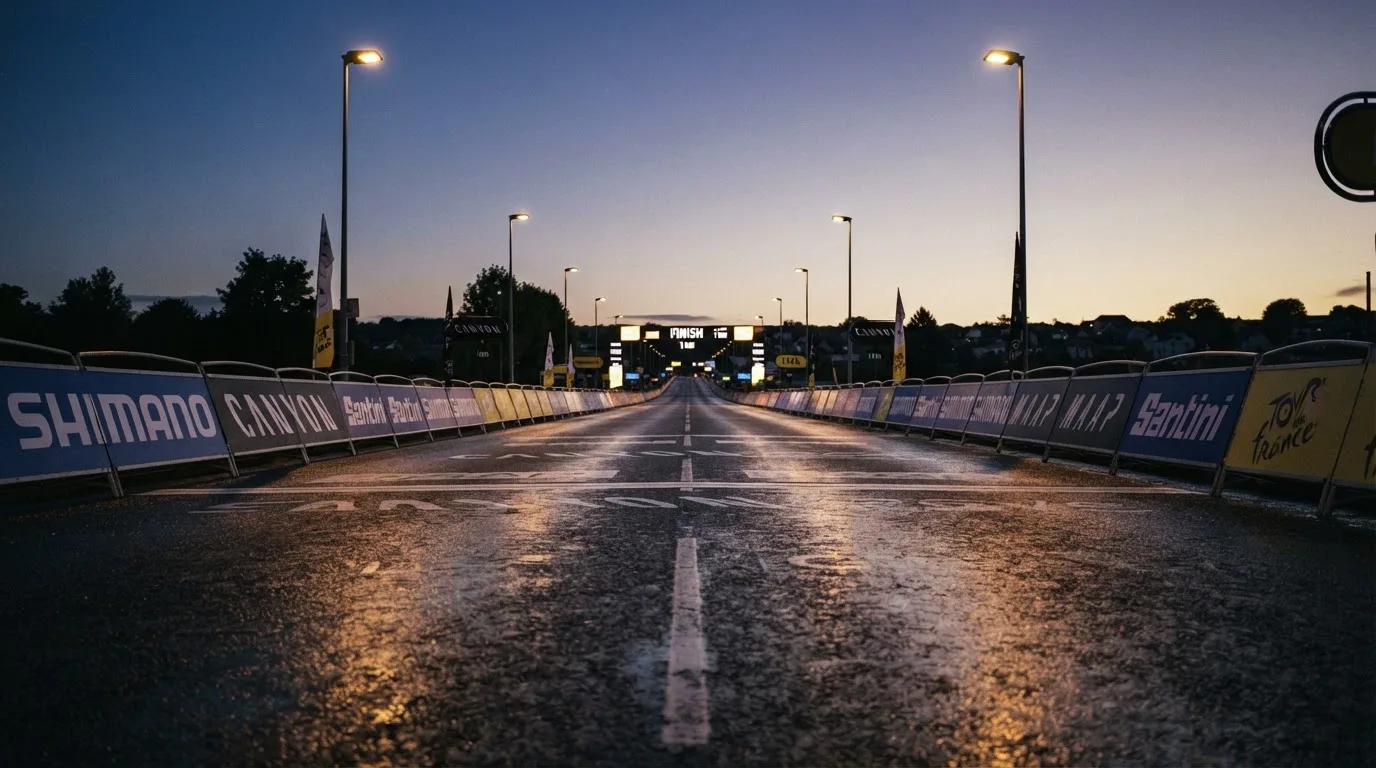
How the ten stack up
| Bookmaker | Gambling Commission licence | What the operator’s own terms state on cycling |
|---|---|---|
| DragonBet | Remote licence 064908-R-339041-003 (account 64908); DragonBet Ltd | Cycling markets feature around Welsh-interest cycling events and the Grand Tours; full in-play coverage on major races; Bet Builder on selected stage and outright markets. |
| Fafabet | Remote licence 057385-R-333191-006 (account 57385); Taichi Tech Limited | Stage winner, GC outright and podium markets priced across all three Grand Tours; Best Odds Guaranteed applies to UK and Irish racing, not cycling. |
| Betboro | Remote licence 044181-R-324363-007 (account 44181); Webmedia Development N.V. | Stage and outright cycling markets around the Tour, Giro and Vuelta; welcome offer is a matched free bet rather than a margin play. |
| Matchbook | Remote licence 039504-R-319407-024 (account 39504); Triplebet Limited | Betting exchange, so prices are set by other customers rather than the firm; commission applies to net winnings on each market, not a margin. |
| Spreadex | Remote licence 008835-R-104580-022 (account 8835); Spreadex Limited | Spread and fixed-odds cycling markets across the Grand Tours; FCA regulates the spread side, Gambling Commission the fixed-odds side, and losses on spreads can exceed the deposit. |
| DAZN Bet | Remote licence 048756-R-327274-019 (account 48756); DZBT Limited | Outright and stage winner cycling markets around the three Grand Tours; offers tend to mirror the wider market; deposits start at £5 by debit card and at £20 by PayPal. |
| Bet Ahoy | Remote licence 100094-R-341742-003 (account 100094); Bet Ahoy Ltd | Outright and stage markets across the three Grand Tours; welcome offer is described as a £5 sports bet plus a £5 acca after a £10 qualifying wager. |
| London Bet | Remote licence 066162-R-340278-004 (account 66162); Thistle Bet Limited | Cycling features among a wider sportsbook built around football, tennis, racing, darts and US sports; outright cycling markets on Grand Tours only. |
| 10bet | Remote licence 043173-R-322899-023 (account 43173); Blue Star Planet Limited | Grand Tour stage winner and GC outright, plus selected Classics; Cash Out and Bet Builder available on listed events. |
| Hollywoodbets | Remote licence 053028-R-330019-013 (account 53028); Hollywoodbets International UK Limited | Stage winner, podium and GC outrights during the three Grand Tours; welcome offer refunds a losing accumulator stake as a free bet rather than touching the odds. |
A licence number confirms the right to take bets remotely from customers in Great Britain; it does not rank the bookmaker on cycling. What it does do is confirm that the standard protections apply: GAMSTOP self-exclusion, a 10x cap on bonus wagering, mandatory financial vulnerability checks once deposits exceed £150 in a rolling 30 days, and access to the Commission’s complaints route. Anything outside that envelope is the operator’s own decision, and the offer terms attached to a price carry as much weight as the price itself.
Why cycling odds look the way they do
Road cycling is hard to price for a bookmaker, and that is not a complaint, it is the shape of the sport. A Grand Tour lasts three weeks and runs through twenty-plus stages that change the leaderboard daily. A field is around twenty-three teams of seven riders, and a single crash or a half-hour of crosswind can split the favourites across two minutes without anyone attacking. Compare that to a Premier League match where the result is one of three outcomes settled in ninety minutes, and the modelling job looks much smaller. The bookmakers who do it well have a route through it; the rest copy prices from the firms that do.

The mechanism is the same one that prices any other sport. Each outcome of a market is given a probability, those probabilities are converted to decimal odds, and a margin is built in to make the prices worse than the true chances they imply. The implied probability of decimal odds *d* is 1/*d*: at 4.00 the implied chance is 25%, at 2.00 it is 50%, at 1.50 it is 66.7%. Add the implied probabilities of every outcome in a market together and the total exceeds 100%; the excess is the margin, the cut the bookmaker takes on every unit staked on the market. The bigger the gap above 100%, the worse the price for the punter and the better it is for the firm.
The two-way head-to-head is the easiest case to see. Take a stage where two riders are priced at 1.90 and 1.90, and ignore the rest of the field for the moment. Each price implies a 52.63% chance: 1 divided by 1.90. Two of them together imply 105.26%, so the margin on this two-way line is 5.26%. The bookmaker pays back 94.74% of the stake as winnings across the market and keeps 5.26%, before any operator-specific commission or promotion. That 5.26% is a band rather than a single number because every bookmaker is built slightly differently, but the structure is fixed.
Field-size sports show a wider gap. A Grand Tour outright market with forty runners, each priced somewhere between 2.50 and 1,000, routinely sums to 115-125%. The margin sits above 15%, occasionally well above. That is one reason outright punters shop around: the field pricing varies more between firms than the two-way head-to-head does, because each bookmaker has to find its own lines on every runner.
In-play markets get a tighter margin than pre-match on the same event, because the bookmaker is reacting to live action rather than setting a number days in advance. Cycling in-play is also a faster-moving market than most: the gap between the leader at the bottom of a climb and the leader at the top can be forty seconds, and the price on the favourite to win the stage can shorten twice in a single ascent. The firms with serious cycling desks are the ones whose prices survive that volatility without falling over.
Where the betting is regulated
Great Britain has no closed list of sports a bookmaker may price; the Gambling Commission’s licensing regime decides who can take bets, not what they may take bets on. Every commercial bookmaker serving customers in Great Britain needs a Commission remote operating licence irrespective of where the company sits. A Curaçao, Maltese or Gibraltar registration is not a substitute: since the Gambling (Licensing and Advertising) Act 2014 took effect, the test of who can take a remote bet from someone in England, Scotland or Wales is the Commission’s public register, full stop. The remote general betting standard (real events) category covers sports like cycling; the remote betting intermediary category is separate and is what covers exchanges such as Matchbook.
The minimum age is 18 and identity is verified before the first deposit and before the first bet, even where that first bet is a free bet or bonus. Credit cards are banned for gambling in Great Britain, including credit-card-funded e-wallet deposits; debit cards and bank-based payments such as Trustly are not covered by that ban. The Commission does not license advertising; that runs through the Advertising Standards Authority’s CAP Code (non-broadcast) and BCAP Code (broadcast). Wagering requirements on bonuses are capped at 10x at licensed operators as of 19 January 2026, and mixed-product promotions that demand betting on two or more product types are banned. Those rules are why the comparison below stays at ten firms: every one of them is on the register, and the package of protections that goes with that licence is the same across the ten.
The player pays no tax on betting winnings in Great Britain. General Betting Duty is the operator’s tax, currently 15% on gross profits for remote betting, moving to a separate 25% remote rate from 1 April 2027 for the part of the business that is remote sports betting; UK horse racing, pool betting and betting in licensed premises stay at 15%. The 25% jump is a duty on the operator, not on the customer, and how far each firm passes it on through shorter odds is not established; what matters for the punter is the spread between any two bookmakers’ prices, not whether the duty is hidden inside one of them.
What every UK-licensed bookmaker has to do for the punter
GAMSTOP is the national self-exclusion scheme and a mandatory licence condition for every online operator in this list since 31 March 2020. Self-exclusion runs for six months, one year, five years, or five years with auto-renewal, and the minimum period is followed by a seven-year cooling-off period unless the customer asks for the exclusion to be lifted. From 30 August 2024 a financial vulnerability check runs on every licensed remote bookmaker once a customer’s net deposits (deposits minus withdrawals) exceed £150 in a rolling 30 days, in force since 28 February 2025. It is a public-record check that looks at things like bankruptcy orders and county court judgments; it is not an income check and not a credit reference check. Deposit limits on a fixed time frame are an RTS 12 obligation: the first phase applied from 31 October 2025, a second phase was postponed to 30 September 2026, and whether it is live is not established.
Help is a layer above the licence conditions. GamCare runs the National Gambling Helpline, GambleAware funds treatment and education, the NHS runs gambling clinics around the country, and Gamblers Anonymous runs peer-support meetings. Every licensed bookmaker links to at least the first two of those services from a safer-gambling page. Help-seeking is the whole reason those links exist, and they are worth using when the bet slips from being a price into being a habit.
The package is not free for the bookmaker, and it is not free for the punter. Verification before the first deposit means there is no anonymous play at a licensed site, which costs the customer ten minutes of upload-time on a passport or driving licence. Bank statements and source-of-funds questions follow once the vulnerability check kicks in, and the £500 cap on bonus wagering means a £10 deposit bonus does not get stretched into a £500 playthrough. Those are the trades the GC regime makes: a customer who fails the checks cannot deposit at all, and a bonus that wants to be cleared can be cleared inside a sensible betting volume.
Cycling itself, and how the calendar shapes the markets
Road cycling sits under the UCI, the Union Cycliste Internationale, a Swiss federation founded in 1900 that has governed road cycling since its earliest organised racing and runs the annual men’s and women’s road World Championships. The top tier of the professional road calendar is the UCI WorldTour, created in 2005 as the ProTour and renamed the WorldTour in 2011; it bundles the three Grand Tours, the one-day Monuments, and the most important week-long stage races into a single calendar. The three Grand Tours are the Giro d’Italia (first held in 1909), the Tour de France (1903) and the Vuelta a España (1935); UCI rules allow a Grand Tour to run for fifteen to twenty-three days, and the leaders wear a pink jersey in the Giro, a yellow jersey in the Tour and a red jersey in the Vuelta. Two rest days are standard.
The three-week race is the one the betting market is built around. A Grand Tour produces more than twenty separate stage-winner markets, a General Classification outright that runs for the full duration of the race, a King of the Mountains outright, a points classification outright, a young rider classification outright, a team classification outright, daily breakaway specials and head-to-heads between named riders, sometimes half a dozen match bets per stage. The shape of the betting calendar follows the shape of the racing calendar: pre-race outrights open weeks before the Grand Tour, in-play markets open on the morning of each stage, and stage markets are settled within an hour of the finish line. Stage winner, top three, top six, head-to-head and overall GC are the markets that hold the deepest liquidity on every licensed UK bookmaker; one-day Classics and week-long stage races outside the WorldTour tend to be priced on outright winner and a few specials rather than the full menu.
The 2026 Tour de France ran from 4 to 26 July 2026, starting in Barcelona with a team time trial and finishing on the Champs-Élysées in Paris, covering 21 stages and 3,245 km with 23 teams. Tadej Pogačar of UAE Team Emirates won the 2026 Tour, his fifth Tour victory. The same trio of Grand Tours sits on the calendar every year, and the bookmakers price each one in the same shape.
How an offer reads against the odds
An offer does not change the odds, but it can change what the odds cost the punter to chase. A matched free bet, an acca refund, a deposit bonus and Best Odds Guaranteed each attach their own conditions to the way the punter plays the price.
A matched free bet pays a free bet equal to the qualifying stake once that stake has settled; the free bet’s stake is not paid back when it wins. A £25 free bet at decimal odds of 4.00 is worth £75 in profit if it wins, against a winning cash bet of the same price that returns £100 in profit. The offer sits behind the qualifying wager, which has its own conditions on minimum stake, minimum number of selections and a minimum price per selection (3/5, or 1.60 decimal, is the common floor).
Best Odds Guaranteed is a horse-racing concession rather than a cycling one. The rule pays out at the bigger of the original price and the starting price when the SP is bigger, and most bookmakers apply it to UK and Irish racing only. Cycling markets have no SP in the racing sense, so this concession does not carry over from the racing page.
A welcome offer reads as headline value against the conditions attached to it. Read the small print first: the qualifying bet, the minimum price per leg, the deadline for placing the qualifying wager, the cap on free-bet winnings, and the rule on what counts as settled. The offer is the wrapper; the price the punter takes is still the same price, and the wrapper changes the net return through what it gives back if the qualifying bet loses.
A worked margin on a two-way line
Take an illustrative two-way market priced at 1.90 and 1.90 in decimal form, equivalent to 9/10 in fractional. The implied probability of each side is 1 ÷ 1.90, or 52.63%. Two sides together imply 105.26%, which means the bookmaker’s margin on this market is 5.26% and the payout share is 94.74%. On this market the bookmaker keeps 5.26 pence of every pound staked across the two outcomes, on average; the punter gets back 94.74 pence in winnings for every pound that finds a winning selection. The two-way line is the cleanest case to read: the same arithmetic on a field-size outright would land higher than 105% on most Grand Tour winner markets.
The margin is an average across all outcomes, not a cost on any single bet. A punter who catches the winner at 4.00 still wins at the price they took; the cost is the gap between the implied probability of that price and the true probability of winning, multiplied through every other losing selection that paid for it.
DragonBet
DragonBet is published by DragonBet Ltd and holds Gambling Commission remote licence 064908-R-339041-003 against Commission account 64908. The brand sits on a smaller consumer base than the major firms, focused on Welsh-interest sports including football and rugby, with racing, American football, in-play betting and a Bet Builder as the broader product. Cycling markets sit inside that mix, concentrated around the Grand Tours, where stage and outright markets carry through; smaller stage races outside the WorldTour tend to fall away.
For the punter, DragonBet is worth a look on Grand Tour outrights where its pricing opens independently of the rest of the field. On stage markets, the depth of the price depends on which side of the line the firm’s traders are staking; on a flattish sprint stage the price of the favourite is unlikely to beat the firms with full-time cycling desks, but on a mountain stage where the firm’s traders have done their homework the price can run to value. The trade-off is depth: the firm carries Welsh-interest football and rugby as its main act, so the cycling product gets close attention only across the three weeks of the Tour, the Giro and the Vuelta.
Fafabet
Fafabet holds Gambling Commission remote licence 057385-R-333191-006 against Commission account 57385 and is operated by Taichi Tech Limited. The site covers UK and Irish horse racing with Best Odds Guaranteed on win and each-way bets from 9am on race days: if the starting price is bigger than the original price, the bigger odds are paid. Cycling sits outside that BOG regime, but the firm prices stage winner, GC outright and podium markets across all three Grand Tours.
The value in Fafabet for a cycling punter is the firm’s Tour pricing, where its outright menu runs through the GC, the points, the KOM, the young rider classification and stage-by-stage specials. Smaller stage races are covered on outright winner only, with the deeper menu reserved for the three weeks of a Grand Tour. The trade-off compared to the larger firms is that smaller Classics tend to be priced after the rest of the market has settled, so the price a punter gets at Fafabet on an E3 or a Liège is rarely the first price around.
Betboro
Betboro holds Gambling Commission remote licence 044181-R-324363-007 against Commission account 44181 and is operated by Webmedia Development N.V. The firm’s welcome offer is a 100% matched free bet of up to £25 on the first qualifying wager, requiring a debit card deposit of at least £10 and a first bet of £5 to £25 with at least three selections each at 3/5 (1.60) or higher. Cycling markets feature around the Tour, the Giro and the Vuelta, on stage and outright markets.
The trade-off for a cycling punter is the shape of the welcome offer. A matched free bet of up to £25 against a £25 qualifying wager reads as a fairly small sweetener when set against firms that pay back the stake on a losing acca, and the qualifier (three selections each at 3/5 or higher) rules out the heaviest favourites on a sprint stage. The cycling product carries the standard Grand Tour menu rather than anything wider.
Matchbook
Matchbook holds Gambling Commission remote licence 039504-R-319407-024 against Commission account 39504 and is operated by Triplebet Limited; the licence covers both remote general betting standard and the betting intermediary category. The site is a betting exchange, where customers bet against each other rather than against the firm, with Bet Builder, multiples, in-play betting and live streaming of horse racing and greyhounds.
For a cycling punter, the exchange model changes the calculation entirely. The back price on a rider is set by another customer laying that rider off, and the layer’s commission is what Matchbook charges on net winnings rather than a margin baked into the price. On a liquid market the backer’s odds can be materially tighter than the firm bookmakers, because the layer keeps a small commission and the layer’s risk is the layer’s own money rather than the firm’s. The trade-off is liquidity: a Grand Tour stage at the front of the race has plenty of backers and layers on either side of a tight spread; a Wednesday morning in February with the Tour a hundred days away is thin, and the spread widens to match.
Spreadex
Spreadex holds Gambling Commission remote licence 008835-R-104580-022 against Commission account 8835 and combines fixed-odds betting with financial spread betting under one app. The fixed-odds side is regulated by the Gambling Commission; the spread side is regulated by the Financial Conduct Authority, and the firm states that spread losses can exceed deposits. One-click, automatic and partial cash out are available; Bet Builder runs across fixed-odds or spread markets; live streaming covers UK and Irish horse racing, greyhounds, tennis, the NFL and selected football.
Cycling markets on Spreadex feature across the Grand Tours under both formats: fixed-odds stage and outright markets alongside the spread side, where prices run as a buy-sell range around an index rather than as a single back price. The trade-off for a punter who has never used spread betting is the mechanic: a spread position is closed at the price the market has moved to, and losses can exceed the deposit because the liability is sized on the points difference rather than the stake. That feature should not be tried on a Grand Tour stage for the first time.
DAZN Bet
DAZN Bet holds Gambling Commission remote licence 048756-R-327274-019 against Commission account 48756 and is operated by DZBT Limited. Deposits start at £5 by debit card, Apple Pay, Paysafecard, Trustly and Skrill, and at £20 by PayPal, with no processing fees. The sportsbook covers cycling on outright and stage winner markets around the three Grand Tours; offers tend to mirror the wider market, so the price is rarely far from the price the rest of the field is showing.
For a cycling punter, DAZN Bet is a clean firm-book option where the firm prices to the market rather than against it. The value comes from the deposit ceiling rather than the price: a £5 deposit floor lets a punter price-test the firm’s Tour menu without committing a tenner, and a £20 PayPal floor is lower than several other licensed firms. The trade-off is depth outside the Grand Tours: smaller Classics run on outright winner at best.
Bet Ahoy
Bet Ahoy holds Gambling Commission remote licence 100094-R-341742-003 against Commission account 100094 and is operated by Bet Ahoy Ltd. The firm’s welcome offer is described as “Bet £10 & Get £10 in Free Bets”, made up of a £5 sports bet and a £5 acca. Cycling markets feature on outright and stage markets across the three Grand Tours.
The trade-off for a cycling punter is the shape of the welcome offer. Two £5 free bets split between a single and an acca are a thinner sweetener than a matched free bet of up to £25, and the £10 qualifying wager still has to settle at minimum qualifying odds before the free bets are paid. The cycling product carries the Grand Tour menu without extending much into the Classics.
London Bet
London Bet holds Gambling Commission remote licence 066162-R-340278-004 against Commission account 66162 and is operated by Thistle Bet Limited. The app combines sports betting on football, tennis, horse racing, greyhounds, darts, golf, cricket, NFL, NBA, MLB and snooker with Pragmatic Play casino slots and live in-play. Cycling features on outright markets for the three Grand Tours only.
London Bet is the thinnest cycling menu of the ten, and the trade-off for a cycling punter is depth. A Grand Tour winner market is the most a punter can expect on a Classics calendar, with stage and classification markets running only during the three weeks of a Grand Tour itself. The price is unlikely to lead the market, but it will track it closely where it is offered.
10bet
10bet holds Gambling Commission remote licence 043173-R-322899-023 against Commission account 43173 and is operated by Blue Star Planet Limited. The sportsbook covers football, tennis and horse racing as its main sports, with Cash Out, Bet Builder and live streaming as the broader product. Grand Tour stage winner and GC outright markets sit alongside selected Classics on the cycling calendar.
For a cycling punter, 10bet is a mid-range option on the Grand Tours and the bigger Classics. The trade-off is the same as for most of the mid-tier firms: the price tracks the market rather than leading it on the obvious races, and the firm is better on outrights than on stage markets. The bet builder and cash-out products run on selected cycling events, although deeper in the calendar those features fall away.
Hollywoodbets
Hollywoodbets holds Gambling Commission remote licence 053028-R-330019-013 against Commission account 53028 and is operated by Hollywoodbets International UK Limited. The sports welcome offer refunds new players who deposit £10 or more by card with their stake back as a free bet of up to £30 on a first qualifying losing accumulator, where the acca has a stake of £10 or more, three or more legs, odds of 4/1 or greater, and is settled within seven days. One free bet per customer.
For a cycling punter, Hollywoodbets is an option on Grand Tours where the welcome offer leans on the bigger odds end of a stage or an outright. The trade-off is the shape of the refund: the qualifying accumulator needs three legs at a combined price that adds up to 4/1, which on a stage market with two short-priced favourites and a longer-priced outsider is workable but on a single Grand Tour winner is a stretch. The acca refund can pay back up to £30 if the wager loses, which beats the £25 Betboro ceiling by a fiver but loses to firms that pay a matched free bet on a single.
How to read the offers against the prices
The same five-percent line on a two-way market is what the punter pays for the service of taking the bet, and that five-percent line holds across most of the firms in the list on liquid markets. The variable is what sits around the price: a welcome offer that lands inside the £10 to £25 range, a free-bet cap that has to be earned through a qualifying bet, a deposit floor that lets the punter try the firm cheaply or forces them to commit. The price is the price; the offer is the offer. Read the offer terms separately.
The biggest gap in offers at this kind of firm bookmaker is the cap on free-bet winnings, which can be as low as the free-bet amount itself on a smaller firm and as generous as any winnings at the larger end. The next gap is the minimum price per leg of the qualifying wager: 3/5 (1.60) is the common floor, and firms that sit on it allow slightly heavier favourites than firms that demand 4/5 (1.80) or 5/4 (2.25). A £10 qualifying wager at 1.60 for the minimum number of selections is the cheapest route through the qualifier; £25 at 1.80 across four legs is the costliest.
Mixed-product bonuses are banned at licensed UK bookmakers as of 19 January 2026; no offer on this list requires the punter to bet on casino to claim a sportsbook free bet, and any such cross-product play would breach the Commission’s marketing rules. Wagering requirements on bonuses are capped at 10x, so a £10 bonus has at most £100 of qualifying bets to clear. Those rules compress the gap between firms on bonus terms.
How the table works for a single bet
Stake × odds gives the total return on a winning single bet. A £10 stake at decimal odds of 4.00 returns £40 (£30 of profit above the £10 stake); a £10 stake at 11/4 (3.75 decimal) returns £37.50 (£27.50 of profit). Each-way doubles the stake and pays on both the win and the place side; place terms vary by race and operator, and the standard place fraction on Grand Tour stages is a quarter of the win odds on the first three places.
A combination bet multiplies the odds together rather than summing them. Three legs at 2.00, 3.00 and 4.00 produce a combined price of 24.00; a £10 single becomes £240 if all three legs win, against £10 if any one of them fails. The deeper the combination, the bigger the price, and the bigger the chance that one rider across twenty days of racing punctures the slip on day four.
What the punter does next
The route through this page is straightforward. The table at the top of this article gathers the licence number and the cycling offer for each firm; the cluster of operator write-ups above the FAQ walks through what each firm’s terms look like in plain reading. The worked-margin section shows where the firm’s cut lives in the price, so the punter can compare a 1.90 / 1.90 line against a 2.00 / 2.00 line and see the second one as the better price by 5%. The FAQ that follows covers how a betting account is verified, how returns work, where the margin sits, and how to read the price the firm is offering.
Frequently asked questions
How do I work out the return on a cycling bet?
Take the stake and multiply it by the decimal odds of the selection. A £10 stake at decimal odds of 4.00 returns £40 in total (£30 of profit on top of the £10 stake); at 3.75, £37.50 (£27.50 of profit). Each-way doubles the stake and pays on both the win side and the place side, with the place fraction set by the operator’s terms.
Where does a bookmaker’s margin sit in a cycling market?
The margin is the gap between the implied probabilities of every outcome in a market and 100%. Each decimal price *d* implies 1/*d* as a probability, and the sum of those probabilities exceeds 100%. The gap is the cut the bookmaker keeps on every unit staked across the market, before any commission. A two-way line at 1.90 and 1.90 implies 105.26% across both sides and a 5.26% margin.
How do I check that a bookmaker holds a Gambling Commission licence?
Search the Commission’s public register by business name, trading name or domain. Every operator in this page’s top ten is on the register under the licence numbers in the table, and the register is the only test of whether a brand is licensed to take remote bets from customers in Great Britain. Check the licence number against the firm’s own terms page; a mismatch is a signal, not proof.
Can I place a cycling bet at a licensed UK bookmaker without verifying my identity?
No. Every licensed remote bookmaker verifies name, address and date of birth before the first deposit and before the first bet, including where that first bet is a free bet or bonus. A financial vulnerability check kicks in once net deposits exceed £150 in a rolling 30 days and runs a public-record check rather than an income check.
What does a combination bet pay out across three or four legs?
Combination bets multiply the odds of the legs together rather than summing them. Three legs at 2.00, 3.00 and 4.00 produce a combined price of 24.00, so a £10 single returns £240 if all three legs win. A combination bet is settled as a single unit: one losing leg voids the slip, and the only edge comes from the bigger price on three or four winners.
Do Grand Tour outright markets really sit on a 15-25% margin?
Grand Tour outright markets routinely come back at margins between 15% and 25%, sometimes higher when the field of riders is large and each runner is priced with little liquidity. The wider the field, the wider the margin, because each runner adds its own implied probability to the total and the bookmaker passes a bigger cut on the ones the punter is less likely to back.
How do fractional odds convert to decimal odds?
Fractional odds *a*/*b* convert to decimal by *a* ÷ *b* + 1. 5/1 becomes 6.00, 11/4 becomes 3.75, evens becomes 2.00. Odds shorter than evens (odds-on) convert the same way: 4/6 becomes 1.67, 1/3 becomes 1.33.
Combat & motorsport – Cricket betting
Content created by the «Cricket betting» team
