
Greyhound racing betting odds in GB: the price, the margin, the bookmaker
 Available in US
The price printed next to a greyhound is not a forecast of how likely that dog is to win. It is a margin dressed up as a number, and the difference is exactly what a bookmaker keeps of every pound wagered on the race. In a sport with six runners and a small field, that margin is often wider than on a Saturday football coupon, and the bettor who treats decimal odds as a probability is the one the market is built to harvest. This page is about the cost: how greyhound racing odds are built, what the margin takes, where the in-play price moves and how it does not, and which of the ten Gambling Commission-licensed bookmakers that cover the sport offer something the others do not.
The figures and licence details below are current as of 27 October 2026, checked against the Gambling Commission’s public register.
Why greyhound racing prices move differently from other sports
The field is small, so the margin per race is wider
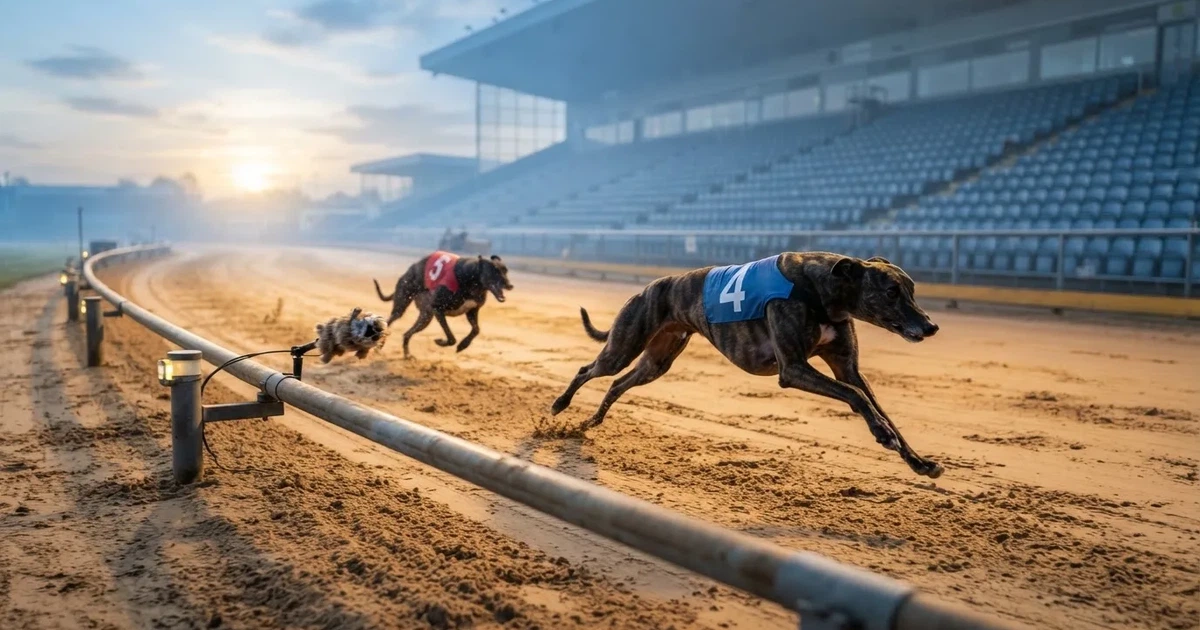
A typical greyhound race at a GBGB-licensed stadium sends six dogs from the traps. The market on the race is a six-way book, sometimes a five-way or seven-way book, and the price a bookmaker posts on each runner has to cover the entire field, not just the favourite. A six-runner race priced at 5.00, 4.50, 6.00, 7.50, 11.00 and 17.00 has a built-in margin of roughly 21% — the bookmaker keeps about 21p of every pound wagered on that race on average. The same mechanism on a Premier League match, with three outcomes and a book of 1.85 / 3.40 / 4.50, sits closer to 5% margin because more money comes in and the lines are tighter.
For the bettor, that means a greyhound winner pays out as if it were a long shot even when the dog is the shortest price in the field. A 5.00 winner is not a five-into-one shot; the implied probability of a fair 5.00 price is 20%, and the dog’s actual chance of winning a six-dog race is closer to 30% or higher once the favourite’s name is on the card. The price has already been discounted.
Starting price and Best Odds Guaranteed change the picture at the off
GB bookmakers use the starting price (SP) as the on-course fixed-odds benchmark at the moment the traps open. Most major books offer Best Odds Guaranteed (BOG) on greyhound racing: if you take an early price and the SP is bigger at the off, the book pays the larger of the two. For the bettor, that is the one concession the market gives away without a wagering requirement, and it shifts the calculation on every ante-post greyhound bet taken more than a few minutes before the race. The trade is that the book has already trimmed the early price to reflect what SP is likely to be, so the gain is small, and on a wet night at a small track it is sometimes nothing.

The lure, the trap draw, and what the market cannot price
Greyhound races start from a mechanical lure that runs along the rail; the result is decided in the first 30 metres. Inside that window, the trap draw is the largest single variable, and a dog drawn in trap one at a tight track has a structural edge that the morning odds do not always price in. The market corrects as the off approaches, but the book is rarely balanced until the last 60 seconds. In-play greyhound betting, where a bookmaker offers a price after the break, is built on that correction: the moment the traps fly open, the book reprices every runner in two or three ticks, and the bettor who took 4.50 about a dog before the off sees that price either collapse to 1.40 or disappear entirely within a stride or two of the rails.
What the margin looks like on a single market
The page is about cost, so the calculation is the cost. Take an illustrative two-way market at decimal odds 1.90 / 1.90 — a perfectly symmetric book. The payout share is 1 ÷ (1/1.90 + 1/1.90) = 1 ÷ (0.5263 + 0.5263) = 1 ÷ 1.0526 = 95.0%. The margin is 1 − 0.9500 = 5.0%, or 5p in the pound. On a six-runner greyhound race priced symmetrically at 6.00 across the field, the same calculation gives a payout share of 1 ÷ (6 × 1/6.00) = 1 ÷ 1.0000 = 100.0% — a margin of zero, which is the bookmaker’s break-even and the line a sharp bettor hunts. A realistic six-runner greyhound book of 5.00 / 5.50 / 6.00 / 6.50 / 8.00 / 12.00 returns a payout share closer to 78–82%, with the margin between roughly 18% and 22% on the race as a whole. The variance inside that band is what the betting editor watches: a margin under 18% on a six-dog race is competitive, a margin over 22% is the book taking its cut early, and the bettor who bets on every race without checking the margin is funding the difference.
The same arithmetic, applied to the favourite-only market on a Saturday card across ten licensed books, is where the licensed bookmakers separate themselves. A book that offers 4.33 about the jolly at a six-dog race and a competitor that offers 4.50 has built a different margin on the favourite alone; the difference is small on the day and large across a season of greyhound bets.
In-play greyhound betting and cash out
The in-play window is short and the price is not generous
A greyhound race is over in under 30 seconds, so the in-play window a bookmaker offers is a moment at the break, sometimes a single tick, sometimes a full second if the leader has not broken clear. Live greyhound betting on a race is closer to a binary than to a market: the leader is 1.10, everything else is 10.00 or bigger, and the book is closed before the second bend. The bettor who wants to lay a leader off mid-race has, in practice, a fraction of a second to do it, and most licensed books will not quote a price on the back of the field at all once the leader has gone three lengths clear.
For the punter, the in-play market is a different product from the pre-off market. The price is not built from a probability; it is built from a moment. A bookmaker that offers in-play greyhound racing is, in practice, offering a one-tick market on a six-runner race, and the bettor who treats it like a Saturday afternoon football in-play is overpaying for the privilege.
Cash out is the bookmaker’s tool, not the bettor’s
Cash out on greyhound markets lets a bookmaker offer to settle the bet early at a price of its own choosing. The price is a function of the current in-play price, the original stake, and the bookmaker’s margin, and it is rarely generous. On a greyhound bet placed at 5.00, the cash-out value at the break is the difference between the in-play price and 1.00, multiplied by the stake, with the bookmaker’s spread taken off. On a winning position that is now 1.20 in-play, the fair cash-out value is 0.20 × the original stake per £1; the offer is usually 0.15 × stake to 0.18 × stake, and the difference is the book’s cut. The bettor who cashes out on every winner is paying a hidden 5–10% on top of the original margin, and the bettor who never cashes out is letting winners run to the line. The honest framing is that cash out exists; what it costs depends on the book and the moment.
Apps and mobile greyhound betting
What a greyhound betting app actually does
A greyhound betting app is a front end on the same fixed-odds book the desktop site runs, with two additions that matter. The first is the push notification: a bettor who opts in gets a price alert on a named dog, and the alert is a real-time greyhound odds feed that beats the desktop site by the time it takes to refresh a browser. The second is biometric login, which gets a returning customer past the deposit screen in a single tap and is now standard across the major licensed books. Beyond those two, the app is a smaller screen on the same market, and the price is the price.
For the bettor, the choice between an app and a browser is a choice about how quickly they want to place a bet and how often they want the book to nudge them. The greyhound bet app for Android and the iOS version differ in nothing the betting slip cares about; the difference is in how the operating system handles background refresh, push delivery and biometric prompts. The licensed bookmakers that publish a greyhound betting app cover the sport on the same markets as the desktop, and the odds are the same on the same race within the same tick.
Streaming and live data inside the app
Several licensed books stream greyhound races from GBGB-licensed stadia inside the app, with a small symbol on the race card. Where streaming is offered, a bet of even 50p on the race unlocks the feed for the duration of the card; the bettor watches the race in the app and the bookmaker keeps the customer in its product. The data the bettor sees is the same data the book is pricing from — the trap draw, the going, the recent form — and the time advantage from being on the same screen as the live picture is what an in-play book is built to deny.
Strategies, predictions and the limits of both
Greyhound betting systems are bankroll rules, not forecasts
A greyhound betting system is a bankroll management rule dressed as a forecast. The flat-stake system, the Kelly criterion, the level-stake acca, the Dutching system on three traps at one meeting — every one of them is a rule about how much to bet and on what, and the rule’s quality is measured over hundreds of bets, not one. A system that turns £100 into £140 over 200 bets at a 5% margin is breaking even; a system that turns £100 into £120 over the same 200 bets is paying the bookmaker to keep the spreadsheet running.
The bettor who reads greyhound betting tips today the way they read the racing page is buying a forecast, not a system. The tipster’s strike rate and the price the tip is taken at determine the value, and the value is on the page of the bookmaker’s site, not on the tipster’s. A 30% strike-rate tipster at an average price of 5.00 has expected value 5.00 × 0.30 − 1 = 0.50 in the pound, before the margin; at a 20% margin the expected value is closer to 0.20 in the pound, and the punter is paying the bookmaker to take the tip.
Form study, trap draw and the data the book already has
A greyhound racing betting strategy that works is a strategy built on form the book has not yet priced. The GBGB publishes graded form, going reports, and trap records for every dog at every track; the major bookmakers carry the same data on the race card, sometimes with one or two seconds of latency. The bettor who does the form work the morning of the card and prices the race themselves against the book’s number is the one with the edge; the bettor who reads a tip written at 11am and bets at 7.30pm is the one the market is built to harvest.
The honest framing on greyhound racing betting tips: they are the public distillation of the same form the book has priced. Where a tip diverges from the price, the divergence is either information the market has missed (rare) or a forecast the market has already incorporated (common). The bettor’s job is to know which.
Greyhound bet types and the markets behind them
Win, place, each-way and the doubling that catches the new punter
A win bet on a greyhound pays the decimal odds on the runner. A place bet pays a fraction of the win price (typically a quarter at one-quarter the odds, or a fifth at one-fifth the odds, depending on the field size and the bookmaker’s terms). An each-way bet is two bets of equal stake — one on the win, one on the place — so the stake doubles, and a £10 each-way bet on a 5.00 shot at one-quarter the odds costs £20 and returns either £10 × 5.00 + £10 = £60 on a win, or £10 × 5.00/4 + £10 = £22.50 on a place. The each-way structure is the most expensive way to back a short-priced favourite, and the cheapest way to back a long shot in a small field.
For the bettor, the each-way bet is a separate market from the win market, and the place terms vary by book and by race. A six-dog race at one book may pay a quarter the odds for two places; at another it may pay a fifth the odds for two places. The difference is small on a single bet and large across a season.
Forecast, tricast and the exotic markets
A forecast bet names the first two dogs in the correct order; a tricast names the first three. Both are pool bets on GB tracks, settled at the on-course tote dividend, and the bettor who backs a forecast at 20/1 in a six-dog race is buying a single 1-in-30 outcome at a price that pays 21-for-1 — a margin that is not what the screen shows. Forecast and tricast dividends are declared after the race, and the bookmaker takes a cut of the pool; the rest is shared among the winning tickets in proportion to the stake.
For the punter, the exotic markets are a separate book from the fixed-odds win market, with a different margin and a different settlement time. The bettor who mixes fixed-odds singles with pool forecasts on the same card is running two books at once, and the margin on the pool is often wider than on the singles.
Ante-post, non-runner and Rule 4
Ante-post greyhound betting is a bet placed before the final declarations, when a dog may still be withdrawn. If the dog does not run, the ante-post stake is lost; there is no Rule 4 deduction and no refund, and the price the bettor took was the price of the risk. Once the final declarations are out, the market moves to its showtime prices and the non-runner rule no longer applies in the same form; a Rule 4 deduction may be taken if a dog is withdrawn from a race after the bets are on, and the deduction is a percentage of the winnings that goes to the book to adjust the book for the missing runner.
The bettor who takes an ante-post price on a greyhound is buying a longer price than the showtime market, in exchange for accepting the risk of a non-runner. The trade is real: ante-post greyhound odds on a fancied runner at Towcester or Perry Barr are typically 25–50% bigger than the showtime price, and a dog that goes from 12.00 ante-post to 8.00 on the night has paid the punter for the risk in a way the showtime market would not.
Greyhound racing tournaments and where the action sits
The GBGB calendar and the 18 licensed stadia
Greyhound racing in Great Britain is regulated by the Greyhound Board of Great Britain (GBGB), which lists 18 licensed stadia on its register. The calendar runs year-round, with graded meetings three or four nights a week at the major tracks and weekly fixtures at the smaller ones. The English Greyhound Derby, run at Towcester, is the sport’s flagship event; the Scottish Greyhound Derby, run at Shawfield, sits alongside it on the calendar. Both are ante-post markets from spring until the final in the autumn, and the bookmakers carry the card from the first round.
For the bettor, the major meetings are the markets with the most liquidity and the tightest margin, and the smaller meetings are the markets with the widest margin and the most value for a bettor who does the form. A graded A1 at a small track on a Tuesday night is not a Premier League match; it is a six-dog race with a wider margin and a sharper edge for the form-watcher.
New Zealand: the end of the industry
Greyhound racing in New Zealand was ended by the Racing Industry (Closure of Greyhound Racing Industry) Amendment Act 2026, passed on 2 April 2026, with the phase-out set for 1 August 2026. The announcement was made by Winston Peters on 10 December 2024, and the seven affiliated clubs of Greyhound Racing New Zealand — Auckland, Waikato, Whanganui, Palmerston North, Canterbury, Otago and Southland — are winding down. For a GB-licensed bookmaker offering greyhound racing, the closure removes a small offshore market and consolidates the calendar onto GBGB, Irish and Australian tracks.
For the GB punter, the closure is a reminder that the sport is not a permanent fixture anywhere, and the licensed bookmakers that covered New Zealand greyhounds have moved the calendar onto other meetings. The price on a Manukau or Addington race in 2026 is, for most GB-licensed books, a price the book no longer offers at all.
The ten licensed bookmakers: what each one costs the GB punter
The ten bookmakers below all hold a Gambling Commission remote licence for Great Britain and are listed on the Commission’s public register. They are listed here because they cover greyhound racing, not because they are the only ten licensed to do so. The set is alphabetical, the order is not a ranking, and the licence numbers are the ones the register shows on the access date.
| Brand | Gambling Commission licence | What the operator’s own terms say about greyhound racing and the cost of betting with them |
|---|---|---|
| Bet Ahoy | Remote licence 100094, account 100094, held by Bet Ahoy Ltd | The welcome is a £10 sports bet plus a £5 acca free bet, settled within seven days of issue |
| Betmaster | Remote licence 065699, account 65699, held by BM Solutions GB Ltd | The app covers football, cricket, horse racing, NFL and esports, with the greyhound calendar carried on the sportsbook |
| Bar One Racing | Remote licence 056516, account 56516, held by Bar-One Racing Limited | An Irish independent bookmaker with shops across Ireland and racing sponsorships at Dundalk, Fairyhouse, Navan, The Curragh, Curraheen Park and Cork |
| Coral | Remote licence 054743, account 54743, held by LC International Limited | The sports welcome is £40 in free bets on a £20 qualifying bet at minimum odds 2.0, with the free bets expiring seven days after issue |
| Fitzdares | Remote licence 000400, account 400, held by Fitzdares Limited | The app offers cash out, accumulators, Lucky 15s, ante-post markets, specials and in-play live odds across horse racing, football, tennis, rugby, cricket, golf and American football |
| Fitzwilliam Sports | Remote licence 048760, account 48760, held by SBKI Limited | A Dublin bookmaker with capped membership, instant deposits, fast withdrawals, timeouts, deposit limits and links to GambleAware, GamStop and Gamblers Anonymous |
| Geoff Banks | Remote licence 054095, account 54095, held by GB Sports Advisors Limited | The app offers live in-play and ante-post prices on future events, with greyhound racing carried on the sportsbook |
| London Bet | Remote licence 066162, account 66162, held by Thistle Bet Limited | The app combines sports betting on football, tennis, horse racing, greyhounds, darts, golf, cricket, NFL, NBA, MLB and snooker with Pragmatic Play casino slots and live in-play |
| Paddy Power | Remote licence 039439, account 39439, held by PPB Counterparty Services Limited | The app covers football, horse racing, boxing, rugby, tennis, golf, darts, snooker and F1, with greyhound racing on the sportsbook |
| Swifty Sports | Remote licence 058957, account 58957, held by Swifty Global (UK) Ltd | Best Odds Guaranteed, Cash Out, daily price boosts, live streaming and in-play on horse racing and football, with Bet Builder listed as coming soon |
The table is the licence test; it is not a comparison. The columns are what the operator’s own terms state about greyhound racing and the cost of using the offer. The bettor who reads the licence column as a quality score is overpaying for the reassurance.
Bet Ahoy
Bet Ahoy’s welcome is the smallest of the set: a £10 sports bet and a £5 acca free bet on a £10 qualifying wager. The qualifying bet’s stake is not returned with a win — it is a free bet in the strict sense, and the bettor is paying for the chance to back a winner without the stake. The cost is the difference between the qualifying bet’s expected loss and the free bet’s expected value; this calculation is standard across all offers listed here. Bet Ahoy is a small sportsbook, and the greyhound calendar sits behind a thin in-play book; the welcome is the headline and the rest of the product is the substance, and the substance is not what the headline advertises.
Betmaster
Betmaster’s app is published by BM Solutions GB Ltd and lists football, cricket, horse racing, NFL and esports as the headline sports, with greyhound racing carried on the sportsbook rather than on a separate tab. The bettor who opens Betmaster for a Saturday greyhound meeting is opening a sportsbook first, with the greyhound card as one of several markets. The cost is the cost of a small book: the margin on the greyhound races is wider than at a specialist, and the in-play window is shorter. The value is the licence and the integration with the rest of the sportsbook; the margin on the card is the price of the convenience.
Bar One Racing
Bar One Racing, now trading as BAR 1 Betting, is an Irish independent bookmaker with shops across Ireland and racing sponsorships at Dundalk, Fairyhouse, Navan, The Curragh, Curraheen Park and Cork. The GB-licensed remote book is the online front of an Irish high-street chain, and the greyhound calendar reflects it: the Irish greyhound scene is the headline, with the GBGB card as the secondary market. For a GB punter who bets on Irish greyhounds, the cost is the specialism — a book that knows the Irish tracks and prices them tighter than a UK-only book would. For a GB punter who bets on Shawfield or Towcester, the cost is the secondary market: the card sits behind the Irish one, and the price reflects it.
Coral
Coral’s sports welcome is the headline of the set: £40 in free bets on a £20 qualifying bet at minimum odds 2.0 (1/1), with the free bets issued within seven days and expiring seven days after issue. The qualifying bet’s stake is at risk and not returned with a win, and the free bets follow the same rule. The cost of the welcome, calculated against the offer’s terms, is the difference between the qualifying bet’s expected loss and the free bet’s expected value, and the calculation runs the bettor’s way on longer prices and the book’s way on shorter ones. Coral carries the GBGB calendar on the sportsbook, and the greyhound card sits inside the wider sports offering rather than on a dedicated tab. The trade-off is the welcome’s headline against the card’s price; the punter who reads the licence first and the offer second is the one who comes out ahead.
Fitzdares
Fitzdares’ app lists cash out, accumulators, Lucky 15s, ante-post markets, specials and in-play live odds across horse racing, football, tennis, rugby, cricket, golf and American football. The greyhound calendar is carried on the sportsbook, with horse racing the headline and greyhounds the secondary market. The cost of betting with Fitzdares is the specialism: a book that prices horse racing tighter than greyhound racing, with the ante-post calendar the most generous of the set. For a punter who bets across both sports, the value is the integration; for a greyhound-only punter, the cost is the secondary market.
Fitzwilliam Sports
Fitzwilliam Sports describes itself as a Dublin bookmaker with capped membership and offers a “High Stakes Welcome” subject to compliance criteria. The site lists instant deposits, fast withdrawals, timeouts, deposit limits and links to GambleAware, GamStop and Gamblers Anonymous. The cost of the welcome is the compliance criteria: a high-stakes welcome is a higher-stakes qualifying bet with a higher-stakes free bet, and the margin on both is the bookmaker’s standard greyhound margin. The value is the safer-gambling tools on the home page; the trade-off is the capped membership, which means the book is not open to every GB punter.
Geoff Banks
Geoff Banks’ app is published by GB Sports Advisors Ltd and offers live in-play and ante-post prices on future events, with greyhound racing on the sportsbook. The cost of a small book is the same here as at Betmaster: the greyhound card is one of several markets, and the margin on the card is wider than at a specialist. The value is the ante-post calendar, which is the strength of the book; the in-play book, however, remains limited for greyhound meetings outside the major events.
London Bet
London Bet’s app combines sports betting on football, tennis, horse racing, greyhounds, darts, golf, cricket, NFL, NBA, MLB and snooker with Pragmatic Play casino slots and live in-play. The greyhound calendar sits inside a sports-and-casino product, with the casino the secondary draw and the sportsbook the primary one. The cost of the integration is the cross-product promotion risk: an offer that requires gambling on two product types is banned under the Gambling Commission’s promotion rules in force since 19 January 2026, and a book that bundles a sports free bet with a casino bonus is offering an offer the regulator has closed. The value is the single-app product; the punter should, however, consider the cross-sell risks with caution.
Paddy Power
Paddy Power’s app covers football, horse racing, boxing, rugby, tennis, golf, darts, snooker and F1, with greyhound racing carried on the sportsbook. Paddy Power is the headline of the set for a reason: the welcome is generous, the card is comprehensive, and the in-play book is the largest of the ten. The cost of betting with Paddy Power is the size of the book: a margin on a six-dog greyhound race that is competitive but not the tightest, and a free-bet stake that is not returned with a win. The value is the integration: a single app, a single login, a single deposit, and the greyhound card is one of several markets the punter can move between without leaving the product.
Swifty Sports
Swifty Sports offers Best Odds Guaranteed, Cash Out on markets including horse racing and football, daily price boosts, live streaming and in-play betting, with Bet Builder listed as coming soon. The greyhound calendar sits inside the sportsbook, with the BOG offer the headline and the price boosts the substance. The cost is the standard greyhound margin; the value is the BOG offer, which pays the bigger of the early price and the starting price on every greyhound bet taken before the off. For a punter who takes ante-post greyhound prices, the BOG offer is the single concession the market gives away without a wagering requirement, and Swifty Sports is one of the licensed books that pays it.
How the licence test works and what a GB licence actually buys
The Commission’s public register is the whole test
A bookmaker holds a Gambling Commission licence if its name appears on the Commission’s public register against a remote betting licence category. The register is searchable by business name, trading name, domain or account number, and the search returns the licence number, the licence holder’s name, the categories covered and the trading names. The ten brands above all appear on the register as remote general betting standard (real events) licensees; the licence numbers are the ones the register shows on the access date.
A bookmaker whose name does not appear on the register is not licensed to take bets from customers in Great Britain. The Gambling (Licensing and Advertising) Act 2014 closed the offshore loophole: an operator whose remote facilities are used in Great Britain needs a Commission licence wherever it is based, and a Curaçao, Maltese or Gibraltar licence is not a substitute. The customer who bets with an unlicensed brand loses the British protections — no GAMSTOP coverage, no Commission complaints route, no approved dispute-resolution body, and no British consumer redress if funds are withheld. The bet is still placed; the protection is not.
What a GB licence requires of the operator
A GB-licensed operator verifies the customer’s name, address and date of birth before the first deposit (since 7 May 2019), including with a free bet or bonus. The customer who passes verification joins GAMSTOP automatically: a multi-operator online self-exclusion scheme that is a mandatory licence condition for online operators since 31 March 2020. The customer who wants to set a deposit limit does so through the operator’s safer-gambling tools; the operator must offer a gross deposit limit on a fixed time frame under the Commission’s Remote Technical Standards.
A licensed operator runs affordability and vulnerability checks at the level the LCCP sets: a financial vulnerability check applies when a customer’s deposits minus withdrawals exceed £150 in a rolling 30 days (since 28 February 2025), and a financial risk assessment is announced, staged, with no start date. The checks are not the same as a credit check; they are a public-record check (bankruptcy, county court judgments) and a request for source-of-funds information at higher spend. The customer who passes the check continues betting; the customer who does not, has the account reviewed.
The bonus cap and what changed in 2026
The Gambling Commission’s promotion rules in force since 19 January 2026 cap wagering requirements on bonuses at 10x. A £10 bonus at 50x wagering, which was the standard at many licensed books before the cap, needed £500 of qualifying bets; under the cap no more than £100 is required. Mixed-product promotions — an offer that requires gambling on two or more product types, such as a sports free bet bundled with casino free spins — are banned. The cap does not change the underlying margin on the market the bonus is cleared on, but it does shorten the time and the stake a customer has to put through the book to convert the bonus to cash.
For the punter, the cap is a hard ceiling on the cost of clearing a bonus. A bonus with a 10x wagering requirement at minimum odds 2.0 has an expected cost of roughly 10 × stake × margin, and the margin on greyhound racing is wider than on football. The bonus that looks like a £40 free bet is, after the cap, a £40 free bet with a £400 turnover requirement at minimum odds 2.0, and the cost of clearing it is the expected loss of the £400 against the greyhound margin. The trade is real; the headline is the headline.
Advertising and the 9pm watershed
GB-licensed operators market under the CAP Code (non-broadcast) and the BCAP Code (broadcast), enforced by the ASA. CAP Code section 16 sets the rule on appeal: marketing must be socially responsible, must not be of strong appeal to under-18s, and no one who is or seems to be under 25 may be featured gambling or play a significant role (with an exception for marketing placed where a bet can be made directly). The rule concerns who may appear in the advertisement; it does not concern who may bet.
The “whistle-to-whistle” industry code restricts betting advertisements on TV from five minutes before a live sporting event to five minutes after it, before the 9pm watershed — with horse and greyhound racing excluded. For the greyhound punter, the exclusion means the sport’s advertising does not face the same pre-watershed blackout as football, and the in-running greyhound card carries the same marketing as the off-course book. The Premier League clubs’ withdrawal of gambling sponsorship from the front of matchday shirts (from 2026/27; sleeves and hoardings remain) is voluntary and does not affect greyhound racing.
What a GB-licensed operator cannot do for the customer
Tax on winnings: the player pays nothing
The player pays no tax on betting winnings in Great Britain. General Betting Duty is the operator’s tax on gross profits, currently 15%, with a new remote rate of 25% applying from 1 April 2027 within it. Until that date, the remote rate stays at 15%, and whether the operator passes the duty on through the odds is not established. The customer who wins £1,000 on a greyhound bet at a GB-licensed book receives £1,000; the duty is the operator’s, not the customer’s.
The customer who is a professional gambler — a small minority of the betting population — should ask HMRC or an adviser; the tax treatment is different and the operator’s terms do not speak to it. For the recreational punter, the answer is simple: the winnings are the winnings, the duty is the operator’s, and the offer is the offer.
Credit cards: banned for gambling
Credit cards are banned for gambling in Great Britain since 14 April 2020, including credit-card-funded payments through an e-wallet. Debit cards and bank-based payments are not covered by the ban. A customer who tries to deposit with a credit card at a GB-licensed book is declined at the payment screen, and the operator’s terms do not offer a workaround. The ban is in the LCCP (condition 6.1.2), not in the Gambling Act, and the operator that processes a credit-card deposit is in breach of its licence.
The ban does not extend to bank transfers, debit cards, or e-wallet deposits funded from a bank account. The customer who deposits with a debit card or a bank transfer is within the rule; the customer who tries the credit card is not.
The £150 vulnerability check and what it costs the customer
The financial vulnerability check, in force since 30 August 2024 and operational since 28 February 2025, applies when a customer’s deposits minus withdrawals exceed £150 in a rolling 30 days. The check is a public-record check (bankruptcy, county court judgments) — not an income check, not a credit reference check. The customer who passes the check continues; the customer who triggers a flag is asked for source-of-funds information, and the account is reviewed under the operator’s anti-money-laundering duties.
The check costs the customer time, not money. The £150 threshold is low enough to catch the recreational punter on a heavy month, and the source-of-funds request is intrusive enough that the punter who hits it should expect to upload bank statements or payslips. The trade is the trade: the licensed market is a checked market, and the check is the cost of the British protections that the licensed market provides.
The safer-gambling tools a licensed book must offer
Deposit limits and timeouts
Every GB-licensed remote bookmaker must offer a gross deposit limit on a fixed time frame (Remote Technical Standard 12), with the first changes applied since 31 October 2025 and a second phase postponed to 30 September 2026. The deposit limit is the customer’s choice: a daily, weekly or monthly ceiling on the amount the customer can deposit, and the operator cannot lift it without a 24-hour cooling-off period. The customer who sets a £200 weekly limit cannot deposit more than £200 in any rolling seven-day period, and the operator’s system enforces it.
Timeouts are the short version of a self-exclusion: a 24-hour, 48-hour, or 7-day break from the account, requested by the customer and applied by the operator without further question. The customer who feels the session running away asks for a timeout, and the account is locked for the chosen period. The longer version is GAMSTOP self-exclusion, which covers every GB-licensed online operator at once.
GAMSTOP and the multi-operator exclusion
GAMSTOP is the national multi-operator online self-exclusion scheme and a mandatory licence condition for online operators since 31 March 2020. Exclusion periods are six months, one year, five years, or five years with auto-renewal. After the minimum period the exclusion stays in place for a further seven years unless the customer asks GAMSTOP to remove it. GAMSTOP covers online sites and apps; betting shops use a separate service.
For the punter, GAMSTOP is the single most effective safer-gambling tool on the GB market. The customer who self-excludes cannot open a new account at any GB-licensed online book for the duration of the exclusion, and the operator’s system is bound to check GAMSTOP before accepting a new customer. The customer who self-excludes and then bets at an unlicensed brand has left the British protections behind; the bet is still placed, and the protection is not.
GamCare, GambleAware and the NHS clinics
GamCare runs the National Gambling Helpline and offers counselling for problem gamblers and their families. GambleAware funds research, education and treatment. The NHS operates gambling clinics in several regions, with referral through the GP. Gamblers Anonymous runs peer-support meetings. A licensed bookmaker’s safer-gambling page links to all four; a punter who is reading the safer-gambling page is reading the right page.
For the punter, the help is the help. The licensed book is the route to it; the unlicensed book is not. The bettor who feels the session running away should ask for a timeout; the bettor who cannot stop should self-exclude; the bettor who cannot self-exclude should call the National Gambling Helpline.
The cost of the welcome offers, calculated
The page is about cost, so the cost is the calculation. The formula is expected cost = required turnover × margin of the market the bonus is cleared on. The four offers above with stated wagering or turnover terms are the ones to watch.
Coral’s welcome is £40 in free bets on a £20 qualifying bet at minimum odds 2.0, with the free bets issued within seven days and expiring seven days after issue. The qualifying bet’s required turnover is £20 × 1 = £20; the free bet’s value is the free-bet amount × (odds − 1) ÷ odds × payout share of the market the free bet is used on. At minimum odds 2.0 on a greyhound race with a 20% margin, the free bet’s value is £40 × (2.0 − 1) ÷ 2.0 × 0.80 = £40 × 0.50 × 0.80 = £16, and the qualifying bet’s expected loss is £20 × 0.20 = £4. The net cost of the welcome is £4 − £16 = −£12, in the punter’s favour, before the free bet is used; the cost of using the free bet at minimum odds 2.0 is the £4 of expected loss on the qualifying bet, and the value is the £16 of expected value on the free bet. The trade is the qualifying bet’s margin against the free bet’s expected value, and the calculation runs the punter’s way on a market with a 20% margin only if the free bet is used at a price longer than the bookmaker’s margin implies.
Bet Ahoy’s welcome is a £10 sports bet and a £5 acca free bet on a £10 qualifying wager. The qualifying bet’s required turnover is £10 × 1 = £10; the free bet’s value at minimum acca odds 2.0 is £15 × (2.0 − 1) ÷ 2.0 × 0.80 = £6, and the qualifying bet’s expected loss is £10 × 0.20 = £2. The net value of the welcome is £6 − £2 = £4 in the punter’s favour; the cost is the qualifying bet’s margin, and the value is the free bet’s expected value at the acca’s minimum price.
Fitzwilliam’s “High Stakes Welcome” is subject to compliance criteria, and the wagering requirement is not specified in the public terms. The cost of the welcome is the qualifying bet’s margin and the free bet’s expected value; refer to the calculation method detailed above. The punter who cannot see the wagering requirement on the welcome page should ask the operator’s customer service before claiming.
The other seven brands in the table do not state a wagering requirement, and the welcome is described qualitatively: a headline free bet, an acca boost, or a sports-and-casino bundle. The cost is the qualifying bet’s margin and the free bet’s expected value, and the calculation runs the same way once the terms are read. The punter who reads the small print before claiming is the one who comes out ahead; the punter who claims the headline and reads the terms after is the one who has already paid the qualifying bet’s margin.
What the page leaves out, and where to look
A licensed bookmaker’s terms change. A welcome offer’s wagering requirement is stated on the operator’s promotion page on the day the offer is claimed, and the value of the free bet is calculated against the margin on the day the free bet is used. The figures on this page are current as of 27 October 2026 and were checked against the operator’s own terms and the Gambling Commission’s public register on that date; the punter who checks the terms on the day of the bet is the one who has the freshest number.
The greyhound calendar is published by the GBGB on its website, with the day’s cards, the graded form, the going reports and the trap records. The bookmaker’s race card is the secondary source; the GBGB is the primary. The punter who reads the GBGB card first and the bookmaker’s card second is the one with the information edge.
The Gambling Commission’s public register is searchable by business name, trading name, domain or account number. The punter who is unsure whether a brand holds a GB licence can search the register directly; the search is the test, and the result is the answer. A brand that does not appear on the register is not licensed to take bets from customers in Great Britain, and the bet is placed outside the British protections.
Frequently asked questions
How does a punter place a bet on greyhound racing?
A licensed bookmaker’s app or site carries the day’s greyhound card under the sportsbook, with a race for each meeting and a market on each race (typically win and place, with forecast, tricast and ante-post on selected cards). The punter selects the dog, chooses the stake, confirms the bet, and the bet is recorded against the account; settlement happens after the race, with Best Odds Guaranteed paying the bigger of the early price and the starting price where the offer applies. Identity verification is required before the first deposit, and the account is bound by the operator’s terms.
How does a punter bet on greyhound dogs specifically?
Greyhound betting uses the same slip as horse racing: a win bet, a place bet, an each-way bet (two bets of equal stake), a forecast (first two in order) or a tricast (first three in order). The price is decimal on the app, fractional on some bookmakers’ older slips, and the starting price is the on-course benchmark at the off. The punter who bets on greyhounds is using a subset of the sportsbook’s racing tab, and the markets are the same across the licensed books.
How is a winning greyhound bet paid out?
A winning bet pays the decimal odds on the stake. A £10 win bet at 5.00 returns £50, with the original £10 stake included; the profit is £40. A £10 each-way bet at 5.00 with a quarter the odds for two places costs £20 (two £10 bets) and returns £60 on a win (£10 × 5.00 + £10) or £22.50 on a place only (£10 × 5.00/4 + £10). Settlement is automatic at the licensed books, and the funds are returned to the account balance.
How can a punter check that a bookmaker holds a Gambling Commission licence?
The Gambling Commission’s public register is searchable by business name, trading name, domain or account number. The search returns the licence number, the licence holder’s name, the categories covered and the trading names. A brand that appears on the register against a remote general betting standard (real events) licence is licensed to take bets from customers in Great Britain; a brand that does not appear is not. The punter who checks the register before depositing is the punter who has confirmed the licence.
How is the return on a bet worked out from the stake and the odds?
The return on a winning bet is stake × odds. A £10 bet at decimal odds 5.00 returns £50, with the original £10 stake included; the net profit is stake × (odds − 1), so £10 × 4.00 = £40. For a combination bet (a double, a treble, an accumulator), the odds of the legs multiply into one price, and the calculation runs the same way on the combined price. The bookmaker’s margin is taken from the odds before the bet is placed, and the return is calculated on the price the punter took.
What is the bookmaker’s margin and how is it visible in the odds?
The bookmaker’s margin is the cut the book keeps of every pound wagered on a market. It is calculated as 1 minus the payout share, where the payout share is 1 divided by the sum of the reciprocals of the odds on every outcome of the market. On a two-way market at 1.90 / 1.90, the payout share is 1 ÷ (1/1.90 + 1/1.90) = 0.95, and the margin is 0.05, or 5p in the pound. On a six-runner greyhound race priced at 5.00 / 5.50 / 6.00 / 6.50 / 8.00 / 12.00, the payout share is closer to 0.80, and the margin is closer to 0.20, or 20p in the pound. The punter who calculates the margin on a race before betting is the one who knows the cost.
Horse racing & greyhounds – Cricket betting
Content created by the «Cricket betting» team
