
Horse racing tipsters in Great Britain: how to read a tip, what it costs, and where the offer cuts
 Available in US
A tipster is a person, a service, or an algorithm that publishes a horse they think will win a race, alongside a price they think is worth taking. The “tip” is the selection; the “price” is the odds on offer at the bookmaker; the bridge between them is the value bet — a price that sits above the true probability of the horse winning, once the bookmaker’s margin is stripped out. That is the working vocabulary of every tipster page in the country, and it is the vocabulary this guide uses from end to end. What follows is not a tip sheet, and no selection is named. What follows is the work the tip is supposed to save: how form is read, how a price is judged, what a betting offer actually pays the punter, and where the offer costs more than it looks.
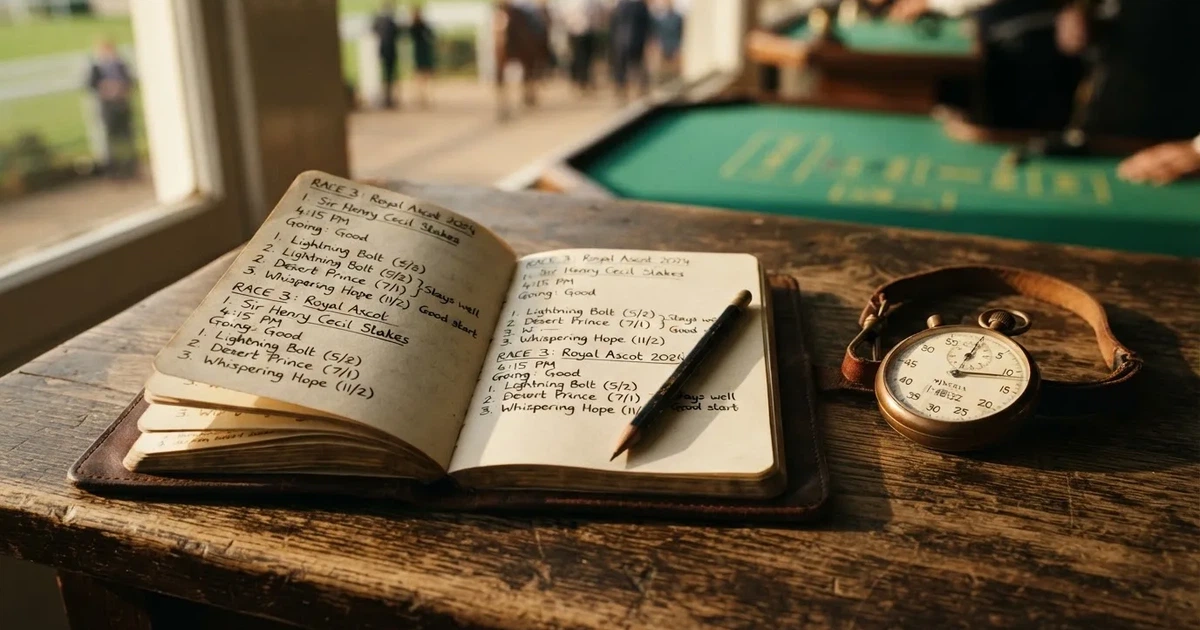
The British market around horse racing tipsters is wide and noisy. Free social-media tipsters compete with subscription services that charge for daily cards, and bookmakers run their own tip lines and price boosts in the same breath. Sorting that market is what this page is for, written for the punter in Great Britain who wants to know what a tip is, what a tip costs, and which bookmakers the Gambling Commission has licensed to take the bet.
Data current as of 27 October 2026 and checked against the Gambling Commission’s public register of remote operating licences.
How a horse racing tip is actually built
Form, the form book, and the limits of past runs
Form is a horse’s recent record — finishing positions, the going, the distance, the class of race, the weight carried, the margin behind the winner. It is the spine of any tip. A tipster will pull a horse’s last three to six runs, weight them by recency, and adjust for the strength of the opposition. A maiden winner beating nothing is not the same animal as a maiden winner beating a field that included two placed horses from a Group race.
Form is necessary and it is not sufficient. Horses step up in class, step down in trip, change stable, change jockey, and race on a different surface from one meeting to the next. A form line that looks strong on paper can be a false friend by post time. The honest tipster writes those conditions into the selection; the dishonest one omits them and lets the form do the talking.
Statistics, speed figures, and the rise of the model
Statistical tipsters run a speed figure on every runner — a number that rates the horse’s most recent effort against the standard of that race. RPR (Racing Post Rating), Topspeed, Timeform figures — they are all attempts at one job: putting every horse in the race on a comparable scale. The tipster then ranks the field and bets where the model is out of line with the market. That is where the value lives, in their account.

Models have a habit of agreeing with each other and disagreeing with the market in the same races, which means the tip is concentrated. Concentration is the danger. When every model picks the same horse, the bookmaker’s price contracts, the value disappears, and the bettor who arrived last is paying the tipster’s edge back in lower odds.
Pace, draw, going, and the inputs the form book misses
A race is run, not selected. Pace maps — which horse wants to lead, which wants to sit, which wants to come late — settle how the race will be run, and a strong pace can turn a soft form line into a hard one. The draw matters at the tracks where the stalls are biased; going matters when a horse has never encountered soft ground, or only soft ground. None of these inputs sit in the headline form, and a tipster who builds them in has earned the price of the card.
The lesson for the punter reading the tip is simple. Form is the headline, the model is the skeleton, the conditions are the muscle. A selection that names only the form is a half-tip.
The market’s own odds as a check
The most underrated input is the price. A 6/1 shot whose every other indicator points to a 5/1 chance is a value bet. A 3/1 shot whose indicators point to a 5/1 chance is a brilliant bet. The price carries the rest of the analysis to the bookmaker; the price is the bettor’s edge. A tipster who does not name a price is selling a horse, not a bet. The place terms, the each-way fraction, the non-runner rule, and the Rule 4 deduction all sit on the same page of the betting slip and they all cut the same way.
What a value bet is, and why no tip is ever certain
The price above the true probability
A value bet exists when the odds offered are larger than the odds that reflect the horse’s real chance of winning. A horse with a 25 per cent chance of winning has fair odds of 3/1 (decimal 4.00). If a bookmaker offers 4/1 (decimal 5.00), the bet is value; the bettor is being paid more than the risk is worth. If the same horse is offered at 5/2 (decimal 3.50), the bet is a poor one and the tip is wrong even if the horse wins.
Value is a property of the price, not of the result. A bet can lose and still have been value; a bet can win and still have been a mistake. A tipster who records winners without the price of each selection is selling a stat sheet, not a tip sheet. The bettor who treats a winner as proof of a tipster’s skill is paying for that misreading with their own bank.
Why certainty does not exist
Horse racing is a probabilistic event run by animals, on surfaces, in weather. A horse that wins nine of ten races has not “guaranteed” the tenth. The model can be wrong, the jockey can be wrong, the trip can be wrong, the ground can be wrong. The bookmaker’s margin sits across every price on the racecard and is the bookmaker’s edge by construction; the bettor’s edge, when it exists, is smaller than the headline price suggests and it lasts only until the market corrects it.
The honest framing is the only one that survives a losing run. Tipping is a long-run activity, measured in months and years, and the right way to judge a tipster is the return on the bets at the prices actually taken, after the place terms and the dead heats and the non-runners are accounted for. A 30 per cent strike rate at 5/1 is value. A 50 per cent strike rate at evens is not.
The each-way bet, in plain terms
An each-way bet is two bets of equal stake on the same horse: a win bet and a place bet. The stake doubles, so a £5 each-way bet costs £10. The place bet pays a fraction of the win odds — most commonly 1/4 or 1/5 of the win price, with the number of places paid depending on the size of the field. On a 10/1 horse at 1/4 place terms for three places, a £10 each-way bet costs £20 and returns £145 if the horse wins — £110 for the win part, £35 for the place part. If the horse finishes second or third, the bettor collects the place part only. If fewer than five runners go to post, the place part does not exist and each-way collapses into a win bet at the same stake.
UK place terms vary by race type. Handicap races with sixteen or more runners pay 1/4 odds for four places. Handicaps with twelve to fifteen runners pay 1/4 for three places. Other races with eight or more runners pay 1/5 for three places. Races with five to seven runners pay 1/4 for two places. Races with fewer than five runners pay win only. The bookmaker’s own terms sit above the LCCP and decide whether the place part is offered at all.
Bankroll, staking, and why the bettor’s discipline matters more than the tip
The bankroll as a working capital, not a savings account
A bankroll is the amount the bettor has set aside for betting, separate from rent, food, and any other commitment. It is working capital, not a savings account, and it should be sized in weeks of disposable income, not in life savings. A bankroll of £200 is enough to learn on; a bankroll of £2,000 is enough to stake seriously; a bankroll of £20,000 is a different conversation, and one that the punter should have with a financial adviser before they have it with a tipster.
The bankroll is the yardstick every tip is sized against. A tip that is 2 per cent of bank is a small bet. A tip that is 10 per cent of bank is a large bet. A tip that is 25 per cent of bank is a gamble, and a tipster who asks for 25 per cent stakes is selling recklessness, not expertise.
Staking plans: level, proportional, and the Kelly criterion
A level staking plan bets the same amount on every selection. A proportional plan bets a fixed percentage of the current bank. The Kelly criterion sizes each bet to the edge the tipster believes they have — bet more when the value is clearer, less when the value is thinner. Kelly is mathematically optimal in the long run; Kelly in real life produces wild swings and ruinous losing runs, and almost no professional tipster follows it at full Kelly. A typical professional will stake 25 to 50 per cent of full Kelly.
The staking plan does not turn a losing tipster into a winning one. It changes the shape of the equity curve, not its direction. A tipster with a real edge survives a level stake; a tipster without one does not, and the staking plan only delays the reckoning.
Recording every bet at the price taken
The discipline that separates a serious punter from a casual one is the bet log. Date, racecourse, horse, price taken, stake, outcome, return. The bet log is the only document a punter can audit a tipster against. A tipster who publishes their own log at the prices actually taken, with the place terms and the Rule 4 deductions applied, is doing what a tipster should do. A tipster who publishes winners and strike rates without the prices is not.
The bookmaker’s margin, in the price of every race
What the margin is and how to read it from the odds
The margin is the cut the bookmaker keeps on every market, expressed as a percentage of the turnover. A market with a 5 per cent margin returns 95 per cent of stakes, on average, across all outcomes; a market with a 10 per cent margin returns 90 per cent. The margin is built into the odds: a “true” price of 2/1 (decimal 3.00) on a two-horse market will be offered at something like 1.90/1.90 (fractional 9/10), and the gap between the two is the margin.
Worked illustration. A two-way market at decimal odds 1.90 and 1.90: the implied probabilities are 1 ÷ 1.90 for each outcome, roughly 52.6 per cent on each side, totalling about 105.3 per cent. The 5.3 per cent above 100 is the bookmaker’s margin, and the payout share — the share of every pound staked that comes back to bettors, on average — is about 95.0 per cent. Stated as a band, the margin on a market at 1.90/1.90 is in the order of 5 per cent; stated as a single number, it is the calculation above. The band is honest because the same market at 1.85/1.85 carries a larger margin, and a market at 2.00/2.00 carries a smaller one, and a punter who treats “5 per cent” as a constant is treating one bookmaker as identical to the next.
Why the margin is the bettor’s permanent opponent
The margin is the only number on the racecard that is not a question of opinion. A tipster can be wrong about a horse and still make a profit at the right price; a tipster who is right about a horse at the wrong price still loses. The margin is the bookmaker’s permanent edge; the bettor’s edge, when it exists, is the gap between the bettor’s probability and the market’s, net of the margin.
A market with a 2 per cent margin is a different market from a market with an 8 per cent margin, even when the favourite is the same. The serious punter reads the margin the way a shopper reads the unit price: as the cost of the product, before the product is bought. The bookmaker’s headline odds are the shelf price; the margin is the unit price.
The British racing landscape in 2026
Flat, jump, and the two halves of the calendar
British horse racing splits into flat racing and jump racing. Flat racing is run between two points around a straight or oval track, with no obstacles; jump racing, called National Hunt in Great Britain and Ireland, runs over fences (steeplechases) and hurdles. The flat season runs from spring to autumn, peaking at the classics; the jump season runs from autumn to spring, peaking at the Cheltenham Festival in March and the Grand National meeting in April.
Flat distances range from five furlongs (about 1,000 metres) to more than two miles, with five to twelve furlongs the most common distances. Jump races start at around two miles and stretch to four and a half miles for the National fences. The race type shapes the tipster’s input — flat form turns on speed and sectionals, jump form turns on stamina and the ability to jump at speed — and a tipster with a flat-only record is not a jump tipster.
Handicaps, conditions races, and the weight that changes everything
In handicap races each horse is assigned a weight to carry based on its official rating: a higher-rated horse carries more weight, a lower-rated horse carries less. The handicap is designed to bring the field together. In conditions races every horse carries the same weight, with allowances for younger and female horses — a three-year-old might give weight to an older horse, a filly might receive weight from a colt.
The weights are published days before the race and a serious tipster works them into the selection. A handicap that turns on a 5 lb rise for the favourite is a different race from the same handicap on the weights of the previous run, and a tipster who does not name the weight is omitting a key input.
The pattern races: the classics, the festivals, and what is at stake
The British flat season centres on the classics — the 2000 Guineas, the Derby, and the St Leger make up the British Triple Crown, three Group 1 races for three-year-olds. The Derby at Epsom in early June is the most-watched race in the British calendar; the St Leger at Doncaster in September closes the classics with the longest distance of the three. The 2000 Guineas at Newmarket in early May opens the classics. A horse that wins all three joins a list short enough to recite.
The jump season centres on the Cheltenham Festival in March — four days, twenty-eight races, the championship meeting of National Hunt — and the Grand National at Aintree in April. The Grand National is the most famous horse race in the world, the one race the casual punter names a horse in, and a market in its own right. A tipster’s record through the spring festivals is the part of their record the public sees.
What a tipster’s offer looks like in practice
Free tipsters, paid tipsters, and the different things they sell
Free tipsters run on social media, on YouTube, on racing forums, and inside bookmaker apps. They sell reach: the punter follows them, sees a daily selection, and decides whether to bet. The free tipster monetises the audience by affiliate links, by sponsorship, or by selling a paid tier above the free one. The cost to the punter is the time spent reading and the bets placed on tips that may be worth less than the price the tipster names.
Paid tipsters run a subscription model, monthly or annual, with a daily card of selections and a staking plan. The cost to the punter is the subscription fee, typically £20 to £100 a month, plus the stakes on the selections. The paid tipster monetises the card directly. The question for the punter is whether the card returns more than the fee, after the bookmaker’s margin, and the only honest way to answer that is a bet log at the prices actually taken.
Bookmaker tip lines and the price boost
Bookmakers run their own tipsters — often a named Racing Post journalist, a former jockey, or a stable-side source — and attach the tip to a price boost on the same race. The “tip” is the marketing; the “boost” is the price. The boost moves the price from, say, 5/1 to 7/1, and the punter reads the move as value. Whether the boosted price is value depends on the same calculation it always does: is the new price above the true probability?
The boost is a marketing line, and the bookmaker’s interest is the same as the punter’s only at the moment the bet is placed. Once the bet is settled, the bookmaker’s interest is in the next bet. The punter’s interest in the bet they placed is the same as it always was. Those interests are not the same thing, and a punter who reads the marketing as analysis is paying the bookmaker to think for them.
Welcome offers and the cost of claiming them
Bookmakers attach welcome offers to the new account: a free bet, a deposit match, a price boost on the first bet. Each offer is structured in the bookmaker’s own terms, and the cost to the punter is the work the offer asks for in return. A free bet whose stake is not returned with the win is the most common shape: a £25 free bet at 5/1 wins £125, not £150, and the punter who expected £150 is short £25. A deposit match with a wagering requirement asks the punter to bet the bonus amount a number of times before the bonus is withdrawable: a £50 bonus with a 10x wagering requirement asks for £500 of qualifying bets, and a punter who does not run the full turnover cannot withdraw the bonus. The bonus is the headline; the wagering is the cost.
The punter who treats a welcome offer as free money is the punter the offer is built for, and the offer is built to take their money. The punter who reads the terms before claiming is the punter the offer is not built for, and the offer is built to keep them on the book for a year. Both punters should know which one they are.
The legal frame: who is licensed to take the bet
The Gambling Commission and the public register
The Gambling Commission, a non-departmental public body sponsored by the Department for Culture, Media and Sport, licenses the commercial gambling market in Great Britain under the Gambling Act 2005. The Act covers England, Scotland, and Wales; Northern Ireland runs its own regime and is not covered by a Great Britain licence. A bookmaker that takes bets from customers in Great Britain needs a Commission licence wherever the company is based — a Curaçao, Maltese, or Gibraltar licence is not a substitute. The Commission’s public register is searchable by business name, trading name, domain, or account number, and the register is the whole test of who holds a licence on a given day.
A licensed operator may run on a .com domain or a .co.uk one; the domain does not prove the licence. A licensed operator may share a parent group with several brands — Ladbrokes and Coral, Paddy Power and Betfair — and those brands are not independent operators for licensing purposes. Several brands in this guide run under one licensee, and the register entry is the same one for the group.
What a Commission licence does and does not guarantee
A Commission licence requires the operator to verify the customer’s name, address, and date of birth before the first deposit. The verification is mandatory and it covers the first free bet or bonus, not only the first cash bet. The licensed operator is part of GAMSTOP, the national multi-operator online self-exclusion scheme, and a customer who has self-excluded through GAMSTOP cannot open an account at a licensed site during the exclusion period. The licensed operator applies a financial vulnerability check once a customer’s net deposits cross £150 in a rolling 30 days — a public-record check, not a credit check, and not an income check. The licensed operator caps bonus wagering at 10x the bonus amount. The licensed operator offers a deposit limit, a time-out, and a self-exclusion inside the account. The licensed operator publishes safer-gambling information and links to GamCare, the National Gambling Helpline, and the NHS gambling clinics.
A Commission licence does not guarantee the operator’s pricing, the generosity of the welcome offer, the speed of withdrawals, or the quality of the customer service. Those are the operator’s choices, and a punter reads them in the bookmaker’s own terms, not in the licence register. The licence is the floor; the terms are the rest of the building.
Credit cards, advertising, and what the punter sees
Credit cards are banned for gambling in Great Britain, including credit-card-funded e-wallet payments. The ban covers every licensed operator and it is not a feature of any one brand. Debit cards and bank-based payments are not covered by the ban. The licensed operator’s advertising runs through the ASA and the CAP Code: no strong appeal to under-18s, no one who is or seems to be under 25 featured in the advertisement (with a narrow exception for marketing placed where a bet can be made directly). “Whistle-to-whistle” — no betting ads five minutes either side of a live sporting broadcast before the 9pm watershed, with horse and greyhound racing excluded — is an industry code, not a law. The Premier League clubs’ voluntary withdrawal of gambling sponsorship from the front of matchday shirts, from the 2026/27 season, is voluntary, not law.
The 10x bonus cap that came in on 19 January 2026 is law for licensed operators, not a marketing choice. Mixed-product promotions — an offer that requires gambling on two or more product types, like a sports bet that unlocks casino free spins — are banned. The cap and the ban sit above the LCCP and the licensed operator cannot route around them. A punter who sees an offer that looks like a mixed-product promotion at a licensed site is looking at an offer that does not exist under the new rules, and a punter who sees the same offer at an unlicensed site is looking at an operator that does not have to obey the cap.
The offshore bookmaker, the punters it courts, and the protections it does not carry
A bookmaker without a Commission licence is not illegal to use in the strict sense — the offence under section 33 of the Gambling Act 2005 is aimed at the operator, not the customer. The punter who bets with an unlicensed site loses the protections the licence carries: no GAMSTOP coverage, no Commission complaints route, no approved dispute-resolution body, no British consumer redress if funds are withheld, no 10x bonus cap, no £150 vulnerability check, no commitment to the deposit-limit and self-exclusion regime. Enforcement against unlicensed sites runs through cease-and-desist notices, search-engine referrals, and work with registrars, hosts, and payment providers, with court-order DNS blocking powers under discussion. ISP blocking is not in operation as of writing, and a punter who treats the absence of a block as a sign of legality is reading the silence as a permission it is not.
The honest framing is the only one that survives a fund dispute. Licensed means checks, limits, GAMSTOP, the bonus cap, and the obligations that go with them. Unlicensed means none of those, and the loss of those protections if the operator stops paying. Neither is “the safe choice” by default; the licensed choice is the choice with British recourse if something goes wrong.
The safety net: what GAMSTOP, the financial vulnerability check, and the deposit limit actually do
GAMSTOP and the multi-operator exclusion
GAMSTOP is the national self-exclusion scheme for online gambling in Great Britain, mandatory for every licensed remote operator since 31 March 2020. A punter who registers with GAMSTOP is excluded from every licensed online site and app for the chosen period — six months, one year, five years, or five years with auto-renewal. After the minimum period the exclusion stays in place for a further seven years unless the punter asks GAMSTOP to remove it, and the request is itself a check the punter has to pass. The exclusion covers online only; the betting shops run a separate, offline register and a punter who wants to exclude from both has to do both.
A punter who has self-excluded and then opens a new account at a licensed site during the exclusion period is breaching their own exclusion, and the operator is required to close the account and refund any deposit. The punter who tries to bypass the exclusion by using a friend’s account, a different name, or a different address is breaking the terms of the exclusion and the terms of the new account. The punter who treats the exclusion as a thing to game is the punter the exclusion is most likely to fail.
The financial vulnerability check and what it actually does
The financial vulnerability check, in force since 30 August 2024 and applied once a customer’s net deposits exceed £150 in a rolling 30 days (in force since 28 February 2025), is a public-record check — bankruptcies, county court judgments, debt relief orders. It is not a credit check and it is not an income check, and it does not require the punter to upload payslips or bank statements. The check is automatic; the punter does not opt into it. A flag on the check does not close the account — it triggers a softer conversation between the operator and the punter about the punter’s gambling, and the conversation is itself a check the operator has to make.
The “affordability checks” of the press — the more intrusive checks at higher spending levels — are announced in a staged plan, with a Commission article of 7 July 2026 setting out the direction. There is no start date, and a punter who reads the headline as “in force” is reading ahead of the regulation. The honest framing is “announced, staged, no start date” until the Commission publishes a start date the regulation carries.
The deposit limit and the punter’s own tool
The licensed operator must offer a deposit limit, and the limit is the punter’s own tool, set by the punter for the punter. A daily limit, a weekly limit, a monthly limit — the punter picks the frame. The first changes to the deposit limit regime applied from 31 October 2025; a second phase was postponed to 30 September 2026, and whether the second phase is live is not established at writing. The punter who sets a £50-a-week deposit limit and sticks to it is the punter the regime is built for; the punter who sets the limit and then raises it the morning after a winner is the punter the regime can only slow, not stop.
There is no state-set ceiling on deposits or losses. The state sets the framework; the punter sets the limit; the operator enforces what the punter set. The deposit limit is not a moral judgement by the state, and a punter who treats it as one is reading the regulation as a sermon, which it is not.
Help when the betting stops being fun
GamCare runs the National Gambling Helpline. The NHS runs gambling clinics in several regions. Gamblers Anonymous runs meetings. GambleAware funds research, treatment, and education. The licensed operator’s safer-gambling page links to all of them. A punter who has reached the point of asking for help is a punter who has done the work the safer-gambling tools could not do, and the help is free, confidential, and British.
The order of escalation that holds up: a deposit limit set below what the punter wants to deposit; a time-out from the account for 24 hours to six weeks; a GAMSTOP registration for six months to five years; a self-exclusion inside the account for the same period; a conversation with GamCare, an NHS gambling clinic, or a GP. The escalation is not a ladder with a top; the escalation is the punter’s own decision, taken at the punter’s own pace, and the tools are there for the punter to use in the order that fits.
In-play and cash out on horse racing
In-play betting and the rhythm of a race
In-play betting is the bet placed after the race has started. On horse racing the in-play market opens as the stalls open or as the tape goes up, and closes with the winning post. The in-play price moves with the position of the horse, the phase of the race, the lead, the gap, the running style. A horse that breaks well and sits second gets a shorter price in-running than it started at; a horse that misses the break and is shuffled back gets a longer price in-running. The in-play market is the punter’s chance to back a horse whose price was wrong at the off and right at the furlong pole, or to lay a horse whose price was right at the off and wrong at the second fence.
In-play on horse racing is not the same as in-play on football. There is no stoppage, no break in play, no corner count, no yellow card. The market has to be priced continuously through a race that takes between one minute and ten minutes, and the bookmaker’s technology is doing the work the trader used to. The licensed operator’s in-play terms sit in the same place as the pre-race terms, and the margin on the in-play market is the bookmaker’s to set, with no statutory cap. A punter who treats the in-play price as the bookmaker’s “true” view of the race is reading the price as a fact, which it is not — the price is the bookmaker’s position on a market the bookmaker runs.
Cash out, the feature that lets the punter close before the end
Cash out is a feature that lets the punter settle a bet before the event is over, at a price the bookmaker sets. On horse racing the cash-out price moves with the in-running price, and the punter can lock in a profit or a loss at any point from the off to the winning post. The cash-out price is set by the bookmaker, not the market, and the bookmaker’s edge on the cash-out price is the same as the bookmaker’s edge on the in-running price, with a spread on top. A punter who cashes out a winning bet is paying the bookmaker for the certainty of the win; a punter who cashes out a losing bet is paying the bookmaker for the certainty of the loss. The cash-out price is the price the punter pays for not waiting.
Cash out is not the same as a betting exchange lay. A betting exchange lets the punter back and lay at prices set by other punters; cash out is a bet between the punter and the bookmaker at a price the bookmaker sets. The licensed operator offers cash out at its discretion; the punter cannot compel the operator to offer it. When the operator does not offer it, the punter waits for the result.
How the bookmakers in this guide compare
| Brand | Gambling Commission remote licence and holder | What the operator’s own terms state on the key’s subject |
|---|---|---|
| Geoff Banks | 054095-R-330366-010 — GB Sports Advisors Limited | Live in-play prices and ante-post prices on future events; GB Sports Advisors Ltd publishes the app |
| Star Sports | 009177-R-104555-019 — Star Racing Limited | UK independent bookmaker; sportsbook, virtual sports, casino and live casino in the same app |
| Fitzdares | 000400-R-103839-030 — Fitzdares Limited | Cash out, accumulators, Lucky 15s, specials, ante-post and in-play live odds on racing, football, tennis, rugby, cricket, golf and American football |
| Octobet | 062545-R-337248-006 — Octopus Game Limited | Best Odds Guaranteed on UK and Irish horse racing, up to £150 per customer per race |
| Midnite | 101839-R-342850-001 — Midnite Limited | In-play events, acca builder, popular accas, price boosts with maximum-stake limits |
| Dabble | 065677-R-340363-005 — Dabble Sports UK Ltd | Bet £10 Get £10 in free bets on first deposit; minimum odds apply; 7-day free bet expiry; stake not returned |
| Fitzwilliam Sports | 048760-R-335434-009 — SBKI Limited | Phone and live chat with the office open 09:00–21:00 Monday to Sunday; messenger replies typically within 90 seconds |
| VBet | 044662-R-324273-022 — SCGO Limited | Bet Builder, pre-match and in-play, live streaming and a live calendar with results and stats |
| London Bet | 066162-R-340278-004 — Thistle Bet Limited | Sportsbook (football, tennis, horse racing, greyhounds, darts, golf, cricket, NFL, NBA, MLB, snooker) with Pragmatic Play slots and live in-play |
| Ladbrokes | 054743-R-330863-014 — LC International Limited | Odds boosts on horse and greyhound bets, Best Odds Guaranteed on UK and Irish horse races, in-play, Acca Boosts |
Geoff Banks
GB Sports Advisors Limited publishes the Geoff Banks app, and the bookmaker’s offer is built around ante-post prices on the bigger meetings and live in-play prices once the race is underway. The brand sits inside a small, focused racing book, and the punter who wants a single-racing app with ante-post depth will find that here. The brand is not the place for the punter who wants a casino, a slots catalogue, or a wide pre-match football card on the side. The licence register is the source of the licence number, and the punter who wants the live check searches the Gambling Commission public register by business name or account number.
Star Sports
Star Racing Limited runs Star Sports as a UK independent bookmaker, and the offer is a sportsbook with virtual sports, casino, and live casino in the same app. The racing book is the spine; the virtual and casino products are the side. The punter who wants an independent British bookmaker with the full product set will find that combination in one app. The punter who wants a racing-only specialist should look elsewhere. The brand positions itself as an independent on the high street and online, and the positioning is real — the operator is a Star Racing Limited entity, not part of one of the multi-brand groups that dominate the rest of the table.
Fitzdares
Fitzdares Limited runs the Fitzdares app with a wide product surface: cash out, accumulators, Lucky 15s, specials, ante-post and in-play live odds across horse racing, football, tennis, rugby, cricket, golf, and American football. The Lucky 15 and the specials are the parts that sit outside the standard racing book, and the punter who likes a structured combination bet on the day’s racing will find the formats here. The licence has been on the register under the same account for years, and the brand is one of the longer-running independent racing books in the country. Bettors seeking a Racing Post-style specials section inside a licensed app should try the Fitzdares specials tab.
Octobet
Octopus Game Limited runs the Octobet offer with a single feature that defines the racing book: Best Odds Guaranteed on UK and Irish horse racing, up to £150 per customer per race. BOG pays the higher of the price taken and the starting price if the starting price is larger, and it is the standard offer on the bigger meetings. The £150 cap per race is the cap the punter is betting against — a winning BOG claim that exceeds £150 is paid at £150. The Octobet offer is built around a single feature and the rest of the sportsbook is the supporting act. BOG-focused bettors will find much to like here; those seeking deep ante-post or live in-play racing markets might find the offering limited.
Midnite
Midnite Limited runs the Midnite app with a sportsbook shaped around in-play events, an acca builder, popular accas, and price boosts with maximum-stake limits. The welcome offer is a £25 free bet bundle plus 50 free spins on a £5+ pre-match qualifying bet at EVS (2.0) or greater within 14 days, with a 7-day expiry on the free bet and the stake not returned on the free bet win. The price-boost structure with maximum-stake limits is the part the punter should read before staking: the boost is the headline, the maximum stake is the cap the punter is betting against, and a punter who wants to bet more than the cap is paying the un-boosted price above the cap. The licensed operator’s app is the place to check the live in-play schedule, the acca builder, and the current boosts.
Dabble
Dabble Sports UK Ltd runs the Dabble app with a “Bet £10, Get £10 in Free Bets” welcome offer on the first deposit for new customers, with minimum odds applying, a 7-day free bet expiry, and the free bet stake not returned with the win. The free bet is the headline, the 7-day expiry is the deadline, and the stake-not-returned shape is the same as the Midnite free bet: a £10 free bet at 5/1 returns £50, not £60. The punter who treats the free bet as a £10 stake is short £10 on every win. The licensed operator’s terms page is the place to read the minimum odds, the qualifying markets, and the expiry before claiming.
Fitzwilliam Sports
SBKI Limited runs the Fitzwilliam Sports offer, and the offer is built around the human side of the bookmaker’s business: phone and live chat with the office open 09:00 to 21:00, Monday to Sunday, and messenger replies typically within 90 seconds. The personal-service shape is the part that sets the book apart from the app-only operators above, and the punter who wants to talk to a trader before placing a bet, or to settle a dispute with a person rather than a chatbot, will find the phone line here. The 09:00–21:00 window is the operational window; outside it, the punter waits until morning. The licensing point is the same as the rest of the table: the Commission register is the source of the licence number, and the account number is the field to search.
VBet
SCGO Limited runs the VBet app with a wide in-play product: Bet Builder, pre-match and in-play betting, live streaming, and a live calendar with results and stats. The live streaming is the feature that sits above the in-play price, and the punter who wants to watch the race in the app and bet in-running at the same time will find the integration here. The licensed operator’s app is the place to check the live calendar, the streaming schedule, and the Bet Builder markets. The punter whose in-play product is built around streaming and stats rather than price will find VBet’s combination competitive.
London Bet
Thistle Bet Limited runs the London Bet app with a sportsbook that covers football, tennis, horse racing, greyhounds, darts, golf, cricket, NFL, NBA, MLB, and snooker, plus Pragmatic Play slots and live in-play betting. The combination of a UK-facing sportsbook with a slots catalogue is the shape of the product, and the punter who wants a single app for racing, football, and slots will find that here. The in-play product sits inside the sportsbook; the live in-play schedule is the place to check the day’s racing coverage. This site is not the primary option for those seeking a racing-only specialist.
Ladbrokes
LC International Limited runs Ladbrokes, and the offer is the broadest in the table: odds boosts on horse and greyhound bets, Best Odds Guaranteed on UK and Irish horse races, in-play betting, and Acca Boosts. The Ladbrokes licence also covers the betting intermediary category, the licence type for exchanges, and the Ladbrokes product sits in the same group as other LC International brands. The punter who wants the full British high-street bookmaker — racing, football, in-play, boosts, acca insurance, and a wide ante-post card — will find the combination in one app. The punter who wants an independent racing specialist should look at the smaller books above; the punter who wants the breadth will find it here.
Reading the punter’s own ledger
The bet log, the price taken, and the place terms applied
A bet log is a spreadsheet or a notebook with the date, the racecourse, the horse, the price taken, the stake, the type (win, each-way, or combination), and the outcome. The price taken is the price the bookmaker showed at the moment the bet was placed, and it is the price that settles the bet, not the price the punter remembered an hour later. The place terms are the bookmaker’s terms at the time of the race, and the Rule 4 deduction — a reduction in price when a horse is withdrawn from a race — is applied by the bookmaker, not the punter. A bet log without the price taken and the place terms is a bet log without the information that matters.
The log is the document the punter audits a tipster against. A tipster’s record at the prices actually taken is the only record a punter can verify. A tipster’s record at the prices after the result, at the prices the punter wishes they had taken, at the prices after the non-runner, is a different record and a less useful one. The punter who keeps the log and matches it to the tipster’s published card is the punter who can answer the only question the tipster’s marketing does not answer: was the tip value, at the price the punter actually paid?
Closing the ledger at the end of the month
The monthly close is a single line: total stakes out, total returns in, net result, return on stakes as a percentage. The closing line is the punter’s own ROI, and it is the number the punter benchmarks the tipster’s published ROI against. A punter with a positive monthly close and a tipster with a negative one is a punter who is doing something the tipster is not, and the punter should look at what they are doing. A punter with a negative monthly close and a tipster with a positive one is a punter whose bet log is a different document from the tipster’s, and the punter should look at the price taken and the place terms before blaming the luck of the run.
The honest close is the close that survives a sample of at least 200 bets. Below 200, the variance of the run is larger than the edge the punter believes they have, and the punter who treats a 50-bet run as proof is reading the small sample as a verdict it cannot carry.
Frequently asked questions about horse racing tipsters
How do you become a betting tipster?
A tipster is anyone who publishes a selection and a price, and the barrier to entry is a Twitter account, a YouTube channel, or a Telegram group. The serious tipster is a record-keeper first and a tipster second: a log of every selection at the price actually taken, the place terms applied, the outcome, and the return on stakes over a sample of at least 200 bets. The serious tipster publishes the log, not the highlights. The paid tipster adds a subscription model on top of the log, and the price of the card is the punter’s cost of reading the log without building it themselves.
Who is the best betting tipster?
There is no such person. The honest answer is that the best tipster for a given punter is the one whose selections, at the prices the punter can take, return more than the punter’s cost of the card, over a sample the punter has personally verified. The marketing version of “the best tipster” is a tipster with a recent winning run, and a recent winning run is the most misleading record a tipster can publish. The punter who wants the answer is asking the wrong question; the right question is which tipster’s published log the punter can verify, and the punter’s own bet log is the only record the punter can verify against.
What is a tipster in betting?
A tipster is a person, a service, or an algorithm that publishes a selection and a price, and is paid either directly (a subscription) or indirectly (an affiliate deal, a sponsorship, a price boost attached to the selection) for publishing. The punter who reads a tipster is buying the tipster’s time and the tipster’s record. The punter who reads only the tip is reading the marketing; the punter who reads the record is reading the work.
What is a value bet and why is no tip ever certain?
A value bet is a bet whose price is above the true probability of the outcome, once the bookmaker’s margin is removed. The price is value if the implied probability of the odds is below the punter’s own estimate of the horse’s chance. No tip is certain because horse racing is a probabilistic event run by animals, on surfaces, in weather, and the model, the jockey, the trip, and the ground can each be wrong. A value bet can lose; a non-value bet can win. The price is the only number on the slip that decides whether the bet was right.
What is the bookmaker’s margin and how can it be seen in the odds?
The margin is the cut the bookmaker keeps on every market, expressed as a percentage of turnover. The margin sits inside the odds: a “true” 2/1 (decimal 3.00) on a two-way market is offered at something like 1.90/1.90 (decimal, fractional 9/10), and the gap between the two is the margin. Worked illustration. A two-way market at 1.90/1.90: the implied probabilities are 1 ÷ 1.90 for each outcome, totalling about 105.3 per cent. The 5.3 per cent above 100 is the bookmaker’s margin; the payout share is about 95.0 per cent. The margin is the bookmaker’s permanent edge; the punter’s edge, when it exists, is the gap between the punter’s probability and the market’s, net of the margin.
How is the return on a bet worked out from the stake and the odds?
The return on a win bet at decimal odds is the stake multiplied by the odds. A £10 stake at decimal odds 5.00 returns £50 in total — the £10 stake plus £40 in profit. The net profit is the stake multiplied by (odds minus 1). On a combination bet, the odds of the legs multiply into one price, and the return is the stake multiplied by the combined odds. The place part of an each-way bet pays a fraction of the win odds, with the number of places paid depending on the race type and the bookmaker’s terms. The bookmaker’s margin sits inside the price the punter sees, and the punter’s actual return on the bet is the price the punter paid, not the price the punter expected.
Horse racing & greyhounds – Cricket betting
Content created by the «Cricket betting» team
