
New betting apps UK 2026: cost-led reviews of the ten worth installing
 Available in US
Every app reviewed here is published by an operator that appears on the Gambling Commission’s public register, and that single fact shapes what follows. A GB licence is what makes the safer-gambling machinery real, what ties a brand to GAMSTOP, what caps a bonus’s wagering at 10x, and what forces the operator to verify a punter’s age before the first deposit. Without it, none of the consumer protections the advertising mentions exist. The angle here is cost, in the two senses the word has: what the app does to a wallet, and what the welcome offer takes to clear before any of it can be withdrawn.
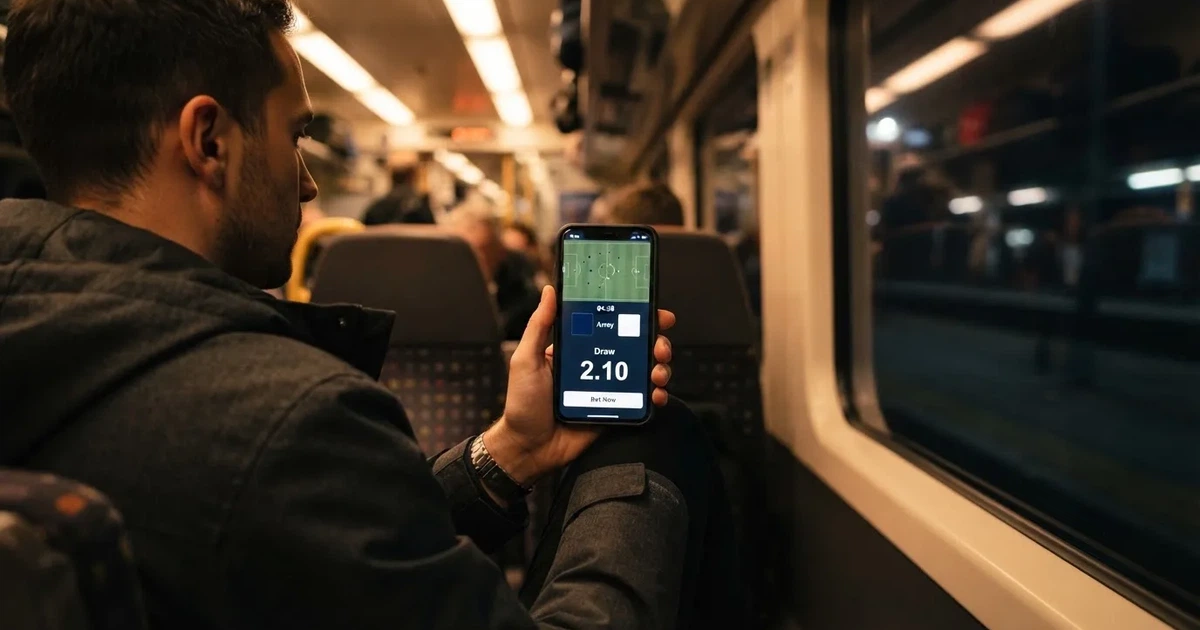
This page compares ten of the newer betting apps available to customers in Great Britain in 2026. It is not a list of the only licensed apps — the Commission’s register carries many more brands than any article can feature — nor is it a ranking by popularity. Each entry carries the licence number, the safer-gambling tools, the headline market features and the conditions behind any welcome offer as those operators themselves state them.
Current as of 27 October 2026, checked against the Gambling Commission’s public register.
What “new” actually means at a UK bookmaker
“New betting app” is a phrase the App Store rankings and the search results both stretch. Three things sit behind it.

A freshly launched operator, the first sense. Kalooki Sportsbook, launched under Kalooki Sports Book Ltd (company number 12938274) and licensed under Gambling Commission account 57730, is the clearest example in the set reviewed here. The brand’s site and app arrived recently enough that its UK presence is still being established.
A new product from a long-standing operator, the second sense. BetVictor describes about 80 years of experience as a bookmaker, and its current iPhone and iPad app is a recent rebuild of an older product. Unibet, in operation since 1999, runs its UK site under Platinum Gaming Limited, Gibraltar, against Gambling Commission account 45322; the app is a separate product from the desktop site and is upgraded on its own cadence. A newer app from an older operator is new in the same way a model-year is new: it is what is currently being sold.
A new licence against an established brand, the third sense, which is rarer but matters because it is the only one that genuinely changes the legal position. When a brand first takes a Gambling Commission remote licence its existing customers are moved onto GB terms, the safer-gambling obligations bind, and the marketing rules apply. A new app from a brand that has held its licence for years is a UI change.
All three are covered here. The point of distinguishing them is that the welcome package, the market depth and the safer-gambling machinery are usually more developed on the older licence, while the design and the on-device polish tend to be better on the newer app.
How the ten apps were chosen
The criterion was a single one: the brand holds a current Gambling Commission remote licence for Great Britain, lists an app in the GB App Store or on Google Play, and accepts customers in Great Britain at the date of writing. The Commission’s public register can be searched by business name, trading name, domain or account number; it is the whole test of whether a licence exists. Several licences cover several brands under one licensee — Ladbrokes and Coral, for example, sit under LC International Limited, and Paddy Power and Betfair share ownership — and the table below records the licence-holder per Betway or per app, not the consumer-facing brand alone.

A note on what was deliberately left out. A GB-licensed land-based bookmaker with no app was left out; the page is about apps, not about betting shops. An exchange-style operator that runs a sportsbook inside a casino app was kept in, because the sportsbook is a sportsbook. A brand whose app is in the store but whose licence has lapsed was left out — the register is the source of truth, not the App Store listing. Anything licensed only outside Great Britain was left out, because the Gambling (Licensing and Advertising) Act 2014 makes a GB licence compulsory at the point of consumption: a Curaçao, Maltese or Gibraltar licence is not a substitute in British law.
The shortlist at a glance
The ten apps reviewed in detail are Matchbook, Fitzdares, Betway, Midnite, BetTom, 888sport, Tote, Smarkets, London Bet and Ladbrokes. Each appears on the register under its own account number, which is reproduced below alongside the licence holder and what the operator’s own terms say on the subject that drives the page: what the app does, what it offers a new customer and what the safer-gambling machinery looks like inside it. None of these numbers is current for longer than the snapshot in the footnote at the foot of the table, and the register itself is the test that settles any doubt.
The ten apps compared
| App | Gambling Commission account | Licence holder | What the operator’s own terms say |
|---|---|---|---|
| Matchbook | 39504 | Triplebet Limited | A betting exchange whose app also runs slots, live casino, jackpots and table games, with an 18+ gate and GambleAware information in-app. |
| Fitzdares | 400 | Fitzdares Limited | Cash out, accumulators, Lucky 15s, antepost and specials on racing, football, tennis, rugby, cricket, golf and American football, with in-play live odds. |
| Betway | 39372 | Betway Limited | Live in-play, live streaming, Bet Builder, full and partial cash out, Betway Boosts, eSports and coverage of more than thirty sports. |
| Midnite | 101839 | Midnite Limited | In-play, an acca builder, popular accas and price boosts with maximum-stake limits, plus weekly rewards clubs and rapid payouts. |
| BetTom | 64959 | Bet Tom Limited | A multi-language app (English, Croatian, Dutch, French, German, Turkish) rated 17+, with sports betting at the centre of its product. |
| 888sport | 39028 | 888 UK Limited | Push notifications for promotions and listed responsible-gambling resources surfaced inside the app. |
| Tote | 54779 | TDCO Limited | Pool betting: Placepot, Jackpot, Scoop6 and Quadpot, plus World Pool commingling on UK, French PMU, US and Hong Kong pools. |
| Smarkets | 39173 | Smarkets (Malta) Limited | A prediction-market exchange with two-factor authentication, live charts, an order book view, quick trade-out and 24/7 live chat support. |
| London Bet | 66162 | Thistle Bet Limited | Sports betting across football, tennis, horse racing, greyhounds, darts, golf, cricket, NFL, NBA, MLB and snooker, with Pragmatic Play slots and live in-play. |
| Ladbrokes | 54743 | LC International Limited | One of the longer-established sportsbooks in the set, rated 4.66 from 101,255 ratings in the GB App Store at the snapshot date. |
The register is the source of truth for the licence columns. Everything in the fourth column is the operator’s own description of its app on the App Store listing or the help pages at the date shown in the footnote at the foot of the table, and the reader’s eye should land on it last.
Where the licensed app sits in UK law
The Gambling Commission licenses the whole commercial market in Great Britain under the Gambling Act 2005, which covers England, Scotland and Wales; Northern Ireland runs its own older law and a GB licence does not reach it. Since the Gambling (Licensing and Advertising) Act 2014, an operator whose remote facilities are used in Great Britain needs a Commission licence wherever it is based. Sections 33 and 36 of the 2005 Act are the operative sections, both as amended; a Curaçao, Maltese or Gibraltar licence does not substitute.
There is no state cap on the number of licences and no state monopoly. Several categories of remote licence exist — remote general betting standard (real events), remote general betting standard (virtual events), remote general betting limited, remote pool betting and remote betting intermediary (the licence under which betting exchanges run) — and a brand holds the categories its product needs. None of this is a permission to operate any market the operator wants; what is offered is what the operator’s licence conditions and codes of practice permit. In-play is offered by GB bookmakers and is governed by the operator’s licence conditions, not by a separate statute. Virtual events are a separate licence category from real events. Esports, politics and novelty markets are offered under the general licence; no statutory prohibition was found.
Identity verification has to happen before a customer can deposit or gamble at a GB-licensed site, including with a free bet or bonus. Name, address and date of birth are checked, and the check has been mandatory since 7 May 2019. The cost of anonymity is the cost of a licensed app: there is no anonymous play.
Minimum age is 18. Credit cards are banned for gambling in Great Britain (since 14 April 2020, including credit-card-funded e-wallet top-ups). Debit cards and bank-based payments are not covered by that ban. There is no statutory list of permitted payment methods, and there is no rule for or against cryptocurrency deposits at licensed operators beyond the operator’s own terms.
Financial spread betting sits under a different regulator, the Financial Conduct Authority. Spreadex, which appears in the wider pool of UK betting apps and combines fixed-odds and spread betting in one product, is regulated by the FCA on the spread side and by the Commission on the fixed-odds side, and its site is at pains to point out that spread betting losses can exceed the deposit. The licensed sportsbook it runs at the same time is still under Commission rules.
Advertising is not licensed by the Commission. The CAP Code (non-broadcast) and the BCAP Code (broadcast) carry the rules, enforced by the ASA. CAP Code section 16 is the social-responsibility section: marketing must not be of strong appeal to under-18s and no one who is or seems to be under 25 may feature gambling or play a significant role in the ad, with an exception for marketing placed where a bet can be made directly. The rule is about who appears in the advertisement, not about who may place a bet; the 18+ age limit is the only restriction on who may.
The player pays no tax on betting winnings in Great Britain. General Betting Duty is the operator’s tax on gross profits, currently 15%; from 1 April 2027 a remote betting rate of 25% applies, while remote bets on UK horse racing, self-service betting terminals in licensed premises, pool betting and in-person betting stay at 15%. Whether the operator passes the duty through into worse odds is not established, and never assume it does. The Commission’s statutory levy is a separate charge and is not the duty.
What protection a GB licence actually buys
Licensed and unlicensed are the two states a customer has to choose between, and the practical difference between them is in what happens when something goes wrong.
At a licensed operator: GAMSTOP is the national multi-operator online self-exclusion scheme and a mandatory licence condition for online operators since 31 March 2020. Periods are six months, one year, five years, or five years with auto-renewal; after the minimum period the exclusion stays in place for a further seven years unless the customer asks GAMSTOP to remove it. GAMSTOP covers online sites and apps; betting shops use a separate service. Deposit limits are an operator requirement under the Remote Technical Standards; the first changes applied on 31 October 2025, a second phase has been postponed to 30 September 2026, and whether it is live is not settled. There is no state-set ceiling for betting, only a customer’s choice. A financial vulnerability check (LCCP condition 3.4.4, in force since 30 August 2024) is a public-record check (bankruptcy, county court judgments), applied when a customer’s deposits minus withdrawals exceed £150 in a rolling 30 days, which became operative on 28 February 2025. It is not an income check, it is not a credit reference check, and the £150 threshold is low enough that it catches a wide range of accounts in normal use. The “affordability check” the press describes is a separate financial risk assessment, announced in a staged plan on 7 July 2026 with no start date.
Promotion rules in force since 19 January 2026 cap wagering requirements on bonuses at 10x: a £10 bonus at 50x would have needed £500 of qualifying bets, and under the cap no more than £100 of qualifying stakes count. The cap applies to bonuses with a wagering condition; free bets with no such condition are not in scope of the cap. Mixed-product promotions — “bet on football to get free spins” — are banned. The maximum money value of a bonus is not capped.
Complaints and dispute resolution run through an approved ADR body, then through the Commission if the ADR route fails. Identity is verified before any deposit; free bets and bonuses do not bypass that check. Bonuses are visible on the operator’s terms, and the terms are enforceable in British courts.
At an unlicensed operator: none of the above applies. There is no GAMSTOP coverage, no Commission complaints route, no approved ADR body, no British consumer redress if funds are withheld, no £150 vulnerability check, no 10x bonus cap. The customer is also outside the British financial-spreadbetting regime for spread products. Providing gambling facilities in Great Britain without the licence the Act requires is an offence under section 33 of the Gambling Act 2005 — up to 51 weeks’ imprisonment, a fine up to level 5, or both; six months in Scotland — aimed at the operator. No offence aimed at a customer who merely bets on an unlicensed site was found; the loss is the loss of protection, not a criminal record. Saying the unlicensed site is “legal to use” is therefore wrong but not for the reason a reader might assume.
Enforcement against unlicensed operators runs through cease-and-desist notices, search-engine referrals, work with registrars, hosts and payment providers and the court-order DNS blocking powers the Commission has been given or is about to receive. ISP blocking of unlicensed gambling sites is not in operation.
The safer-gambling machinery inside a licensed app
The safer-gambling tools inside the ten apps vary in name and in placement, but every licensed operator has to offer the same core set: deposit limits, time-outs, reality checks, self-exclusion, and access to help information. Where a tool sits inside a particular app is recorded below from the operator’s own description; the underlying obligation is the same.
Deposit limits are offered by every operator on this list. Star Sports provides deposit limits, a Play Break facility and self-exclusion from My Account. William Hill offers time reminders, time-outs and deposit limits as safer-gambling tools, with 24/7 customer service reachable through in-site messaging. Dabble provides deposit limits and cooling-off periods as safer-gambling tools, with resources in the app and on its helpdesk. Lottoland UK is 18+ with responsible-gambling resources listed; Kwiff is UKGC-licensed and rated 17+ in the App Store. These are the touchpoints a punter sees inside the app; the underlying GAMSTOP enrolment and the £150 vulnerability check sit in the background.
Help information is consistently signposted. GamCare runs the National Gambling Helpline, GambleAware funds treatment and education, NHS gambling clinics treat severe cases, and Gamblers Anonymous runs peer-support meetings. The Commission’s rules require each operator to surface these in-app and on its help pages. An app that hides them is breaking a licence condition.
Self-exclusion is the hardest of the tools to undo. GAMSTOP’s minimum period is six months; the next is one year; five years and five years with auto-renewal sit at the top. After the minimum period the exclusion stays in place for a further seven years unless the customer asks GAMSTOP to remove it. The seven-year tail is what makes the choice a real one.
A bettor with a small budget has different needs from one who plays in hundreds, and the safer-gambling machinery is calibrated to both. The £150 vulnerability check is set deliberately low because the regulator wants it to catch accounts in normal use, not just heavy play. The deposit-limit tool is a customer’s choice and is correct as a first step before any welcome offer is taken, because a bonus’s wagering requirement is itself a deposit-like commitment.
What a new-customer offer actually costs
“Welcome bonus” is the marketing word. What sits behind it is a wagering requirement: a multiple of qualifying bets that have to be placed before any of the bonus money can be withdrawn, and the bookmaker’s margin on those bets is what the bonus actually costs. A £10 bonus at 10x needs £100 of qualifying bets, and on a market with a 5% margin the expected cost of clearing is £5. The “free” part is clipped to the bonus amount and lost on any bet that does not win.
A free bet works differently. The stake is not paid back with the win, so a £10 free bet at odds of 6.00 returns £50 of profit if it wins, not £60; on a market with a 95% payout share the expected value of the free bet is roughly £10 × 5 ÷ 6 × 0.95, which is the average over many uses rather than a guaranteed return on any single bet. The expected value is below the free-bet amount; that is the nature of the product.
A risk-free bet is a marketing word for a free bet that is refunded as a free bet when the qualifying bet loses. The stake is the customer’s, the refund is a free bet with the same terms as any other free bet, and the cost of the offer to the operator is the expected value of the refund. None of that makes the offer a refund in cash.
A price boost is a price the operator sets above its own market price. The boost is real and can be back-tested, but the margin on the rest of the bet is unchanged; the boost does not turn a market into a fair one. An accumulator insurance refunds a stake as a free bet if one leg of a multi loses; the maths is similar to a free bet and the cost is in the lost stake on the winning accumulators the insurance does not refund.
The promotion rules in force since 19 January 2026 cap wagering on bonuses at 10x. A £10 bonus at 10x needs £100 of qualifying bets; the same bonus at 50x would have needed £500. Under the cap no more than £100 of qualifying stakes count towards the requirement. The cap is the binding constraint, and any offer on a licensed app in 2026 sits under it.
A bettor with a small budget gets the most out of a bonus by checking the qualifying-bet minimum price, the deadline, the markets that count, and the maximum stake that contributes to the requirement. The £100 cap on qualifying stakes means a bonus with a low wagering multiple and a tight deadline can be cleared by the customer’s normal stake size; the same bonus with a high wagering multiple and a long deadline is closer to a marketing line than an offer.
A final point on cost. The bookmaker’s margin is the operator’s cut of every market, expressed as 1 minus the payout share. A market priced at odds of 2.00 on both sides has a payout share of 1 ÷ (0.5 + 0.5) = 100% and a margin of 0%. The same market priced at 1.91 on both sides has a payout share of 1 ÷ (0.5236 + 0.5236) = 95.5% and a margin of 4.5%. The margin is what makes a long sequence of bets net negative even when the punter’s picks win at the rate the odds imply.
Where the comparison has to stop being a comparison
Two things cannot be compared without misleading the reader. The first is a bookmaker’s margin across two different markets. The 1X2 margin on a Premier League match is not the margin on a totals market on the same match, and neither is the margin on a handicap market. Margins are not transferable. The second is a bookmaker’s price on one event against its price on another. A 1.85 on a tennis match is not a 1.85 on a horse race; the markets are different and so are the books.
A price or a margin is stated on this page only where the underlying event, bookmaker and snapshot date are all specified. The rest of the comparison is qualitative: “wide range of sports”, “price boosts with maximum-stake limits”, “rapid payouts”. The reader who wants the precise number should look at the betting slip or the operator’s terms at the moment of betting; the numbers on the page would be a day old by the time they are read.
Matchbook — the exchange with a casino attached
Matchbook’s app carries the betting-exchange core and adds a casino on top: slots, live casino, jackpots and table games, with an 18+ gate and GambleAware information in the app. The licence is Commission account 39504, held by Triplebet Limited. The exchange is licensed as a betting intermediary, which is the Commission category for back-and-lay markets; rates and rules specific to exchanges are stated only from the exchange’s own terms.
For a customer comparing this to a traditional sportsbook the difference is structural. On a traditional sportsbook the operator takes the other side of every bet and earns the margin. On an exchange the customer takes the other side, the exchange earns a commission on net winnings, and the margin on the prices the customer matches is whatever the customer chooses to leave in the market. The exchange’s product is a thinner one and the casino is the fatter earner for the operator.
Worth it for the customer who wants to lay bets and trade out, or for the one who treats the casino as a side feature. Less worth it for the punter who wants a single sportsbook with deep in-play markets and a price-boost tab — the exchange’s UI is built around the order book, not the betting slip.
Fitzdares — the racing-led sportsbook with the specials tab
Fitzdares holds Commission account 400 through Fitzdares Limited, and the app is built around horse racing: cash out, accumulators, Lucky 15s, antepost markets, specials, plus football, tennis, rugby, cricket, golf and American football. In-play live odds are available across the sports it covers. The racing focus is the brand’s identity and it shows in the structure of the markets.
Worth it for the racing customer who wants antepost and Lucky 15s in one place, and who reads specials as a feature rather than a marketing line. Less worth it for the customer whose sportsbook is a football-led product.
Betway — the full-feature sportsbook with the broadest sports list
Betway’s licence is Commission account 39372, held by Betway Limited. The app runs live in-play, live streaming, Bet Builder, full and partial cash out, Betway Boosts, eSports markets and coverage of more than thirty sports. It is the broadest feature set in the ten-app comparison and the broadest sports list, with the eSports coverage in particular being one of the more developed in the set.
Worth it for the customer who wants one app that covers everything from the Premier League to eSports, and who treats Bet Builder and cash out as everyday tools. The breadth is the feature and the cost is the per-sport depth being thinner than a specialist.
Midnite — the newer app with the rapid-payout pitch
Midnite is published by Dribble Media Limited and licensed under Commission account 101839 through Midnite Limited. The app shows in-play events, an acca builder, popular accas, and price boosts with maximum-stake limits, plus weekly rewards clubs and rapid payouts. The “rapid payout” claim is the marketing angle and the operator’s terms support it.
Worth it for the customer whose main concern is how long a withdrawal takes, and who is happy with a thinner market depth in exchange for speed. Less worth it for the punter who treats sports coverage as the deciding factor.
BetTom — the multi-language app
BetTom is published by Bet Tom Limited under Commission account 64959, and the app is available in English, Croatian, Dutch, French, German and Turkish. It carries a 17+ App Store age rating and is a sports-led product rather than a casino one.
Worth it for the customer whose preferred language is one of the six the app ships in, and who is happy to bet with a smaller brand in exchange for the localisation. Less worth it for the punter who values brand recognition over language coverage.
888sport — the brand-led app
888sport is licensed under Commission account 39028 through 888 UK Limited. The app surfaces push notifications for promotions and lists responsible-gambling resources. The 888 brand is broader than the sportsbook; the consumer-facing experience is the 888 brand’s normal product, not a specialist sportsbook.
Worth it for the customer who already has an 888 account and wants the sportsbook on the same login. Less worth it for the punter who wants the specialist feature set of a Betway or a Betfair.
Tote — the pool-betting specialist
The Tote app is published by UK Tote Group Ltd and licensed under Commission account 54779 through TDCO Limited. It carries the pool bets: Placepot, Jackpot, Scoop6 and Quadpot, plus World Pool commingling with the French PMU, US and Hong Kong pools. Pool betting is a different product from fixed-odds betting and is licensed under its own category.
Worth it for the racing customer who plays the pools and wants a UK-licensed pool operator with international commingling. Less worth it for the punter whose betting is fixed-odds football.
Smarkets — the prediction-market exchange
Smarkets are licensed under Commission account 39173 through Smarkets (Malta) Limited, in the betting-intermediary category. The app supports two-factor authentication, live charts and an order book view, plus a quick trade-out option and 24/7 live chat support. The exchange UI is the product and the security features are the brand’s pitch.
Worth it for the customer who treats betting as a trading problem, who wants two-factor authentication on every login and who is comfortable with the order book as the interface. Less worth it for the punter who wants a sportsbook-style slip and a price-boost tab.
London Bet — the multi-sport app with the Pragmatic Play casino
London Bet is published by Thistle Bet Limited under Commission account 66162. The app covers football, tennis, horse racing, greyhounds, darts, golf, cricket, NFL, NBA, MLB and snooker, with Pragmatic Play casino slots and live in-play. The casino is real and the slots are a recognisable brand.
Worth it for the customer who wants the sportsbook and the slots on the same login and is happy with a smaller brand. Less worth it for the punter who treats brand size as a proxy for product maturity.
Ladbrokes — the long-established sportsbook
Ladbrokes is published by Entain Operations Limited and licensed under Commission account 54743 through LC International Limited, in the categories of remote general betting standard (real events) and remote betting intermediary. At the snapshot date the app was rated 4.66 from 101,255 ratings in the GB App Store, which is the deepest rating base in the comparison.
Worth it for the customer who treats brand recognition and a large customer base as a feature in their own right, and who wants the breadth of an established sportsbook. The breadth is the upside and the per-feature polish is the downside, in the same way as for any product at this scale.
What “100% bonus” and “risk-free bet” really mean
The marketing word for a new-customer offer is usually one of three. “100% bonus” — a deposit match, where the bookmaker credits bonus money equal to the customer’s first deposit, subject to a wagering requirement and other terms. “Risk-free bet” — a first bet whose stake is refunded as a free bet if it loses, with the refund usually subject to minimum-odds conditions. “Free bet” — a credited stake whose value is not paid back with a winning bet.
Each costs the punter something real. The 100% bonus costs the wagering multiple times the bonus base, at the margin of the markets the wagering must be done on. The risk-free bet costs the stake of the first bet when it loses (the stake is the customer’s, not the operator’s) and the loss of the stake on the winning case (no refund is paid). The free bet costs the expected value of the difference between the stake and the payout, which is the stake times one minus the payout share of the market it is used on.
“Best odds guaranteed” is a racing-specific marketing term that means the operator pays the starting price if it is higher than the price the punter took. It is a real feature, not a marketing word, and the cost is built into the racing margin.
“Enhanced odds” is a price the operator chooses to offer above its own market, usually on a featured event. The boost is real, but the rest of the bet is priced at the operator’s normal margin. The punter should compare the enhanced price to the price on a competing bookmaker’s site and take the larger of the two, not the marketing copy.
Each of these is described in the operator’s own terms on the relevant welcome page. None requires a code, and none is printed here.
Choosing an app: the reader’s checklist
A useful sequence for the reader who has not yet installed an app is this. First, check the Commission’s register for the licence number the app lists. Second, read the safer-gambling section of the operator’s help page; the deposit-limit tool, the time-out and the self-exclusion option should all be visible. Third, read the welcome offer’s full terms: the wagering multiple, the qualifying-bet minimum price, the deadline, the maximum stake that contributes, and the markets excluded from qualifying. Fourth, deposit by debit card or bank-based payment rather than by an e-wallet that might be credit-card-funded. Fifth, set a deposit limit before the first bet.
A useful sequence for the reader who is switching apps is shorter. Check that the new app does not duplicate a product the existing app already covers well, and that the welcome offer’s terms are not worse than the existing account’s current promotion calendar. A bookmaker’s welcome offer is not its best offer; the existing customer promotions are usually priced for retention rather than acquisition.
The angle in one sentence
The cost of a betting app is the licence (which fixes the protections), the wagering multiple (which fixes the cost of the welcome offer), the qualifying-bet minimum price (which fixes which bets count), the deadline (which fixes when the offer is gone), and the margin on the markets the wagering has to be done on (which fixes what the wagering costs on average). The size of the brand, the rating in the App Store and the depth of the sports list are not costs, however much the marketing positions them as such.
Reading the table and the table’s footnote
The table above carries the licence number, the licence holder and what each operator’s own terms say at the snapshot date. The licence numbers are the Commission’s account numbers and are the test that settles any doubt about whether a brand is licensed. The licence holder is the legal entity on the register, which is not always the consumer-facing brand; several licences cover several brands under one licensee, and the table records the licence-holder per Betway or per app, not the brand alone. The fourth column is the operator’s own description at the snapshot date, taken from the GB App Store listing or the operator’s own help pages.
The footnote that would normally sit under such a table is, in this article, a sentence: the register is the source of truth and the App Store listing is the source of the operator’s self-description. Both are accessible to the reader without a subscription, and the reader’s own check at the moment of installing an app will be more current than any number on this page.
How a punter’s stake becomes a return
The mechanics of a bet are worth a paragraph because the marketing words hide them. A bet is a contract: the punter stakes an amount, the operator offers odds, and if the punter’s selection wins the operator pays the stake back plus winnings calculated as the stake multiplied by the odds minus one. At decimal odds of 6.00 a £10 stake returns £60 of profit plus the £10 stake, for a total return of £70. At fractional odds of 5/1 the same return is calculated as £10 multiplied by 5 ÷ 1 plus the £10 stake, which is the same number; the conversion from fractional a/b to decimal is a ÷ b + 1, so 5/1 becomes 6.00, 11/4 becomes 3.75, and evens (1/1) becomes 2.00.
A combination bet multiplies the odds of the legs into one price. A double at 3.00 and 4.00 has combined odds of 12.00; a £10 stake returns £120 if both legs win. The margin compounds with the legs, which is one reason a long-priced accumulator is rarely as good value as the price suggests.
The bookmaker’s margin is calculated as one minus the payout share, where the payout share is one divided by the sum of the inverse odds on every outcome of the market. A two-outcome market priced at 1.91 on each side has a payout share of 1 ÷ (0.5236 + 0.5236) = 95.5% and a margin of 4.5%. The same market priced at 1.85 on each side has a payout share of 1 ÷ (0.5405 + 0.5405) = 92.5% and a margin of 7.5%. The margin is the operator’s cut on every unit staked on the market, regardless of the outcome.
How free bets, price boosts and acca insurance actually pay
A free bet is a credited stake whose value is not paid back with a winning bet. A £10 free bet at odds of 6.00 returns £50 of profit on a win, not £60; the £10 stake is the operator’s money and is forfeit regardless of the outcome. The expected value of the free bet is the free-bet amount multiplied by the odds minus one divided by the odds, multiplied by the payout share of the market it is used on. On a market with a 95% payout share a £10 free bet at odds of 6.00 has an expected value of roughly £10 × 5 ÷ 6 × 0.95 = £7.92, which is the average over many uses, not a guaranteed return on any single bet.
A price boost is a price the operator sets above its own market. The boost is real but the rest of the bet is priced at the operator’s normal margin; the boost does not turn a market into a fair one.
An accumulator insurance refunds a stake as a free bet if one leg of a multi loses. The maths is similar to a free bet’s, and the cost is the lost stake on the winning accumulators the insurance does not refund. A punter who plays accas regularly and treats insurance as a feature should check the minimum number of legs, the minimum odds per leg and the maximum refund.
A risk-free bet is a marketing word for a free bet that is refunded as a free bet when the qualifying bet loses. The stake is the customer’s; the refund is a free bet with the same terms as any other free bet; the cost of the offer is the expected value of the refund, which is below the original stake on any market with a positive margin.
What the calculation does and does not say
The maths in this article is a statistical estimate, not a forecast. A 95% payout share on a market is a long-run average over many bets, not the payout on any one bet. A £7.92 expected value on a £10 free bet is the average over many uses; the outcome of any single free bet is binary.
The maths also assumes the markets are priced as the operator’s terms state. In a real betting market the price moves between the time the operator offers it and the time the punter takes it, and the realised payout share differs from the headline. The reader’s own stake and timing are part of the calculation and are not captured by any formula.
A punter who wants the precise number for a given bet should calculate the return and the margin from the prices on the betting slip at the moment of placing the bet. The general formula is the same; the inputs change.
A note on the legal frame
The legal frame around a UK betting app is unusually settled for a consumer market. The Gambling Commission is the regulator, the Gambling Act 2005 is the statute, the LCCP and the Remote Technical Standards are the binding codes, and GAMSTOP is the self-exclusion mechanism. The reader who wants to challenge a betting decision has the ADR route and then the Commission; the reader who wants to challenge a marketing decision has the ASA. None of this is novel and none of it requires a court order to invoke.
What is novel in 2026 is the staged rollout of the financial risk assessment and the postponed second phase of the deposit-limit changes. Both are announced but not in force, and any article that describes them as in force is describing the regulator’s plan rather than its rules.
What is settled in 2026 is the 10x wagering cap on bonuses, the mixed-product promotion ban, the credit-card gambling ban and the £150 vulnerability check. These have dates and the dates are past.
A note on the market’s own terms
The bookmaker’s margin is the operator’s cut on every market, expressed as 1 minus the payout share. It is not a fee on losing bets; it is built into the price of every bet, winning or losing. The punter pays it on every stake, and it is what makes a long sequence of bets net negative even when the punter’s picks win at the rate the odds imply.
The market is not a fair one by construction. A 5% margin means the operator keeps 5p of every £1 staked across the market, and the punter needs to win at a rate above 50% on a two-outcome market at even odds to break even. The 5% is the operator’s edge and it is consistent across winning and losing bets.
The reader who wants the precise margin for a market should calculate the payout share from the prices on the betting slip and subtract from 1. The general formula is the same; the inputs change.
What the App Store listing does and does not prove
An app’s presence in the GB App Store is not a licence. Apple’s age rating is a content rating, not a regulatory approval; a 17+ rating is a content guideline, not a licence condition. The Commission’s register is the test of whether a brand is licensed, and the licence number on the app’s description page is what the reader should check.
An app’s rating in the App Store is a customer satisfaction signal, not a measure of product quality. A 4.66 rating from 101,255 ratings is informative about customer experience and not informative about the operator’s margin, the wagering multiple on the welcome offer or the cost of clearing it. The reader who treats the rating as a proxy for value is reading the wrong column.
An app’s features list is the operator’s marketing. “Live streaming”, “Bet Builder”, “price boosts” — each of these is the operator’s own description of the feature, and the terms of each are in the operator’s own help pages. The reader who wants to know what a feature costs should read the help page; the App Store description is the headline.
A note on what the licence does not cover
The licence covers the operator’s compliance with the LCCP and the Remote Technical Standards. It does not cover the operator’s solvency, the operator’s customer-service quality, or the operator’s commercial decisions. A licensed operator can still go into administration; a licensed operator can still hold a withdrawal for compliance reasons; a licensed operator can still offer poor odds. The reader’s protection is in the dispute-resolution route and the British courts, not in the licence itself.
The licence does not cover the bonus’s value. A licensed bonus can still be worth less than a free bet, can still require more wagering than the punter wants to do, and can still expire before the punter gets to it. The 10x cap is the binding constraint; the rest is the operator’s commercial decision.
The licence does not cover the odds. A licensed operator can price a market at any margin it chooses, subject only to the operator’s own commercial discipline. The reader who wants the best price should compare across operators, not within a single licensed app.
A closing thought on what cost means here
The cost of a betting app is not the subscription (there is none on a licensed sportsbook), not the data the app collects (the safer-gambling data is the operator’s compliance, not a paid product), and not the time the punter loses (this is the punter’s call). The cost is the licence (which fixes the protections), the wagering multiple (which fixes the cost of the welcome offer), the qualifying-bet minimum price (which fixes which bets count), the deadline (which fixes when the offer is gone), the margin on the markets the wagering has to be done on (which fixes what the wagering costs on average), and the maximum stake that contributes to the requirement (which fixes how much of the punter’s normal stake size counts).
The cost of a betting app is also the cost of the app’s safer-gambling machinery not being used. A deposit limit set above what the punter would normally stake is a marketing line, not a tool. A time-out that is never invoked is a feature on a help page. The machinery exists; using it is the punter’s call, and the call is the only cost the operator cannot charge for.
Frequently asked questions
What should a punter look for in a new sports betting app?
The first check is the Gambling Commission’s public register: search by business name, trading name, domain or account number, and confirm the licence is current and covers the categories of betting the app offers. The second check is the safer-gambling section of the operator’s help page: deposit limits, time-outs, reality checks, self-exclusion and GAMSTOP enrolment should all be visible. The third check is the welcome offer’s terms: wagering multiple, qualifying-bet minimum price, deadline, maximum stake and excluded markets. The fourth is the payment method: a debit card or a bank-based payment, not a credit card or a credit-card-funded e-wallet.
How does a punter check that a bookmaker holds a Gambling Commission licence?
The Commission’s public register is searchable by business name, trading name, domain or account number, and is the whole test of whether a licence exists. The register lists the licence-holder (the legal entity on the register), the categories of licence, and the dates the licence is in force. A brand that lists a licence number on its app description page but does not appear on the register is not licensed in the UK. The register’s access date is the snapshot that settles any doubt, and a licence that has lapsed, been suspended or been surrendered is shown on the register as such.
How is a bet’s return worked out from the stake and the odds?
At decimal odds, the return on a winning single bet is the stake multiplied by the odds, and the profit is the stake multiplied by the odds minus one. A £10 stake at odds of 6.00 returns £60 of profit plus the £10 stake, for a total return of £70. On a combination bet the odds of the legs multiply into one price; a double at odds of 3.00 and 4.00 has combined odds of 12.00, and a £10 stake returns £120 on a win.
What is the bookmaker’s margin and how does it show in the odds?
The margin is the bookmaker’s cut on every market, expressed as 1 minus the payout share. The payout share is 1 divided by the sum of the inverse odds on every outcome of the market. A two-outcome market priced at odds of 1.91 on each side has a payout share of 95.5% and a margin of 4.5%; the same market at 1.85 has a payout share of 92.5% and a margin of 7.5%. The margin is built into the price of every bet, winning or losing, and is what makes a long sequence of bets net negative even when the punter’s picks win at the rate the odds imply.
How do fractional odds such as 5/1 convert to decimal odds?
The conversion from fractional odds a/b to decimal odds is a divided by b plus 1, so 5/1 becomes 6.00, 11/4 becomes 3.75, and evens (1/1) becomes 2.00. The decimal odds include the stake; the fractional form expresses only the profit. A £10 stake at fractional odds of 5/1 returns £50 of profit plus the £10 stake, which is the same as a £10 stake at decimal odds of 6.00 returning £60 total.
Which tools for controlling play does a licensed bookmaker have to offer?
Deposit limits, time-outs, reality checks, self-exclusion and GAMSTOP enrolment are the core set, and every licensed operator has to offer them under the LCCP and the Remote Technical Standards. GAMSTOP is the national multi-operator online self-exclusion scheme with periods of six months, one year, five years, or five years with auto-renewal, and a seven-year tail after the minimum period. GamCare runs the National Gambling Helpline, GambleAware funds treatment and education, NHS gambling clinics treat severe cases and Gamblers Anonymous runs peer-support meetings. Help information has to be visible in the app and on the operator’s help pages.
Payments & apps – Cricket betting
Content created by the «Cricket betting» team
