
What online cricket betting in 2026 actually costs the punter
 Available in US
Data current as of 27 October 2026; figures checked against the Gambling Commission’s public register and each operator’s own published terms.

Cricket punting has more moving parts than most sports betting markets because the match itself does. A Test lasts up to five days and ends in a draw, an ODI is fifty overs a side and may be settled by the Duckworth-Lewis-Stern method after rain, and a T20 is a 120-ball sprint where a tied match goes to a super over. Every one of those shapes the markets a bookmaker offers, the way odds move during a session, and the cost the punter actually pays. The headline price on a screen already carries the bookmaker’s margin, the welcome bonus hides a turnover requirement behind a five-day expiry, and the credit-card ban in Great Britain plus the GAMSTOP check at sign-up frame the whole exercise long before a stake is placed.
What follows is a walk through online cricket betting as a British punter meets it in 2026: the formats, the live markets and the cash-out that follows them, the predictions culture and the strategy vocabulary around it, the bet types and how the odds are built, the tournaments the calendar turns on, the ten-bookmaker shortlist the comparison rests on, the licence and self-exclusion frame, the safer-gambling tools and the bonus terms that turn a £20 free bet into something else. The angle is what it costs — the pounds, the rollover, the deadline, the margin the punter does not see.
Cricket apps and the mobile shortlist
A betting app is no longer a convenience layer over a website; for most punters it is the product. A cricket punter watching a Test from a living room checks the app between overs, places an in-play wager when the partnership passes fifty, and cashes out the bet before tea if the price moves. The browser version sits behind. That makes the app the right place to start a tour of online cricket betting.

The App Store descriptions on the ten shortlisted bookmakers are short and matter-of-fact. The bet365 app is the most downloaded sports betting app in the UK, with the Champions League partnership pinned at the top. The Fitzdares app carries cash out, accumulators, Lucky 15s and specials across horse racing, football, tennis, rugby, cricket, golf and American football, with in-play live odds. The BetVictor app adds Best Odds Guaranteed on UK and Irish racing, enhanced live race streaming and a BetFinder feature for finding racing bets, with Smart Stats underneath. NetBet ships a Bet Builder with instant dynamic odds, daily price boosts and Profit Boosts. The Paddy Power app covers football, horse racing, boxing, rugby, tennis, golf, darts, snooker and F1, with the rest of the sports book sitting beside that core.
Several of the brands use the app to expose a different face than the desktop site. Midnite’s app describes in-play events, an acca builder, popular accas and price boosts with maximum-stake limits attached. Geoff Banks’ app is the GB Sports Advisors Limited product, with live in-play prices and ante-post prices on future events. Lottoland’s UK app folds casino, lottery betting, sports betting and scratchcards into one wallet. Star Sports’ app keeps a phone line — 08000 521 321 — for punters who would rather speak to a trader to open an account, place a bet or ask a question, alongside the email route. Spreadex runs two books under one brand: spread betting is regulated by the Financial Conduct Authority, and the spread book can lose more than the deposit; fixed-odds betting on the same site sits under the Gambling Commission.
That split is worth holding in mind. A punter downloading the Spreadex app on a hunch that the run rate will slow in the middle overs could find themselves in either book depending on which tab they pick, and the consumer protection runs to different regulators. The cricket book is the Gambling Commission’s; the spread book is the FCA’s, and the FCA’s rules are written for a different product. The lesson generalises: the app icon does not tell you whose rules you are betting under, and a punter who values the British safer-gambling framework — GAMSTOP, deposit limits, the £150 financial-vulnerability check, the approved dispute-resolution route — should check that the betting tab they are about to use sits under a Gambling Commission licence, not beside one.
Browser-only punters are a smaller group than they were five years ago, but the ten shortlisted brands all run a working desktop site. The differences show up in how much the app and the desktop share: BetVictor, bet365, William Hill and Paddy Power have largely converged products across both, with the desktop keeping the larger fixture list and the app keeping the in-play depth. Smaller brands split the labour more sharply. Fitzwilliam Sports’ site is built around instant deposits, fast withdrawals, timeouts and deposit limits, with links to GambleAware, GAMSTOP and Gamblers Anonymous visible from the home page, and the product range is narrower than the high-street names.
The short version: the app is the cricket book, the browser is a fallback, and the licence line is the thing to check first. Everything else on the app — Best Odds Guaranteed, a Bet Builder, acca insurance, enhanced live race streaming — is a feature the punter pays for through the margin, and the next sections show what that margin looks like in the odds.
In-play cricket betting and the cash-out question
In-play cricket has a different shape from in-play football. A football match runs in two halves of forty-five minutes with a clear clock, and the in-play book settles around goals, cards and corners. A cricket match has phases — the powerplay, the middle overs, the death overs, the new ball, the second new ball, the rain break, the DLS recalculation — and the in-play book settles around each one. A punter who treats a Test innings like a football match is overpaying for prices the bookmaker has already trimmed, because the in-play trader on a fifty-over ODI has more data to work with than the pre-match trader had at the toss.
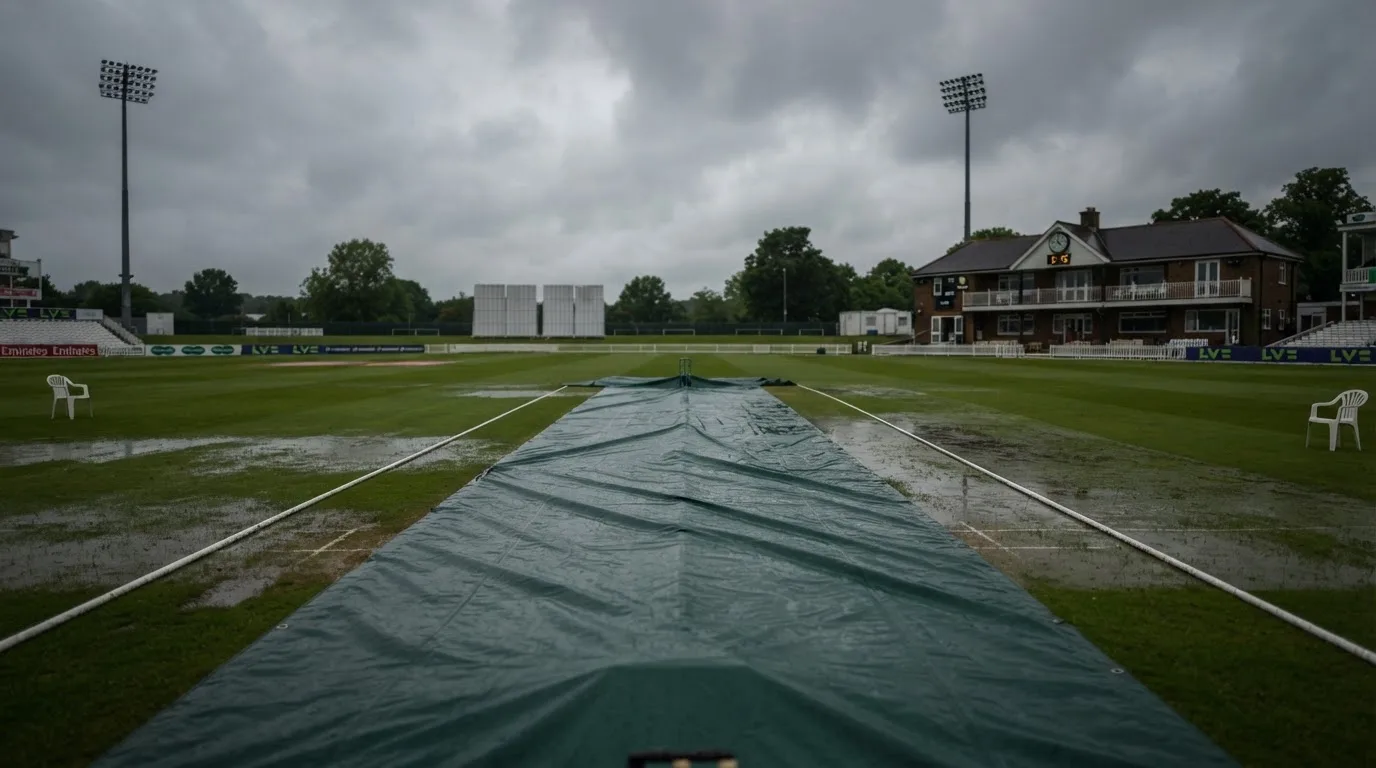
Most of the ten shortlisted brands offer in-play cricket. The Midnite app lists in-play events as a top-level tile. BetVictor’s in-play book sits under Smart Stats. NetBet’s app carries a bet builder with instant dynamic odds that re-prices on every selection. Fitzdares runs in-play live odds across its sport tabs, including cricket. The high-street names — William Hill, Coral, Paddy Power, BetVictor — take in-play cricket as a default and run it deep. The narrower brands still offer in-play, but the price depth and the market range shrink accordingly.
Cash out is the second half of the in-play story. A punter who backed India at 2.10 before the toss can cash out the bet at 1.40 once the openers put on fifty, locking in a smaller profit without waiting for the result. The same punter, on a T20 where the chase is collapsing, can cash out at 0.20 and claw back a fraction of the stake. Cash out is offered by most of the ten, and the price is the bookmaker’s price — the in-play margin applies, and the cash-out value is usually worse than the true market value because the bookmaker keeps a slice for closing the bet early.
The price the punter sees in the in-play book is the in-play margin, not the pre-match margin, and the two are not the same. In-play traders price to the next event, not the eventual result, and the margin on the next-ball market is wider than the margin on the match result. A punter who watches a session and bets on every over boundary is paying a higher per-bet margin than the pre-match price implied. A punter who waits for the partnership to break and bets on the next wicket method is paying a more reasonable margin, because the market is deeper and the trader has had time to balance the book.
There are two practical consequences. First, the in-play margin is where a bookmaker earns the most per unit staked, and the punter who lives in the in-play book pays more, on average, than the punter who bets pre-match. Second, the in-play book is the place where cash-out is most useful, because the cash-out value moves further from the true value the longer the bet runs, and locking in early is the punter’s only defence. The bookmaker keeps the difference either way: the punter who holds the bet pays the in-play margin on the eventual settlement; the punter who cashes out pays the in-play margin and then pays the cash-out haircut on top.
The British regulatory frame sits across both. In-play cricket is legal and licensed; there is no statutory restriction on in-play sports betting in Great Britain, and the controls are the operator’s licence conditions and customer-protection duties. The same identity check that gates the pre-match bet gates the in-play bet, and the £150 financial-vulnerability check that triggers on a rolling 30-day deposit total applies whether the bet is placed at 9 am on a Tuesday or at 3 pm during a Saturday Test. The punter who has been betting all morning on the session market will have triggered the check by the afternoon, and the bookmaker’s safer-gambling team will get a flag.
In-play cricket is the part of the book that rewards a punter who knows the format and the phase. A Test innings moves in partnerships, and the in-play price on the next wicket method drifts after a fifty and tightens after a hundred. An ODI moves in powerplay windows, and the in-play price on the next over total swings with the bowling change. A T20 moves in clusters — a wicket, two boundaries, a dropped catch — and the in-play price on the next ball moves in fractions of a second. The punter who knows which format they are watching is the one who finds value, and the punter who treats all three formats the same is the one the margin eats.
Predictions, tips and the strategy vocabulary
Cricket betting has a predictions culture that other sports do not. Football tips are a market, but cricket tips are a calendar: a website publishes a hundred-word preview for each ODI, a YouTube channel posts a six-minute video the morning of a Test, and a tipster on X posts a single line — “India top batsman: Kohli at 4.50” — that is the whole content. The volume is the point; the punter picks the source they trust and ignores the rest.
The honest version is that no one knows who will win. A prediction is a probability estimate dressed up as a tip, and the punter’s job is to spot the predictions that disagree with the bookmaker’s price. A tipster who says “India to win” at 1.50 is not telling the punter anything the market does not already know. A tipster who says “Kohli top batsman at 4.50 or better” is flagging a price the punter might not have noticed. The difference is not accuracy; it is information the bookmaker has not already priced in.
The strategy vocabulary around cricket betting borrows from poker and from sports trading. A bankroll is the float the punter sets aside for betting, sized so that a bad run does not force a stake the punter cannot afford. A unit is 1-3% of the bankroll, and the punter bets in units so the stake scales with the bankroll rather than with the confidence in a single match. A value bet is a wager whose price is higher than the probability the punter assigns, and the punter’s job is to find enough of them that the margin averages out. An each-way bet is two bets of equal stake — one on the win, one on the place — so the stake doubles and the punter has a return even if the selection finishes second. An accumulator is a single bet whose price multiplies across the legs, and a Lucky 15 is fifteen bets on four selections across singles, doubles, trebles and a four-fold accumulator. A Patent is seven bets on three selections; a Yankee is eleven on four; a Heinz is fifty-seven on six; a Goliath is two hundred and forty-seven on eight. The unit stake multiplies by the number of bets, so a £1 Lucky 15 costs £15 and a £1 Goliath costs £247.
The bankroll idea is the part that matters. A punter with a £500 bankroll and a 1% unit bets £5 per selection, and a 10% loss in a session is a £50 hit, not a £500 hit. A punter with the same bankroll betting £50 a go is staking 10% of the bankroll on a single bet, and a bad week ends the bankroll. The strategy vocabulary is the language the punter uses to keep the bankroll intact long enough for the value bets to compound.
Predictions and strategy intersect in the staking plan. A flat-stake punter bets the same unit on every selection, regardless of confidence. A proportional-stake punter scales the unit with the perceived edge — 1% on a marginal price, 3% on a strong price — and the bankroll grows faster on the strong prices and shrinks slower on the weak ones. A Kelly-stake punter sizes the bet to the perceived edge and the price, and the formula is edge divided by (price minus one); a 10% edge at 3.00 is a 5% stake, and a 5% edge at 1.50 is a 10% stake. The Kelly stake is the mathematically optimal size, but it is also aggressive, and most punters stake half-Kelly or quarter-Kelly in practice because the full Kelly punter overestimates their edge and goes broke.
The strategy vocabulary also covers the markets themselves. A match result bet is a wager on the win, and a Test match can be a draw. A top batsman bet is a wager on the run-scorer in an innings, and the book is wide because the field is large. A top bowler bet is a wager on the wicket-taker, and the field is narrower. A method of dismissal bet is a wager on how the next batter is out — bowled, caught, LBW, run out, stumped, hit wicket — and the price varies with the bowler and the batter. A total runs bet is a wager on the team innings total, and the line is set in a band so the punter can take over or under. A partnership bet is a wager on the next partnership, and the line moves with the format.
The punter who treats the predictions as raw material and the strategy as the framework has the right shape. The punter who treats the predictions as gospel and the strategy as a marketing word is the one who loses the bankroll to the margin.
Cricket bet types, odds and how the bookmaker is paid
The bet types on a cricket book fall into a few families, and the family determines the kind of analysis the punter can do. The first family is the match result: win, lose, draw, tie. The second family is the innings: top batsman, top bowler, method of dismissal, total runs, partnership. The third family is the session: runs in the next over, runs in the next ten overs, wickets in the next ten overs. The fourth family is the combination: a bet builder that folds several selections into one price, a Lucky 15 that folds four selections into fifteen bets, an accumulator that folds several legs into one.
The odds on a cricket market carry the bookmaker’s margin the way a high-street price carries the VAT. A two-way market priced at 1.90 / 1.90 has a payout share of 1 ÷ (1 ÷ 1.90 + 1 ÷ 1.90) = 0.95, so the margin is 5%. A 1.85 / 1.85 market has a payout share of 0.93 and a margin of 7%. A 1.80 / 1.80 market has a payout share of 0.90 and a margin of 10%. The bookmaker keeps the margin on every unit staked, and the punter pays the margin as a tax on every bet. A punter who bets £10 at 1.90 on a 5%-margin market is paying 50p of margin; the same punter at 1.80 on a 10%-margin market is paying £1 of margin; the difference is the cost of taking a less efficient price.
The margin varies by market and by bookmaker. A match result on a Test is a three-way market (home win, away win, draw) and the margin is wider than a two-way market because the draw sits in the book. A match result on an ODI or T20 is a two-way market (home win, away win, with tie settled separately) and the margin is tighter. A top batsman market is a wide-field market with twelve to fifteen runners and the margin is the widest of all. A bet builder combines several markets into one and the margin is layered, so the combined price carries the margin of each leg. A bookmaker’s headline price on a popular match — England v India at Lord’s, Australia v Pakistan in Melbourne — is usually tighter than the headline price on a domestic match, because the book is deeper and the bookmaker can lay off more of the risk.
The punter’s tool for reading the margin is the implied probability. A 1.90 price implies a 52.6% chance; the other side at 1.90 implies the same. If the punter thinks the true chance is 55% and the bookmaker’s price implies 52.6%, the punter has a 2.4% edge. The edge has to be larger than the margin, and the punter has to win the bet more often than the price implies, or the bankroll shrinks. A punter who bets at random on a 5%-margin market loses 5% of turnover on average; a punter who bets at random on a 10%-margin market loses 10% of turnover. The difference is not the punter’s skill; it is the market the punter is in.
The odds also have a format. British punters meet fractional odds by default — 5/1, 11/4, evens — and decimal odds on the same markets. A 5/1 fractional price is a 6.00 decimal price; an 11/4 fractional price is a 3.75 decimal; evens (1/1) is a 2.00 decimal. The conversion is decimal = a ÷ b + 1 for a fractional a/b. The payout is stake × decimal odds, and the profit is stake × (decimal odds minus one). A £10 bet at 6.00 returns £60; a £10 bet at 3.75 returns £37.50; a £10 bet at 2.00 returns £20. The same bet in fractional at 5/1 returns £60 (£50 profit plus the £10 stake); at 11/4 returns £37.50; at evens returns £20. The two forms describe the same bet.
The starting price (SP) is the industry term for the price the book settles at when the market closes, and Best Odds Guaranteed (BOG) is the bookmaker’s promise to pay the SP if the SP is higher than the price the punter took. BOG is mostly a horse-racing product, and the shortlisted bookmakers apply it to racing, not cricket. William Hill’s BOG applies from 8 am on the day of UK and Irish racing, on single and multiple bets, but not to ante-post, tote or pari-mutuel bets. The cricket punter does not see BOG; the cricket book is fixed at the price the punter took, and the in-play book is a separate market with its own prices.
The combination bets — the Lucky 15, the Yankee, the Heinz, the Goliath — multiply the price across the legs, and the margin compounds with the legs. A Lucky 15 on four selections at 1.90 each has a single price of 1.90^4 = 13.03, and the four-fold accumulator carries the margin four times. A Heinz on six selections at 1.90 each has a six-fold accumulator price of 1.90^6 = 47.05, and the six legs carry the margin six times. The combination price looks generous because the number is large, but the implied probability is small — 47.05 implies a 2.1% chance of all six legs winning — and the punter is paying the margin on every leg.
The bet builder is the same shape, compressed. A bet builder on a T20 folds three or four selections — top batsman, top bowler, total runs, method of first dismissal — into one price, and the price is the product of the implied probabilities adjusted by the bookmaker’s correlation factor. The bookmaker reduces the combined price because the legs are correlated — a high team total makes the top batsman more likely and the top bowler less likely, and a correlated price is harder to lay off. The punter pays the correlation factor as part of the margin, and the bet builder price is usually worse than the same selections priced separately and combined by the punter.
The arithmetic above is a worked example, not a quoted price. The two-way market at 1.90 / 1.90 produces a payout share of about 95% and a margin of about 5% in the most efficient end of the cricket book; a 1.85 / 1.85 market is roughly 7% and a 1.80 / 1.80 market is roughly 10%. Real match-result prices on a Test usually sit in the 1.80-1.95 band, and the margin on the three-way market (with the draw) is higher than the two-way band would suggest. The exact margin on a specific match depends on the bookmaker, the format, the liquidity and the time of day, and the punter who wants the live number does the arithmetic on the prices in front of them.
Cricket tournaments and the calendar the book follows
Cricket is played in three international formats, and each one shapes a different corner of the book. Test cricket lasts up to five days with up to four innings in total, a minimum of ninety overs scheduled per day, and a match not won by either side is a draw. One Day Internationals (ODIs) are fifty overs a side, with the Duckworth-Lewis-Stern method settling rain-affected matches; if too few overs are played (usually twenty) the match is a no result. Twenty20 (T20) is a maximum of twenty overs per side, 120 legal deliveries, with a bowler limited to four overs and a tied match decided by a super over.
The international calendar is run by the International Cricket Council, which has twelve full members holding Test status, and the World Test Championship began its inaugural season in 2019. The ICC Men’s T20 World Cup is the short-format flagship: the 2026 edition ran from 7 February to 8 March 2026, co-hosted by India and Sri Lanka across twenty teams, and India beat New Zealand by ninety-six runs in the final. The ODI World Cup sits on a four-year cycle and the Champions Trophy fills the years between. The Ashes is a five-Test series between England and Australia played roughly every two years, with the next edition in Australia in 2025/26 already on the book. The Hundred is the ECB’s eight-team franchise competition, played in July and August, and it is the part of the English summer that draws the most in-play money on the domestic calendar.
Domestic cricket runs the year round. The English county season is April to September, with the County Championship (four-day), the One-Day Cup and the Vitality Blast (T20) sitting on the same fixture list. The Big Bash League runs the Australian summer from December to February. The Indian Premier League runs from March to May and is the single largest cricket betting market by turnover in the world. The Caribbean Premier League runs from August to October. The Pakistan Super League runs from February to March. The SA20 runs in January and February. The ILT20 runs in the UAE from January to February. Each competition has a different shape for the book: the IPL has every market a punter can think of, the County Championship has match result and a handful of innings markets, the Big Bash has the full T20 menu with the bigger sides priced tighter than the smaller ones.
The bookmaker’s calendar follows the cricket calendar. The Ashes brings every bookmaker’s biggest cricket promotion of the English summer, with enhanced odds, free bet clubs and acca insurance on the Test match. The IPL brings the same in the Indian spring, and the markets run twenty-four hours a day through the play-off window. The Hundred brings a different kind of promotion because the format is new, and the bookmakers price it tighter to draw the punter in. The domestic county season runs on match result and a few innings markets, and the bookmaker’s marketing spend on a County Championship match between two mid-table sides is zero.
The punter who follows the calendar has a different in-play book from the punter who does not. A punter who watches the Ashes has a five-Test series to bet into, and the price on the series result moves with every session. A punter who watches the IPL has seventy league matches plus the play-offs, and the price on the outright moves with every game. A punter who watches the Hundred has thirty-four group matches plus the knockouts, and the format is short enough that the in-play book stays liquid throughout. A punter who watches the County Championship has sixteen four-day matches per side in the Championship and a smaller in-play book, and the price moves less.
The punter’s decision on which calendar to follow is partly about the markets and partly about the format. A Test punter is betting on sessions, not on overs, and the patience of the format suits a punter with a small bankroll and a long view. An ODI punter is betting on innings, and the format suits a punter who likes a clear target and a DLS-adjusted result. A T20 punter is betting on overs, and the format suits a punter who likes a fast in-play book and a short attention span. The three formats are not the same market, and a punter who treats them the same is paying a margin the bookmaker has already trimmed.
Ten bookmakers the cricket punter should know
The shortlist is built from the Gambling Commission’s public register, and every brand on it holds a remote general betting licence for real events. The brands are not ranked; they are listed in the order the public register presents them once the brand-name filter is applied. A punter choosing between them is choosing between products, not licences, because the licence frame is the same for all ten.
Fitzdares — the boutique book with the racing lean
Fitzdares’ app carries cash out, accumulators, Lucky 15s, specials and antepost markets on horse racing, football, tennis, rugby, cricket, golf and American football, with in-play live odds. The Commission licence is 000400-R-103839-030 under Fitzdares Limited. The brand’s lean is the horse-racing customer, and the cricket book is solid rather than deep. The Paddy Power app covers football, horse racing, boxing, rugby, tennis, golf, darts, snooker and F1. The Commission licence is 039439-R-319330-013 under PPB Counterparty Services Limited. Paddy Power is a mass-market brand with the full sports book and a marketing machine behind it; the cricket book runs deep and the in-play book is liquid. The punters who like a wide sports book and a brand that spends on marketing are the ones Paddy Power suits.
The licence and terms table
| Brand | Gambling Commission remote licence (account) | What the operator’s own terms state on cricket |
|---|---|---|
| Fitzdares | 000400-R-103839-030 (Fitzdares Limited) | Cash out, accumulators, Lucky 15s, in-play live odds across cricket alongside racing, football, tennis, rugby, golf and American football |
| Geoff Banks | 054095-R-330366-010 (GB Sports Advisors Limited) | Live in-play prices and ante-post prices on future events |
| BetVictor | 039576-R-319370-028 (BV Gaming Limited) | Smart Stats, Best Odds Guaranteed on UK and Irish horse racing, BetFinder, enhanced live race streaming; full sports book including cricket |
| DAZN Bet | 048756-R-327274-019 (DZBT Limited) | Debit card, Apple Pay, Paysafecard, Trustly, Skrill deposits from £5, PayPal from £20, no processing fees |
| William Hill | 039225-R-319373-015 (WHG (International) Limited) | Best Odds Guaranteed on UK and Irish horse racing from 8 am, single and multiple bets, no ante-post, tote or pari-mutuel |
| NetBet | 039170-R-319343-032 (Netbet Enterprises Limited) | Daily Boosts, Profit Boosts, free bet offers, Bet Builder with instant dynamic odds, sports stats for major leagues |
| Coral | 054743-R-330863-014 (LC International Limited) | Get £40 in free bets when you bet £20 — minimum odds 2.0, free bets issued within 7 days, expire 7 days after issue, new GB customers only |
| Midnite | 101839-R-342850-001 (Midnite Limited) | In-play events, acca builder, popular accas, price boosts with maximum-stake limits; sports welcome: bet £5+ at EVS or greater within 14 days for £25 free bets and 50 free spins, valid 7 days |
| Star Sports | 009177-R-104555-019 (Star Racing Limited) | Phone trading on 08000 521 321, email support, full sports book |
| Paddy Power | 039439-R-319330-013 (PPB Counterparty Services Limited) | Full sports book across football, horse racing, boxing, rugby, tennis, golf, darts, snooker, F1 and cricket |
The table is a register view, not a recommendation. Every row is a brand whose name appears on the Commission’s public register against a remote general betting licence for real events; the right-hand column is what each brand’s own terms or app description state about the subject the row covers. The punter’s decision is made on the right-hand column, not the licence number, because the licence is the same frame for all ten.
The shortlisted brand the cricket punter might not expect is Lottoland, whose UK app combines casino, lottery betting, sports betting and scratchcards under one wallet, with the Gambling Commission licence for customers in Great Britain. The cricket book is a tab inside a wider product, and the punter who plays the lottery and the sports book from the same wallet is the one Lottoland suits. The shortlisted brand the cricket purist might overlook is Kalooki Sportsbook, operated by Kalooki Sports Book Ltd (company number 12938274) under Commission account 57730, and a GAMSTOP member. The cricket book is the brand’s focus, and the marketing budget is small.
The other brand on the Commission’s register that does not appear in the table is Spreadex, which runs two books — a spread book regulated by the FCA, and a fixed-odds book regulated by the Commission. The cricket book is the fixed-odds book, and the spread book can lose more than the deposit. A punter who picks Spreadex is picking the fixed-odds book and accepting the spread book is a different product on the same app.
The shortlist is a register view, not a ranking. A punter who wants a deep in-play cricket book with a long list of markets will find different strengths across the ten, and the decision is made on what the punter bets and how the punter bets, not on the licence number. The next sections show the licence frame, the safer-gambling tools and the bonus terms that decide what a free bet is actually worth.
The legal frame around online cricket betting in Great Britain
The Gambling Commission licenses the whole commercial betting market in Great Britain under the Gambling Act 2005, which covers England, Scotland and Wales; Northern Ireland has its own older law and is outside the 2005 Act. A bookmaker whose remote facilities are used in Great Britain needs a Commission licence wherever it is based, and the 2014 amendment to the Act closed the offshore loophole: a Curaçao, Maltese or Gibraltar licence is not a substitute. The Commission’s public register is the whole test of who holds a licence, and the punter can search by business name, trading name, domain or account number. A licence is not a recommendation; a place in a comparison is not a licence; and no single brand is the only licensed one, because the register lists more brands than any article features.
The betting licence types that matter to a cricket punter are remote general betting standard (real events) for the sports book, remote betting intermediary for the exchanges, and remote general betting standard (virtual events) for the simulated markets. Every shortlisted brand holds a remote general betting standard (real events) licence, and Coral additionally holds a remote betting intermediary licence. The licences are the consumer-protection frame, and the punter who bets on a Commission-licensed site has access to GAMSTOP, the approved dispute-resolution route and the Commission’s complaints procedure. The punter who bets on an unlicensed site has none of those.
The minimum age is 18, and identity is checked before the first deposit or bet, including with a free bet or bonus. The check covers name, address and date of birth, and the rule has been in force since 7 May 2019. The punter who has been verified by one Commission-licensed brand is not automatically verified by another; each brand runs its own check, and the verification is per-operator. The check is the price the punter pays for the consumer protection, and the next section shows what that protection buys in safer-gambling tools.
In-play betting is legal and licensed; the controls are the operator’s licence conditions and customer-protection duties, not a statutory list. Spread betting on financial markets sits under the FCA, and the spread book at Spreadex is the FCA’s responsibility, not the Commission’s. General Betting Duty is the operator’s tax on gross profits, currently 15% across the board, and from 1 April 2027 a remote rate of 25% applies within it; the player pays no tax on betting winnings in Great Britain. The Premier League clubs’ withdrawal of gambling sponsorship from the front of matchday shirts from 2026/27 is voluntary, and the rest of the marketing — sleeves and hoardings — stays in place.
The offshore frame is the other side. A GB licence is compulsory at the point of consumption, and providing gambling facilities in Great Britain without the licence the Act requires is an offence under section 33 of the 2005 Act, with a sentence of up to 51 weeks’ imprisonment, a fine up to level 5, or both. No offence aimed at a customer who merely bets on an unlicensed site was found, but the punter loses the protection: no GAMSTOP coverage, no Commission complaints route, no approved dispute-resolution body, no British consumer redress if funds are withheld, and not bound by the 10x bonus cap or the £150 vulnerability check. The honest framing is licensed equals checks, limits, GAMSTOP and the bonus cap, but also verification before the first bet; unlicensed equals none of those protections and possible loss of funds. Neither is the safe choice by default.
The punter’s working test is the Commission’s public register. The punter types the brand name, the trading name, the domain or the account number into the register, checks the licence status is current, and checks the licence categories cover the kind of betting the punter is doing. The ten shortlisted brands are all on the register with a current remote general betting standard (real events) licence, and the punter who wants to check can do so in a few minutes with the brand name. The brand whose register entry is not current, or whose categories do not cover the bet the punter is placing, is a brand the punter does not bet with.
Safer gambling and the tools the British punter has
Every Commission-licensed online operator takes part in GAMSTOP, the national multi-operator self-exclusion scheme that has been a mandatory licence condition for online operators since 31 March 2020. The punter signs up once and the exclusion applies across every participating brand. The periods are six months, one year, five years, or five years with auto-renewal, and after the minimum period the exclusion stays in place for a further seven years unless the punter asks GAMSTOP to remove it. The cover is online sites and apps; betting shops use a separate service.
A financial vulnerability check is a public-record check — bankruptcy, county court judgments, the electoral register — and it triggers on a rolling 30-day deposit total above £150 (since 28 February 2025). The check is not an income check and not a credit reference check, and the punter who has been depositing and withdrawing within the threshold does not trigger it. The punter who has been depositing more than £150 in a rolling 30-day window will see the check, and the operator’s safer-gambling team will get a flag. Financial risk assessments — the affordability checks of the press — are announced in a staged plan with no start date.
Deposit limits are the operator’s tool, and the rules are the operator’s licence conditions. A gross deposit limit is set on a fixed time frame, and the first changes applied on 31 October 2025; a second phase was postponed to 30 September 2026, and whether it is live is not established. There is no state-set deposit or loss ceiling, and limits are the punter’s choice. A punter who wants a £50-a-week deposit limit sets it on the operator’s site, and the operator enforces it.
Help is available outside the operators. GamCare runs the National Gambling Helpline, and the service is free and confidential. GambleAware funds treatment and research. The NHS runs gambling clinics in several regions. Gamblers Anonymous runs peer-support meetings. Fitzwilliam Sports’ home page links to GambleAware, GAMSTOP and Gamblers Anonymous, and that is the kind of footer a punter expects to see on a Commission-licensed site. The punter who is betting more than the bankroll supports, or betting to recover a loss, is the punter the help lines are there for.
The punter’s safer-gambling tool is the deposit limit. A punter who sets a £100-a-week limit and sticks to it is gambling within a budget, and the budget is the boundary between a hobby and a problem. A punter who raises the limit after a bad week is gambling to recover, and the limit is no longer a tool. The punter who excludes through GAMSTOP and then opens a new account with a different operator is gambling past the protection, and the protection is no longer a tool. The tools are the punter’s, and the punter decides whether to use them.
The £150 vulnerability check is the regulator’s tool. A punter who has been depositing more than £150 in a rolling 30-day window will be checked, and the check is the operator’s safer-gambling team looking at the punter’s public record. The punter who has a county court judgment on the public record will see the check, and the operator will restrict the account or close it. The punter who has a clean public record will see the check pass and the account continue. The check is the price the punter pays for the consumer protection, and the price is a public-record check rather than an income check.
The credit-card ban in Great Britain has been in force since 14 April 2020, and the ban covers credit-card-funded payments through an e-wallet as well as direct credit-card payments. The ban is at the operator’s payment processor, and the punter who tries to deposit with a credit card at a Commission-licensed site is declined. The ban does not cover debit cards or bank-based payments, and the punter who pays with a debit card or a bank transfer is unaffected. The ban is the consumer-protection frame around the payment method, and the punter who values the frame pays with a debit card.
The punter who has been excluded by GAMSTOP and wants to bet is the punner the scheme is designed to catch. The punter cannot open a new account at a Commission-licensed site during the exclusion, and the punter cannot use a different name or address because the check is against the punter’s identity, not the punter’s account. The punter who bets on an unlicensed site during the exclusion is not covered by the scheme, and the punter’s funds are at the operator’s discretion. The protection is the Commission’s, and the punter’s decision to use it is the punter’s.
Cricket bonuses, free bets and what they cost
A cricket welcome offer is a marketing tool, and the punter’s job is to read the terms before claiming it. Coral’s sports welcome offer is “Get £40 in free bets when you bet £20”: a deposit and sports bet of £20 or more at minimum odds of 2.0 (1/1), with £40 in free bets issued within seven days and expiring seven days after issue, for new GB customers who opt in. Midnite’s sports welcome offer is a £5+ bet at pre-match odds of EVS (2.0) or greater within fourteen days of sign-up for £25 in free bets and 50 free spins, valid for seven days. NetBet’s app advertises Daily Boosts, Profit Boosts and free bet offers, with a Bet Builder and sports stats for major leagues. The welcome offers are the same shape across the ten shortlisted brands: a qualifying bet at a minimum price, a free bet or bet credit issued on settlement, and an expiry that runs from seven to thirty days.
The free bet is the part the punter reads twice. A free bet is a one-shot stake the operator gives the punter, and the stake is usually not paid back with a win. A £10 free bet at 3.00 returns £30 — the £20 profit, not the £30 with the stake added — and the punter’s value is the £20, not the £30. A free bet whose stake is paid back with a win is a stake refund, and the marketing words around it are different. A “risk-free” bet is usually a free bet issued if the first bet loses, and the punter reads the terms to see whether the refund is in money or in free bet. A “bet credit” is a free bet that returns the stake as well, and the punter reads the terms to see whether the credit is single-use or reusable. The words are not the product; the terms are.
The wagering requirement is the other part. A bonus with a 10x wagering requirement on a £10 bonus needs £100 of qualifying bets before the bonus is withdrawable; a bonus with a 5x requirement needs £50. The bonus cap announced for 2026 limits wagering requirements on bonuses to 10x and bans mixed-product promotions — offers that require gambling on two or more product types — from 19 January 2026. The cap does not cover free bets with no wagering condition, and the cap on the money value of a bonus is not established. A punter who claims a bonus with a wagering requirement reads the term and decides whether the edge is worth the turnover.
The expected cost of clearing a bonus is the turnover times the margin of the market the punter bets into. A punter clearing a £10 bonus with a 5x requirement at a 5% margin on a cricket market is paying £50 × 5% = £2.50 in margin; the punter ends the bonus with the £10 bonus plus whatever the bets won, minus the £2.50 of margin. A punter clearing the same bonus at a 10% margin is paying £5 of margin; the punter ends with the £10 bonus minus the £5 of margin, and the bonus was not worth claiming. The arithmetic is on the punter’s side when the margin is tight and the wagering factor is low; the arithmetic is on the bookmaker’s side when the margin is wide and the wagering factor is high.
The bet credit is a different product. A £10 bet credit at 3.00 returns £30 — the £20 profit plus the £10 stake — and the punter’s value is the £30. A bet credit is more valuable than a free bet at the same price, and the punter’s calculation is different. A bet credit can be reused until the balance is zero, and the punter who treats the credit as a stake rather than a windfall is the punter who extracts the value.
The price boost is a third product. A price boost is a single-price enhancement on a specific market — India to win at 3.50 instead of 3.00 — and the punter’s value is the difference between the boosted price and the unboosted price. A price boost usually has a maximum stake, and the punter reads the term to see the cap. An acca insurance is a refund on an accumulator if one leg loses, and the refund is usually a free bet. The punter’s value is the probability of the leg saving the bet, and the punter who reads the term sees the cap on the refund and the minimum number of legs.
The bonus term the punter reads first is the minimum odds. A bonus that requires a qualifying bet at minimum odds of 2.0 (1/1) is a bonus the punter can clear on a cricket match result; a bonus that requires minimum odds of 5.0 (4/1) is a bonus the punter clears on an outsider, and the punter’s edge is smaller. A bonus that requires minimum odds of 1.5 (1/2) is a bonus the punter can clear on a favourite, and the margin is wider on the favourite than on the outsider, so the punter’s edge is smaller. The minimum odds is the constraint, and the punter who reads the term decides whether the bonus is worth the bet.
The expiry is the second term. A free bet that expires in seven days is a free bet the punter uses in the first week; a free bet that expires in thirty days is a free bet the punter uses when the right price comes up. The seven-day expiry is a marketing tool that nudges the punter into a bet the punter would not have placed. The thirty-day expiry is a friendlier product, and the punter who has a long view prefers the thirty days.
The Cricket Welcome Bonus is a category the Commission does not regulate, and the bonus cap is the only consumer protection the punter has. A punter who claims a bonus with a 10x wagering requirement and a seven-day expiry is on a treadmill, and the punter who steps off the treadmill reads the term and decides whether the bonus is worth the bet. The bookmaker’s marketing is not the punter’s edge, and the bonus is not the punter’s profit. The bonus is a marketing tool, and the punter’s edge is the value the punter finds in the market after the bonus is cleared.
A worked example: the margin on a two-way cricket market
The arithmetic in this section uses a single illustrative price, not a quoted market. A two-way cricket market at decimal odds 1.90 / 1.90 — fractional 9/10, or 9/10 the way a British punter reads it — is the kind of price a punter sees on a tight match result, and the math is the same on any two-way market. The payout share is 1 ÷ (1 ÷ 1.90 + 1 ÷ 1.90) = 1 ÷ 1.0526 = 0.95, or 95%. The margin is 1 − 0.95 = 0.05, or 5%. A 1.85 / 1.85 market gives 1 ÷ (1 ÷ 1.85 + 1 ÷ 1.85) = 1 ÷ 1.0811 = 0.925, or 92.5%, and a margin of 7.5%. A 1.80 / 1.80 market gives 1 ÷ (1 ÷ 1.80 + 1 ÷ 1.80) = 1 ÷ 1.1111 = 0.90, or 90%, and a margin of 10%. The band is 5% to 10% on a tight two-way market, and the punter’s cost on a £10 bet is £0.50 to £1.00, before the bookmaker’s other edges are counted.
The same math on a three-way Test market is wider. A Test match with home win at 2.50, away win at 3.50 and draw at 4.00 gives a payout share of 1 ÷ (1 ÷ 2.50 + 1 ÷ 3.50 + 1 ÷ 4.00) = 1 ÷ (0.40 + 0.2857 + 0.25) = 1 ÷ 0.9357 = 1.069, which is over 100% and not a book the bookmaker would lay; a tighter Test market at 2.20 / 3.00 / 3.50 gives 1 ÷ (0.4545 + 0.3333 + 0.2857) = 1 ÷ 1.0735 = 0.932, or 93.2%, and a margin of 6.8%. The draw sits in the book and the bookmaker keeps a wider margin. The punter’s cost on a £10 bet at the 6.8% margin is £0.68, and the punter pays that on every unit staked.
The numbers above are a band, not a single figure, because the margin on a specific market depends on the bookmaker, the format, the liquidity and the time of day. The punter who wants the live margin does the arithmetic on the prices in front of them: convert each price to implied probability (1 ÷ decimal odds), sum the implied probabilities, and read the result. A sum below 1.00 is an arbitrage the punter can take, and a sum at 1.05 is a margin of 5%. The bookmaker’s job is to keep the sum above 1.00; the punter’s job is to read the sum and decide whether the price is worth the bet.
Frequently asked questions
What is the basic process of cricket betting?
A bet on cricket is placed the same way a bet on any sport is placed: with a Commission-licensed bookmaker, on the operator’s app or desktop site, after the identity check has passed. The punter signs up, deposits by debit card or bank transfer (credit cards are banned for gambling in Great Britain), and places the bet on the chosen market. The bet settles when the market settles, and the return is paid into the punter’s account.
Is there a strategy for winning at cricket betting?
Nobody knows who will win a cricket match, and no system can promise a winning bet. The punter’s edge is the gap between the price the bookmaker offers and the probability the punter assigns, and the punter’s job is to find enough of those gaps that the margin averages out. A punter with a 5% edge on a 5%-margin market breaks even before the margin, and a punter with a 10% edge on a 5%-margin market is ahead.
How to verify a Gambling Commission licence?
The Gambling Commission publishes a public register, and the punter can search it by business name, trading name, domain or account number. The punter types the brand name into the search, checks the licence status is current, and checks the licence categories cover the kind of betting the punter is doing. The register is the whole test, and a brand whose register entry is not current is a brand the punter does not bet with.
How can I calculate returns from stake and odds?
The return on a winning bet is the stake multiplied by the decimal odds, and the profit is the stake multiplied by (decimal odds minus one). A £10 bet at 3.75 returns £37.50 — £27.50 profit plus the £10 stake. A £10 bet at 2.00 returns £20 — £10 profit plus the £10 stake. The decimal odds are the price the bookmaker offers, and the conversion from fractional odds is a divided by b plus one. A 5/1 fractional price is a 6.00 decimal price.
How do I interpret the bookmaker’s margin?
The bookmaker’s margin is the cut the bookmaker keeps on every unit staked on a market, and it shows in the implied probabilities. A two-way market at 1.90 / 1.90 has implied probabilities of 52.6% on each side, summing to 105.3% and a margin of 5.0%. A 1.85 / 1.85 market sums to 108.1% and a margin of 7.5%. A 1.80 / 1.80 market sums to 111.1% and a margin of 10.0%. The punter’s cost on a £10 bet is the margin times the stake, and the punter reads the prices to see the margin.
Rugby, cricket & Gaelic – Cricket betting
Content created by the «Cricket betting» team
